Istanbul history overview
Full-Day Walking Tour of Istanbul's Old City
Duration: 5 hours
How old is Istanbul and why is it so historically significant?
Istanbul has been continuously inhabited for at least 2,700 years. It served as the capital of three successive empires — the Byzantine (Eastern Roman), the Latin, and the Ottoman — making it one of the most consequential cities in world history.
Three empires, one city
Few cities have sat at the center of world history for as long as Istanbul. From its founding as a small Greek colony to its role as the capital of the Eastern Roman Empire and then the Ottoman Empire, the city on the Bosphorus has shaped and been shaped by events that resonate down to the present day.
The story moves in three broad acts: the Greek and Roman centuries, the Byzantine millennium, and the Ottoman era. Each layer left physical traces you can still visit — which is what makes Istanbul so rewarding for anyone who looks beyond the surface.
| Span covered | 657 BC – present, roughly 2,700 years |
| Three capitals of | Byzantium, the Latin Empire, the Ottoman Empire |
| Best base for ruins | Sultanahmet, walkable between most sites |
| Time needed | half a day for the highlights, 2–3 days for depth |
| Free to see | the Hippodrome, the Column of Constantine, the Theodosian Walls |
Istanbul’s eras at a glance
| Era | Dates | Defining structure | Best place to see it today |
|---|---|---|---|
| Greek Byzantium | 657 BC – 330 AD | The Hippodrome’s first form | Sultanahmet Square |
| Roman/early Christian | 330 – 395 AD | Column of Constantine | Çemberlitaş street |
| Byzantine Empire | 395 – 1453 AD | Hagia Sophia | Hagia Sophia |
| Ottoman conquest & empire | 1453 – 1922 | Topkapı Palace, Süleymaniye | Topkapı Palace |
| Late Ottoman/Westernization | 1839 – 1922 | Dolmabahçe Palace, Pera | Beyoğlu, Beşiktaş |
| Turkish Republic | 1923 – present | Marmaray tunnel | citywide |
Byzantium: the Greek foundation (657 BC – 330 AD)
The city began, according to tradition, when Greek colonists from Megara sailed into the Bosphorus under a leader named Byzas around 657 BC. They settled on the triangular peninsula where Sultanahmet stands today — an almost perfectly defensible position, with the sea on two sides and the narrow neck of land to the west, and the natural harbor of the Golden Horn sheltering the north shore.
Byzantium was a prosperous trading post throughout the classical period, strategically placed to collect tolls from Black Sea commerce. It passed between Persian, Macedonian, and Roman influence over the following centuries. By the time of Augustus, it was a free city nominally under Roman protection.
The city’s strategic value made it a prize in Roman civil wars. During the conflict between Septimius Severus and Pescennius Niger in 193-196 AD, Byzantium backed the loser and was almost completely destroyed in revenge, its walls torn down and its privileges stripped. Severus later rebuilt it, constructing a hippodrome and new civic buildings — the Hippodrome visible in Sultanahmet today occupies that same site.
Constantine’s new capital (330 AD – 395 AD)
The transformation from provincial city to world capital happened with startling speed. Emperor Constantine I, having consolidated power over the Roman Empire after decades of civil war, chose Byzantium as the site for a new eastern capital in 324 AD. Within six years, on 11 May 330, he formally inaugurated Nova Roma — though the city quickly took his name as Constantinople.
Constantine’s reasons were partly strategic (the site was more defensible and more central to the eastern provinces than Rome) and partly symbolic (the old capital was too closely associated with pagan tradition). He built on a lavish scale: new city walls, a forum (the Column of Constantine still stands there, much reduced, on the street called Çemberlitaş), palaces, churches, and an expanded hippodrome that became the social center of the empire.
The porphyry column in Çemberlitaş is one of the oldest monuments in the city still in place. It once bore a statue of Constantine as the sun god Apollo; now it stands in a quiet street, mostly overlooked by tourists rushing between the Basilica Cistern and the Grand Bazaar.
The Byzantine Empire (395 AD – 1453 AD)
After the empire’s final formal division in 395 AD, Constantinople became the capital of what we call the Eastern Roman Empire, or Byzantium. It would remain so for over a thousand years — by far the longest stint as an imperial capital in Western history.
The city’s apogee came under Emperor Justinian I (ruled 527-565 AD). Justinian reconquered much of the Western Mediterranean, codified Roman law, and most visibly, built the Church of Hagia Sophia — Holy Wisdom — between 532 and 537 AD. Its dome, floating on a ring of windows, was the largest in the world for nearly a millennium and remained an engineering marvel that drew visitors from across Eurasia. You can visit Hagia Sophia today; despite its later history as a mosque and now a mosque again, the mosaics and the spatial experience of the nave still communicate something of Justinian’s ambition.
The Byzantine centuries were not a continuous triumph. The city survived the Arab siege of 674-678 AD and again in 717-718 AD, and the catastrophic sack by the Fourth Crusade in 1204 — when crusaders meant for Egypt turned their swords on their fellow Christians and looted the city for three days, melting down antiquities and stripping churches. The Latin Empire they founded lasted only until 1261, but Constantinople never fully recovered its former population or wealth.
Walking through Sultanahmet, you encounter the physical memory of these centuries at almost every turn. Sultanahmet Square occupies the ancient Hippodrome, where 100,000 spectators once watched chariot races and political violence. The surviving monuments — the Serpent Column from Delphi, the Egyptian Obelisk of Thutmose III, the Column of Constantine Porphyrogennetos — were placed here as trophies of empire.
An all-day walking tour of the old city is the most efficient way to understand the physical layers of Byzantine and Ottoman history in Sultanahmet.
The Ottoman conquest (1453)
By the mid-15th century Constantinople was a shadow of its former self — perhaps 50,000 inhabitants in a city built for hundreds of thousands, its remaining population clustered in a few neighborhoods within the old walls. The Byzantine emperors had been reduced to vassals of the Ottoman sultans they nominally resisted.
Sultan Mehmed II, who came to the throne in 1451 at age nineteen, was determined to take the city. He commissioned massive bronze cannons of a size never before built, constructed the fortress of Rumeli Hisarı on the European bank of the Bosphorus (you can visit Rumeli Fortress today) to control shipping, and besieged the city with an army estimated at 80,000 men.
The decisive assault came on the night of 28-29 May 1453. Mehmed’s forces broke through the Blachernae section of the Theodosian Walls after a prolonged bombardment and breached the inner defenses at dawn. Emperor Constantine XI Palaiologos died fighting, and the city fell.
The conquest was a watershed in world history — it ended the medieval Roman Empire and gave the Ottoman sultans control of the eastern Mediterranean’s most important strategic point. In European memory it became the moment that closed one era and opened another, though the date 1453 means something more complicated in Turkish and Greek memory.
Ottoman Istanbul: the imperial transformation
Mehmed II immediately set about transforming and repopulating the city. He invited Greek, Jewish, and Armenian communities to settle, constructed the Grand Bazaar (Kapalıçarşı) as a commercial hub, and began work on Topkapı Palace on the acropolis overlooking the Bosphorus junction. The palace would remain the administrative center of the Ottoman Empire for almost four centuries.
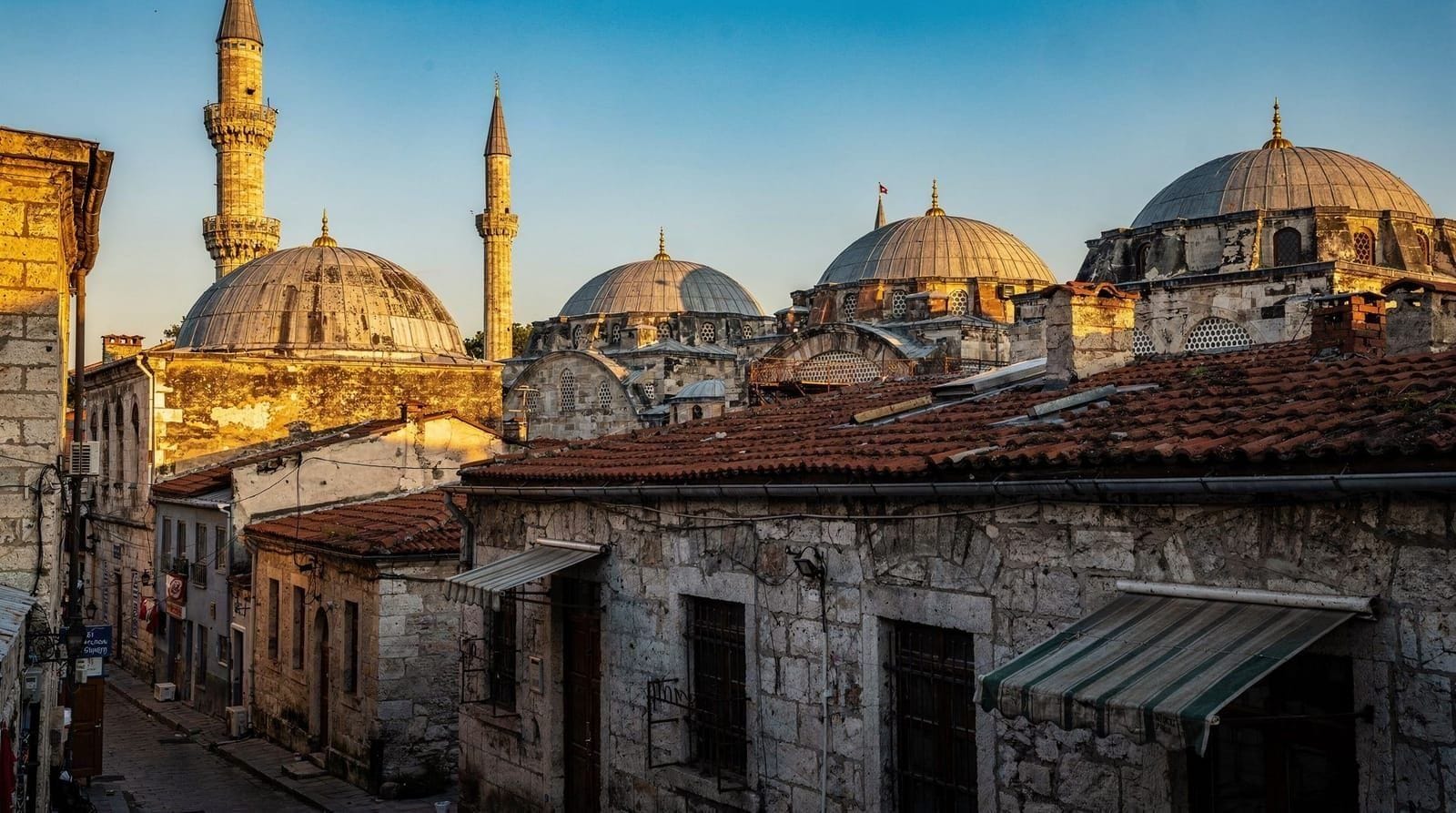
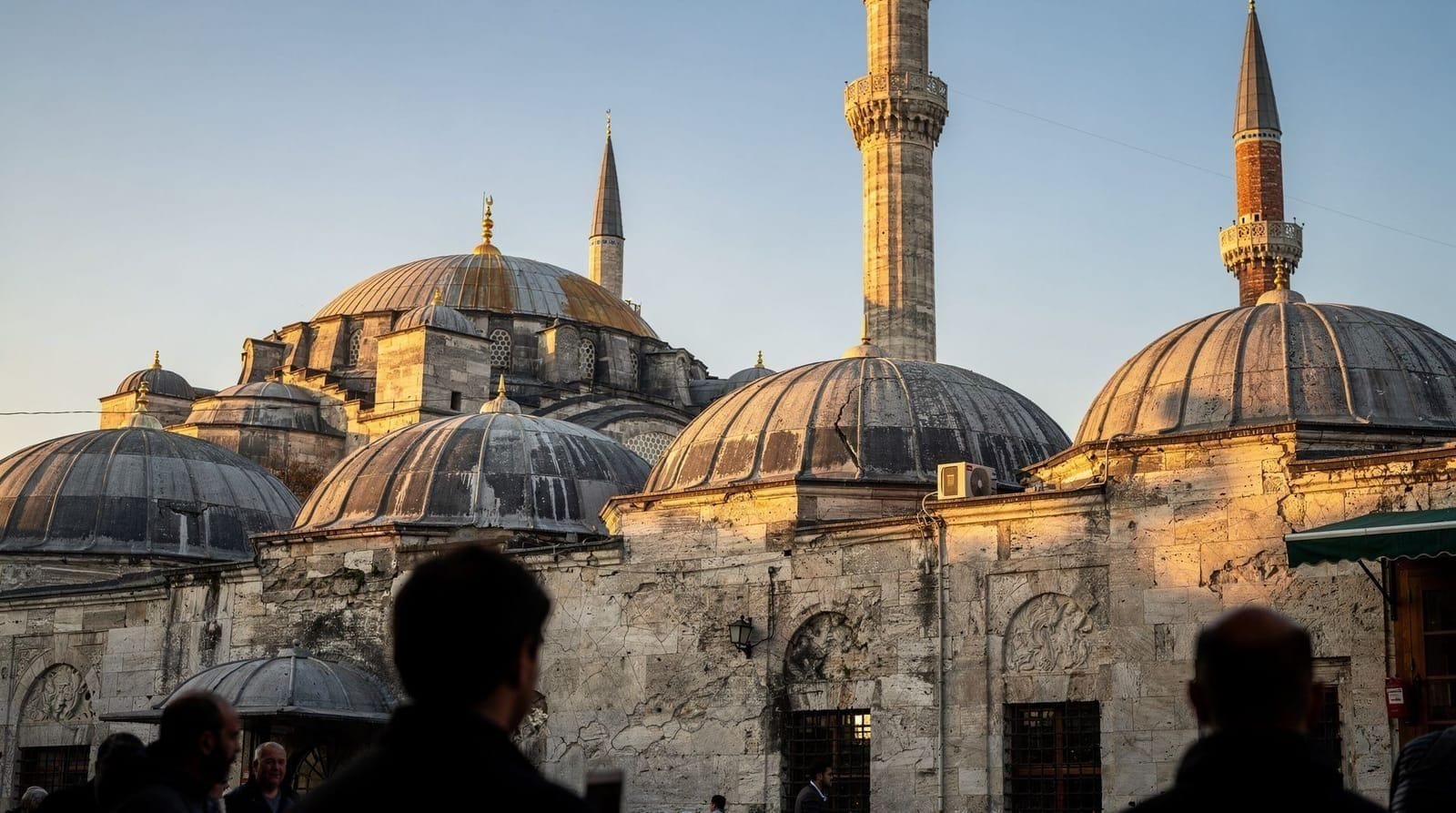
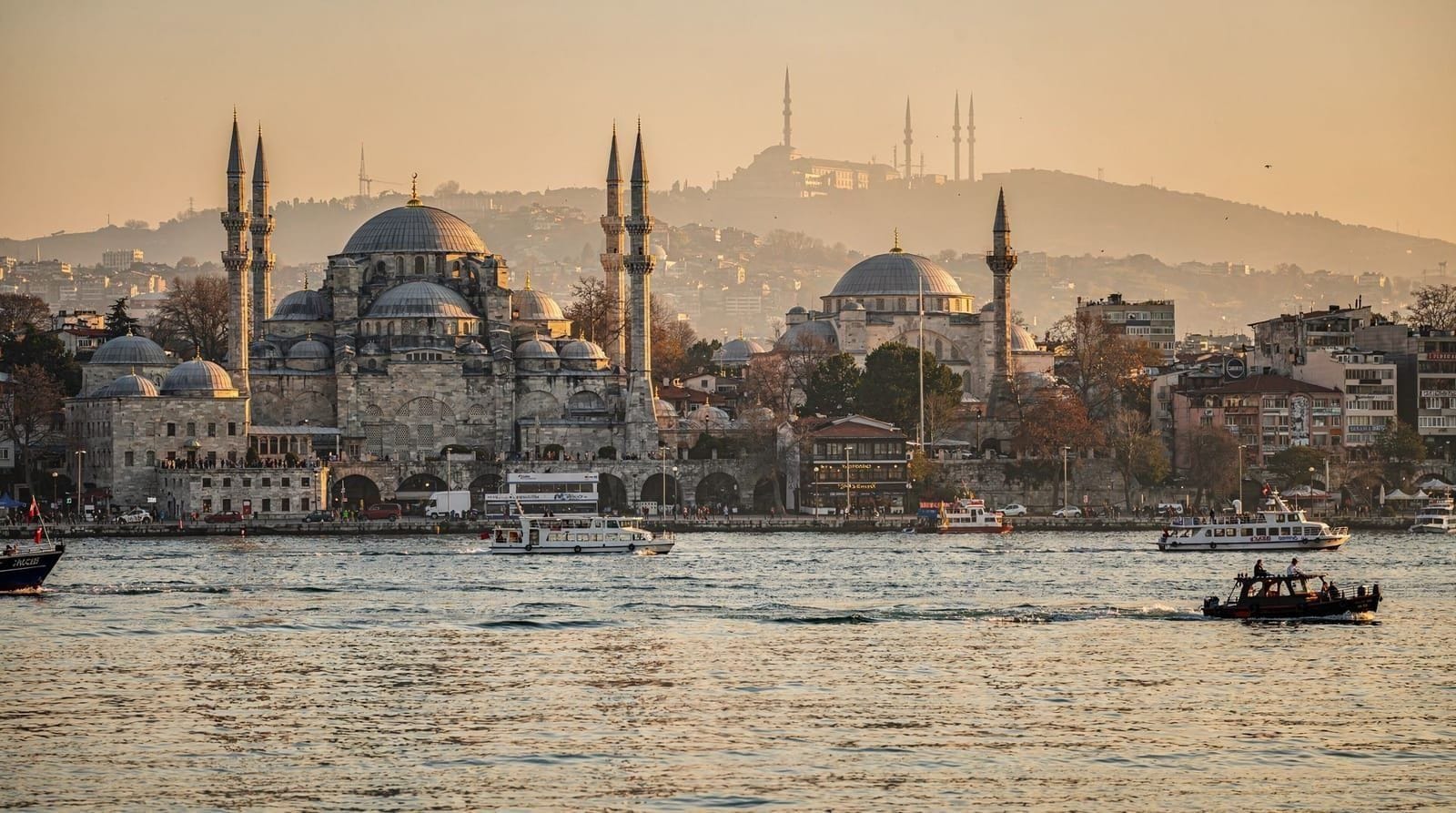
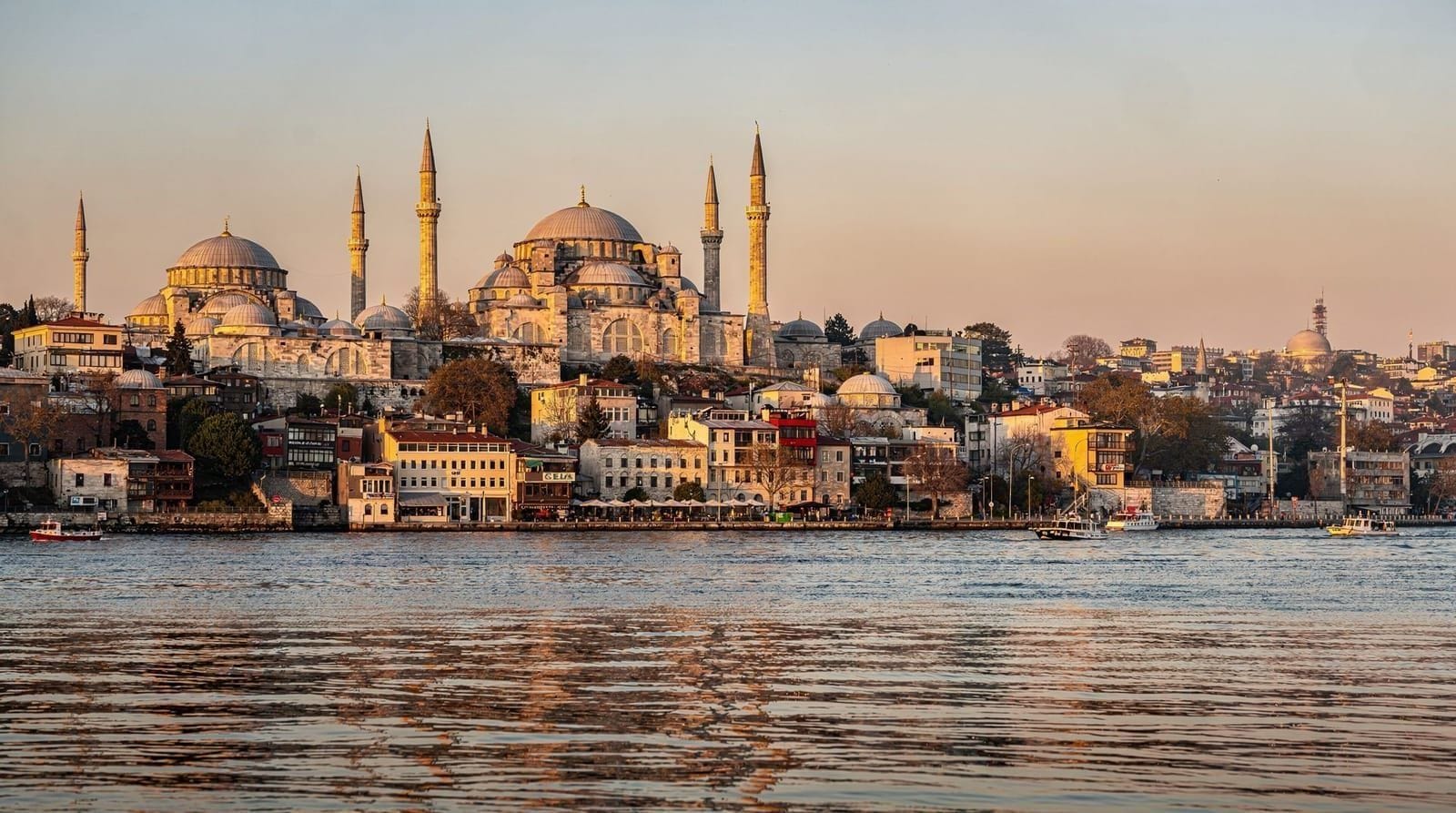
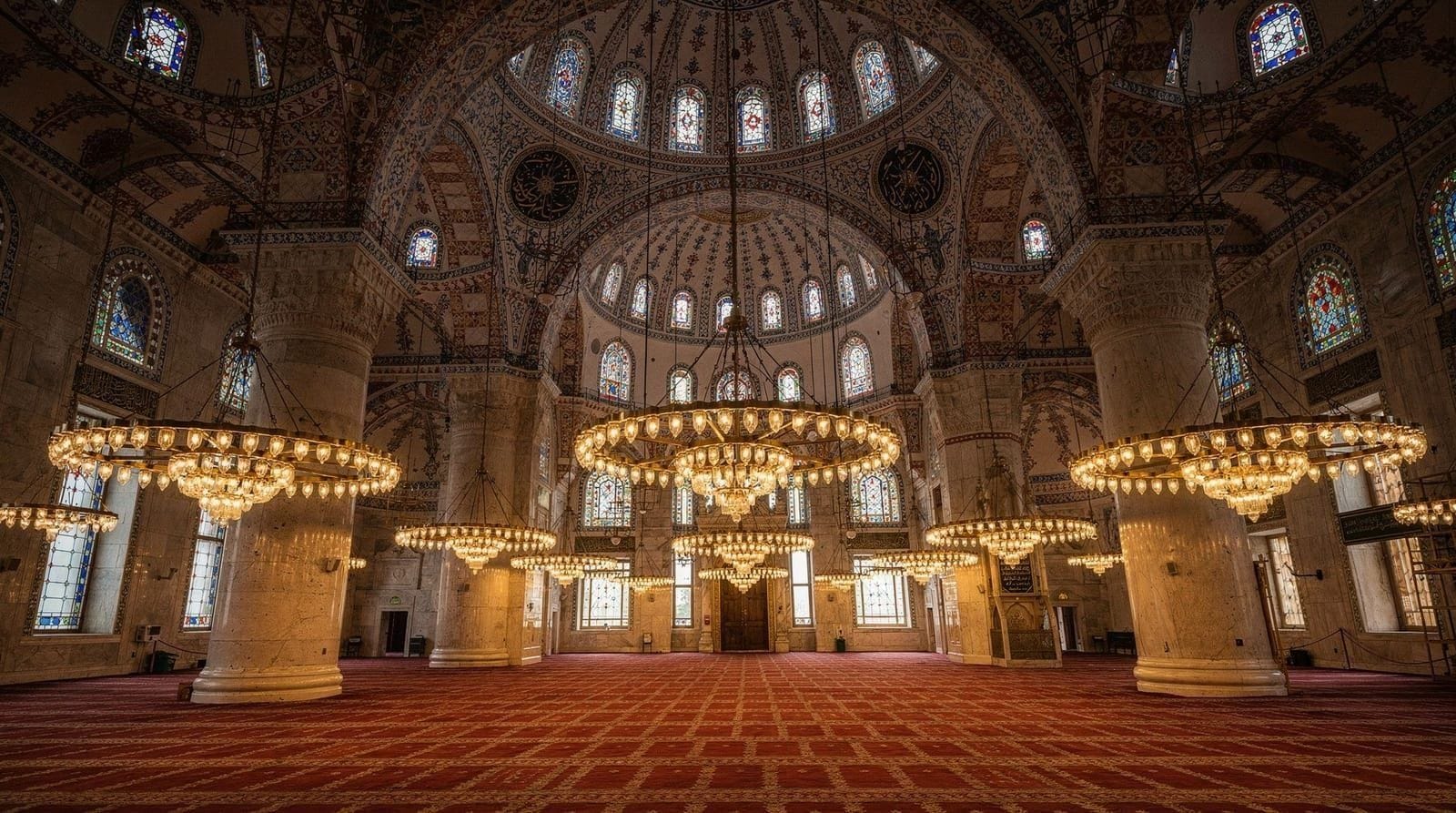
Hagia Sophia was converted into a mosque, a fate shared by hundreds of Byzantine churches. New Ottoman mosques were built across the city, most grandly the Süleymaniye complex under Suleiman the Magnificent (ruled 1520-1566) — you can read more about it in our Süleymaniye Mosque guide. The architect Mimar Sinan, who served three sultans and built over 300 structures, was responsible for the transformation of Istanbul’s skyline into its characteristic silhouette of domes and minarets.
A guided tour of Hagia Sophia, the Blue Mosque, and Süleymaniye covers the transition from Byzantine to Ottoman architecture in a single morning.
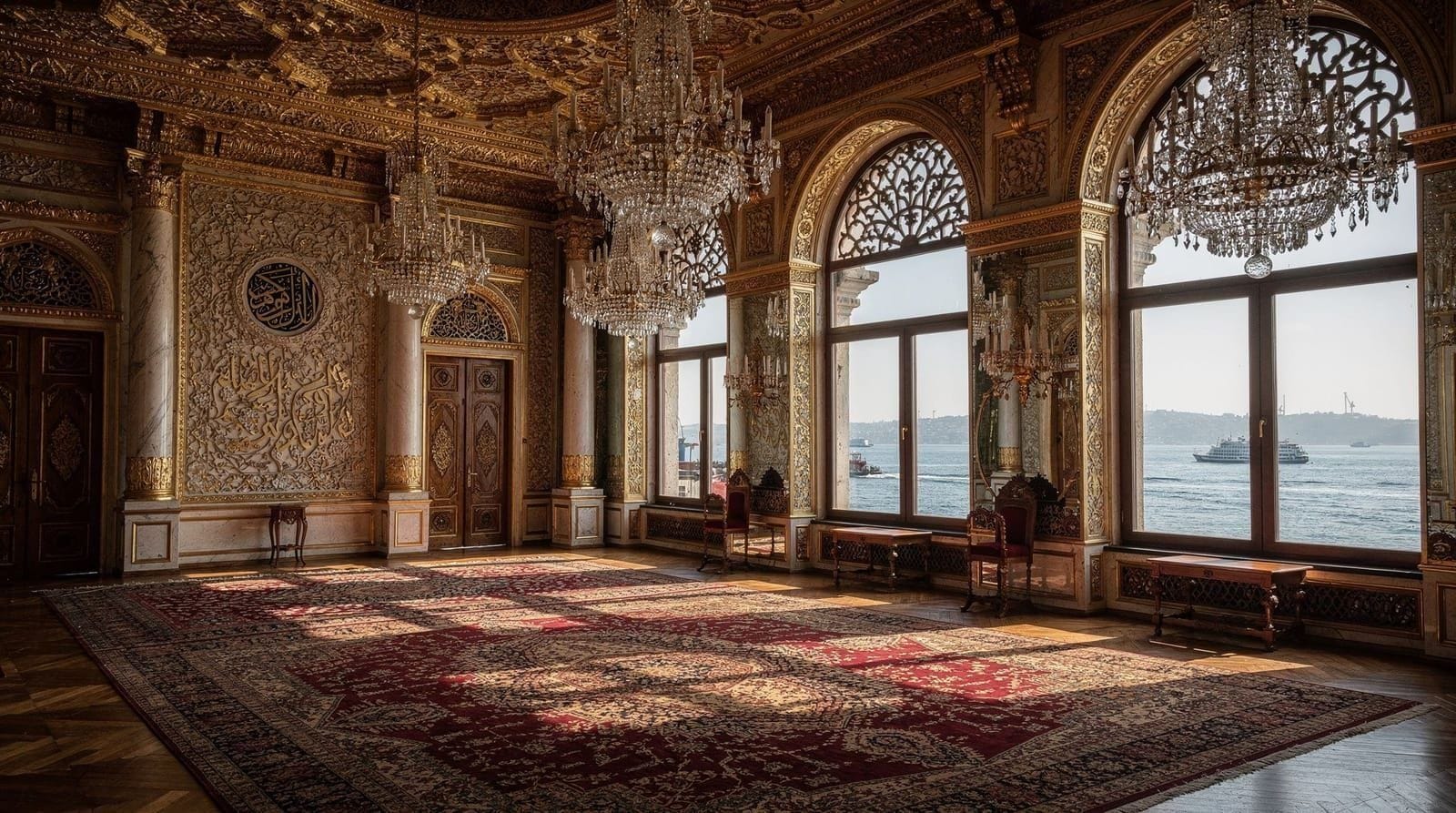
The Ottoman centuries brought the city back to imperial scale. By the 16th century Constantinople had perhaps 700,000 inhabitants — roughly the size of Paris at its height before industrialization. The Topkapı Palace complex grew to encompass multiple courts, pavilions, the imperial harem, and the treasury where the Topkapi Dagger and other treasures remain on display. The Topkapı Palace remained the center of power until Sultan Abdülmecid built Dolmabahçe Palace on the Bosphorus shore in 1856 — a shift from the medieval hilltop fortress to a European-style neoclassical palace that expressed the Tanzimat reform era’s aspirations.
The 19th century and the road to the Republic
The 19th century was a period of political reform and architectural Westernization in Istanbul. The Tanzimat reforms introduced from 1839 onward attempted to modernize Ottoman governance, extend civil rights to non-Muslim subjects, and bring the empire into alignment with European norms. Pera (now Beyoğlu) became the European quarter, home to embassies, banks, hotels, and the tramway — the Pera Palace Hotel, which opened in 1892 as the terminus hotel for the Orient Express, survives as a luxury landmark today.
The Galata Tower in Karaköy dates to Genoese construction in 1348, and the neighborhood below it — now Karaköy — was the commercial quarter of European traders for centuries. Walking from Karaköy through Galata toward Beyoğlu and İstiklal Avenue today still traces the boundary between the Ottoman Muslim city and the cosmopolitan Levantine trading quarter.
The empire’s final decades saw military defeats, the massacre of Armenians from 1915-1923, population exchanges with Greece in 1923, and the loss of the city’s centuries-old Greek, Armenian, and Jewish communities through emigration, pogroms (the 1955 Istanbul pogrom was directed at the remaining Greek community), and official pressure.
The Turkish Republic and modern Istanbul
With the founding of the Turkish Republic in 1923, Ankara replaced Istanbul as the capital. Atatürk’s reforms transformed the city: the Arabic script was replaced by the Latin alphabet, religious courts were abolished, and the Sultanate and Caliphate ended. Hagia Sophia was secularized into a museum in 1934 — a gesture of modernism that the Republic maintained for 86 years before President Erdogan re-designated it a mosque in 2020.
The city’s population exploded from the 1950s onward as rural Anatolians migrated for industrial employment, transforming Istanbul from a city of perhaps two million in 1950 to over fifteen million today. The Asian side, once sparsely developed, became a vast urban extension. The Marmaray rail tunnel, opened in 2013, connected the European and Asian rail networks under the Bosphorus for the first time, echoing the ancient role of the city as a continental bridge.
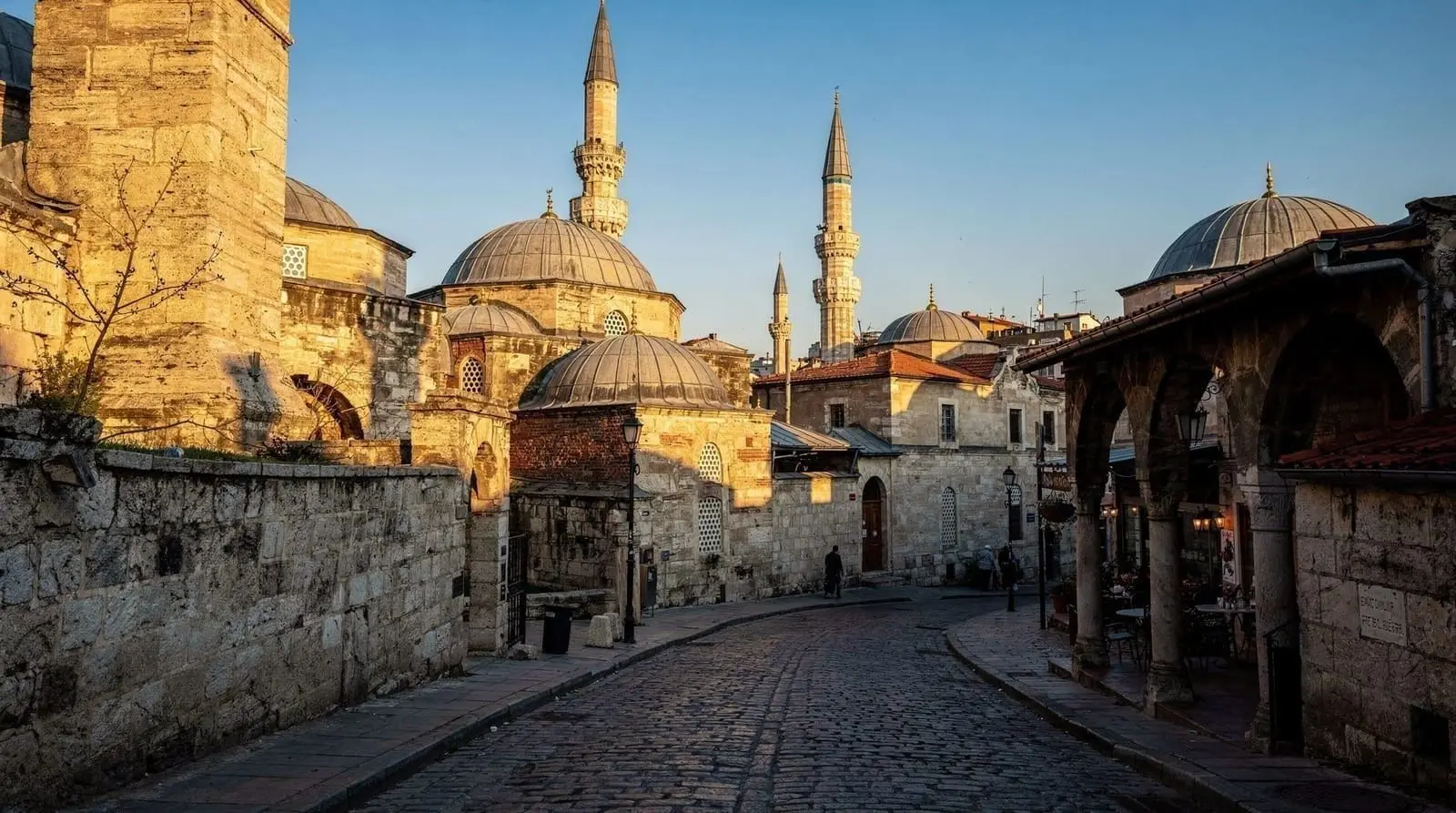
For the visitor, this layering of history is Istanbul’s defining characteristic. On a single walk through Sultanahmet you can move from the ruins of a Byzantine hippodrome to a 6th-century engineering marvel, to a 17th-century imperial mosque, to Ottoman hans and markets. The Balat and Fener neighborhoods north of the Golden Horn preserve traces of the Greek, Jewish, and Armenian communities that once formed a third of the city’s population.
A guided tour of Fener and Balat puts the city’s multi-ethnic history into concrete focus — the Ecumenical Patriarchate, the synagogue, the Bulgarian church, and the Ottoman street pattern all within a few blocks.
What to visit to understand Istanbul’s history
The most historically dense area is Sultanahmet, where the Hagia Sophia, Blue Mosque, Basilica Cistern, and Topkapı Palace are all within walking distance of each other.
For Byzantine history specifically, the Chora (Kariye) Museum in the Edirnekapı neighborhood contains the finest surviving Byzantine mosaics, dating to the early 14th century. The Archaeological Museums near Topkapı hold one of the finest collections of classical antiquities in the world, including the Alexander Sarcophagus and the Treaty of Kadesh. The Istanbul Archaeological Museums are frequently underrated by visitors focused on the famous monuments.
For Ottoman history, Topkapı Palace is essential — three to four hours minimum. The Dolmabahçe Palace on the Bosphorus shows the empire’s Westernizing turn in the 19th century. The Süleymaniye complex includes not only the mosque but Sinan’s tomb, a library, and a medrese (theological school) that shows the full ambition of classical Ottoman urbanism.
The city’s history is best approached chronologically: start in Sultanahmet (Byzantine and early Ottoman), cross the Golden Horn to Karaköy and Galata (Genoese and Levantine), then walk up to Beyoğlu (19th-century cosmopolitan quarter). Add Balat and Fener for the minority communities, and Beşiktaş for Dolmabahçe and Çırağan.
For trip planning around history, see our Istanbul trip planning guide and the itinerary for first timers.
A practical half-day route through the layers
If you only have half a day for history, walk it chronologically rather than by proximity alone. Start at the Hippodrome (now Sultanahmet Square) for the Greek and Roman foundation, move to Hagia Sophia for the Byzantine peak, cross to the Basilica Cistern for Justinian-era engineering, then to Topkapı Palace for the Ottoman transformation. Finish at the Grand Bazaar, itself a 15th-century Ottoman commercial institution still functioning as one. This order takes roughly 5–6 hours including queues, and turns a list of monuments into a single readable timeline.
For a deeper dive into a single era, the Byzantine Istanbul guide and the Ottoman Istanbul guide each expand one half of this overview considerably. If you’d rather have the layering explained as you walk it, this half-day Old City highlights tour led by an art historian covers much the same ground with someone trained to connect the historical context on the spot.
Common misconceptions worth clearing up
“Istanbul is Turkey’s capital.” It isn’t, and hasn’t been since 1923 — Ankara is. Istanbul remains the country’s largest city and cultural centre, but the seat of government moved deliberately, partly to distance the new Republic from the imperial and religious associations of the old capital.
“Everything old in Sultanahmet is Ottoman.” Much of what looks like a single “old city” layer is actually Byzantine structure with Ottoman additions on top — Hagia Sophia is the clearest example, a 6th-century Byzantine cathedral with 15th-century Ottoman minarets bolted on. Learning to read a building for both layers, rather than assuming a single origin, changes how the whole district reads.
“The 1453 conquest ended the city’s importance.” The opposite happened — Mehmed II’s conquest triggered a deliberate repopulation and building programme that took Constantinople/Istanbul from a depopulated shell of perhaps 50,000 people back to imperial scale within a few generations. The conquest was a rupture in political control, not a decline in the city’s significance.
A combined Galata Tower, Chora Church and Balat tour connects the Genoese, Byzantine and minority-community layers of the city in a single guided route.
Frequently asked questions about Istanbul history overview
What was Istanbul called before?
When did the Ottoman Empire conquer Constantinople?
Why was Constantinople so important to Rome and Byzantium?
What happened to the city after the Ottoman conquest?
What Byzantine remains survive today?
Is Istanbul now the capital of Turkey?
How did Istanbul's population change over the 20th century?
Top experiences
Bookable activities with verified prices and instant confirmation on GetYourGuide.