Byzantine Istanbul guide
Full-Day Walking Tour of Istanbul's Old City
Duration: 5 hours
What Byzantine sites can you still visit in Istanbul?
The main Byzantine monuments are Hagia Sophia (now a mosque), the Basilica Cistern, the Chora church mosaics in Kariye, the Theodosian Walls, the Hippodrome monuments in Sultanahmet, and the Istanbul Archaeological Museums. Most are within walking distance of each other in the old city.
What “Byzantine Istanbul” means today
The Byzantine Empire lasted from 330 AD, when Constantine I inaugurated his new capital, until 29 May 1453, when Ottoman forces under Mehmed II breached the Theodosian Walls. Over eleven centuries, Constantinople was the largest and richest city in the Western world for much of that time. What remains is fragmentary — wars, fires, earthquakes, and the deliberate transformation of the city after 1453 have left gaps — but what survives is extraordinary.
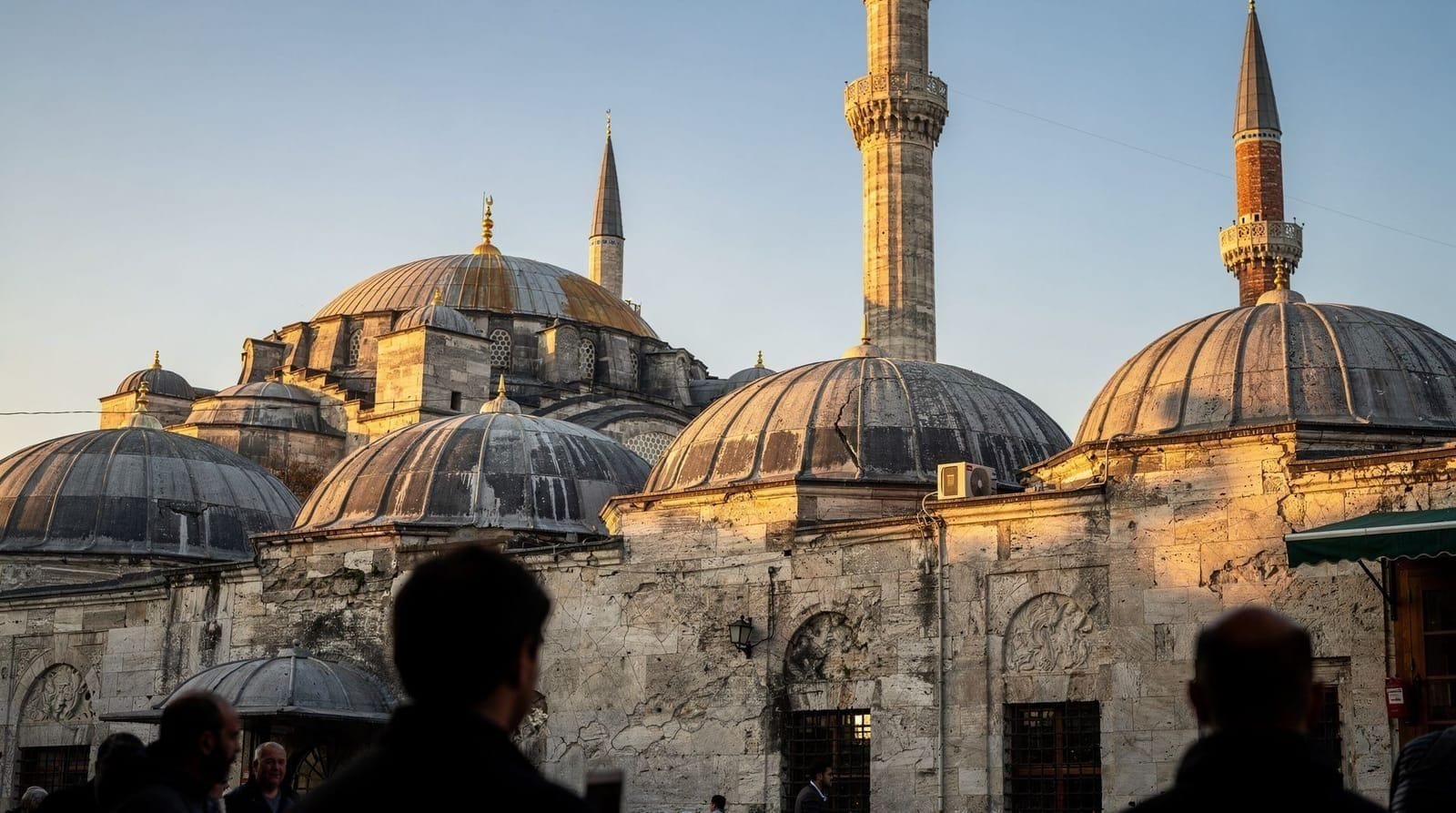
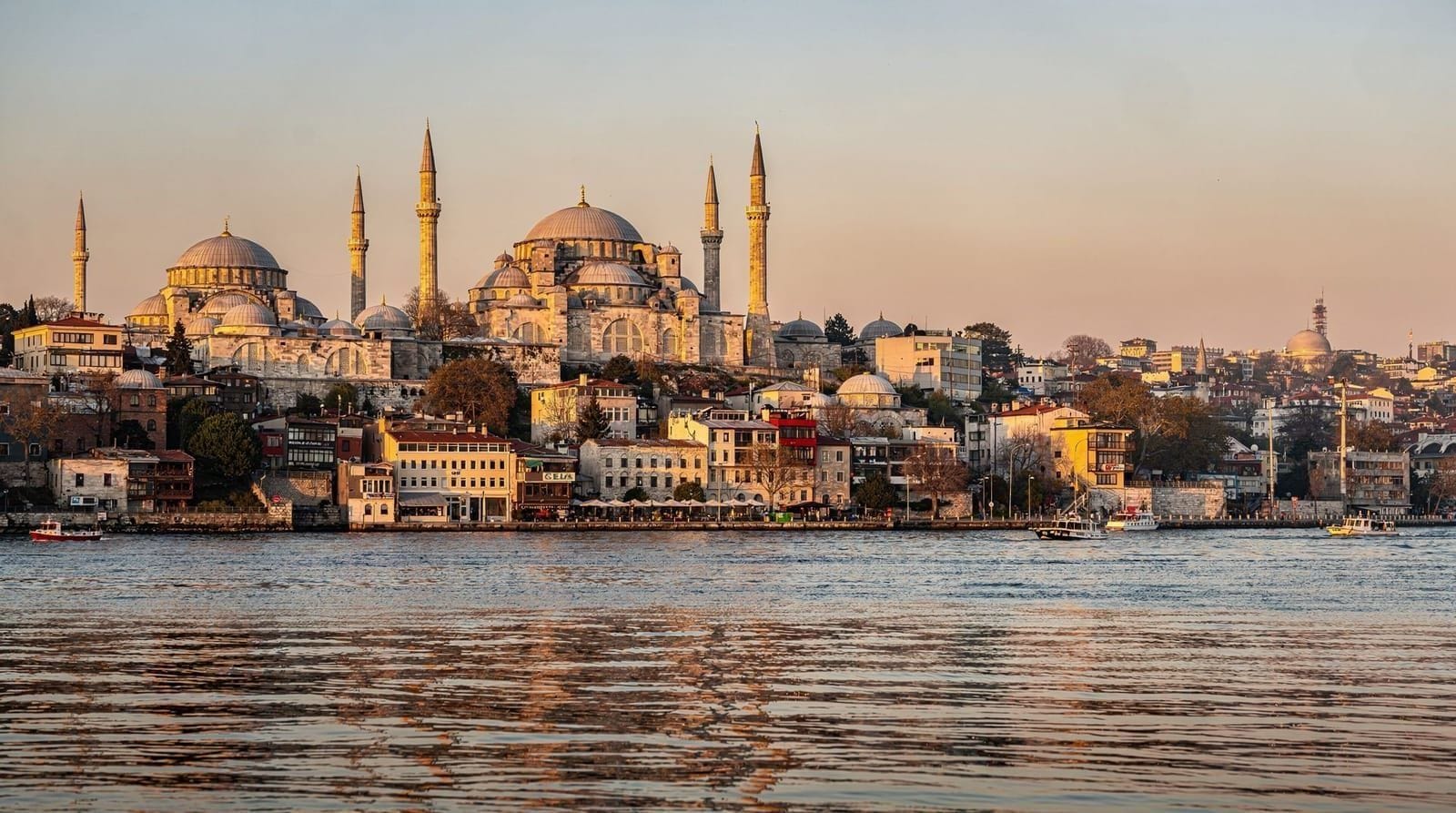
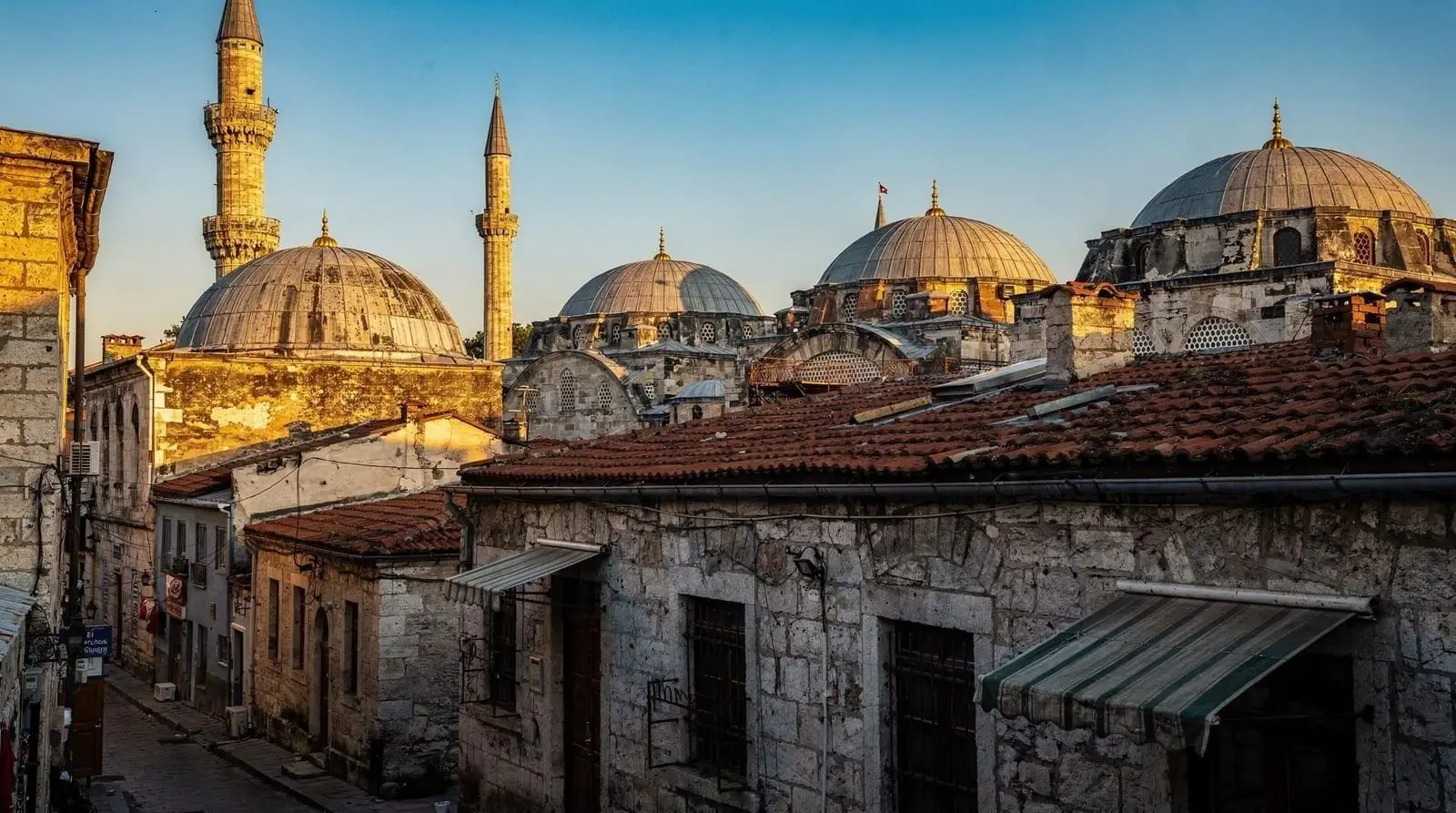
The key word for visitors is patience. Byzantine Istanbul does not announce itself the way Ottoman Istanbul does, with its grand skyline of domes and minarets. Much of it requires seeking out: descending below street level into a cistern, walking to an out-of-the-way neighborhood to see the finest mosaics in the city, recognizing that the monuments standing in a traffic roundabout are three thousand years old.
| Where | Sultanahmet peninsula for the main cluster; Edirnekapı for the Chora church |
| Time needed | Half a day for Hagia Sophia, the Cistern and the Hippodrome; add a half day for Chora and the Archaeological Museums |
| Cost | Hagia Sophia is free; the Basilica Cistern, Chora and Archaeological Museums each charge separate entry |
| Getting there | T1 tram to Sultanahmet for the main sites; T1 to Topkapı stop, then walk, or a taxi for Chora |
| Best time | Weekday mornings (8-10am) or the last two hours before closing, to get ahead of tour groups |
How the main Byzantine sites compare
If you only have time for two or three, this is roughly how they stack up:
| Site | Time needed | Entry | Best for |
|---|---|---|---|
| Hagia Sophia | 1.5-2 hours | Free | Sheer architectural scale, the dome |
| Basilica Cistern | 45-60 minutes | Paid | Atmosphere, the Medusa heads |
| Chora church (Kariye) | About 1 hour | Paid | The finest surviving mosaics anywhere in the city |
| Archaeological Museums | 1.5-2 hours | Paid | Depth — sarcophagi, ancient treaties, far fewer crowds |
If you can only manage one detour beyond Sultanahmet, make it Chora — it rewards the extra travel time more than any other single Byzantine site in the city.
Hagia Sophia: the essential monument
No Byzantine building in the world approaches Hagia Sophia for ambition or influence. Emperor Justinian I commissioned it after the destruction of an earlier church in the Nika riots of 532 AD, and his architects Anthemius of Tralles and Isidorus of Miletus completed it in the astonishing span of five years, inaugurated on 27 December 537 AD.
The dome — 31 meters in diameter, supported on a ring of forty windows — floated above the nave in a way that contemporary observers described as suspended from heaven by a golden chain. Nothing like it had been attempted before. Hagia Sophia remained the largest cathedral in the world until Seville’s was completed in 1507.
What survives today is a palimpsest of uses. The mosaics — added over the centuries, then plastered over after 1453, then partly uncovered in the 20th century — are visible in the upper gallery and in the narthex. The gold and abstract mosaic decoration above the apse is original 6th-century work. The enormous circular calligraphic medallions are Ottoman additions. The mihrab and minbar were installed after 1453. The massive hanging chandeliers and the four minarets outside are Ottoman.
Entry is now free but the site is a functioning mosque; entry is suspended during prayer times (approximately five times daily, including Friday midday prayer, which involves the longest closure). Women must cover their heads — scarves are available at the entrance. Remove shoes at the door. See our full Hagia Sophia visiting guide for current hours and practical detail.
A guided tour combining Hagia Sophia with the Blue Mosque and Süleymaniye Mosque puts the Byzantine and Ottoman buildings in architectural dialogue.
The Basilica Cistern: underground water
The Yerebatan Sarnıcı — the Basilica Cistern — is the most famous of Istanbul’s surviving Byzantine cisterns and one of the city’s most atmospheric spaces. Built under Justinian I in the 6th century, it stored water for the Great Palace and surrounding buildings, fed by the Valens Aqueduct. The cistern is 143 meters long and 65 meters wide, supported by 336 columns arranged in twelve rows.
The two inverted Medusa heads used as column bases in the northwest corner are the most photographed element. Scholars debate why they were placed upside-down and sideways — possibly for height, possibly to neutralize the gaze of the Gorgon through inversion. The columns themselves are a miscellany of different styles and periods, apparently gathered from older structures.
The cistern was forgotten by European visitors for centuries, rediscovered in the 16th century, and opened as a tourist site in 1987. It’s the most reliably stunning of Istanbul’s underground spaces. Lighting and a wooden walkway were improved in recent years; there are occasional classical music concerts held here. Read more in our Basilica Cistern visiting guide.
A smaller but recently opened cistern — the Cistern of Theodosius — is a few hundred meters away; it receives fewer visitors and has a more atmospheric, less polished presentation.
The Chora church (Kariye): the finest mosaics
The Chora church, now officially Kariye Camii (Chora Mosque) after its re-designation in 2020, is in the Edirnekapı neighborhood on the northwest edge of the old city — a 20-minute walk or short tram ride from Sultanahmet. It requires a deliberate trip, and it is worth it.
The mosaics and frescoes date primarily to the early 14th century, commissioned by the Byzantine statesman Theodore Metochites during a restoration. They are narrative cycles depicting the life of the Virgin, the life of Christ, and Old Testament scenes, executed with a vivacity and human warmth that anticipates the Italian Renaissance. The Anastasis fresco in the parekklesion — showing a risen Christ pulling Adam and Eve from their tombs, flanked by kings and prophets — is one of the great works of medieval art anywhere in Europe.
The building is functioning as a mosque, so entry rules match those for Hagia Sophia: modest dress, shoes removed, head covering for women. The mosaics in the narthex and nave are freely visible; access can be crowded on summer weekends. An audio guide helps interpret the iconographic programs. See our Chora Museum guide for details.
An entry ticket and audio guide for the Chora church lets you work through the mosaic cycles at your own pace with explanatory context.
The Hippodrome monuments
Sultanahmet Square occupies the site of the Byzantine Hippodrome, the great chariot-racing track that was also the city’s civic space — where emperors addressed the populace, criminals were executed, and the famous 532 Nika riots, which nearly toppled Justinian, began and ended.
Three ancient monuments still stand in the open space:
The Egyptian Obelisk is the oldest object in the city — carved for Pharaoh Thutmose III around 1450 BC, brought to Constantinople and erected on the spina (central barrier) of the Hippodrome around 390 AD. The marble base bears carved reliefs showing Emperor Theodosius I presiding over races; the four imperial figures and their attendants are among the finest surviving examples of Late Roman relief carving.
The Serpent Column is a bronze column originally cast to commemorate the Greek victory over Persia at Plataea in 479 BC. It stood at Delphi for over eight centuries before Constantine I brought it to Constantinople as a trophy. The upper portion with the serpent heads was broken in the Ottoman period; a fragment of one head is in the Istanbul Archaeological Museums.
The Column of Constantine Porphyrogennetos (also called the Walled Obelisk or Column of Constantine VII) is an uninscribed stone column from the 10th century that once had bronze sheeting with carved reliefs; the sheeting was stripped during the 1204 Crusader sack.
The Hippodrome itself is long gone, but some of the spina’s substructures remain below the square. The At Meydanı (Horse Square) name preserves the memory of the chariot track.
The Theodosian Walls
The walls built under Emperor Theodosius II in 412-413 AD defended Constantinople’s land boundary for over a thousand years — through Arab sieges, Bulgarian attacks, and the First Crusade, until their final breach in 1453. They run approximately 6.5 kilometers from the Marmara shore to the Golden Horn.
The walls are a triple system: a wide outer moat, a lower outer wall, and the main inner wall with towers at regular intervals. Their scale is impressive even in ruin. The most accessible section for visitors is near Edirnekapı (the Adrianople Gate), close to the Chora church — you can walk along the base of the walls for several hundred meters. The Yedikule Fortress in the south, built by Mehmed II into a corner tower of the walls, is also visitable.
The walls are not uniformly preserved or explained. Some sections have been restored with anachronistic brickwork. Others are genuinely ruinous and have been colonized by urban allotments and tea gardens. The government has undertaken some restoration work, but it remains an underinterpreted monument compared to the famous sites in Sultanahmet.
The Istanbul Archaeological Museums
The Archaeological Museums complex near Topkapı Palace is one of the finest archaeological collections in the world and one of Istanbul’s most consistently underrated sites. The complex includes three buildings: the main Archaeological Museum, the Museum of the Ancient Orient, and the Tiled Kiosk Museum.
The most famous exhibit is the Alexander Sarcophagus — found in the royal necropolis at Sidon (now Lebanon) in 1887, it dates to the late 4th century BC and depicts battle and hunting scenes with surviving polychrome paint. The sarcophagus is named “Alexander” not because the Macedonian king was buried in it, but because he is depicted on it; it likely belonged to a Phoenician vassal king.
The museum also holds a plaster cast of the Treaty of Kadesh — the peace treaty between Ramesses II and the Hittites from around 1259 BC, arguably the oldest surviving international peace treaty — as well as an extraordinary collection of sarcophagi, classical sculpture, and Byzantine artifacts. Entry is separate from Topkapı Palace.
The Valens Aqueduct
The Bozdoğan Kemeri (Valens Aqueduct) runs across a busy main road in the Fatih district, largely ignored by passing traffic. Built in the 4th century and completed under Valens around 368 AD, it supplied water from the hills northwest of the city to the cisterns at lower elevation. The surviving section, about 920 meters long, is over 18 meters high at its tallest point. It functioned continuously until the 17th century.
The aqueduct is not a formal tourist site — you simply walk up to it on the road. There is no ticket, no audio guide, no explanation at the monument. That combination of scale and obscurity is very Byzantine Istanbul: major ancient engineering, mostly walked past by people on their way somewhere else.
A one-day Byzantine Istanbul itinerary
If you only have one day to dedicate to Byzantine sites, this order minimizes backtracking. Start at Hagia Sophia right at opening (usually around 9am) before the tour groups arrive — 1.5 to 2 hours is enough to take in the nave and climb to the upper gallery for the mosaics. From there it’s a five-minute walk to the Hippodrome monuments in Sultanahmet Square; give the obelisk and the Serpent Column 20 minutes. The Basilica Cistern is another five-minute walk south — budget 45 minutes to an hour, more if you linger over the Medusa heads.
By early afternoon you should have a couple of hours free for lunch in Sultanahmet before deciding on the Chora church. If your legs and your schedule allow, take the T1 tram to the Topkapı stop and walk north for about 15 minutes to reach Kariye — it closes earlier than the central sites, so aim to arrive at least 90 minutes before closing. If Chora feels like too much for one day, it pairs just as well with a separate half-day trip to the Theodosian Walls and the Archaeological Museums instead, spread over your second or third day in the city.
Byzantine Istanbul beyond the highlights
A handful of lesser-visited Byzantine survivals reward travelers who have already done the main circuit. The Column of Constantine (Çemberlitaş) stands in the middle of a busy tram-line intersection on Divan Yolu — a scorched, porphyry column erected in 330 AD to mark the dedication of the new capital, now hemmed in by traffic and largely ignored by passersby.
The Church of the Pantokrator (Zeyrek Camii), in the Zeyrek neighborhood overlooking the Golden Horn, was once the second-largest religious complex in Byzantine Constantinople and served as an imperial mausoleum. It’s a working mosque today, structurally impressive but without the mosaics of Chora or Hagia Sophia — worth a visit if you’re already exploring the Balat and Fener area nearby, less so as a standalone trip.
The Fenari Isa Camii (former Church of the Lips Monastery), also in the Fatih district, is another converted Byzantine church with an unusual double-church plan from two different building phases. None of these sites has ticketed entry or curated visitor information — you simply turn up, which is part of the appeal for anyone who has already seen the headline monuments and wants a quieter version of the same history.
Practical tips for visiting Byzantine Istanbul
The main cluster of Byzantine sites — Hagia Sophia, the Basilica Cistern, the Hippodrome monuments — are all in Sultanahmet and can be covered in a day if you move efficiently. Budget at least half a day more for the Chora church in Edirnekapı and the Archaeological Museums.
Buy your Hagia Sophia visit on a weekday morning (8-10 AM) or late afternoon (4-6 PM) to avoid peak crowds. The Basilica Cistern is reliably atmospheric regardless of crowds. For the Chora church, a mid-week visit avoids weekend tour groups.
Plan to have cash or a payment card for entry fees. Museum Pass Istanbul covers the main sites including the Archaeological Museums and the Cistern of Theodosius; see our Istanbul Museum Pass guide for whether it’s worthwhile for your itinerary.
Walking between sites takes 10-20 minutes most of the time within Sultanahmet. For the Chora church and Theodosian Walls, either walk (30-40 minutes from Sultanahmet) or take the T1 tram to Topkapı station (the gate, not the palace) and walk north.
Frequently asked questions about Byzantine Istanbul
Is Hagia Sophia still open to non-Muslim visitors?
What are the best Byzantine mosaics in Istanbul?
Where are the Theodosian Walls?
How much time do I need for Byzantine sites?
What is the Hippodrome and what survives?
Are there other Byzantine cisterns besides the Basilica Cistern?
What happened to Byzantine churches after 1453?
Top experiences
Bookable activities with verified prices and instant confirmation on GetYourGuide.