Ottoman Istanbul guide
Full-Day Walking Tour of Istanbul's Old City
Duration: 5 hours
What are the most important Ottoman sites in Istanbul?
Topkapı Palace, the Blue Mosque, Süleymaniye Mosque, Dolmabahçe Palace, the Grand Bazaar, and the Spice Bazaar are the major Ottoman landmarks. The skyline of domes and minarets visible from the Bosphorus is overwhelmingly Ottoman in origin.
The Ottoman city: an empire built in stone
When Mehmed II entered Constantinople on 29 May 1453, he found a city reduced by war, plague, and the catastrophic Latin occupation of 1204-1261 to perhaps 50,000 inhabitants — a fraction of its former population, scattered among ruins and fields within the great Byzantine walls. Over the following two centuries, the Ottomans rebuilt it into what was arguably the world’s largest and most sophisticated city.
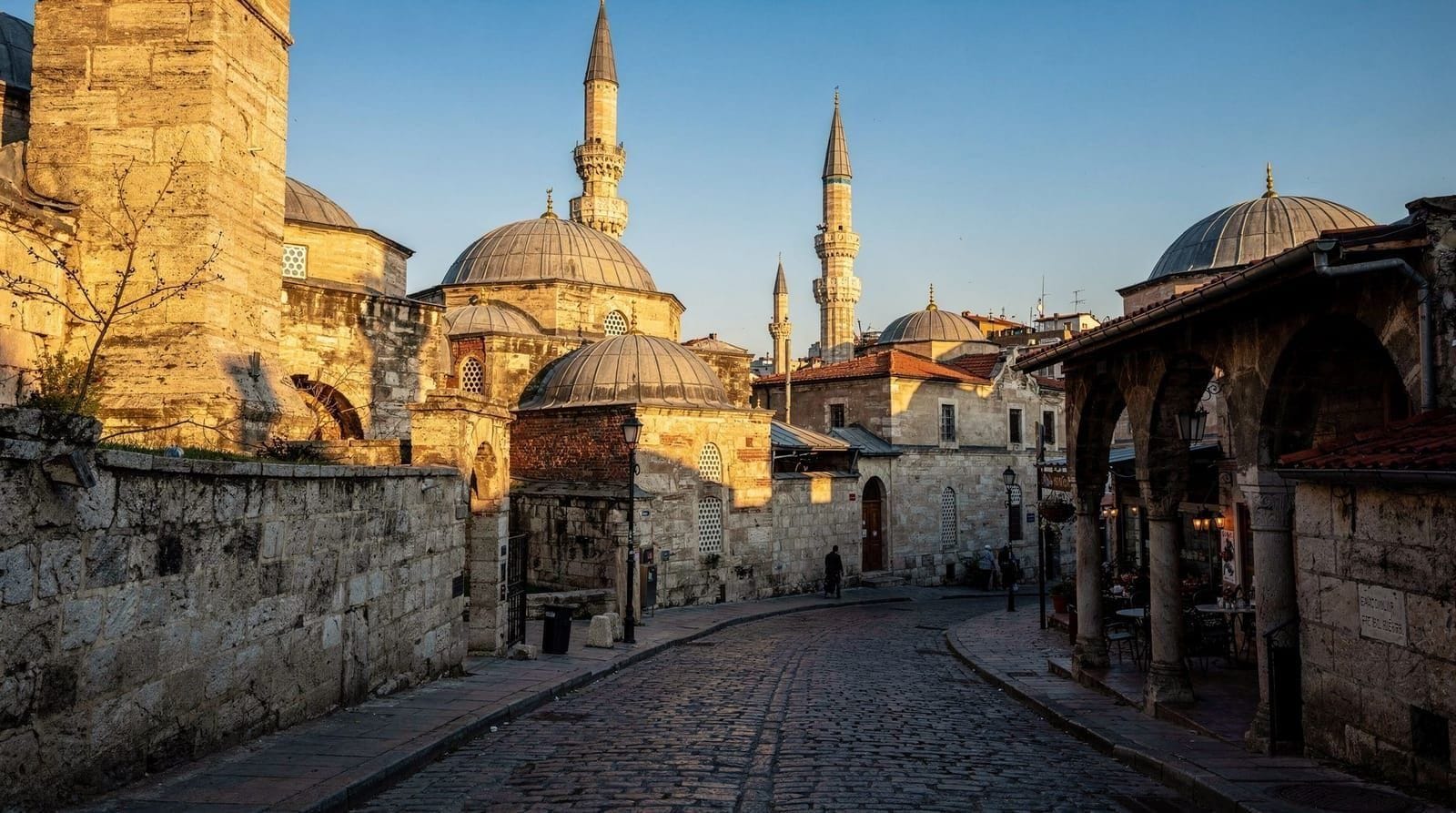
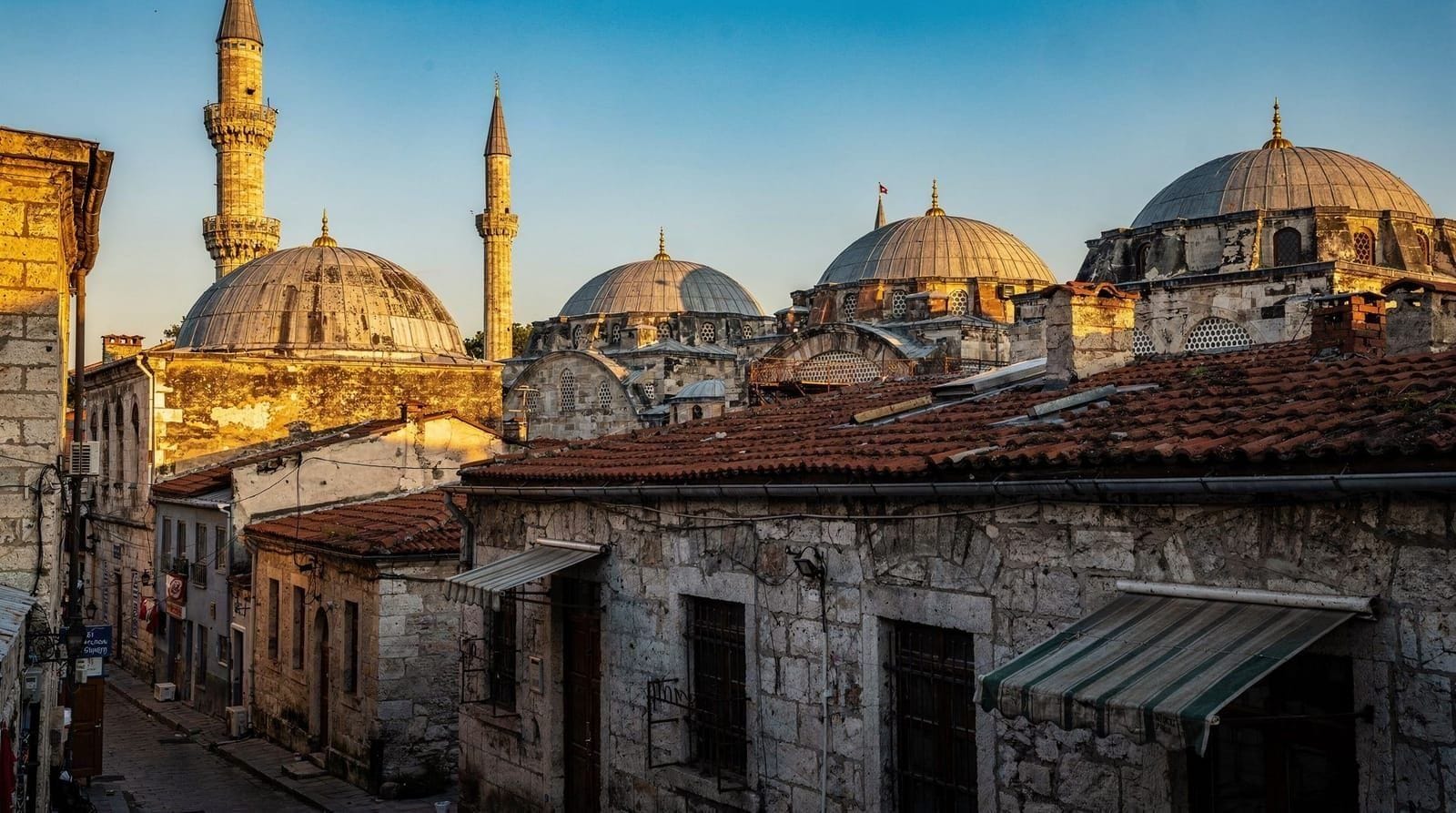
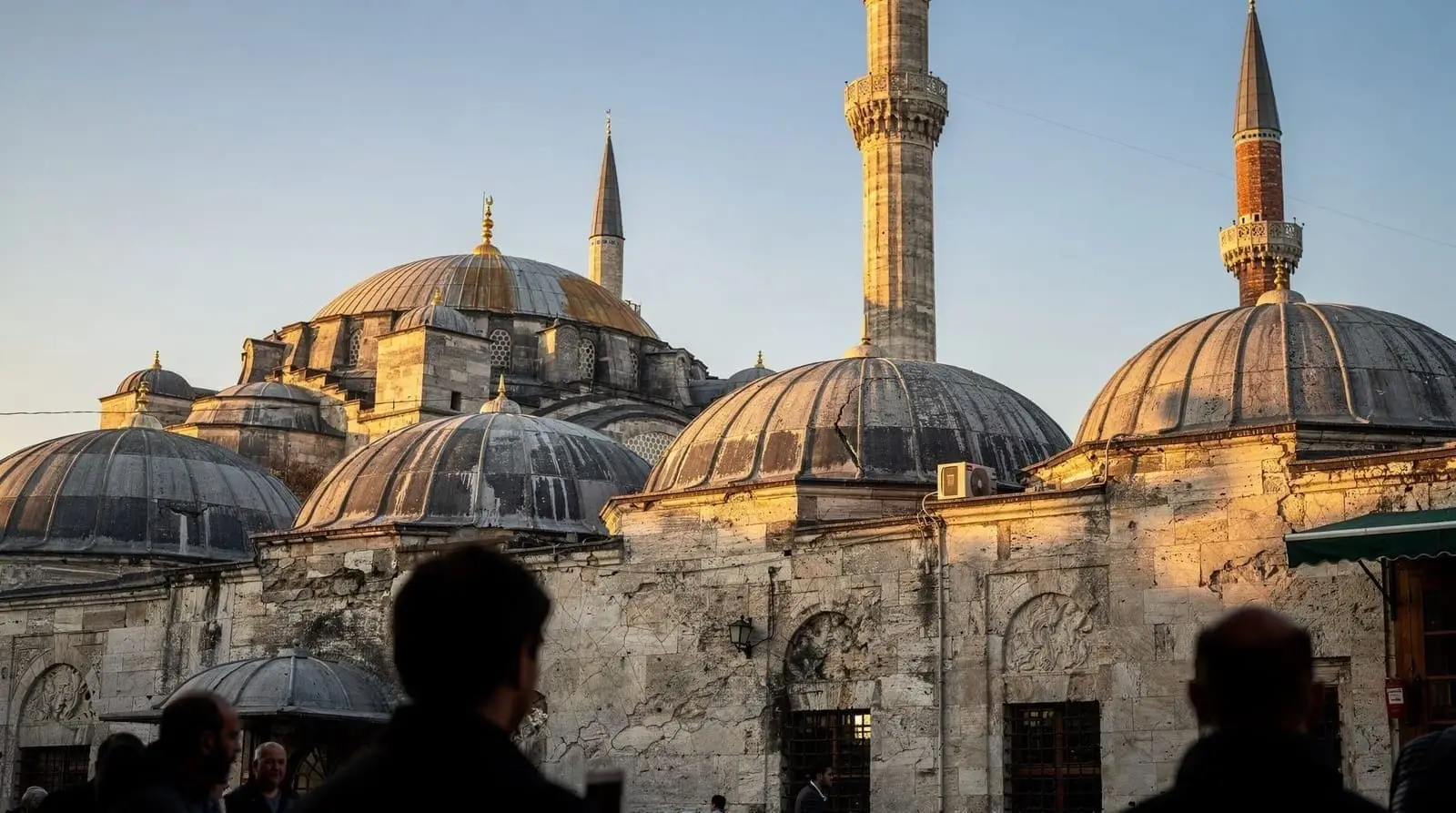
The skyline you see today from the Bosphorus — the sequence of domes and minarets punctuating the peninsula of Sultanahmet — is almost entirely Ottoman in origin. The Byzantine Hagia Sophia anchors it, but the Blue Mosque, the Süleymaniye, the Nuruosmaniye, and the smaller neighborhood mosques are Ottoman buildings that define Istanbul’s visual identity.
Understanding what you’re seeing requires knowing something about the people who built it.
| Where | Sultanahmet (core sites), Beşiktaş (Dolmabahçe) |
| Cost | Mosques free; Topkapı/Harem and Dolmabahçe ticketed |
| Time needed | 1 full day for Topkapı, half a day for the rest |
| Getting there | Walkable within Sultanahmet; tram/ferry to Dolmabahçe |
| Best time | Morning, avoiding Friday midday at mosques |
A two-day Ottoman Istanbul plan
For visitors who want to see the major Ottoman sites without cramming everything into one exhausting day, splitting across two days works better than trying to do it all at once.
Day one — the imperial core: Start at Topkapı Palace early (it opens before the crowds arrive), allowing 3–4 hours including the Harem. Continue to the Blue Mosque and Hagia Sophia in the early afternoon — both are a short walk from Topkapı and can be covered in under two hours combined outside of peak queue times. Finish with the Grand Bazaar, ideally before closing when the crowds thin.
Day two — Süleymaniye and Dolmabahçe: Spend the morning at Süleymaniye Mosque and the surrounding Third Hill neighbourhood — quieter and less rushed than day one’s itinerary. In the afternoon, take the tram or ferry to Beşiktaş for Dolmabahçe Palace, which requires a guided tour slot and benefits from booking ahead. This splits the ticketed, time-pressured sites (Topkapı Harem, Dolmabahçe) across two separate mornings rather than back-to-back, which reduces the fatigue that comes from touring multiple palace interiors in a single day.
Mehmed II and the making of the imperial city
The story of Ottoman Istanbul begins with a deliberate act of city-making. Mehmed II, 21 years old at the conquest, set about repopulating the city immediately. He issued decrees inviting Greek, Armenian, and Jewish communities to settle — and sometimes compelling them to do so, relocating craftsmen, merchants, and artisans from across his empire.
His first major building project was the Grand Bazaar (Kapalıçarşı), constructed in 1455-1461. The covered market complex grew over subsequent centuries to its current form — 61 covered streets, over 4,000 shops, 18 internal hans (caravanserais), and multiple gates. It remains one of the largest covered markets in the world and was for centuries the commercial center of the entire Ottoman trade network.
You can walk through the Grand Bazaar today for free; the interior is largely 19th-century reconstruction after a fire, but the spatial structure and the concentration of trades in specific areas (jewelers in one street, carpet merchants in another, leather in a third) preserves the Ottoman commercial geography. See our Grand Bazaar shopping guide for how to navigate it.
Topkapı Palace was begun around 1459, on the acropolis overlooking the junction of the Bosphorus, the Golden Horn, and the Sea of Marmara. It grew over the following centuries into an enormous complex of multiple courtyards, pavilions, kiosks, gardens, and the Harem — the domestic quarter housing the sultan’s family, concubines, and slave household.
Topkapı Palace: the imperial heart
Topkapı is not a palace in the European sense — a single grand building with a unified facade. It is a campus of structures organized around a sequence of courts of increasing exclusivity. The First Courtyard (also called the Court of the Janissaries) was public space; anyone could enter. The Second Courtyard, behind the Gate of Salutation (Bab-üs Selam), was for official business and ceremony. The Third Courtyard, behind the Gate of Felicity (Bab-üs Saade), was restricted to palace staff and those the sultan received in audience. The Fourth Courtyard was private imperial space.
The Treasury, in the Third Courtyard, holds the most famous objects: the Topkapi Dagger (an elaborate gold dagger inlaid with three large emeralds), the Spoonmaker’s Diamond (an 86-carat pear-shaped diamond surrounded by smaller diamonds), and a case containing sacred relics including what are said to be hairs from the Prophet Muhammad’s beard and the Prophet Abraham’s cooking pot. Whether or not these attributions are accurate historically, they were treated as genuine by the sultans and remain objects of veneration.
The combined Topkapı Palace and Harem skip-the-line ticket with audio guide covers the essential sections efficiently and avoids the longest queues.
The Harem requires a separate ticket (purchased at the Carriage Gate inside the Second Courtyard). The Harem was the household of the sultan — not simply a place of concubines, though that was part of it, but a complex domestic institution housing the sultan’s mother (the Valide Sultan, who wielded substantial political power), his wives, daughters, sons, concubines, eunuchs, and hundreds of servants. The apartments of the Valide Sultan and the throne room within the Harem show the most elaborate İznik tile decoration in the complex.
From the garden terraces of the Fourth Courtyard, the views over the Bosphorus junction are the finest in the city — the Golden Horn to the left, the Bosphorus ahead, the Asian shore of Üsküdar and Kadıköy across the water. It explains why Constantine and then Mehmed both chose this promontory.
See our full Topkapı Palace visiting guide for hours, ticket prices, and routing advice.
Suleiman the Magnificent and the classical period
The reign of Suleiman I (1520-1566), known in Europe as “the Magnificent” and in Turkey as “Kanuni” (the Lawgiver), represents the peak of Ottoman imperial culture. Suleiman’s armies besieged Vienna, his navy dominated the Mediterranean under Hayreddin Barbarossa, and his legal codes reorganized the empire’s administration. His court produced outstanding examples of calligraphy, miniature painting, tile-making, and gold-smithing.
Most visible in Istanbul is the work of his chief architect, Mimar Sinan. The Süleymaniye Mosque complex (1550-1557), built on the Third Hill overlooking the Golden Horn, is Sinan’s largest Istanbul commission — a külliye of mosque, four medreses, a hospital, a caravanserai, a primary school, a türbe (mausoleum) for Suleiman and his wife Hürrem Sultan, and Sinan’s own tomb in a garden nearby. The mosque interior is less ornate than the Blue Mosque but more harmonious, the dome rising to 53 meters with a cleaner spatial effect.
The Süleymaniye is accessible from Beyoğlu via the Galata Bridge or from Sultanahmet on foot (uphill). Entry is free, but dress rules apply (see our mosque etiquette guide). The area around the complex includes traditional Ottoman-era hans and medreses now converted to cafes and small workshops — it rewards slow exploration.
A guided tour of Hagia Sophia, the Blue Mosque, and Süleymaniye Mosque covers three centuries of Istanbul’s most important sacred architecture in a morning.
The Blue Mosque: spectacle and symbolism
The Sultan Ahmed Mosque — universally called the Blue Mosque after the İznik tiles covering its interior — was built between 1609 and 1616, under Ahmed I. Placed directly across from Hagia Sophia in Sultanahmet, it was a deliberate statement: the Ottoman sultans were heirs to and competitors with the legacy of the Byzantine emperors.
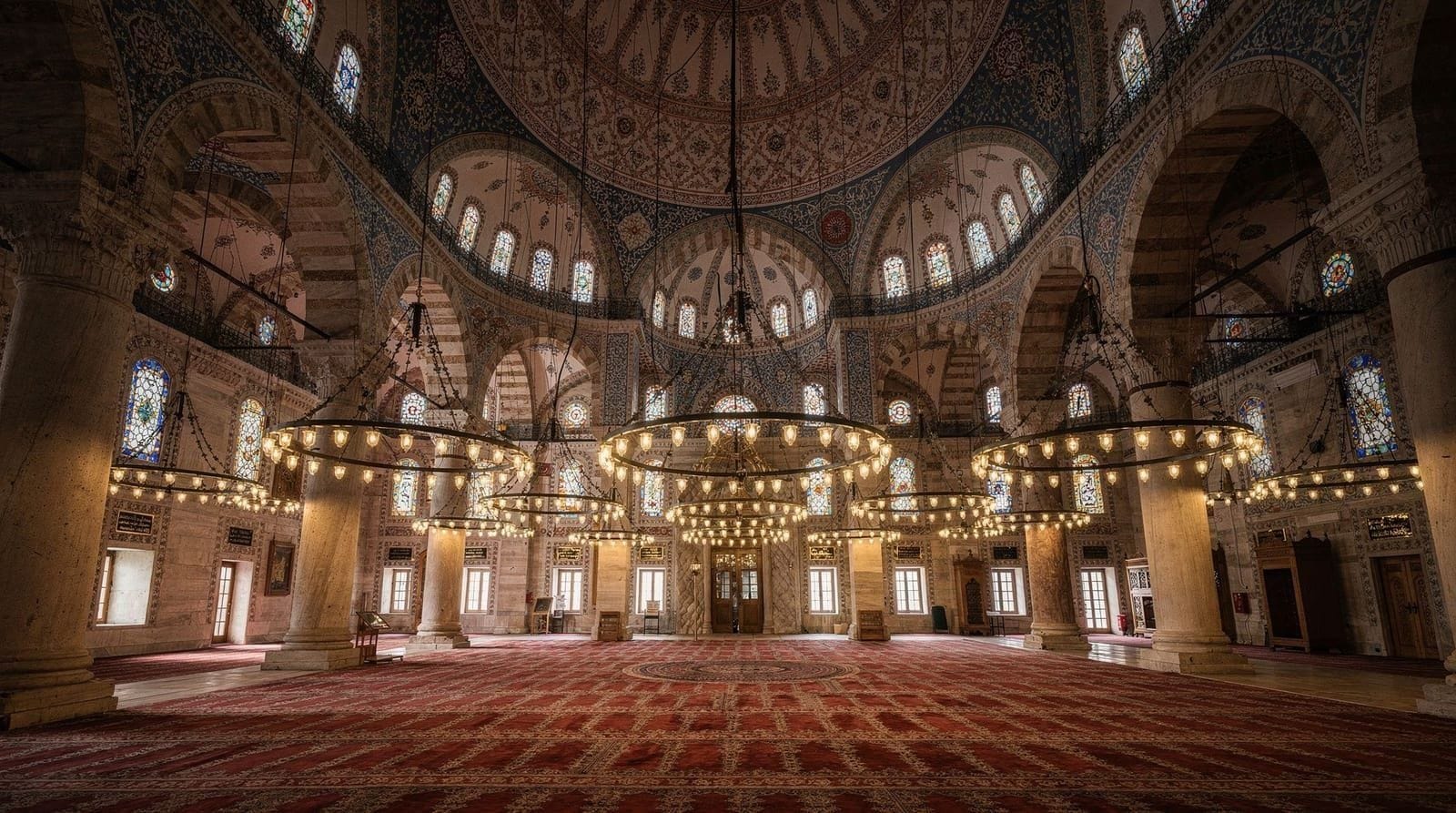
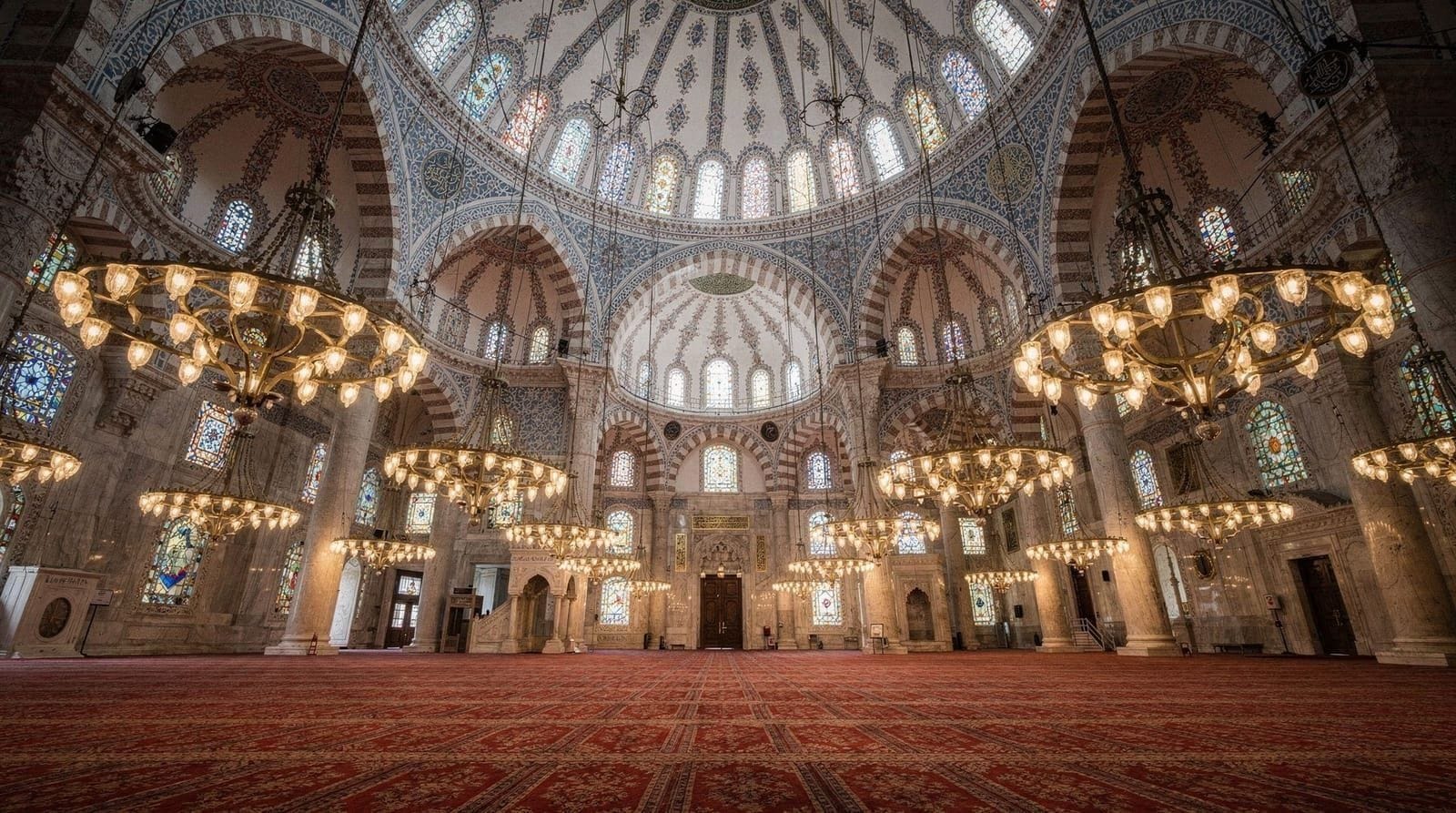
Its exterior silhouette — six minarets and a cascading sequence of half-domes around the central dome — is Istanbul’s most famous view. The interior is impressive, the dome reaching 43 meters, the 20,000 İznik tiles in blue-green patterns covering the upper walls. There are 260 windows.
Entry is free, but as a functioning mosque it is closed for prayer five times daily (about 90 minutes total throughout the day). The queue to enter can be long in summer. Modest dress is required; the mosque provides free loaners. See our Blue Mosque visiting guide.
The mosque is directly adjacent to the Hippodrome (Sultanahmet Square) and Hagia Sophia, making all three easily walkable in a half-day.
The Grand Bazaar and Spice Bazaar
The Ottoman commercial system centered on the bazaar. The Grand Bazaar was the hub, with the Spice Bazaar (Mısır Çarşısı, also called the Egyptian Bazaar) at Eminönü serving as the market for spices, herbs, and provisions arriving from Egypt and the Arab provinces.
The Spice Bazaar, built in 1660, is smaller, more manageable, and more atmospheric than the Grand Bazaar. The L-shaped market near the Yeni Cami (New Mosque) is filled with spice stalls, dried fruit, Turkish delight (lokum), nuts, and tourist goods. The herbs and spices are genuinely sold to locals as well as visitors, though prices are higher than in supermarkets. See our Spice Bazaar guide.
Between the two bazaars, the Kapalıçarşı neighborhood contains Ottoman hans — covered courtyards that served as commercial inns and warehouses. Some have been converted to cafes or boutique hotels; others remain working workshops. The Büyük Valide Han and the Çorlulu Ali Paşa Medresesi tea garden are worth finding.
Dolmabahçe: Ottoman modernity
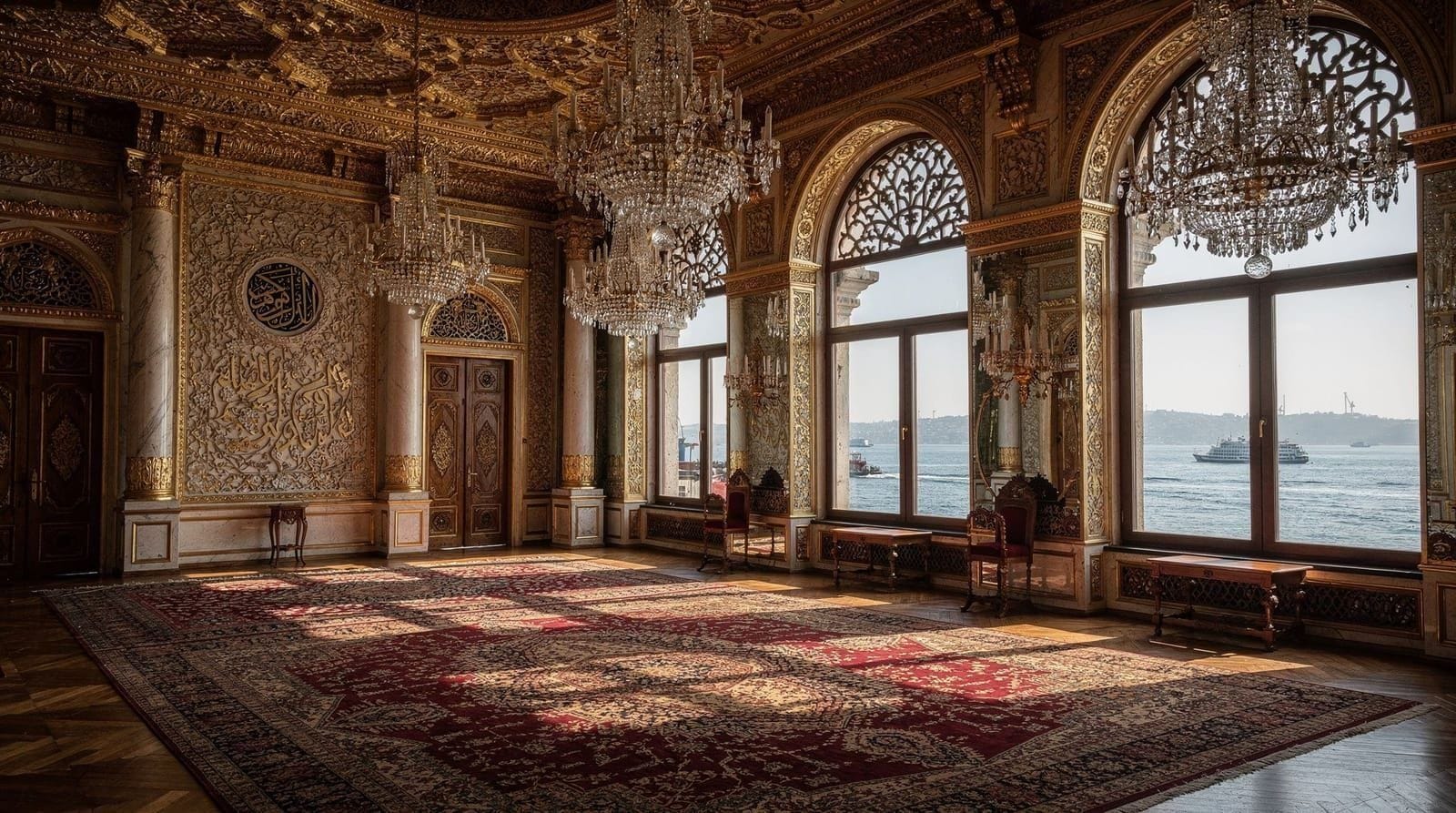
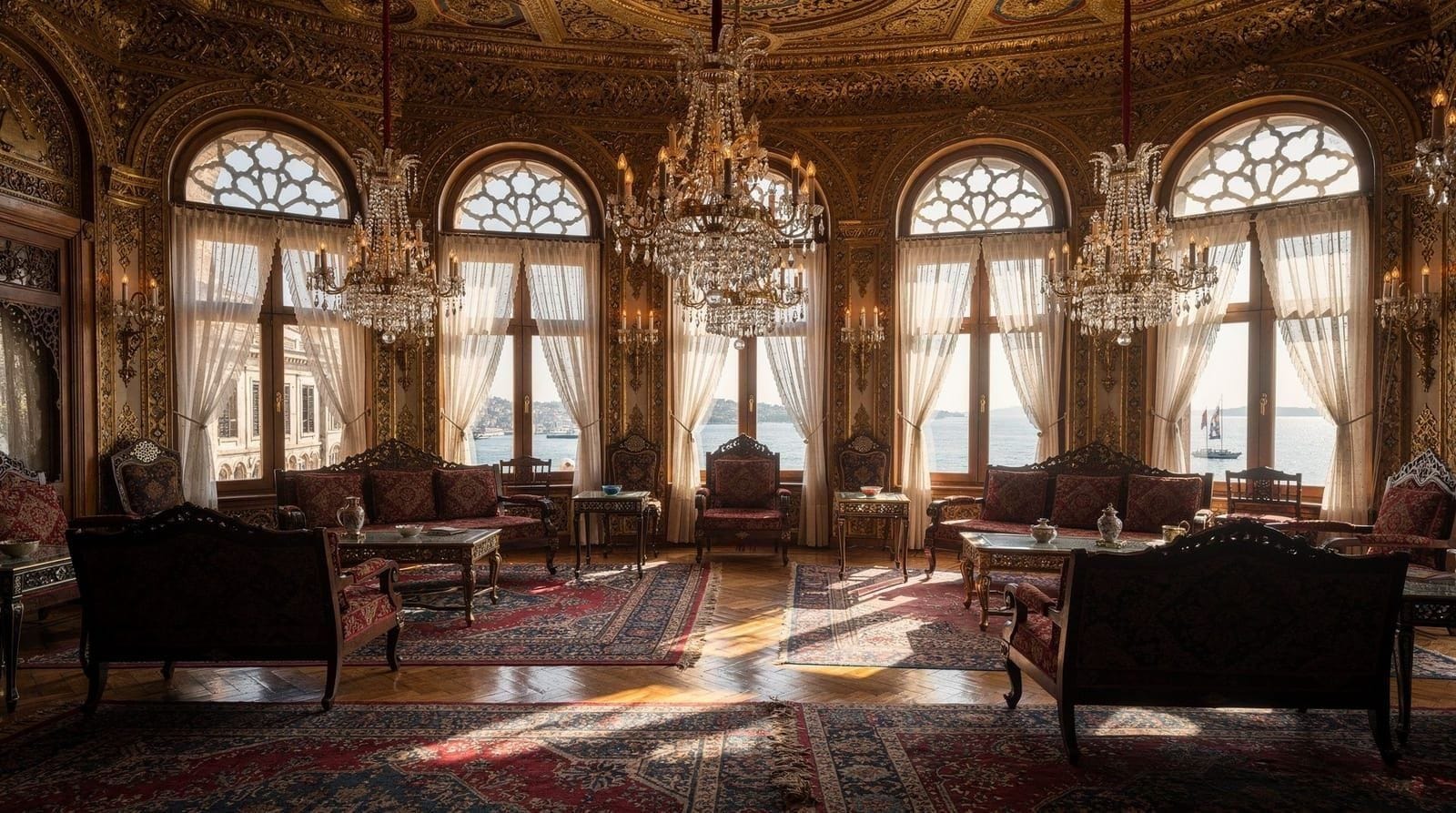
By the mid-19th century, Topkapı Palace felt antiquated to the reform-minded Tanzimat sultans. Sultan Abdülmecid I commissioned a new palace on the Bosphorus shore at Beşiktaş, and Dolmabahçe opened in 1856. It is extravagant by any standard: 285 rooms, 46 halls, 6 Turkish baths, 68 toilets, a ceremonial hall whose chandelier is one of the world’s largest (4.5 tons, 750 lights), and an ornate facade stretching 600 meters along the Bosphorus.
Dolmabahçe represents the late Ottoman empire’s attempt to assert parity with European courts. The styles are eclectic — Baroque, Neoclassical, Ottoman — and the scale is immense. Atatürk used it as an official residence after the Republic was founded; he died there on 10 November 1938.
Entry requires a guided tour (no independent visiting). The clocks in the palace are stopped at 9:05 AM — the time of Atatürk’s death. See our Dolmabahçe Palace visiting guide.
Mosques beyond the famous ones
Istanbul has hundreds of historic mosques. Beyond the Blue Mosque and Süleymaniye, several are worth visiting:
The Yeni Cami (New Mosque) at Eminönü, begun in 1597 and completed in 1663, is passed by thousands of people daily who feed the pigeons on its steps without going inside. The interior has excellent İznik tiles and is genuinely beautiful.
The Rüstem Paşa Mosque in Eminönü, designed by Sinan in 1563, is elevated above street level on a platform over market stalls. It contains some of the finest İznik tile panels in Istanbul — dense, repeat-pattern İznik tiles covering the entire interior. Small, often uncrowded, excellent.
The Eyüp Sultan Mosque at the head of the Golden Horn is the most sacred mosque in Istanbul — built near the grave of Eyüp el-Ensari, a companion of the Prophet Muhammad. It is a place of active pilgrimage and prayer, and the surrounding neighborhood (Eyüp) has a genuinely different atmosphere from the tourist-heavy areas. Visiting requires respectful behavior and modest dress.
The Ortaköy Mosque on the Bosphorus shore at Ortaköy is the most photographed mosque in Istanbul after the Blue Mosque, its two minarets framed by the Bosphorus Bridge behind. It dates to 1855.
The role of the Bosphorus
The Ottomans used the Bosphorus not just as a defensive water but as a ceremonial and residential setting. The waterfront yalı (wooden mansions) that line both shores of the Bosphorus were the summer residences of the Ottoman elite. Most are now in private hands or converted to hotels, but the visual continuity of the wooden waterfront architecture is best appreciated from a ferry — see our Bosphorus cruise guide for how to arrange a boat that covers the waterfront.
The Rumeli Hisarı (Rumeli Fortress) on the European bank, built by Mehmed II in 1452 to control the strait before his siege of Constantinople, is open as a museum. The Anadolu Hisarı on the Asian bank, older (1394), is smaller and less visited. See our Rumeli Fortress guide for visiting details.
Ottoman craft traditions still visible today
Beyond the monuments, several Ottoman craft traditions remain active and visible in Istanbul today, giving a more tactile sense of the empire’s material culture than the buildings alone.
İznik tile production: The blue-and-red floral tile style that covers the interiors of the Blue Mosque, Rüstem Paşa, and Topkapı’s Harem was produced in the town of İznik (ancient Nicaea) from the 15th to 17th centuries. Contemporary workshops in Istanbul and İznik still produce hand-painted tiles using similar techniques, sold at specialty shops rather than the general bazaar stalls.
Calligraphy: Ottoman calligraphy (hüsn-i hat) remains a living art form, visible in the giant roundels inside the Blue Mosque and Hagia Sophia bearing the names of God, the Prophet, and the early caliphs. The Turkish Islamic Arts Museum near the Blue Mosque has an extensive calligraphy collection.
Marbling (ebru): Turkish paper marbling, historically used to decorate manuscript covers and official documents, is now taught in workshops around Sultanahmet and sold as standalone art. It’s a craft with direct Ottoman court lineage, distinct from the more commercial souvenir items sold nearby.
Visiting Ottoman Istanbul practically
The main Ottoman sites are concentrated in Sultanahmet and can mostly be reached on foot. Budget one full day for Topkapı Palace including the Harem (morning, to avoid afternoon crowds), and one half-day for the Blue Mosque, Süleymaniye, and Grand Bazaar.
Dolmabahçe is in Beşiktaş, accessible by tram (T1 to Kabataş, then a short walk or funicular) or by ferry. The Eyüp Sultan Mosque requires a short tram ride beyond Eminönü. Many of the mosques are free to enter; Topkapı, the Harem, and Dolmabahçe charge significant entry fees.
Most Ottoman mosques are functioning places of worship. Visiting times must avoid the five daily prayers (approximately 15-30 minutes each; Friday midday prayer is longer). See our mosque etiquette guide and our Istanbul trip planning guide.
Ottoman sites compared: time, cost, and priority
| Site | Time needed | Cost | Priority |
|---|---|---|---|
| Topkapı Palace + Harem | 3–4 hours | Ticketed, Harem separate | Essential |
| Blue Mosque | 30–45 min | Free | Essential |
| Süleymaniye Mosque | 30–45 min | Free | High — quieter alternative |
| Grand Bazaar | 1–2 hours | Free to browse | High |
| Dolmabahçe Palace | 1.5–2 hours (guided only) | Ticketed | High if time allows |
| Spice Bazaar | 30–45 min | Free to browse | Medium |
| Eyüp Sultan Mosque | 45 min–1 hour | Free | Medium — for those interested in active pilgrimage sites |
A full-day guided walking tour of the old city covers most of Sultanahmet’s Ottoman highlights in a single structured day if self-guided planning feels like too much.
Frequently asked questions about Ottoman Istanbul
How long did the Ottomans rule Istanbul?
Who was the greatest Ottoman architect?
Is Topkapı Palace worth visiting?
Why does the Blue Mosque have six minarets?
What is the difference between a mosque and a külliye?
Can you visit Topkapı Palace without a guide?
What happened to Topkapı Palace after the empire ended?
Top experiences
Bookable activities with verified prices and instant confirmation on GetYourGuide.