Blue Mosque visiting guide — free entry, dress code, and honest tips
Istanbul: Blue Mosque Guided Tour
Is the Blue Mosque free to visit and what is the dress code?
The Blue Mosque (Sultan Ahmed Camii) is free to enter. Shoulders and knees must be covered; women need a head covering inside the prayer hall. The mosque closes for the five daily prayers (roughly 20–30 minutes each); check the current prayer schedule before visiting. The best visiting windows are typically 10–11:30 am and 1:30–2:30 pm.
What the Blue Mosque actually is
Sultan Ahmed I (1590–1617) built the Sultan Ahmed Camii between 1609 and 1617 at the age of 19. He is one of the few Ottoman sultans to have directly supervised his own construction project, reportedly visiting the site regularly. He was also unusual in being the sultan who did not expand the empire — after inconclusive wars with Persia and Austria, he needed a monument to match those of his predecessors. The mosque, designed by court architect Sedefkar Mehmed Ağa (a student of the great Mimar Sinan), was intended to be the most impressive mosque in Istanbul.
Whether it succeeded is debatable. Sinan’s Süleymaniye (1557) is architecturally more precise. The mosque built for Selim II in Edirne by Sinan (the Selimiye, 1574) is considered by most architectural historians to be Sinan’s masterpiece and arguably the finest Ottoman mosque. The Blue Mosque is larger than Süleymaniye and its tile work is more extensive, but it sits at the end of the great period of Ottoman architecture rather than at its height.
For most visitors, none of this matters. The Blue Mosque is the most visited site in Turkey and one of the most recognisable buildings in the world. It is free, impressive, and directly across the Hippodrome from Hagia Sophia.
| Where | Sultanahmet, directly across the Hippodrome from Hagia Sophia |
| Cost | Free — no ticket, no donation required |
| Time needed | 30–45 minutes |
| Getting there | Tram T1 to Sultanahmet stop, 2-minute walk |
| Best time | 10–11:30am or 1:30–2:30pm, outside prayer closures |
The exterior
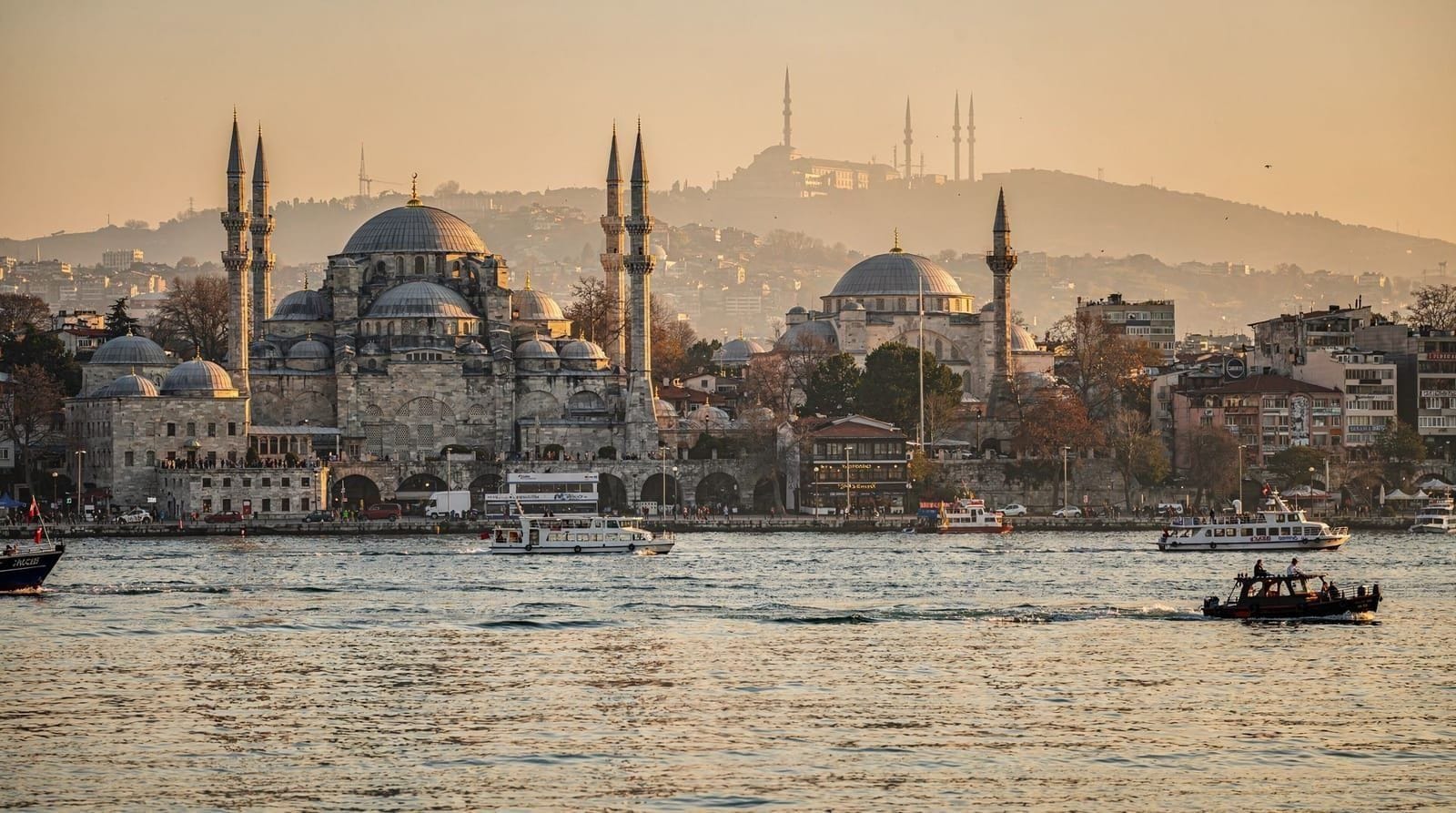
The six minarets are the first thing to note. Ottoman imperial mosques typically have four. Six minarets — matching the Kaaba in Mecca at the time — caused significant controversy. The debate over the minarets and their resolution (Sultan Ahmed paid for a seventh minaret at Mecca) is one of the more interesting details in the mosque’s history.
The cascade of domes descending from the central dome to the four semi-domes and then the smaller domes at the corners is classical Ottoman mosque composition — Sinan perfected it at Hagia Sophia and the Selimiye; Mehmed Ağa follows the formula here competently.
The outer forecourt (avlu) with its ablution fountain is worth time. The courtyard arcades, the proportions, and the scale are impressive. Enter through the tourist entrance on the south side (not the main front door, which is for worshippers).
The interior
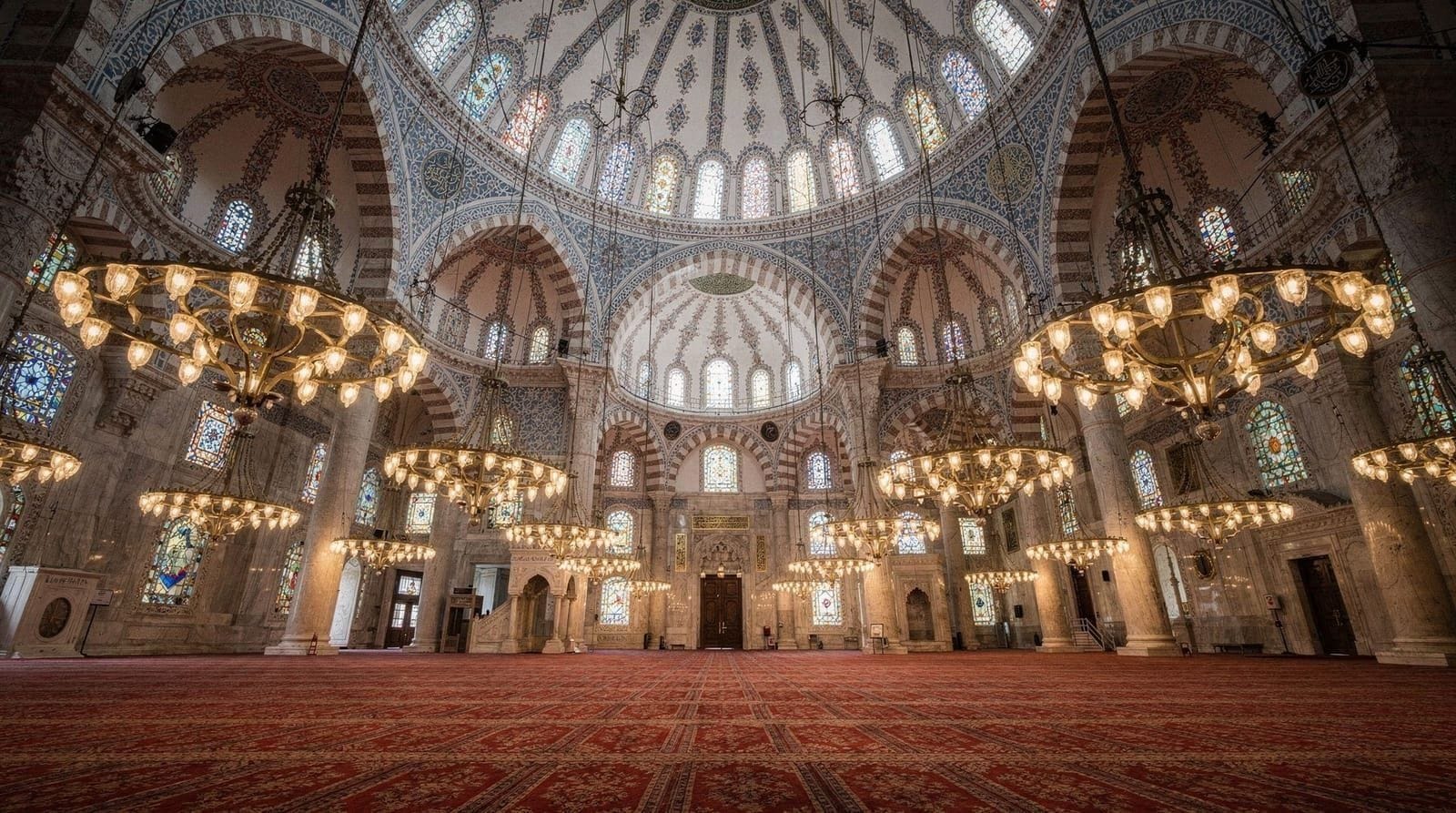
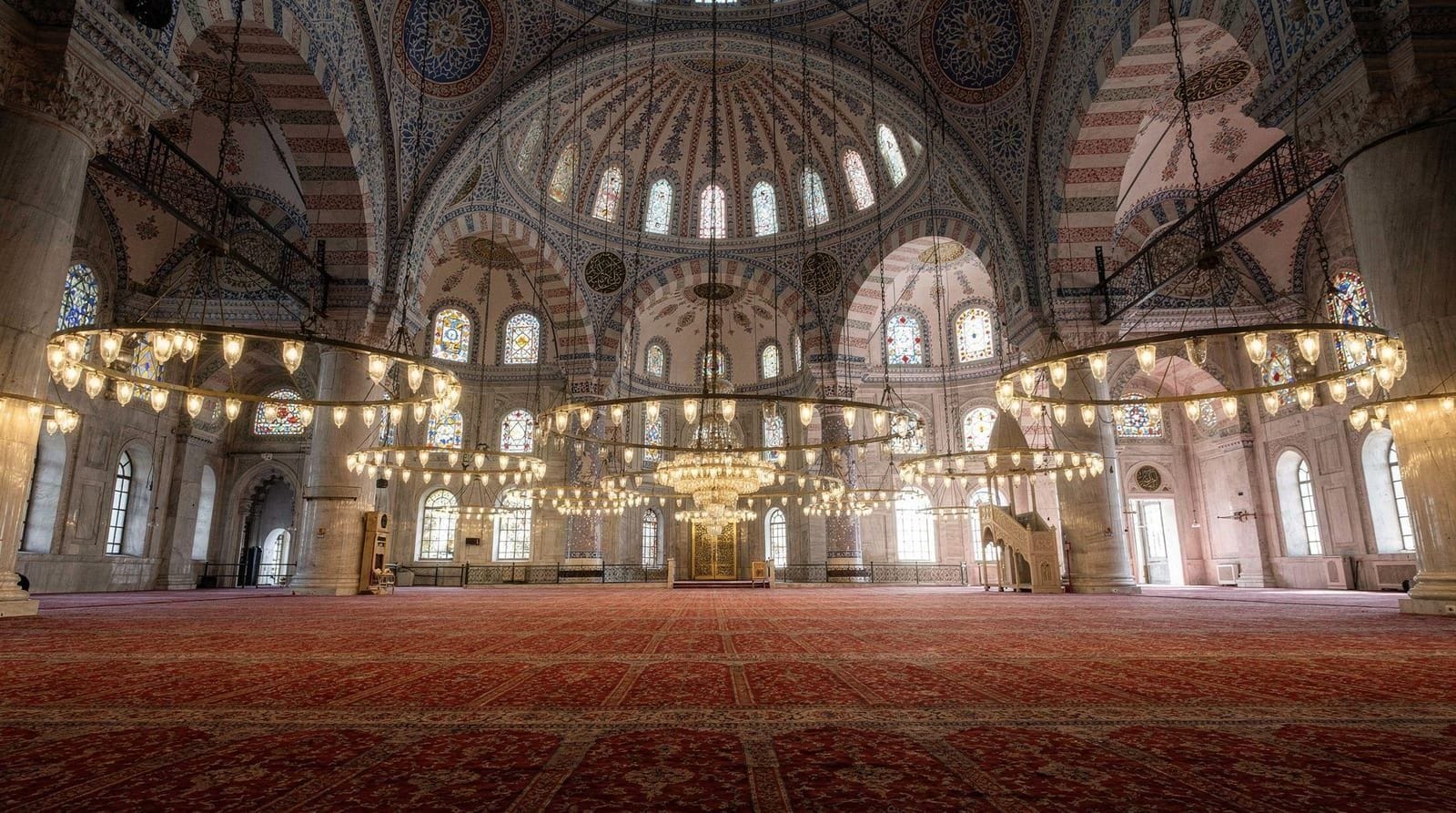
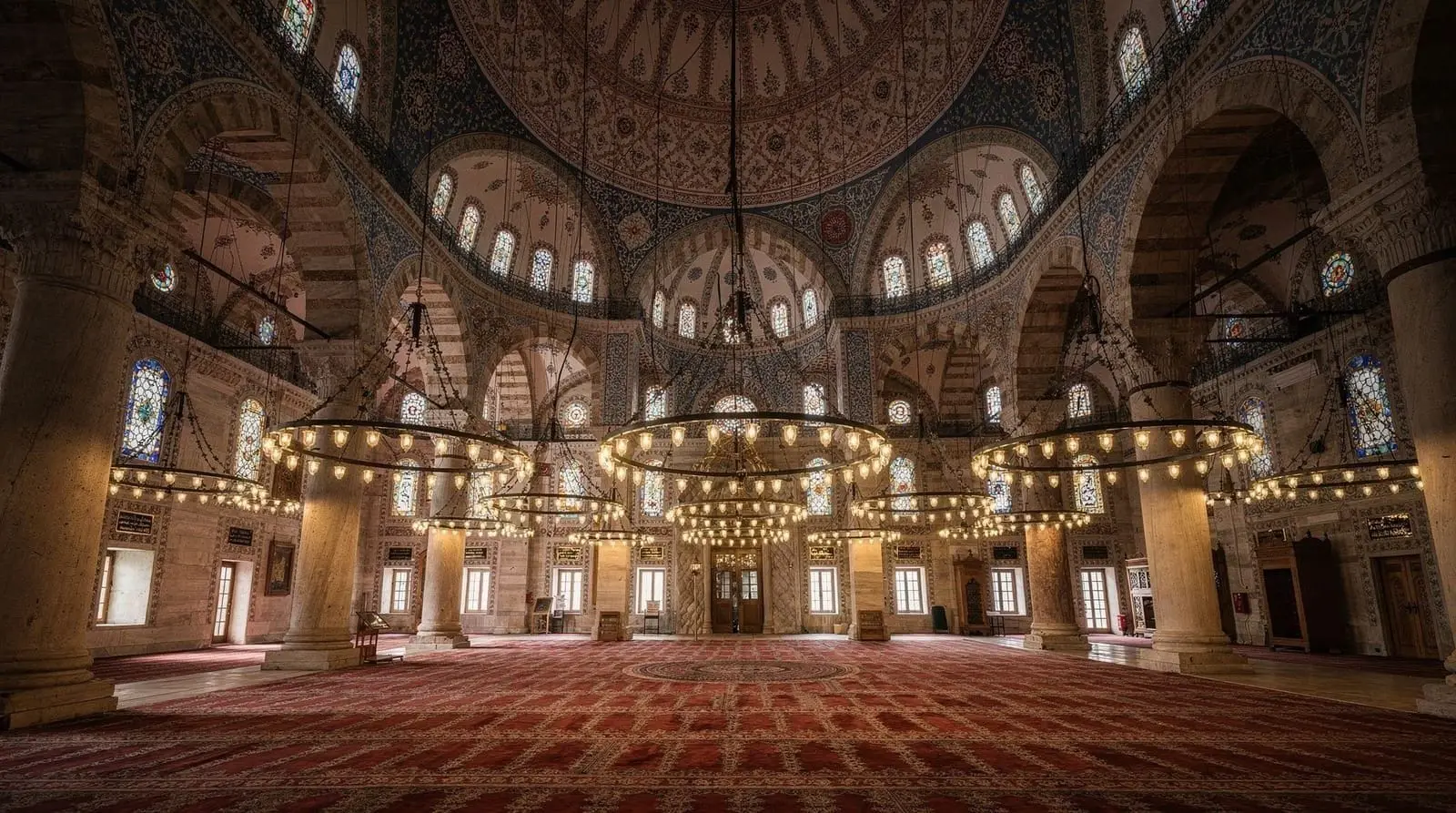
The Iznik tile work: approximately 20,000 tiles in the upper walls and gallery areas — the famous source of the “blue” name. The tiles are 17th-century Iznik production in the distinctive blue-white-turquoise palette; by this period the best Iznik production was slightly past its 16th-century peak (the tomato-red pigment was harder to reproduce consistently), but the installation here is extraordinary in sheer quantity. The tiles are in the arches, the gallery balustrades, and the upper walls — you need to look up.
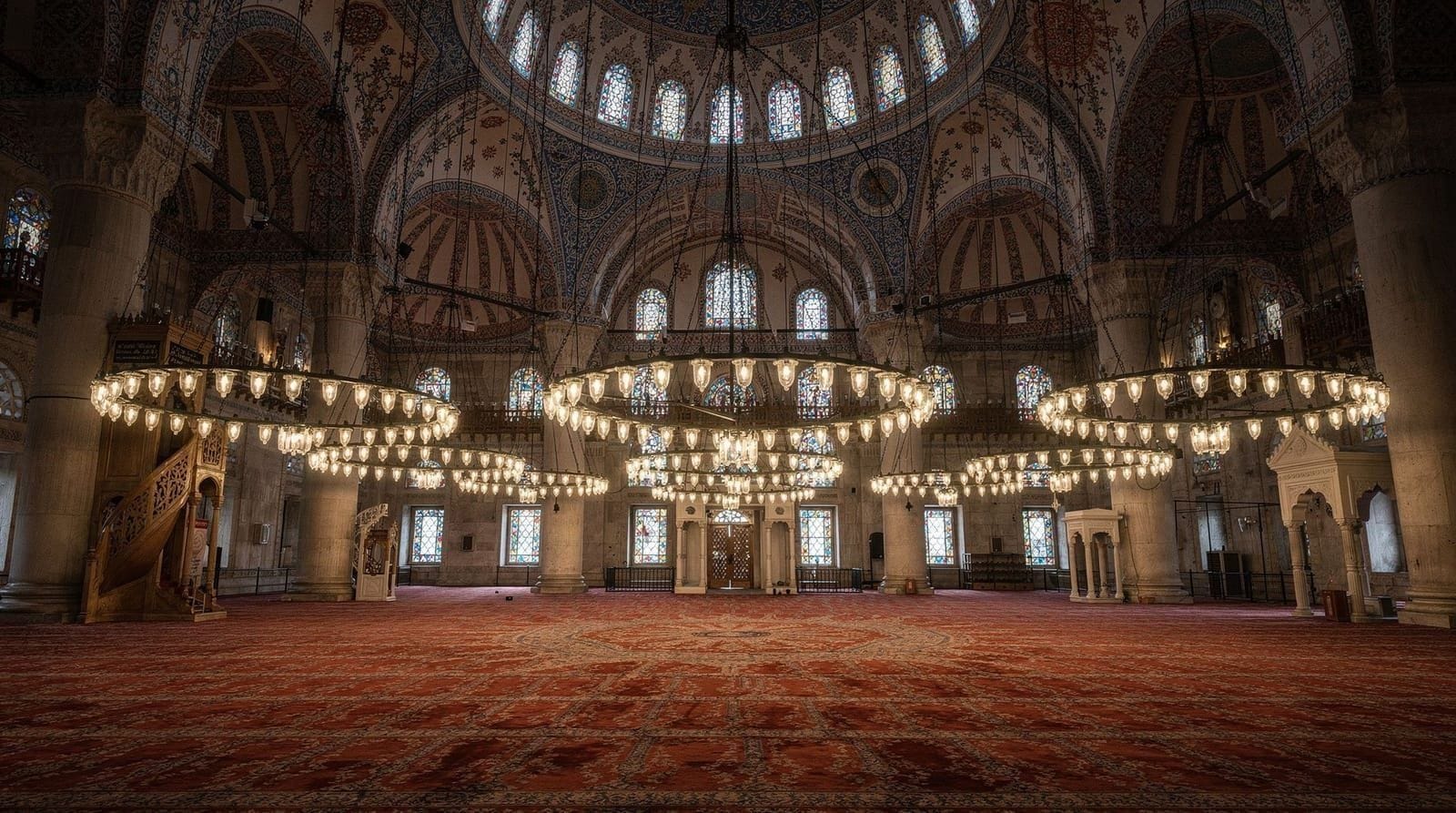
At eye level: the interior is more cream and grey than blue. The lower walls are plain marble. The massive supports (elephant feet) that hold the dome are disproportionately large — the main criticism of the mosque’s interior proportions. Sinan at Süleymaniye managed similar structural requirements more elegantly.
The stained glass windows: the lower windows have been replaced multiple times; the current set includes Turkish work from the 17th century and later restorations.
The mihrab and mimber: the mihrab (prayer niche indicating Mecca) is carved marble; the mimber (pulpit) is also carved in the white marble characteristic of the period. Both are elaborate examples of 17th-century Ottoman craftsmanship.
The chandelier: the massive hanging chandelier is a later addition. In the Ottoman period, the mosque was lit by oil lamps — the current chandelier is 19th–20th century.
Dress code and visiting protocol
Entry is at the south entrance (the tourist entrance, separate from the main entrance for worshippers).
Dress code: shoulders and knees covered for all visitors. Women need a head covering — scarves are available at the entrance (free to use, return them when leaving, or bring your own). Shoes are removed at the entrance; cloth bags are provided.
Prayer closures: the mosque closes to tourists during the five daily prayers. The schedule varies by season; it is posted at the entrance. The most significant closure is Friday midday prayer. After each prayer closure, expect a queue as visitors are readmitted.
Photography: permitted inside, but do not photograph worshippers who are praying.
What to do if asked for money: the Blue Mosque entry is free. No official of the mosque will ask for a “donation” or “ticket fee” at the entrance. Anyone doing so is not affiliated with the mosque. See honest Istanbul planner for the full scam guide.
Fake admission fees — the most common scam at the Blue Mosque
The area around the Blue Mosque has one of the most consistent tourist scam operations in Istanbul: a person (often posing as a security guard or official guide) approaches visitors outside and says the mosque is “closed for prayer” or requires a “ticket” or “donation.” This is false. The mosque is free and these individuals are not affiliated with it.
If in doubt: walk directly to the official tourist entrance. Check the official schedule posted at the entrance. See Honest Istanbul and our broader Istanbul scams and how to avoid them guide, which covers this specific scam alongside the other common ones around Sultanahmet and Beyoğlu.
A licensed guided tour of the Blue Mosque includes a guide who can explain the architectural programme and Ottoman context — worth it if you want more than a visual impression.
Combining with other Sultanahmet sites
The Blue Mosque is most naturally combined with Hagia Sophia (directly opposite, 200 metres across the Hippodrome) and the Basilica Cistern (5 minutes walk). For the comparison between the Blue Mosque and Hagia Sophia, see Comparisons. If you would rather see all three in one go with a guide, a combined Blue Mosque, Hagia Sophia and cistern tour keeps the logistics simple.
For more on Istanbul’s mosque landscape, see Palaces & mosques, our roundup of the best mosques in Istanbul, and the dedicated mosque etiquette guide if this is your first mosque visit anywhere.
Blue Mosque vs Hagia Sophia at a glance
The two are so often paired that a quick side-by-side is worth having:
| Blue Mosque | Hagia Sophia | |
|---|---|---|
| Cost | Free | Paid (separate tourist section) |
| Time needed | 30–45 min | 45–75 min |
| Best for | Ottoman tile work, six minarets | Byzantine history, sheer scale |
| Crowds | Busy, but free entry moves fast | Busy, ticketed queue |
For the fuller version of this comparison, see Hagia Sophia vs Blue Mosque and the dedicated Hagia Sophia visiting guide. Since the Basilica Cistern is a five-minute walk from both, our Basilica Cistern visiting guide is worth reading before you build the rest of the morning. If you’re planning a single busy day around these three sites, the Istanbul in 1 day itinerary sequences them efficiently.
Planning your visit around the prayer closures
The single most useful habit at the Blue Mosque is to treat the prayer schedule as the backbone of your morning rather than an afterthought. The mosque is a working place of worship first and a landmark second, so the rhythm of the day is set by the call to prayer, not by tour groups. If you arrive without checking, you can easily spend your best light waiting outside the south entrance.
A practical approach is to look at the posted times the evening before, then decide whether you want to be among the first people readmitted after a closure or to arrive well after the rush has thinned. Right after a closure the queue tends to be at its longest, because everyone who was waiting is released at once. A few minutes later the line usually moves quickly, since entry is free and there is no ticket to check. If you are travelling in a busy season, patience at the door pays off more than trying to beat the crowd by arriving early.
Friday deserves its own note. The midday prayer is the most important of the week, so the building is fuller with worshippers and the closure is the one most likely to disrupt a plan. Many visitors simply move the Blue Mosque to another day and use Friday for the Grand Bazaar area or the Basilica Cistern instead, then return when the mosque is calmer.
What to look for once you are inside
Once your eyes adjust, slow down. The temptation is to take a quick lap, a few photographs, and leave, but the interior rewards stillness. Stand near the centre of the prayer hall and let the scale of the dome settle before you start examining details. Then look in turn at the tiles above you, the large supporting piers, the carved marble of the mihrab and mimber, and the way light enters through the windows and changes across the floor.
The carpeted floor is part of the experience too. Because you are visiting in socks, the building feels intimate in a way a ticketed museum rarely does. Visitors are kept to a designated section so that worshippers retain the main space, and respecting those boundaries is simply part of being a guest. If you want context on how this building sits within the wider Ottoman tradition, our Ottoman Istanbul guide and Istanbul architecture guide explain the visual vocabulary that makes these domes and semi-domes easier to read.
Children and older visitors generally manage the visit comfortably, since there is no climbing involved and the pace is entirely yours. If you are travelling with a family, the Istanbul with kids guide has ideas for balancing quiet sites like this with more active stops later in the day.
Getting the best photographs
Photography is allowed inside, and the most rewarding pictures are rarely the obvious ones. The upper tiles, the pattern of arches, and the overlapping domes make better subjects than a wide shot taken from the entrance. Keep your flash off, move quietly, and never point a camera at someone who is praying. Treat the space as you would any place where people are in the middle of something personal.
Outside, the forecourt and the cascading domes look best from the Hippodrome side, where you can step back far enough to take in the whole composition. Visitors who like skyline views often pair the mosque with a higher vantage point later in the day; our best views in Istanbul guide and the Istanbul rooftop bars guide suggest where to see these domes from above.
Building a Sultanahmet day around the mosque
Because the mosque is free and compact, it works well as an anchor that you can build other stops around. Many travellers begin with the mosque, continue to Hagia Sophia, and then drop underground at the cistern, leaving the afternoon for something slower. If you want the palace side of the district, the Topkapı Palace visiting guide explains how to approach it, and the broader Sultanahmet destination page puts the whole neighbourhood in one place.
If you are deciding how to divide your time, a few pairings tend to work well:
- History-focused morning: the mosque, then Hagia Sophia, then lunch nearby, with the Byzantine Istanbul guide as background reading the night before.
- Mosque-focused day: start here, then cross the city to the Süleymaniye Mosque for a calmer comparison of Ottoman architecture.
- Short stopover: if you only have a few hours, the Istanbul stopover guide shows how to fit the essentials together without rushing.
For visitors with more time, the Istanbul 2 days itinerary and the Istanbul 3 days itinerary both place the Blue Mosque early, which is sensible: the mornings are the most comfortable time to walk between the main monuments.
Respect and common-sense etiquette
Beyond the dress code, a few small behaviours make the visit better for everyone. Speak quietly, avoid sitting with your back to the prayer area where people are praying, and do not touch the walls or tiles. Keep phones on silent. If something about the rules is unclear, a staff member at the entrance is the right person to ask, not someone who approaches you in the square.
It also helps to remember that being turned away during a prayer closure is not a snub. The mosque is doing what it has always done, and the closure is a feature of visiting a living building. Use the pause for a coffee or a walk through the nearby park, and come back when the doors reopen. If this is your first mosque, the Turkish customs and etiquette guide and the free mosques in Istanbul guide give useful background on what to expect elsewhere in the city.
After the Blue Mosque
When you leave, you will be at the heart of the old city with plenty of choices. If you want to understand the district’s older layers, the Istanbul history overview is a good companion. If you would rather eat, the where to eat in Istanbul guide helps you avoid the most tourist-oriented restaurants around the square, and the Istanbul tourist traps guide is worth skimming before you wander far from the main monuments. For planning the rest of your trip, the Istanbul trip planning guide ties everything together.
Frequently asked questions about Blue Mosque visiting guide — free entry, dress code, and honest tips
Why is it called the Blue Mosque?
Is the Blue Mosque better or worse than Hagia Sophia?
How long should I spend at the Blue Mosque?
When does the Blue Mosque close for prayers?
Do I need to book in advance?
What are the six minarets about?
Is the Blue Mosque an active mosque?
Top experiences
Bookable activities with verified prices and instant confirmation on GetYourGuide.