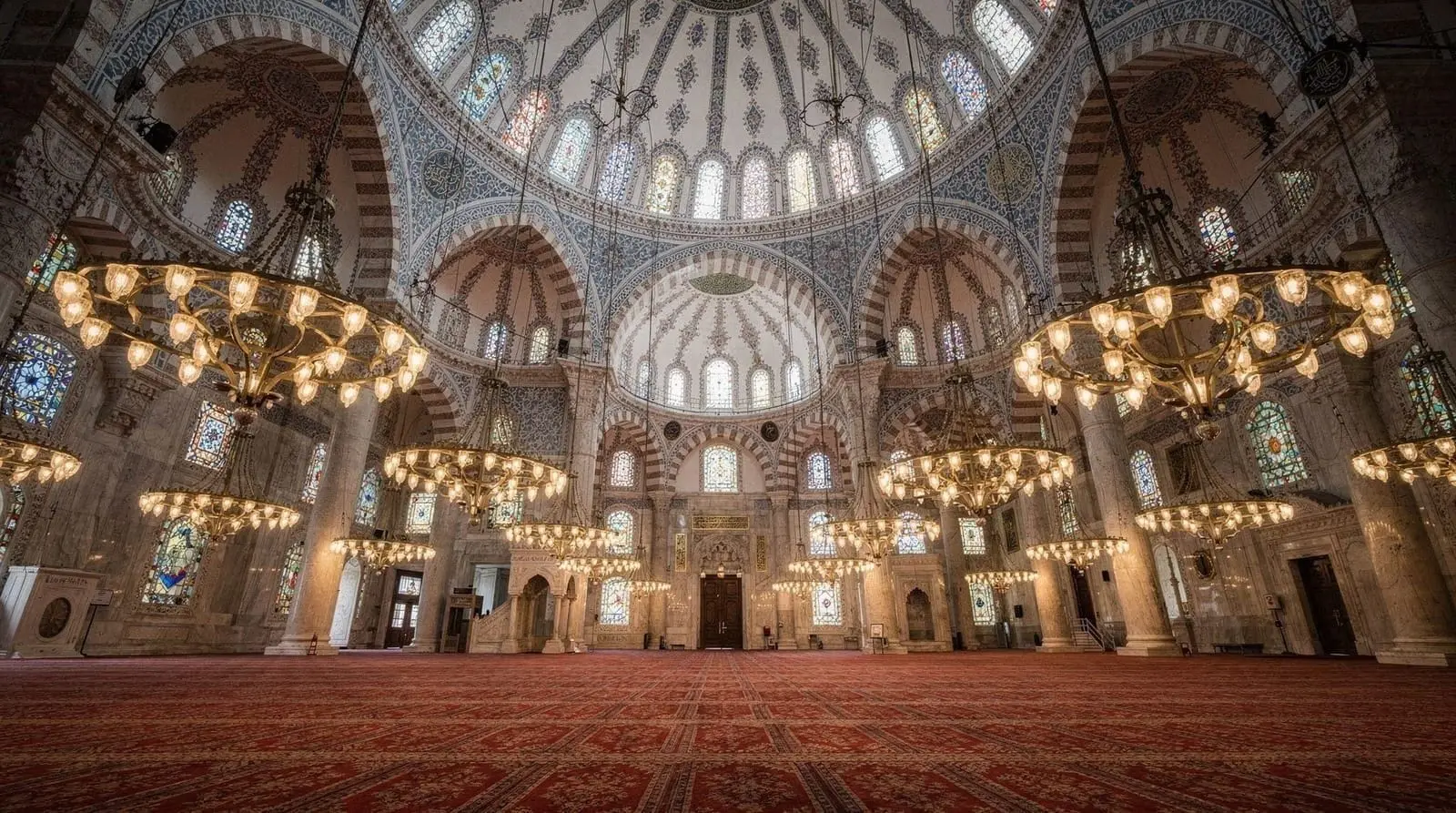
Süleymaniye Mosque visiting guide — the masterwork of Mimar Sinan
Istanbul: Suleymaniye Mosque Guided Tour
Is the Süleymaniye Mosque better than the Blue Mosque?
Architecturally, most specialists consider Süleymaniye superior — more precise proportions, better integration of light, and a more resolved interior space. It is also free, less crowded, and has a remarkable terrace view over the Golden Horn. The Blue Mosque is more photographed and better located for the tourist circuit; Süleymaniye requires a short walk but rewards it significantly.
Sinan’s masterwork in Istanbul
Mimar Sinan (c.1490–1588) is the greatest architect of the Ottoman Empire and one of the most prolific architects in history: over 370 buildings commissioned in a career spanning more than 50 years as chief imperial architect. The Süleymaniye Mosque, built between 1550 and 1557 for Sultan Süleyman the Magnificent, was his major statement of the early career — the building where he first fully demonstrated the structural and spatial innovations that defined Ottoman mosque architecture.
| Where | Third Hill, ~10 min walk uphill from the Grand Bazaar |
| Cost | Free |
| Time needed | 45-60 minutes, longer with the tombs and terrace |
| Best time | Late afternoon for terrace light; avoid Friday midday |
| Dress | Covered shoulders/knees, headscarf for women, shoes off |
The Süleymaniye is not Sinan’s masterpiece — he later described the Selimiye Mosque in Edirne (1574) as his own greatest work, a statement with which most architectural historians agree. But the Selimiye is in Edirne, 230 kilometres away. The Süleymaniye is five minutes from the Grand Bazaar, free to enter, and in most respects more impressive than the Blue Mosque across town.
Architecture: what Sinan solved
The central problem of large Ottoman mosque design was structural: how to span the widest possible floor space with the highest possible dome, with columns or piers as far apart as possible (to maximise open floor space for prayer), without the structure collapsing under the dome’s lateral thrust.
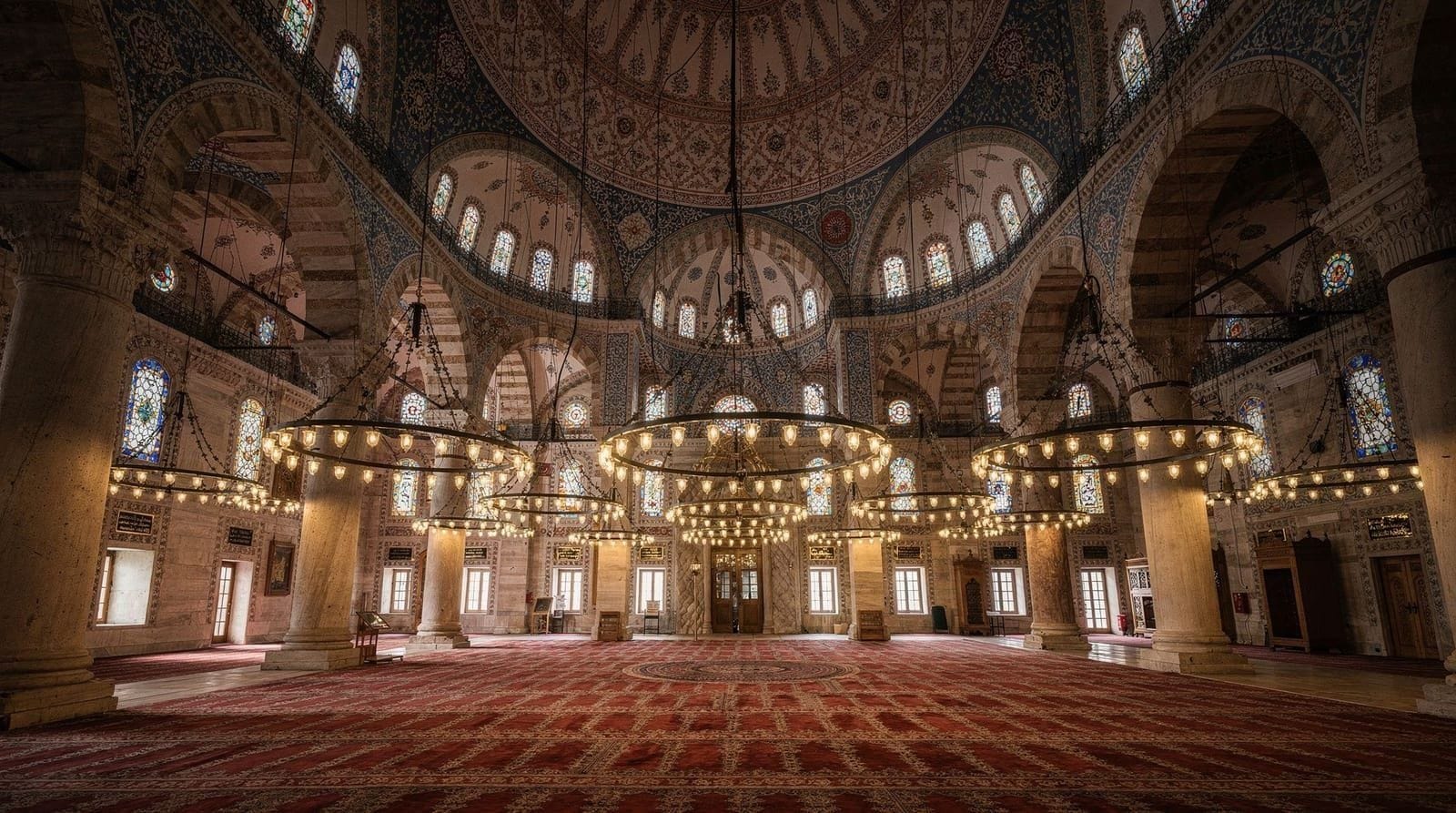
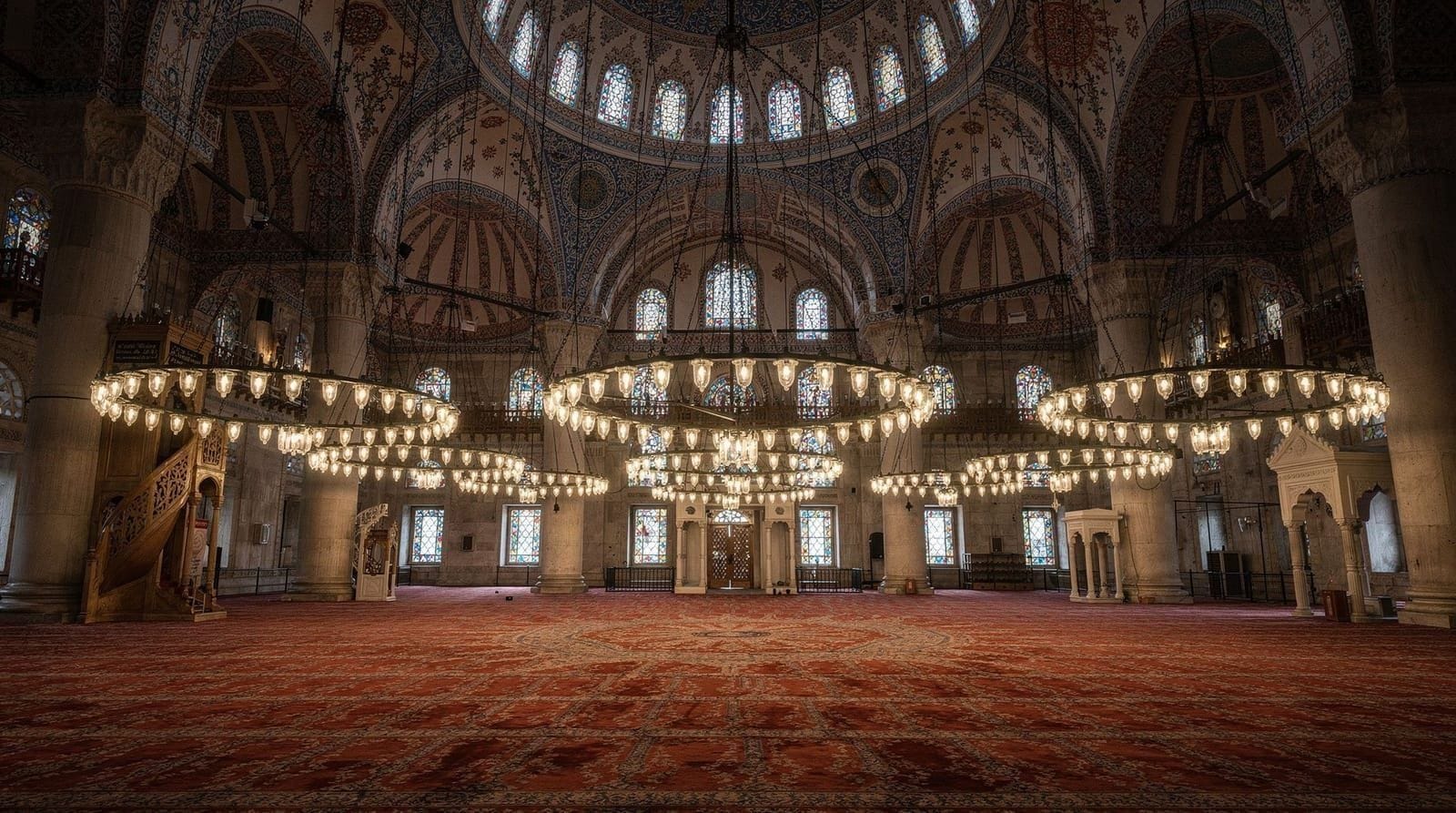
Sinan’s solution at the Süleymaniye uses a modified version of the Hagia Sophia’s structural system — a central dome supported by two half-domes on the east-west axis, with the lateral thrust transferred via the arches to massive abutments inside the walls. The result is a 53-metre-high central dome (slightly lower than Hagia Sophia’s 55 metres) supported by four massive columns 24 metres apart, with an open, clear floor space of extraordinary spatial quality.
The key achievement is the quality of light. The lower walls of the mosque have over 200 windows at various levels. The upper dome has a ring of windows at its base. The lighting is graduated and even — the interior never feels dark or oppressive. Sinan is reported to have said that the light in the Süleymaniye was the element he was proudest of.
What to see inside
The interior space: arrive and simply stand still for a moment. The scale is the first impression — the dome at 53 metres is vast. The proportions of height to width and the quality of the light are the things to notice rather than individual decorative elements.
The Iznik tiles: used sparingly in the mihrab area and the windows. Sinan used fewer tiles than later mosque builders (the Blue Mosque has 20,000; the Süleymaniye is much more restrained), which means the tiles that are used — in the four Iznik glass windows flanking the mihrab — stand out with particular clarity.
The stained glass: the lower windows contain exceptional 16th-century work by the master glazier Ibrahim the Drunkard (İbrahim Sarhoş). The blue and red glass in the lower windows is particularly good.
The marble: the mihrab and mimber are carved white marble of high quality. The floor is the original 16th-century marble, worn smooth.
The calligraphy: the inscriptions in the dome arches and the mimber are by Ahmed Karahisari, the finest calligrapher of the period.
The outer terrace and the Golden Horn view
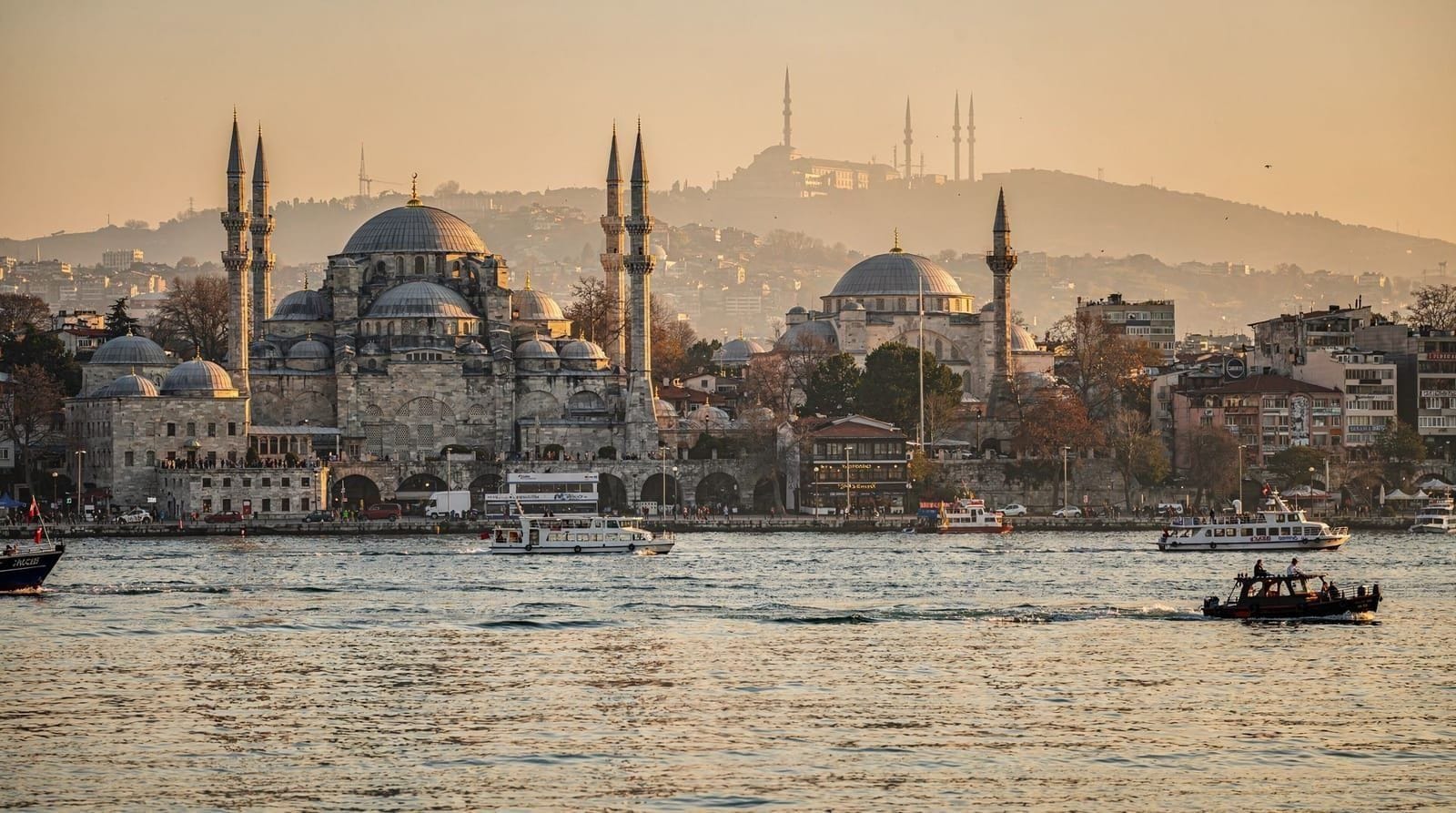
The outer garden and terrace on the southern side of the mosque complex, accessible from the mosque grounds, gives one of the best views in Istanbul: the Golden Horn, the Galata Tower, the Beyoğlu skyline, and the Karaköy waterfront visible from above. This view costs nothing and is rarely crowded.
The terrace is at its best in late afternoon, when the light catches the Galata Tower and the water below. See Istanbul highlights.
The mausolea (türbeler)
The tomb of Süleyman the Magnificent is in the garden at the south end of the mosque — the octagonal domed türbe is one of the finest Ottoman mausolea, covered inside in superb Iznik tiles. Süleyman died on campaign in Hungary in 1566; he asked to be brought back to Istanbul to rest near his mosque.
Adjacent is the tomb of Hürrem Sultan (Roxelana) — Süleyman’s wife and the most politically powerful woman in Ottoman history. She converted from concubine to legal wife (unusual in Ottoman court tradition) and is credited with significant political influence over Süleyman’s reign. The two tombs and their story are worth time.
A licensed guided tour of the Süleymaniye Mosque contextualises the architecture, the Sinan tradition, and the Süleyman-Hürrem story in ways that significantly enhance the visit.
The külliye complex
The mosque was the centrepiece of a larger social complex (külliye) commissioned by Süleyman. The surviving components include:
Medreseler (theological schools): four medreses line the streets south of the mosque. Now used as research centres and storage.
Darüşşifa (hospital): the Ottoman hospital attached to the complex was one of the most advanced medical institutions of its era, treating physical and mental illness. The building survives.
Türbe garden: in addition to Süleyman and Hürrem, the garden contains the tombstones of other notable figures, including Mimar Sinan himself (his tomb is in a small türbe at the corner of the outer wall — modest and almost hidden, which was apparently his preference).
The hammam: the Mimar Sinan Hamamı on the street south of the mosque was designed by Sinan for the complex. It operates as a commercial hammam today.
How to get there
Walk north from the Grand Bazaar’s Nuruosmaniye Gate approximately 10 minutes up the hill. Follow signs for Süleymaniye Camii. Alternatively: Tram T1 to Laleli-Üniversite stop, walk uphill 15 minutes. From Eminönü waterfront: walk uphill 15 minutes along Ordu Caddesi.
See Süleymaniye Mosque for a map.
How the Süleymaniye compares to Istanbul’s other major mosques
Visitors often plan mosque visits as a set, and it’s worth knowing how the Süleymaniye fits with the others:
| Süleymaniye | Blue Mosque | Hagia Sophia | |
|---|---|---|---|
| Entry | Free | Free | Free |
| Crowds | Low | High | Very high |
| Architecture | Most technically refined (specialist consensus) | Most ornate, most tile work | Byzantine origin, unique history |
| Best feature | Light, proportion, Golden Horn terrace | Blue Iznik tiles, scale | 1,500-year layered history |
| Location | 10 min uphill from Grand Bazaar | Central Sultanahmet | Central Sultanahmet |
The full Hagia Sophia visiting guide and the head-to-head Hagia Sophia vs Blue Mosque comparison cover those two directly. For a fourth option beyond the “big three,” the Süleymaniye’s proximity to the Grand Bazaar makes it easy to combine with a shopping stop at the Grand Bazaar on the same outing. See also the best mosques in Istanbul for the fuller ranked list and free mosques in Istanbul for the broader free-to-visit picture — nearly all functioning mosques share that in common with the Süleymaniye.
Mosque etiquette specific to the Süleymaniye
The general rules covered in the mosque etiquette guide apply here — modest dress, shoes off, quiet during prayer — but a few things are specific to this mosque. Because it draws far fewer tourists than the Blue Mosque, the atmosphere inside is closer to a working neighbourhood mosque than a monument; visitors should be correspondingly more careful about loud conversation and photography during active prayer times. Headscarves for women are available at the entrance, as at other major mosques, but supply can be more limited than at the Blue Mosque given lower footfall — bringing your own scarf is a safer bet. The tomb garden has its own, slightly separate visiting hours from the main mosque; check both before planning a tight schedule.
The Süleymaniye at different times of day
Morning (9-11:30am): Calmest visiting window, best for unhurried appreciation of the interior light and architecture without service interruptions.
Early afternoon (1:30-3pm): Similarly quiet, good alternative if mornings are booked with other sights, though avoid Friday when the midday prayer draws the week’s largest crowd.
Late afternoon (4-5:30pm): The terrace view over the Golden Horn is at its best in this window, with warmer light catching the Galata Tower and Beyoğlu skyline across the water.
Dusk: Not an official “visiting window” but worth knowing about — the call to prayer from the four minarets, heard from the terrace as the light fades, is one of the more memorable few minutes available to any visitor in Istanbul, whether or not you enter the mosque itself at that exact time.
Building a day around the Süleymaniye
The mosque sits on a hill, and that shapes how a visit works in practice. Most travellers arrive from the lower, busier parts of the old city, so the climb itself is part of the experience: the streets change character as you leave the tourist circuit, and the neighbourhood around the complex feels like a residential quarter with students, tea houses and small workshops. Treat the walk as a feature rather than a chore, and wear shoes you can slip off easily at the door.
A sensible half-day pairs the mosque with the markets below it. Start at the Grand Bazaar before the crowds build, walk up to the Süleymaniye for a quiet interior visit, then drop down towards the waterfront and the Spice Bazaar. If you prefer to keep the market for later, the bargaining in the bazaar guide is worth reading before you go in. That order means you do the physically demanding uphill section while you are fresh, and finish downhill with food in mind.
For a fuller day, the mosque works as the northern anchor of an old-city loop that also takes in Sultanahmet, the Hagia Sophia and the Blue Mosque. If you are still deciding how to spread your sights, the Istanbul in one day and Istanbul in two days plans show where a mosque visit like this one fits without rushing. If you would rather have the three great mosques linked together for you, a guided tour covering all three mosques is a practical way to do the loop with commentary.
Reading the building as you walk through it
Many visitors step inside, take a photograph of the dome and leave within minutes. The Süleymaniye rewards a slower approach, and a few habits make the difference.
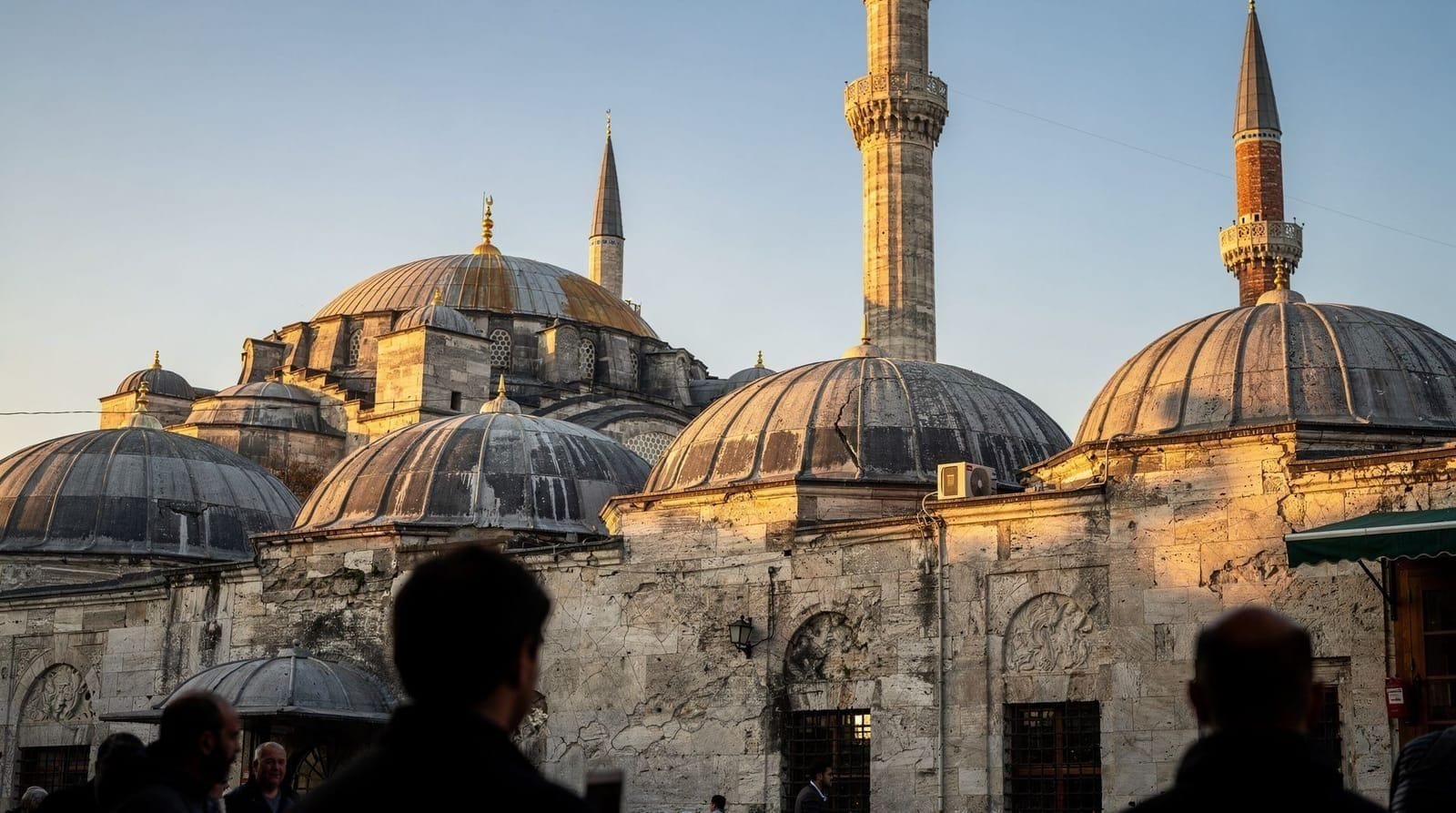
Begin in the courtyard before you enter. The forecourt gives you a sense of the proportions Sinan was working with, and the arcade around it prepares the eye for the larger space inside. Notice how the minarets frame the entrance and how the whole composition steps upward towards the dome. Understanding that rising silhouette helps you read the interior afterwards.
Once inside, sit rather than wander. The carpeted floor is meant to be used, and visitors who take a few minutes to sit quietly along the edge, away from the prayer rows, usually notice things that standing tourists miss: how the light shifts as clouds pass, how the sound softens beneath the dome, how the eye is drawn from the lower windows up to the central space. If prayer is under way, stay at the back and keep still.
Then compare. If you have already seen the Blue Mosque, look at what the Süleymaniye does differently. There is less colour and less surface decoration, and the effect comes from structure and light instead. The Hagia Sophia vs Blue Mosque comparison is a useful companion for thinking about what each building is trying to achieve, and the Istanbul architecture guide places Sinan’s work in the longer story of the city’s domed buildings.
Context that deepens the visit
The Süleymaniye is easier to appreciate when you know where it sits in the city’s history. It belongs to the great age of Ottoman imperial building, when the capital was being reshaped by monumental mosques and their surrounding institutions. The Ottoman Istanbul guide and the Istanbul history overview give that background, and the Byzantine Istanbul guide explains what Sinan and his patron were measuring themselves against.
It also helps to think of the complex as a working piece of urban planning rather than a single building. The idea of a mosque surrounded by schools, a hospital, a kitchen and a bath is a very Ottoman one, and recognising that logic turns the walk around the outer streets into a small lesson in how a city cared for its people. If you enjoy that angle, the Eyüp Sultan Mosque guide and the New Mosque in Eminönü guide show other chapters of the same tradition, and the Turkish Islamic Arts Museum guide adds the decorative and material side.
Practical habits that make the visit smoother
Carry a small bag for your shoes, because the shoe racks near the entrance can be busy and it is easier to keep your footwear with you. Dress for the whole outing rather than only for the mosque: layers that cover shoulders and knees are comfortable for the climb and appropriate once you arrive. Keep your phone on silent, and keep photographs discreet and respectful of anyone praying.
Check the day before you go whether it falls in a season that changes the rhythm of the city. The Ramadan in Istanbul guide explains how mosque visits and daily life shift during that month, and the best time to visit Istanbul guide helps you choose weather that suits a hillside walk. If you are travelling with a limited budget, the free things to do in Istanbul guide shows how well this visit pairs with other no-cost sights, and getting around Istanbul covers the transport options for reaching the old city.
Frequently asked questions about Süleymaniye Mosque visiting guide — the masterwork of Mimar Sinan
Is Süleymaniye Mosque free to visit?
Who designed the Süleymaniye Mosque?
Who is buried at the Süleymaniye Mosque?
What is the Süleymaniye complex?
How do I get to the Süleymaniye Mosque?
What are the opening hours?
Top experiences
Bookable activities with verified prices and instant confirmation on GetYourGuide.