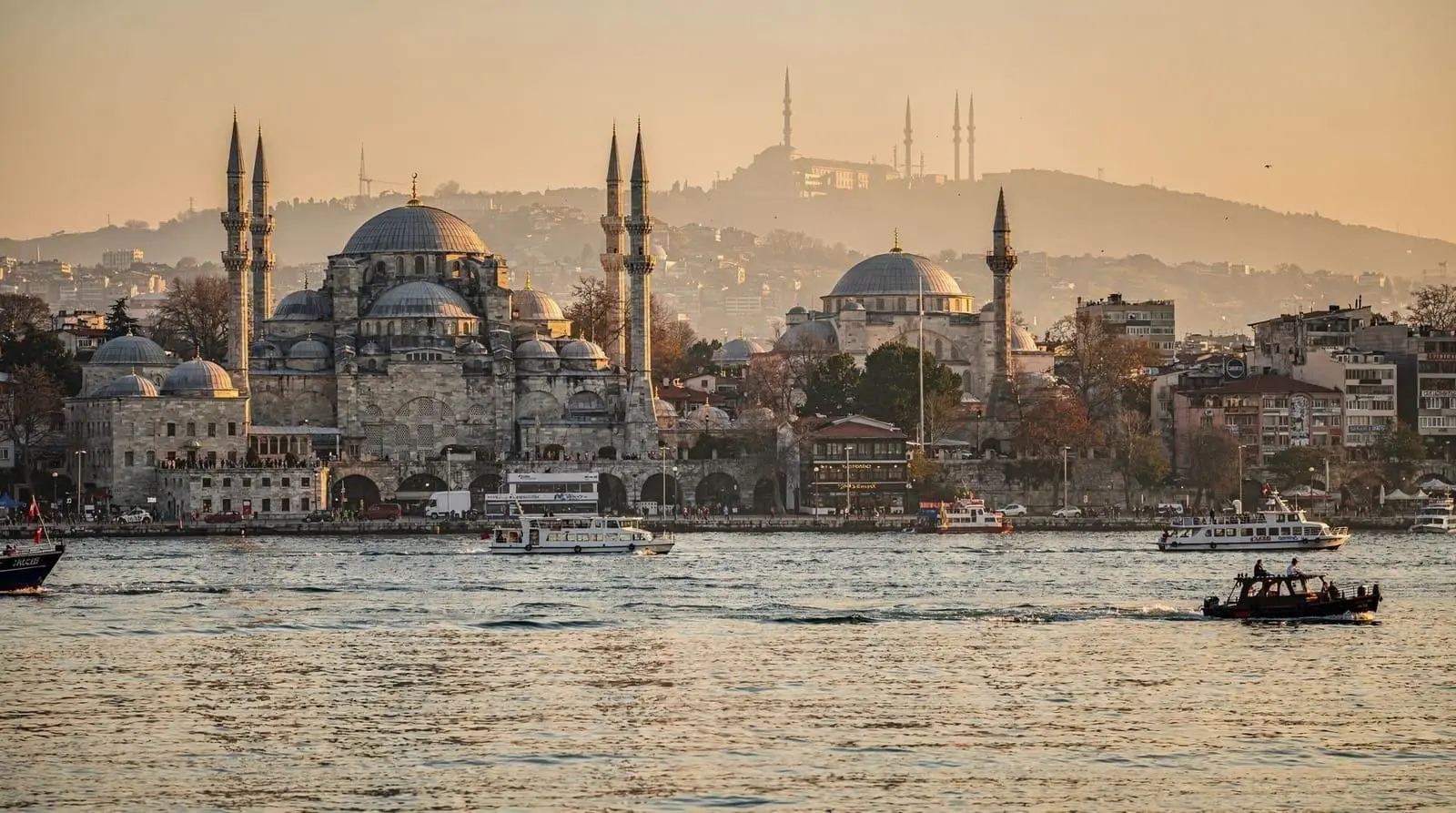
Hagia Sophia visiting guide — tickets, timing, and what to see
Istanbul: Hagia Sophia Skip-the-Line Ticket & Museum Option
What do I need to know before visiting Hagia Sophia?
Hagia Sophia is now a functioning mosque. Entry rules and ticket prices for visitors are set by the Ministry of Culture and Tourism and change, so check the current rules and price on the official site (muze.gov.tr) before going. Dress modestly; women need a head covering inside. Arrive at 9 am opening to avoid peak crowds.
What makes Hagia Sophia different from any other building
In 537 CE, when Emperor Justinian I inaugurated the newly completed Hagia Sophia, he reportedly said “Solomon, I have surpassed you” — a reference to the Temple of Jerusalem. This was not false modesty. The building had a dome that was technically impossible by the standards of the time, an interior space that dwarfed any preceding structure, and a spatial quality that no subsequent building has quite replicated.
| Where | Sultanahmet, old city |
| Cost | Check current rules and price on muze.gov.tr |
| Time needed | 30-45 min main hall only, 75-90 min with upper gallery |
| Getting there | Tram T1 to Sultanahmet stop, short walk |
| Best time | 9 am opening, before the 10:30 am crowd surge |
It was the world’s largest cathedral for nearly 1,000 years. In 1453, when Mehmed II entered the conquered city, the first thing he did was ride to Hagia Sophia and convert it to a mosque. For 481 years it functioned as one. In 1934 Atatürk converted it to a secular museum. In 2020 it became a mosque again.
The layered nature of the building — the Byzantine mosaics partially covered by Ottoman renovations, the Christian architecture housing Islamic prayer, the 1,500-year span between the original construction and the present day — is what makes Hagia Sophia genuinely unlike anywhere else.
Entry and tickets
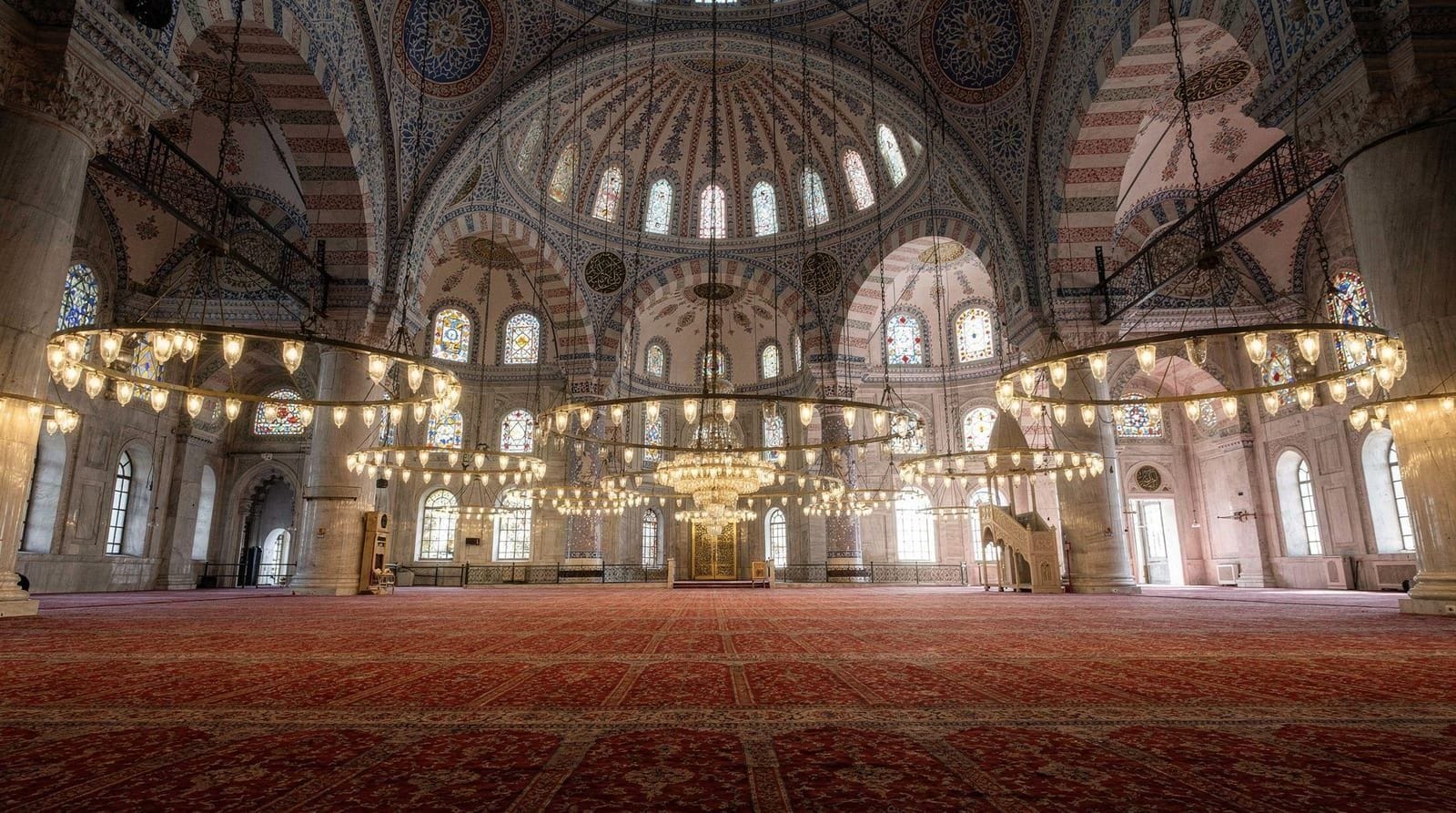
You enter from the main door (south entrance if you are arriving from the Hippodrome side), remove your shoes, and are in the central nave. The dome, the great chandeliers, the Ottoman medallions, and the basic scale of the space are all visible from there.
The upper gallery (accessible via a ramp in the northwest corner) is where the most significant Byzantine mosaics survive:
- Deësis mosaic: south gallery, upper floor. An approximately 13th-century mosaic showing Christ flanked by the Virgin Mary and John the Baptist. The gold background is nearly intact; the faces are remarkably expressive for Byzantine art.
- Empress Zoe mosaic: also south gallery. Zoe, one of only three women to rule Byzantium as empress in her own right, is depicted with Christ and her third husband Constantine IX Monomachos.
- Comnenus mosaic: nearby, showing Emperor John II Comnenus, the Empress Eirene, and the Virgin Mary.
Entry rules and ticket prices for visitors are set by the Ministry of Culture and Tourism and change, so check the current rules and price on the official site (muze.gov.tr) before going. You can also book via a tour operator to avoid the ticket queue.
A skip-the-line ticket with museum access handles the booking and queue management. Worth it in peak season when the ticket line alone can be 30–45 minutes.
The architecture: what to look for
The dome: 31.24 metres in diameter, 55.6 metres above the floor. It sits on four massive piers and transitions to a ring of 40 arched windows at the base — on a sunny day, the light entering through these windows creates a floating effect that prompted the Byzantine historian Procopius to describe the dome as “suspended from heaven by a golden chain.” The current dome is a partially rebuilt version; the original collapsed in 558 CE and was rebuilt slightly higher by Justinian’s architects Isidore the Younger.
The exedrae: semi-circular spaces flanking the central nave on the east and west. These extend the sense of space and allow light from different angles. The eastern exedra contains the mihrab (prayer niche indicating the direction of Mecca, facing slightly away from the building’s Christian east axis).
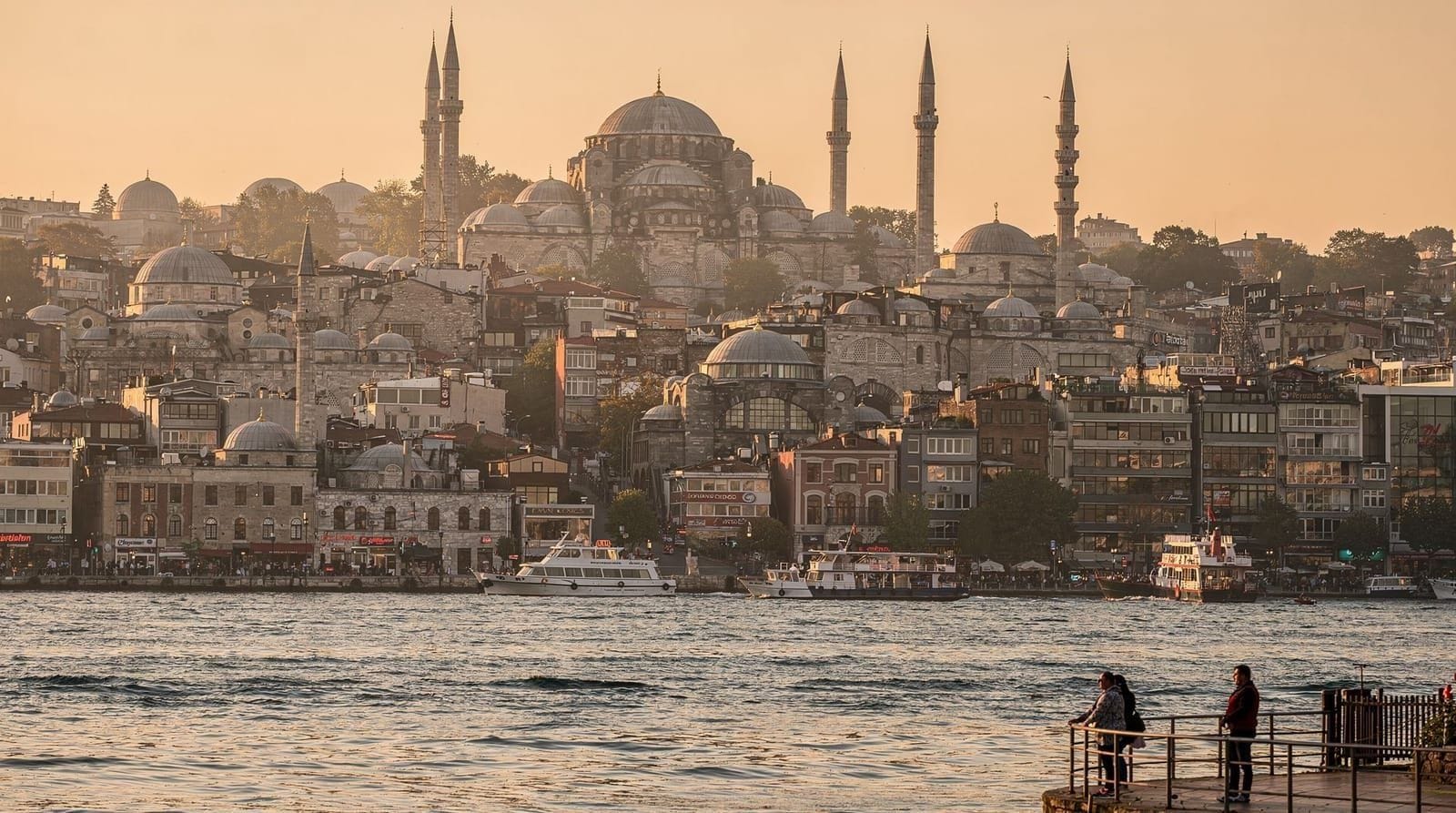
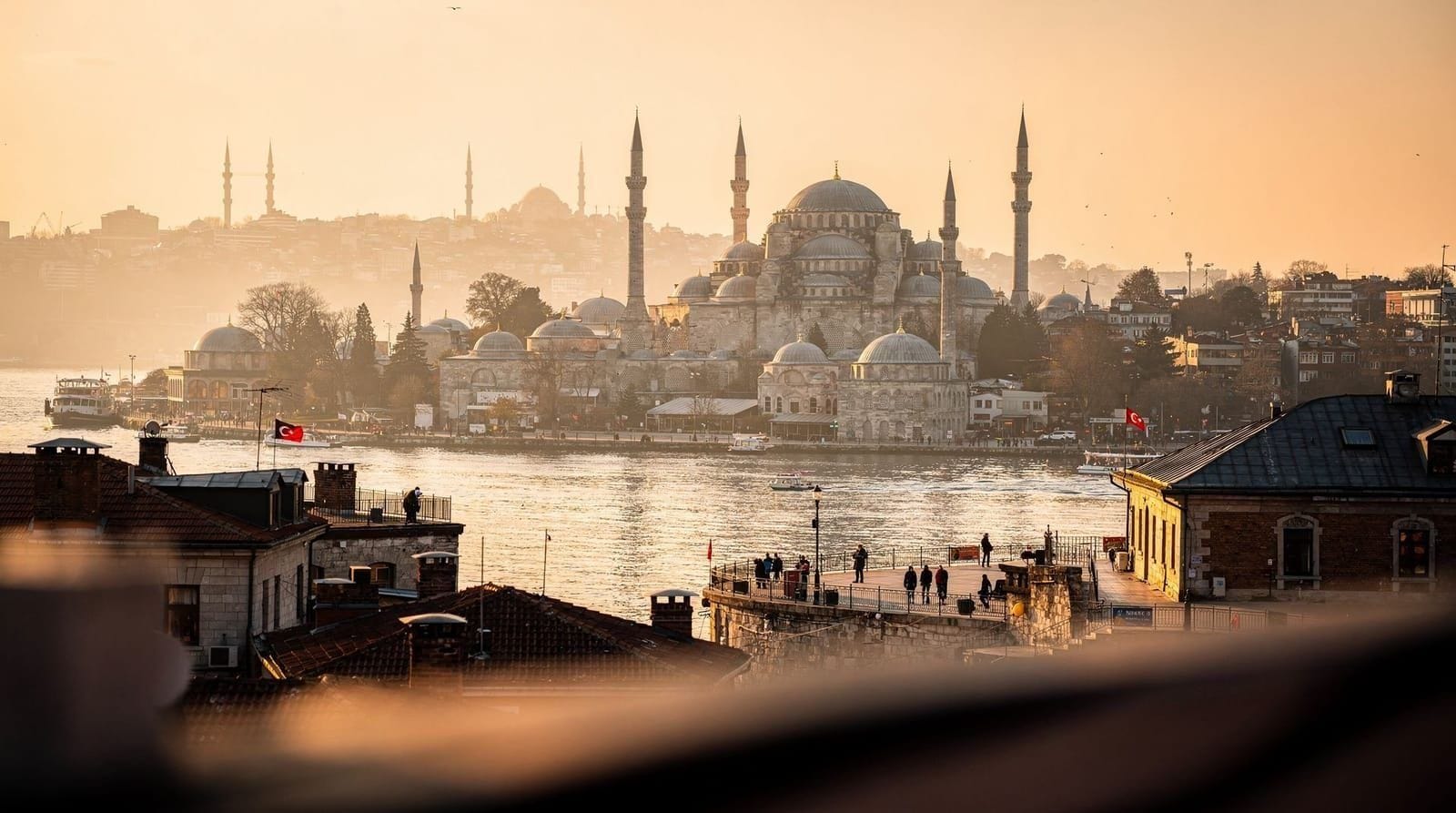
The Ottoman additions: the four minarets (added between 1453 and the late 16th century, the final one in 1588), the large wooden ramp in the southwest corner, the mimber (pulpit), and the Ottoman medallions. The medallions, added in the 19th century and rehung in 2020, are calligraphic discs 7.5 metres in diameter bearing the names of Allah, Muhammad, and the first four Caliphs.
The Byzantine remnants: the marble floor panels, still largely original to Justinian’s period, worn smooth by 1,500 years of visitors. The column capitals in the galleries with their pierced decoration (a Byzantine stonecutting technique). The remains of Justinian’s mosaic programme in the apse — a gold-background image of the Virgin Mary with the Christ child, visible from the main floor.
The upper gallery: in the Byzantine period, the upper gallery (or “gynaikonitis”) was reserved for women and for important ecclesiastical ceremonies. The imperial loge (the VIP box, effectively) where the empress and her retinue sat is marked by a green marble disc set into the floor.
Getting in: the practical steps
- Check the rules and book: check current entry rules and ticket prices on the official site (muze.gov.tr), or book through a GYG tour operator.
- Dress code: shoulders and knees covered, all genders. Women cover hair with a scarf inside the prayer area (provided at the entrance; bring your own for comfort). Remove shoes (cloth bags are provided for carrying them).
- Arrive early: 9 am opening, ideally. By 10 am the main hall is crowded.
- Enter from the south (facing the Hippodrome) for the main entrance. The upper gallery ramp is inside the northwest corner.
- Avoid prayer times: the mosque closes to tourists for approximately 20–30 minutes for each of the five daily prayers.
See Hagia Sophia for complete logistics including location map and transport directions. If you are still deciding whether to prioritise Hagia Sophia over the Blue Mosque, the dedicated Hagia Sophia vs Blue Mosque comparison breaks down the differences directly.
Photography inside
Photography is generally permitted in the main hall and upper gallery, without flash and without tripods, which are not allowed. During active prayer times, photography in the prayer hall is discouraged out of respect for worshippers — put the camera away and simply observe if you are inside during a call to prayer. The best light for photographing the dome and windows is mid-morning, when direct sun angles through the upper ring of windows.
How to pace the visit once you are inside
Most visitors walk in, look straight up, and then drift along the walls without a plan. A little structure makes the hour much better. Start in the centre of the nave and simply stand still for a few minutes: let your eyes adjust to the light, then take in the dome, the semi-domes and the hanging calligraphic discs in turn. Only then start moving. Walk the perimeter slowly, looking at the floor, the columns and the marble panels, since these are among the oldest surfaces in the building.
If you have access to the gallery, head up to the gallery before the crowds thicken and give the mosaics unhurried time. The south gallery is where the best-known panels are, and they reward close looking: the faces, the gold background and the way the figures are arranged all say a lot about how Byzantine artists wanted worshippers to feel. Come back down afterwards and look at the nave once more from the floor. The same space reads differently after you have seen it from above, and the contrast between the Byzantine mosaics and the Ottoman calligraphy becomes much easier to appreciate.
Visiting with children or older relatives
The building is large and the floor is carpeted, so there is plenty of room to move around, but the experience is quiet and slow. Children usually do better if you give them something to find: the dome windows, the green marble disc, the gold of the mosaics. For older relatives, the ramp up to the gallery is the main thing to think about, so decide in advance whether the upper level is realistic for them. More ideas for travelling as a family are in Istanbul with kids, and the family itinerary shows how to fit the old city into a day that does not wear anyone out.
Guided tours: a genuine recommendation
For a site this historically layered, a licensed guide earns their fee. The relationship between the building’s Byzantine and Ottoman periods is not intuitive from looking at the architecture, and a guide who can explain what is original versus added, what was covered versus revealed, and why specific design choices were made makes the visit significantly richer.
A guided tour with skip-the-line entry combines the logistics benefit (no queuing) with a licensed guide for the historical content. Smaller group tours give better access to the guide’s time.
Combining Hagia Sophia with nearby sites
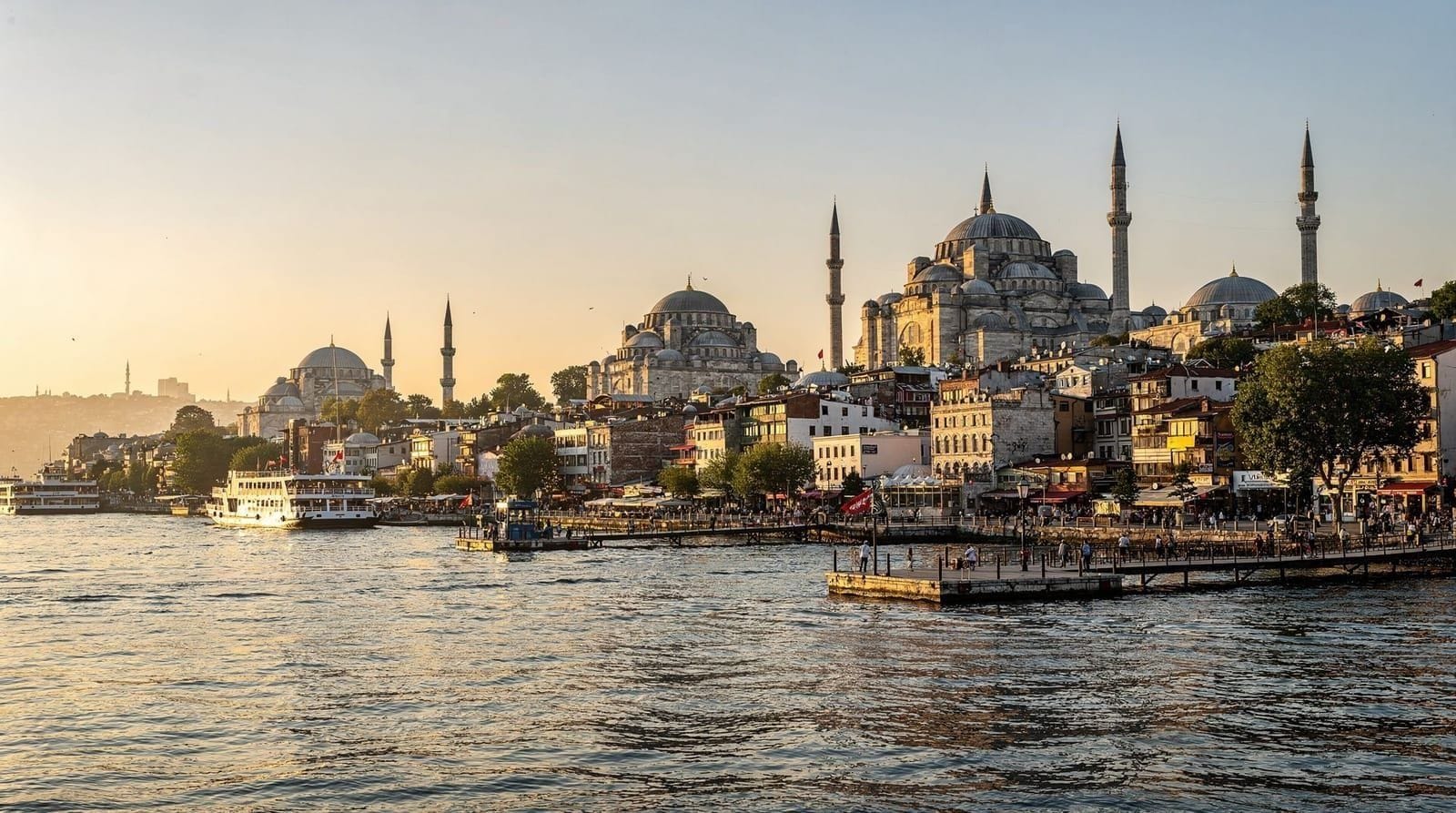
The Sultanahmet cluster — Hagia Sophia, Blue Mosque, Basilica Cistern, Hippodrome — is within a 10-minute walk radius. A logical half-day: Hagia Sophia first (9 am, with the upper gallery, 75 minutes), Basilica Cistern next (10:30 am, 45–60 minutes), Blue Mosque (late morning, free), Hippodrome monuments, lunch.
For Topkapı, add another half-day; it is a 5-minute walk from Hagia Sophia through its own garden. The combination of Hagia Sophia, Basilica Cistern, and Topkapı represents the core of the old city visit. See Istanbul in 3 days.
For a comparison of Hagia Sophia and the Blue Mosque, see Comparisons. If you have more time and want the fuller old-city picture, the top things to do in Istanbul guide sets Hagia Sophia in context alongside the rest of the must-see list, and Istanbul for first-timers has a wider planning framework for a first visit.
Where to go after Hagia Sophia
The old city rewards a slow day. After the interior, the neighbouring Basilica Cistern offers a very different atmosphere, dim and quiet, which makes a good change after the scale of the nave. The Blue Mosque visiting guide explains how to approach that building, and the Topkapı Palace guide covers the palace that sits just beyond Hagia Sophia’s garden. To understand how the city got from one era to the next, the Byzantine Istanbul guide and the Ottoman Istanbul guide are useful companions, and the mosque etiquette guide is worth a read before you go inside any active place of worship.
If you are working out what is worth your time and what is not, the Istanbul museum pass guide is a sensible next step, since pass rules change and it is better to check them before you buy rather than at the ticket window.
A quick timeline
| Year | Event |
|---|---|
| 537 | Justinian’s Hagia Sophia completed, world’s largest cathedral |
| 1453 | Converted to a mosque after the Ottoman conquest |
| 1934 | Secularised into a museum under Atatürk |
| 2020 | Reconverted to an active mosque |
What does not need saying but usually is
Hagia Sophia has been at the centre of political controversies since 2020. Visitors will have their own views on the conversion back to a mosque. What is empirically true: the physical building is intact, the Byzantine mosaics are preserved and accessible (some are covered during prayers by curtains or lighting, not permanently), and the site remains fully visitable. The UNESCO World Heritage designation covers the building regardless of its current use.
Practically, this means visitors of any faith or none are welcome outside prayer times, provided they follow the dress code and behave with the same quiet respect expected in any active place of worship. Non-Muslim visitors are not expected to participate in prayer, only to be unobtrusive if a prayer is called while they are inside. If the political history interests you further, a knowledgeable guide is a better source than online debate — ask about it directly during a guided visit rather than forming an opinion from headlines alone.
Preparing before you arrive
A few small choices make the visit smoother. Wear shoes that are easy to slip on and off, since you will be carrying them in a bag for the whole visit. Keep your belongings light, because you will be standing and walking on carpet for a while, and a heavy bag becomes tiresome quickly. Check the prayer schedule on the day, because it shapes when you can enter, and allow some flexibility in your plans so that a closure does not throw the rest of your morning off.
It also helps to read a little background in advance. Knowing the broad story of the building, from cathedral to mosque to museum and back to mosque, lets you spot the layers for yourself instead of relying entirely on a guide. Take a moment to think about what you most want to see, whether that is the dome, the mosaics or the calligraphy, and spend your time there rather than trying to take in everything at the same pace.
Frequently asked questions about Hagia Sophia visiting guide — tickets, timing, and what to see
How much does it cost to visit Hagia Sophia?
What is the current status of Hagia Sophia?
How long should I spend at Hagia Sophia?
What are the best mosaics to look for?
Can I visit during prayer times?
What is the best time of day to visit?
Is it worth paying for a guided tour?
What should I expect from the interior?
Top experiences
Bookable activities with verified prices and instant confirmation on GetYourGuide.