Topkapı Palace visiting guide — tickets, Harem, and what not to miss
Istanbul: Topkapi Palace & Harem Skip-the-Line Access & Audio Guide
How do I visit Topkapı Palace and what does it cost?
Topkapı Palace costs ~750 TRY (~22 USD) for the main complex; the Harem is a separate ~350 TRY (~10 USD). Both sell out in peak season — book online. Budget 3–4 hours for the main palace and Harem combined. The treasury (second courtyard) and the Harem are the essential sections; the kitchen buildings and arms collections can be skipped if time is short.
| Where | Sultanahmet peninsula, 5-minute walk from Hagia Sophia |
| Cost | ~750 TRY (~22 USD) main palace; Harem ~350 TRY extra |
| Time needed | 3–4 hours (add ~1 hour for the Harem) |
| Getting there | Tram T1 to Sultanahmet, then 10-minute walk |
| Best time | Opening (9am), before treasury queues build |
The heart of the Ottoman Empire
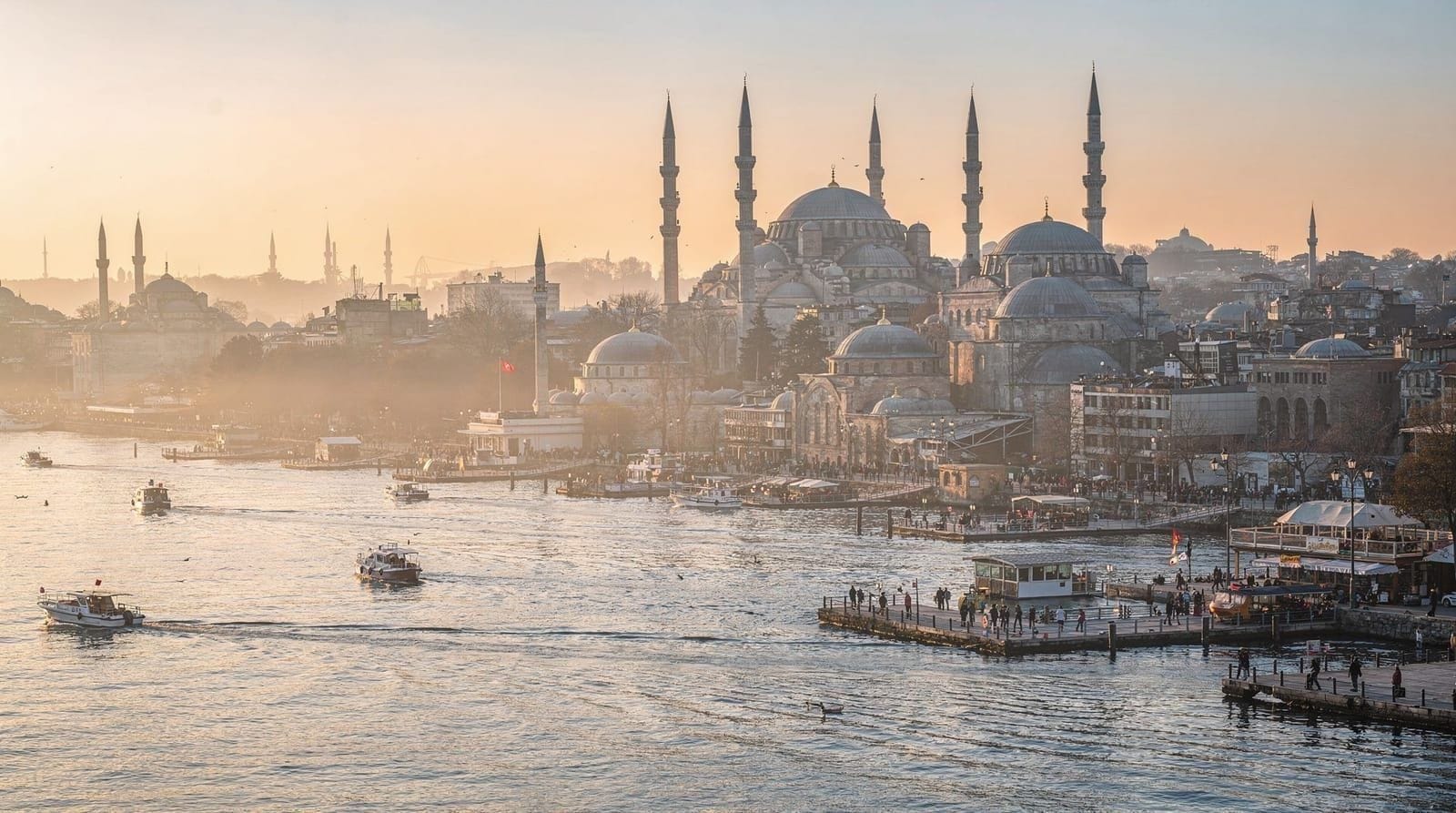
Topkapı Palace (Topkapı Sarayı) was the administrative and residential centre of the Ottoman Empire from the 1460s until 1856, when Sultan Abdülmecid I moved the court to the newly built Dolmabahçe Palace on the Bosphorus. For nearly four centuries, Topkapı was where empires were governed, sultans born and died, and the treasury accumulated. The result is a complex of exceptional scale and historical depth.
Unlike European palaces of comparable importance, Topkapı is not a single imposing building. It is a series of courtyards, each increasingly private as you move toward the inner apartments, with buildings arranged around the perimeter and in between. The logic is architectural and hierarchical: access determined your importance, and the final courtyard was accessible only to the sultan and his household.
Layout and sequence
The palace is organised into four main courtyards:
First courtyard (free to enter — accessible from the street): the outer court, open to the public in the Ottoman period. Contains Hagia Irene (the oldest surviving Byzantine church in the city, now a museum and concert venue; separate entry fee).
Second courtyard: entered through the Imperial Gate (Bab-ı Selam). This is where visitors pay and enter the palace proper. The Divan-ı Hümayun (Council Hall), kitchens (now converted to porcelain and silver exhibitions), and the treasury are here. The queue for the treasury building can be 30–60 minutes.
Third courtyard: the most formal inner court, housing the throne room (Audience Hall), the sultan’s private chambers, the Sacred Relics pavilion (Hırka-ı Saadet), and the library of Ahmed III. The Sacred Relics room contains the Prophet Muhammad’s mantle, sword, and tooth — continuously recited prayers play in the room, creating a distinct atmosphere regardless of your religious background.
Fourth courtyard: the gardens and terraced pavilions where the sultan relaxed. The Revan Kiosk and the Baghdad Pavilion (both 17th century) are here, along with the circumcision room. The terrace looking out over the Bosphorus junction — three seas visible simultaneously on a clear day — is one of the finest views in Istanbul.
The treasury: the Topkapı Dagger and the Spoonmaker’s Diamond
The treasury (Hazine) in the second courtyard is the single most visited building in the palace. The Topkapı Dagger — presented by Sultan Mahmud I to the Shah of Persia and returned when the Shah was assassinated en route — has three large emeralds on its handle and is one of the most recognisable objects in Turkish museums. The Spoonmaker’s Diamond (Kaşıkçı Elması), a pear-shaped 86-carat diamond surrounded by 49 brilliant-cut diamonds, was found by a fisherman (according to legend) and sold for three spoons — hence the name.
Queue management: arrive early and go to the treasury first, before the tour groups build up. By late morning the queue can exceed 45 minutes.
The Harem: a separate experience worth the ticket
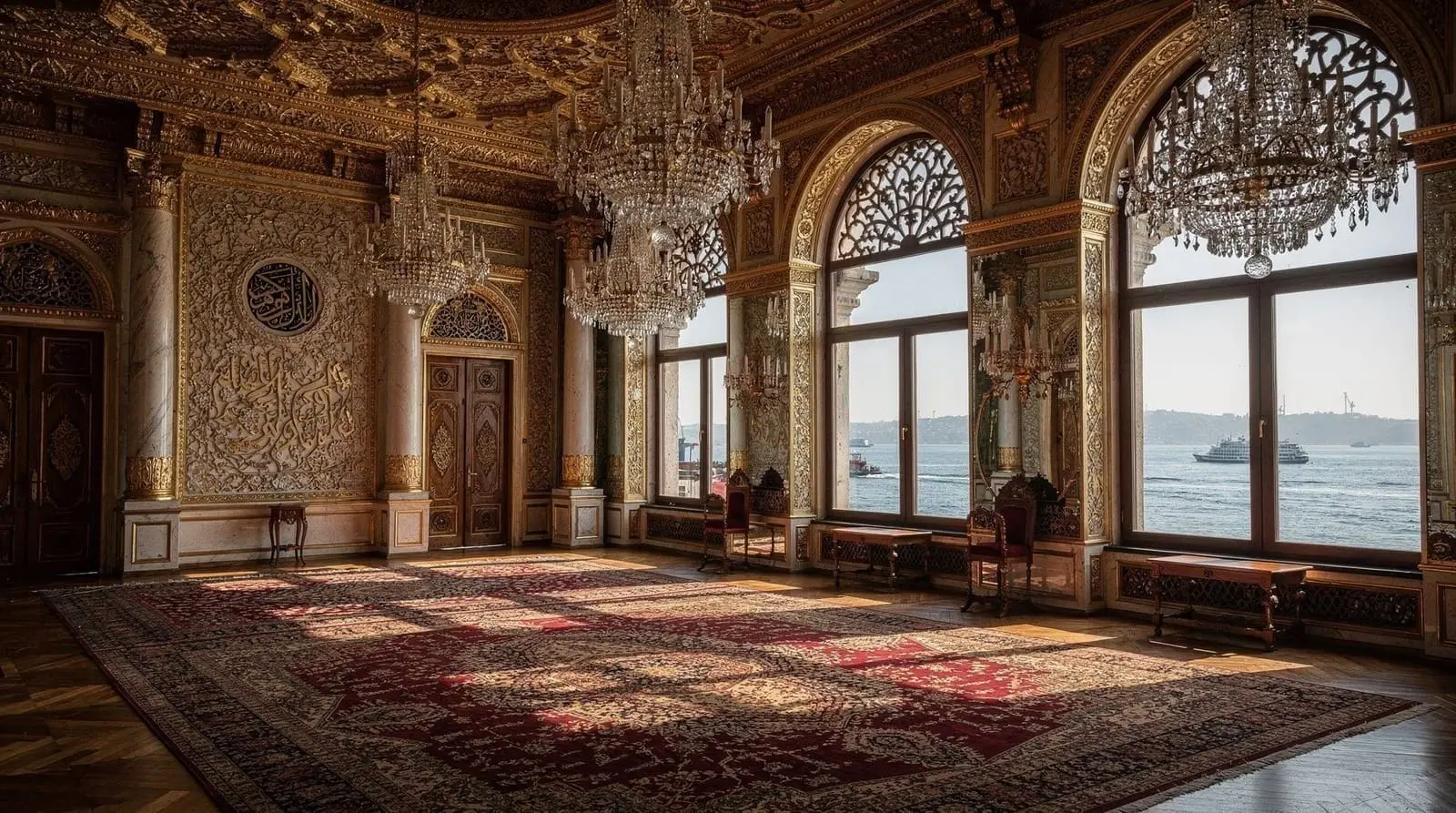
The Harem with audio guide access is genuinely worth the extra ticket. The Harem was the private residential quarter of the sultan, his family, and hundreds of servants, concubines, and officials — essentially a palace within a palace of over 400 rooms.
Access is via guided entry groups (roughly every 30 minutes); your Harem ticket specifies an entry time window. The 40 or so rooms open to visitors include:
- The Valide Sultan’s courtyard and apartments (the sultan’s mother, effectively the most powerful woman in the empire)
- The Sultan’s bathrooms (Murad III’s bath, with exquisite 16th-century Iznik tiles)
- The Imperial Hall, where the sultan received the women of the harem
- The “Cage” (Kafes) — the rooms where princes were confined during their brothers’ reigns, to prevent palace coups
- The private apartments of Murad III and Ahmed I (outstanding painted walls and Iznik tile work)
The Harem tour takes 45–60 minutes. For more detail, see Palaces & mosques.
Logistics and tickets
Main palace: ~750 TRY (~22 USD, mid-2026). Harem: separate ~350 TRY (~10 USD). Hagia Irene: separate fee (check current price).
Both should be booked online in peak season. A guided tour with entry tickets included handles booking for both the palace and Harem and adds a licensed guide. For first-time visitors, having a guide at Topkapı is a significant improvement — the exhibition labelling is inconsistent and the historical context is dense.
Opening hours: generally 9 am–6 pm (last entry 5 pm), closed Tuesdays. Verify current hours; they have changed. The Harem is on its own schedule — check the current entry windows when you book.
Getting there: Topkapı is at the tip of the Sultanahmet peninsula, a 5-minute walk from Hagia Sophia. The main gate (Bab-ı Hümayun) is on Babıhümayun Caddesi. Tram T1 to Sultanahmet, then walk 10 minutes.
Honest assessment: what to skip if pressed for time
The arms and armour collection: extensive but poorly contextualised. Skip unless specifically interested.
The ceramics rooms in the kitchens: the Chinese porcelain collection is historically significant (the Ottomans collected it specifically to test for poison, which was believed to change the colour of the glazes) but the installation does not explain this well. Worth a quick look, not a deep one.
The carriage museum: a separate building on the outer road, rarely visited, not particularly interesting without a specific Ottoman transport history interest.
Priority if short on time: treasury first, then Sacred Relics, then fourth courtyard view, then Harem (if you have time).
For a full Topkapı experience, consider Istanbul in 4 days.
Building Topkapı into your Sultanahmet day
Topkapı sits at the end of the Sultanahmet cluster, which makes it either the natural finish to an old-city day or a full morning on its own, depending on how much time you have. Many first-timers try to combine it with Hagia Sophia on the same day and end up rushing one or the other — as the FAQ above notes, six hours is the realistic minimum for both done properly. If you’re mapping a multi-day old-city plan, see Istanbul in 4 days for how Topkapı, the Harem, and the rest of Sultanahmet fit together without feeling compressed.
For visitors who want the palace and Harem covered together with entry included, a combo ticket bundling Topkapı, Hagia Sophia, and the Basilica Cistern removes the separate booking and queuing for each site individually — useful if you’re trying to fit all three into two days.
Topkapı vs. the other Sultanahmet museums
Topkapı is the largest single time commitment in the old city, so it’s worth knowing how it compares before you allocate a full morning to it.
| Site | Time needed | What it’s best for |
|---|---|---|
| Topkapı Palace (+ Harem) | 3–5 hours | Ottoman court history, the treasury, palace architecture |
| Hagia Sophia | 75–90 minutes | Byzantine and Ottoman religious architecture in one building |
| Turkish and Islamic Arts Museum | 2–3 hours | Carpets, ceramics, and manuscripts, far lighter crowds |
| Archaeological Museums | 1–2 hours | Pre-Ottoman antiquities, sarcophagi, ancient artefacts |
If your time in Sultanahmet is genuinely limited, Topkapı still earns priority over the smaller museums above — nothing else in the old city matches its scale and historical range.
Reading the palace as a story of power
Topkapı makes more sense once you stop treating it as a list of rooms and start reading it as a sequence of thresholds. The Ottoman court used architecture to manage proximity to the sultan. Petitioners and soldiers stayed in the outer spaces, officials of the Divan met in the second courtyard, and only a tiny circle ever reached the third. Walking the courtyards in order, you are retracing that hierarchy, and the way the scale of the buildings shrinks as you go deeper is deliberate. Early on, the palace feels like a small town; further in, it feels like a private house.
This is also why the palace rewards a slower pace than most Istanbul sights. The rooms are not dramatic in the way a cathedral nave or a mosque dome is. Their interest lies in tilework, calligraphy, inlaid shutters, and the small domestic details that show how people actually lived and worked here. Pause in the Council Hall and imagine the viziers deliberating while the sultan, in theory, listened unseen from the window above. That one detail explains a great deal about how power was exercised in this building.
For the wider historical frame, Ottoman Istanbul and the Istanbul history overview give the background that the on-site labels often assume you already have. Reading one of them the evening before makes the visit noticeably richer.
How to pace the visit
A palace this large can exhaust you before you reach the best parts. A few habits help:
- Go to the busiest, most queue-prone space first, then work outward to quieter areas as the day fills up.
- Treat the courtyards as breathing room. Between indoor sections, step outside, sit for a few minutes, and look at the architecture around you rather than rushing to the next doorway.
- Keep the fourth courtyard for the end of the main-palace section, when you want a calm place to sit, look at the water, and let the details settle.
- If you are visiting with children, break the visit into shorter bursts and let them choose one section to explore freely. Our Istanbul with kids guide has more ideas for keeping younger travellers engaged.
Comfortable shoes matter more here than at most museums, because the complex involves a lot of walking on stone and gravel, and you will spend time standing in queues. Bring water, and expect that there are fewer places to sit indoors than you might want.
Etiquette and practical comfort
Topkapı is a museum rather than a place of worship, but the Sacred Relics section is treated with real reverence by many visitors. Keep your voice low, avoid blocking the doorway for photographs, and follow any instruction from the staff about where to stand. If you are unsure about dress, the principles in our mosque etiquette guide are a sensible default for the whole complex: covered shoulders and knees are never out of place, and they make the visit more comfortable when you move between sections.
Photography rules vary from room to room, and they are enforced inconsistently, so look for the signs at each entrance rather than assuming. Where photography is not allowed, you will usually find that putting the phone away makes the experience better, not worse.
Where to eat and what to do afterwards
You will be hungry after several hours on your feet, and the area immediately around the palace is better for sightseeing than for lunch. Walk a little further into the old city and you will find more authentic options. Our guide to where to eat in Istanbul lists places worth planning around, and the best Turkish breakfast guide is useful if you want to fuel up properly before an opening-time start.
After the palace, the best way to decompress is to head downhill toward the water. A ferry ride is a gentle contrast to the formal rooms you have just seen, and our Istanbul ferries guide explains how to use the system. Alternatively, wander toward the Spice Bazaar for colour and noise after the hush of the palace.
Choosing between self-guided and guided
Whether to bring a guide is the main decision visitors face. Going on your own gives you freedom to linger where you like and skip what you don’t, and it costs nothing extra beyond the ticket. A guide gives you context, a logical route through the complex, and someone who knows which rooms are worth the detour. For a first visit, many travellers find the guided option more satisfying precisely because the palace is so sprawling and the labelling so uneven. If you already know the history well, or you prefer to wander at your own pace, the audio-guide route described above is a good middle ground.
If you are still deciding how much of the old city to attempt, the Sultanahmet district page puts all the neighbouring sights on one map, and the Istanbul museum pass guide is worth reading if you plan to visit several paid sites.
Frequently asked questions about Topkapı Palace visiting guide — tickets, Harem, and what not to miss
Do I need separate tickets for Topkapı and the Harem?
How long do I need at Topkapı Palace?
What is the best thing to see in Topkapı Palace?
When was Topkapı Palace built?
What is in the Topkapı treasury?
Is the Topkapı Harem really worth the extra ticket?
Can I visit Hagia Sophia and Topkapı on the same day?
Top experiences
Bookable activities with verified prices and instant confirmation on GetYourGuide.