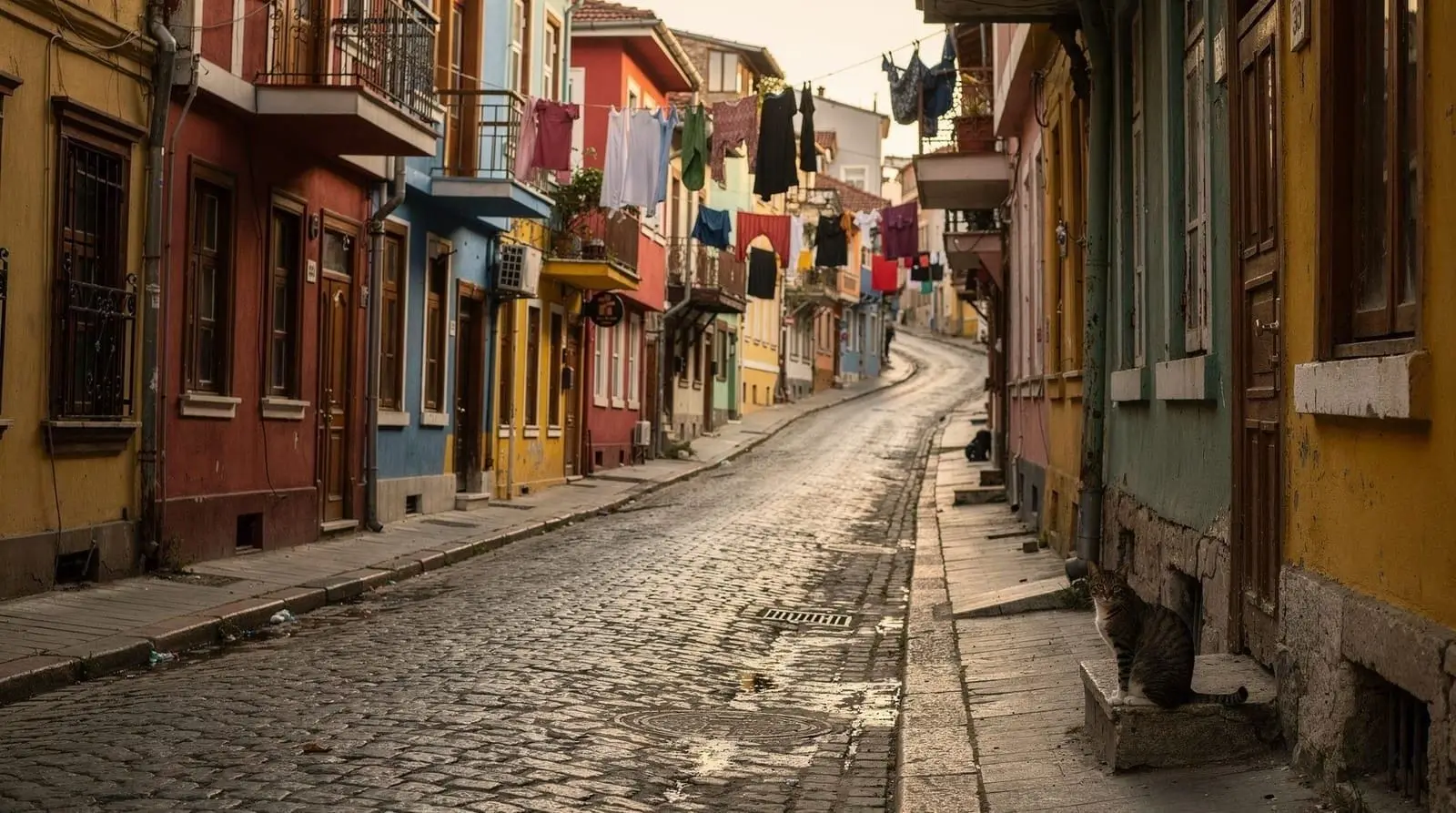
Balat and Fener
Historic Jewish and Greek neighbourhoods on the Golden Horn — colourful painted houses, the Ecumenical Patriarchate, antique shops, and rising
Istanbul: Fener & Balat Guided Tour Through the Colored Streets
Quick facts
- Location
- European shore of the Golden Horn, north of Sultanahmet
- Getting there
- Bus 99 from Eminönü or Unkapanı; walk 35 min from Sultanahmet
- Historical community
- Balat: Sephardic Jewish; Fener: Greek Orthodox
- Patriarchate
- Ecumenical Patriarchate of Constantinople is in Fener
- Character
- Gentrifying but still partially worn — old-city neighbourhood
- Café scene
- Concentrated around Vodina Caddesi and the hillside lanes
What Balat and Fener actually are
| Where | European shore of the Golden Horn, ~5 km north of Sultanahmet |
| Cost | Free to walk; a Turkish breakfast runs around 200–300 TRY for two |
| Time needed | Half a day; a full Golden Horn day if combined with Chora/Kariye |
| Getting there | Bus 99 from Eminönü (~20 min), or 35–45 min on foot |
| Best time | Weekday mornings — weekends bring heavy café and photo crowds |
Balat and Fener are adjacent neighbourhoods on the western Golden Horn shore, roughly 5 kilometres north of Sultanahmet along the coast. Balat was historically Istanbul’s primary Sephardic Jewish neighbourhood — Jews expelled from Spain in 1492 were invited to settle in the Ottoman Empire by Bayezid II, and Balat remained a Jewish community centre through much of the Ottoman period and into the 20th century. Fener (from the Greek word for “lighthouse” — Phanar) was the centre of the Greek Orthodox community in the Ottoman city, housing the Ecumenical Patriarchate, several Greek schools, and the headquarters of the Greek-speaking intellectual class.
Both communities shrank dramatically through the 20th century — the 1942 Varlık Vergisi (Wealth Tax) disproportionately targeted non-Muslim minorities, and the 1955 Istanbul pogroms further accelerated emigration. Today, the Jewish population of Balat is a fraction of its historical size, and the Greek community in Fener is similarly diminished. What remains is the physical fabric of the neighbourhood: the painted wooden houses, the synagogues, the Greek school buildings, and the street pattern.
What has happened more recently is significant gentrification. The colourful house photography that circulates online has made Balat one of Istanbul’s most-visited neighbourhoods for day-trippers, and the café and boutique scene in the hillside lanes has expanded rapidly. The result is a neighbourhood in transition — genuinely interesting historically, progressively more curated in its tourist-facing presentation.
The Ecumenical Patriarchate (Fener)
The Ecumenical Patriarchate of Constantinople (Rum Patrikhanesi) — the oldest Christian institution in the city and the spiritual centre of world Orthodox Christianity — is located on Sancaktar Yokuşu in Fener. The Patriarchate Church of St. George (Aya Yorgi) dates largely from the 19th century (the original church was on the same site from the 10th century onwards), with a sober interior containing important icons and relics including the column of flagellation. The Patriarchate is open to visitors during the day; entry is free.
This is an unusual and often overlooked Istanbul visit: the oldest Christian institution in a city now 98% Muslim, operating continuously in the same neighbourhood for over a millennium, currently led by Patriarch Bartholomew I. The Patriarchate’s position — permitted to exist but legally constrained (the Halki Seminary, the main Orthodox theological school, has been closed since 1971 under Turkish regulations) — gives the visit a particular historical weight.
The Bulgarian Iron Church
The Church of St. Stephen of the Bulgars (Sveti Stefan) stands on the Golden Horn waterfront in Fener — a cast iron structure prefabricated in Vienna in 1898 and assembled on-site, one of only a few pre-fabricated cast-iron churches in the world. The building is remarkable for being entirely made of cast iron, from the exterior walls to the interior columns and decoration. It fell into disrepair for decades and was comprehensively restored in 2018; entry is now reliably possible.
The neighbourhood on foot
The main visual appeal of Balat is the hillside streets above the Golden Horn — painted wooden houses in various states of restoration, steep stairs between lanes, street cats on every corner, and the occasional genuinely old building that hasn’t been renovated at all. The photographic appeal is real; so is the fact that the same lanes can be extremely crowded on weekend afternoons.
Vodina Caddesi and the streets leading off it toward the hill constitute the most active café and boutique zone. Several antique and bric-a-brac dealers operate in the lower streets closer to the Golden Horn waterfront; prices vary from genuinely old Ottoman household objects to imported tourist knick-knacks.
The Balat market (active mainly on weekends) in the main square area sells secondhand goods of the practical rather than decorative variety — old electrical equipment, tools, clothing. The character is closer to a car-boot sale than a curated flea market.
Food and eating in Balat
The café scene in Balat runs to small independent venues serving standard Turkish breakfast (menemen, cheese plates, olives, bread, tea) and coffee. Prices here are lower than in Sultanahmet but have risen with gentrification. A proper Turkish breakfast for two runs approximately 200–300 TRY (6–9 USD).
For a genuine lunch, the best option in the neighbourhood is one of the remaining meyhane-style restaurants on the lower streets. These are increasingly rare as the neighbourhood gentrifies, but a few remain serving fish and meze at non-tourist prices.
What to see besides the painted houses: a practical checklist
Visitors who only chase the photogenic streets miss most of what makes the neighbourhood worthwhile. A more complete half-day covers: the Ecumenical Patriarchate and its sealed gate, the Bulgarian Iron Church, the Etz ha-Hayyim Synagogue exterior (one of the few Balat synagogues still marked and visible from the street), the Balat market streets near the ferry piers for genuine local prices, and — time permitting — a walk along the Golden Horn shore toward Ayvansaray to see the unrestored Byzantine wall towers. For a structured version of this route with commentary, see the Balat and Fener walking guide.
Antique shopping deserves a specific mention: the dealers on the lower streets near the water sell everything from genuine Ottoman brassware to imported reproductions, and prices are negotiable but not low. If you are serious about buying, compare two or three shops before committing — the same item’s asking price can vary by 30–50% between dealers a block apart.
Balat and Fener compared
The two neighbourhoods blend into each other on foot, but they have distinct characters worth knowing before you plan a route:
| Balat | Fener | |
|---|---|---|
| Historic community | Sephardic Jewish | Greek Orthodox |
| Main draw | Painted houses, café lanes, market | Ecumenical Patriarchate, Bulgarian Iron Church |
| Crowd level | Higher — the Instagram streets | Lower — quieter, more residential |
| Best for | Photography, café culture | History, architecture, quiet walking |
Most visitors do both in a single loop rather than choosing one, since they are a 10-minute walk apart.
Getting there
The most convenient routes:
Bus 99 from Eminönü (near the Spice Bazaar) along the Golden Horn waterfront to Balat/Fener — approximately 20 minutes. This is the easiest option.
Walking from Sultanahmet: possible but lengthy — approximately 35–45 minutes along the waterfront on foot. The route passes Eminönü, the Golden Horn ferry piers, and the historic Ayvansaray city walls.
From Karaköy or Beyoğlu: bus or taxi, 15–25 minutes.
Guided tours: what they add
The Fener and Balat guided tour covers the historical background of both communities, the significant buildings, and the neighbourhood streets with a guide explaining the minority history of Ottoman Istanbul. This context is difficult to pick up from solo exploration — the physical fabric alone does not tell the story of why the Patriarchate is where it is or why the painted houses represent a particular social history. A guided introduction is particularly useful here.
The full-day tour combining Galata Tower, Chora/Kariye, and Balat makes efficient geographic sense — the three sites are in the same northern European city quadrant and represent complementary aspects of pre-Ottoman and minority-community Istanbul.
Combining with Chora/Kariye
The Chora Church/Kariye Camii — containing the finest Byzantine mosaics in existence outside of Ravenna — is about 15–20 minutes uphill by taxi or bus from Balat/Fener. Combining both visits makes good use of a day: Balat/Fener in the morning for the neighbourhood and Patriarchate visit; Chora in the afternoon for the Byzantine art. Together they represent the depth of the city’s pre-Ottoman history.
Practical notes: safety, kids, and nearby neighbourhoods
Balat and Fener are as safe as any other Istanbul residential neighbourhood — normal city precautions apply, and the area sees far less of the targeted tourist-scam activity described in the Istanbul scams guide than Sultanahmet does, precisely because it is less saturated with tour groups. The neighbourhood is walkable with children, though the steep hillside stairs and uneven cobbles in the upper lanes make a stroller impractical; see the Istanbul with kids guide for how a Balat walk fits a family itinerary. For a café-and-food-focused alternative on the same shore, Karaköy has a more polished, less residential version of the same waterfront-district appeal, and the Spice Bazaar is a short bus ride south at Eminönü if you want to combine Balat with old-city shopping.
Frequently asked questions about Balat and Fener
Are the colourful houses real or staged?
The painted wooden houses are genuine residential buildings that have been, in many cases, recently restored and repainted — the current vivid palette is partly the result of a neighbourhood beautification initiative from the early 2010s. Older photographs of the area show more weathered, muted tones. The houses are real; the current colour saturation is somewhat curated. This does not make them less photographically interesting.
Is there still a Jewish community in Balat?
A very small one — the great majority of Istanbul’s Sephardic Jewish community emigrated to Israel, the United States, and other countries during the 20th century. There are synagogues in the neighbourhood that are occasionally open to visitors (with advance arrangement through the Turkish Jewish community); contact the Türk Yahudi Cemaati for current access information. Regular services still occur in some synagogues.
Is Balat touristy now?
Increasingly so, particularly on weekends. Balat was relatively undiscovered by tourists before approximately 2015; the subsequent decade saw significant commercial development aimed at visitors. The neighbourhood has not yet lost its residential character, but the weekend café crowds in the main lanes are substantial. Visiting on a Tuesday morning looks and feels quite different from a Sunday afternoon.
Can I visit the Ecumenical Patriarchate without arranging anything in advance?
Generally yes, during opening hours. The church and the grounds are accessible to visitors; no prior arrangement is needed for a standard visit. Photography is permitted in most areas. Check current opening hours on arrival or via the Patriarchate’s official website.
Understanding the minority history: why Balat and Fener look as they do
The physical fabric of Balat and Fener reflects a sequence of historical decisions about who could live where in Ottoman Istanbul. The old city (Sultanahmet peninsula) was generally reserved for the Muslim population after the 15th century; Galata and the surrounding areas had the heaviest concentration of non-Muslim communities — Greeks, Armenians, Jews, and Levantines. Fener and Balat, on the Golden Horn shore, were among the established Jewish and Greek quarters from the early Ottoman period.
The Sephardic Jews of Balat arrived from Spain after 1492, invited by Bayezid II’s famous pronouncement that Ferdinand of Spain had sent him his poverty and given him wealth. The Ottoman Empire actively welcomed skilled and educated Jewish refugees; the Jewish population of the empire swelled in the late 15th and 16th centuries, and communities from different origin cities (Toledo, Burgos, Lisbon, Sicily) maintained distinct customs and even separate synagogues into the 20th century. The Balat synagogues represent this diversity.
The Greek community of Fener — the Phanariots — occupied a particular position in the Ottoman system from the 17th century onwards. As educated, multilingual Greek Christians, they served as translators, diplomats, and administrators; the Phanariot dragomans (interpreters) were indispensable to Ottoman foreign relations. Some Phanariot families acquired enormous wealth and influence; the Ypsilantis, Callimachi, and Mourouzis dynasties produced Ottoman provincial governors and intellectuals. The Patriarchate was the centre of this world.
The 1821 Greek War of Independence ended the Phanariot golden age — Patriarch Gregory V was hanged by the Ottomans at the Patriarchate gate in reprisal for the uprising (his grave is in Odessa, where he died; the gate where he was hanged is permanently closed as a memorial and can still be seen in Fener). The subsequent century saw the gradual reduction of the Greek community through emigration, property seizures, and the 1955 pogroms.
The 1955 Istanbul pogroms and their aftermath
The September 1955 pogroms (Septemvriana / 6-7 Eylül) were organized riots targeting the Greek, Armenian, and Jewish communities of Istanbul. Over two days, thousands of properties — businesses, churches, homes, cemeteries — were attacked and destroyed in coordinated violence across the city. Balat and Fener suffered significant damage; the Greek and Jewish populations of Istanbul dropped dramatically in the following years as communities concluded they had no future in the city.
The events of 1955 are a significant and often underacknowledged aspect of Istanbul’s history. The neighbourhood’s current thinness of minority presence — the few remaining synagogues, the much-reduced Greek community, the near-absence of the Armenian community in what were once Armenian districts — is a direct consequence. Visiting the Ecumenical Patriarchate with this context in mind gives the institution’s current circumstances a sharper significance: it is not merely a historic church but an institution that has survived a sustained assault on its community.
Photography in Balat: beyond the Instagram frames
The street photography possibilities in Balat go beyond the painted-house shots that dominate social media. Some specific things worth looking for:
Architectural detail: the ornate wooden balconies, iron brackets, plasterwork cornices, and carved door surrounds of the 19th-century buildings. Many are damaged or partially collapsed; the contrast between the restored buildings and the unrestored ones is a story in itself.
Daily life: the local vegetable shops, the elderly residents on their doorsteps, the children using the lanes as a playground — these are scenes that disappear as gentrification proceeds. A Tuesday morning in the lower streets provides this more readily than a Sunday afternoon.
The Golden Horn view: from the upper streets of Fener, looking down over the rooftops to the Golden Horn and the waterfront below, you see the topography of the neighbourhood clearly — the hill descending to the water, the Bulgarian Iron Church’s cast-iron spire, the ferries moving along the Horn. This view is less photographed than the painted houses and more revealing of the neighbourhood’s actual geography.
The Patriarchate gate: the permanently closed gate where Gregory V was hanged is clearly visible on the facade of the Patriarchate church building. It is sealed with red paint and has been since 1821; the symbolism is deliberate and maintained.
Planning a full Golden Horn day
A logical routing for a full day exploring the western Golden Horn shore:
Morning (09:00–12:00): Bus from Eminönü (bus 99) to Balat. Start with the lower streets and the fish/vegetable market area. Walk uphill through the painted house lanes. Visit the Etz ha-Hayyim synagogue area (exterior; interior access varies).
Mid-morning (10:30–12:00): Walk north to Fener. Visit the Bulgarian Iron Church (open most mornings, free). Continue to the Ecumenical Patriarchate; allow 30–45 minutes.
Lunch (12:30–14:00): Return to Balat’s Vodina Caddesi area for lunch at a neighbourhood café or small restaurant. Budget 200–300 TRY for a proper meal.
Afternoon (14:00–17:00): Taxi or bus to Chora/Kariye Camii (15–20 minutes inland), which has the finest Byzantine mosaics remaining in Istanbul. Allow 1.5–2 hours.
Late afternoon: Return to the European city centre via the Golden Horn shore bus (to Eminönü) or taxi.
This routing combines the Ottoman minority history of Balat and Fener with the Byzantine Christian heritage of Chora — two aspects of the city’s pre-Ottoman past that are geographically close and historically complementary.
Eating and drinking in Balat and Fener
The eating scene in Balat has bifurcated as the neighbourhood gentrified. The lower end of the spectrum — lokanta restaurants serving set-menu lunches (çorba, main, dessert, bread) for 120–200 TRY — still exists in the market area and the streets away from the main tourist lanes. These are the genuine neighbourhood restaurants, operating on the assumption that their customers are local residents.
The upper end — the café and brunch spots on Vodina Caddesi and the hillside lanes — is now priced for visitors and weekend tourists. A Turkish breakfast plate at these venues runs 200–400 TRY for two, and the quality is usually good but the price point is significantly above what residents pay.
For the most honest food experience in Balat: walk to the lower market streets (the area near the ferry piers and the vegetable market), find a lokanta with handwritten menus or a blackboard specials list, and order the daily soup and the daily main. This is Istanbul neighbourhood food at its most unmediated.
Café Polonez: one of the longer-standing cafés in the Balat café scene, with a pleasant interior in a restored building. Serves decent coffee and food; prices are tourist-facing but reasonable. A good introduction to the neighbourhood’s café character.
The market produce stalls: shopping for fruit and vegetables in the lower market gives the best prices in this area of Istanbul. The quality of the produce reflects the Golden Horn agricultural hinterland; seasonal items are notably good in spring (broad beans, strawberries) and autumn (figs, pomegranates, persimmons).
Gentrification: a candid assessment
Balat’s transformation from a neglected historical neighbourhood to a tourist-frequented destination is a relatively recent and still-evolving process. In 2010, the neighbourhood had almost no cafés aimed at tourists and significant stretches of abandoned or deteriorating building stock. By 2020, the main café lanes were fully operational and the painted-house photographs were circulating widely on social media. By 2026, the process is well advanced in the tourist-facing zones but has not yet reached the streets away from the main lanes.
The honest assessment for visitors: the neighbourhood is still worth visiting precisely because it has not yet completed its gentrification. The original residents remain; the authentic street life continues a block away from the café strip; the historical buildings are undergoing restoration but are not yet uniformly sanitised. A visit in 2026 is likely to show a Balat that will look different in 2030.
This is worth noting because the reasons to visit Balat — historical depth, authentic urban character, minority heritage — are all served better in a neighbourhood that is imperfect and partially unpolished than one that has been fully processed for tourism. Lean into the rougher edges.
The Golden Horn walk
The waterfront promenade along the Golden Horn (Haliç) south from Balat toward Eminönü passes several significant points. Ayvansaray, immediately south, has a section of the intact Byzantine city walls running down to the water — a substantial and rarely visited piece of the 5th-century Theodosian walls that ring the old city peninsula. The wall towers and sections here are accessible and largely unrestored, giving a more visceral sense of the fortification than the better-maintained but more touristed sections near Topkapı Palace.
From Ayvansaray, the walk continues south along the Golden Horn waterfront for about 30 minutes to reach the Atatürk Bridge (one of the Golden Horn crossings) and then Eminönü. The route passes under several bridge overpasses and through a mix of industrial, commercial, and residential areas. It is a genuine Istanbul walk rather than a scenic promenade, but the water views and the occasional discovered detail — a Byzantine church converted to a mosque, a 19th-century Levantine warehouse, a fishermen’s tea house — make it worthwhile for visitors with an exploratory inclination.
Where Balat fits in a wider Istanbul plan
Balat and Fener work best as a slower, lower-key counterweight to the headline sights. If you are still deciding how to divide your time, the Istanbul neighborhoods overview shows how the Golden Horn shore compares with the other districts, and the Istanbul trip planning guide helps you decide where a half-day here belongs in your schedule.
Visitors who like the idea of old Istanbul beyond the famous domes will find the neighbourhood pairs naturally with Sultanahmet and the wider story told in the Byzantine Istanbul guide and the Ottoman Istanbul guide. Both give the background that makes the Theodosian wall towers, the Patriarchate and the minority quarters easier to read on the ground.
If a day on the Golden Horn appeals, the Golden Horn cruise guide offers the same shoreline from the water, and the Eyüp Sultan Mosque guide covers another quiet, historically rich stop in the same part of the city. For getting between these places without a car, the Istanbul public transport guide explains the buses and ferries you will rely on, and the Istanbulkart guide covers the card that makes them simple to use.
Travellers who want to turn a Balat morning into a full outing can look at the Istanbul 3 days itinerary, and anyone drawn to the food side of the neighbourhood will enjoy the Istanbul food tours guide.
Top experiences
Bookable activities with verified prices and instant confirmation on GetYourGuide.

