Dolmabahçe Palace visiting guide — tickets, Harem, and Atatürk's room
Istanbul: Dolmabahce Palace and Harem Skip-the-Line Ticket
How do I visit Dolmabahçe Palace and what does it cost?
Dolmabahçe Palace can only be visited on a guided tour. The main palace (Selamlık) ticket costs ~600–800 TRY (~18–24 USD, mid-2026); the Harem is separate or available in combo. Book online in advance — entry is via timed tours that fill up. Budget 2–3 hours. The highlight is Atatürk's room, preserved exactly as it was at his death on November 10, 1938 at 9:05 am.
The Ottoman answer to Versailles — and its complications
| Where | Beşiktaş waterfront, on the Bosphorus |
| Cost | Around 600-1,000 TRY (18-30 USD) depending on Selamlık/Harem combination |
| Time needed | 2-3 hours |
| Getting there | T1 tram to Kabataş, then walk along the waterfront |
| Booking | Online in advance — timed-entry tours fill up in peak season |
Dolmabahçe Palace was built between 1843 and 1856 under Sultan Abdülmecid I as a deliberate statement: the Ottoman Empire could match European baroque architecture as well as any European power. The British, French, and Russian ambassadors were invited to the opening. The message was clear — this was a modern state that spoke the visual language of European power.
The palace cost approximately five million Ottoman gold liras to build — an enormous sum that significantly strained the imperial treasury and contributed to the debt problems that would eventually lead to major economic crises and loss of independence. The building is magnificent and the financial consequences were severe: the Ottoman state effectively went bankrupt in 1875, partly from the accumulated spending of which Dolmabahçe was the largest example.
Both things are true: it is one of the most extraordinary palace interiors in the world, and it was built at a cost that the empire could not afford.
Architecture: European form, Ottoman content
The palace’s architect was the Armenian-Ottoman Balyan family — specifically Nikoğos Balyan, working with his father Garabet Balyan. The result is a specific synthesis: Baroque and Neoclassical European facades combined with some Ottoman decorative elements, arranged around a Bosphorus waterfront frontage of 600 metres.
The main facade directly on the Bosphorus is the most impressive view of the building — the two-story European classical composition reflected in the water, with the Dolmabahçe Mosque (a later addition) at one end. Most Bosphorus cruise ships pass directly in front of this facade. See Bosphorus cruises, or combine both in one outing with this hop-on hop-off Bosphorus cruise with a Dolmabahçe Palace visit.
The interior is divided into:
- Selamlık (ceremonial/public rooms): the formal staterooms
- Harem (private residential quarters): the sultan’s family apartments
The Selamlık highlights
The Crystal Staircase: the double-spiral staircase in the main entrance hall has a crystal banister — a feat of Bohemian glasswork that was considered extraordinary at the time and still is. The staircase rises two floors through a space of exceptional spatial quality.
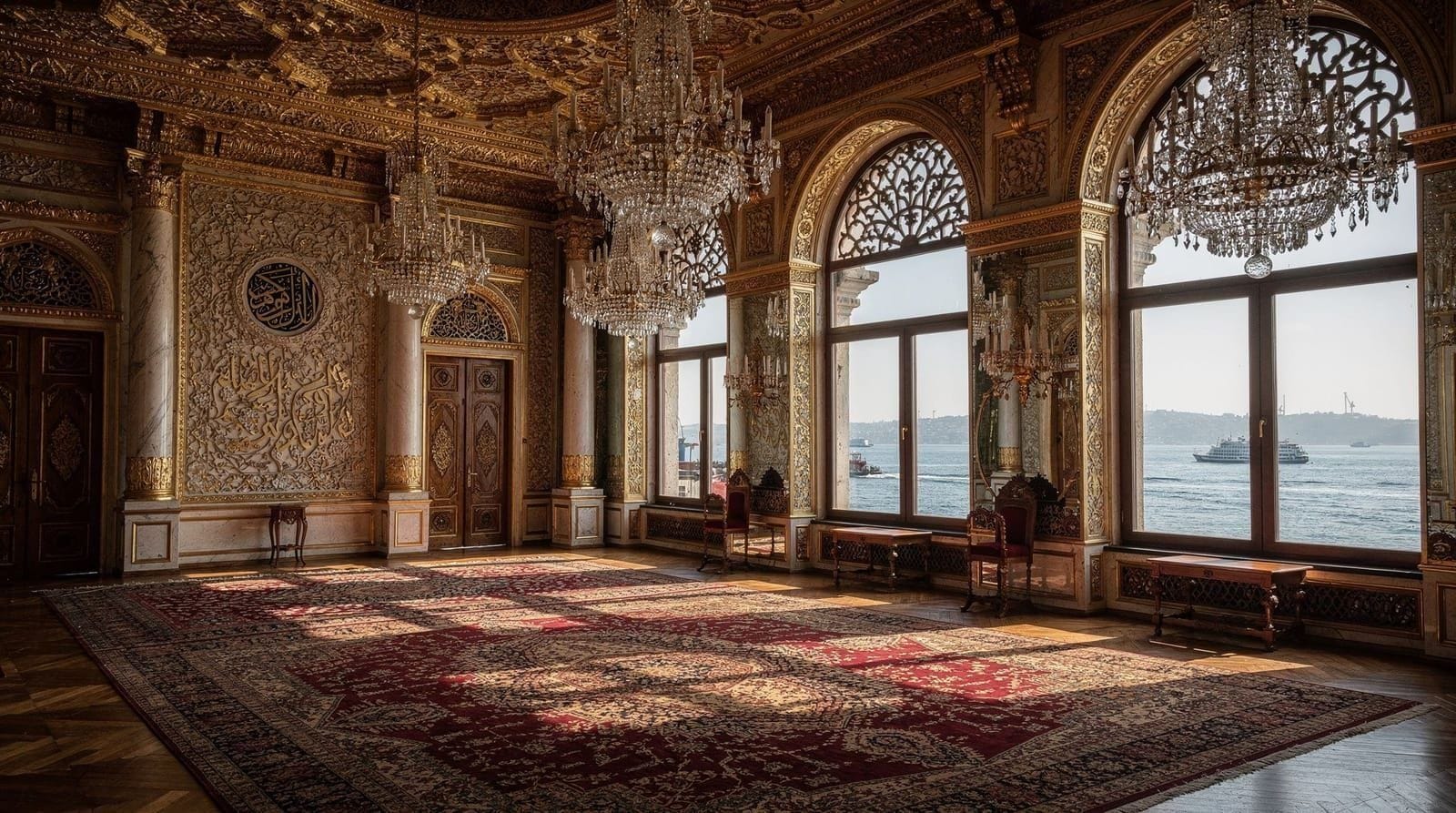
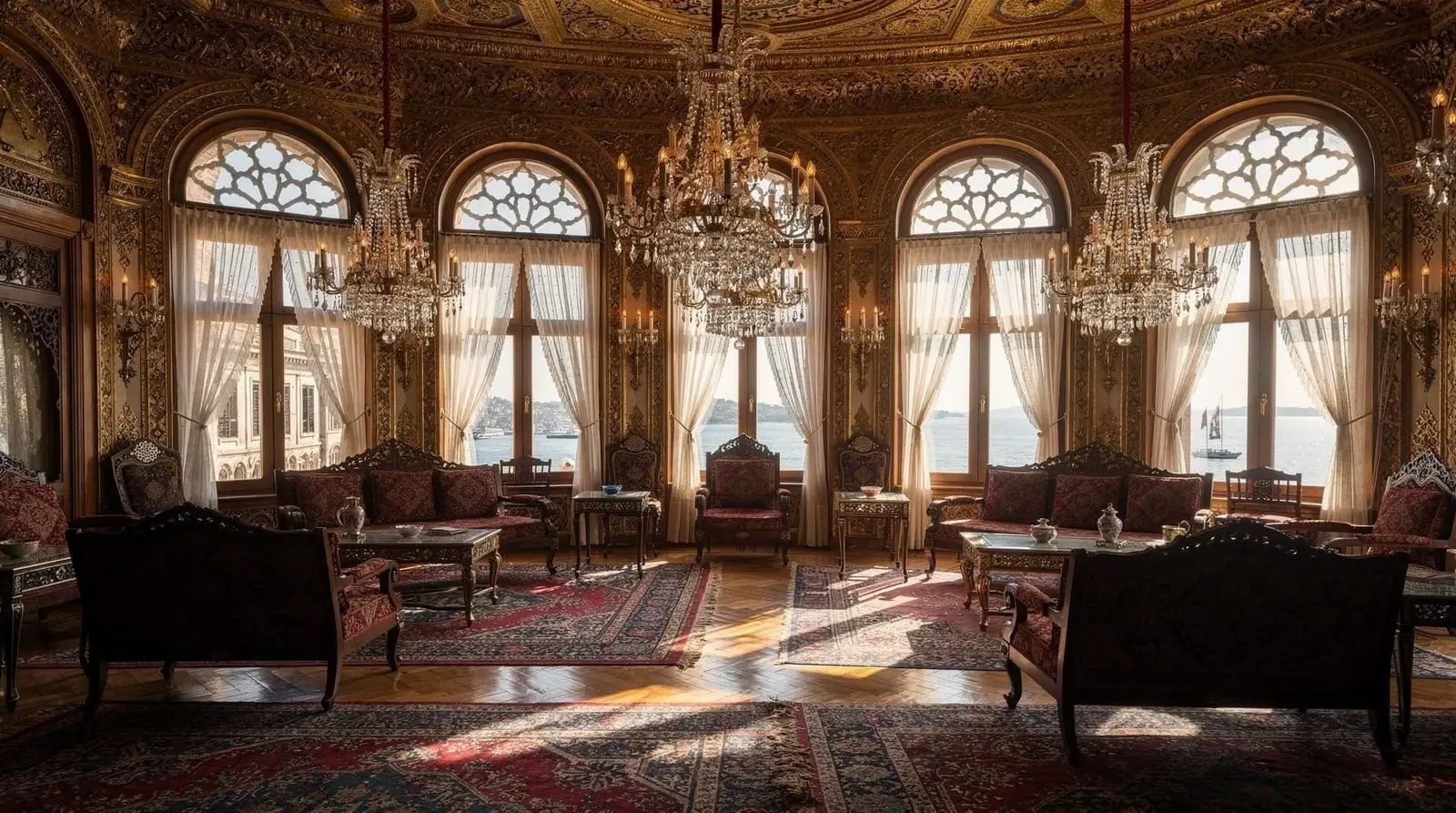
The Ceremonial Hall (Muayede Salonu): the largest single room, used for formal receptions. The chandelier is 4.5 tonnes, the largest crystal chandelier in the world when it was made, gifted by Queen Victoria. The ceiling bears 14 tonnes of gold leaf. The floor area is approximately 2,000 square metres. The room is genuinely overwhelming in scale.
The Bosphorus view rooms: the staterooms facing the Bosphorus have floor-to-ceiling windows with the strait as backdrop. The combination of European decoration and Bosphorus view is unlike anything else.
Atatürk’s bedroom: Mustafa Kemal Atatürk used Dolmabahçe as his Istanbul base from the late 1920s until his death. He died there on November 10, 1938, at 9:05 am. His bedroom is preserved exactly as it was — the bed, the furniture, the personal items. All clocks in the palace are stopped at 9:05. This is a deeply significant site for Turkish visitors; the emotional weight of the room is genuine regardless of your relationship to Atatürk’s legacy.
The Harem
Skip-the-line tickets for the Dolmabahçe Palace and Harem are the most practical way to manage the timed entry system and avoid the walk-up queue.
The Harem section covers the private apartments of the sultan’s family — a European-styled equivalent of the Topkapı Harem but reflecting 19th-century tastes. French wallpaper, European furniture, Bohemian glass, and Ottoman decorative elements coexist in a sequence of rooms that reads as both familiar (in European terms) and exotic (in the objects and arrangements). The last Ottoman sultans lived here in conditions simultaneously opulent and melancholic — aware that the empire was contracting and that their days were numbered.
The most historically charged room in the Harem is the one where Atatürk’s study and workspace were maintained alongside the family apartments.
Dolmabahçe vs Topkapı: which to prioritize
If you only have time for one Istanbul palace, the choice depends on what you value. Topkapı Palace is the historically primary Ottoman seat for four centuries, spread across courtyards with the Topkapı Harem as a separate ticketed section — it rewards slow, independent wandering. Dolmabahçe is a single, spectacular 19th-century interior, seen only on a guided tour, and carries the additional emotional weight of Atatürk’s death there. Many visitors do both if their Istanbul stay is three days or more; if forced to choose one, history-focused travelers tend to prefer Topkapı, while those drawn to opulent interiors and the Atatürk story prefer Dolmabahçe.
Combined Dolmabahçe Palace and Galata Tower ticket is a practical way to pair the palace with another major sight on the same day without re-queuing separately.
Practical information
Tickets: the main palace (Selamlık) and Harem are typically sold as a combined or separate option. The combined ticket runs ~600–1,000 TRY (~18–30 USD, mid-2026) for the full experience. Book online — the timed-entry tours fill up, particularly in peak season.
Tours only: unlike Topkapı, you cannot wander freely. All visits follow a guided tour route with a group. This can feel constraining if you want to linger in specific rooms.
Photography restrictions: some rooms (particularly Atatürk’s bedroom) have strict photography rules. Follow the guide’s instructions.
Closed days: Mondays and Thursdays. Verify current hours.
Getting there: Tram T1 to Kabataş, then walk or take the tram extension along the waterfront to Dolmabahçe. Or taxi from Beşiktaş or Taksim. The main entrance is on the Bosphorus waterfront road.
See Dolmabahçe Palace for location details.
What is nearby
Çırağan Palace (Kempinski Hotel): immediately north of Dolmabahçe along the Bosphorus waterfront. A different Ottoman palace converted to a hotel after a fire in 1910 gutted the interior. The Bosphorus-facing terrace bar is one of the better high-end sunset drink experiences in Istanbul.
Yıldız Park: the forested hill directly behind Dolmabahçe, with Ottoman pavilions and gardens. Free to walk. Worth an hour if you need fresh air after the palace interiors.
The Dolmabahçe Mosque: the small baroque mosque adjacent to the palace, designed by the same Balyan family in 1855. Free, rarely crowded.
See Beşiktaş for the wider Beşiktaş neighbourhood context.
Before you go: how to prepare for a guided visit
Because the visit is a guided route, the best preparation is mental rather than logistical. Decide in advance whether you want the Selamlık only or the Selamlık and the Harem, and book the matching ticket so you are not choosing at a crowded counter. Arrive at the entrance a little before your session so that bag checks and the security queue do not eat into your slot, and carry as little as possible: large bags are a nuisance in rooms where the group moves in a tight line.
Wear comfortable shoes. The route is long, much of it on polished floors, and you will spend most of it standing while the guide explains a room. Protective covers are usually put over shoes to preserve the historic floors, so do not be surprised when you are asked to wear them. Keep your phone ready for the rooms where photography is permitted, but expect to put it away quickly when the guide says so.
A little background reading changes the experience. If you know the outline of the late Ottoman story, the visit stops being a series of ornate rooms and becomes a narrative about an empire trying to present itself as modern. The Ottoman Istanbul guide and the Istanbul history overview give that context in a few minutes of reading, and the Istanbul architecture guide explains why this palace looks so different from the older Ottoman buildings across the Golden Horn.
How to read the rooms as you walk
The guide will move fast, so it helps to know what to look for. Notice how almost every room is organised around the view or around a single dramatic object: a staircase, a chandelier, a fireplace, a carpet. The palace was designed to impress visitors who arrived by water, and the stateroom sequence rewards that logic. Look at the ceilings as much as the walls; painted skies, gilded mouldings and trompe-l’oeil details are easy to miss when you are following the person in front.
Pay attention to the contrast between the public and private halves of the building. The Selamlık is theatrical and formal, built for ambassadors and ceremonies. The Harem is more domestic in scale, even when the decoration is rich, and the difference in atmosphere between the two is one of the most revealing things about how the court actually lived. If you have already seen Topkapı, compare how each palace handles privacy, light and the relationship with the water.
Do not try to photograph every room. Visitors who spend the whole tour behind a screen tend to remember less than those who simply look, and the rooms with the strongest emotional pull, Atatürk’s bedroom above all, are exactly the ones where cameras are most restricted.
Choosing the right day and time
Palace tours run in groups, so the experience depends heavily on how busy the building is. Weekends and the middle of the day are the most crowded; an early session usually feels calmer, with more room around the staircase and in the larger halls. In peak season, aim for the first available slot and book it ahead. Remember the closed days listed above, and plan the rest of your day around them: if your free day in Istanbul falls on a closed day, shift your palace visit rather than hoping for an exception.
Weather matters less than at open-air sights, since most of the visit is indoors, which makes Dolmabahçe a sensible choice for a rainy or very hot day. Check the Istanbul weather by month guide and the best time to visit Istanbul when deciding where the palace fits in your trip. If you are travelling during Ramadan, the Ramadan in Istanbul guide explains how opening patterns and crowds can shift across the city.
Visiting with family or with limited mobility
A guided walk through a large palace can be tiring for children. Younger visitors tend to enjoy the staircase, the chandelier and the idea of a palace on the water, but they struggle with long explanations. If you are travelling with children, keep expectations modest, consider doing only the Selamlık, and pair the visit with the open space of Yıldız Park afterwards. The Istanbul with kids guide has other ideas for balancing sightseeing with downtime.
Because the route is fixed and includes stairs, it is worth asking the ticket office or your tour provider about accessibility before you book, rather than assuming. Policies and routes can change, and a short enquiry in advance is better than discovering a problem at the entrance.
Fitting Dolmabahçe into a wider Istanbul day
The palace sits on the European shore, so it combines naturally with other sights along the Bosphorus rather than with the historic peninsula. A sensible plan is to start with the palace in the morning, walk to Yıldız Park or the waterfront for a break, and continue by ferry or on foot toward Ortaköy. If you prefer to see more of the strait from the water, the best Bosphorus cruise guide compares the main options, and the Bosphorus landmarks guide helps you identify what you pass on the way.
For travelers building a full itinerary, the palace works well as the anchor of a Bosphorus-focused day inside the Istanbul in 3 days itinerary or the Istanbul in 2 days itinerary. If you have only one day, the Istanbul in one day guide shows what to prioritise, and you may decide that a view of the facade from the water is enough. To get around between the sights, the getting around Istanbul guide covers trams, ferries and the Istanbulkart.
Why the palace still matters
Dolmabahçe is more than an opulent interior. It was the last great Ottoman imperial residence and, later, a working base for the early Turkish Republic. That double identity is what makes it unusual: the same rooms that were built to dazzle foreign envoys became the place where the republic’s founder lived and died. Visitors who leave only with photographs of gilding miss that layer. Take a moment in the last rooms to reflect on how quickly the world around the palace changed, and on how deliberately its builders tried to hold that change at bay with marble, crystal and silk.
Sunset and photography from Dolmabahçe
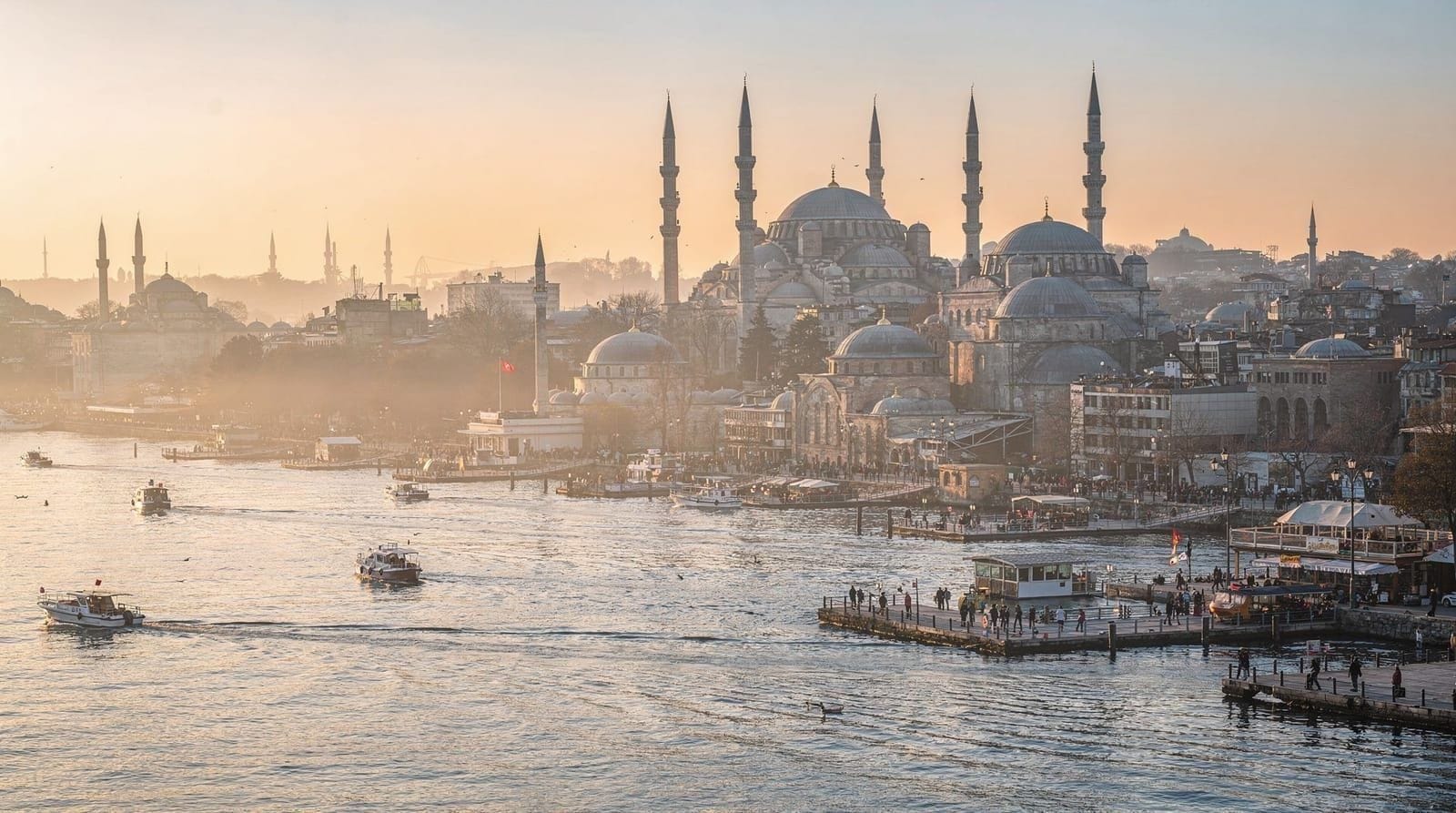
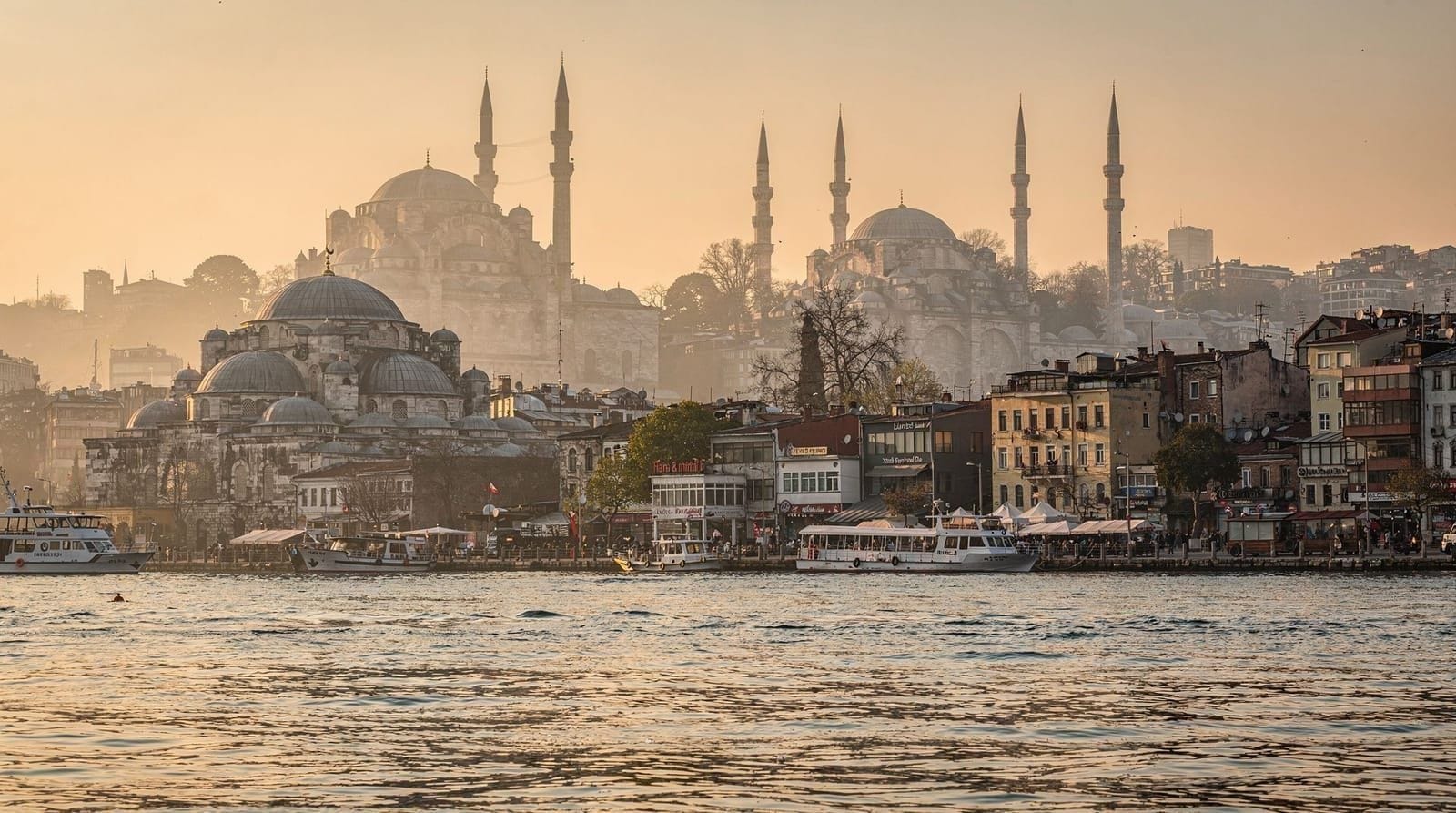
The palace’s waterfront position makes it a strong late-afternoon photography stop, even from outside the ticketed grounds — the Bosphorus-facing facade catches warm light in the two hours before sunset, and the best views in Istanbul guide has other nearby vantage points if you want the palace itself in the frame rather than viewing it from inside. A short walk or ferry further along the strait, the Ortaköy Mosque makes a natural add-on for a Bosphorus-focused afternoon, its baroque style echoing Dolmabahçe’s own European-Ottoman synthesis on a smaller scale.
Frequently asked questions about Dolmabahçe Palace visiting guide — tickets, Harem, and Atatürk's room
Can I visit Dolmabahçe Palace independently?
What are the highlights of Dolmabahçe Palace?
What is special about Atatürk's room at Dolmabahçe?
How does Dolmabahçe compare to Topkapı Palace?
Is the Harem at Dolmabahçe worth the extra ticket?
What time does Dolmabahçe Palace open?
Top experiences
Bookable activities with verified prices and instant confirmation on GetYourGuide.