Mosque etiquette guide for Istanbul visitors
Istanbul: Hagia Sophia, Blue Mosque, Suleymaniye Mosque Tour
What do I need to know before visiting a mosque in Istanbul?
Cover shoulders and knees (both men and women). Women must also cover their hair — a scarf is usually available free at the entrance. Remove shoes and place them in the bags provided. Enter quietly, avoid walking in front of people praying, and do not visit during the five daily prayer times.
Why etiquette matters in Istanbul’s mosques
Istanbul’s great mosques are not only tourist attractions — they are functioning places of worship used by hundreds of thousands of Muslims every week. The etiquette rules exist partly out of respect for religious observance and partly because the mosques are holy spaces in Islamic tradition. A visitor who follows the basic rules will have a better experience too: you will be welcomed, not directed away, and you will see more of the interior.
The rules are simple and consistent across mosques. This guide covers everything you need to know before visiting the Blue Mosque, Hagia Sophia, Süleymaniye, or any other mosque in Istanbul.
| Where | Blue Mosque, Hagia Sophia, Süleymaniye, and hundreds more |
| Cost | Free entry to all mosques |
| Time needed | 20–90 minutes per mosque |
| Getting there | Central Sultanahmet mosques are walkable together |
| Best time | Mornings, avoiding Friday around midday |
If you’d rather have a guide explain the etiquette and history in person rather than navigate it solo, a combined tour covers the etiquette naturally as part of the visit:
Guided tour of Hagia Sophia, the Blue Mosque, and Süleymaniye MosqueDress requirements
For women: Cover shoulders and arms (no sleeveless tops or thin straps), cover legs to at least the knee (skirts, trousers, or a shawl wrapped as a sarong), and cover hair with a headscarf. The covering should be reasonably opaque — thin scarves that show hair clearly may draw polite guidance from staff at the entrance.
For men: Shorts that end above the knee are not acceptable. Long trousers or mid-calf shorts are fine. Shoulders should be covered; most men in T-shirts or short-sleeve shirts are admitted without comment.
Practical tips: Many major mosques — the Blue Mosque and Hagia Sophia especially — provide free loaner scarves and sarong-style wraps at the entrance for visitors who arrive under-dressed. These are useful in emergencies but often low-quality fabric. In summer, carrying a lightweight linen scarf in your bag is the simplest solution. It takes almost no space and guarantees hassle-free entry.
What not to wear: Revealing clothing, beachwear, or anything with offensive imagery should be avoided. Modest dress is straightforward — the standard is “covered from shoulder to knee plus head for women.”
Shoes: the most important rule
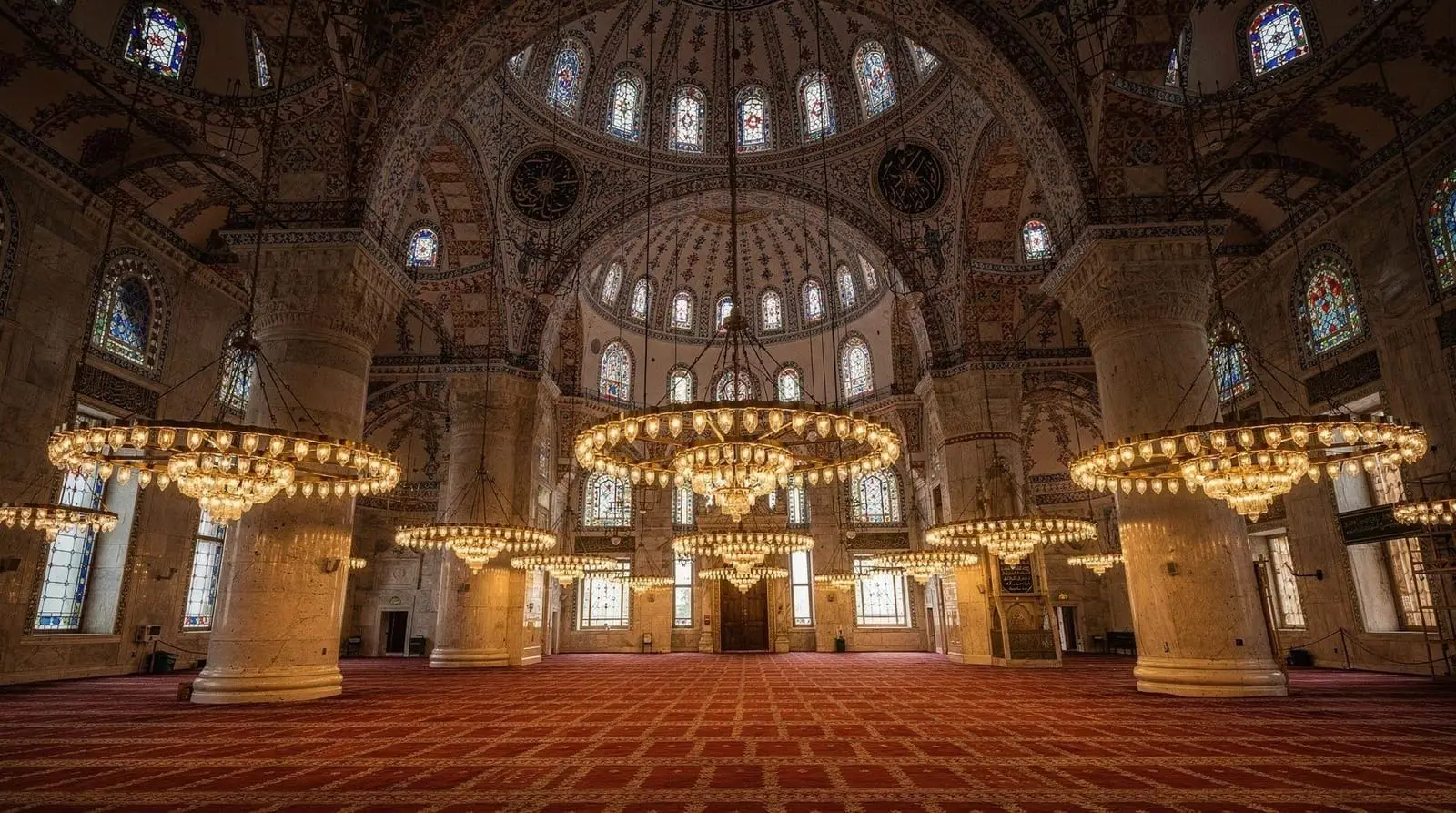
Remove your shoes before stepping onto the carpeted prayer hall floor. This is mandatory, not optional, and it is enforced. Most mosques have a shoe rack at the entrance or provide plastic bags to carry your shoes with you inside the mosque. The bag option is more convenient if the shoe rack is crowded.
Wear shoes that are easy to remove. Knee-high lace-up boots are annoying to deal with in a busy mosque queue. Slip-on shoes, sandals, or trainers are practical choices for a day of mosque visiting.
Prayer times and when not to visit
Mosques in Istanbul are closed to tourist visits during the five daily prayers (namaz). These occur at approximately:
- Fajr (dawn): Before sunrise — roughly 5-6 AM in summer, 6-7 AM in winter
- Dhuhr (midday): Around midday, varying by season
- Asr (afternoon): Mid-afternoon
- Maghrib (sunset): Immediately after sunset
- Isha (night): About 90 minutes after sunset
Prayer times shift daily with the season and are calculated astronomically. The evening call to prayer (ezan at Maghrib) is the most audible and occurs at sunset. The midday and afternoon prayers are when tourist visits are most commonly interrupted.
The Friday midday prayer (Cuma namazı) is the most important weekly prayer in Islam, equivalent to the Sunday service in Christian tradition. On Fridays, the noon prayer draws a larger congregation and lasts 45-60 minutes. Some mosques are more restricted to tourists on Friday lunchtimes than on other days.
Ramadan: During Ramadan (approximately 19 February-19 March 2026 — verify before travel, as dates shift each year by the lunar calendar), mosques see significantly increased attendance for evening and night prayers. The Teravih prayer after Isha (performed only in Ramadan) can draw large crowds. See our Ramadan in Istanbul guide for what to expect.
Practical strategy: Visit major mosques in the morning (between the Fajr and Dhuhr prayers), which typically gives you 3-4 hours of access. Avoid Friday around midday. Check prayer times at the mosque entrance on arrival.
Behavior inside the mosque
Move quietly. Normal tourist noise — conversation, camera clicking — is acceptable, but keep voices low. Avoid loud talk, phone calls, or disruptive noise.
Do not walk in front of someone praying. If you see someone performing namaz (the formal prayer, involving standing, bowing, and prostration), do not cross in front of them. Walk behind them or wait.
Maintain physical distance from active prayer areas. Major mosques typically rope off sections for worshippers and open other sections for visitors. Follow the signage and roping; staff will redirect you if necessary.
Photography: Permitted in most mosques, but be discreet. Do not photograph people at prayer from close range. Avoid flash in areas with historic mosaics or other light-sensitive surfaces. At Hagia Sophia, some areas are covered during prayer times.
Children: Bring them in, but be prepared to leave quickly if they become disruptive. Active mosques are less suitable for very young children who cannot be kept quiet.
Strollers and wheelchairs: Most major mosques have step-free access at the tourist entrance, though the carpeted prayer hall floor can make manoeuvring a stroller awkward during busy periods. Folding strollers are easier to carry over the shoe-removal step than pushing them through.
Groups: Large group tours are asked to keep noise down and are sometimes staged to enter in smaller batches at the busiest sites. If travelling with a big group, expect brief waits at the entrance even outside prayer closures.
Mosque-specific notes
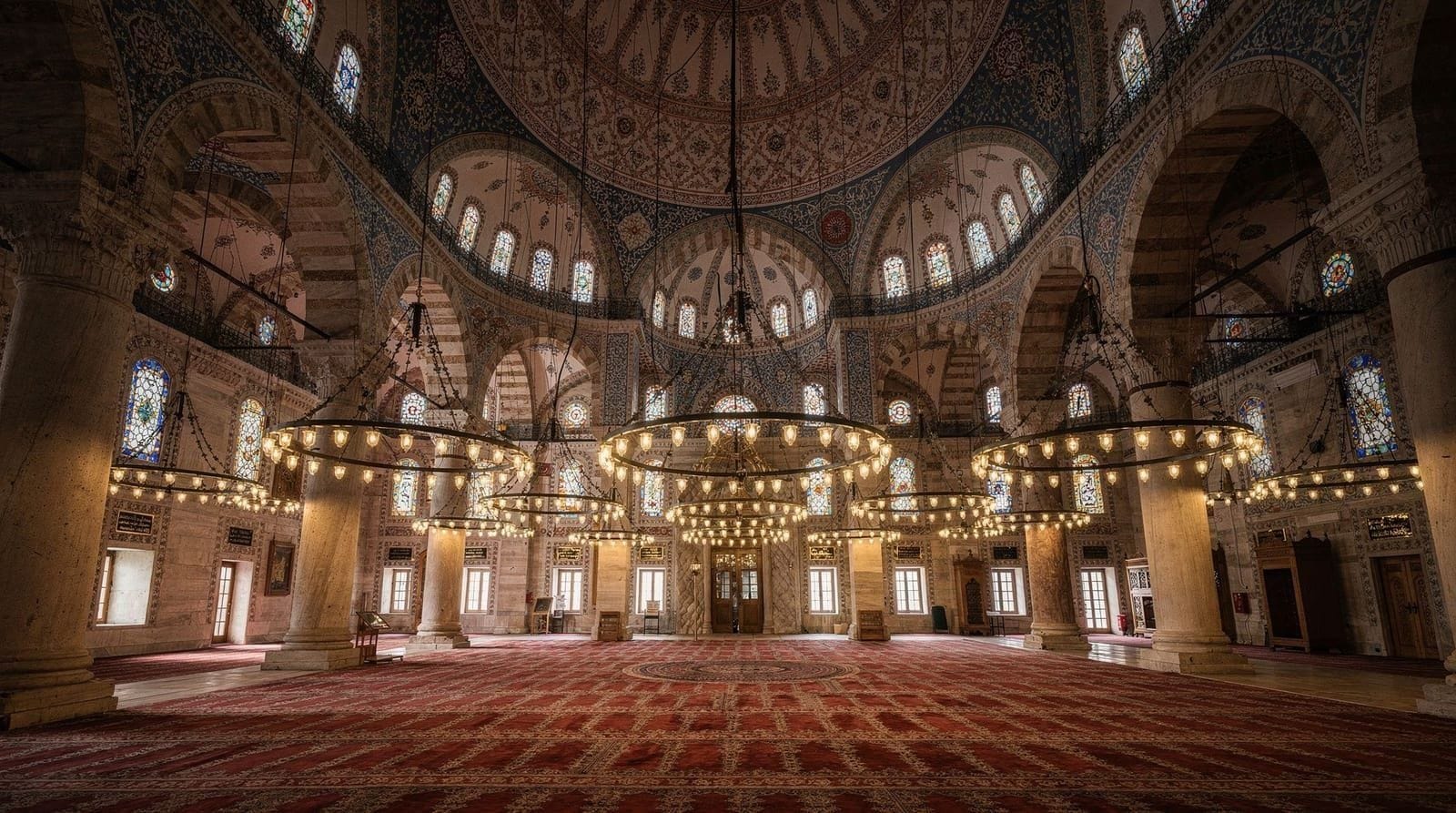
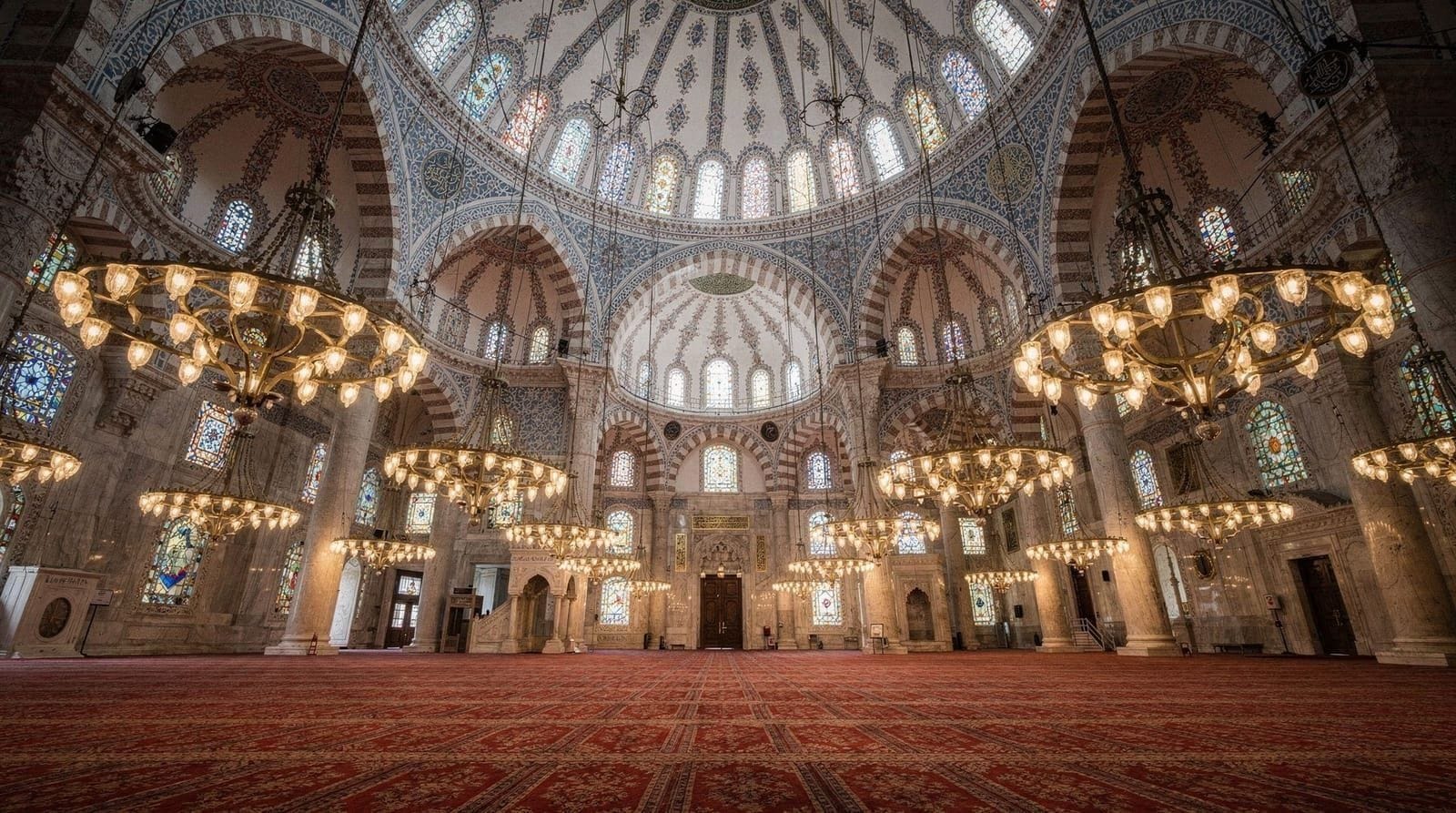
Blue Mosque (Sultan Ahmed Mosque): Entry through the dedicated tourist entrance on the north side (facing Sultanahmet Square). Free. Loaners available. Entry queues can be long in summer. The interior is visually impressive; the İznik tiles are best seen in the upper walls. Closed during the five daily prayers. See our Blue Mosque visiting guide. If you would rather have the dress and entry rules handled for you, a guided visit to the Blue Mosque is a reasonable option.
Hagia Sophia (Ayasofya Camii): Free entry as a functioning mosque since 2020. Entry through the main entrance facing Sultanahmet Square. Women must cover hair; everyone removes shoes. Closed during prayer times — the Dhuhr and Asr prayers especially affect peak daytime visiting. Mosaics in the upper gallery visible; some are covered during prayer. The nave is vast; allow 60-90 minutes. See our Hagia Sophia visiting guide.
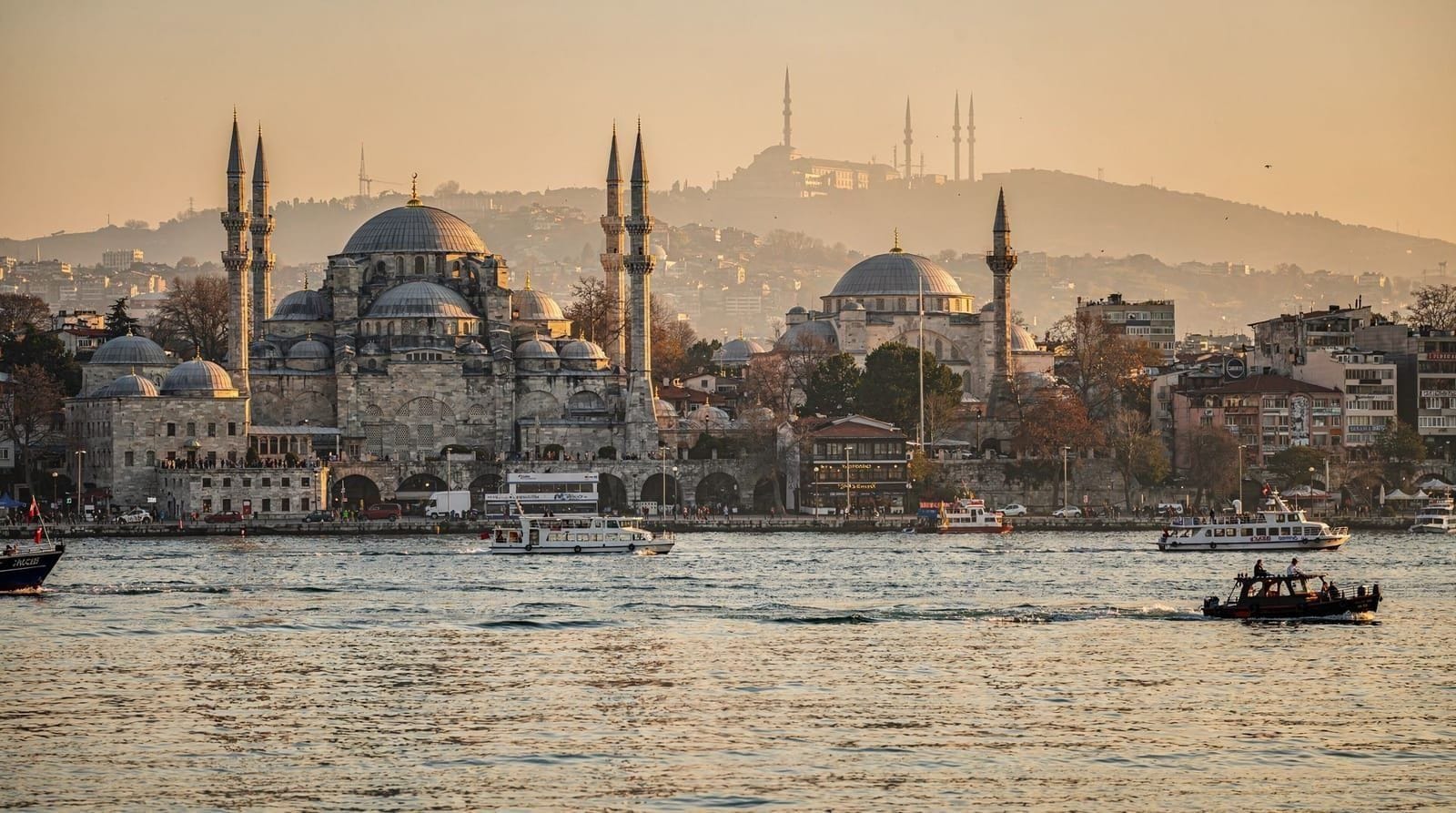
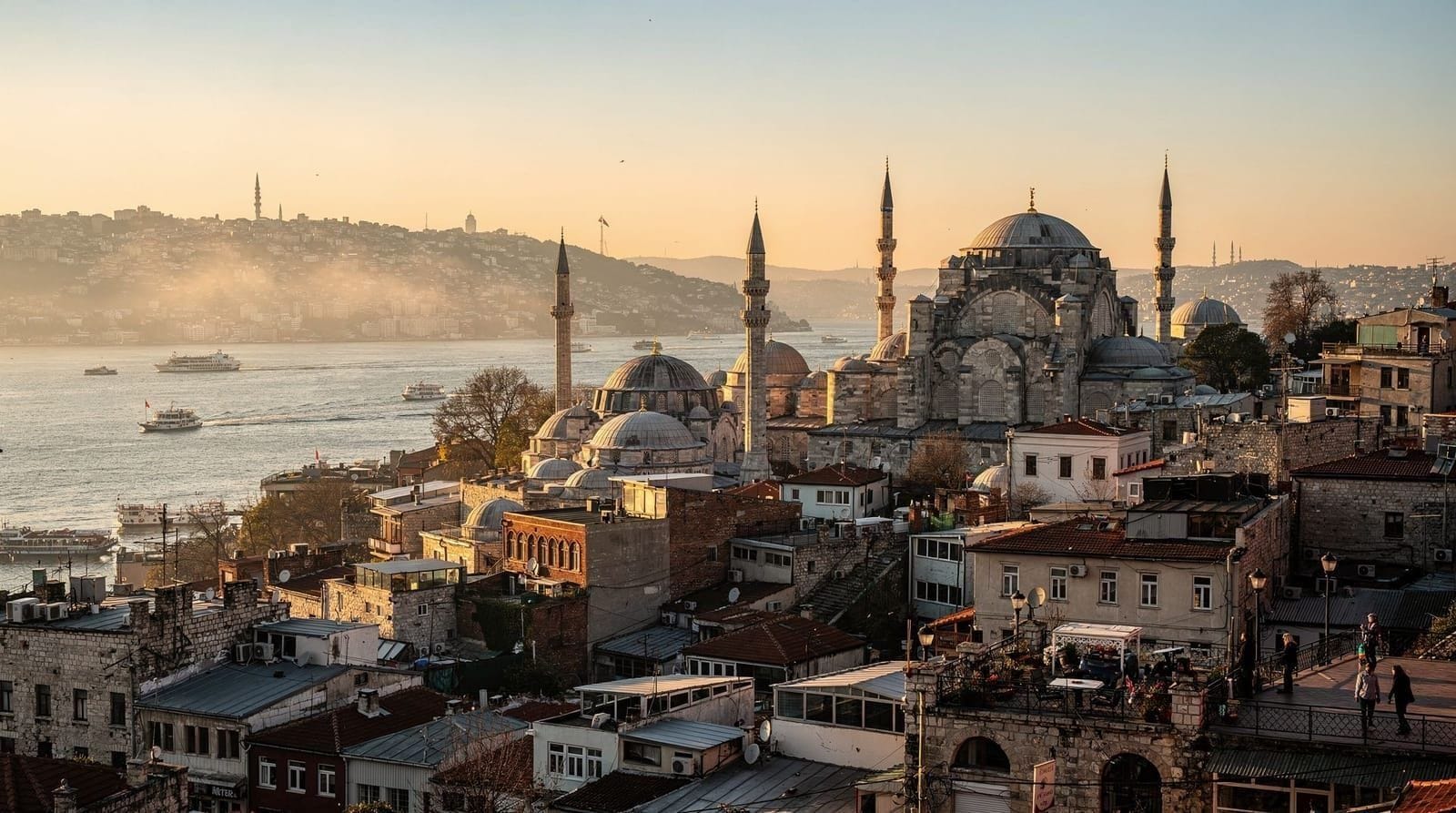
Süleymaniye Mosque: Located on the Third Hill above Eminönü. Free, quiet by comparison with Sultanahmet mosques, and often uncrowded. The courtyard has an excellent view over the Golden Horn. The türbe (mausoleum) garden behind the mosque contains the tombs of Suleiman the Magnificent and Hürrem Sultan, open to respectful visitors. See our Süleymaniye Mosque visiting guide.
Eyüp Sultan Mosque: The most sacred mosque in Istanbul — a place of active pilgrimage. Approach with particular respect; avoid tourist posing or loud behavior. The surrounding cemetery and tea gardens on the hill above (accessible by cable car) are peaceful. Most appropriate for culturally curious visitors with genuine interest in Islamic tradition.
Rüstem Paşa Mosque (near the Spice Bazaar): Elevated above street level, accessed by staircase. One of the best İznik tile interiors in the city. Small, often uncrowded, no admission charge.
Etiquette differences between the major mosques
While the core rules (dress, shoes, quiet, no walking in front of prayer) apply everywhere, the practical experience varies by site:
Blue Mosque: The busiest tourist entrance in the city, with the most consistent enforcement of dress code at the door — expect a brief visual check before entry. Queues form early in summer; loaner scarves are plentiful but quality varies.
Hagia Sophia: As both a major museum-turned-mosque and one of the most visited sites in the world, staff are used to explaining the rules to first-time visitors. The mixed status (historic monument and active mosque) means some areas are roped for prayer even outside the five daily windows on Fridays.
Süleymaniye: Far fewer visitors, so the etiquette rules feel less like a checkpoint and more like common courtesy naturally observed by a small crowd. A good choice if the Blue Mosque’s queues and dress-code checks feel overwhelming.
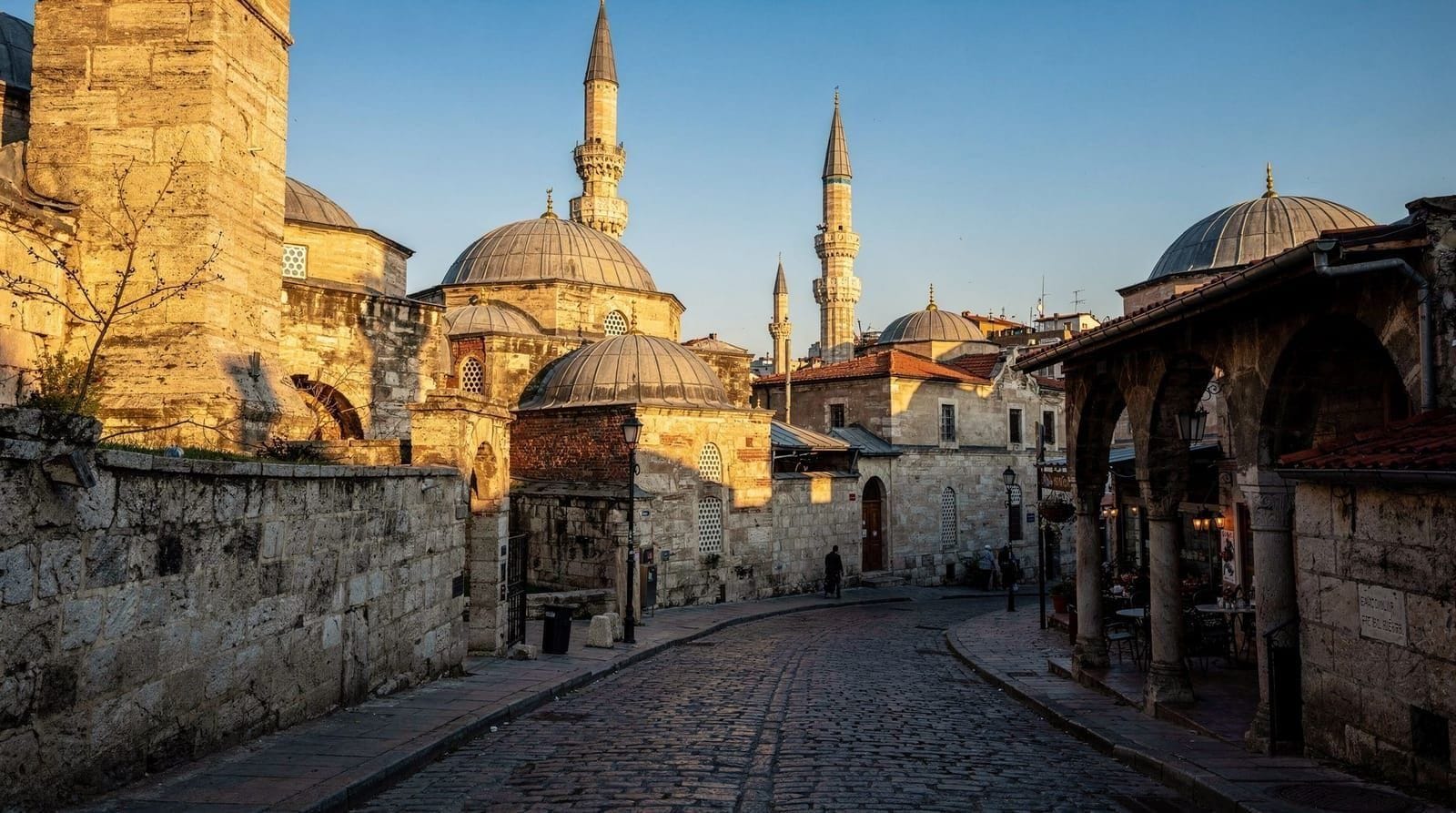
Neighbourhood mosques (Rüstem Paşa, Sokollu Mehmed Paşa, and similar): No formal entry process at all — you remove your shoes, dress modestly, and simply enter. These are the most relaxed environments to practice the etiquette rules without an audience of other tourists.
Free mosques — a note on scams
The most persistent mosque-related scam in Istanbul is someone at the entrance claiming that there is an “entry fee” for the mosque. There is no entry fee for any mosque in Istanbul; all are free to enter. If someone tells you there is a charge, decline politely and enter past them. This scam operates particularly near the Blue Mosque tourist entrance.
A second version involves someone offering to act as a “guide” inside the mosque for a “small fee.” You are not required to use any guide, and informal guides at mosque entrances are unlicensed. If you want a guided tour, book one through a reputable agency. See our Istanbul scams to avoid guide and the honest Istanbul hub.
The call to prayer (ezan)
The ezan is broadcast from mosque minarets five times daily, traditionally by a muezzin (caller to prayer), now mostly via loudspeaker recording. In Istanbul, with hundreds of mosques in the historic peninsula, the overlapping calls from multiple minarets at different moments can be an unexpectedly moving experience. The text of the ezan calls to prayer in Arabic: “God is great… I testify there is no god but God… I testify Muhammad is the messenger of God… Come to prayer… Come to success…”
The ezan is not directed at tourists and requires no response or behavior change from non-Muslims in the street. You will simply hear it.
Practical checklist before visiting mosques
- Carry a lightweight scarf (women) or loose long trousers (men in shorts)
- Wear shoes you can remove without sitting down
- Check prayer times on the day (apps, or posted at the entrance)
- Avoid Friday noon at major mosques
- Do not bring oversized bags or wheeled luggage into mosques
- Camera ready, flash off
- No entry fees anywhere — ignore anyone claiming otherwise
For planning your mosque visits alongside other Sultanahmet sites, see our Istanbul trip planning guide and the Istanbul first-timer tips.
More mosques worth visiting in Istanbul
Beyond the famous “headline” mosques, Istanbul has hundreds of neighborhood mosques that are free to enter, rarely crowded, and architecturally interesting. A few worth seeking out:
Rüstem Paşa Mosque (near the Spice Bazaar in Eminönü): Elevated above street level, accessed by a staircase through the market stalls below. Designed by Mimar Sinan in 1563, it contains the finest concentration of İznik tile panels in Istanbul — over 80 distinct tile designs on a relatively small interior space. The mosque is small, usually quiet, and completely free. One of the best places in Istanbul for tile photography. Check prayer times posted at the entrance.
Sokollu Mehmed Paşa Mosque (Kadırga, near the Hippodrome): Also designed by Sinan. The interior has excellent 16th-century İznik tiles and contains fragments of stone reportedly from the Kaaba (the sacred stone at the center of the Masjid al-Haram in Mecca), embedded in the mihrab. The courtyard is peaceful.
Eyüp Sultan Mosque (Eyüp, at the head of the Golden Horn): Istanbul’s most sacred mosque, built near the tomb of Eyüp el-Ensari, a companion of the Prophet Muhammad who died during the 7th-century Arab siege of Constantinople. A significant place of pilgrimage with a very different atmosphere from the tourist-focused Sultanahmet mosques. The hillside cemetery above Eyüp and the Pierre Loti café at the top are worth combining with the mosque visit. Approach with particular respect for the active religious use.
Mihrimah Sultan Mosque at Edirnekapı (near the Theodosian Walls): A Sinan work built for Suleiman the Magnificent’s beloved daughter Mihrimah. The interior has an extraordinary amount of natural light — the windows fill the upper walls. Less visited than the central mosques but architecturally one of Sinan’s most elegant interiors.
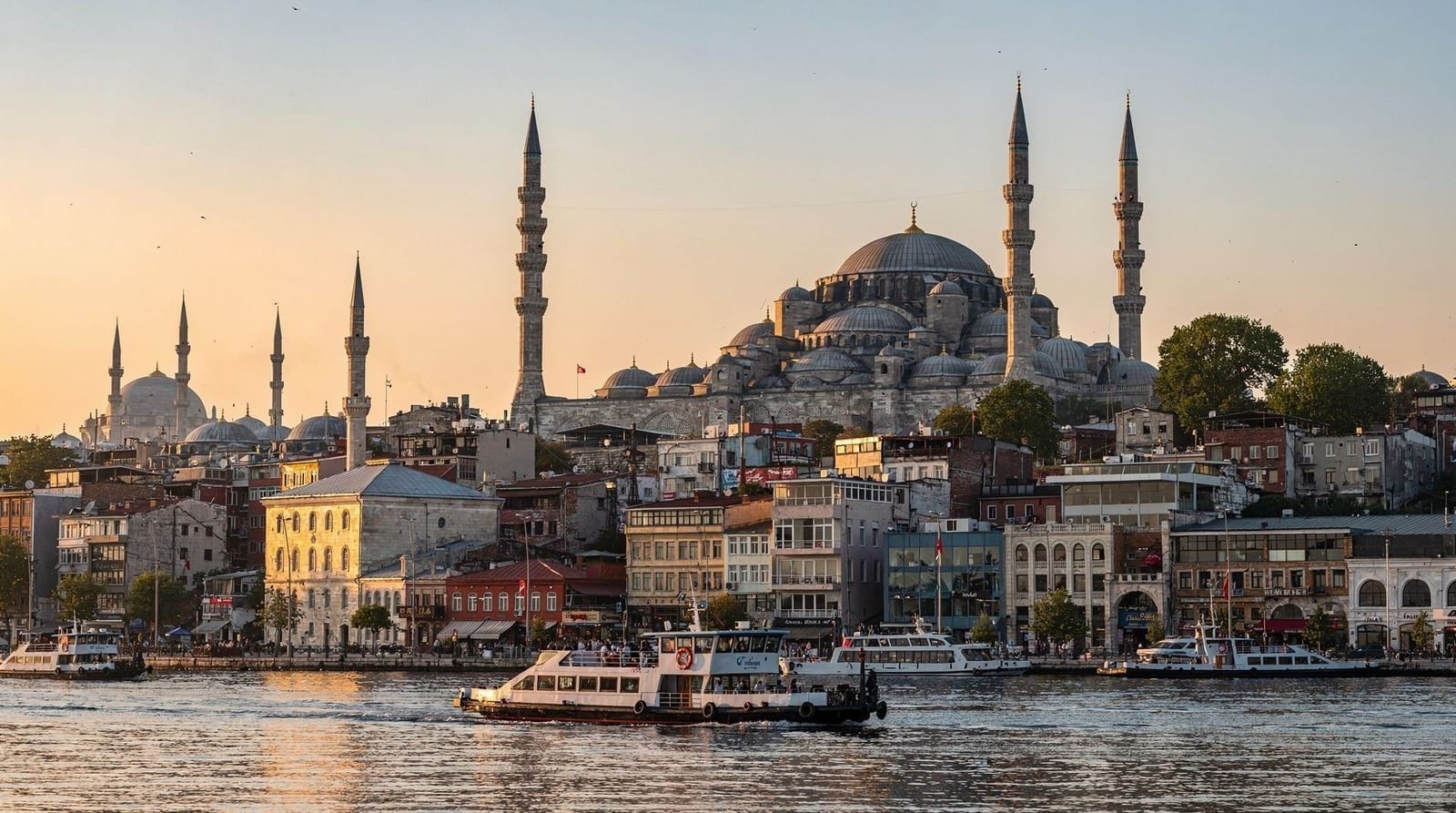
Yeni Cami (New Mosque) at Eminönü: The most-walked-past mosque in Istanbul — millions of people cross near it daily going to the ferries and the Galata Bridge. The name “New Mosque” is misleading; it dates to 1663. The interior has beautiful İznik tiles and is usually not crowded with tourists (they are all outside feeding pigeons). Free.
The call to prayer in daily life
Visiting Istanbul means living with the ezan (call to prayer) throughout the day. In Sultanahmet, where there are multiple mosques in close proximity, overlapping calls at slightly different times create a polyphonic effect that visitors often find unexpectedly moving.
The calls to prayer do not require any response or behavioral change from non-Muslims. You will hear them while eating, walking, or in your hotel room. The evening call (Maghrib, at sunset) is often the most audible and is the signal for iftar during Ramadan.
Asking Turkish friends about the ezan — what they hear in it, whether they respond to it — tends to open genuinely interesting conversations about the role of religion in secular Turkish identity.
Dress code quick reference
| Item | Women | Men |
|---|---|---|
| Shoulders | Covered | Covered |
| Legs | Covered to below knee | Covered to below knee |
| Hair | Covered with scarf | No requirement |
| Shoes | Removed at entrance | Removed at entrance |
| Loaner items | Scarves and wraps usually available free | Rarely needed |
Carrying your own scarf and a pair of light trousers or a long skirt guarantees hassle-free entry everywhere, without relying on loaner stock that can run low during peak hours. If your itinerary covers several mosques in one day — as it typically does in Sultanahmet — packing these once in the morning saves repeated borrowing at each entrance.
Planning a mosque day alongside other sights
Mosque visits fit naturally into a wider day of sightseeing, as long as you plan around the prayer windows rather than against them. A sensible pattern is to put the big mosques in the morning and keep the afternoon for sights where prayer closures do not matter, such as a museum, a bazaar or a ferry ride.
- Sultanahmet cluster: pair the Blue Mosque and Hagia Sophia on foot, and read the Hagia Sophia vs Blue Mosque comparison if you are deciding where to spend more time.
- Bazaar side of the Golden Horn: the Süleymaniye Mosque sits close to the Spice Bazaar and the Grand Bazaar, so a quiet mosque stop can break up a busy shopping morning.
- Choosing which mosques to prioritise: our best mosques in Istanbul list helps you pick, and the free mosques guide explains why you never need to pay at the door.
- Further out: the Eyüp Sultan Mosque guide and the Ortaköy Mosque guide cover two mosques with a very different feel from the Sultanahmet crowds.
Etiquette in a mosque is one part of a broader set of habits worth knowing, from greetings to tipping. The Turkish customs and etiquette guide covers the rest, and the blog post on mosque etiquette for visitors is a shorter companion read. If you are travelling at the start of the year, check the best time to visit Istanbul as well, since the season affects both prayer times and how crowded the mosques are.
Frequently asked questions about Mosque etiquette guide for Istanbul visitors
Do I need to bring a headscarf to mosques in Istanbul?
How do I know when prayer times are?
How long are mosques closed during prayer?
Is entry to mosques in Istanbul free?
Can I take photos inside mosques?
What is the shoe protocol?
Can women visit mosques alone?
Top experiences
Bookable activities with verified prices and instant confirmation on GetYourGuide.