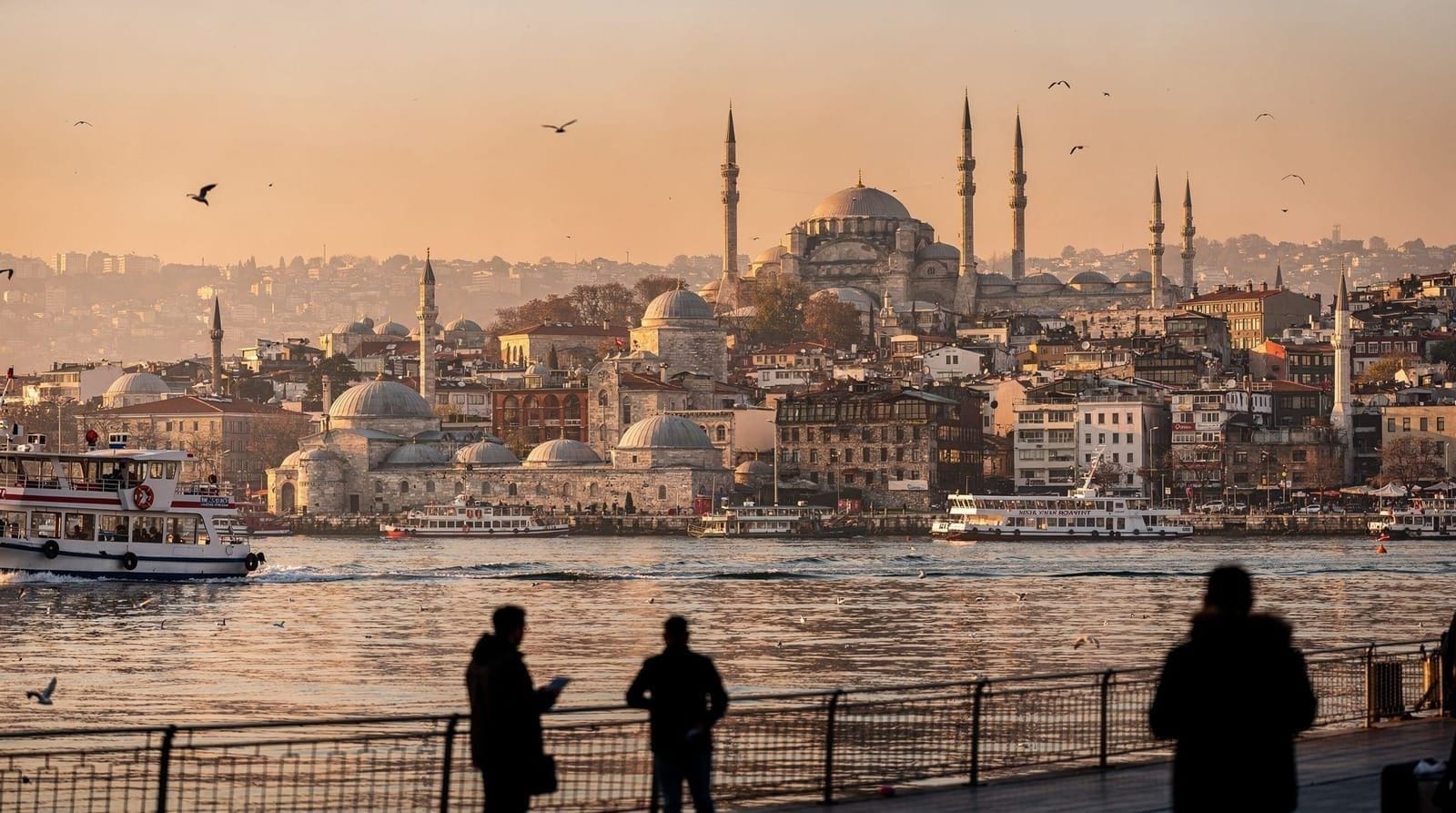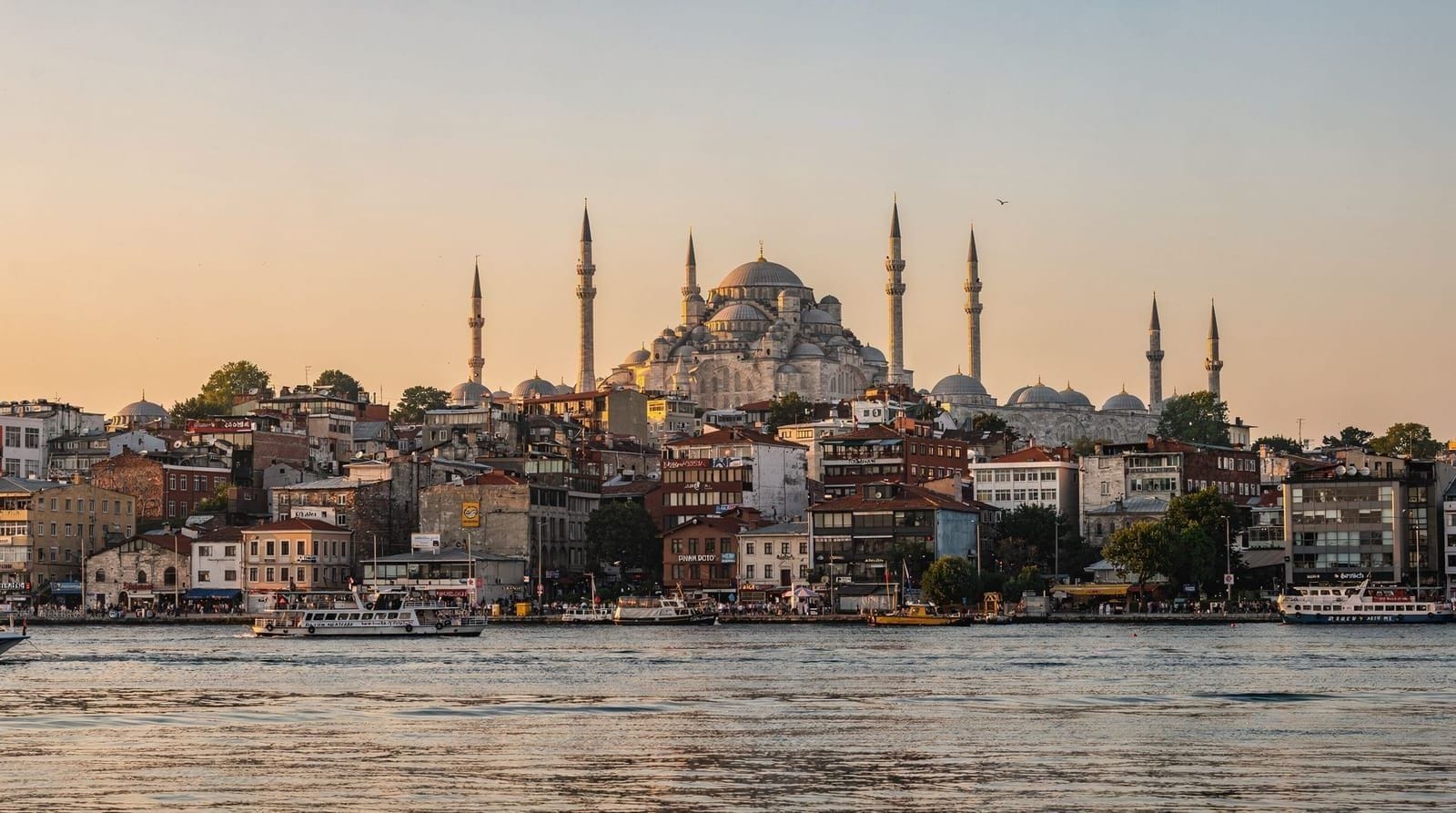
Turkish food guide — what to eat in Istanbul
Istanbul: European and Asian Side Guided Foodie Walking Tour
Duration: 5.5 hours
What is the best Turkish food to try in Istanbul?
Start with lahmacun, balık ekmek (fish sandwich), and a proper Turkish breakfast spread. Seek out köfte at Sultanahmet Köftecisi, pide at a local fırın, and meze at a meyhane in Beyoğlu. Avoid tourist-facing restaurants around the Blue Mosque — prices are 3–5x what locals pay two streets back.
Quick answer: Start with lahmacun, balık ekmek, and a full Turkish breakfast spread. Avoid restaurants directly facing the Blue Mosque — prices are 3–5x what locals pay two streets back. The most authentic eating in Istanbul happens in Eminönü, Kadıköy, and the meyhane strips of Beyoğlu.
| Must-try dishes | Lahmacun, balık ekmek, full kahvaltı breakfast, meyhane meze |
| Where to avoid | Restaurants directly facing the Blue Mosque or inside the Grand Bazaar |
| Typical local meal | 80–150 TRY in a working-class neighbourhood |
| Typical tourist meal | 300–600 TRY near major sights |
| Best all-round area | Kadıköy for market food, Beyoğlu for meyhane dinners |
The honest overview of Turkish food in Istanbul
Turkish cuisine is not one thing. What gets called “Turkish food” in travel guides ranges from Ottoman palace cooking (intricate, rich, multi-course) to Anatolian village food (bread, cheese, lamb, lentils) to the quick street food of a city of 15 million people — simit, lahmacun, balık ekmek, kokoreç.
Istanbul sits at the intersection of all of it. The city was the Ottoman capital for 500 years, drawing ingredients and techniques from the Balkans, the Caucasus, the Levant, and North Africa. What you find today is a living version of that synthesis, embedded in a working megacity with its own fast-food shortcuts and tourist-facing distortions.
This guide is structured around what you can actually eat, where, and for what price — not a generic list of “10 foods you must try.”
Breakfast: the meal Istanbul does best
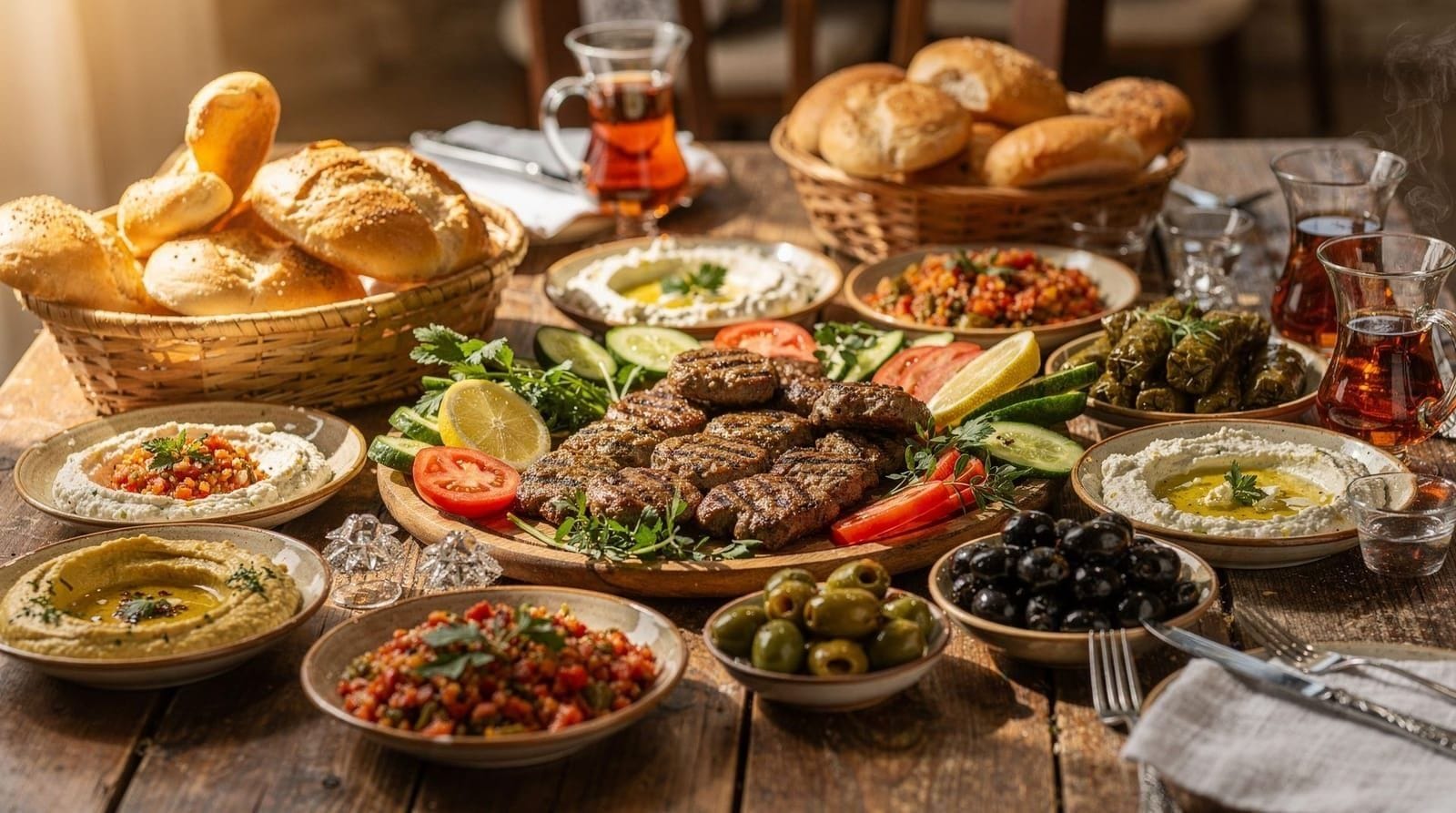
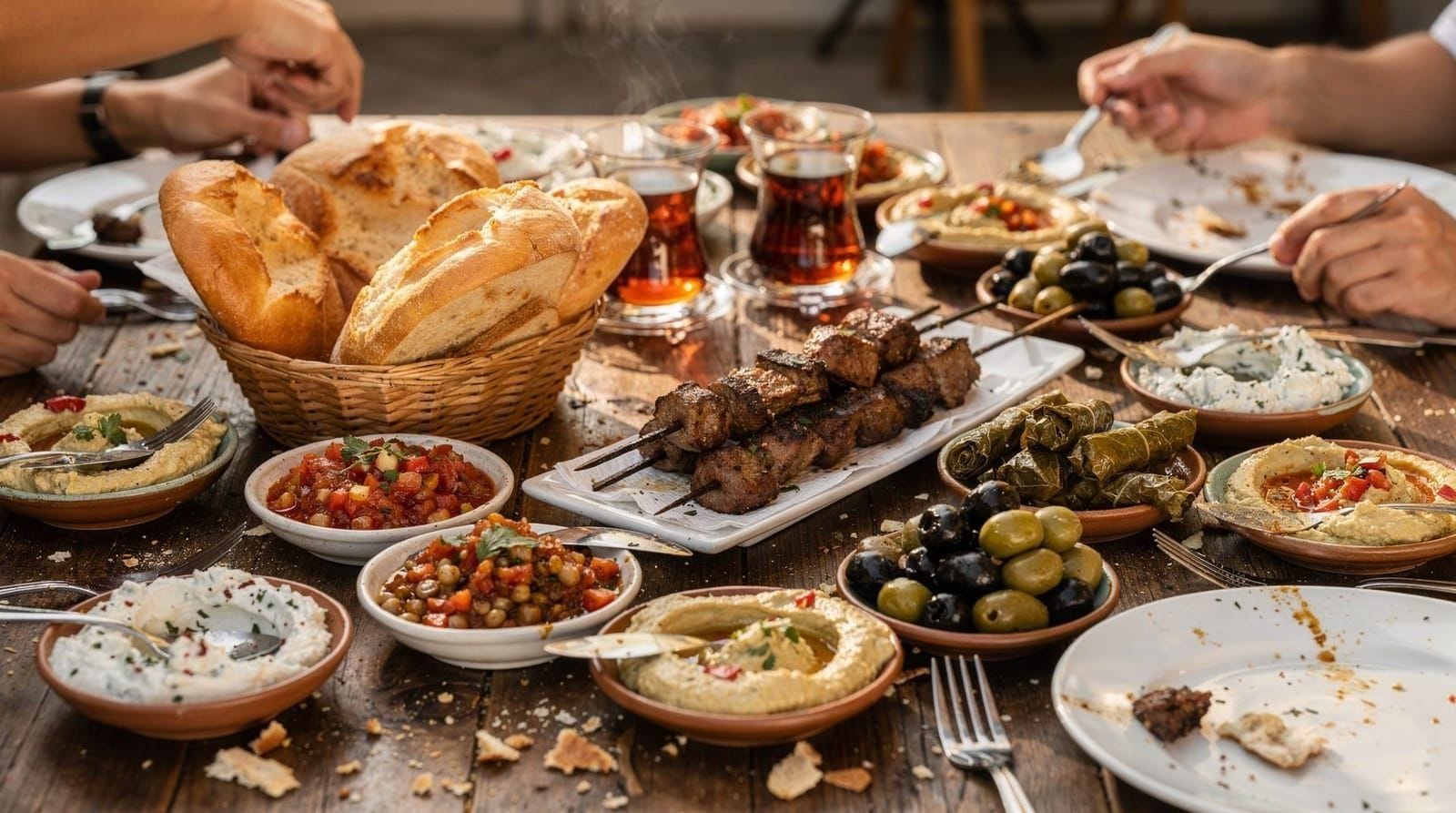
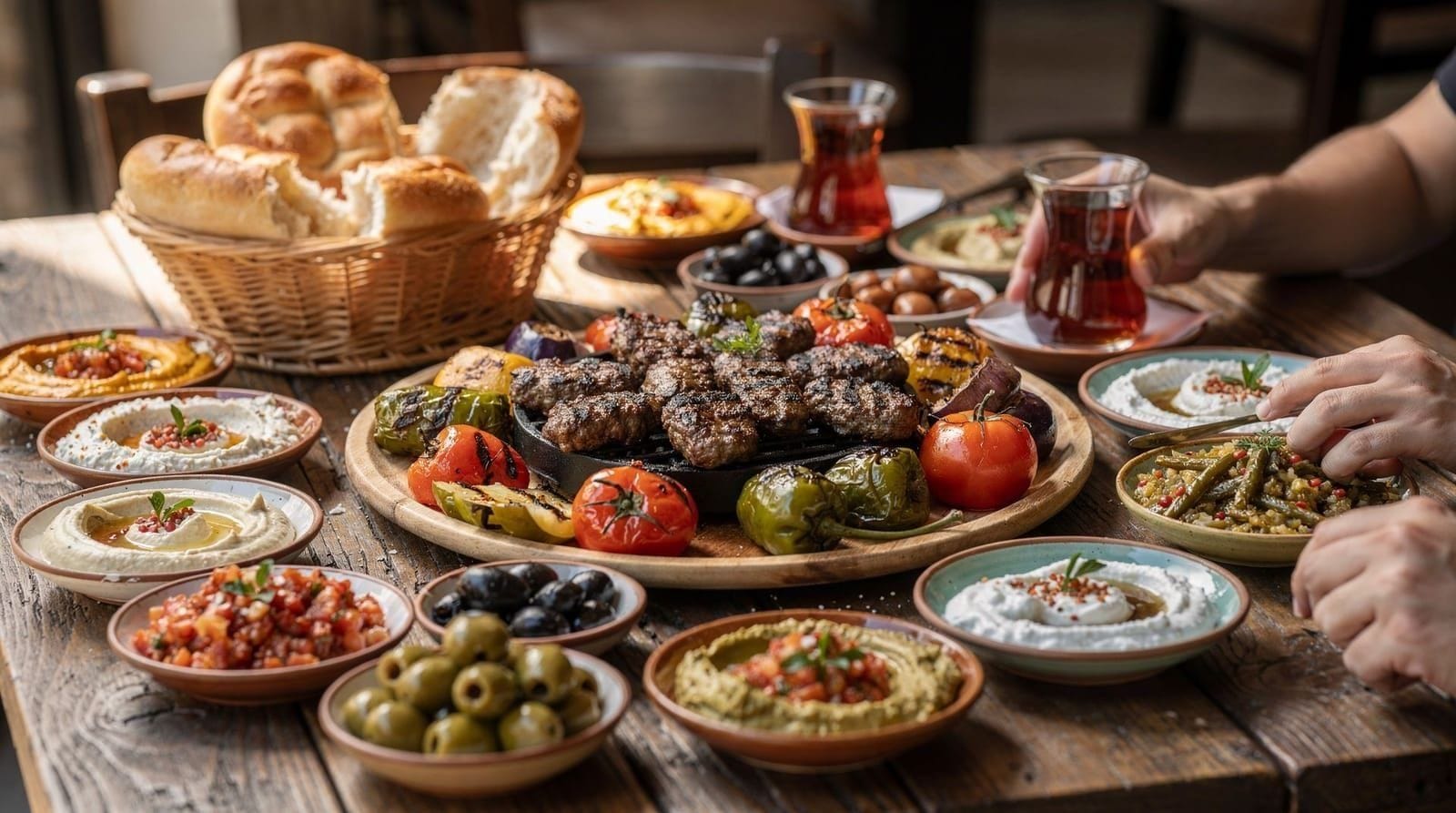
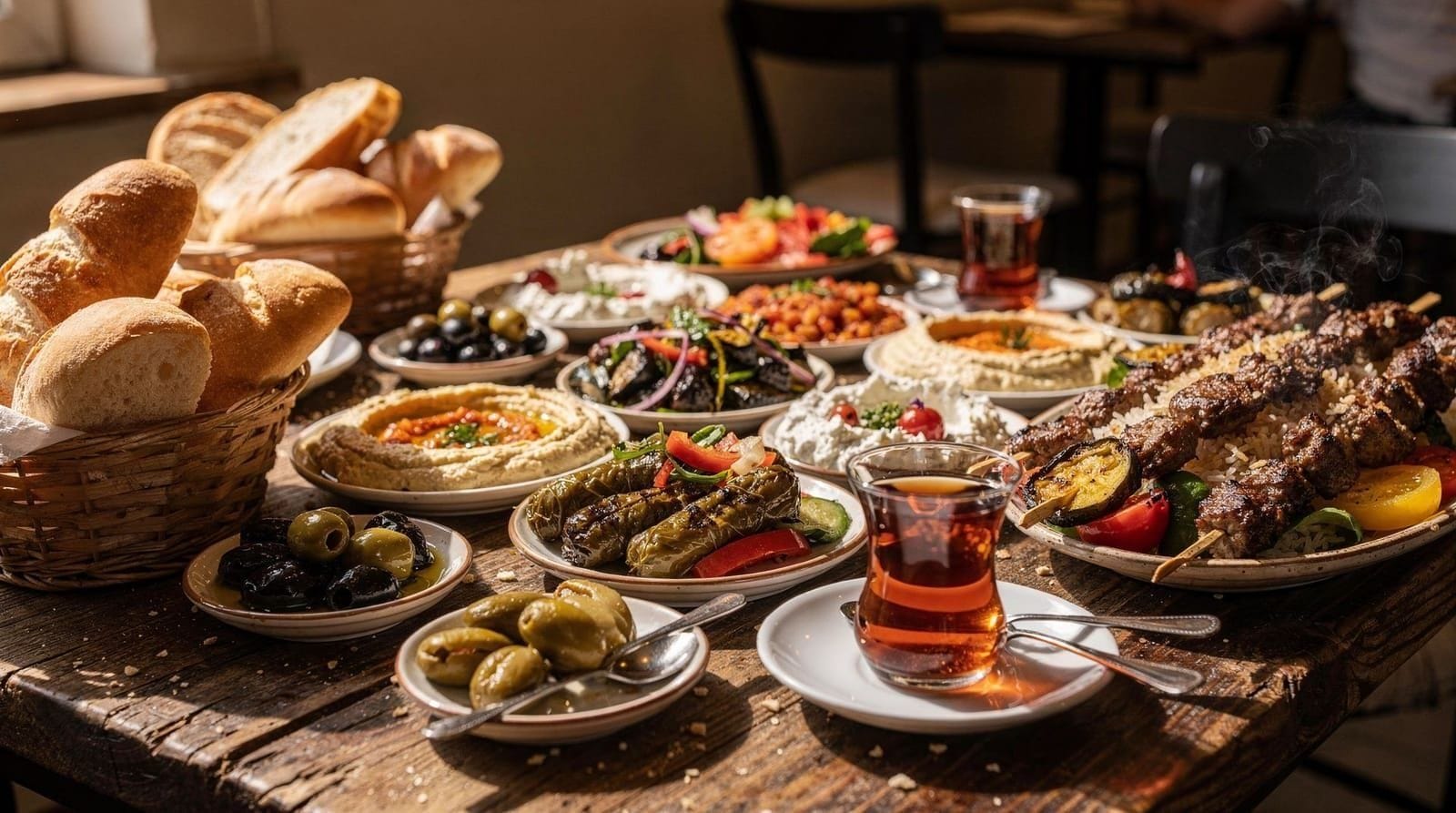
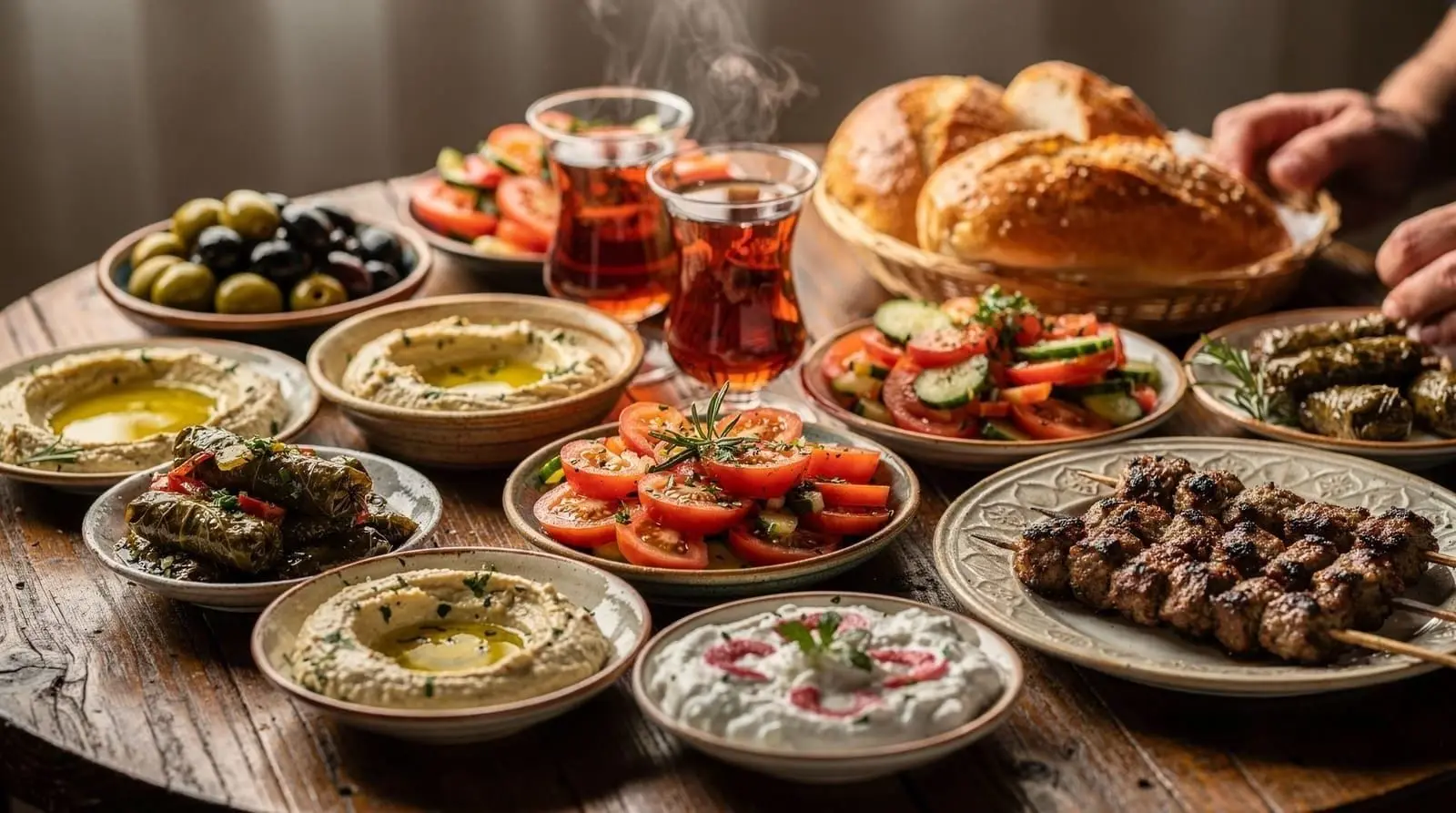
A proper Turkish breakfast is the meal most tourists underestimate. Locals treat it as an event — often a 2-hour affair on weekends. The spread (kahvaltı) includes:
- Beyaz peynir — white sheep’s milk cheese, similar to feta but less salty
- Kaşar — mild yellow cheese, semi-hard
- Olives — both black and green, often marinated
- Tomatoes and cucumbers — sliced thick, unfussy
- Eggs — either fried, soft-boiled, or menemen (scrambled with tomatoes and peppers)
- Honey and kaymak — thick clotted cream, essential, eaten on white bread
- Butter and jams — multiple varieties
- Simit — sesame ring bread, freshest from a street cart at 5–6 TRY
For a proper sit-down version, the Van Kahvaltı Evi in Cihangir (around 200 TRY per person in 2026) is one of the city’s well-known breakfast spots — it serves the Van-region style with 20+ small dishes. Similarly, Çengelköy Breakfast shops on the Asian side have good value options at 150–180 TRY per person.
Budget: 60–80 TRY for a simple breakfast at a local esnaf lokantası, 150–250 TRY for a full kahvaltı spread.
Street food worth eating
Istanbul’s street food scene is genuine and cheap, operating at a scale most cities can’t match. Here is what is actually good:
Simit — sesame bread rings sold from red carts everywhere. 5–6 TRY (under $0.20). Best eaten fresh, warm from the cart.
Balık ekmek — grilled mackerel in bread, sold from boats moored at Galata Bridge in Eminönü. 20–25 TRY. The famous ones at the bridge are legitimate — not a tourist trap. Eat it standing with pickled vegetables and lemon.
Lahmacun — thin flatbread spread with spiced minced meat, baked in a wood-fired oven. From fırın (bakery) counters across the city, 20–30 TRY each. Roll it with parsley and lemon. Kapalı Fırın near the Grand Bazaar is solid.
Kumpir — baked potato with extreme toppings. The Ortaköy kumpir strip near Ortaköy mosque is the tourist version (50–80 TRY); locals prefer it simpler, from side-street shops.
Midye dolma — mussels stuffed with spiced rice, lemon squeezed on top. Sold from trays on the street in Taksim, Beşiktaş, and Kadıköy. 3–5 TRY per mussel. High turnover stalls (the ones with a crowd) are safe; avoid any that look like the tray has been sitting out for hours.
Börek — flaky pastry filled with cheese, spinach, or meat. From börekçi shops (not restaurants). Pogaça, the round bun version, is 15–20 TRY.
Kokoreç — seasoned lamb intestines grilled on a rotating spit. Not for everyone. The best ones are in Beyoğlu near Galatasaray. 50–80 TRY for a half-portion sandwich.
Main meals: what to order and where
Kebab — the category is broad. What tourists get in tourist restaurants (döner in bread, or “mixed kebab platters”) is the lowest end of the category. Worth seeking: Adana kebab (ground lamb with red pepper, from Beyazıt’s lokantalar), şiş kebab (skewered cubed lamb, best at proper ocakbaşı grills), and Bursa’s İskender kebab (sliced döner on bread with tomato sauce and browned butter — eat it in Bursa or at Karaköy Lokantası in Istanbul).
Köfte — spiced meatballs, grilled or pan-fried. Tarihi Sultanahmet Köftecisi on Divan Yolu has been serving the same menu since 1920 — İnegöl köfte and lentil soup, around 180–220 TRY for a full meal in 2026. Touristy location, genuine food.
Balık (fish) — Istanbul is a coastal city and the fish is fresh. The Bosphorus once gave abundant bluefish (lüfer) and mackerel; overfishing means most fish now comes from farms, but the meyhane fish tradition persists. Best fish restaurants are in Kumkapı (tourist-facing but functional), Arnavutköy, and Sarıyer on the upper Bosphorus.
Pide — Turkish flatbread pizza, thicker than lahmacun, baked in a long leaf shape. Beyoğlu’s Bafra Pide Salonu is old-school and cheap. Order kıymalı (minced meat) or yumurtalı (egg). 120–180 TRY per pide in 2026.
Meze — cold and warm small dishes, best at a meyhane. The format: you order a spread of cold meze (haydari — yogurt with herbs, patlıcan ezmesi — smoked aubergine, arnavut ciğeri — Albanian-style fried liver) then warm dishes, then a main. This is the way Istanbullus eat on a night out.
The meyhane: Istanbul’s dining institution
A meyhane is a Turkish tavern, usually unlicensed for religious reasons until the 1970s, now a fixture of evening culture in Beyoğlu and across the city. The format is ritualistic: arrive in a group (meyhanes work better with 4+), order rakı (the 45% anise spirit, 150–200 TRY per glass or 400–600 TRY for a bottle in 2026), dilute it with water (it turns white, hence “aslan sütü” — lion’s milk), and eat slowly.
Well-known strips for meyhanes:
- Nevizade Sokak, Beyoğlu — narrow street with a dozen options; touristy but atmospheric
- Karaköy — more local crowd, slightly better quality
- Moda, Kadıköy — neighbourhood restaurants with Asian-side character
- Balıkçı Sabahattin, Cankurtaran (Sultanahmet) — expensive (900–1,200 TRY per person) but reliable for fish and meze
Full meyhane dinner with rakı: 500–900 TRY per person depending on how much you drink.
Turkish desserts: what is actually worth eating
Baklava — the version you find in tourist areas (usually pre-made, heavy on syrup) is mediocre. Real baklava is pistachio-forward and lighter than it looks. Karaköy Güllüoğlu near the Galata Bridge is considered Istanbul’s benchmark — 80–120 TRY per 100g. Buy fresh, eat same day.
Künefe — shredded wheat pastry with cheese, soaked in syrup and served warm. A dessert from Hatay province, served hot and slightly savoury. Worth ordering at a dedicated künefe shop.
Sütlaç — Turkish rice pudding, baked in an earthenware dish so the top caramelises. Cold and dense. A proper pudding-shop (muhallebici) version is 40–60 TRY.
Lokma — fried dough in syrup, given away free at religious events or sold from street stalls. 10–15 TRY for a portion.
Turkish delight (lokum) — ranges from excellent (fresh, from proper confectioners like Hacı Bekir or Ali Muhiddin) to tourist-trap garbage (flavoured starch). Avoid the Spice Bazaar for buying lokum — buy from shops on Mahmutpaşa or in Karaköy.
Turkish coffee and tea culture
Çay — Turkish black tea, served in small tulip-shaped glasses, bottomless, free or very cheap. The national beverage. You will be offered it everywhere. Accept it — refusing is mildly rude. 5–15 TRY in a lokanta, often complimentary after a meal.
Turkish coffee — thick, unfiltered coffee served in a small cup with grounds in the bottom. Ordered by sweetness level: sade (unsweetened), az şekerli (slightly sweet), orta (medium), çok şekerli (sweet). 25–50 TRY in a cafe. The famous Mandabatmaz in Galata serves excellent traditional-style coffee.
Where to eat: neighbourhood breakdown
Eminönü / Kapalıçarşı area: Good for street food and quick lunches — simit, balık ekmek, gözleme. Avoid the sit-down restaurants near the entrance to the Grand Bazaar (marked-up menus, pushy service). See the Grand Bazaar shopping guide for better nearby options.
Sultanahmet: The sit-down restaurant scene here is almost uniformly tourist-facing with inflated prices. Tarihi Sultanahmet Köftecisi (on Divan Yolu) and Balıkçı Sabahattin (in Cankurtaran, for fish) are the two exceptions worth making.
Beyoğlu / İstiklal: Dense with options from low-end to high-end. The meyhane strip of Nevizade is worth a visit. Baklavacı Güllüoğlu is in Karaköy, a 10-minute walk downhill. Beyoğlu has Istanbul’s best concentration of mid-range restaurants.
Karaköy: The most interesting food neighbourhood of the past decade. Good for breakfast, lunch, wine bars, and fish. Karaköy Lokantası is a reliable modern-Ottoman restaurant. The neighbourhood is walkable from Galata Tower.
Kadıköy (Asian side): The best market food scene in the city. The covered market (çarşı) area has dozens of mezeliers and fishmongers. The 3-hour evening food tour based in Kadıköy is particularly good for getting into the back streets. Kadıköy is worth a half-day for eating alone.
Balat / Fener: The gentrified breakfast and brunch scene. Weekend mornings bring long queues at the more photogenic spots. The neighbourhood itself — Jewish, Greek Orthodox, and Armenian history layered together — is worth visiting for Balat Fener reasons beyond food.
What to avoid
Menu translation services: In tourist areas, a man might approach and offer to help you find a table or translate the menu. He is usually on commission and will lead you to overpriced restaurants. Find tables yourself.
Fixed-price tourist menus: These are usually 300–500 TRY and not better than what you’d order à la carte for 150–200 TRY. They exist to simplify the transaction and capture tourists who are intimidated by ordering in Turkish.
“Authentic Turkish restaurants” marketed to tourists: The claim of authenticity in Istanbul is worth very little. The least authentic restaurants are often the ones with “authentic” in the name. The authentic ones just say what they are: an ocakbaşı, a lokanta, a börekçi.
Practical notes for 2026
Prices cited are based on mid-2026 rates with the TRY at approximately 38 TRY to 1 USD. Currency fluctuation affects this significantly — check rates on arrival.
Most local restaurants prefer cash. Tourist-facing restaurants take cards. The gap in price between cash and card venues is also a rough proxy for the gap in food quality.
Tipping at lokantalar: 10% is generous and appreciated. Rounding up the bill is standard. At meyhanes, 10–15% is the norm.
For deeper exploration across both sides of the Bosphorus, the food tours listed at the top of this guide are a reliable starting point — they cover ground faster than navigating solo and put you in neighbourhoods most first-timers don’t find on their own.
Dietary needs and how well Istanbul handles them
Halal is the default across Istanbul — you don’t need to seek it out or ask, since virtually all mainstream restaurants serve halal meat by default and pork appears only in specifically international or expat-oriented venues. Vegetarian eating is comfortable thanks to the zeytinyağlı tradition, börek, and the full breakfast spread, all covered above. Vegan is the harder category: most home cooking leans on butter, yoghurt, and clotted cream, so dedicated vegan restaurants (concentrated in Kadıköy) or the vegan/vegetarian cooking class that focuses specifically on the zeytinyağlı tradition are the more reliable routes than hoping a standard menu has enough plant-based options. Gluten-free travellers will find rice-based dishes (dolma, pilaf) and grilled meats straightforward, but most street food staples (simit, lahmacun, pide, börek) are wheat-based by definition.
Going deeper: cooking classes and coffee culture
If a few meals aren’t enough and you want to actually understand the technique behind Turkish home cooking, the Turkish cooking class experience guide covers what a hands-on class teaches — dolma rolling, börek layering, the char technique behind smoked aubergine dip — and how the home-format and teaching-kitchen options compare. Coffee deserves its own stop too: the Turkish coffee guide covers where to drink it properly and the fortune-telling tradition that follows it.
A guided food tour through Istanbul’s back streets is a practical way to taste widely across the dishes above in a single outing, with a local who knows which stalls are worth the stop.
Neighbourhood food crawl comparison
If you’re choosing one neighbourhood to focus a food-first afternoon or evening on, here’s how the main options stack up:
| Neighbourhood | Strongest for | Rough budget per person |
|---|---|---|
| Kadıköy | Market food, fish, everyday local eating | 150–350 TRY |
| Beyoğlu | Meyhane dinners, rakı culture, dessert shops | 500–900 TRY |
| Karaköy | Modern-Ottoman restaurants, coffee, breakfast | 200–500 TRY |
| Eminönü | Cheap street food, fish sandwiches, spice shopping | 50–150 TRY |
| Balat / Fener | Weekend brunch and photogenic cafés | 200–400 TRY |
Frequently asked questions about Turkish food guide — what to eat in Istanbul
Is Turkish food spicy?
What does a typical Turkish breakfast include?
Where should I eat near the Grand Bazaar without getting ripped off?
What is a meyhane and is it worth going?
Can vegetarians eat well in Istanbul?
What is the price difference between tourist restaurants and local ones?
What should I try at the Spice Bazaar?
Top experiences
Bookable activities with verified prices and instant confirmation on GetYourGuide.