Turkish cooking class experience — what you'll learn and cook in Istanbul
Istanbul: Traditional Cooking Class with a Local Mom
What do you learn in a Turkish cooking class in Istanbul?
Core classes cover 4–6 dishes including börek or dolma, a meze dish, a meat or vegetable main, and a dessert. You learn technique — proper phyllo layering, charring aubergine for smokiness, the rice-to-filling ratio for dolma. Classes run 3–4 hours and end with eating what you made. The home-format class teaches Turkish home cooking more authentically than a professional kitchen setting.
Quick answer: A typical 3–4 hour Turkish cooking class in Istanbul covers 4–6 dishes including börek or dolma, meze, a main, and dessert. The home-format class (in a local host’s kitchen) is more authentic than a professional school. You eat what you make at the end. Budget €50–80 per person.
| Where | Local host homes across Istanbul, or professional teaching kitchens |
| Cost | Around €50–80 per person |
| Time needed | 3–4 hours, including eating what you make |
| Best for | Home-format for culture, teaching-kitchen for precise technique |
| Booking | Advance recommended, especially for smaller home-format classes |
What Turkish home cooking actually involves
Turkish home cooking is distinct from restaurant Turkish food in several ways. The home version is simpler in presentation but richer in technique — family recipes passed down through generations, regional variations, and a relationship with seasonal ingredients that restaurant cooking often flattens.
Istanbul cooking classes that work most effectively focus on this home cooking tradition rather than restaurant production methods. The dishes you learn in a good cooking class are the dishes that Turkish families actually make on Sundays — not the tourist-facing kebab menu.
This guide goes into the specific dishes, techniques, and what you can realistically take away from an Istanbul cooking class.
Dish by dish: what you’ll learn
Patlıcan ezmesi (smoked aubergine dip)
The most technique-revealing Turkish dish. The smokiness comes from direct charring — the aubergine is placed directly on a gas burner flame (or over charcoal) and turned until the skin is completely blackened and the inside is collapsed and fragrant.
The technique:
- Place a whole aubergine directly on the burner, flame set to medium
- Turn every 5 minutes until the skin is entirely charred and the aubergine collapses (15–20 minutes)
- Transfer to a bowl and allow to cool
- Peel away the charred skin, squeezing gently to remove excess moisture
- Chop or blend the flesh with olive oil, garlic (optional), lemon juice, and salt
The characteristic smokiness is impossible to replicate with smoked paprika or liquid smoke — it comes specifically from the direct char. A cooking class where you do this step yourself produces a memorable result.
What you can do at home: Any gas burner works. Electric or induction requires a different technique (roasting under a very hot grill in the oven approximates it but produces less smokiness).
Dolma (stuffed grape leaves)
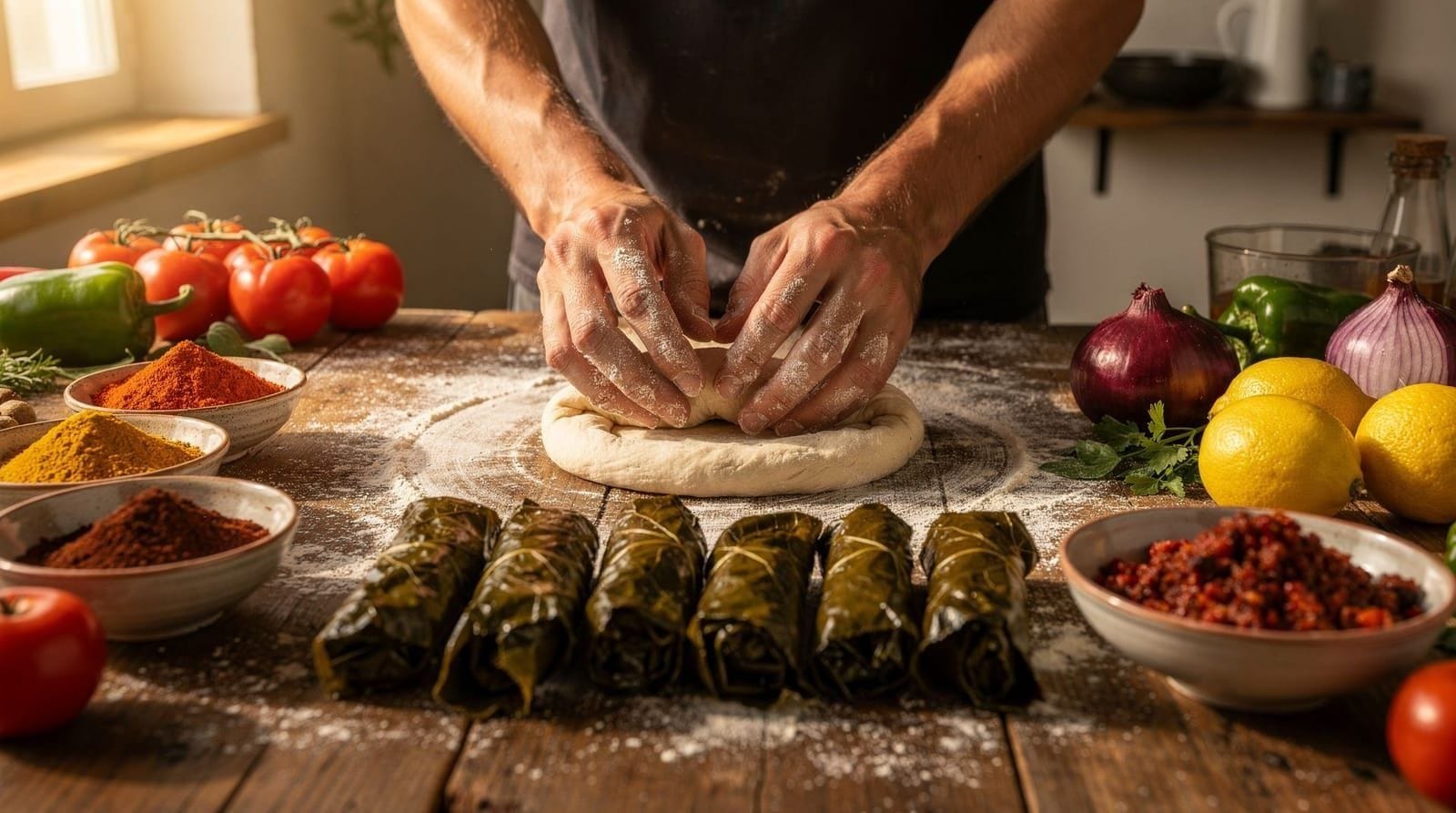
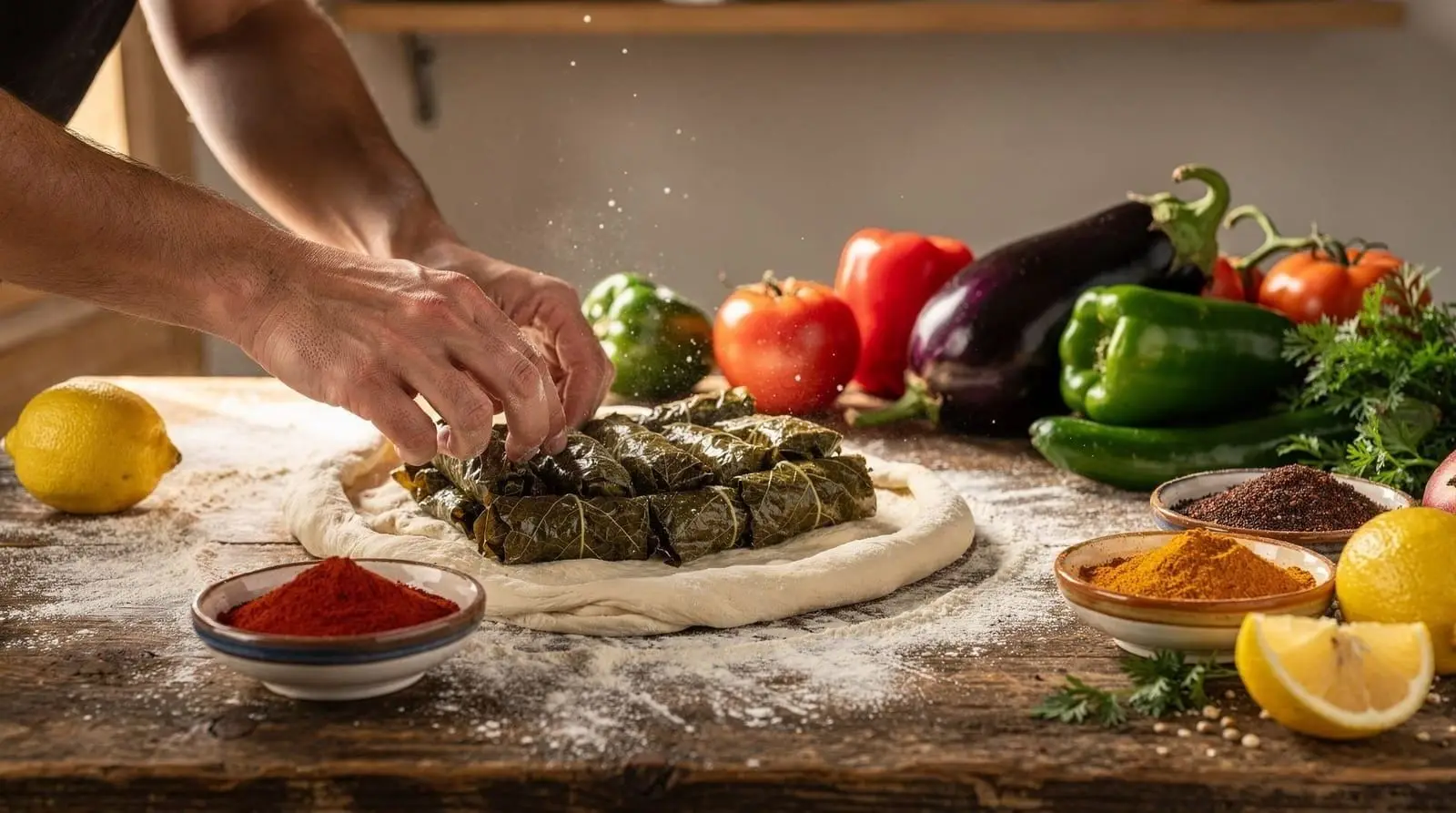
The version most commonly taught is yaprak sarma — rice filling in brined grape leaves. The technique has two components: the filling and the rolling.
The filling — typically: short-grain rice, chopped tomato, onion, pine nuts, dried currants, fresh dill and mint, olive oil, salt, and dried mint. The spicing should be light — dolma flavour comes from the grape leaf itself and the absorbed cooking liquid.
The rolling technique: Place the leaf smooth-side down, spoon filling onto the centre of the widest part, fold the sides in, then roll tightly from the bottom. The rolls should be finger-tight — loose dolma fall apart during cooking.
Cooking: Stack the dolma tightly in a wide pot (tight packing prevents unrolling during cooking), weigh them down with a plate, cover with water and olive oil, cook on low heat for 30–40 minutes.
Turkish cooking teachers often say “the rolling is quick to learn and hard to perfect” — you’ll make presentable dolma after one session, but the speed and tightness of the roll improves over years of practice.
Börek (savory layered pastry)
The börek made in most Istanbul cooking classes is the peynirli börek (white cheese börek) using yufka — Turkish-style phyllo. The technique involves:
- Laying sheets of yufka on a floured surface
- Brushing each sheet generously with melted butter or a butter-egg mixture
- Adding the filling (crumbled white cheese and fresh parsley or dill) at the centre layer
- Folding and pressing
- Baking at high heat until golden and crisp
The key technique lesson is butter application — Turkish börek uses considerably more butter than most home cooks would guess. The richness comes from the fat in the layers, not from the filling.
Variations you may encounter:
- Sigara böreği — fried cigar-shaped rolls (different from baked börek but made in some classes)
- Ispanaklı börek — spinach filling instead of cheese
- Kıymalı börek — spiced minced lamb filling
Köfte (spiced meatballs)
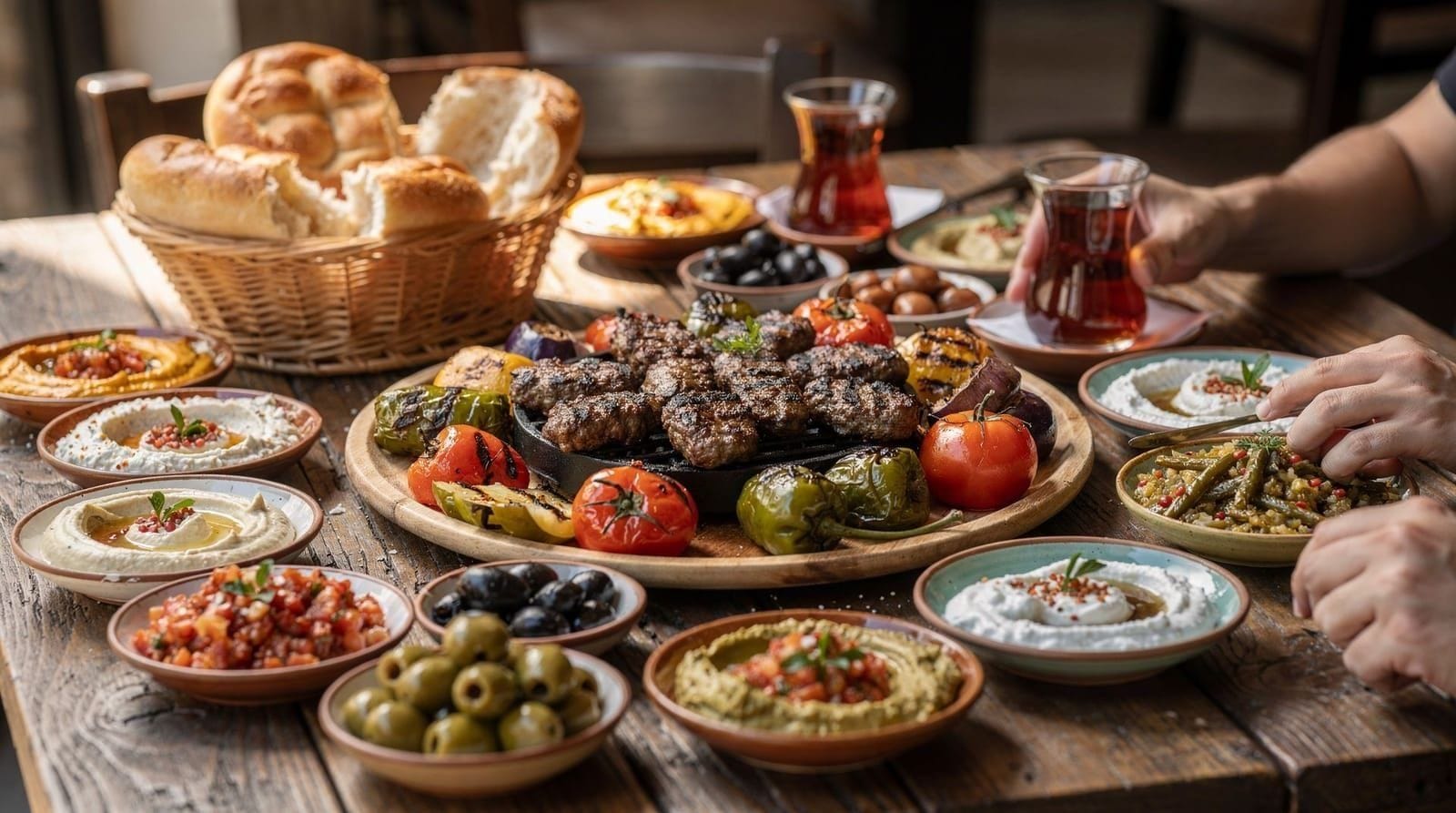
Turkish köfte is a ground meat preparation using a specific technique: the meat is kneaded with spices, breadcrumbs (or soaked bread), and often grated onion until the mixture develops a specific texture — firmer than a burger, smooth rather than crumbly.
The spice mix for İnegöl-style köfte (the standard home version): cumin, black pepper, red pepper flakes, dried mint, salt. Garlic is optional and contested (the traditional İnegöl version excludes it).
Technique: The kneading is important — it develops protein structure that keeps the köfte together on the grill without binding agents. You’ll typically knead for 5–7 minutes by hand.
The result is a simple dish elevated entirely by proper technique and seasoning.
Zeytinyağlı fasulye (green beans in olive oil)
A zeytinyağlı dish (literally “with olive oil”) is a slow-cooked vegetable preparation that defines Turkish home cooking. Green beans, artichoke hearts, celery root, courgettes, and many other vegetables are cooked in this style.
The technique:
- Sauté onions and tomatoes in generous olive oil
- Add vegetables and season
- Cook covered on very low heat for 30–45 minutes
- Cool to room temperature and serve — not hot, not cold
The result should taste of olive oil and the vegetable itself, not of sauce. It improves after resting for several hours. Learning this technique unlocks a broad category of Turkish home cooking.
Baklava (simplified version)
Most cooking classes don’t teach full from-scratch baklava (the phyllo-making itself requires days of practice). Instead, classes cover:
- Using commercial phyllo/yufka correctly (the proper brushing technique)
- Making the clarified butter
- Pistachio filling preparation and distribution
- Syrup preparation (the ratio and temperature matter)
- Scoring and cutting before baking
The result is genuine baklava — not as perfect as Karaköy Güllüoğlu, but replicable at home. The baklava you make goes home with you.
Formats compared: home kitchen vs. teaching kitchen
Home kitchen (local host format):
- Residential neighbourhood, real family kitchen
- The host cooks at home regularly — the recipes are lived rather than performed
- More conversational — you learn context and family history alongside technique
- Less precise in measurements (a handful of this, a splash of that) — which is actually how Turkish home cooking works
- Smaller groups (4–8 people)
Teaching kitchen (professional chef format):
- Proper commercial kitchen equipment
- More precision in measurements and technique
- Better for people who want to translate the learning into precise home cooking
- Less culturally immersive than the home format
- Groups up to 12–15
The honest recommendation: For cultural experience and authentic recipes, the home format. For technical cooking instruction, the professional kitchen. If you’re uncertain, the home format is more likely to be the memorable experience.
The vegan and vegetarian option
Istanbul has at least two operators running dedicated vegan/vegetarian cooking classes. These cover the zeytinyağlı tradition extensively — a branch of Turkish cooking that is naturally plant-based and underrepresented in standard cooking class curricula.
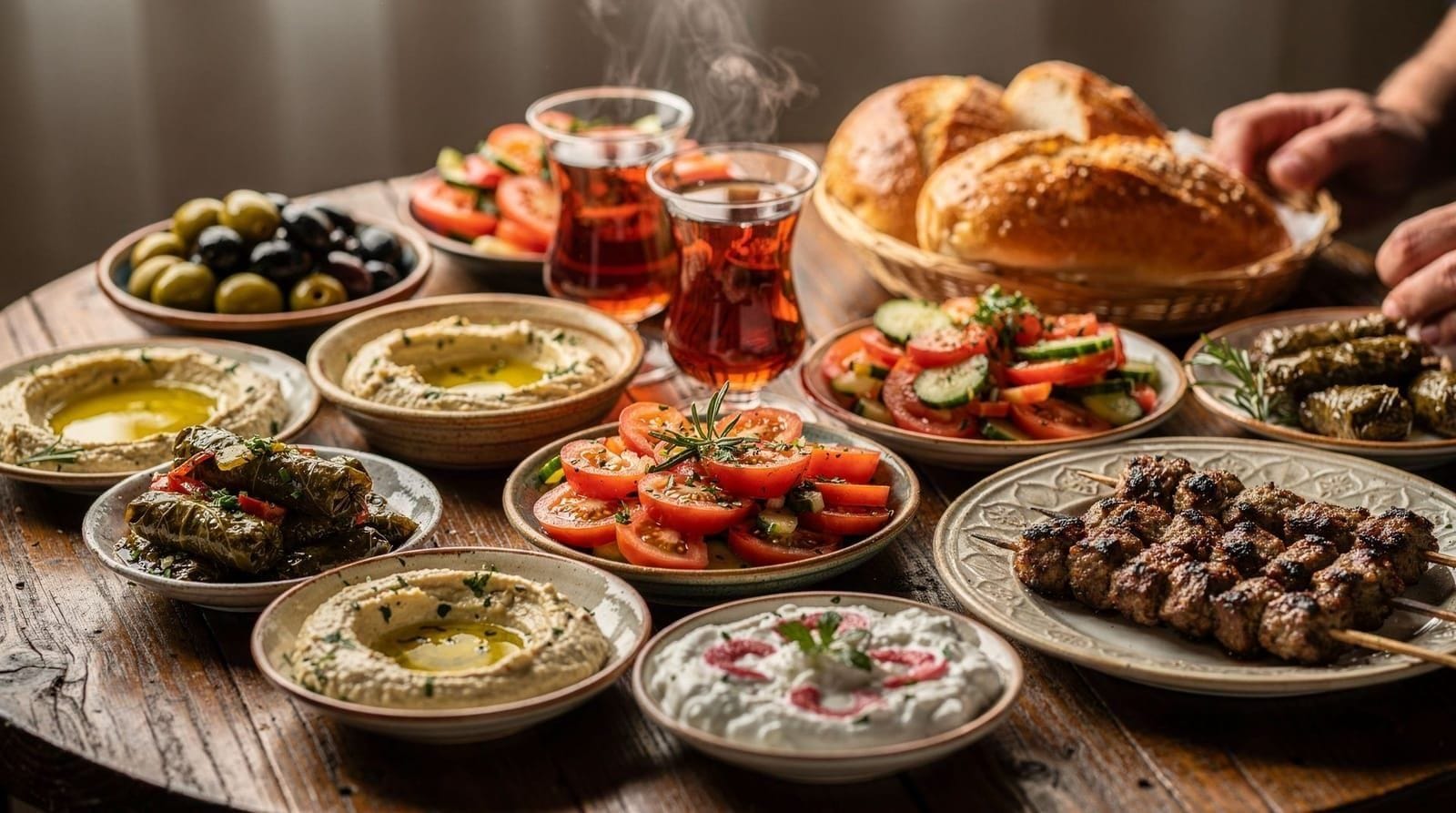
Dishes covered: Zeytinyağlı enginar (artichokes in olive oil), imam bayıldı (stuffed aubergine), zeytinyağlı fasulye, vegetarian dolma with dried apricots and pine nuts, various meze.
What to do with your recipes after the class
A good cooking class leaves you with:
- Printed or digital recipe cards in English with specific ingredient names in both Turkish and English
- Notes on substitutions for ingredients hard to find outside Turkey (fresh yufka → standard phyllo, specific cheese varieties → what substitutes)
- Knowledge of where to buy Turkish ingredients abroad (Turkish grocery shops exist in most European and North American cities)
The dishes most replicable at home:
- Patlıcan ezmesi — requires only a gas burner
- Dolma — grape leaves are available tinned internationally
- Zeytinyağlı fasulye — straightforward with widely available ingredients
- Börek — commercial phyllo works well
The most difficult to replicate:
- Full handmade phyllo börek — requires days of practice
- Artisan baklava — the phyllo-stretching technique is a years-long craft
Pairing a cooking class with other Istanbul activities
A cooking class morning (10am–1pm) fits naturally before an afternoon at the Spice Bazaar — you’ll have context for what you’re buying. The Grand Bazaar shopping guide covers kitchen goods and spice sourcing for taking Turkish cooking ingredients home.
For a food-focused Istanbul trip, see the Istanbul foodie 2-day itinerary for how to arrange cooking classes, food tours, and market visits over two days.
Comparing a cooking class to other hands-on food experiences
A cooking class isn’t the only way to get hands-on with Turkish food culture in Istanbul, and it’s worth knowing what each option actually delivers before booking.
| Experience | What you get | Best if |
|---|---|---|
| Home-format cooking class | Recipes, technique, a meal, conversation with a local host | You want the fullest cultural context |
| Teaching-kitchen class | Precise technique, replicable measurements | You plan to cook these dishes regularly at home |
| Food tour | Breadth — many dishes tasted across neighbourhoods | You want to understand the food geography, not cook |
| Turkish coffee workshop | A narrower, single-craft deep dive | You want one specific skill rather than a full meal |
If you’re deciding between a cooking class and a Turkish coffee trail or fortune-telling workshop, the honest distinction is depth versus breadth — the cooking class teaches you to make a full meal, the coffee workshop teaches one specific ritual well.
Group size and what it changes
Group size affects both price and how much individual attention you get, and it’s worth asking about before booking rather than discovering it on arrival. Home-format classes capped at 4–8 people mean the host can correct your rolling technique or check your char on the aubergine directly; teaching-kitchen classes running 12–15 people are closer to a demonstration with some hands-on stations. Neither is wrong, but they produce different experiences for the same nominal “cooking class” label. If the listing doesn’t specify group size, it’s a reasonable question to ask before booking, particularly for the home-format options where intimacy is part of the appeal.
How Istanbul cooking classes fit around your itinerary
Morning classes (starting 10am) work well before an afternoon exploring Kadıköy or the Spice Bazaar, since you arrive with fresh context for the ingredients on display. If you’re building a food-focused day rather than a single activity, pairing the cooking class with the Istanbul street food guide or a visit to Karaköy rounds out the day without repeating dishes — a home-cooked meal in the morning, street food snacking in the afternoon, and a proper sit-down dinner covers the full range of how Istanbul actually eats.
A Turkish coffee and desserts cooking course is a lighter-weight alternative if a full 3–4 hour savoury cooking class feels like too much time — it focuses specifically on baklava, lokum, and coffee preparation in a shorter session.
Where this class sits in the wider food picture
A cooking class makes more sense once you know what you are cooking toward. The Turkish food guide explains the regional dishes and the everyday structure of a Turkish meal, and the Istanbul cooking class guide compares the operators and formats if you are still choosing. If you are drawn to the sweet side of the class, the baklava and Turkish desserts guide shows what the finished product should look and taste like, which gives you a benchmark for judging your own attempt.
The meze you learn to make also pairs naturally with the drinking and sharing culture described in the meze and rakı guide, and the morning table covered in the best Turkish breakfast guide is a good way to see the same olive oil, cheese and herb logic from another angle. For a plan that puts several of these experiences into one trip, the Istanbul for first-timers guide helps you decide how much of your time to give to food.
Frequently asked questions about Turkish cooking class experience — what you'll learn and cook in Istanbul
Is Turkish cooking difficult to learn?
What is dolma and how do you make it?
What is börek and how hard is it to make at home?
What spices will I learn to use in an Istanbul cooking class?
Can children participate in Istanbul cooking classes?
What is the difference between the dolma and börek class options?
What can I buy at the market before a cooking class?
Top experiences
Bookable activities with verified prices and instant confirmation on GetYourGuide.