Meze and rakı guide — how to eat like an Istanbullu
Istanbul: European and Asian Side Guided Foodie Walking Tour
Duration: 5.5 hours
What is a meyhane and how do I order meze and rakı?
A meyhane is a Turkish tavern where you eat meze (small plates) and drink rakı (anise spirit diluted with water). Start with cold meze (haydari, patlıcan ezmesi, arnavut ciğeri), add warm dishes, then a fish or meat main. Rakı is poured over ice, diluted 1-to-1 with water (it turns cloudy white). Budget 500–900 TRY per person with drinks in a mid-range Beyoğlu meyhane.
Quick answer: A meyhane evening starts with cold meze (haydari, smoked aubergine, flash-fried liver), moves through warm dishes, and ends with fish or kebab. Rakı — diluted 1-to-1 with cold water — is the drink throughout. Budget 500–900 TRY per person. The best Beyoğlu meyhane strips are Nevizade Sokak and Karaköy.
Understanding the meyhane culture
The word meyhane comes from Persian — mey (wine) and hane (house). In contemporary Istanbul, it refers to a style of tavern built around meze and rakı rather than food as the primary event. The evening is the event.
The tradition has Ottoman roots but became a distinctly Istanbul phenomenon, tied to the city’s multiethnic past — historically, meyhanes were associated with the city’s Greek, Armenian, and Jewish communities (often exempted from Islamic liquor prohibitions under Ottoman law). After the population exchanges of the early 20th century, the culture persisted but transformed.
Modern meyhanes are secular Turkish spaces, but the cultural memory of that multiethnic food culture (meze dishes with Greek names, music that borrows from Balkan and Greek traditions, the long evening format) is still present.
The format is slow by design. You arrive, you order drinks, meze appears in waves, you eat slowly, you talk, you drink. A proper meyhane evening is 2–3 hours minimum. This is incompatible with a tight sightseeing schedule.
| Where | Nevizade Sokak (Beyoğlu), Karaköy, Kumkapı |
| Cost | 500–900 TRY/person with drinks, mid-range |
| Time needed | 2–3 hours minimum |
| Getting there | Walkable from İstiklal Caddesi / tram T1 to Karaköy |
| Best time | 8–10pm on a weekday |
Building a meyhane evening for a group
For visitors organising a meyhane night for a group of four or more, ordering strategy matters more than at a typical restaurant. Rather than each person ordering individually, the standard approach is for the table to agree on a shared spread: order roughly one and a half cold meze per person to start, add two or three warm meze once the cold plates are half-finished, and only then decide on mains. Groups that order everything at once often end up with cold food arriving alongside the fish course, which defeats the pacing that makes a meyhane evening work.
Splitting the bill in a meyhane is usually done evenly rather than itemised, since the shared-plate format makes individual tracking impractical — worth agreeing on before the first round of rakı arrives, not after.
Rakı: how to drink it properly
Rakı is not an aperitif, not a digestif, and not a shots drink. It is the companion to the entire meal — you pour it at the start and it stays with you through the meze, the warm dishes, and the main.
Ordering rakı:
- A glass (the standard order for one person) runs 150–200 TRY in 2026 at a mid-range meyhane.
- A bottle (700ml, serves 3–4 people) costs 400–700 TRY. Ordering a bottle is more efficient for groups.
- The most commonly drunk brand is Yeni Rakı (the standard commercial version). Tekirdag Rakı is considered slightly superior by aficionados. Artisanal/small-batch rakıs exist at premium prices, and for the wine side of the table a city wineries tour with a private sommelier is a good complement to a rakı-focused evening, covering Turkey’s growing domestic wine scene.
How to drink it:
- The glass arrives with ice already in it.
- You pour rakı over the ice (typically 1/3 to half the glass).
- Add cold water (poured from a separate small pitcher) in roughly equal proportion.
- The rakı turns cloudy white — this is the “louche,” caused by anise oils coming out of solution. This cloudiness is not a flaw.
- Drink slowly throughout the meal.
Do not drink rakı neat (unless you specifically want to). The dilution is not about reducing alcohol — it is about changing the flavour profile and pace of drinking. A rakı glass consumed over two hours alongside meze is different from a shot.
Rakı with specific foods:
- Arnavut ciğeri (liver) is the classic pairing — the iron-rich flavour contrasts with the anise.
- White cheese (beyaz peynir) is always on the table with rakı — the fat coats the mouth and smooths the anise.
- Watermelon in season — a famous combination. The sweetness against the bitter anise is the reason for the pairing.
- Fish — the classic rakı main is grilled sea bass or turbot. Avoid red meat with rakı if you can (though it’s not prohibited).
The meze menu: what to order
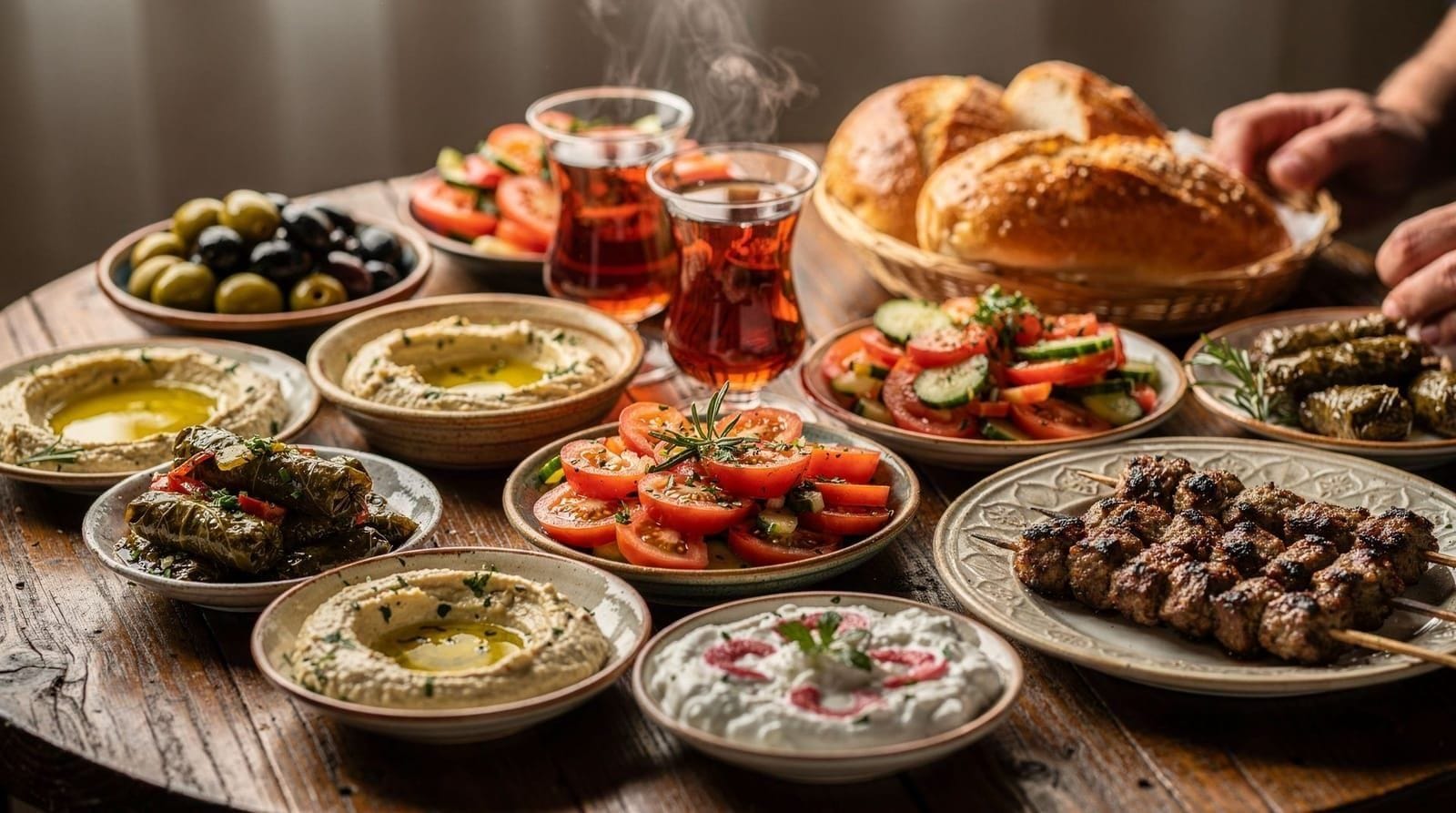
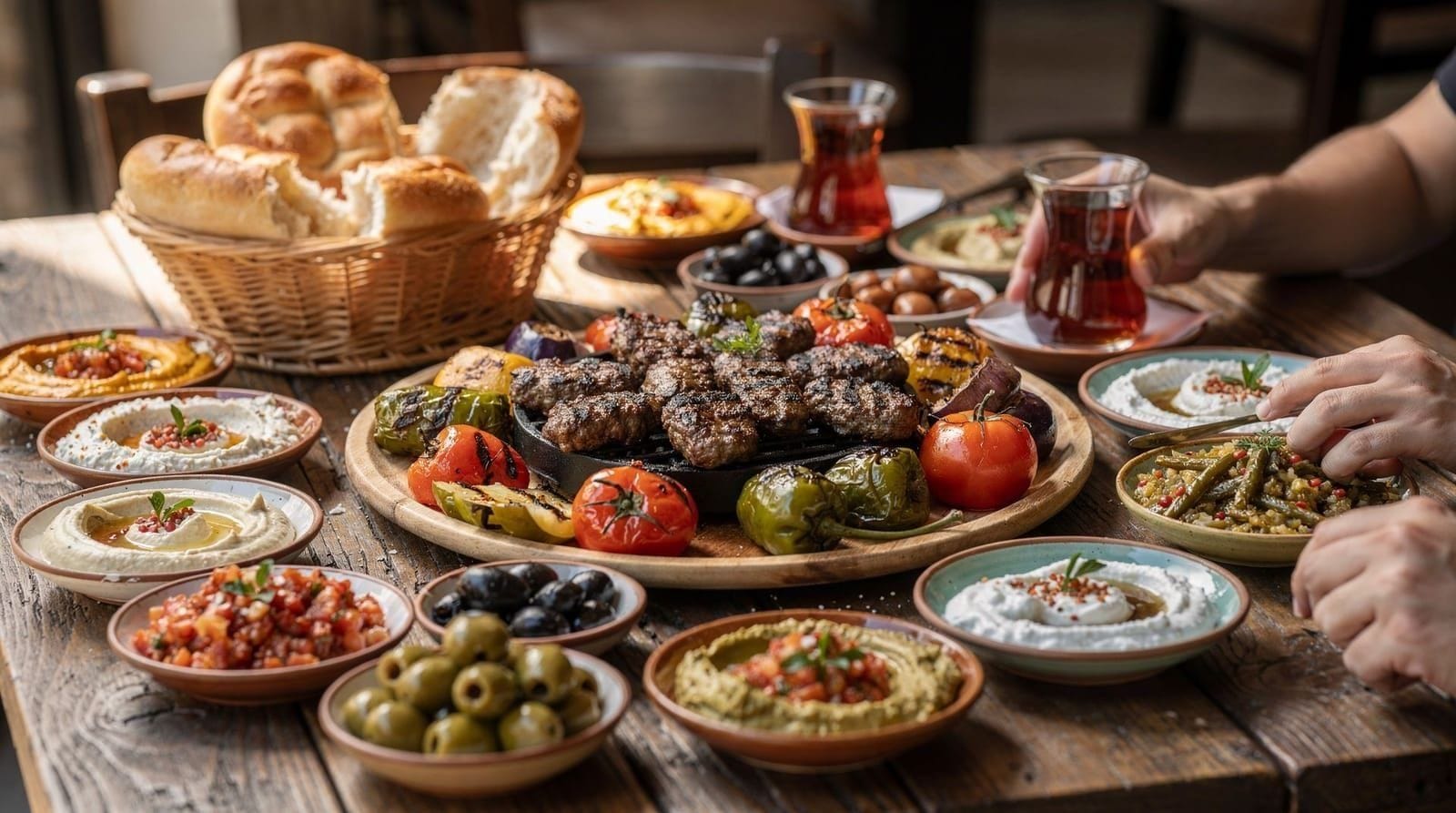
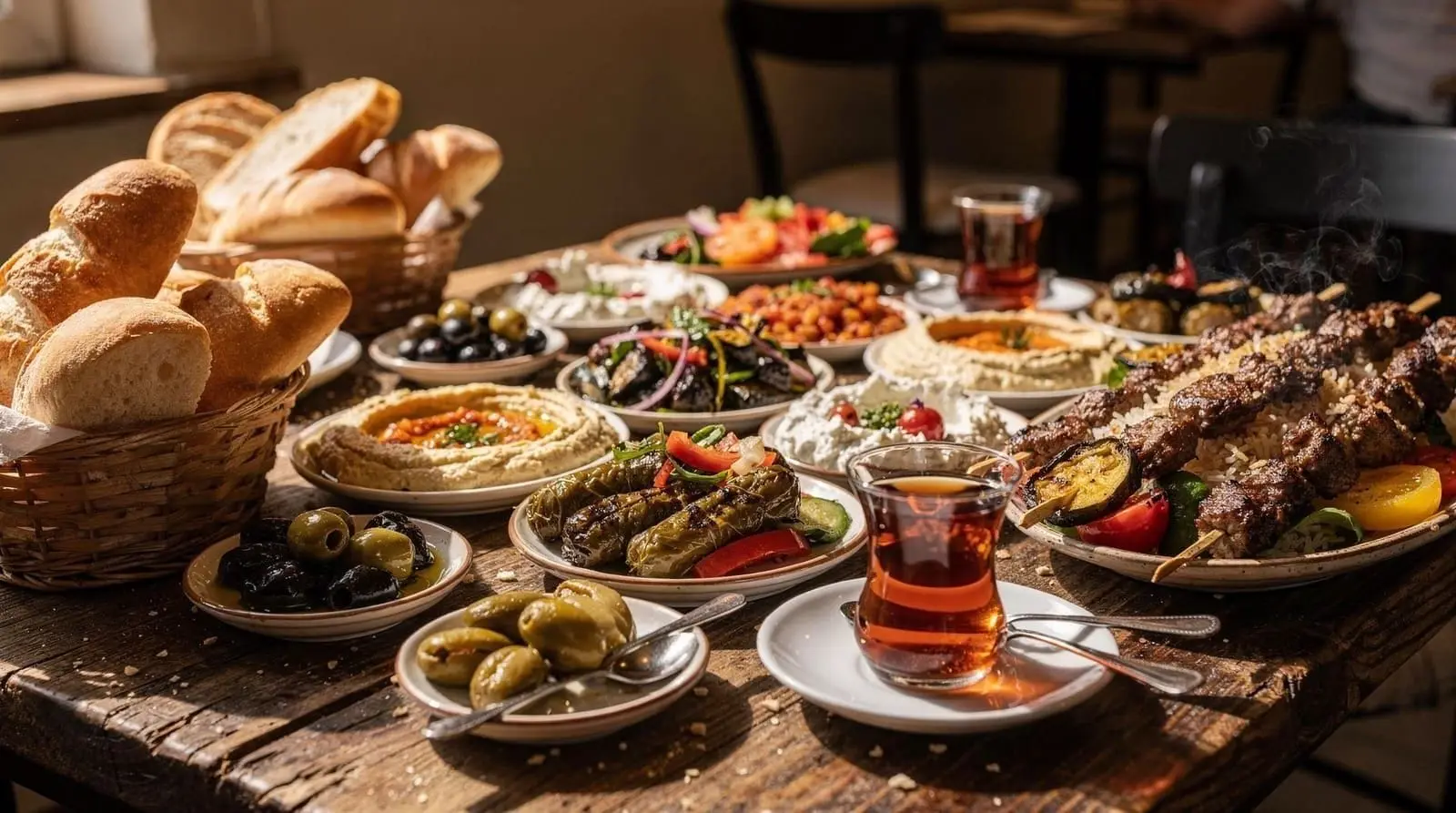
Cold meze (soğuk mezeler) arrives first and is the foundation of the meal. These are room-temperature or cold dishes, designed to accompany the first glass of rakı:
Haydari — thick strained yogurt with olive oil, mint, and often dill. Mild, creamy, the coolness offsets the rakı. Essential.
Patlıcan ezmesi — smoked aubergine purée with olive oil, sometimes with garlic and lemon. Better than most baba ganoush versions because the aubergine is charred over an open flame, giving genuine smokiness. Essential.
Arnavut ciğeri — “Albanian-style liver” — thin-sliced lamb liver, flash-fried, served with raw white onion, sumac, and parsley. The version that has converted many liver-averse visitors. The key is freshness and high heat — the liver should be pink inside, not overcooked.
Çoban salatası — “shepherd’s salad” — finely diced tomato, cucumber, onion, and green pepper with olive oil. Simple and refreshing.
Zeytinyağlı enginar — artichoke hearts in olive oil, often with peas and carrots. Cold, very light, delicate.
Rakı balığı — literally “rakı fish” — marinated anchovies or sardines in olive oil. Pairs specifically well with rakı.
Semizotu salatası — purslane (a succulent herb) salad with yogurt. A specific Turkish meyhane salad not found much elsewhere.
Warm meze (sıcak mezeler) follows later:
İçli köfte — torpedo-shaped bulgur croquettes stuffed with spiced lamb and pine nuts, deep-fried. One of the more impressive meze dishes technically.
Sucuklu yumurta — beef sausage sliced and pan-fried with eggs. Appears on breakfast menus too; here it is a warm meze.
Kalamar tava — fried calamari, common, quality varies. At a fish-focused meyhane, the calamari should be fresh and lightly battered.
Midye tava — fried mussels, similar.
Karides güveç — shrimp baked in a clay pot with tomatoes and herbs. A warm meze at better meyhanes.
Ordering strategy: For two people, 4–5 cold meze and 2–3 warm meze is enough before a main course. Meyhane servers often have an incentive to bring more meze than you need — it is appropriate to say “yeter” (enough) or specify a limit at the start.
The main course
A proper meyhane main is grilled fish or a kebab from a real charcoal grill. Not all meyhanes have strong main courses — some are primarily meze establishments where you fill up on small plates.
Fish: In Istanbul, sea bass (levrek), sea bream (çipura), red mullet (barbunya), and bluefish (lüfer) are the standards. Fish is priced by weight — ask the price per 100g before ordering (barbunya, being smaller, is usually priced differently). A grilled whole fish for one person: 200–400 TRY depending on species and size.
Kebab: At meyhanes with a good charcoal grill, şiş kebab or Adana kebab is the alternative to fish. Less expensive than fish, still satisfying after a full meze spread.
Not all meyhanes do mains well: Some meyhanes are explicitly meze-only or meze-forward establishments where the mains are secondary. If you want a substantial main, choose accordingly or ask before sitting.
Ordering fish by weight: Whole fish is priced per 100g in most meyhanes, and the fish is typically shown to you at the table before it’s cooked so you can approve the size. Ask for the price per 100g and the approximate total weight before agreeing — this avoids the surprise of a much larger bill than expected, particularly with premium species like lüfer in season, which command higher prices than farmed sea bass or bream.
Best meyhanes by neighbourhood
Beyoğlu — Nevizade Sokak
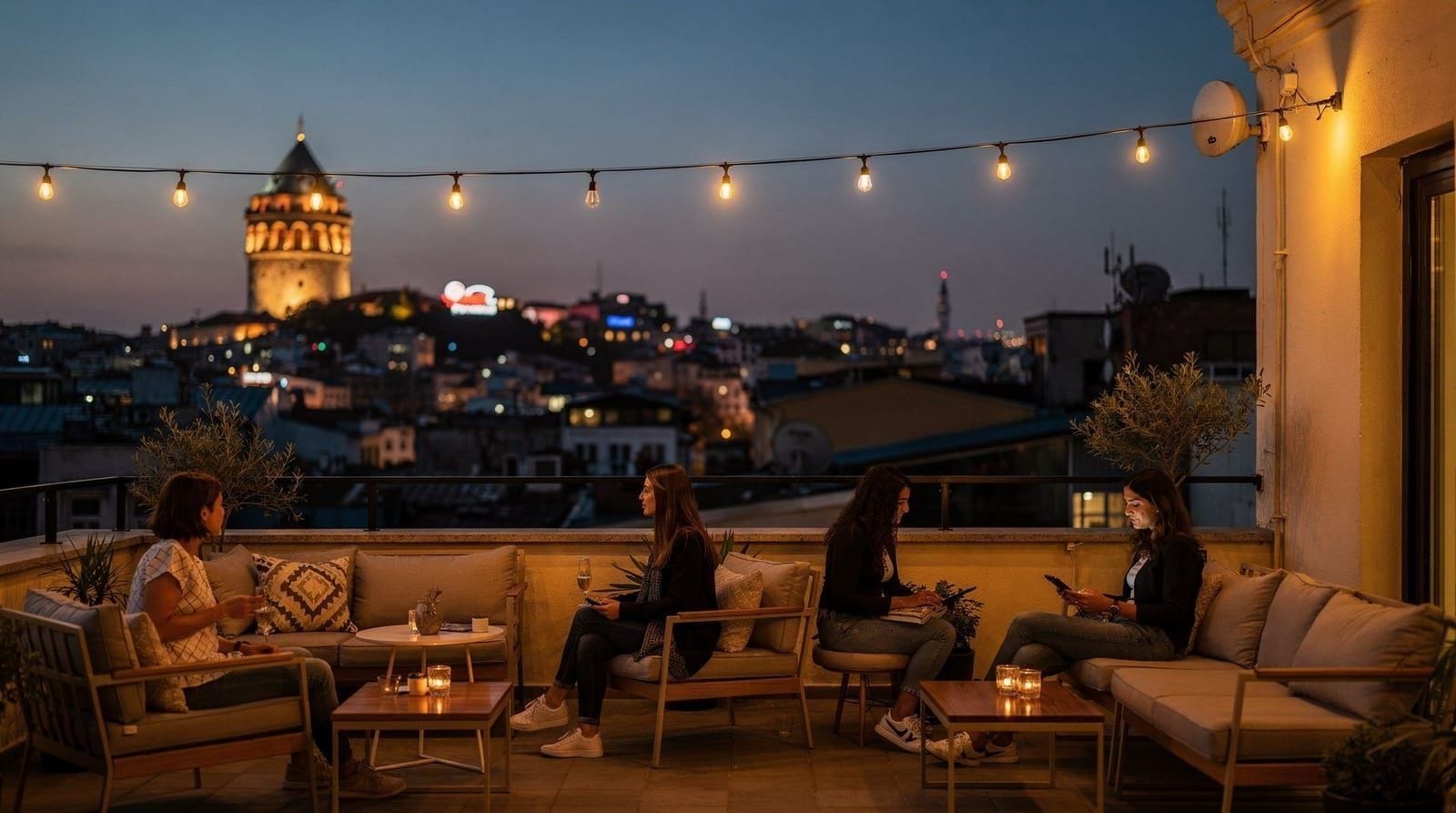
A narrow cobbled street parallel to İstiklal Caddesi with a dozen meyhanes side by side. Chairs spill onto the street in summer. The atmosphere is dense, loud, and genuinely fun — the strip has been doing this for 70+ years.
The meyhanes here are mid-range to slightly tourist-aware (English menus exist). The food is reliable rather than exceptional. The best time is 8–10pm on a weekday when it is full but not insane.
What to expect: 600–900 TRY per person with rakı. The strip is 10 minutes walk from Galata Tower.
Karaköy
More local and younger crowd than Nevizade. Smaller spaces, more contemporary interiors, slightly better food. A neighbourhood that has gentrified over the past decade but maintains genuine meyhane culture.
Karaköy Lokantası is the best-cited restaurant in the area (mid-range Ottoman food rather than a classic meyhane, but worth knowing). Several smaller meyhanes on the side streets offer authentic meze formats.
What to expect: 500–800 TRY per person with rakı.
Kumkapı
The old fish market district south of Sultanahmet, historically the city’s main meyhane zone for centuries. More tourist-facing now than Nevizade, but still genuine. The fish (bought fresh from the adjacent market) is the main draw.
Musicians walk between tables and expect tips — this is part of the experience, not a scam, but knowing to expect it avoids confusion.
What to expect: 700–1,200 TRY per person with fish and rakı.
Balıkçı Sabahattin (Cankurtaran, Sultanahmet)
The most frequently cited upscale fish meyhane in Istanbul, operating since the 1940s in the old city. Exceptional fish, proper meze, service above the local meyhane standard. Not cheap: expect 900–1,400 TRY per person with drinks.
Requires a reservation for weekends. One block from Sultanahmet.
Aşiyan Meyhane (Çengelköy, Asian side)
Bosphorus-facing meyhane on the Asian side, considered one of the best in the city for both meze quality and atmosphere. Particularly good at lunch — eating meze in the afternoon sun on the Bosphorus is one of Istanbul’s better experiences. Getting there requires a ferry or bus to Çengelköy.
Fitting a meyhane evening into your trip
A meyhane night works best when the rest of the day is light. If you have spent the morning on a long sightseeing circuit, such as the Hagia Sophia and the Blue Mosque, you will arrive hungry and tired, and the slow pace of the evening will feel like a reward rather than a delay. Our Istanbul in one day plan is too packed for a proper meyhane dinner, while the 3-day itinerary leaves room for one.
Food-minded travellers should look at the foodie 2-day itinerary, which builds a day around eating and leaves the evening open for exactly this kind of dinner. For the rest of the Turkish table, the Turkish food guide explains the dishes you will meet beyond meze, and where to eat in Istanbul covers lunch and everyday places so that dinner can be the long, slow meal.
If you want something sweet to close the night, the baklava and Turkish desserts guide and the Turkish coffee guide suggest what to order once the rakı glasses are finally empty. Many tables end with coffee rather than another round, and it is a gentle way to finish.
Getting to and from the meyhane
Nevizade and the surrounding streets sit in the heart of Beyoğlu and İstiklal, so the simplest plan is to book a hotel nearby or know your route home in advance. Our guide to getting around Istanbul and the Istanbulkart guide explain the options for the trip back, and it is worth checking them before you sit down for a long evening. If you are still choosing a base, staying in Sultanahmet versus Beyoğlu weighs how close you want to be to the evening scene.
Anyone heading out after dark should also read the Istanbul scams to avoid page, since touts in the busiest nightlife lanes sometimes steer visitors toward overpriced tables. Choosing your meyhane from the street menu and agreeing on what you order helps you avoid trouble.
A note on the Turkish culture around drinking
Rakı and meyhane culture sit in an interesting space in modern Turkey — a country where the majority of the population is Muslim and does not drink, but where the meyhane tradition remains a significant and legally protected part of secular urban life, particularly in Istanbul. Alcohol taxation is high (a policy tool as much as a revenue one), and public conversations about drinking culture are politically sensitive in ways that surprise some visitors. None of this affects a tourist’s ability to enjoy a meyhane evening — it simply explains why prices for rakı specifically feel high relative to the food, and why the meyhane districts (Nevizade, Karaköy, Kumkapı) are concentrated rather than evenly spread through every neighbourhood.
Visitors who want to experience the food culture without alcohol are not unusual at a meyhane table — ordering ayran or soda alongside a full meze spread is common and unremarked upon by staff.
For more on manners at the table and beyond it, the Turkish customs and etiquette guide is a useful companion, and the Istanbul nightlife guide shows where a meyhane evening fits among the city’s other after-dark options.
Practical notes for 2026
Timing: Meyhanes open for dinner from 7pm; the proper atmosphere begins after 8pm and peaks around 9–10pm. Arriving at 7pm means a quiet (sometimes awkward) start.
Reservations: Recommended for weekends at any named meyhane, essential at Balıkçı Sabahattin.
Alcohol: Turkey taxes alcohol heavily. The alcohol component of a meyhane bill is often as much as the food. Be aware of this before sitting down — if alcohol prices matter, ask for the drinks menu separately first.
Non-drinkers: You can eat meze and order ayran (yogurt drink) or a soft drink instead of rakı. The format works without alcohol — you lose some cultural authenticity but the food stands alone.
Meyhane strips compared
| Strip | Atmosphere | Price per person | Best for |
|---|---|---|---|
| Nevizade Sokak (Beyoğlu) | Loud, dense, tourist-aware | 600–900 TRY | First-timers, groups |
| Karaköy | Local, younger, contemporary | 500–800 TRY | A quieter, gentrified evening |
| Kumkapı | Old fish-market character, musicians | 700–1,200 TRY | Fish-focused evenings |
| Balıkçı Sabahattin | Upscale, historic | 900–1,400 TRY | A special-occasion dinner |
| Aşiyan Meyhane (Asian side) | Bosphorus-facing, relaxed | 600–1,000 TRY | Lunch with a view |
For a guided introduction that removes the guesswork on ordering and pacing, see the Istanbul food tours guide for options that include a meyhane stop.
Frequently asked questions about Meze and rakı guide — how to eat like an Istanbullu
What is rakı?
What meze should I order at a meyhane?
How much does a meyhane dinner cost in Istanbul?
Where are the best meyhanes in Istanbul?
Is it appropriate to go to a meyhane alone?
Do meyhanes take reservations?
What is the difference between a meyhane and a regular restaurant?
Top experiences
Bookable activities with verified prices and instant confirmation on GetYourGuide.