Istanbul street food guide — 12 must-try bites and where to find them
Istanbul: Traditional Street Food Tour
What is the best street food in Istanbul?
Simit (sesame bread, 5–6 TRY), balık ekmek at Galata Bridge (20–25 TRY), lahmacun from a fırın (20–30 TRY), and midye dolma from a high-turnover stall (3–5 TRY each). These are the non-negotiable four. The tourist versions near the Blue Mosque exist but cost 2–3x as much for the same food.
Quick answer: The four non-negotiable street foods are simit (5–6 TRY), balık ekmek at Galata Bridge (20–25 TRY), lahmacun from a neighbourhood fırın (20–30 TRY), and midye dolma from a busy stall (3–5 TRY each). All are cheap, real, and eaten daily by millions of Istanbullus.
| Where | Eminönü waterfront, Kadıköy market, Fatih, Ortaköy, Beyoğlu backstreets |
| Cost | A full street-food meal typically runs under 100 TRY per person |
| Best time | Morning for börek/simit, midday for lahmacun, evening/late night for kokoreç and midye |
| Getting there | T1 tram to Eminönü, ferry to Kadıköy, or a short walk off İstiklal |
| Payment | Mostly cash; carry small TRY notes, card readers are rare at stalls |
Why Istanbul’s street food is different from what tourists usually encounter
Istanbul has 15 million people and a street food culture built around feeding a working population on tight budgets. The result is an extraordinary density of fast, cheap, genuinely good food available at every corner of every neighbourhood.
The problem is that tourist Istanbul — the area within a kilometre of the Blue Mosque — has its own parallel food economy where the same items cost 3–5x more and are often inferior. A fish sandwich at a tourist-facing boat stall on the tourist waterfront costs 80 TRY; the identical sandwich at the Galata Bridge boats costs 20–25 TRY.
This guide focuses on the street food that locals actually eat, where they eat it, and what it costs.
Street food works best as one thread in a wider food plan. For the sit-down side of the picture, our Turkish food guide explains the dishes behind the stalls, and where to eat in Istanbul covers the restaurants worth a proper table. If you only have a day in the city, the Istanbul in one day plan leaves natural gaps for a simit, a fish sandwich and an evening bite.
The 12 street foods worth seeking out
1. Simit — the sesame ring
Istanbul’s default food. A simit is a ring of bread covered in sesame seeds, baked until golden-brown and slightly crunchy. It is sold from the red municipal carts (Halk Ekmek) found everywhere and from boys carrying stacked trays on their heads. Freshness matters — a simit from a cart with visible steam is not the same as one sitting for three hours.
Price: 5–6 TRY (2026). Where: Any Halk Ekmek cart, any neighbourhood.
Pair with white cheese (beyaz peynir) from a nearby market for a quick and sufficient breakfast.
If you want a fuller morning meal than a simit on the move, the Turkish breakfast guide shows what a sit-down spread looks like and when it is worth the time.
2. Balık ekmek — the fish sandwich
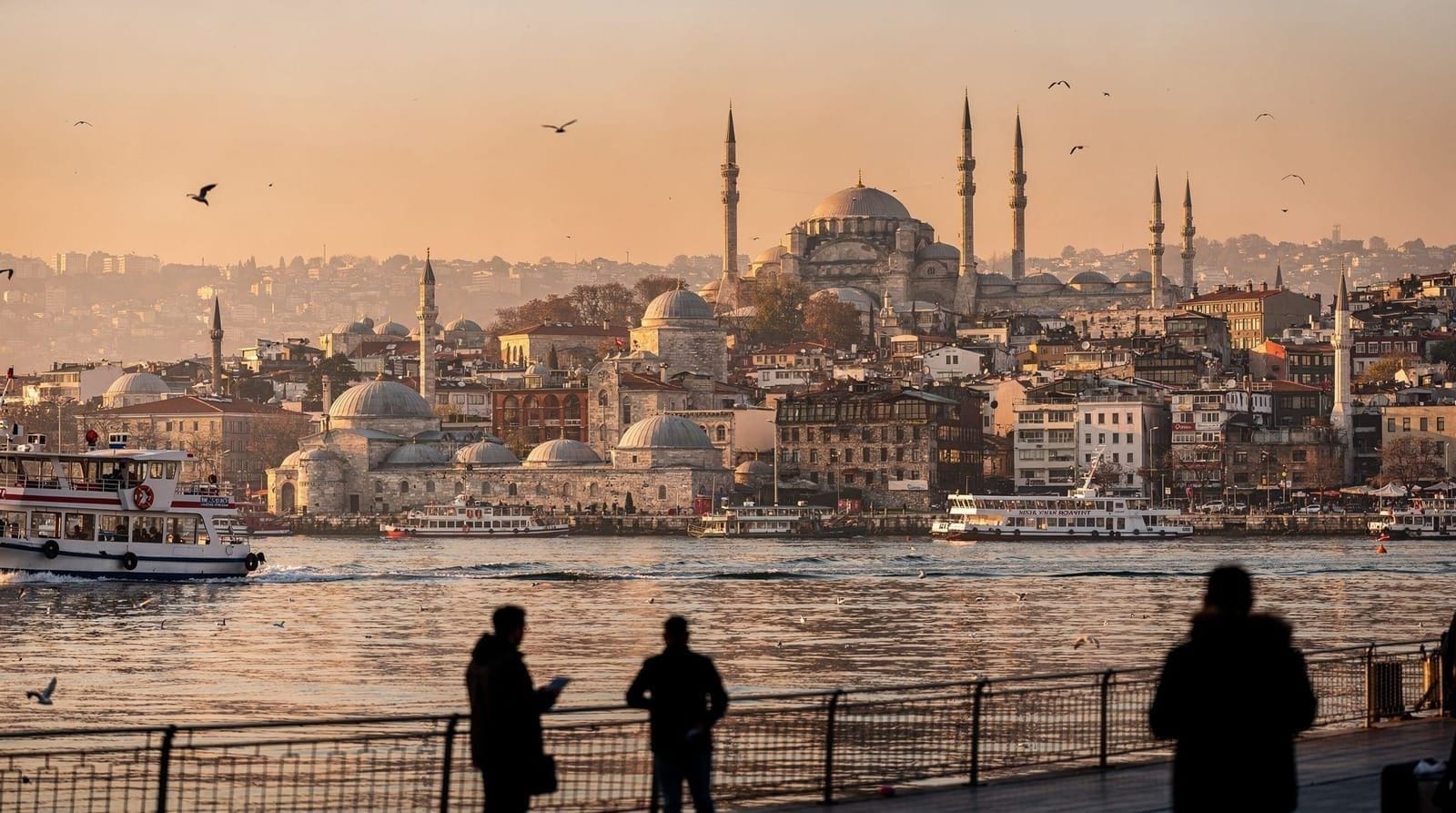
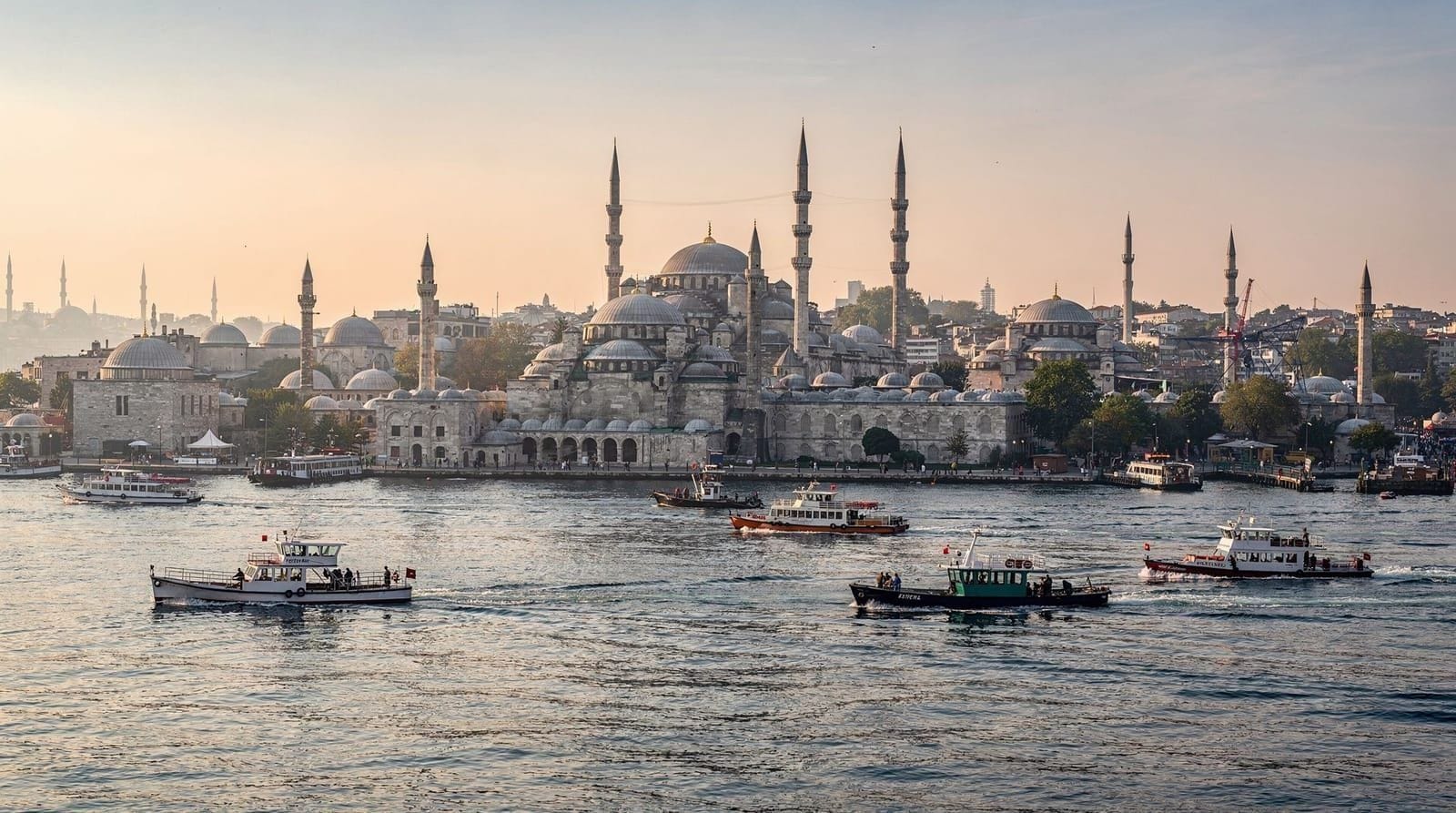
A large fillet of fresh-grilled mackerel on white bread with onions, pickled vegetables, and a squeeze of lemon. Sold from small motorboats moored at the Galata Bridge in Eminönü. The boat operators are genuine and have been there since the 1980s.
Price: 20–25 TRY at the boats. Where: Eminönü waterfront, under the Galata Bridge. Also from shore-side stands — same quality, slightly cheaper.
The tourist version is sold in wooden kiosks nearby for 80–120 TRY. The boat version tastes better and costs a quarter of the price.
Eat it standing by the water and watch the ferries come and go. The Bosphorus by public ferry guide is a good follow-up if the harbour atmosphere appeals, and the Eminönü and Spice Bazaar area is a few minutes’ walk away for a second round.
3. Lahmacun — Turkish “pizza”
A thin flatbread spread with a seasoned mix of minced lamb or beef, tomatoes, peppers, and parsley, then baked at high heat in a wood-fired oven. Not pizza — drier, crunchier, lighter. Roll it lengthwise with fresh parsley inside and squeeze lemon over it.
Sold from fırın (bakery) counters across the city, not primarily from street carts. The good ones are from neighbourhood bakeries in Fatih, Beyazıt, or Kadıköy rather than tourist areas.
Price: 20–30 TRY each. Where: Any working neighbourhood fırın; Kapalı Fırın near the Grand Bazaar; Kadıköy market area.
4. Midye dolma — stuffed mussels
One of Istanbul’s most distinctive street foods. Mussels stuffed with spiced saffron rice, served cold with lemon. Stall operators carry the shells in large trays and hand them to you one by one, squeezing lemon on each. Eaten standing up.
Price: 3–5 TRY per mussel. Where: Taksim, Beşiktaş, Kadıköy — areas with high pedestrian traffic and visible crowds around the stall.
The safety rule: buy where there is a queue. Turnover is everything for mussels. A vendor selling fast is a safe vendor.
5. Börek — flaky pastry
Börek is phyllo or yufka dough layered with filling (white cheese, spinach, minced meat, or potato) and baked or fried. The categories are wide: sigara böreği (cigar-shaped, fried), su böreği (water börek — boiled then baked, dense and rich), kol böreği (rolled, baked).
Price: 20–40 TRY depending on size and type. Where: Dedicated börekçi shops open early morning, or from the glass cases at the front of large lokantalar.
Best börek in the city is contested but the neighbourhood börekçi at 7am, with fresh-baked inventory, beats any restaurant version.
6. Gözleme — thin flatbread
A handmade flatbread griddled on a large convex iron (sac), filled with cheese, spinach, potato, or meat. You can watch the dough being rolled and filled — good gözleme makers do it publicly and quickly.
Price: 50–80 TRY. Where: Fatih market days, Balat Fener neighbourhood, Ortaköy, and tourist areas (where it costs 120–150 TRY and is usually worse).
7. Kumpir — loaded baked potato
A large baked potato split open, mashed with butter and cheese inside the skin, then loaded with toppings: olives, corn, pickles, coleslaw, sausage, mushrooms. The Ortaköy kumpir strip, between Ortaköy mosque and the Bosphorus, is the best-known location — it is tourist-facing but the food is legitimate.
Price: 50–80 TRY with 4–5 toppings. Where: Ortaköy (the classic version), also in Beşiktaş and Kadıköy for less touristy variants.
8. Kokoreç — grilled intestines
Lamb or goat intestines wrapped around a skewer, grilled over charcoal, then chopped with herbs and spices and served in a bread roll. Strong smell. Polarising. An Istanbul institution.
Price: 50–80 TRY for a half-portion. Where: Beyoğlu near Galatasaray (best concentration), also Eminönü and Kadıköy. Usually available late at night when other food options are limited.
Not for sensitive stomachs. But for the adventurous: the late-night kokoreç sandwich at 1am in Beyoğlu is one of Istanbul’s more memorable food experiences.
9. Döner — the real version
The tourist döner (chicken or beef in flatbread, sold everywhere) exists but is not the interesting version. Look for:
- Iskender kebab — döner meat over bread cubes, with tomato sauce and browned butter poured tableside. From a sit-down restaurant, not a street stall. 180–250 TRY.
- Dürüm — döner rolled tight in lavaş bread. From a dönerci (specialist), not a tourist spot. 60–100 TRY.
The worst döner in Istanbul is the 300 TRY tourist version. The best is from a high-volume specialist that turns over an entire skewer in an hour.
10. Roasted chestnuts and corn
Seasonal. Roasted chestnuts (kestane) are sold from carts in autumn and winter, 25–40 TRY for a bag. Corn on the cob (mısır) — either grilled or boiled — is available year-round, 20–30 TRY.
Neither is exceptional food. Both are part of the street texture of Istanbul, particularly around Taksim and Eminönü.
11. Lentil soup from a stand
Mercimek çorbası (red lentil soup) is available at dedicated soup kiosks (çorbacı) and many street-side lokantalar. 30–50 TRY for a bowl with bread. Open early and late — one of the few hot street foods available at midnight.
The çorbacı near the Spice Bazaar in Eminönü opens at 6am and serves construction workers and market porters. The soup is better at 7am than at 2pm.
12. Lokma — fried dough in syrup
Small fried dough balls coated in syrup, served hot. Often given away free at street events during religious observances (as a form of charity). Also sold at dedicated lokma stalls in İstiklal and Eminönü at 10–20 TRY for a portion.
The free version (when you can find it) is the best — always fresh, given out fast.
Lokma is the gateway to the sweet side of the street. When you are ready for something richer, the baklava and Turkish desserts guide picks up where the syrup stalls leave off, and the Turkish coffee guide covers what to drink alongside.
Street food by neighbourhood
Eminönü / Kapalıçarşı: The widest variety — balık ekmek, midye dolma, simit, kokoreç, lentil soup. The oldest working harbour market in the city.
Beyoğlu / İstiklal: Better for evening street food — kokoreç, döner, late-night simit carts. The Beyoğlu neighbourhood guide and the Beyoğlu and İstiklal destination page help you plan the rest of the evening around it. The tourist density is high on İstiklal itself; walk one block east or west to find real prices.
Kadıköy (Asian side): The most interesting and least touristy street food scene. The covered market (çarşı) and surrounding streets have excellent midye, fresh fish, börek, and gözleme. This is where Istanbullus from the Asian side actually eat. See the Kadıköy neighbourhood guide for getting there.
Ortaköy: Specifically good for kumpir. The location (near the Bosphorus bridge) is picturesque; the food is genuine.
Fatih: The most traditional Istanbul neighbourhood. Dense with fırınlar, börekçi shops, and soup kiosks at honest prices. Less English spoken, better food, lower prices.
What to avoid
“Traditional” food in tourist zones: The fish sandwiches sold from wooden kiosks near the Eminönü ferry terminal, the simit carts with prices in euros, the gözleme demonstrations near Hagia Sophia — all overpriced, often not better than the street version.
Food from inside tourist sites: The café inside Topkapı Palace charges 5x street prices. Exit the site and buy from the vendors outside for anything other than water.
Grand Bazaar restaurants: The restaurants inside the Grand Bazaar and its immediate surroundings are uniformly tourist-facing and poor value. Eat before you go in, or walk 5 minutes to Beyazıt Square.
Prices at a glance
| Food | Typical price (2026) | Where to trust it most |
|---|---|---|
| Simit | 5–6 TRY | Any Halk Ekmek red cart |
| Balık ekmek | 20–25 TRY | Galata Bridge boats, Eminönü |
| Lahmacun | 20–30 TRY | Neighbourhood fırın, not tourist strip |
| Midye dolma | 3–5 TRY each | Stalls with a visible queue |
| Börek | 20–40 TRY | Early-morning börekçi |
| Gözleme | 50–80 TRY | Balat, Fatih market days |
| Kumpir | 50–80 TRY | Ortaköy strip |
| Kokoreç | 50–80 TRY (half-portion) | Beyoğlu near Galatasaray, late night |
| Lentil soup | 30–50 TRY | Çorbacı near Spice Bazaar |
Treat any street stall pricing meaningfully above these ranges — especially anything quoted in euros or dollars — as a tourist-zone markup, not a reflection of quality.
Staying comfortable while you graze
Street eating is easier when the rest of the trip is organised around it. Most stalls take cash only, so it helps to understand how money works in Istanbul before you set out. Moving between food areas is simple with an Istanbulkart, which covers the tram to Eminönü and the ferry across to Kadıköy. If you are building a trip around eating, the Istanbul foodie itinerary for two days strings the best of these stops together, and our advice on Istanbul tourist traps explains how to spot a marked-up stall before you order.
Seasonal street food notes
Most of the list above is available year-round, but a few items shift with the calendar. Roasted chestnuts appear in autumn and winter and largely disappear by late spring; corn on the cob runs the opposite way, more common in the warmer months. Ramadan changes the rhythm of street eating noticeably — some stalls near mosques slow down during fasting hours and pick up sharply after iftar (sunset), when queues for simit, lokma, and hot soup lengthen. If your visit overlaps Ramadan, see our Ramadan in Istanbul guide for how this affects timing beyond just street food.
Getting more out of the street food scene
A small-group street food tour with a local guide crosses neighbourhoods faster and gets you to vendors that are genuinely hard to find without local knowledge. The tours operating in 2026 cover 8–12 tastings in 3–4 hours, typically across Eminönü, Kapalıçarşı, and sometimes the Asian side. They run mornings and evenings — the evening version has better atmosphere and more variety at late-night stalls, and options built around local hotspots and gourmet street foods tend to go deeper into Fatih and Kadıköy than the standard route.
For planning your food itinerary, budget roughly 2 hours of dedicated street eating per neighbourhood you want to cover properly.
Frequently asked questions about Istanbul street food guide — 12 must-try bites and where to find them
Is street food in Istanbul safe to eat?
How much does street food cost in Istanbul in 2026?
Where is the best street food in Istanbul?
What is simit and where do I get the best one?
What is midye dolma and should I eat it?
Is there vegetarian street food in Istanbul?
What is kokoreç and should I try it?
Top experiences
Bookable activities with verified prices and instant confirmation on GetYourGuide.