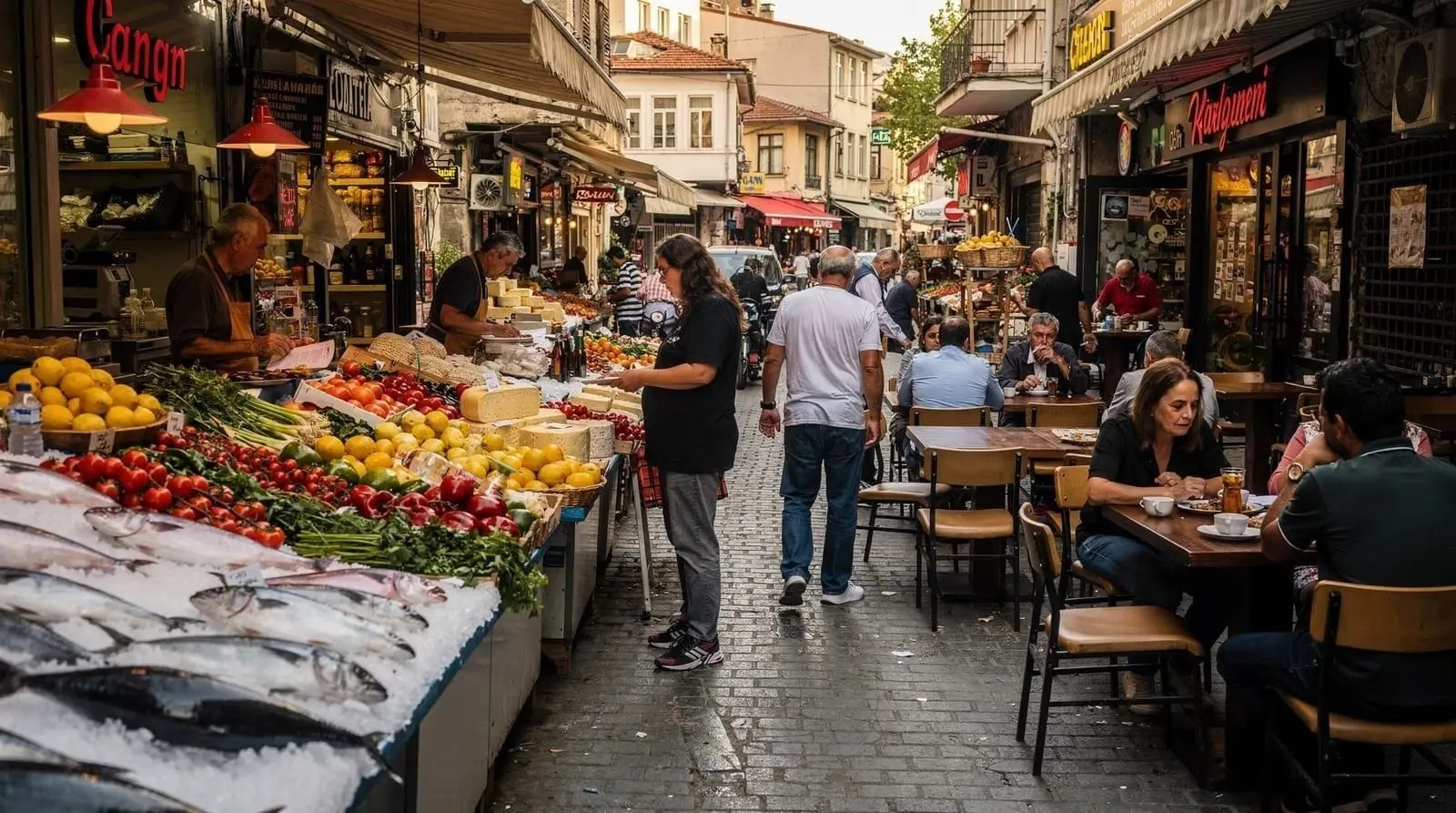
Kadıköy
Istanbul's best food district on the Asian shore — a covered market, street food, craft coffee, and a neighbourhood that locals use without a tourist
Istanbul: Asian Side Uskudar & Kadikoy Tour with Lunch
Quick facts
- Location
- Asian shore, southeastern Bosphorus
- Ferry from Eminönü
- ≈ 25 minutes, Istanbulkart
- Ferry from Karaköy
- ≈ 20 minutes, Istanbulkart
- Market
- Kadıköy Çarşısı — daily, covered and outdoor
- Known for
- Food (Çiya Sofrası, market), arts, music venues, cafés
- Nightlife
- Kadıköy pub crawl district — Barlar Sokak area
Kadıköy: the honest assessment of Istanbul’s best food neighbourhood
Kadıköy (historically Chalcedon — founded before Byzantium, according to ancient sources) is consistently the neighbourhood Istanbul residents recommend when asked where to eat. The covered market area (Kadıköy Çarşısı) spreads through a network of streets and has a density of fresh produce, fishmongers, cheese vendors, pickle specialists, spice dealers, and prepared food stalls that is not found anywhere else in the city. This is where Istanbulites shop for ingredients, and the quality and variety reflect local demand rather than tourist tastes.
| Where | Asian shore, ~20–25 min ferry from Eminönü or Karaköy |
| Cost | Market grazing 150–400 TRY; Çiya Sofrası meal 300–500 TRY |
| Time needed | Half a day minimum; a full day with Moda |
| Getting there | Ferry from Eminönü/Karaköy (Istanbulkart) |
| Best time | Weekend mornings for the market at its fullest |
For visitors, the practical advantages of Kadıköy over tourist-adjacent eating options are clear: prices are local, there is no tourist menu tax, the quality is high, and the volume of interesting food to try is substantial. The main disadvantage is the 20–25 minute ferry crossing from the European side, which adds time. The crossing is recommended anyway — the view from the Bosphorus back to the old city is one of the best in Istanbul. For a fuller neighbourhood walkthrough, see the Kadıköy neighbourhood guide.
If you are still deciding which shore suits your trip, the Asian side guide and the comparison of the European and Asian sides put Kadıköy in context. For the ferry itself, the Istanbul ferries guide explains how the boats work, and the Istanbulkart guide covers the card you tap to board.
The Kadıköy market
The main market area covers several streets around Moda Caddesi and the covered food hall. Key things to look for:
Fishmongers: the Kadıköy fish hall (Balık Çarşısı) is one of Istanbul’s most active. The variety of Bosphorus and Marmara fish is extensive — çipura (sea bream), levrek (sea bass), barbunya (red mullet), lüfer (bluefish, seasonal in autumn), palamut (bonito, autumn), midye (mussels). Prices are well below waterfront restaurant prices.
Cheese vendors: there is a density of specialist cheese shops selling Turkish regional cheeses — Ezine beyaz (white cheese from the Çanakkale region), tulum peyniri (pressed cheese aged in goat skin), lor (fresh ricotta-like), various aged and smoked varieties. Tasting before buying is standard.
Pickle specialists: the turşu (pickle) tradition in Turkish food is substantial, and Kadıköy has several shops selling dozens of varieties of pickled vegetables, olives, and preserved foods. A glass of pickle brine (turşu suyu) is offered as a street drink — it is an acquired taste and is fine.
Spice shops: similar to the Spice Bazaar in Eminönü but without the tourist premium. Quality spices, teas, and dried fruits at prices the local cooks actually pay.
Where to eat: specific names
Çiya Sofrası: the most frequently mentioned restaurant name for Kadıköy, and for good reason. Chef Musa Dağdeviren has spent decades researching Anatolian regional cooking and presents dishes from across Turkey — things you would not find on a standard Istanbul menu. The main sit-down restaurant and the adjacent dürüm and soup counter are different operations; the counter is cheaper and faster. A full meal at the restaurant runs 300–500 TRY (9–15 USD); expect a queue at lunch. The food is genuinely exceptional and the documentation of Turkish culinary heritage is unique.
Yanyalı Fehmi Lokantası: a traditional tripe-and-offal lokanta on a side street, operating since 1920. Not for the squeamish, but for those interested in traditional Turkish breakfast culture (İşkembe çorbası — tripe soup — is the canonical morning-after dish), this is the authentic version.
Borsam Taşfırın: good simple pide and lahmacun (Turkish flatbread with minced lamb) at a low price point. Around 80–120 TRY for a full pide.
Coffee: Kadıköy has a notably good independent café scene. Monokel and several other specialty roasters operate here. An espresso runs 25–40 TRY; the quality is consistently better than the chains dominating Beyoğlu.
For a wider view of what to order before you arrive, the Turkish food guide and the street food guide explain the dishes you will meet at the market counters. If you want to compare Kadıköy with eating options elsewhere in the city, where to eat in Istanbul sets out the alternatives.
The evening and nightlife side
The streets around Kadıköy’s Barlar Sokak (“Bar Street”) and the surrounding area are active in the evenings with live music venues, bars, and meyhane restaurants. The character is younger and more local than the Taksim nightlife — this is where Istanbul’s university-educated 20-somethings drink. Prices are lower than Beyoğlu; the music tends toward Turkish pop, rock, and occasionally jazz.
The evening food tour of Kadıköy covers the market area and several eating stops with a local guide who navigates the neighbourhood and explains the food — a useful introduction if you are arriving for the first time and want to understand what you are looking at.
Getting to Kadıköy
From Eminönü: Şehir Hatları ferry, approximately 25 minutes. This is the recommended approach — the crossing itself is part of the experience.
From Karaköy: IDO ferry, approximately 20 minutes.
From Üsküdar: Bus or taxi, 15–20 minutes. More practical if you are already on the Asian shore.
From Sabiha Gökçen Airport (SAW): M4 metro to Ayrılık Çeşmesi, then transfer to M4 connection or bus. Alternatively, direct bus services. The airport is on the Asian side, making Kadıköy a reasonable first stop after landing.
Combining Kadıköy with the Asian shore
Kadıköy and Üsküdar are the natural pairing for an Asian shore day. The two neighbourhoods are 20 minutes apart by bus or taxi and represent complementary experiences: Üsküdar is the traditional, historic, mosque-focused neighbourhood; Kadıköy is the food, arts, and contemporary urban scene. Together they give a complete picture of the Asian city. See the Üsküdar neighbourhood guide for what to pair it with, and if you’re weighing the Asian side against Beşiktaş on the European shore, the Beşiktaş neighbourhood guide covers that Bosphorus-front alternative.
Kadıköy vs Beyoğlu for food
| Kadıköy | Beyoğlu | |
|---|---|---|
| Pricing | Local, no tourist markup | Mixed — tourist zones inflate prices |
| Market access | Kadıköy Çarşısı, daily fresh produce | No equivalent covered food market |
| English menus | Rare | Common |
| Crossing required | Yes, ferry (20–25 min) | No, on European side |
| Signature spot | Çiya Sofrası | Balık Pazarı fish market off İstiklal |
If eating like a local is the priority, Kadıköy wins clearly; if convenience and English-language ease matter more, stay on the European side.
The European-side alternative is worth seeing for itself: Beyoğlu and İstiklal and nearby Karaköy are where the ferry to Kadıköy starts, so a morning on one shore and an afternoon on the other combines well. The Karaköy neighbourhood guide is a good companion for that European leg.
The guided Üsküdar and Kadıköy tour covers both districts with lunch included and a guide explaining the Asian side’s history and contemporary character — useful as an orientation, particularly if you have only one day to dedicate to the Asian shore.
Frequently asked questions about Kadıköy
Is Kadıköy worth crossing the Bosphorus for?
Yes — consistently so, and not just for tourists. Istanbul residents cross regularly for the market. The food quality-to-price ratio in Kadıköy is the best in the city. If you have time for one Asian-side visit, Kadıköy is the most rewarding.
What is the difference between Kadıköy and Moda?
Moda is the quieter, residential neighbourhood directly south of Kadıköy’s commercial centre — a peninsula with a waterfront promenade, a historic ice cream parlour (Moda Dondurmacısı, operating since 1944), and a generally calmer atmosphere. Worth a 20-minute walk south from the market if you want to see an Istanbul residential neighbourhood without commercial intensity.
Is Kadıköy safe at night?
Yes. The nightlife area is well-populated and active; the standard urban precautions apply. It is no more dangerous than Beyoğlu at equivalent hours.
Can I take a water taxi instead of a ferry?
Water taxis (deniz taksi) are available from Eminönü to Kadıköy but cost significantly more than the public ferry (600–800 TRY per journey vs under 50 TRY on the ferry). They are faster and more flexible but not economically justified for most visits.
What should I definitely eat in Kadıköy?
Priority in rough order: fresh fish from a market counter (ask them to grill it, some will), the Çiya Sofrası regional Turkish dishes for lunch, a piece of baklava or künefe from one of the sweet shops, and a proper Turkish coffee at a specialty café. A glass of ayran (cold yoghurt drink) with the fish is the correct pairing.
Kadıköy’s cultural and arts scene
Kadıköy is one of Istanbul’s more active neighbourhoods for live music, independent cinema, and contemporary art. Several specific venues worth knowing:
Kadıköy Produce Market (Tarihi Kadıköy Çarşısı): beyond the food itself, this covered market has an aesthetic that makes it one of Istanbul’s more photographically interesting spaces — the stalls, the light from the skylights, the vendor-customer interactions are all worth observing at leisure. Saturday morning is when the market reaches maximum intensity.
Rexx Cinema: one of the handful of surviving independent cinemas in Istanbul, showing art-house and international films with Turkish subtitles. Located in the main market area; screenings in the evening from approximately 19:00. Tickets run approximately 100–150 TRY.
Moda Sahne: a mid-size live music venue in the Moda neighbourhood, programming Turkish and international acts across jazz, rock, and world music. Ticket prices vary; the programme is published monthly.
Street music culture: Kadıköy has an unofficial tradition of street musicians in the market lanes and on the main Moda promenade. The quality ranges from amateur to genuinely accomplished; the scene is live and participatory in a way that the tourist-facing music venues in Sultanahmet are not.
The history of Chalcedon
Kadıköy occupies the site of ancient Chalcedon, the Greek colony founded approximately 685 BCE — earlier than Byzantium on the European shore across the strait. The oracle at Delphi allegedly described the founders of Chalcedon as “blind men” for choosing the less-obviously-superior Asian shore when the magnificent harbour of the Golden Horn lay directly opposite; this dismissive legend reflects the later dominance of Byzantium/Constantinople, but Chalcedon was in fact a prosperous city in its own right for several centuries.
The Council of Chalcedon (451 CE), one of the most significant councils in early Christian history, met in this city — the council that defined the two natures of Christ and produced the Chalcedonian creed. The church where the council was held has not survived, but the historical weight of the location is real.
Under Byzantine rule Chalcedon was repeatedly damaged by conflict before eventually losing significance to Constantinople. Under Ottoman rule the area was a agricultural and residential suburb rather than a commercial centre until the 19th century, when the ferry connections made it more accessible to the European city.
Practical notes for visiting the market
Go hungry: the market’s eating possibilities are best explored on an empty stomach. The concentration of fish, prepared foods, cheese, olives, pastries, and fresh vegetables rewards grazing rather than having a preset meal plan.
Bring cash: many market vendors prefer cash (TRY). There are ATMs in the main commercial streets of Kadıköy, but it is more convenient to arrive with cash already.
Language: many vendors in the market speak minimal English. Basic Turkish food words (balık = fish, peynir = cheese, domates = tomato, elma = apple) are useful; pointing and gesturing works fine for most transactions.
Bags: bring a reusable bag. Market purchases accumulate quickly and the vendors’ bags are not always adequate for the weight.
Best days: weekends (especially Saturday) are when the market is at its most complete and most vibrant. Weekdays are calmer; some specialty vendors only set up on weekends.
Transport notes: getting from Kadıköy to the airport
For step-by-step options from the Asian airport, see the SAW airport to city centre guide, and the IST versus SAW comparison if you are still choosing flights.
To Sabiha Gökçen (SAW): this is by far the easier connection from Kadıköy — the Asian airport is approximately 40–60 minutes by taxi (400–600 TRY depending on traffic) or 60–80 minutes by M4 metro and connection to the airport bus. The M4 metro starts from Kadıköy (Kadıköy station) and runs southeast.
To Istanbul Airport (IST): significantly further, on the opposite (European) shore. Ferry to Eminönü or Karaköy (25 min), then M2 metro to Gayrettepe, then M11 to IST. Total approximately 90 minutes in good conditions. Taxi is faster (45–60 min) but expensive (800–1,200 TRY). Plan carefully if catching an early flight — the ferries do not run 24 hours.
The Moda neighbourhood in detail
Moda occupies the narrow peninsula south of Kadıköy’s commercial centre. It is primarily residential and has a calmer, more neighbourhood-scaled character than the market district to the north.
The main point of interest is the Moda waterfront promenade, which follows the peninsula’s coast for about 2 kilometres. The promenade is popular with Istanbul residents for walks, cycling, and the sea views. On weekends it fills with families and young couples; on weekdays it is quiet.
Moda Dondurmacısı: the ice cream shop on the main promenade has been operating since 1944 and is a genuine local institution. The ice cream (a Turkish style dondurma with a characteristic chewy texture from the mastic resin and salep thickener) is good; the queues on summer weekends are long. A single scoop runs approximately 30–40 TRY.
Café Loti, at the end of the Moda pier, is one of the better waterfront cafés — basic food, reasonable prices, good sea view. Turkish breakfast (menemen, cheese, bread, olives, tea) runs 150–200 TRY for two people.
The weekly Moda Bazaar: on weekends, a small artisan market operates in the Moda park area with locally made goods, second-hand books, and vintage clothing. More curated and less busy than the Kadıköy main market.
The Asian side’s demographic shift
The transformation of Kadıköy and the surrounding Asian shore over the past two decades reflects a broader demographic shift in Istanbul. As property prices in the European old city and Beyoğlu rose, and as the tourist-facing character of those areas intensified, the educated professional class that drives Istanbul’s cultural scene — artists, academics, journalists, tech workers — moved increasingly to the Asian side.
Kadıköy and the adjacent Asian neighbourhoods (Moda, Bostancı, Acıbadem) now have a density of independent bookshops, galleries, music venues, specialty food shops, and farmers’ markets that significantly exceeds the tourist-facing areas on the European side. The current situation is something of a reversal from the historical pattern in which Beyoğlu was the cosmopolitan intellectual centre and the Asian shore was the conservative residential periphery.
This shift is worth knowing about because it means that Kadıköy offers a more contemporary, locally-oriented version of Istanbul culture than most tourist itineraries would suggest. The question is whether you have time to cross the Bosphorus for it.
On the practical question of including Kadıköy in a short visit
For a visit of three days or fewer: Kadıköy is a nice addition if you have an afternoon free and want to eat well, but it is secondary to the major sites on the European side.
For a visit of four days or more: a Kadıköy half-day is strongly worth doing. The combination of the market, Çiya Sofrası, the ferry crossing view, and the neighbourhood walk through Moda gives a meaningfully different view of Istanbul that the old city does not.
For visitors with a specific interest in food culture: Kadıköy should be on the list regardless of trip length. The market and the restaurant concentration here are not replicated anywhere on the European side in the same density and authenticity.
Honest assessment of Kadıköy’s tourist-facing limitations
There is almost no tourist infrastructure in Kadıköy — very few English-language menus, no souvenir shops, minimal tourist-oriented services. This is entirely a feature rather than a bug for the visitor who wants an authentic urban neighbourhood experience; it is a genuine limitation for visitors who need significant English-language support or who are not comfortable navigating without it.
The ferry crossing is a small practical barrier that reduces casual tourist traffic — most visitors staying in Sultanahmet or Taksim don’t make the trip unless they have a specific reason. This is why Kadıköy has retained its character to a greater degree than the old city’s equivalent food-and-market areas.
Top experiences
Bookable activities with verified prices and instant confirmation on GetYourGuide.

