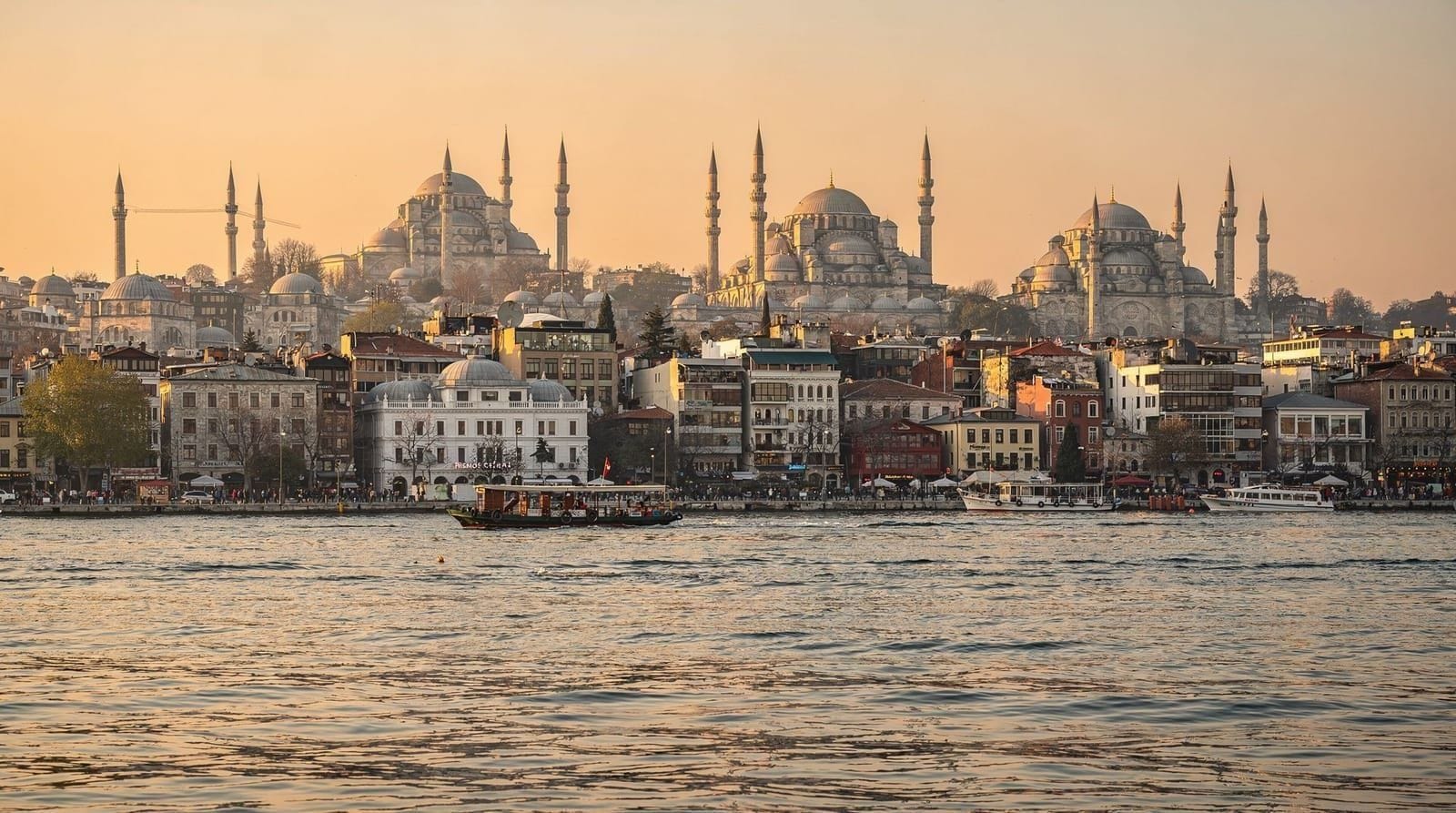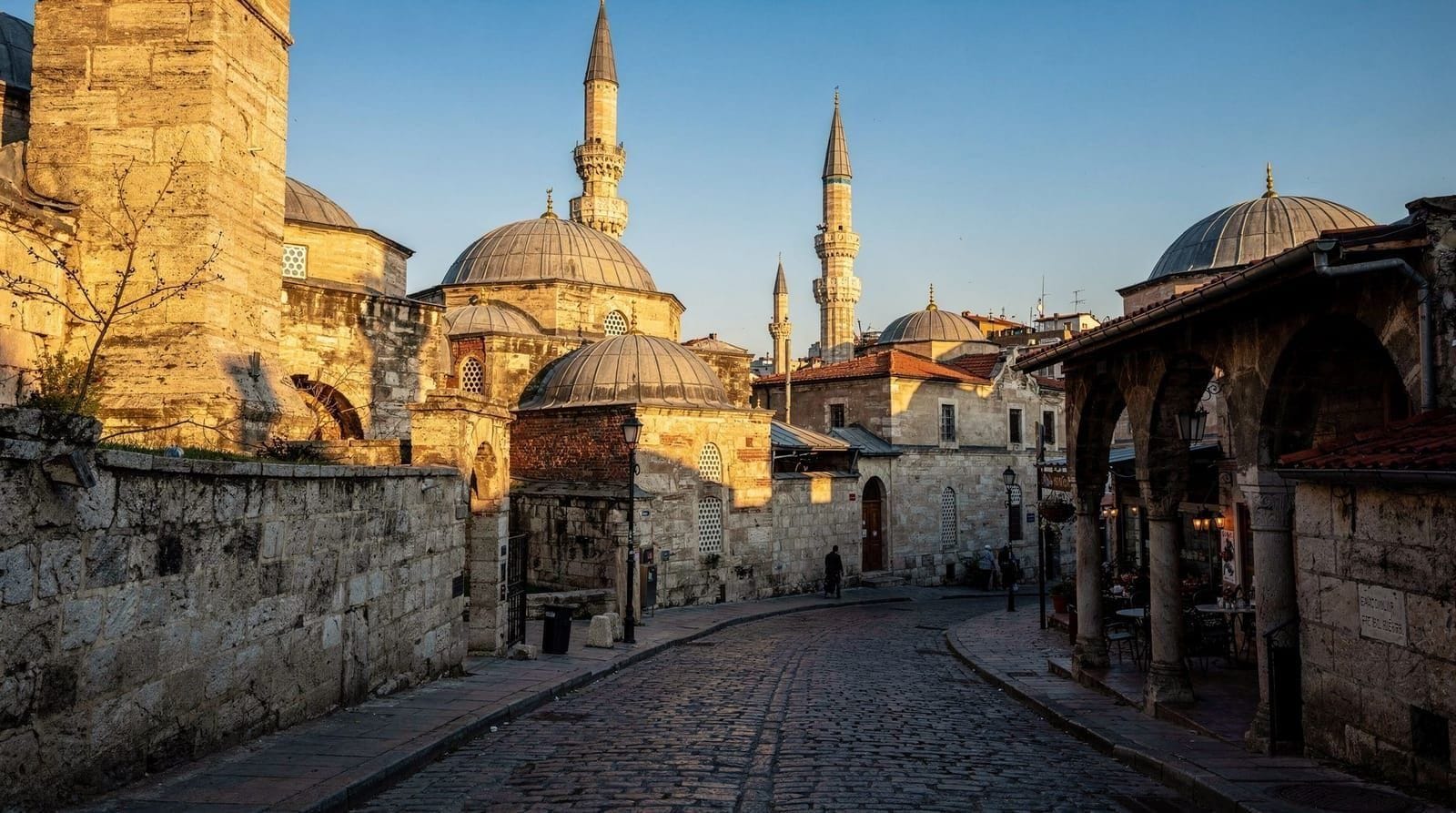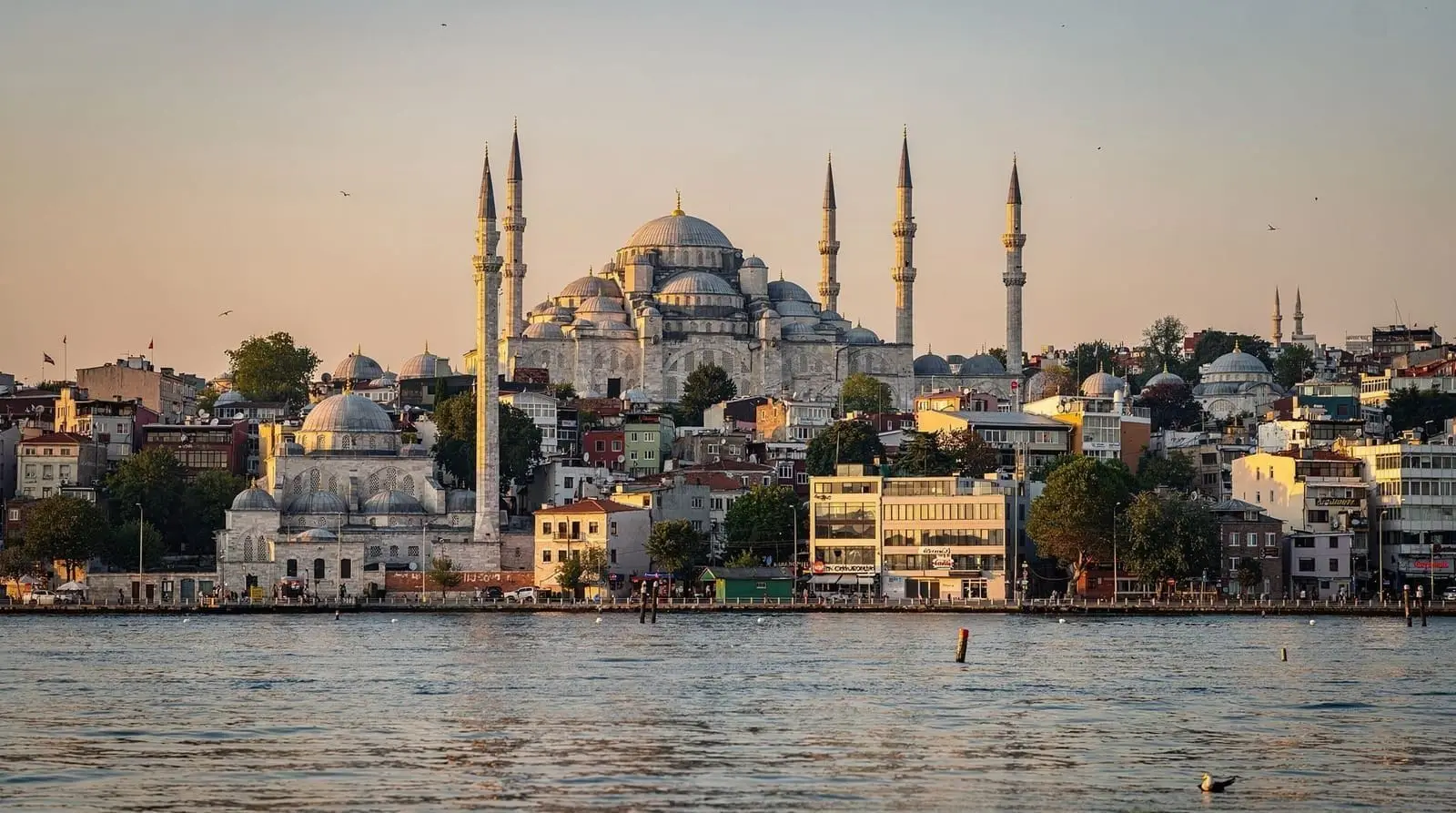
Bosphorus landmarks guide — everything you see from the water
Istanbul: Bosphorus Sightseeing Cruise with Sunset Option
What are the main landmarks you can see from the Bosphorus?
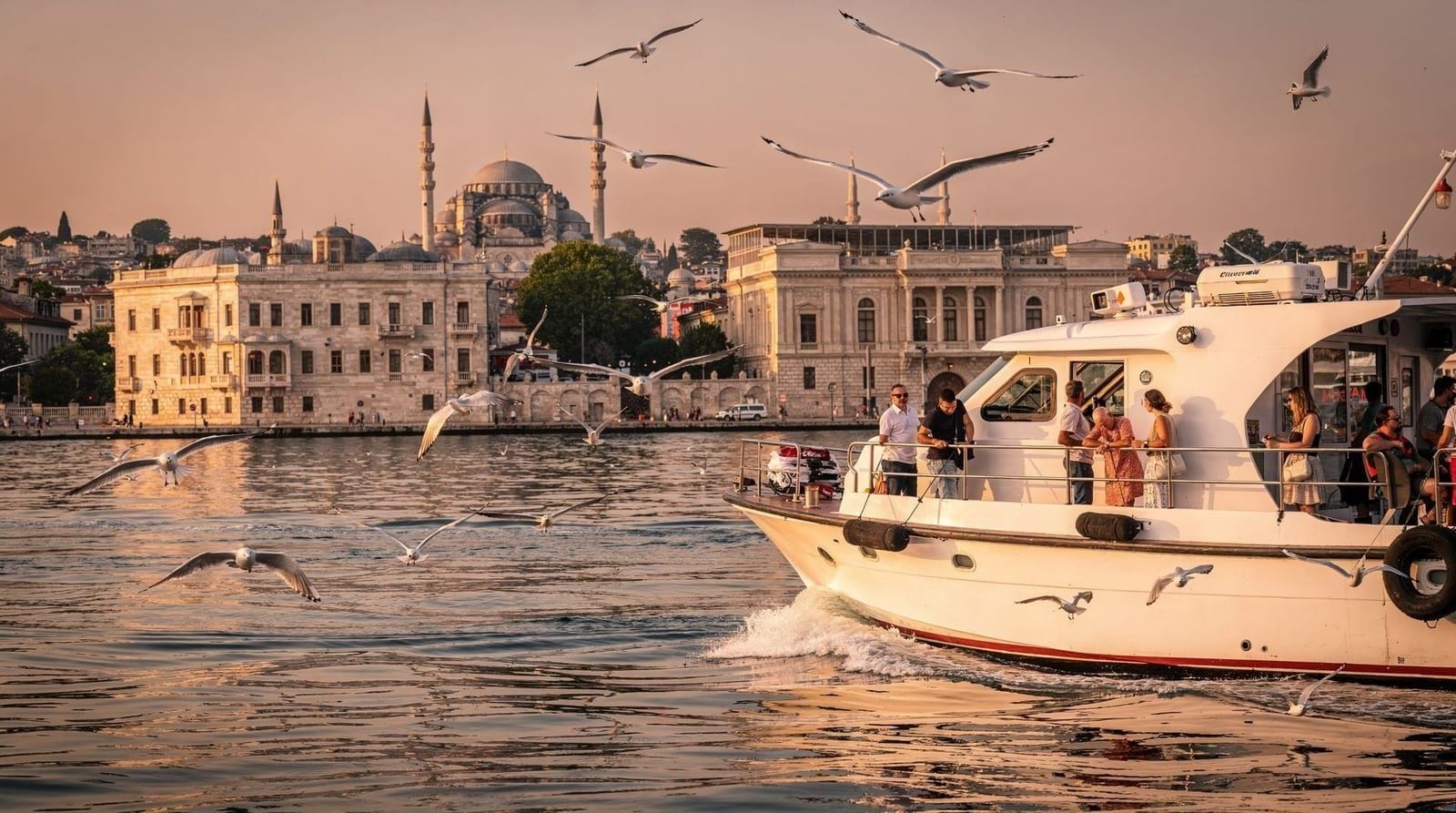
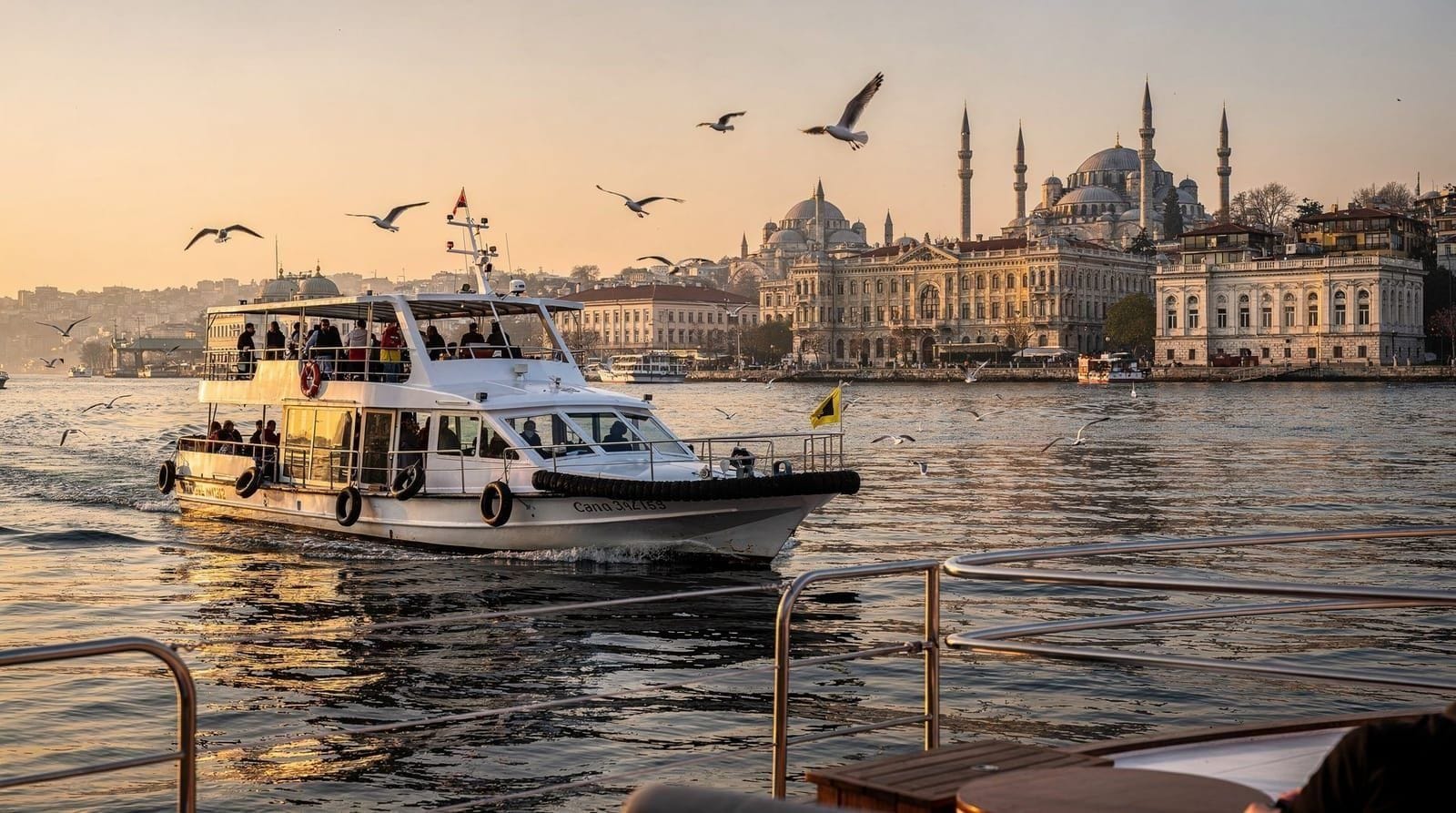
On the European shore: Topkapı Palace sea walls, Dolmabahçe Palace, Çırağan Palace (Kempinski), Ortaköy Mosque under the bridge, Rumeli Fortress. On the Asian shore: Maiden's Tower, Beylerbeyi Palace, Anadolu Fortress. Both shores have historic wooden yalı mansions. Most sightseeing cruises cover Eminönü to the first bridge (approximately 15 km each way).
Reading the Bosphorus from the water
The Bosphorus is 31 kilometres long from the Sea of Marmara to the Black Sea, and 700 metres to 3.4 kilometres wide. Most sightseeing cruises cover the lower section — from Eminönü north to the first or second suspension bridge, roughly 15 km each way. What you see in that stretch is dense enough to fill a guide of its own.
This page provides a landmark-by-landmark breakdown of both shores, going north from Eminönü. It’s designed to be read before your cruise — so you can name what you’re looking at from the deck rather than squinting at an audio guide pamphlet.
| Where | Eminönü to the first or second bridge, ~15km each way |
| Cost | Free to read; cruise prices from ~350 TRY |
| Time needed | 5–10 minutes to skim before boarding |
| Getting there | N/A — reference for any cruise, ferry, or land viewpoint |
| Best time | Read before boarding; morning light favours the European shore, afternoon favours the Asian shore |
European shore (heading north from Eminönü)
Seraglio Point (Sarayburnu)
The tip of land where the Golden Horn meets the Bosphorus meets the Sea of Marmara. The outer walls of Topkapı Palace run along the shoreline here. You’re not seeing the palace itself (which sits back on the hill) but the sea walls and towers of the outer precinct. The Point is also where Byzantine Constantinople’s harbour entrance was located.
Sirkeci and Eminönü waterfront
The railway terminus of Sirkeci — once the eastern terminus of the Orient Express — sits just behind the waterfront. Now converted to a commuter rail station on the Marmaray line. The Spice Bazaar (Mısır Çarşısı) is behind the waterfront buildings, invisible from the water.
Galata Bridge
The double-deck bridge connecting Eminönü to Karaköy. The lower level is lined with restaurants. Fishing rods dangle over the upper railings — Galata Bridge fishing is an Istanbul institution, practised year-round by regulars who seem impervious to the traffic behind them. Looking back from the water after passing the bridge, you see the Galata Tower rising above the Beyoğlu/İstiklal district.
Dolmabahçe Palace
The first major landmark after Galata Bridge on the European shore. Built 1843–1856 by Sultan Abdülmecid I as a replacement for Topkapı — more European in style, more expensive to maintain, more visible to passing ships. The white marble facade runs 600 metres along the waterfront. Kemal Atatürk, founder of the Turkish Republic, died here on 10 November 1938. The palace is fully visitable — see the Dolmabahçe Palace guide for details.
The clock tower at the sea gate was stopped at 9:05 am, the time of Atatürk’s death, and remains at that hour as a memorial.
Çırağan Palace (Kempinski Hotel)
Immediately north of Dolmabahçe, also built in Ottoman Baroque style. Construction completed 1867 under Sultan Abdülaziz. Burned down in 1910 and stood as a gutted ruin until restoration as a luxury hotel in 1992. The Kempinski Çırağan Palace is now one of Istanbul’s most expensive hotels, with the Bosphorus facade largely restored. From the water, you see white marble colonnades and the hotel gardens.
Beşiktaş waterfront
The Beşiktaş district occupies the shore between Dolmabahçe and Ortaköy. The Beşiktaş stadium (Vodafone Park, home of the Beşiktaş football club) is visible from the water — an unusual waterfront football stadium. The municipal ferry terminal at Beşiktaş is one of the main boarding points for Bosphorus cruises.
Ortaköy Mosque
One of the most photographed views in Istanbul: the Büyük Mecidiye Camii (Great Mosque of Mecidiye), completed 1856 by Nikoğos Balyan, sits almost at the water’s edge directly below the Bosphorus Bridge’s southern tower. The juxtaposition of a delicate baroque mosque with the industrial steel of the suspension bridge above it is one of the city’s great compositions.
The Ortaköy neighbourhood behind the mosque is worth a separate walk — the waterfront square is lined with cafés, and waffle kiosks (the Ortaköy waffle is a local institution) crowd the street.
Bosphorus Bridge (15 July Martyrs Bridge)
The first suspension bridge. 1,560 metres long, 165 metres above the water. Opened in 1973, it was the first fixed link between the European and Asian sides of Istanbul. The bridge was renamed in 2016 after the failed coup attempt. Pedestrian access was closed after a series of suicides; the bridge is now road-only.
From the water directly below, the scale is more apparent than from any land-based viewpoint.
Yıldız Palace and gardens
The hillside above Beşiktaş and Çırağan is covered by Yıldız Palace and its extensive gardens — now partly a public park. The palace was the preferred residence of Sultan Abdülhamid II (reigned 1876–1909). Not easily visible from the water, but the wooded slope creates the distinctive green backdrop between the concrete districts.
Rumeli Hisarı (Fortress of Europe)
At the narrowest point of the Bosphorus (approximately 660 metres wide), the European shore features the three towers and curtain walls of Rumeli Hisarı. Built in 1452 by Sultan Mehmed II in four months — a feat of medieval construction — as the northern choke point for Constantinople’s strangling before the 1453 siege. With Anadolu Hisarı directly opposite on the Asian shore, the two fortresses controlled all Bosphorus traffic.
The fortress is open to visitors (it hosts summer concerts). From the water, the three round towers (named after the viziers who supervised their construction — Sarıca Paşa, Zağanos Paşa, Halil Paşa) are clearly visible rising from the hillside. For a land visit, our dedicated Rumeli Fortress guide covers opening hours and how to combine it with the upper Bosphorus villages.
Fatih Sultan Mehmet Bridge
The second suspension bridge, 1,510 metres long. The upper Bosphorus cruise sections pass under it. Some sightseeing cruises turn back here; others continue further north.
Asian shore (returning south toward Eminönü)
Maiden’s Tower (Kız Kulesi)
At the southern end of the Asian shore, a small tower on a tiny island marks the entrance to the Bosphorus from the Sea of Marmara. The structure has been a lighthouse, a customs checkpoint, a quarantine station, and now a restaurant and museum. Its Byzantine origins are debated, but the current structure dates from 1763.
The tower is the subject of a Turkish legend involving a princess imprisoned by her father after a prophecy of death by snake bite — the snake arrived in a basket of grapes, the prophecy fulfilled. More practically, it featured in a James Bond film (The World Is Not Enough) and is frequently painted, illustrated, and photographed.
For visiting independently: take the ferry from Kabataş or Üsküdar — see the Maiden’s Tower visiting guide.
Üsküdar and Beylerbeyi
The Üsküdar waterfront stretches along the Asian shore opposite Beşiktaş, and a Bosphorus cruise with a stopover on the Asian side is the easiest way to see these landmarks close up rather than just from the passing boat deck. The mosques visible on the waterfront include Mihrimah Sultan Mosque (16th century, by Mimar Sinan) and the smaller Şemsi Ahmet Paşa Mosque, which partially extends over the water.
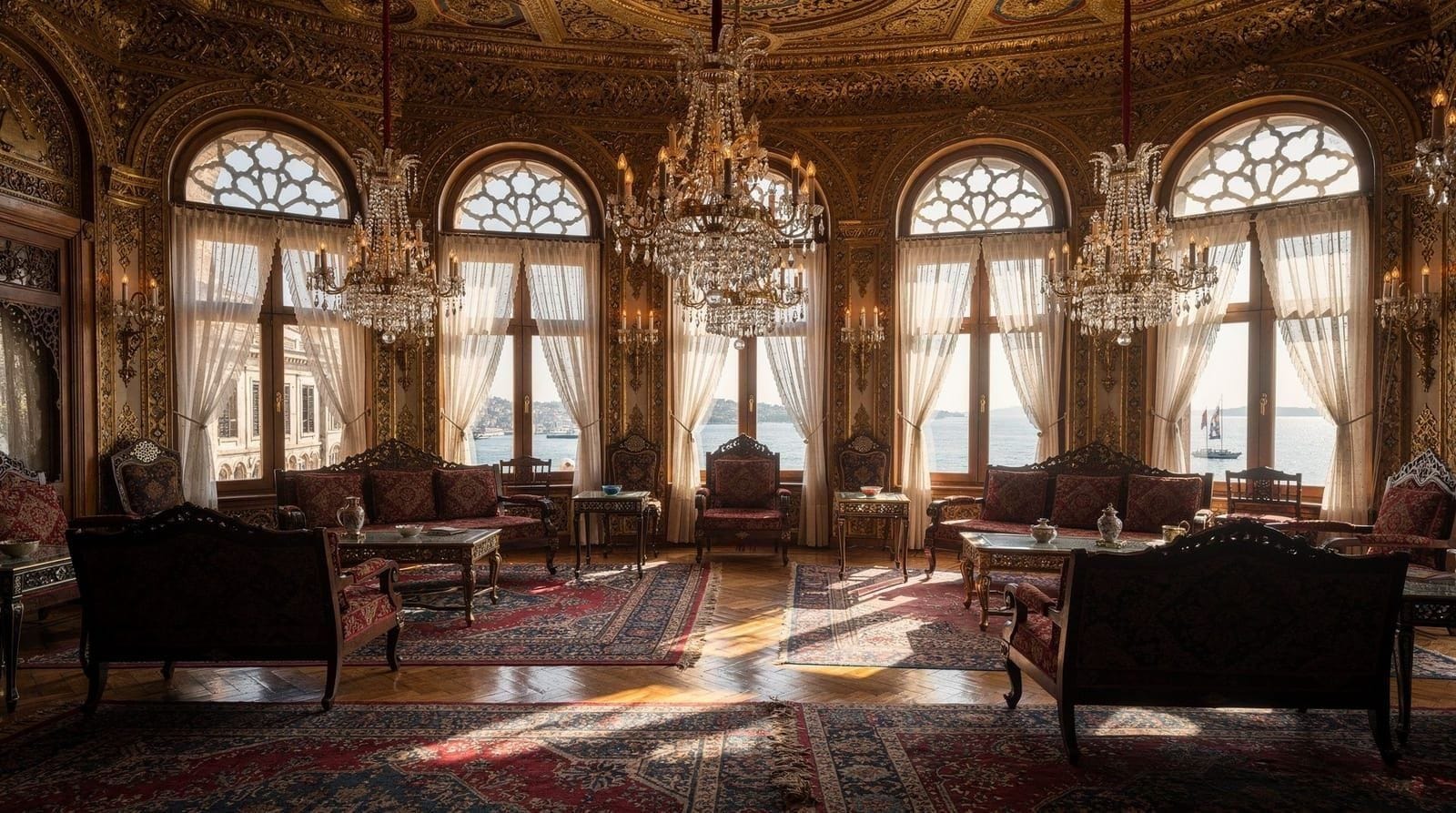
Beylerbeyi Palace: Built 1861–1865 as a summer residence for the Ottoman sultans, Beylerbeyi Palace sits directly on the Asian shore just south of the first bridge. The white marble facade is modest compared to Dolmabahçe but more intimate. Sultan Abdülhamid II was held under house arrest here after his deposition in 1909 and died here in 1918. Open to visitors.
Anadolu Hisarı (Fortress of Asia)
Directly opposite Rumeli Hisarı on the Asian shore, the older of the two fortresses. Built around 1394 by Sultan Bayezid I as a crossing point and surveillance post. Smaller than Rumeli Hisarı and less visited but can be explored without an organised tour.
Upper Bosphorus yalılar
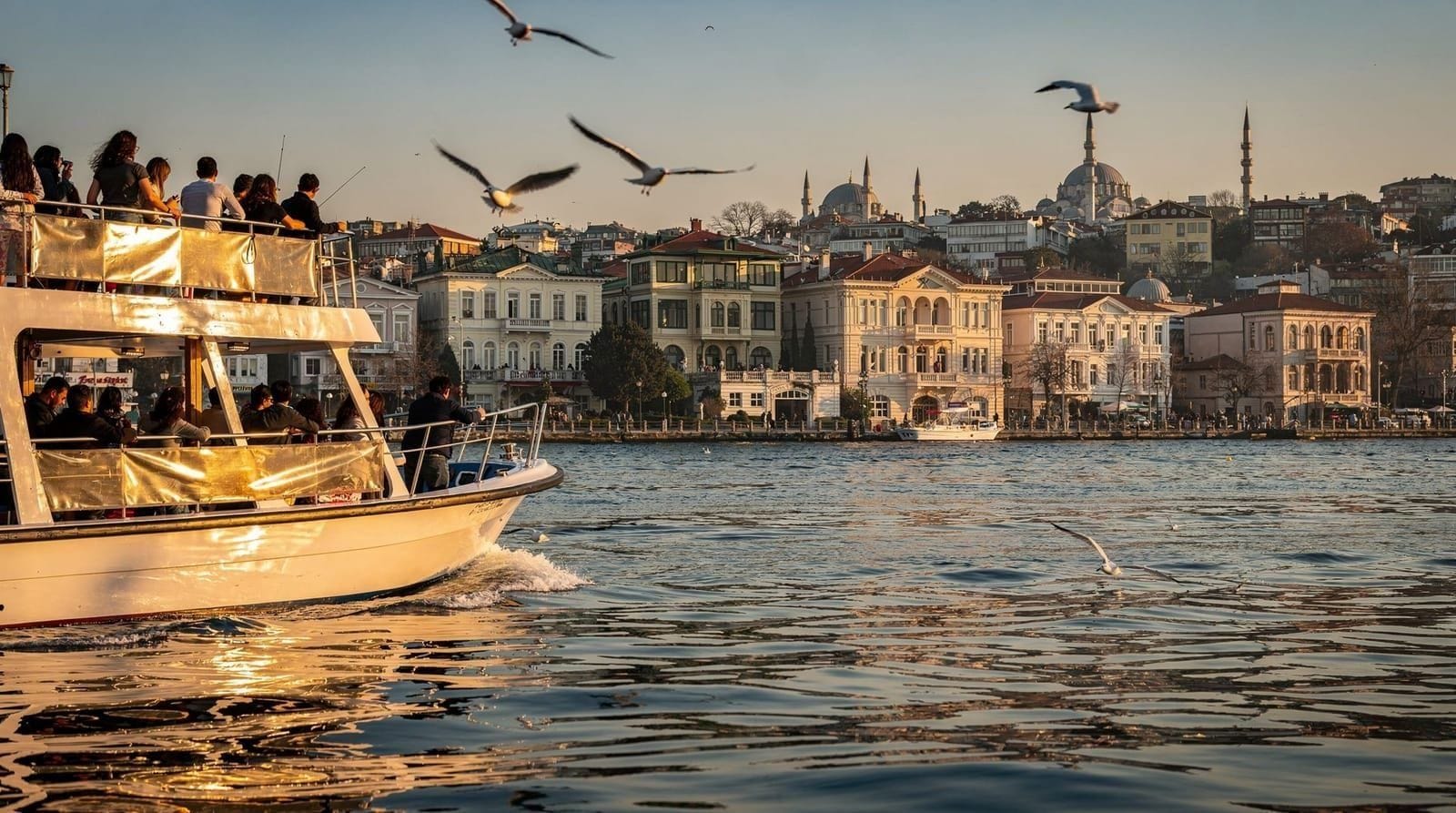
Between the two bridges, both shores are lined with yalılar — the wooden Ottoman-era waterfront mansions that are among Turkey’s most distinctive domestic architecture. The finest concentrations are in Bebek, Arnavutköy, Kandilli, and Emirgân. Many are painted in the traditional Bosphorus red (Turkey red, derived from iron oxide). Some are in poor repair; others are meticulously maintained private residences or been converted to restaurants — a handful can even be booked for private events, though most remain firmly private and are only ever seen from the water.
A practical note on using this guide during a cruise
If you’re on a standard group cruise with audio commentary, the guide will name landmarks as you pass them but may not provide much historical depth. If you’re on the public ferry or a self-guided charter, this page functions as your reference.
The morning cruise tends to give better light on the European shore (sun is lower in the east, backlighting the Asian shore — switch attention to the Asian side in the morning for better contrast). The afternoon and sunset cruises give better warm light on both shores.
If you’re on the public ferry rather than a tour boat, this guide matters even more, since the Şehir Hatları Boğaz Hattı ferry offers no commentary at all — see the Bosphorus by public ferry guide for the practical logistics of that route, which covers much of the same stretch described above but continues further north to Anadolu Kavağı at the Black Sea mouth. If your priority is the golden-hour light on these landmarks specifically rather than covering the widest possible stretch of water, the Bosphorus sunset cruise guide is the more targeted option, and pairs well with reading this landmark list beforehand so you know exactly when to have your camera ready for each one.
For a pre-cruise overview of Istanbul’s history that contextualises what you’re seeing, the Istanbul history overview and Byzantine Istanbul guide provide useful background. For the architectural threads running through several of these palaces and mosques, the Ottoman Istanbul guide and Istanbul architecture guide go into more depth than fits on this page, and our best mosques in Istanbul roundup covers Ortaköy and the Üsküdar mosques mentioned above alongside the rest of the city’s mosque landscape.
Quick-reference: what’s on each shore
| Landmark | Shore | Look for |
|---|---|---|
| Dolmabahçe Palace | European | 600m white marble facade, stopped clock tower |
| Çırağan Palace | European | Restored Ottoman Baroque, now a hotel |
| Ortaköy Mosque | European | Small baroque mosque beneath the bridge |
| Rumeli Hisarı | European | Three medieval towers at the narrowest point |
| Maiden’s Tower | Asian | Small island tower near Üsküdar |
| Beylerbeyi Palace | Asian | Modest white marble summer palace |
| Anadolu Hisarı | Asian | Older, smaller fortress opposite Rumeli Hisarı |
| Upper Bosphorus yalılar | Both | Wooden Ottoman-era mansions, Bosphorus red |
Frequently asked questions about Bosphorus landmarks guide — everything you see from the water
Which palace is visible from the Bosphorus?
What is the difference between Rumeli Fortress and Anadolu Fortress?
Is Ortaköy Mosque on the Bosphorus?
What are the suspension bridges called?
What are yalılar and are they worth looking for?
Can you see the Maiden's Tower from a cruise?
Top experiences
Bookable activities with verified prices and instant confirmation on GetYourGuide.