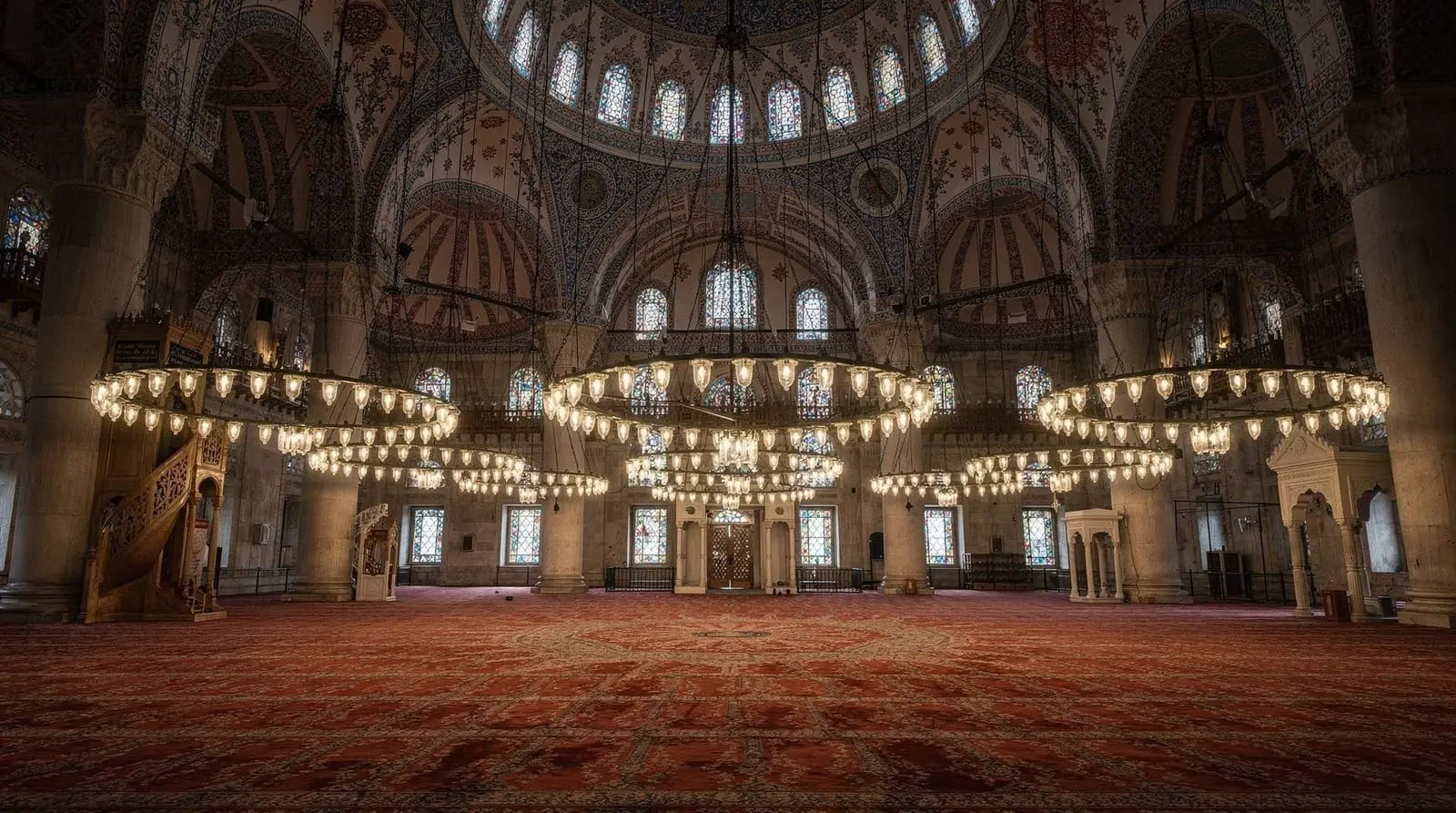
Best mosques in Istanbul — beyond the Blue Mosque and Hagia Sophia
Istanbul: Hagia Sophia, Blue Mosque, Suleymaniye Mosque Tour
What are the best mosques to visit in Istanbul?
The five best mosques in Istanbul are Süleymaniye (the most architecturally accomplished), Rüstem Pasha (extraordinary Iznik tiles, almost no tourists), the Blue Mosque (famous and free), the Little Hagia Sophia (the oldest surviving mosque in Istanbul), and Eyüp Sultan (the most significant spiritually, in an atmospheric neighbourhood). All are free to enter.
Istanbul’s mosques: more than the Blue Mosque
Istanbul has over 3,000 mosques. The famous ones — the Blue Mosque, Hagia Sophia — attract most of the tourist attention. But Istanbul’s mosque landscape is far richer than the Sultanahmet concentration suggests, and several of the most remarkable mosques are almost tourist-free.
This guide covers the best mosques across the city, from the architecturally significant to the spiritually important to the ones that will make you stop and stare.
| Where | Spread across the old city (Sultanahmet, Fatih) and the Bosphorus shore (Ortaköy) |
| Cost | Free — no ticket, no donation required |
| Time needed | 20–40 minutes per mosque; half a day for three to four |
| Getting there | Tram (T1) for Sultanahmet/Eminönü mosques; bus or ferry for Ortaköy and Eyüp |
| Best time | Weekday mornings, roughly 9–11:30am, outside prayer |
Süleymaniye Mosque — the architectural standard
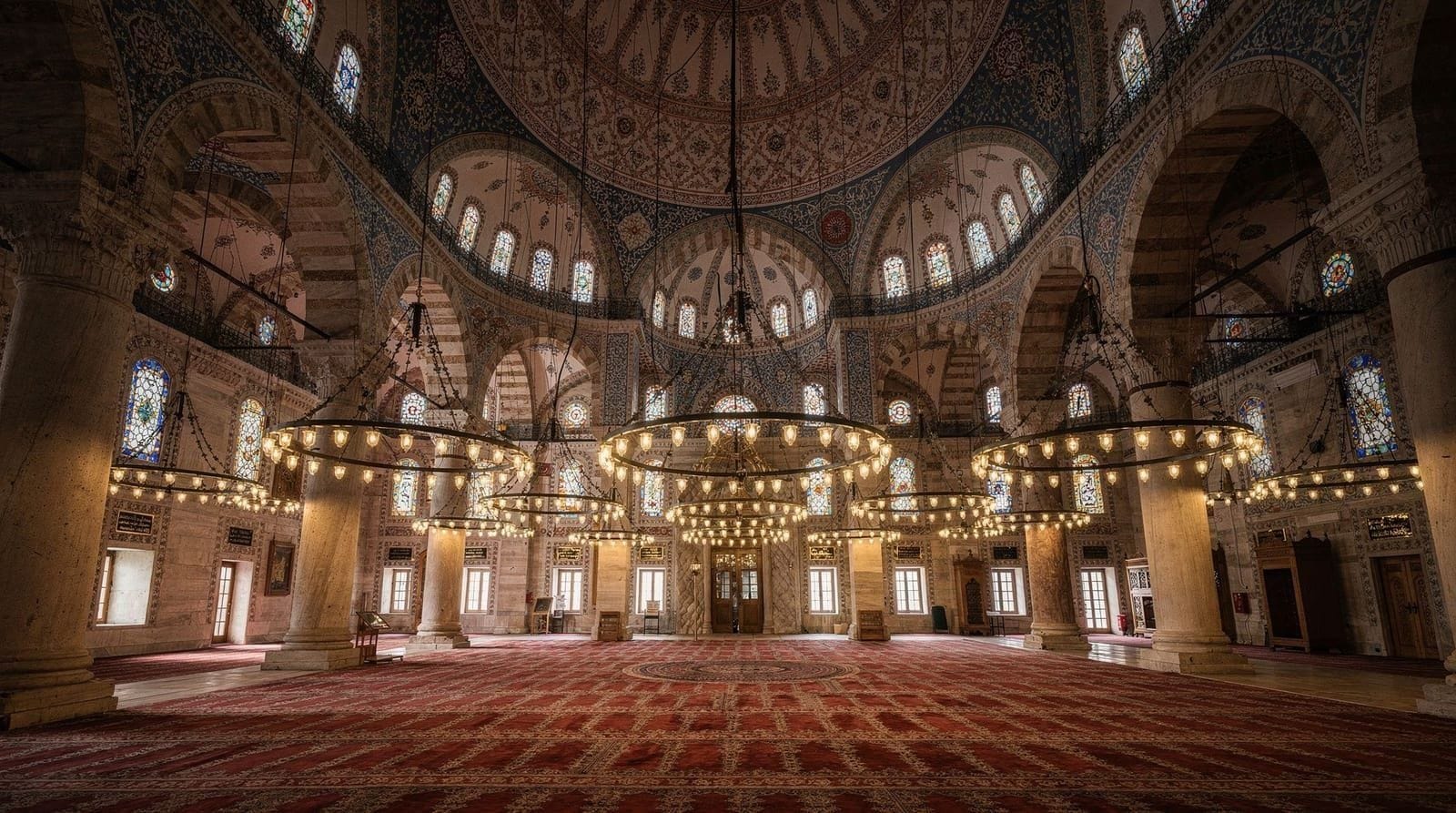
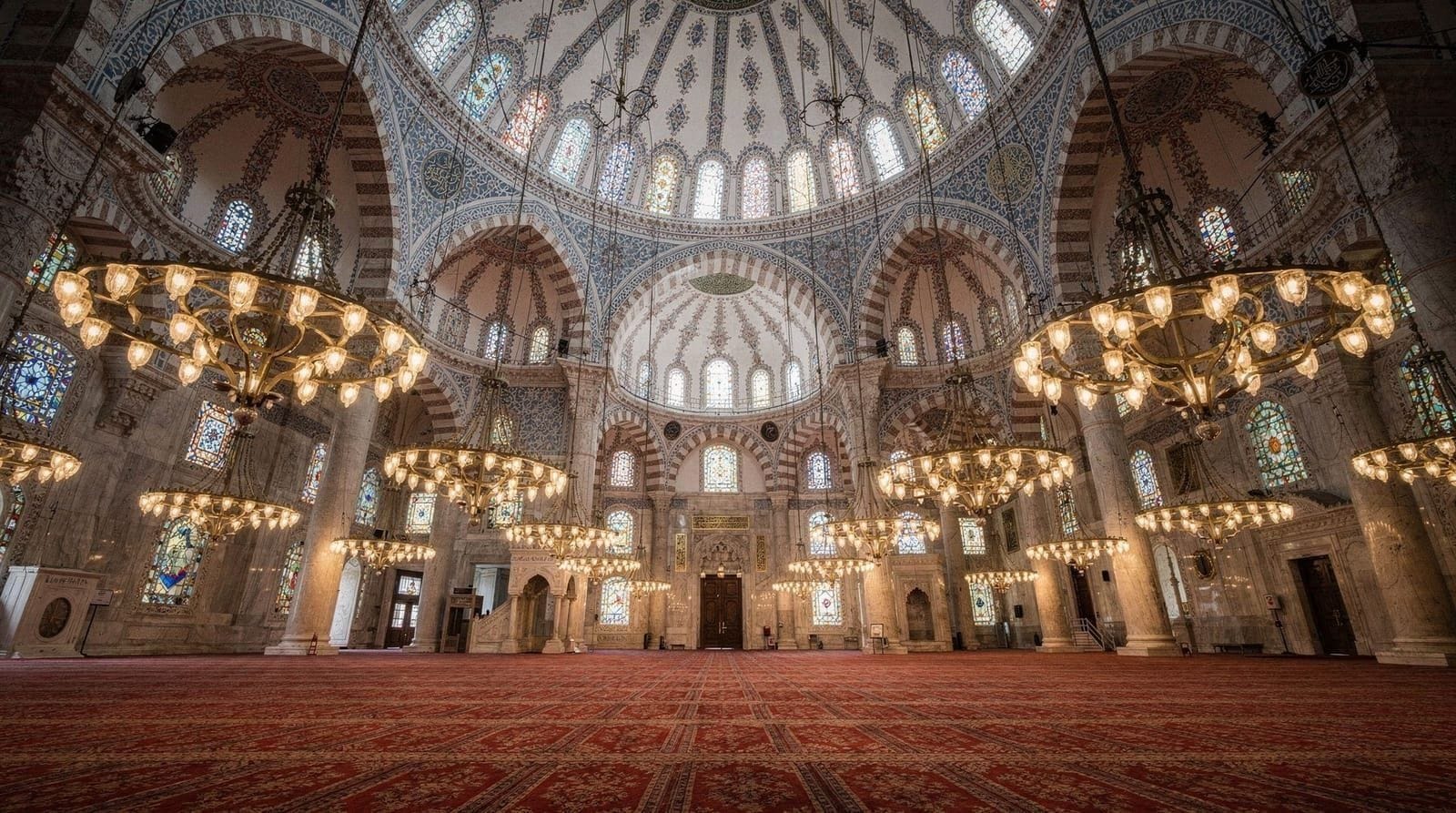
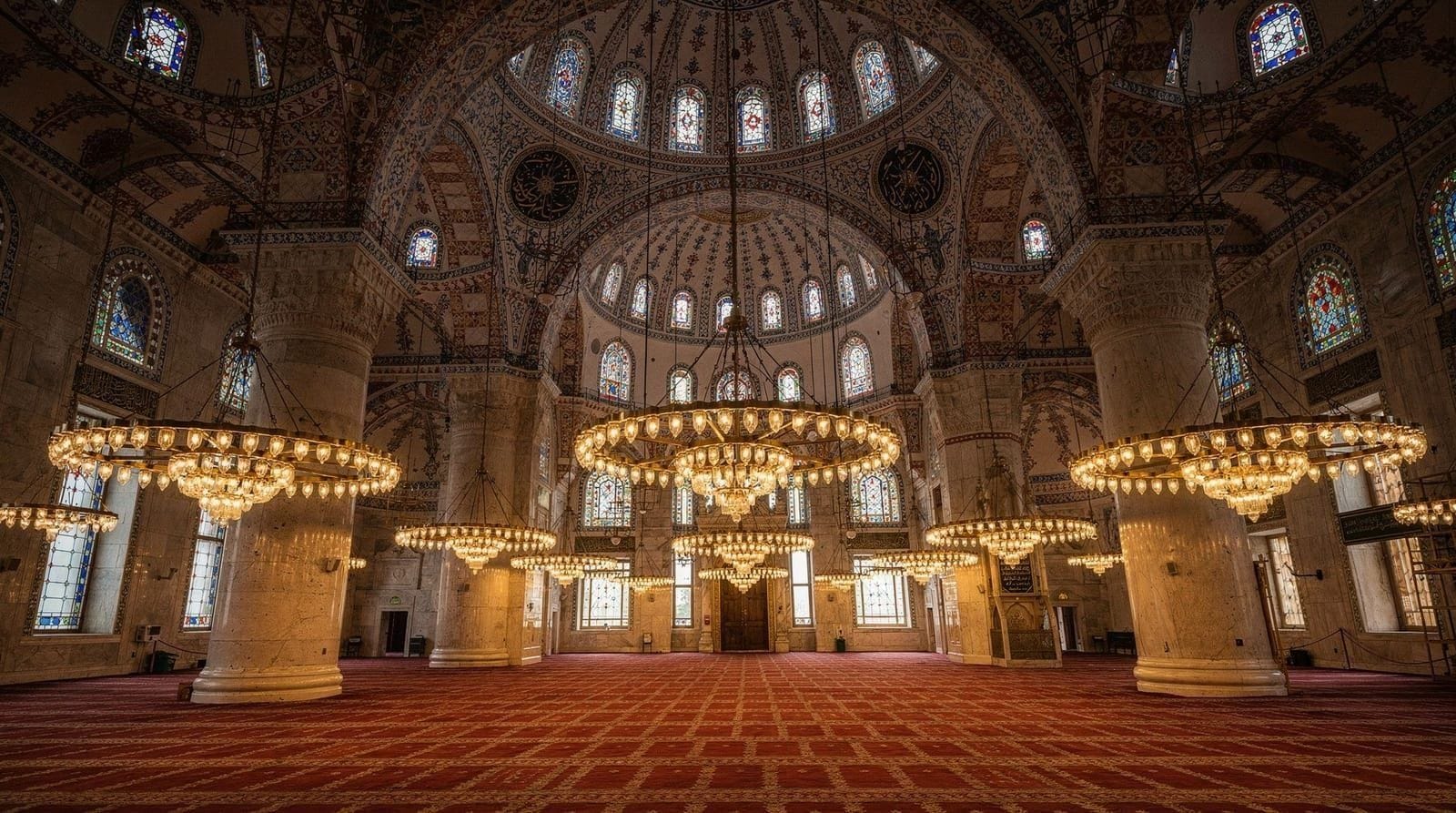
Mimar Sinan’s Süleymaniye (1550–1557) is the most accomplished mosque interior in Istanbul. The graduated light, the 53-metre dome supported on four massive piers, the spare use of Iznik tiles in the mihrab window area, and the quality of the calligraphy set a standard that later mosques (including the Blue Mosque) tried but did not fully match.
Free. Outside prayer times. The outer terrace gives the best view of the Golden Horn from anywhere in the old city. The tombs of Süleyman the Magnificent and Hürrem Sultan are in the garden; Mimar Sinan’s own modest tomb is at the outer wall. See Süleymaniye Mosque and the full visiting guide at Palaces & mosques.
Rüstem Pasha Mosque — the most beautiful tiles
Hidden on the second floor of a commercial building near the Spice Bazaar, Rüstem Pasha Mosque (1563) is the most extraordinary small mosque in Istanbul. Designed by Sinan for Grand Vizier Rüstem Pasha, the entire interior — walls, arches, mihrab, mimber — is covered in 16th-century Iznik tiles of the highest quality. The tiles are in better condition and more extensively applied than anywhere else in the city, including the Blue Mosque.
Finding it requires looking for the stairwells in the commercial building on Hasırcılar Caddesi near the Spice Bazaar; there are no prominent signs from the street. Ask locally. Free. Almost never crowded. See Hidden gems in Istanbul.
Blue Mosque — the famous one
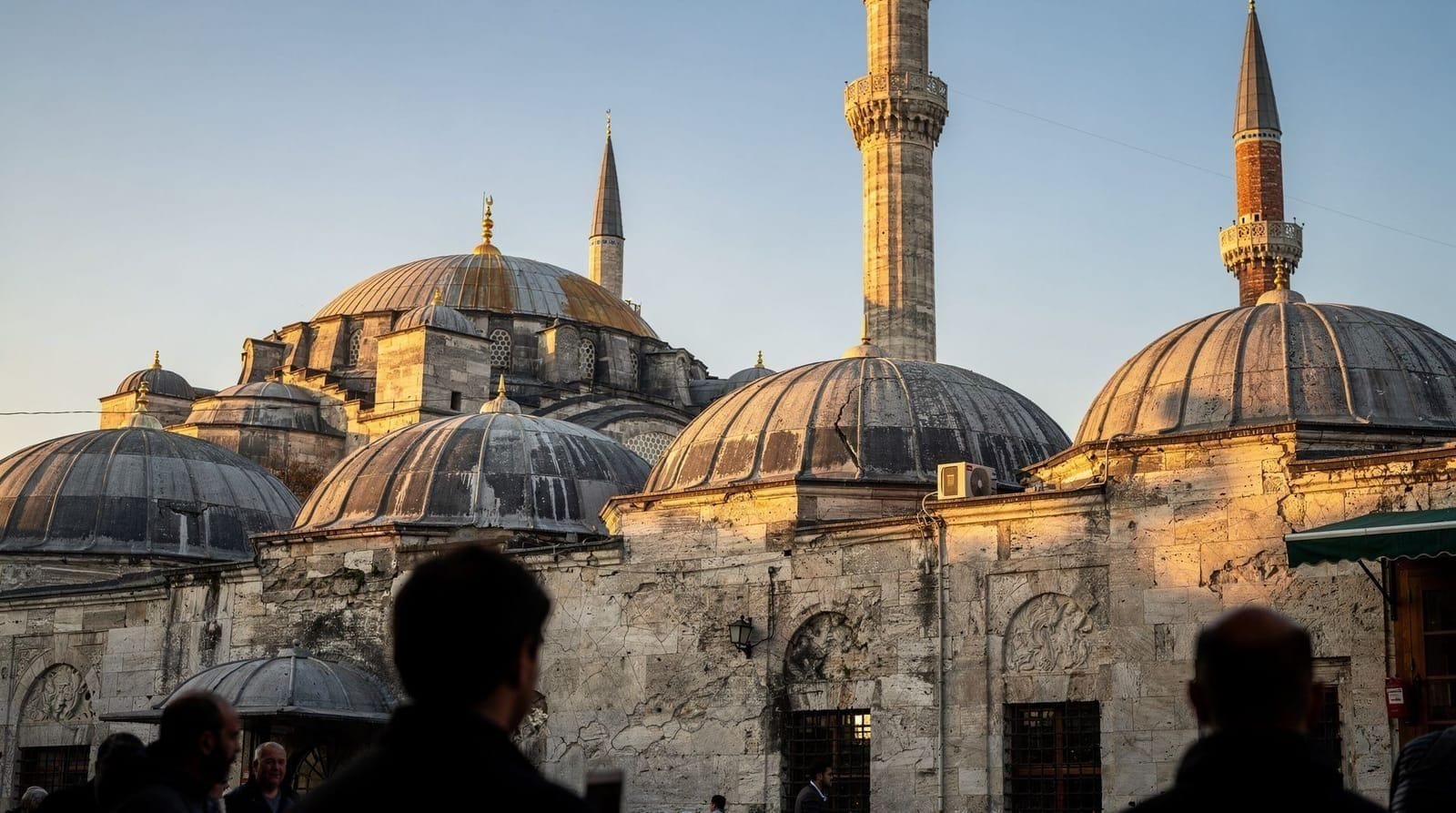
Sultan Ahmed I’s 1617 mosque is the most famous in Istanbul. Six minarets (controversial at the time), a cascade of domes, 20,000 Iznik tiles, and a position directly opposite Hagia Sophia. Less architecturally refined than Süleymaniye but grander in its accumulation of ornament.
Free. Close attention to prayer closure times. Avoid the fake entrance fee scam at the tourist entrance. Full visiting guide at Palaces & mosques. See Blue Mosque.
A guided tour covering Hagia Sophia, the Blue Mosque, and Süleymaniye is the most logical way to see the three most architecturally important religious buildings in the city in a single day with context.
Little Hagia Sophia (Küçük Ayasofya Camii) — the prototype
Built between 527 and 536 CE, several years before the current Hagia Sophia, the Church of Saints Sergius and Bacchus is considered a prototype for the larger building. Converted to a mosque in the early Ottoman period (now Küçük Ayasofya Mosque), it preserves sections of original Greek-letter inscriptions in the marble frieze above the lower arcade.
In the Küçük Ayasofya neighbourhood, southwest of the Blue Mosque. Free. Almost always empty of tourists. The original Greek inscription is visible in the upper arcade — worth finding specifically. See History & culture.
Eyüp Sultan Mosque — the most spiritually significant
The Eyüp Sultan Mosque at the far end of the Golden Horn is built around the tomb of Abu Ayyub al-Ansari (Eyüp Sultan), the standard-bearer of the Prophet Muhammad, who died during the first Arab siege of Constantinople in 674–678 CE. For Muslims, this is one of the most sacred sites in Istanbul — and one of the most sacred outside the Arabian peninsula.
The mosque and tomb are free to visit. The surrounding neighbourhood of Eyüp is distinctly different from Sultanahmet — primarily Turkish and religious rather than tourist-facing. The Ottoman cemetery on the hill above (accessible by cable car or on foot to Pierre Loti Hill) is worth the visit. See Balat and Fener for neighbourhood context.
New Mosque (Yeni Cami) — at the heart of the city
The Yeni Cami at Eminönü was completed in 1665 after a 66-year construction period involving multiple architects and a gap of several decades when funds ran out. The result is solidly Ottoman imperial in style, free, and central to the daily life of the Eminönü waterfront. Worth 20 minutes inside and a look at the exterior from the waterfront.
Ortaköy Mosque — the photogenic one
The Büyük Mecidiye Mosque in Ortaköy (1856, designed by Nikoğos Balyan) is baroque Ottoman in style — smaller and more ornate than the classical mosques. It sits directly on the Bosphorus waterfront with the first Bosphorus Bridge in the background, creating the most photographed composition in Istanbul. The interior is smaller than the exterior suggests.
Free. Worth visiting for the setting and the photograph rather than the interior. The Ortaköy neighbourhood around it has good cafés and the famous kumpir (stuffed baked potato) street food. See Ortaköy.
Mihrimah Sultan Mosque at Edirnekapı — Sinan at his most spatial
The Mihrimah Sultan Mosque at Edirnekapı (1565) was commissioned by Süleyman the Magnificent for his daughter Mihrimah and designed by Sinan. The mosque sits directly at the Edirnekapı gate in the city walls. Sinan’s solution here — an almost completely glazed upper section, creating an interior flooded with light from three directions — is distinctive and memorable. The mosque is near the Chora Church, making a natural pairing.
Free. Rarely visited by tourists. Worth combining with the Chora Church on an off-circuit half-day. See Museums & monuments and the full Chora Museum guide for opening hours and what the mosaics show.
What to look for inside a mosque
Visiting several mosques in a row is more rewarding if you know what to look at. Start with the light: in Sinan’s work especially, windows are placed so that the interior changes through the morning, and a slow lap of the prayer hall tells you more than a quick look from the doorway. Then look up at the dome and notice how the weight is carried down through half-domes, arches and piers. The Istanbul architecture guide explains this vocabulary in more depth.
Next, look at the surfaces. Iznik tiles, painted calligraphy and carved marble each tell you something about the patron and the period. The mihrab, the niche that marks the direction of prayer, and the mimber, the stepped pulpit, are usually the most carefully finished elements in the room. Finally, look at the courtyard and the fountain: in many Ottoman mosques the outer space was designed as part of the experience, a transition from the street to the prayer hall.
A short pause also helps. Sitting quietly at the back of the carpeted area, away from the prayer lines, lets you take in the proportions without disturbing anyone. This is how most locals use these buildings outside prayer, and it is the best way to understand why the architecture was designed the way it was.
Planning a mosque route through the old city
The easiest route starts in Sultanahmet, where the Blue Mosque and Hagia Sophia face each other. If you have only a morning, take those two in order, then walk toward the Spice Bazaar for Rüstem Pasha, and finish at the Yeni Cami on the waterfront. The Spice Bazaar guide helps you find your way around the area and pairs naturally with the tile-covered interior upstairs.
A second route heads up the hill from the Grand Bazaar to Süleymaniye, which works well as a slow late-morning visit with the terrace as a rest stop. The Süleymaniye visiting guide covers the complex in detail. Both routes are easy to link with a tram ride, and the getting around Istanbul guide shows how the lines connect.
A third, quieter day suits visitors who have already seen the headline sights. Pair the Mihrimah Sultan Mosque with Chora, then drift toward the old neighbourhoods along the Golden Horn. The Balat and Fener walking guide gives you somewhere to eat and wander afterwards. The Eyüp Sultan visit deserves its own slot; the Eyüp Sultan Mosque guide explains what to expect from the atmosphere there.
Visiting respectfully, not just correctly
The dress code is the visible part of mosque etiquette, but the spirit matters as much. These are working places of worship, and for many people inside they are part of a daily routine. Keep your voice low, keep phones silent, and avoid walking in front of anyone who is praying. If a section of the hall is roped off for worshippers, treat that boundary as firm even when it is not staffed.
Be ready to adapt. Some mosques ask visitors to use a separate entrance or a marked area, and the instructions on the day take priority over anything written in a guidebook. Smile, follow the signs, and ask a volunteer if you are unsure. Most people are glad to help a visitor who has clearly made an effort.
For broader context on manners across the country, our Turkish customs and etiquette guide covers greetings, hospitality and everyday behaviour, and the blog post on mosque etiquette offers a shorter checklist you can read on the way. If your trip falls during the holy month, Ramadan in Istanbul explains how the atmosphere around mosques changes in the evenings.
Which mosque fits your itinerary
Not every visitor has time for all eight. This comparison helps you pick based on how much time you have and what you’re after:
| Mosque | Best for | Crowd level | Time needed |
|---|---|---|---|
| Blue Mosque | First-timers, the classic photo | Busy | 20–30 min |
| Süleymaniye | Architecture and views over the Golden Horn | Light | 30–40 min |
| Rüstem Pasha | Tile detail, off the main circuit | Very light | 15–20 min |
| Little Hagia Sophia | Byzantine history buffs | Empty | 15 min |
| Eyüp Sultan | Spiritual significance, neighbourhood atmosphere | Moderate (locals) | Half-day trip |
| Ortaköy | The Bosphorus Bridge photograph | Moderate | 10–15 min (exterior) |
| Mihrimah Sultan | Sinan completists, pairing with Chora | Very light | 20 min |
If this is your first trip, our top things to do in Istanbul guide and the Istanbul neighbourhoods overview help place these mosques on a wider map. For the two most-asked-about mosques side by side, see Hagia Sophia vs Blue Mosque. And if mosque architecture is a specific interest, the Istanbul architecture guide and Ottoman Istanbul guide go deeper on Sinan’s body of work across the city.
Hagia Sophia skip-the-line ticket is worth booking ahead if you’re pairing it with the Blue Mosque and Süleymaniye on the same day — it’s the one queue that genuinely gets long.
Practical guide to mosque visiting in Istanbul
Prayer times: all mosques close to tourists during the five daily prayers. Times shift seasonally. The most consistent visitor-friendly windows are approximately 9–11:30 am, 1:30–3 pm, and 4–6 pm. Friday midday is always busier.
Dress code: shoulders and knees covered; women cover hair inside the prayer hall. Shoes removed at the entrance. Cloth bags for shoes are provided.
Photography: permitted in most mosques outside prayer times, without flash. Do not photograph worshippers who are praying.
Donations: mosques do not charge entry. Donation boxes are typically present inside; contributing is optional, not required. Anyone outside a mosque requesting an entrance fee is not affiliated with the mosque.
For the mosque etiquette guide in full, see History & culture and our dedicated mosque etiquette guide, which covers what to wear and how to behave inside in more detail. If you want a full list of no-cost sights beyond mosques, free things to do in Istanbul rounds them up.
Combining mosques with the rest of your trip
Mosques fit easily around other plans because each visit is short and the sights cluster. If you are building a longer stay, the Istanbul in one day guide and the three-day itinerary show where mosque visits slot in without crowding the day. Visitors with a shorter window can use the Istanbul first-timer itinerary to decide which one or two are worth the time.
Many of these mosques also sit beside other attractions. Sultanahmet puts several within walking distance, while the Golden Horn cruise guide is a pleasant way to see Eyüp and the waterfront from the water. Leave room for lunch between visits: mosque-hopping is quieter work than it sounds, and a break helps you pay proper attention to the next interior.
Frequently asked questions about Best mosques in Istanbul — beyond the Blue Mosque and Hagia Sophia
Are all mosques in Istanbul free to visit?
What is the dress code for Istanbul mosques?
Which mosque has the best interior?
Is the Ortaköy Mosque worth visiting?
What is the best time to visit mosques in Istanbul?
Are there any mosques with particularly beautiful gardens?
Top experiences
Bookable activities with verified prices and instant confirmation on GetYourGuide.