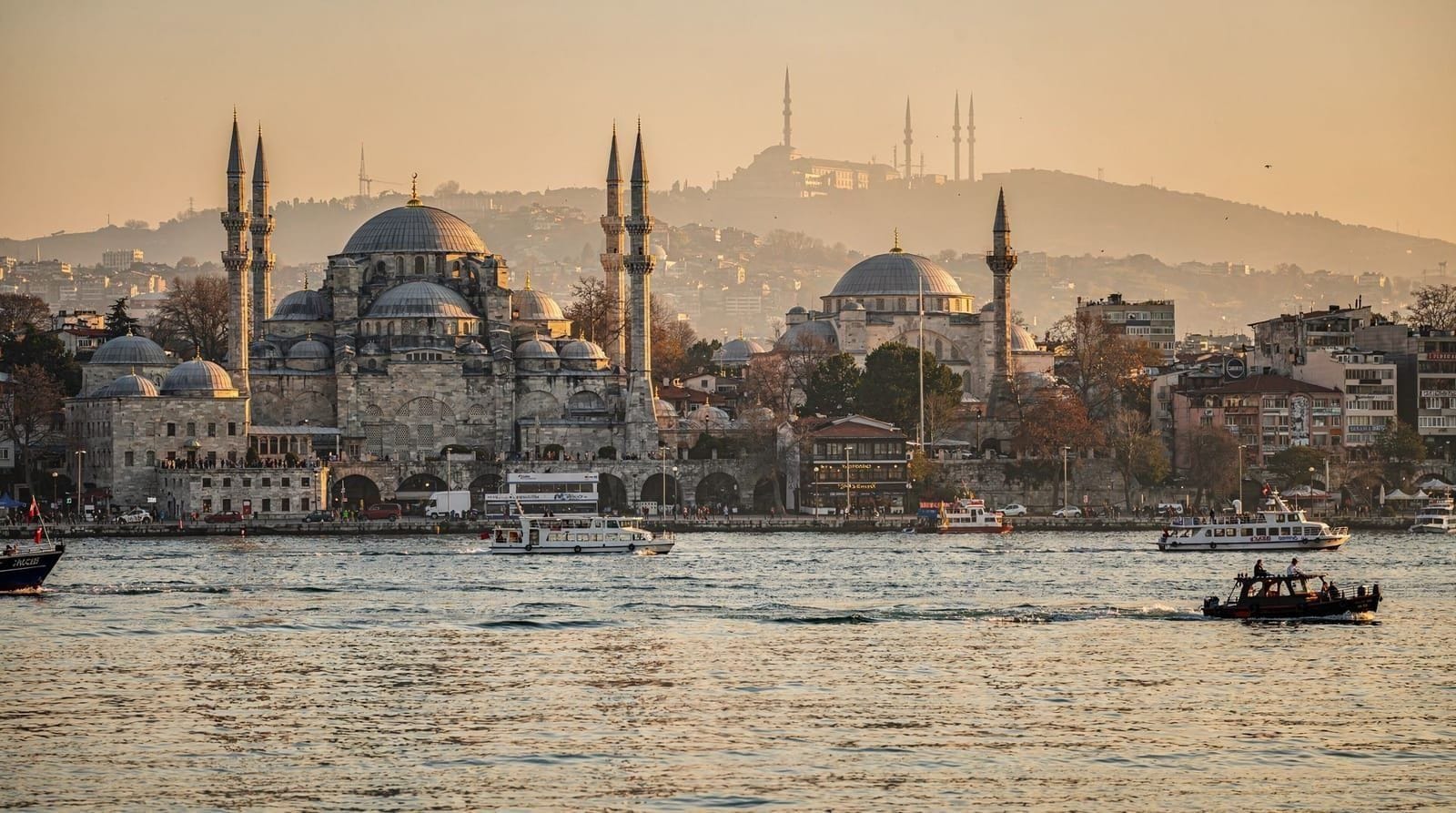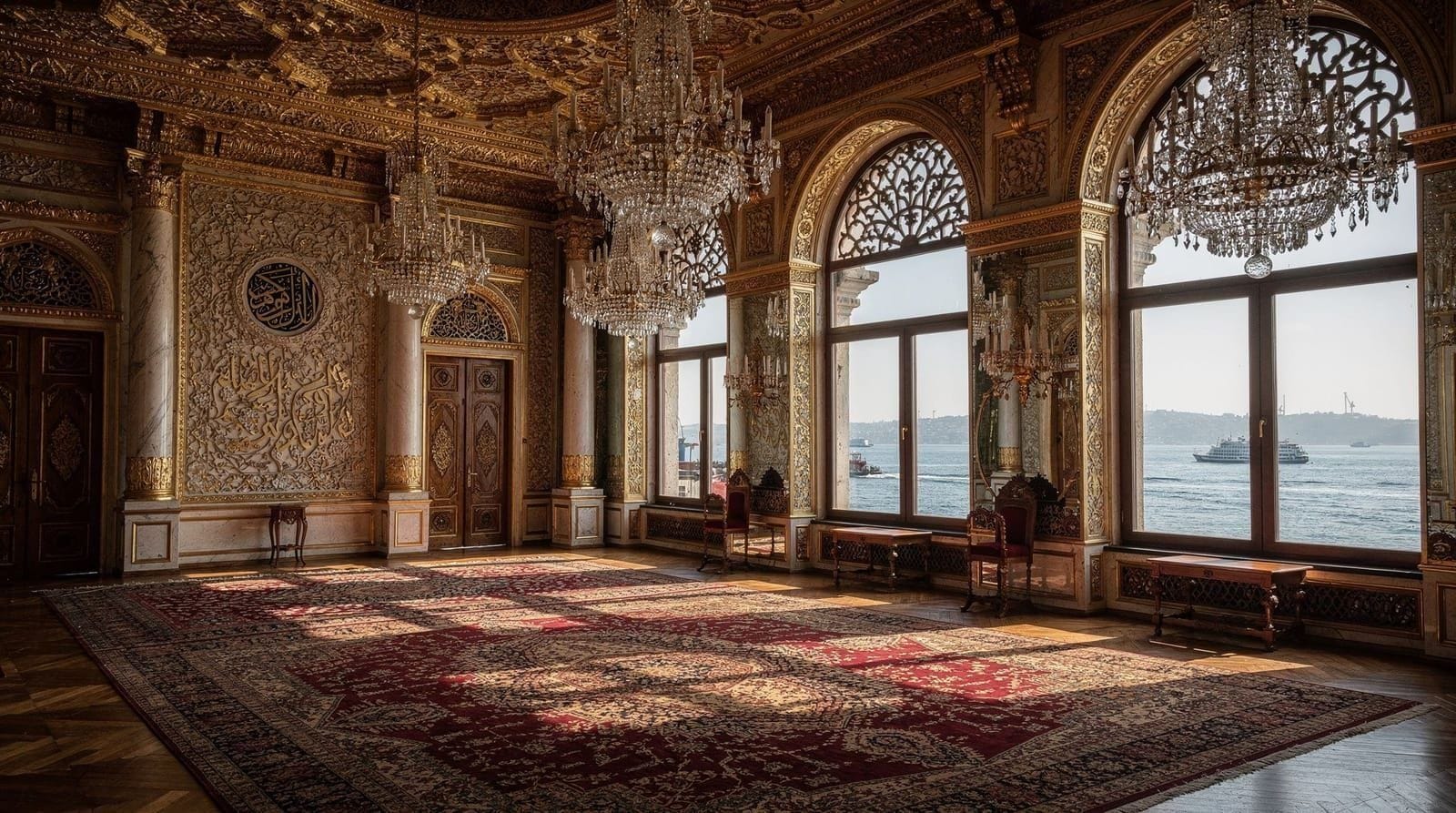
Hagia Sophia vs Blue Mosque: which to visit (or do both)?
Istanbul: Hagia Sophia Skip-the-Line Ticket & Museum Option
Should I visit Hagia Sophia or the Blue Mosque?
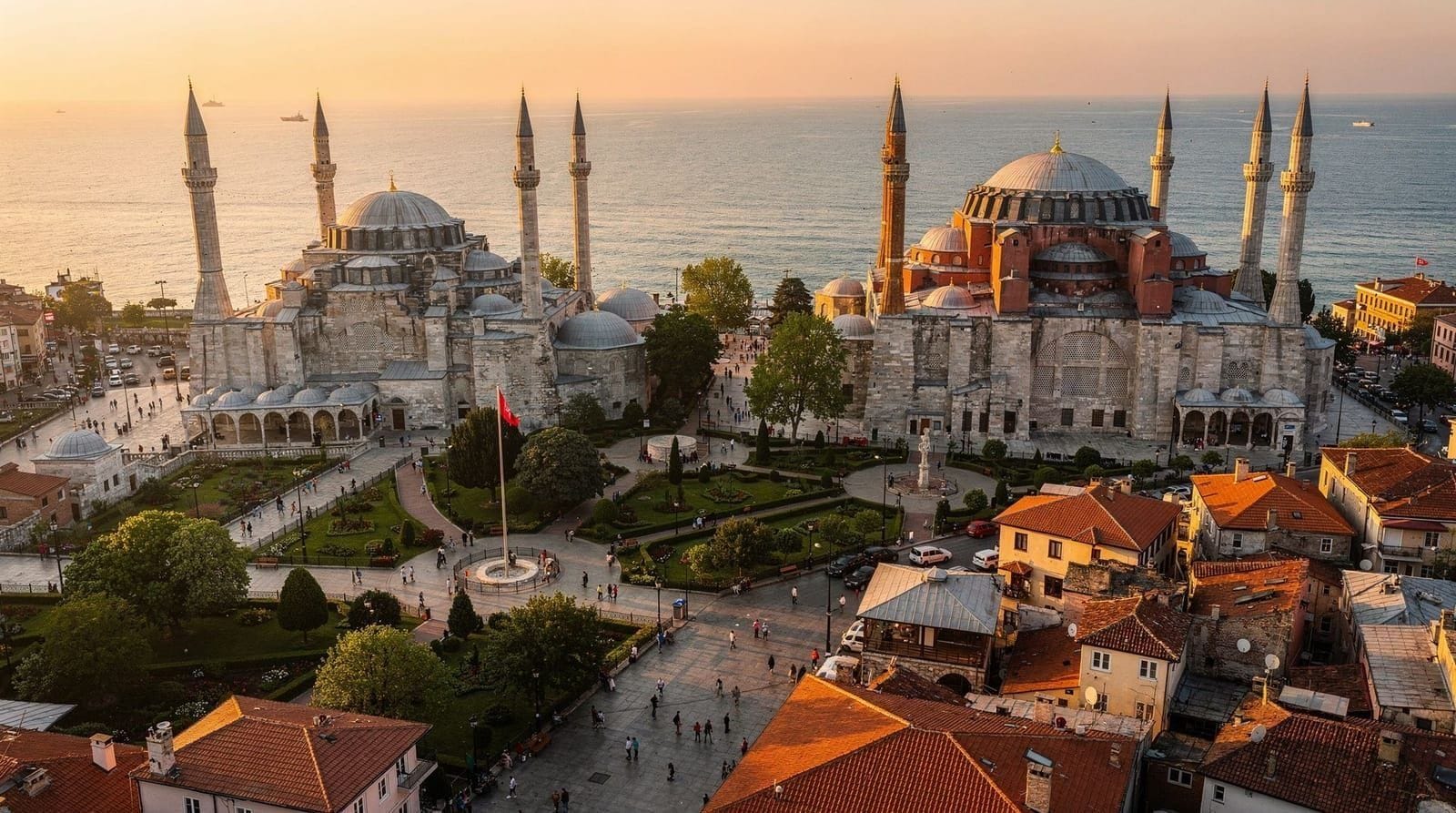
The two are only 500 metres apart in Sultanahmet — there is no practical reason to choose one over the other. Hagia Sophia is larger, more layered historically, and requires more time. The Blue Mosque is more visually homogeneous and can be visited in 30–45 minutes. Plan both in the same morning.
The question nobody needs to ask
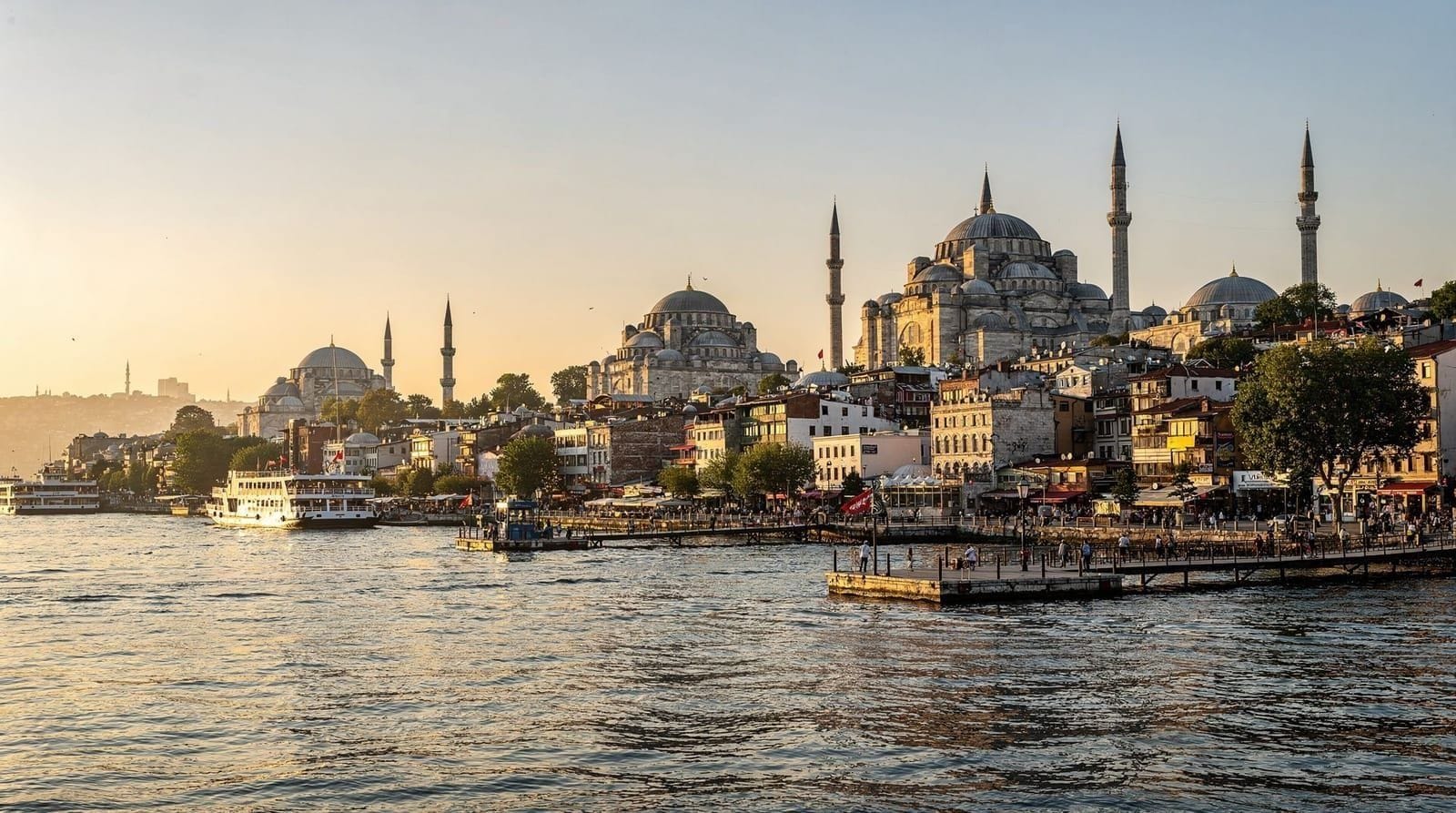
Hagia Sophia and the Blue Mosque are 500 metres apart in Sultanahmet. The Blue Mosque is free; for Hagia Sophia, check the current access conditions on the official Ministry of Culture site. The “which one should I visit” question almost never applies — if you’re spending even half a day in the old city, visiting both is the obvious move.
| Where | Sultanahmet square, 500m apart |
| Cost | Blue Mosque free; Hagia Sophia: see the official Ministry of Culture site |
| Time needed | ~2 hrs combined (1.5-2 hrs Hagia Sophia, 30-45 min Blue Mosque) |
| Getting there | Tram T1 to Sultanahmet stop |
| Best time | First thing in the morning, before the queues build |
What is genuinely useful to know: the differences in scale, history, logistics, and what each experience is actually like. This guide gives you an honest, specific comparison rather than generic tourism language. For the fuller logistics of each site individually, see the Hagia Sophia visiting guide and the Blue Mosque visiting guide.
What each building is, in plain language
Hagia Sophia (Ayasofya)
Built by the Byzantine Emperor Justinian I and completed in 537 AD, Hagia Sophia was for nearly a thousand years the largest enclosed space in the world. Its central dome — 55 metres high, 31 metres in diameter — was an engineering achievement not surpassed in the Christian world for centuries.
The building has been three things in its lifetime:
- Byzantine cathedral (537–1453) — seat of Eastern Orthodox Christianity
- Ottoman imperial mosque (1453–1934) — Mehmed the Conqueror converted it within days of taking Constantinople
- Museum (1934–2020) — secular monument under Atatürk’s republic
- Active mosque (2020–present) — re-converted by presidential decree; open to tourists outside prayer times
This layering is what makes Hagia Sophia singular: Byzantine gold mosaics coexist with huge Ottoman calligraphy roundels, Christian iconography with Islamic prayer niches. No other building in the world contains this specific historical argument.
Blue Mosque (Sultan Ahmed Camii)
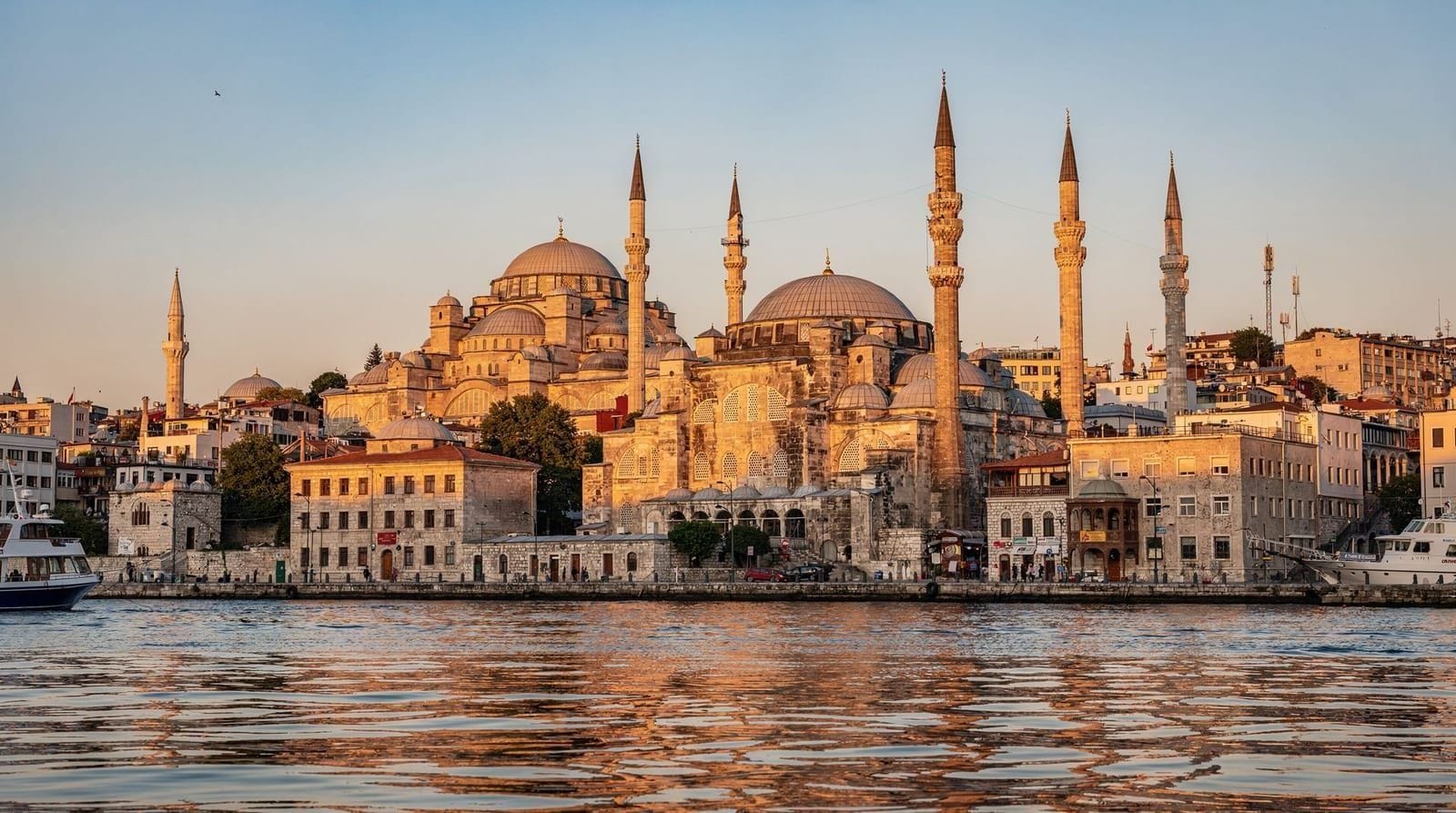
Completed in 1616 under Sultan Ahmed I, the Blue Mosque is the masterwork of the Ottoman classical architectural tradition — specifically, of the school of Mimar Sinan’s student Sedefkâr Mehmed Ağa. It was controversial upon completion: its six minarets were seen as arrogance (equalling the mosque at Mecca), and the Sultan had to fund a seventh minaret for Mecca at his own expense to resolve the controversy.
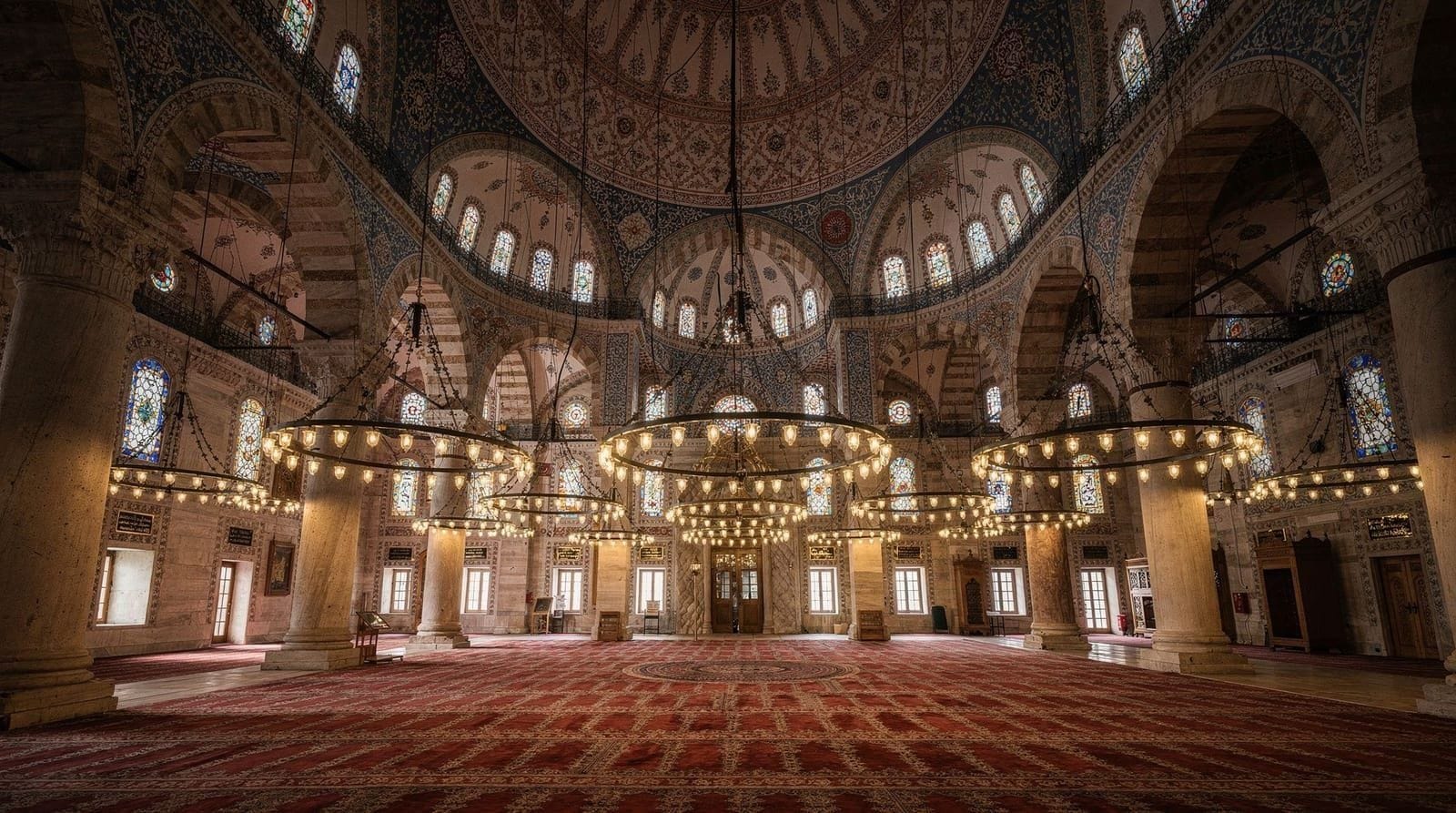
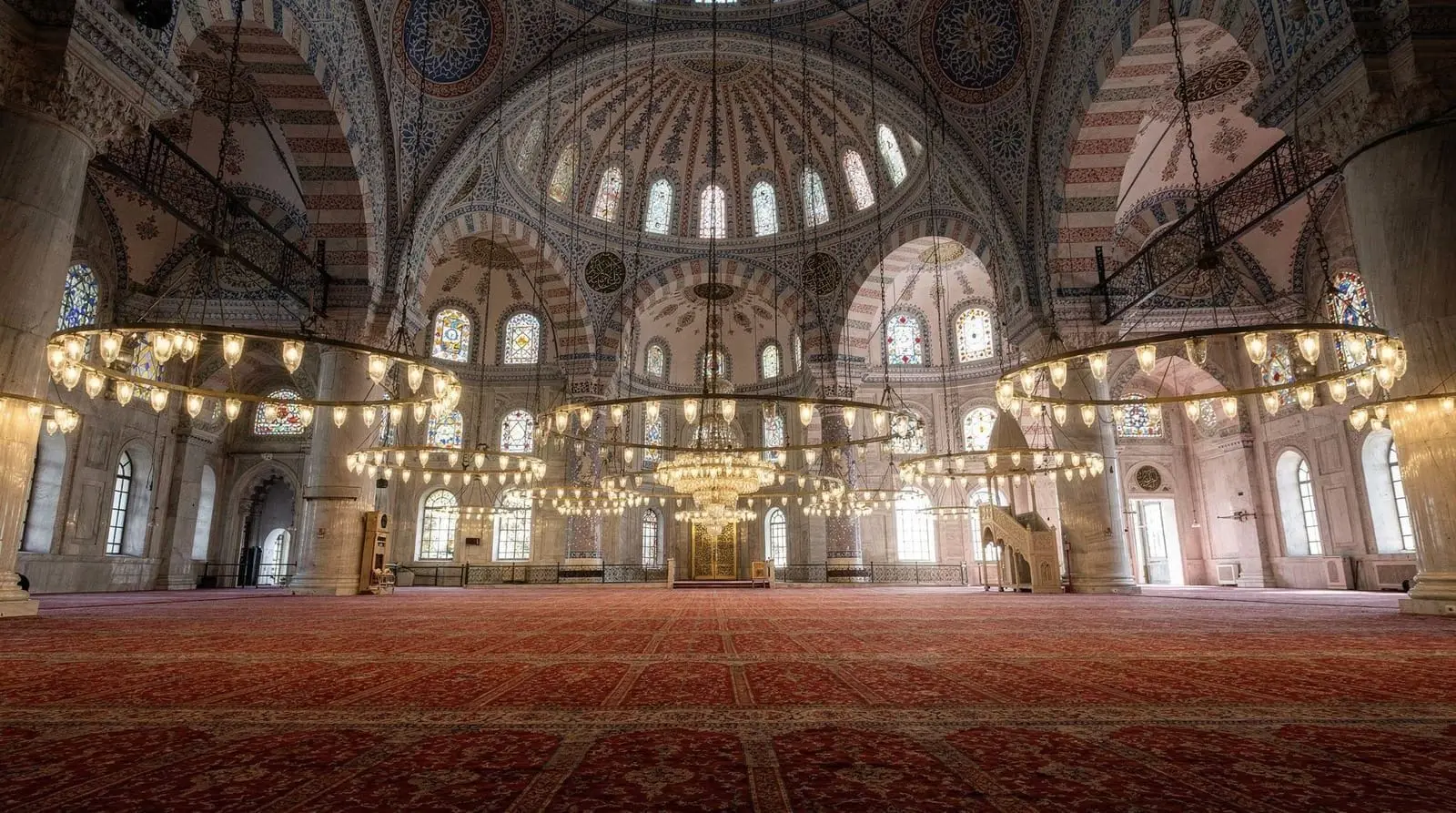
The name “Blue Mosque” comes from the 21,043 Iznik tiles that line the interior — predominantly white with blue floral designs. The effect is of overwhelming decorative coherence. Where Hagia Sophia is a palimpsest, the Blue Mosque is a singular vision executed with precision.
The mosque is still an active place of worship. It is closed to visitors during the 5 daily prayer times — brief 20–30 minute closures that happen roughly at dawn, midday, mid-afternoon, sunset, and night.
Practical comparison
| Hagia Sophia | Blue Mosque | |
|---|---|---|
| Entry fee | See the official Ministry of Culture site | Free |
| Ticket required | See the official Ministry of Culture site (guided tours optional) | No |
| Queue (July peak) | 60–90 min without tour | 10–20 min; closes during prayers |
| Time needed | 1.5–2+ hours | 30–45 min |
| Photography | Yes (no flash inside) | Yes (respectful) |
| Prayer closures | Yes (5x daily, ~30 min) | Yes (5x daily, ~30 min) |
| Guided tour value | High — complex history | Medium — interior speaks clearly |
| Upper gallery | Yes (included) | No |
The honest assessment of each experience
Visiting Hagia Sophia
Without context, Hagia Sophia can feel overwhelming and confusing. The building is enormous, currently used as a mosque, and contains layers of Byzantine and Ottoman history that are not self-explanatory if you just walk in.
With even basic preparation — or a guide — it becomes one of the great experiences in world architecture. The upper gallery offers the best views of the Byzantine mosaics (the Deësis mosaic of Christ, John the Baptist, and the Virgin; the Empress Zoë mosaic) and an elevated perspective on the dome. The marble floor, worn smooth by 15 centuries of feet, is extraordinary underfoot.
Practical notes:
- Women must cover their head inside (headscarves available at the entrance)
- Prayer rugs cover sections of the floor during active prayer periods
- Photography permitted; tripods require permission
- The adjacent Hagia Sophia museum complex (formerly the baptistery, now a tomb) is worth a look
Visiting the Blue Mosque
The Blue Mosque interior is, architecturally, more immediately beautiful than Hagia Sophia — the Iznik tiles create an almost enveloping blue-white atmosphere, and the proportions of the six-domed approach to the central dome are harmonious and clear.
The experience as a tourist can feel slightly regimented — visitor flow is controlled through a roped entrance, and you move through a defined route. This is understandable given the building is an active mosque, but it limits lingering. Spend time standing in the centre and looking up at the tiled semi-domes before moving through.
Practical notes:
- Shoe covers are provided (remove shoes at entrance)
- Head covering required for women
- Prayer closures last approximately 20–30 minutes; plan around them if you want uninterrupted access
- The blue Iznik tiles are stunning but the viewing angle from the tourist roped area is limited — look for gaps to see them in full
How the two feel different once you are inside
The simplest way to think about the pair is by mood. Hagia Sophia asks you to slow down and work a little: you look up at the dome, then down at the worn floor, then across at a mosaic that belongs to a completely different religious world from the calligraphy beside it. The Blue Mosque gives itself to you almost immediately. You step in, you look up, and the tiled semi-domes do the work. Neither reaction is better, but they suit different moods and different energy levels, which is one more reason to see them in a deliberate order rather than at random.
Many visitors find that Hagia Sophia is the one they keep thinking about afterwards, precisely because it raised questions. The Blue Mosque is the one they photograph most, because its coherence reads well in a picture. If you like understanding why a place looks the way it does, lean towards spending your extra time in Hagia Sophia. If you simply want to feel the beauty of a space without reading about it, the Blue Mosque will satisfy you quickly and leave the rest of your morning free.
For the wider architectural story behind both, the Istanbul architecture guide and the Byzantine Istanbul guide give context that makes the buildings far easier to read. The Ottoman Istanbul guide covers the other half of the story, the sultans who converted one building and commissioned the other.
Choosing who should go where
Different travellers get different things from these two buildings, so a few quick pointers:
- First-timers with a single morning: do both, in the order of the route below, and do not agonise over it.
- History lovers: give Hagia Sophia the lion’s share of your time, and read the Hagia Sophia visiting guide beforehand. The Istanbul history overview is a good companion read.
- Photographers: the Blue Mosque courtyard and exterior are as rewarding as the interior, and the exterior from the square needs no queue at all. See the most Instagrammable spots in Istanbul for other angles on the same skyline.
- Families with children: the Blue Mosque is the easier visit because it is shorter. Hagia Sophia can be done in a shorter, more selective pass if patience runs out; the Istanbul with kids guide has more on pacing a day like this.
- Travellers who dislike crowds: go early, and consider the quieter Süleymaniye Mosque as your main mosque experience instead of repeating the busiest hours in Sultanahmet.
Dress and behaviour in both buildings
Both are working mosques, so the same basic rules apply and they are easy to follow. Cover your shoulders and knees, remove your shoes, and keep your voice low. Women cover their hair, and scarves are normally available at the entrance if you did not bring one. Carry a light layer or scarf in your bag so you are never caught out, even on a hot day, because lightweight clothing that covers the shoulders is usually more comfortable than stopping to improvise at the door.
Behaviour matters as much as clothing. Do not photograph people who are praying, do not walk through prayer areas, and do not block the entrance for a photo. The fuller list of dos and don’ts is in the mosque etiquette guide and the broader Turkish customs and etiquette page, and if you are curious about mosques that cost nothing and see fewer visitors, the free mosques in Istanbul and best mosques in Istanbul guides are worth a look.
Where to stay to make this easy
The easiest way to beat the queues is to sleep nearby. A hotel in Sultanahmet puts both buildings within a short walk, so you can arrive as the doors open without any transport planning. The trade-off is that the area is quiet in the evening and more touristy than other districts; the Sultanahmet vs Beyoğlu comparison and the where to stay in Istanbul guide weigh that up honestly. If you stay elsewhere, the tram described in the Istanbul public transport guide is the simplest link to the square.
What about Süleymaniye Mosque?
A question the comparison naturally raises: what about Süleymaniye? The Süleymaniye Mosque (1557) is Mimar Sinan’s acknowledged masterwork — widely considered architecturally superior to the Blue Mosque by Ottoman architectural scholars. It is also significantly less crowded, on a hilltop overlooking the Golden Horn, with a far more serene visitor experience.
If you have time for three mosques, Süleymaniye is the one that rewards the most visitors by surprise. It is free, quieter, and has a stunning elevated terrace view. See the Süleymaniye mosque visiting guide.
Süleymaniye also has practical courtyard cafés and a tomb complex worth ten minutes, and the surrounding neighbourhood (a working, non-touristy stretch of the old city) is a useful contrast after the crowds of Sultanahmet. It is a 20-minute walk or a short taxi from Hagia Sophia, best folded into an afternoon after the Sultanahmet cluster rather than the same morning rush.
What if you only have 90 minutes?
If time genuinely forces a choice, split the 90 minutes unevenly rather than evenly: 20 minutes at the Blue Mosque, 70 at Hagia Sophia. The Blue Mosque’s visual impact lands quickly; Hagia Sophia rewards a slower pace and the extra time is better spent there. This is the one scenario where prioritising is worth doing deliberately rather than trying to rush both equally.
Recommended morning route
8:45am — Arrive at Hippodrome (Sultanahmet Square). View the Egyptian Obelisk, the Serpentine Column, and the German Fountain. Free; no queue.
9:15am — Blue Mosque. Enter via the tourist entrance (southeast side). Spend 30–45 minutes inside. Check prayer times if planning arrival for opening.
10:15am — Walk 500 metres to Hagia Sophia. Join the queue or enter with pre-booked tickets/tour. Spend 1.5–2 hours.
12:15pm — Exit toward Topkapı Palace (5-minute walk) for the afternoon, or head to the Basilica Cistern (10 minutes’ walk) for a cool interlude.
This route handles both buildings in a single morning without rushing. In summer, arrive 30 minutes earlier.
For a guided experience combining both with Topkapı:
Extending the route
If your morning is going smoothly and you have energy left, the Basilica Cistern is a 10-minute walk from Hagia Sophia and pairs naturally as an early-afternoon stop — the cool underground air is a welcome break after two mosque visits in the midday sun. Topkapı Palace is the fuller afternoon option if you want to continue the Ottoman history thread rather than switch to something completely different.
Anyone stacking several sites in one day should also check the Istanbul Museum Pass guide — the Blue Mosque is free regardless (for Hagia Sophia, see the official Ministry of Culture site), but the pass can be worth it once Topkapı and other paid sites enter the plan. And whichever mosque you visit, a quick read of the mosque etiquette guide beforehand avoids the most common first-timer missteps around dress and behaviour.
Fitting the pair into a longer trip
Seeing both mosques is usually the opening move of a wider Sultanahmet day rather than a standalone plan. The Istanbul in one day guide and the 1-day itinerary show how the morning described above slots into a full day, while the 2-day itinerary and 3-day itinerary give you room to spread the old city over more than one visit. If you are still deciding how long to stay, the how many days in Istanbul guide helps, and the Hagia Sophia destination page and Blue Mosque destination page collect everything else about each site in one place.
A few last practical thoughts
Plan around prayer rather than fighting it. Check the day’s timings when you wake up, choose which building to enter first based on what is closing soon, and treat a closure as a chance for a coffee in the square rather than a setback. Wear comfortable shoes that slip off easily, because you will remove them at least once, and bring a small bag you can carry in one hand while you walk in socks. Finally, leave a little slack in the morning. The best moments in both buildings tend to come when you stop checking the time and simply stand still under the domes.
Frequently asked questions about Hagia Sophia vs Blue Mosque: which to visit (or do both)?
Is there an entrance fee for Hagia Sophia?
Is there an entrance fee for the Blue Mosque?
Which has the longer queue?
How long do I need for each?
Can I visit both on the same day?
Which is better architecturally?
Top experiences
Bookable activities with verified prices and instant confirmation on GetYourGuide.