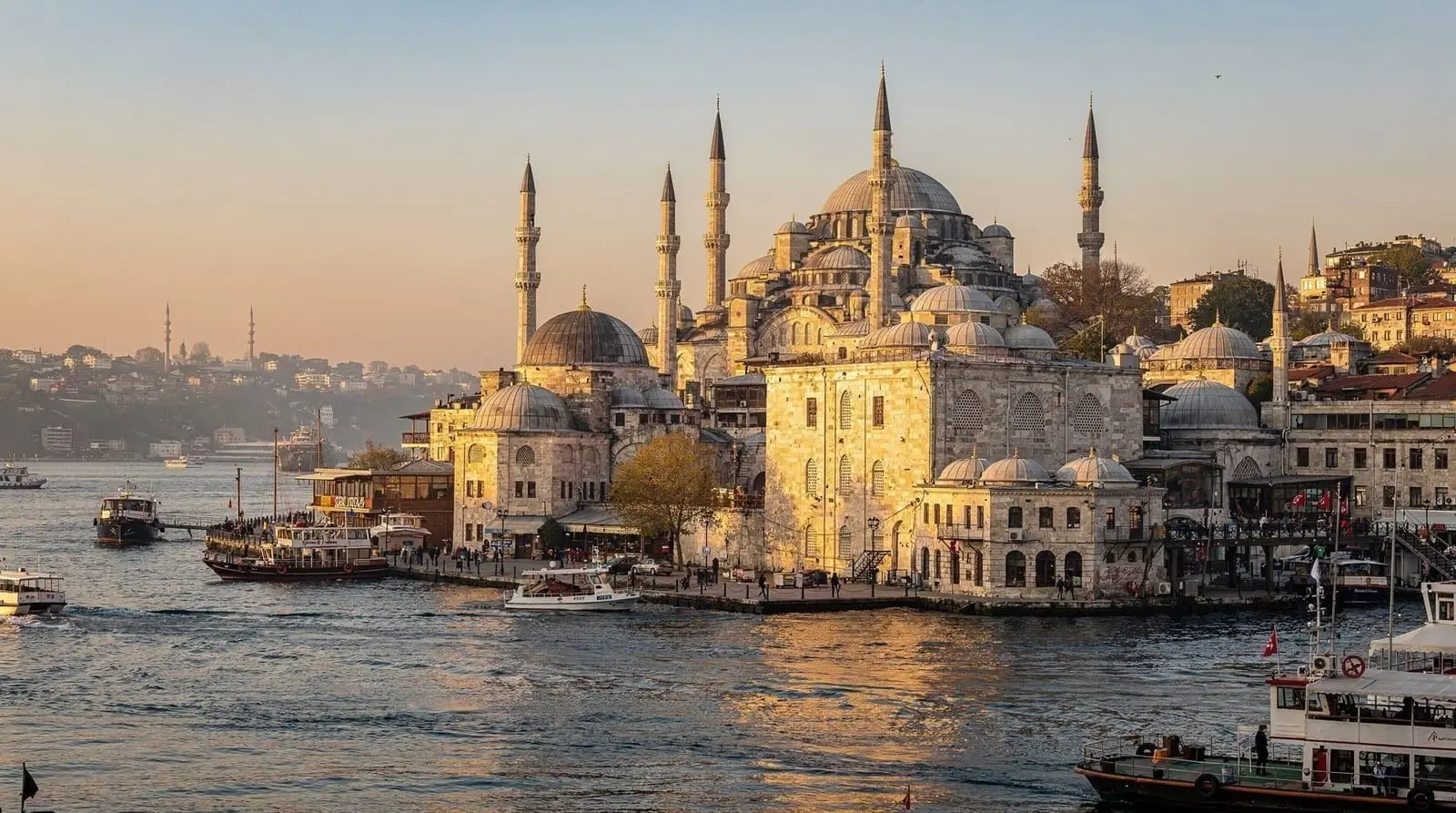
Free things to do in Istanbul — what actually costs nothing
Full-Day Walking Tour of Istanbul's Old City
Duration: 5 hours
What can I do for free in Istanbul?
Most mosques — including the Blue Mosque and Süleymaniye — are free to enter. The Grand Bazaar and Spice Bazaar cost nothing to browse. Walking Balat and İstiklal Street, crossing the Galata Bridge, and sitting on the Bosphorus waterfront at Ortaköy or Kadıköy are all free. The public ferry to the Asian side costs under 2 USD on an Istanbulkart.
Istanbul on a tight budget is entirely possible
The Istanbul that costs nothing is often more interesting than the one behind ticket gates. The mosques are free and architecturally extraordinary. The bazaars are free and centuries old. The waterfront is free. The neighbourhoods are free. And several of the best views in the city require only a walk uphill.
This guide covers what is genuinely free or near-free, what is worth paying for, and the tourist-trap “free” things to be sceptical about.
| Cost | Free to near-free — mosques, bazaars, viewpoints, walks |
| Time needed | A full day, easily, without spending much beyond food |
| Getting around | Walking plus Istanbulkart ferries/tram (a few TRY each) |
| Best time | Weekday mornings for quieter mosques and markets |
| Booking | None needed for any of the free sites below |
Free mosques — the best of them
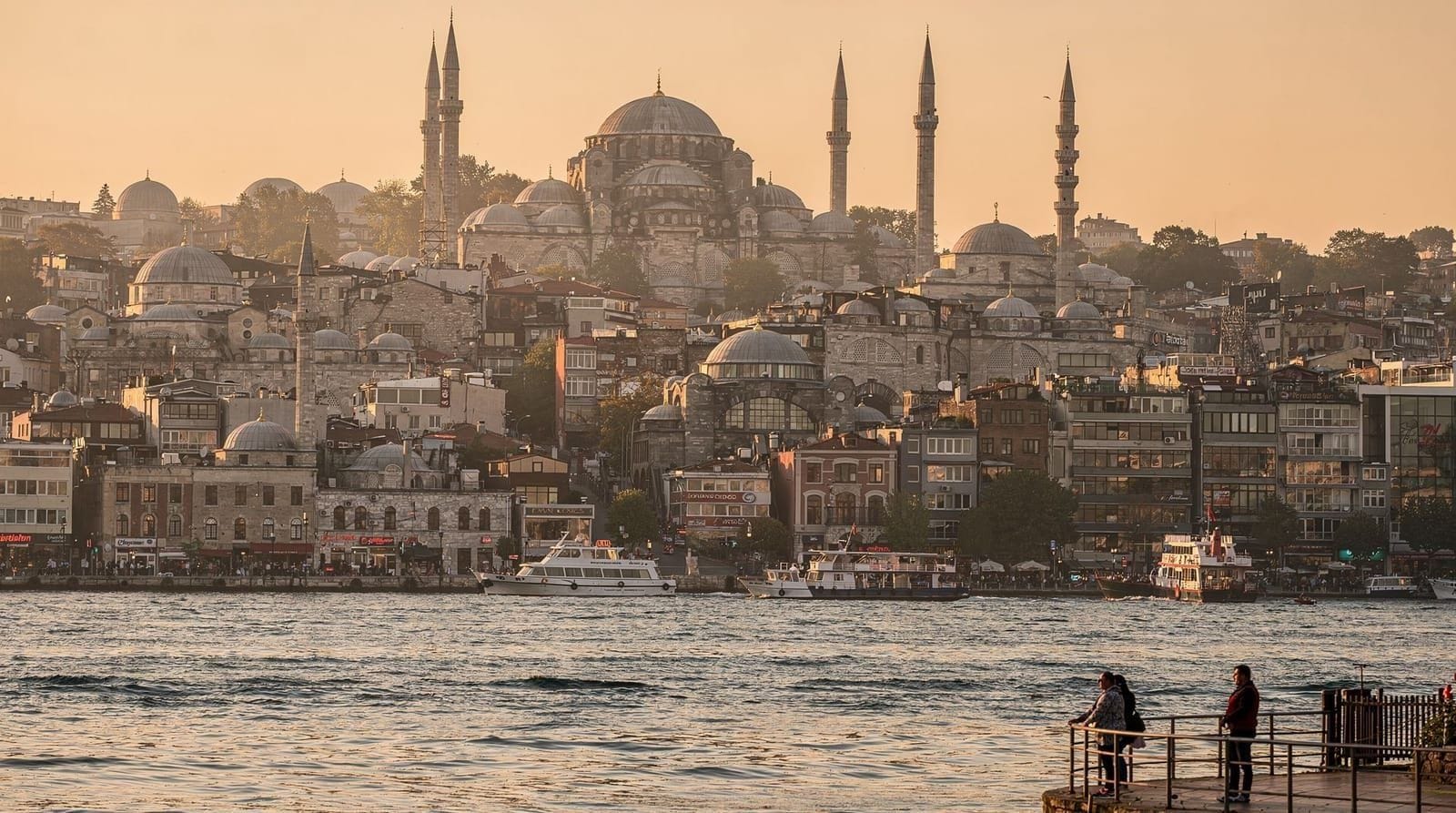
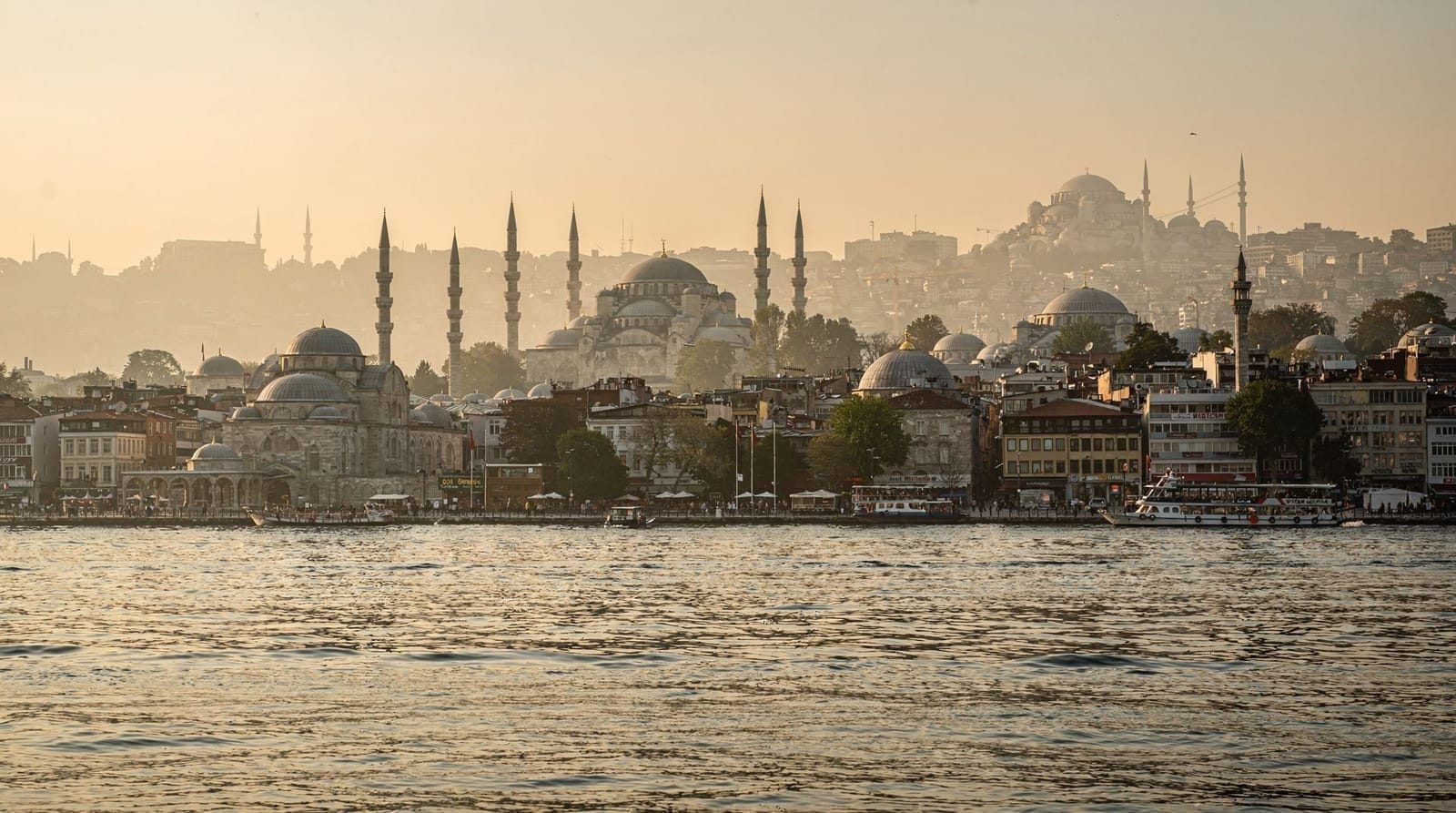
Most visitors know the Blue Mosque is free but many do not realise that Süleymaniye Mosque is both free and architecturally superior. Designed by Mimar Sinan in 1557 for Süleyman the Magnificent, it sits on the third hill of Istanbul with a sweeping view of the Golden Horn from its outer terrace. Inside, the proportions are considered the masterwork of Ottoman mosque design — three semi-domes, a central dome 53 metres high, and Iznik tiles used sparingly but to great effect. Almost always less crowded than Hagia Sophia. See Süleymaniye Mosque.
The Blue Mosque (Sultan Ahmed Camii) is free and still impressive despite being the more touristed option. Entry is managed by timed closures around prayer times; the most reliable window is 10–11:30 am and 1:30–2:30 pm. See Blue Mosque.
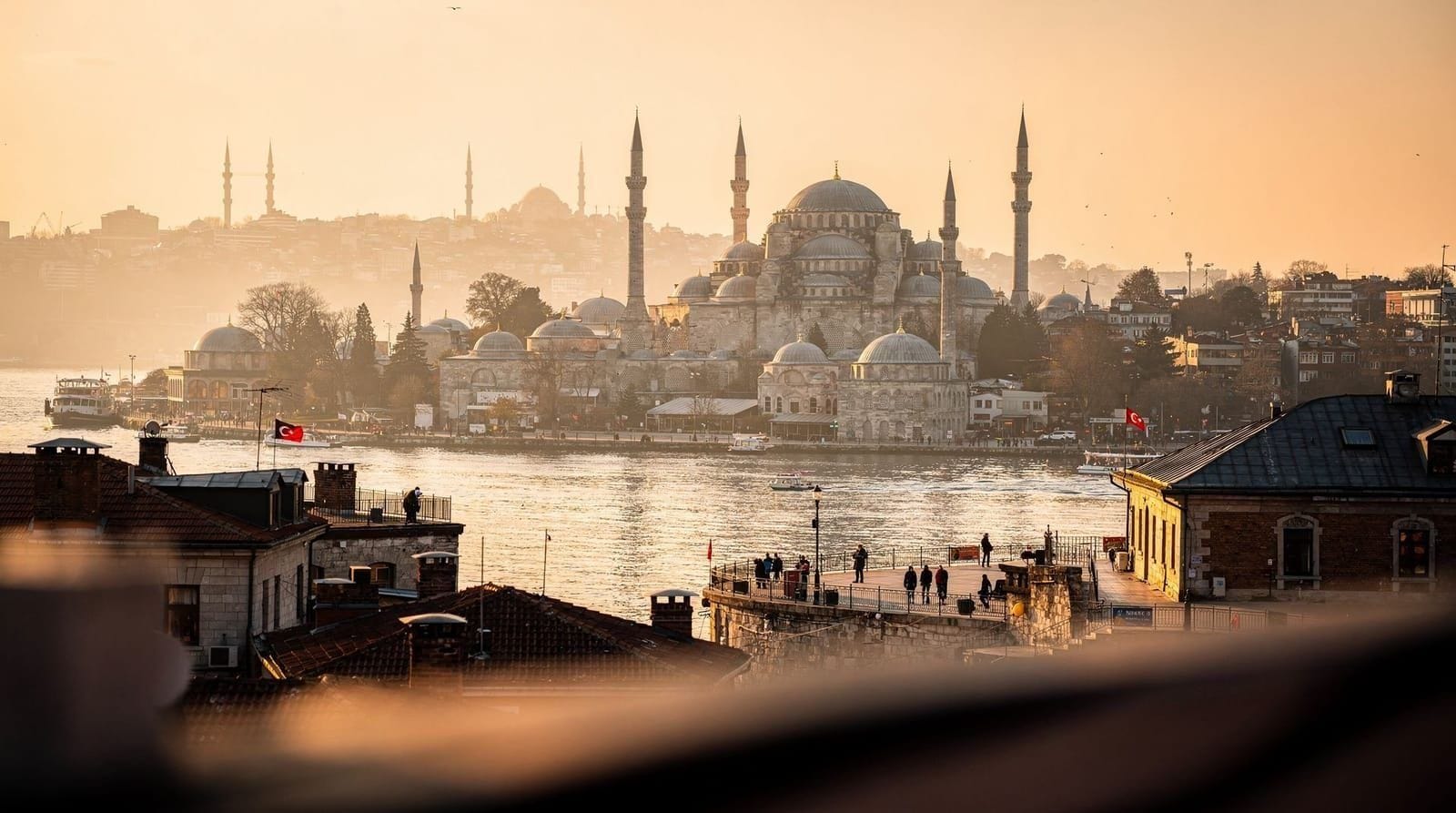
The New Mosque (Yeni Cami) at Eminönü dates from 1665 and marks the start of the Spice Bazaar. Free, usually uncrowded, and structurally interesting. Worth 20 minutes.
Eyüp Sultan Mosque, at the far end of the Golden Horn in the Eyüp district, is one of the holiest sites in Istanbul — the tomb of Abu Ayyub al-Ansari, companion of the Prophet Muhammad, is directly attached to the mosque. The surrounding neighbourhood is distinctly local, away from the tourist circuit. Free to enter.
Ortaköy Mosque sits directly on the Bosphorus at Ortaköy and photographs beautifully against the backdrop of the first Bosphorus Bridge. Free to enter outside prayer times. See Ortaköy.
For more, see Honest Istanbul on scams involving fake mosque entry fees.
The bazaars: free to enter, expensive to leave
The Grand Bazaar (Kapalıçarşı) has been free to enter since it opened in the 1460s. Browse the ceramics, textiles, and spices at your pace; say no firmly and keep moving when pressured. The architecture of the inner hans is worth seeing even if you buy nothing. See Grand Bazaar.
The Spice Bazaar (Mısır Çarşısı) near Eminönü is similarly free. The stalls inside cater primarily to tourists at inflated prices; the wholesale spice and herb vendors in the streets surrounding it (Tahtakale area) sell to locals at honest prices. Worth a look at both. See Spice Bazaar.
Arasta Bazaar, behind the Blue Mosque, is a quieter covered market in a reconstructed Ottoman bazaar building. Less aggressive, better quality textiles and ceramics on average. Free to browse.
A practical note on both bazaars: browsing is genuinely free and there’s no obligation to buy, but the bargaining culture means prices are rarely fixed — a firm, friendly “no thank you” ends most sales pitches quickly, and vendors rarely take offence at a polite decline. Wandering the quieter side-lanes away from the main covered avenues in the Grand Bazaar costs nothing extra and often reveals better-value stalls than the busiest thoroughfares.
Free viewpoints
Süleymaniye terrace: the outer courtyard of Süleymaniye Mosque gives a sweeping view over the Golden Horn, the Galata Tower, and the Beyoğlu skyline. Best at late afternoon.
Pierre Loti Hill (Eyüp): a short cable car ride or a steep 20-minute walk brings you to a hilltop café with panoramic views over the Golden Horn and the old city. The café itself was supposedly a favourite of French novelist Pierre Loti in the early 20th century. The view is excellent, especially at sunset.
Galata Tower area (street level): the tower itself charges admission, but the streets around it and the hilltop the tower sits on give a reasonable view without paying. See Galata Tower.
Çamlıca Hill on the Asian side: the highest point on the Istanbul European or Asian sides, with a panorama of the entire Bosphorus, both bridges, and the old city. Accessible by bus or taxi. Free to walk around; the mosque and tea gardens on the hill are worth exploring.
| Viewpoint | Cost | Best time | What you see |
|---|---|---|---|
| Süleymaniye terrace | Free | Late afternoon | Golden Horn, Galata Tower, Beyoğlu skyline |
| Pierre Loti Hill | Free walk / cable car | Sunset | Golden Horn, old city, cemetery on the way up |
| Galata Tower area (street level) | Free | Any time | Rooftops, Bosphorus glimpses, no tower-top view |
| Çamlıca Hill | Free (transport cost only) | Clear days | Full Bosphorus, both bridges, old city skyline |
Free neighbourhoods
Balat: Istanbul’s old Jewish quarter on the Golden Horn — colourful crumbling buildings, steep streets, antique shops, and several excellent coffee shops. Genuinely photogenic and genuinely pleasant on a weekday morning. See Balat and Fener.
Ortaköy: the neighbourhood at the foot of the first Bosphorus Bridge has a picturesque mosque, a small square with vendors selling kumpir (baked stuffed potatoes) and midye dolma (stuffed mussels), and a pleasant waterfront. Crowded on weekend evenings but a nice stroll. See Ortaköy.
Kadıköy, on the Asian side, is where Istanbul’s young creative class lives. The market streets (especially Güneşlibahçe Sokak and Mühürdar Caddesi), the fish and produce market (Tarihi Kadıköy Pazarı), and the Moda coastal walk are all free. See Kadıköy.
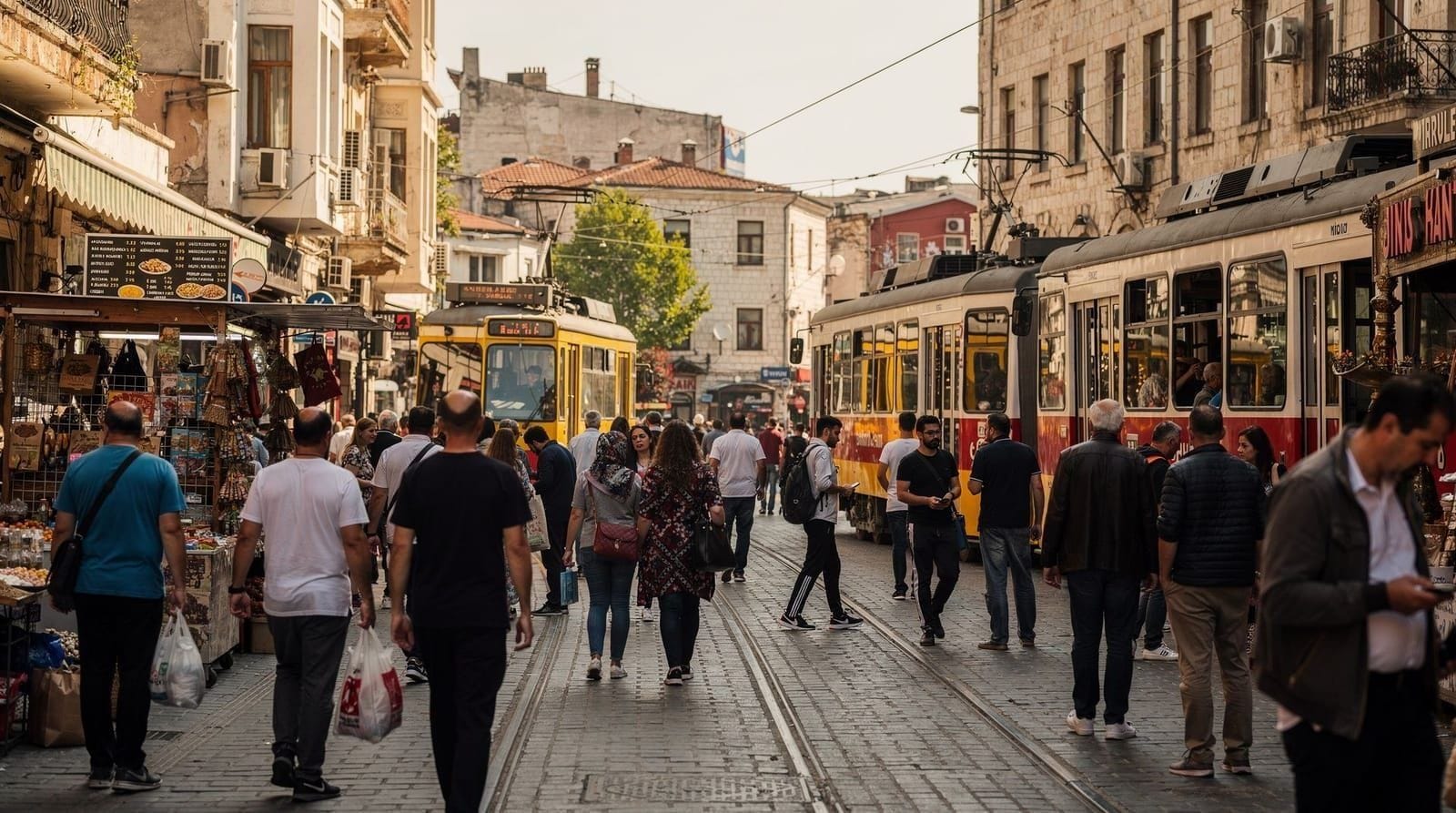
İstiklal Caddesi in Beyoğlu is a 1.4 km pedestrian street of bookshops, music stores, 19th-century buildings, and hundreds of side-street restaurants and bars. The street itself is free. The nostalgia tram (T2) running its length charges an Istanbulkart fare. See Beyoğlu and İstiklal Avenue.
Free Bosphorus experience (almost)
The Şehir Hatları public ferry from Eminönü to Kadıköy (20 minutes) and the shorter ferry to Üsküdar (15 minutes) are not technically free, but they are cheap enough that seasoned travellers list them among the best-value experiences in the city. You get a Bosphorus crossing among commuters — a more authentic Istanbul moment than most paid activities.
For longer Bosphorus views on a genuine budget, take the old Boğaz Hattı (Bosphorus Line) public ferry service from Eminönü to Anadolu Kavağı at the mouth of the Black Sea. This longer ferry runs a few times a day, takes about 1.5 hours each way, and passes the main waterfront palaces and fortresses. Istanbulkart fare.
What is free but often misrepresented
Hagia Sophia main prayer hall: technically free, but the sections containing the Byzantine mosaics and upper gallery are paid. You can enter and see the main dome and nave for free; the historic museum content requires a ticket. If you decide the paid sections are worth it, a skip-the-line Hagia Sophia ticket with a Blue Mosque audio guide can save time in the queue.
“Free” walking tours: these require a tip, typically a few hundred lira or equivalent per person. They are not free — just tip-based. Quality varies considerably.
Mosque entrance “donations”: legitimate mosques do not charge entrance fees. Anyone outside a major mosque asking for a fee or “donation” for entry is not affiliated with the mosque. The Blue Mosque, Süleymaniye, and all others are free. See Honest Istanbul.
Free art and culture
Istanbul Modern (Tophane waterfront, near Karaköy): Istanbul’s main contemporary art museum, in a restored 1950s warehouse. Entry is charged, but worth noting is that many visiting exhibitions have had occasional free days — check the website. The building and the Tophane/Karaköy waterfront outside are free to enjoy.
Pera Museum (Beyoğlu): a private museum with a strong collection of Ottoman painting and Orientalist art. Not free (see the museum’s official site for current prices), but consistently good.
Outdoor public art is scattered throughout Beyoğlu, Karaköy, and along the Bosphorus waterfront. No cost.
Budget eating: near-free food experiences
Istanbul’s best cheap eating is mostly street food:
- Simit (sesame bread ring): 15–20 TRY (~0.50 USD) from carts everywhere
- Balık ekmek (fish sandwich): 80–120 TRY (~2.50–3.50 USD) from the boats at Eminönü
- Midye dolma (stuffed mussels, per mussel): 10–15 TRY each, widely sold street-side
- Kumpir (baked potato with toppings): 80–150 TRY in Ortaköy
- Çay (tea): 20–40 TRY in a local çay evi vs. 80–150 TRY in a tourist café
For more, see Food & drink.
A classic half-day guided tour of the old city is a reasonable way to cover the historical context of the free sites efficiently, especially on a first visit — the guide earns their fee by explaining what bare walls don’t say.
Free parks and outdoor spaces
Gülhane Park, on the eastern slope of the Topkapı peninsula below the palace walls, is a large public garden with rose gardens, tea houses, and a view of the Bosphorus from its lower edge. Free. Families and couples picnic here daily.
Yıldız Park in Beşiktaş is a hillside forest park with Ottoman-era pavilions scattered through it. Free to walk; some pavilions charge small entrance fees.
The Bosphorus waterfront in Bebek, Arnavutköy, and Kuruçeşme on the European side offers free walking along the water, with tea gardens and fish restaurants at various points. A lovely late afternoon or evening walk.
For the best of Istanbul on a genuine budget, see Honest Istanbul and Istanbul in 2 days.
Where to go next once the free list is done
The free sites in this guide are best used as the connective tissue of a trip rather than a replacement for it. If you want the full picture of the headline sights, the top things to do in Istanbul guide sets the paid and free options side by side. For a realistic view of spending, the Istanbul travel budget and honest Istanbul on a budget guides explain where money genuinely matters and where it doesn’t.
Several of the free stops here have their own deeper guides. The free mosques in Istanbul guide and the mosque etiquette guide cover what to wear and when to visit, while the Balat and Fener walking guide and the Kadıköy neighbourhood guide turn two of the best free neighbourhoods into proper walking days. If the ferry crossings appeal, Bosphorus by public ferry shows how to get the most from them, and Istanbulkart explained covers the card you will need for every one of them.
Travelling with children? Many of these free parks and waterfronts suit families in Istanbul particularly well, since there are no tickets to queue for and plenty of room to move. And if you would rather see the bigger picture first, Istanbul for first-timers is the natural starting point.
Building a free day into a longer itinerary
A free-focused day works best slotted in mid-trip, after you’ve already covered the paid headline sights (Topkapı, Hagia Sophia’s paid sections, the Basilica Cistern) so you have a point of comparison for how much the free alternatives genuinely deliver. Many first-time visitors are surprised that the free Süleymaniye terrace view rivals anything from a paid viewpoint, and that the free neighbourhoods (Balat, Kadıköy, Ortaköy) are often more memorable than a paid museum stop. If you’re mapping out day-by-day pacing for the wider trip, this free day slots naturally alongside the Istanbul in 2 days itinerary as a lower-cost add-on day, or as a deliberate budget-recovery day if you’ve spent heavily earlier in the trip.
Frequently asked questions about Free things to do in Istanbul — what actually costs nothing
Is Istanbul expensive for tourists?
Are all mosques in Istanbul free to visit?
What is the best free view in Istanbul?
Is the Grand Bazaar free?
Can I take free ferry rides?
What free experiences do locals actually enjoy?
Top experiences
Bookable activities with verified prices and instant confirmation on GetYourGuide.