Turkish customs and etiquette for Istanbul visitors
Full-Day Walking Tour of Istanbul's Old City
Duration: 5 hours
What are the most important customs to know when visiting Istanbul?
Remove shoes when entering homes and mosques. Accept tea if offered — refusing is mildly rude. Dress modestly near mosques. Tip 10-15% in restaurants (cash, in Turkish Lira). Bargaining is normal in the bazaars but not in regular shops. Use your right hand for giving and receiving.
| Tipping | 10–15% cash in restaurants; not expected at street food stalls |
| Dress | Modest at mosques (shoulders/knees covered, women’s hair covered) |
| Bargaining | Normal in bazaars only, not in shops, restaurants, or with taxis |
| Greetings | Handshake standard; follow the other person’s lead on cheek kisses |
| Shoes | Remove at home entrances and mosques — always |
Why etiquette matters in Istanbul
Istanbul is a city where tourists are welcomed — genuinely and warmly — but where specific cultural norms govern social interaction in ways that can initially confuse visitors from northern Europe or North America. Understanding a few key customs will make your interactions smoother, your bazaar visits less bewildering, and your mosque visits more comfortable.
None of this is complicated. The core of Turkish hospitality culture is generosity and warmth. Most interactions you will have in Istanbul are positive. But a few specifics help.
Tea culture: the foundation of hospitality
Tea — çay — is the social currency of Turkey. Per capita, Turkey is one of the highest tea-consuming countries in the world, with black tea brewed in double-decker glass-and-metal teapots (çaydanlık) drunk throughout the day in small tulip-shaped glasses.
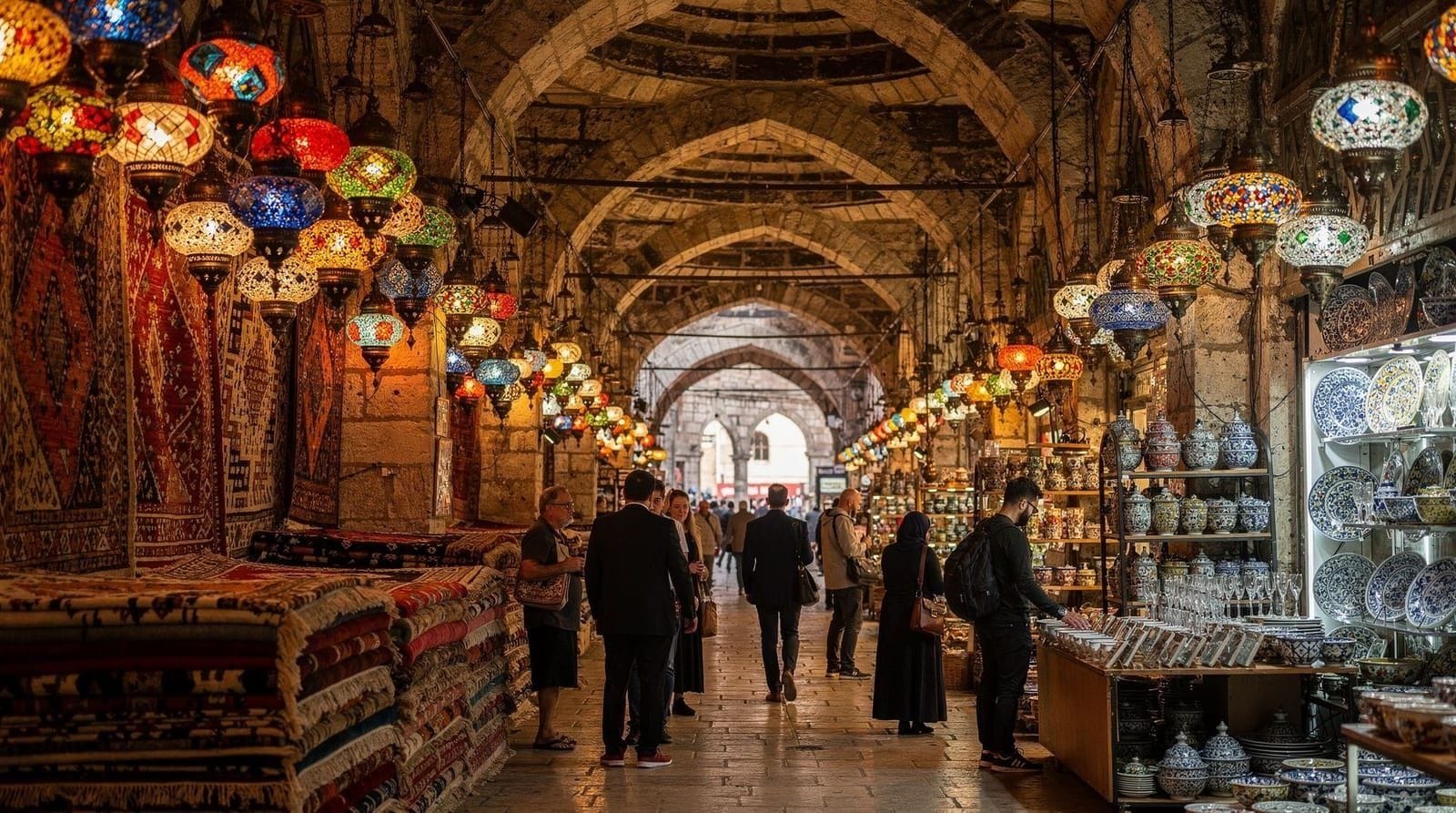
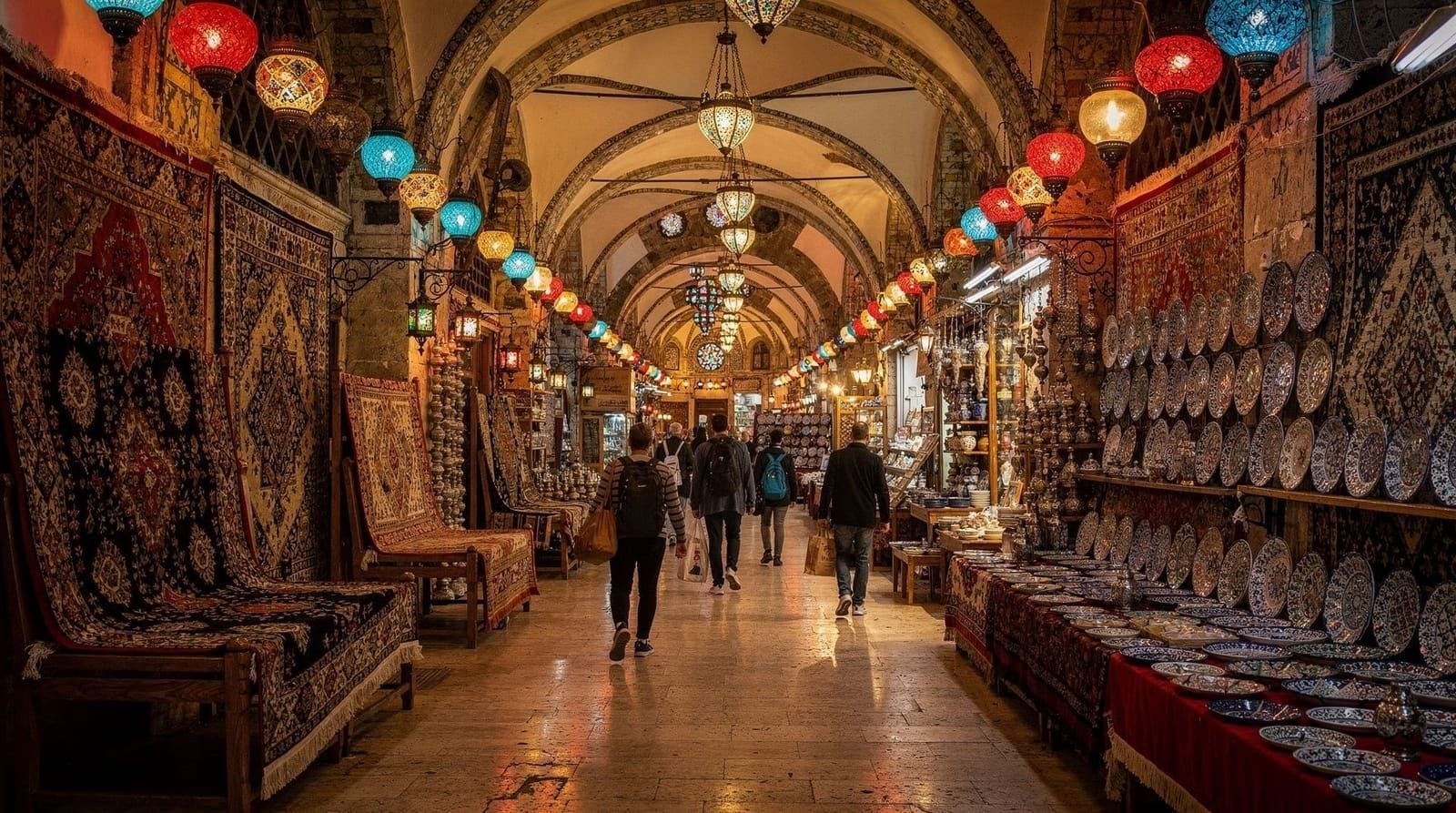
When you browse in a shop in the Grand Bazaar or visit a carpet dealer, you will almost certainly be offered tea. This is genuinely hospitable — it is not (always) a sales tactic, though it can be. Accepting is the polite response. You can drink it slowly, leave half the glass if you want, and it does not oblige you to buy anything. Declining a cup when first offered can read as unfriendly.
Tea is served black and strong; sugar cubes come on the saucer. In traditional settings, coffee (kahve) is less common than tea but is offered at significant social moments — Turkish coffee, served in tiny cups with grounds settled at the bottom.
If you are invited to someone’s home, you will be served tea, possibly followed by coffee, possibly with sweets or pastries. Refusing hospitality is impolite. Eating or drinking a small amount of what is offered is the gracious response even if you are not hungry.
Greetings and physical contact
The standard verbal greeting is “Merhaba” (hello) or “Günaydın” (good morning), “İyi günler” (good day), “İyi akşamlar” (good evening). “Selam” is informal. “Hoş geldiniz” (welcome) is the host’s greeting; the appropriate response is “Hoş bulduk” (we found it nice to be here).
Physical greetings are contextual. Between men who know each other, a handshake and sometimes a one-cheek or two-cheek kiss is standard. Between women who know each other, cheek kisses. Mixed-gender greetings in secular contexts often involve a handshake. In more conservative or religious contexts, men may place a hand over their heart rather than offering a handshake to a woman wearing a headscarf; follow the other person’s cue.
“Teşekkür ederim” (formal) or “Sağ ol” (informal) mean thank you. Using these is appreciated. “Evet” (yes), “Hayır” (no), and “Lütfen” (please) are the other basics.
Bargaining in the bazaars
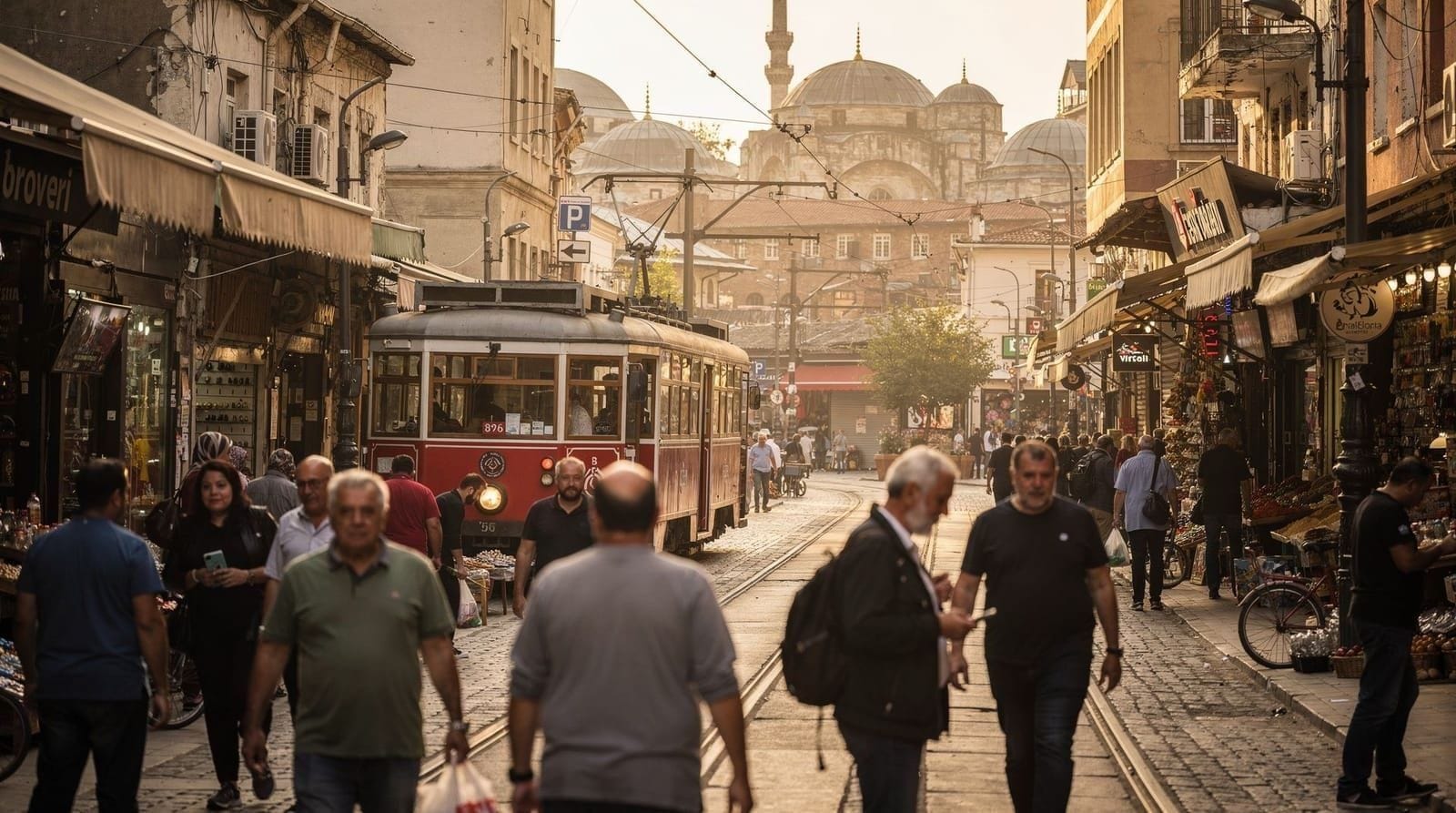
Bargaining (pazarlık) is a cultural practice in the Grand Bazaar and other market contexts, but it has rules.
Where it applies: The Grand Bazaar, the Spice Bazaar, street markets, antique dealers, carpet shops, independent souvenir stalls. Basically anywhere that does not have a fixed price label.
Where it does not apply: Restaurants, cafes, supermarkets, established boutiques, transport (metered taxis), museums. Attempting to bargain in a normal shop or restaurant is embarrassing for everyone.
How to do it: Look at the item. Ask the price (“Ne kadar?” = how much?). Counter-offer at roughly 50-60% of the asking price. The seller counters. You meet somewhere in the middle — typically 60-75% of the initial ask in a tourist bazaar context. If the seller says a price you want to pay, you can just say yes. If you cannot agree, you can walk away — sellers will often call you back with a better price.
What not to do: Do not start negotiating seriously unless you have genuine interest in buying. Prolonged bargaining followed by not buying is considered rude. Do not agree to a price and then try to renegotiate it.
See our full bargaining in the bazaar guide and Grand Bazaar shopping guide.
Dress norms
Istanbul is a city of contrasts in dress. In Beyoğlu, Karaköy, and Kadıköy, the dress range is cosmopolitan — shorts, summer dresses, everything. In Sultanahmet near the mosques, tourists in very revealing clothing look out of place. In conservative neighborhoods like parts of Fatih or Üsküdar, women in tight or revealing clothing may receive looks or comments.
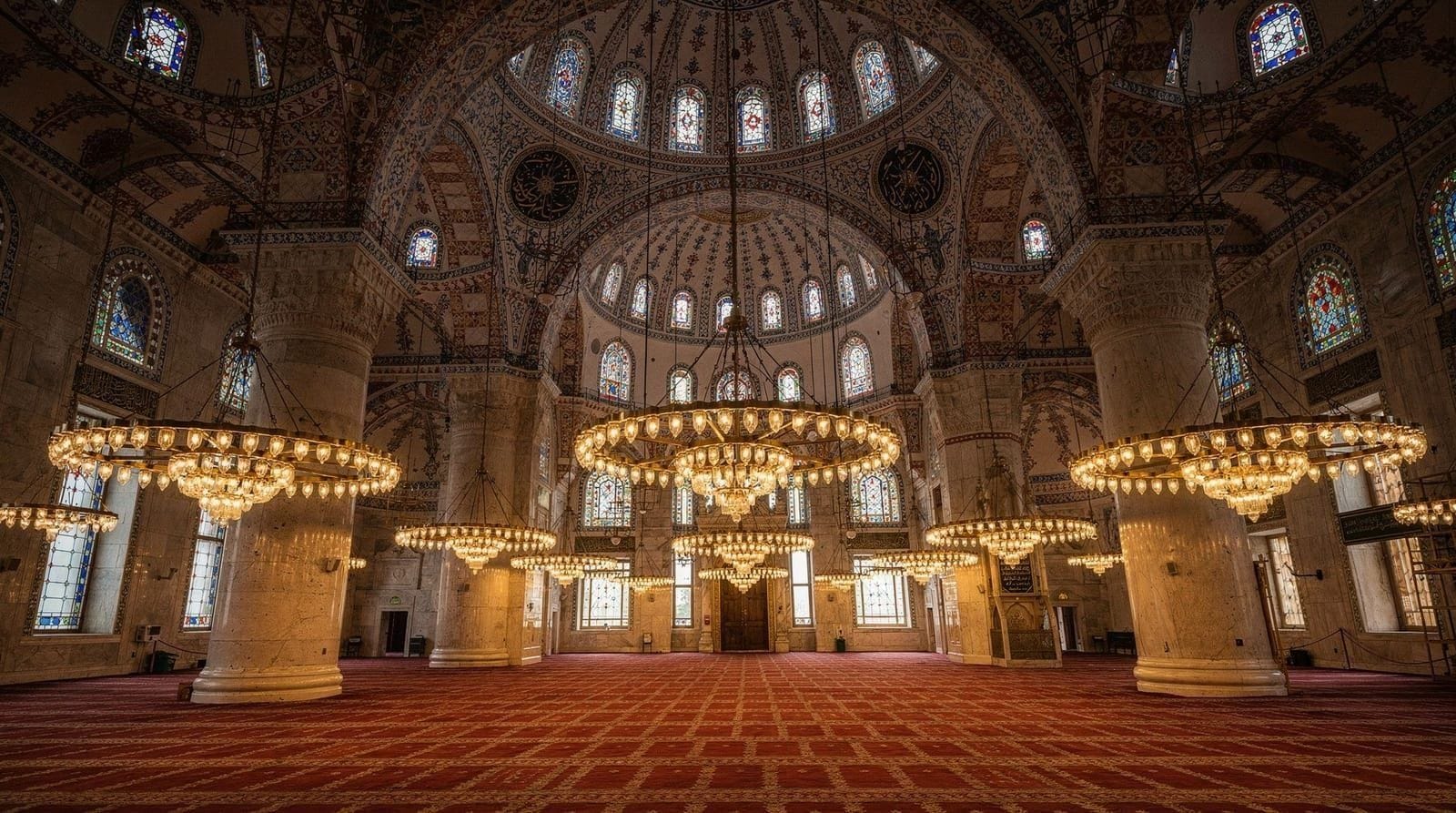
The practical rule: dress modestly when visiting mosques (shoulders covered, knees covered, women’s heads covered inside). Outside mosques in tourist areas, dress as you would in any European city.
See our mosque etiquette guide for the specific rules at religious sites.
At the table
Turkish meals are social events, often unhurried. Some specifics:
Sharing: Turkish food culture is communal. Meze (small shared dishes) are meant to be eaten together. Sharing plates is entirely normal and expected.
The hospitality insistence: Turkish hosts commonly insist you eat more (“Daha ye!” / “eat more!”). The expected response is to take a small additional portion and praise the food. Repeated refusals can seem like a criticism of the cooking.
Payment: The person who invites pays. If you invite Turkish friends to dinner, expect to pay. If you are a guest, expect your host to fight for the bill. This is not false modesty — it is genuine. Accept graciously and offer to reciprocate another time.
Alcohol: Offered freely in secular restaurants and meyhanes. If you do not drink, “İçmiyorum” (I don’t drink) is sufficient explanation. Asking for the alcohol menu is normal in most tourist restaurants; you should not need to ask for a special non-alcoholic option.
Tipping: Leave 10-15% in cash on the table or hand it to your server directly. Cash tips are far more reliable than card tips. In upscale restaurants, check if a service charge is already included in the bill (it often is in tourist-heavy establishments).
Public behavior
Public displays of affection: Heterosexual couples holding hands is completely normal in Istanbul. Kissing in public is common in secular areas like Beyoğlu and Kadıköy. In conservative neighborhoods, more modesty is appropriate. Istanbul is not universally conservative.
LGBTQ+ visitors: Istanbul has a visible LGBTQ+ community, primarily in Beyoğlu and Kadıköy, though the Pride parade has been banned since 2015 and the political climate has become less welcoming. Public discretion is advisable, particularly in non-central neighborhoods. See our is Istanbul safe guide for an honest assessment.
Noise: Turkish cities are not quiet. Istanbul is loud. Neighbors, traffic, calls to prayer, music from cafes — all are normal. Complaining about the call to prayer to a Turkish person will not go well.
Smoking: Turkey has strict indoor smoking bans that are generally enforced in restaurants and cafes. Outdoor smoking is common. Non-smoking areas in outdoor cafes are rare.
Shoes and homes
As noted above: remove shoes at the entrance to any home you are invited into, and at the entrance to any mosque. This is non-negotiable in both contexts. The shoe rack or pile of shoes at the door is the signal.
Cameras and photography
Photographing people in the street without asking is generally fine in tourist areas. In more intimate settings — someone’s shop, at a market stall — asking (gesture to camera, raise eyebrows, smile) is more polite. In mosques, avoid photographing people at prayer from close range. The Blue Mosque and Hagia Sophia are heavily photographed; the informal street life of Balat or Kadıköy is more worth asking before shooting.
Some useful phrases
| Turkish | Pronunciation | Meaning |
|---|---|---|
| Merhaba | mehr-hah-bah | Hello |
| Teşekkür ederim | teh-shek-kür eh-deh-reem | Thank you (formal) |
| Sağ ol | sah-ol | Thank you (casual) |
| Evet / Hayır | eh-vet / hah-yur | Yes / No |
| Ne kadar? | neh kah-dar | How much? |
| Lütfen | lüt-fen | Please |
| Çok güzel | chok gü-zel | Very beautiful |
| Afiyet olsun | ah-fee-yet ol-sun | Enjoy your meal |
Navigating difficult situations politely
Persistent sales in the bazaar: Bazaar merchants who follow you, touch your sleeve, or repeat their pitch after you have declined are a known feature of the Grand Bazaar experience. A calm “Hayır, teşekkürler” (No, thank you) repeated firmly and without anger is effective. Walking away without engaging further is also fine. Do not feel obliged to explain yourself or justify not buying — simply decline and move on.
Carpet shops: The carpet dealer invitation — “Just come in, have tea, no obligation to buy” — is almost always the beginning of a sales session. There genuinely is no obligation to buy, and the tea will be served. But the sales pitch will follow, and leaving after tea without buying can feel socially awkward. If you are genuinely interested in carpets, the carpet bazaar merchants are skilled and the goods can be genuine. If you are not, decline the invitation from the start.
The Turkish concept of time: Istanbul operates on a flexible concept of punctuality. “I’ll be there in 10 minutes” often means 20-30. Restaurant reservations are approximate. This is not rudeness — it is a different cultural relationship with time. Build flexibility into plans that involve meeting locals.
Complaining to authority figures: Complaining to a manager or supervisor is culturally more acceptable in Turkey than in some northern European contexts. If you have a genuine problem with service or pricing, asking to speak to the sorumlu (manager/person responsible) is a normal and effective approach.
Understanding hospitality obligations in context
Turkish hospitality has a specific social logic: the host is responsible for the guest’s comfort and well-being, and offering tea/coffee/food is an expression of this responsibility, not merely courtesy. This has a practical consequence: if you are hosted by Turkish friends or business contacts, they will typically insist on paying, insist on feeding you, and insist on looking after your logistics. Refusing too firmly is a rejection of their role as host, not just a preference about money.
The correct approach to a Turkish host who insists on paying for dinner: thank them sincerely, accept their hospitality, and offer clearly to reciprocate “next time” (which may or may not happen). Repeated insistence on paying for yourself can become a minor source of friction.
This dynamic does not apply to commercial restaurant situations — a tourist restaurant in Sultanahmet does not owe you host hospitality. It applies to personal social situations with Turkish hosts.
Mosques and religious spaces: brief practical reminder
Turkish etiquette in mosques and religious spaces overlaps with but extends the practical rules. Being visibly respectful — quiet voice, unhurried pace, no obviously irreverent behavior — is the key principle beyond the dress code. Taking photos of people at prayer from close range is intrusive even if not technically prohibited. Sitting on the mosque carpet in an obviously casual way (lying down, eating) is disrespectful.
For the full details, see our mosque etiquette guide.
Etiquette in practice: where it actually comes up
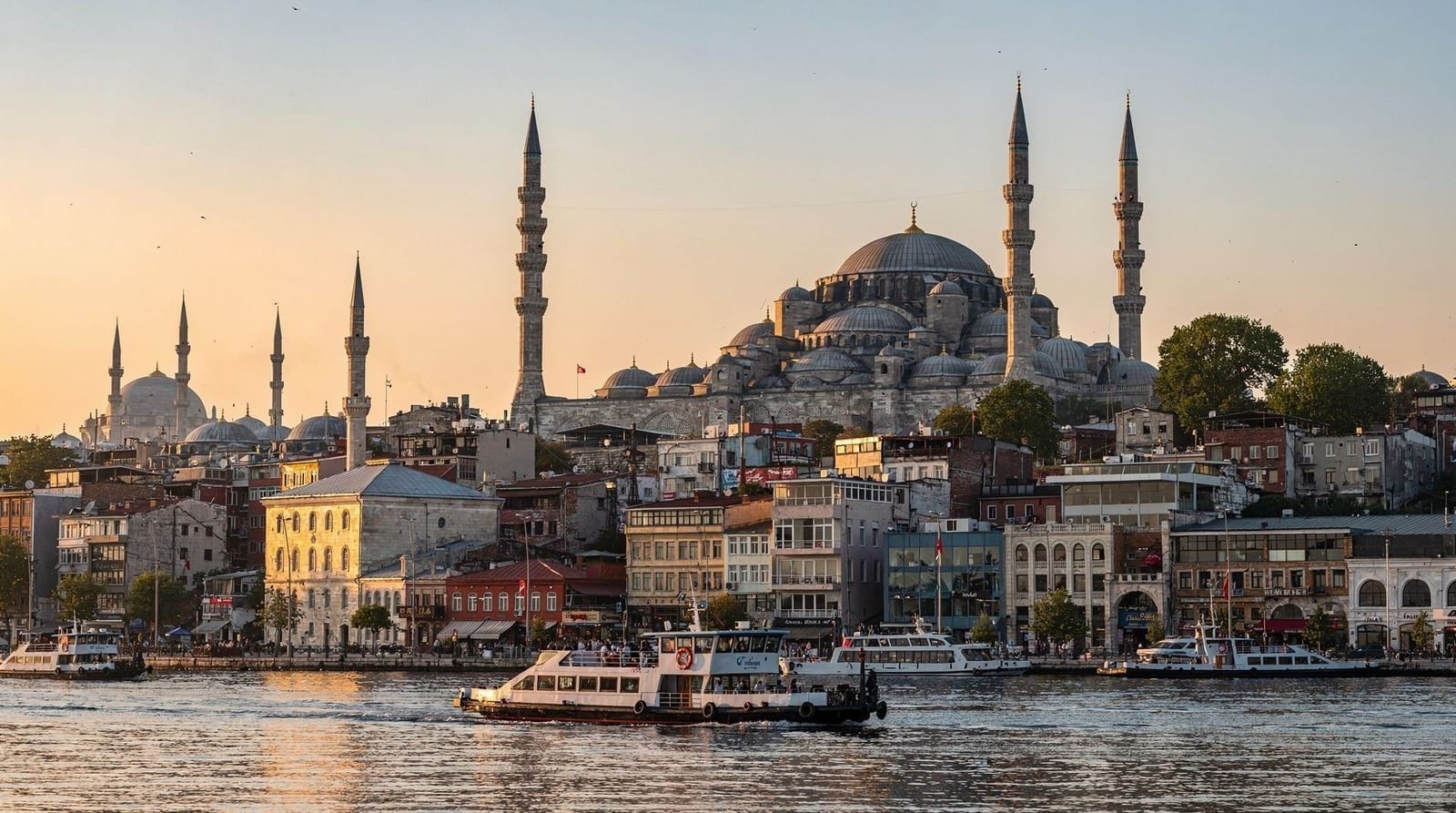
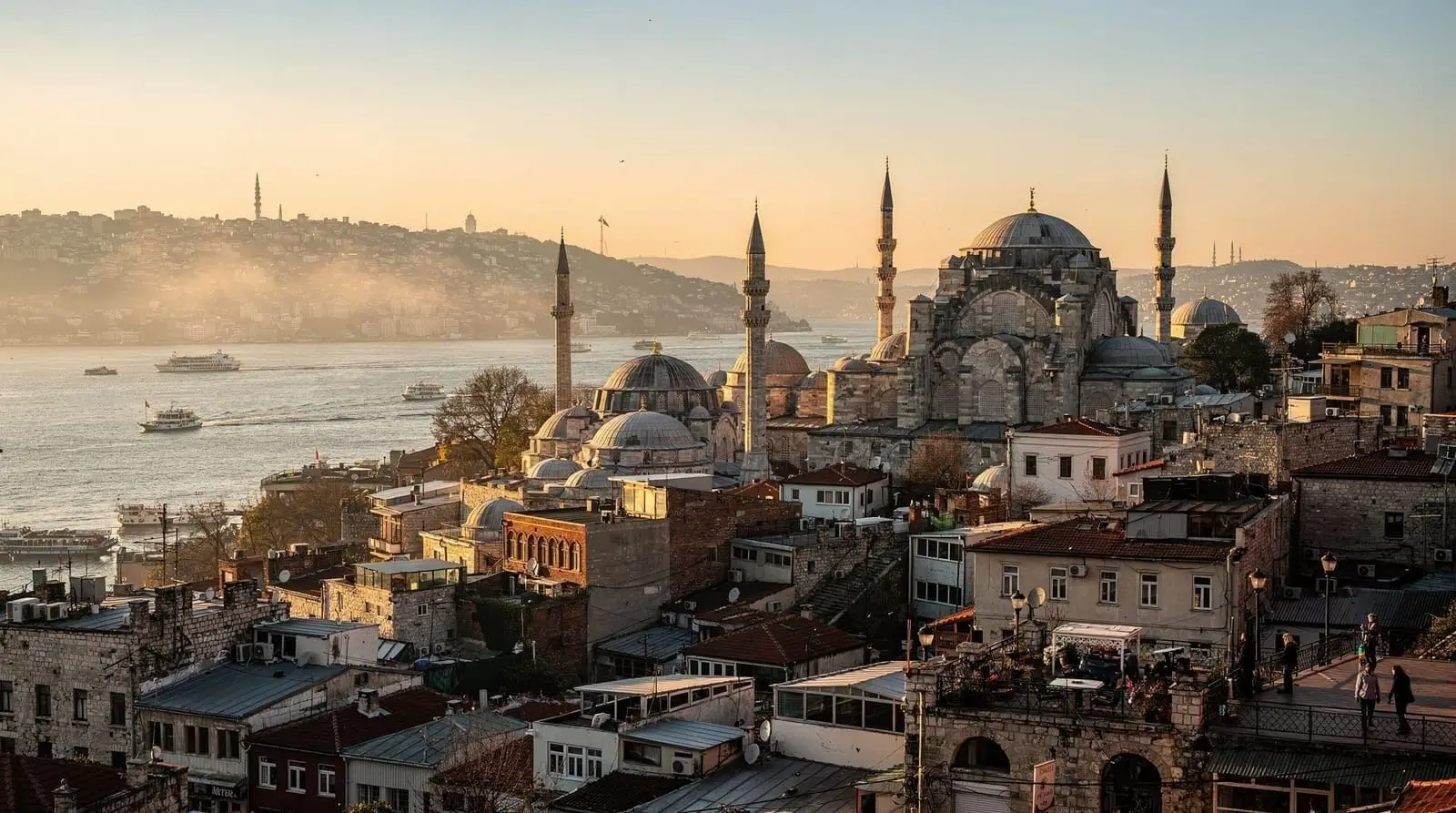
Most visitors experience Turkish etiquette not as abstract rules but as specific moments during sightseeing. Removing shoes and covering shoulders matters most at Hagia Sophia, the Blue Mosque, and Süleymaniye Mosque — all of which enforce the dress code at the door, sometimes lending scarves for uncovered hair. Bargaining etiquette matters most in the Grand Bazaar, and the hospitality-insistence dynamic around tea shows up constantly if you’re browsing carpet or ceramics shops there.
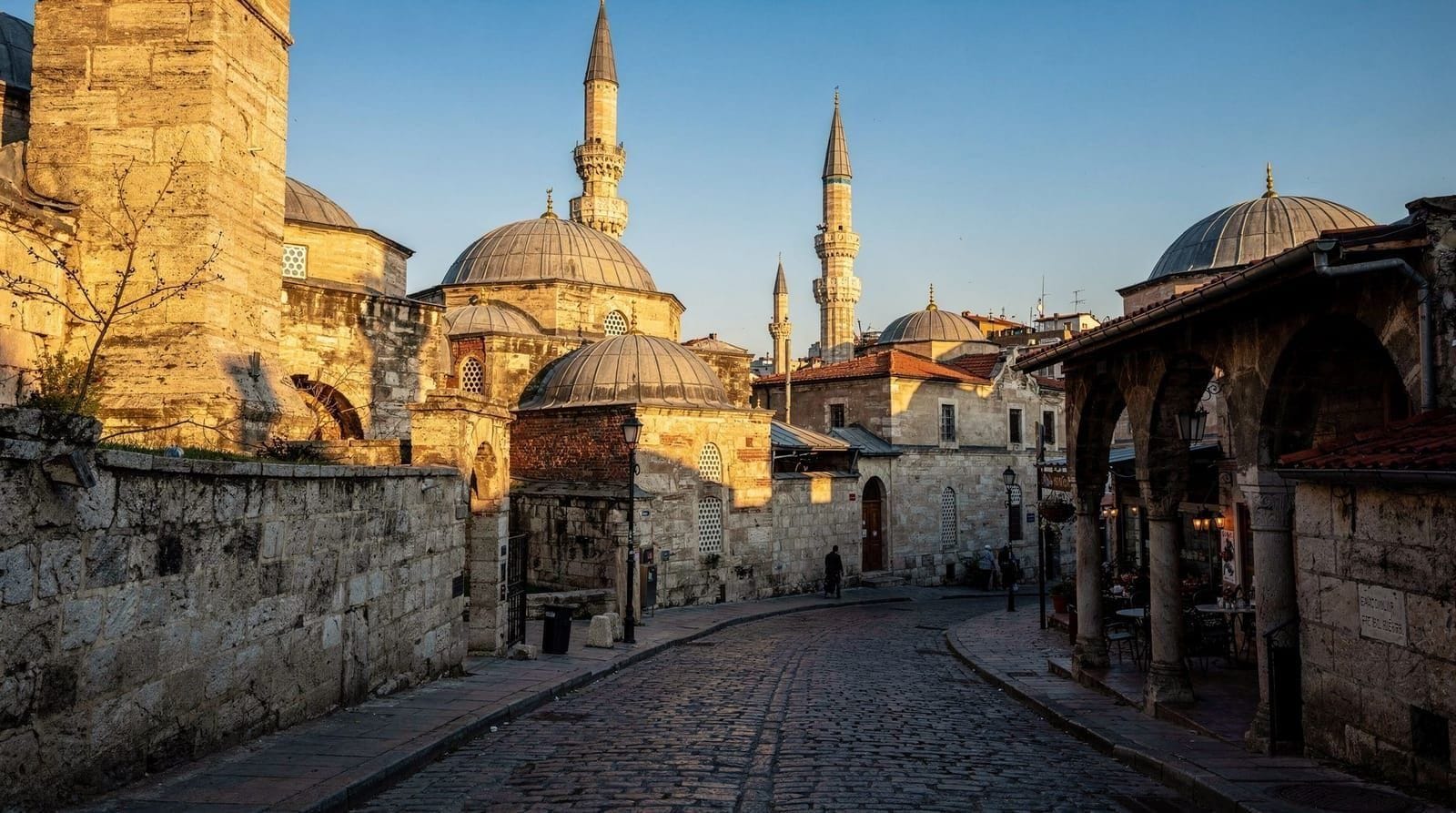
A guided walk through the old city is a low-pressure way to absorb these norms by observation before you’re navigating them solo. A full-day guided old city walking tour puts a local guide alongside you through the mosque and bazaar etiquette above, which is often the fastest way to get comfortable with it.
For neighbourhoods further off the standard tourist track — Balat and Fener, for instance — local etiquette leans a little more conservative than Beyoğlu or Karaköy, simply because the residential character is stronger and photography of people’s homes and doorways draws more attention. A guided Balat and Fener walking tour is a good way to see the neighbourhood’s famous colourful streets with someone who can flag where a photo is welcome and where it isn’t.
Etiquette by context: quick comparison
| Context | Dress | Bargaining | Tipping |
|---|---|---|---|
| Mosques (Blue Mosque, Hagia Sophia) | Shoulders/knees covered, women’s hair covered | N/A | Donation box optional |
| Grand Bazaar / Spice Bazaar | Casual is fine | Expected and normal | N/A |
| Restaurants (Beyoğlu, Sultanahmet) | Smart casual in upscale venues | Never | 10–15% cash |
| Someone’s home | Modest, shoes off at entrance | N/A | Small gift appreciated, not expected |
A note on regional variation within Istanbul
Istanbul’s size means etiquette expectations genuinely shift by neighbourhood, more than in most cities of comparable scale. Beyoğlu, Karaköy, and central Kadıköy run cosmopolitan and secular — dress codes relax considerably, alcohol is everywhere, and public affection draws no attention. Fatih, much of Üsküdar, and the more residential stretches of the Asian interior lean noticeably more conservative, and a level of dress or behaviour that’s unremarkable in Karaköy can draw looks there. Sultanahmet sits in between — heavily touristed but adjacent to working mosque communities, which is why the modest-dress expectation is enforced more visibly there than almost anywhere else in the city. None of this requires research beyond a general awareness; reading the room as you move between neighbourhoods is usually enough.
Frequently asked questions about Turkish customs and etiquette for Istanbul visitors
Is it rude to decline tea in Turkey?
How do Turks typically greet each other?
Is bargaining expected in Istanbul's markets?
What is the tipping norm in Istanbul restaurants?
Is it acceptable to drink alcohol in Istanbul?
Are there taboo topics to avoid?
Should I take off my shoes when entering a Turkish home?
Top experiences
Bookable activities with verified prices and instant confirmation on GetYourGuide.