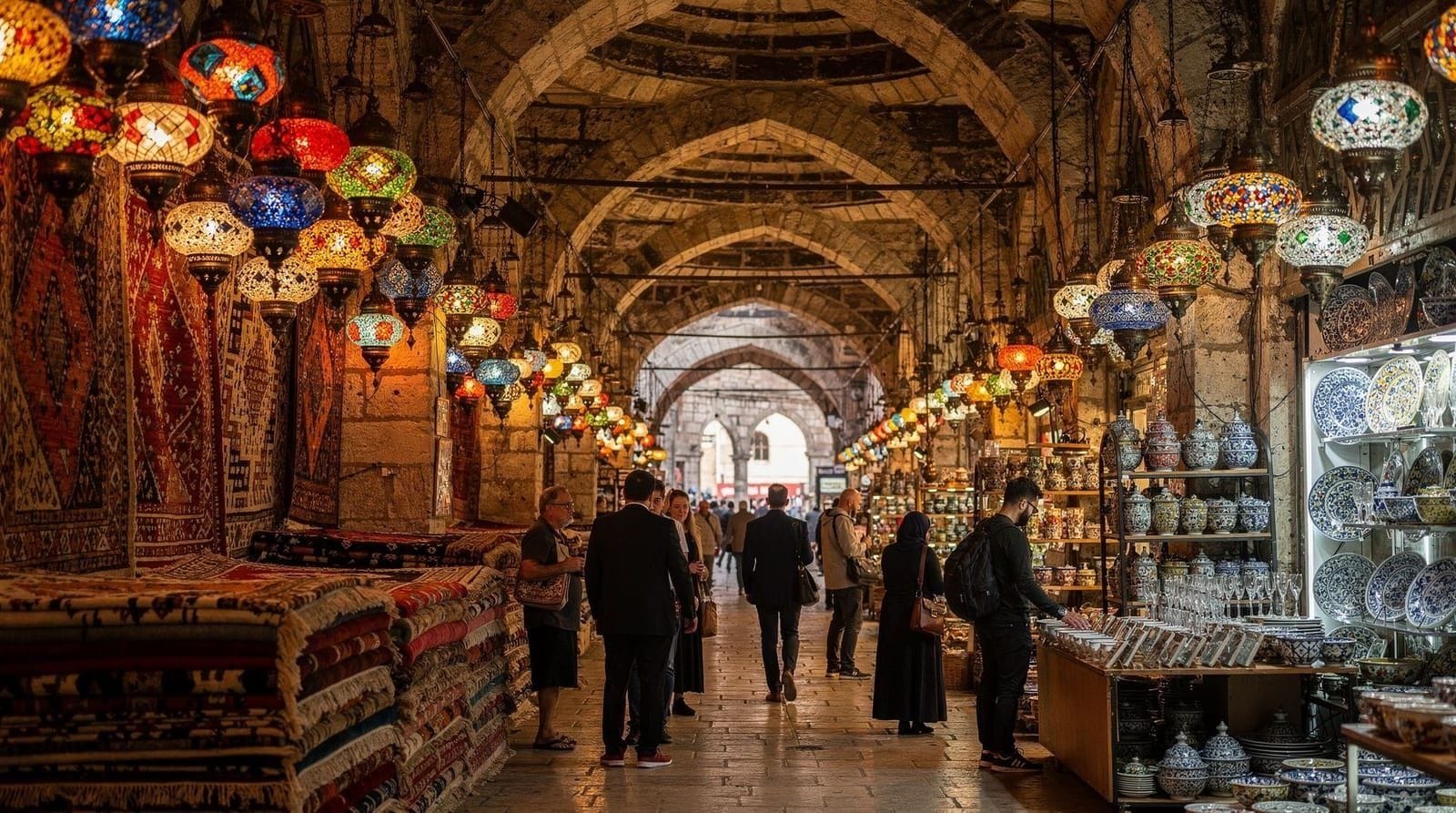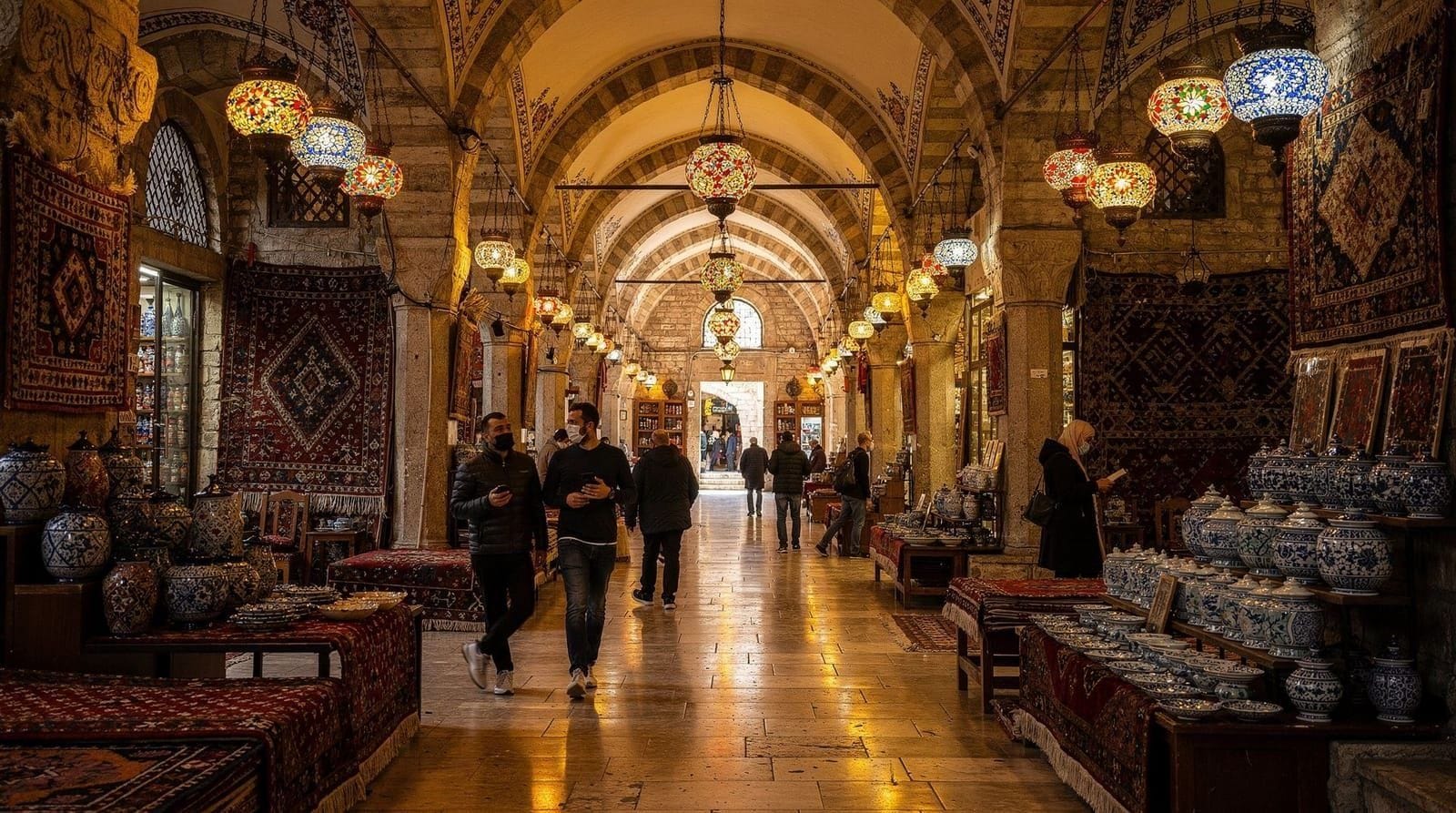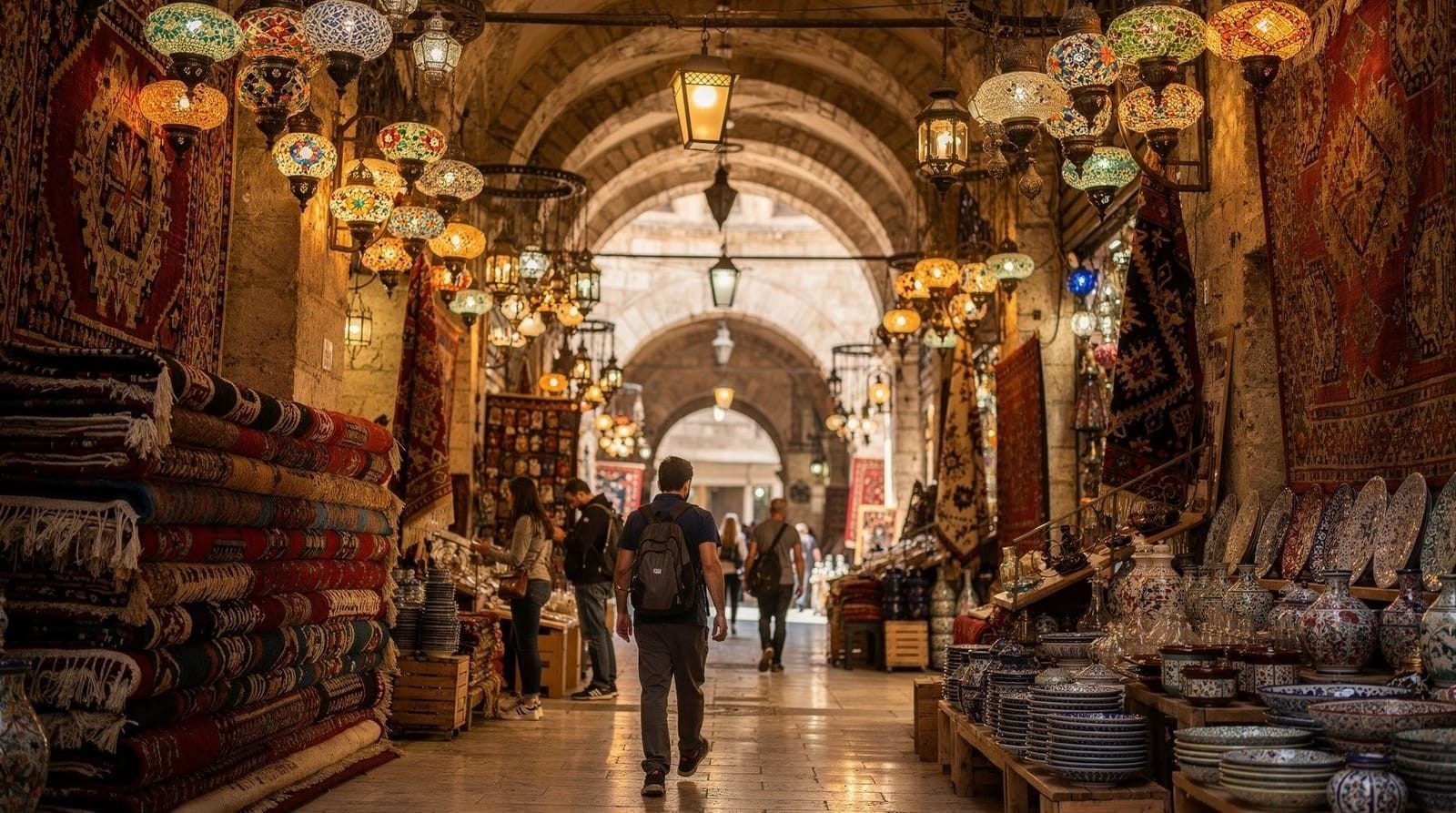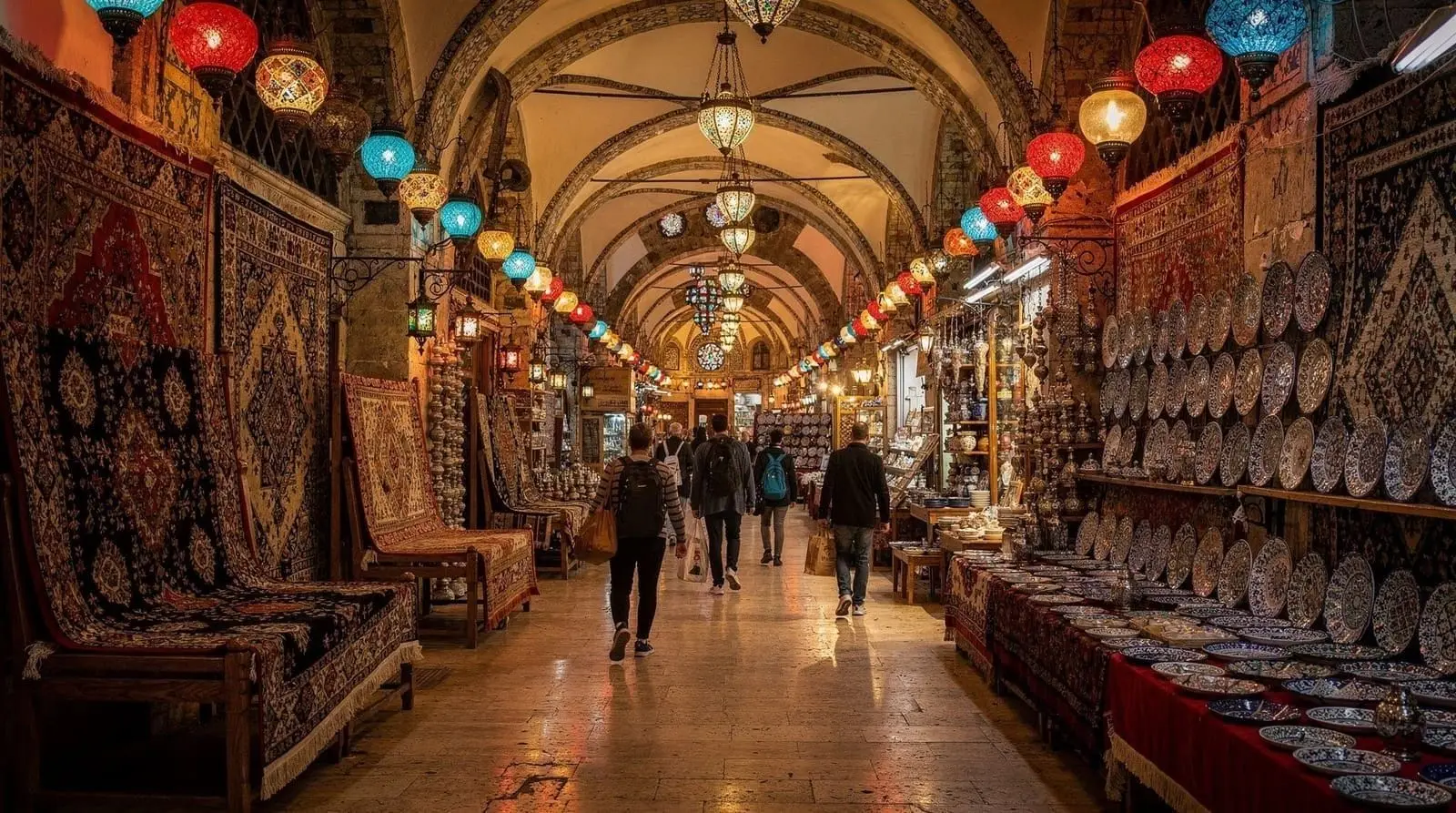
Bargaining in the bazaar — how to negotiate prices in Istanbul
Istanbul: Grand Bazaar Shopping Experience with a Local
Should I bargain in Istanbul's Grand Bazaar?
Yes, for most goods in the Grand Bazaar (textiles, carpets, leather, decorative items). Not for gold (transparent per-gram pricing), food items, or shops with displayed fixed prices. Initial asking prices in tourist-facing bazaar shops are typically 30–60% above the final price. Start by offering 40–50% of the asking price and expect to settle somewhere in between.
The bargaining culture in Istanbul’s markets
| Where it applies | Grand Bazaar textiles/leather/carpets, Çukurcuma antiques |
| Where it doesn’t | Gold by weight, Spice Bazaar food items, fixed-price shops |
| Typical discount | Asking price often 30–60% above final price |
| Opening offer | Around 40–50% of the asking price |
| Best time | Weekday mornings, unhurried, cash in hand |
Bargaining (pazarlık in Turkish) is a functional commercial practice in Istanbul’s bazaars, not a performance. Sellers expect it. The initial asking price is set with negotiation in mind — if you pay asking price without question, you’re not insulting anyone, but you’re paying more than the market price.
Understanding how and when to bargain saves money and makes the bazaar experience more authentic. This guide covers the mechanics: when it applies, how to start, how to conclude, and what the common pressure tactics look like. For the fuller picture of what’s worth buying in the first place, pair this with the what to buy in Istanbul guide and the broader Istanbul shopping guide.
When bargaining applies
Grand Bazaar — yes: For textiles, carpets, leather goods, decorative ceramics, lamps, silver, and most non-food items in the Grand Bazaar.
Gold market — no: The Grand Bazaar gold section uses real-time per-gram pricing shown on screens. The gold weight cost is international market price and non-negotiable. A small margin on workmanship fees exists, but the core price is fixed.
Spice Bazaar food items — generally no: Spices, nuts, and dried goods are usually fixed-price. Volume discounts are sometimes possible for large quantities. You won’t insult anyone by asking, but expect the answer to be the displayed price.
Antique shops (Çukurcuma) — yes: Prices are set by the seller’s assessment and what the traffic will bear. Negotiation is standard.
Regular restaurants and shops — no: Restaurants, cafés, supermarkets, and modern retail have fixed prices. Attempting to bargain in these contexts creates awkwardness without benefit.
Street markets (haftalık pazar) — occasionally: For produce, fixed. For non-food goods (second-hand items, textiles), some sellers expect negotiation; others have fixed prices. Read the seller’s approach.
The bargaining process — step by step
1. Show genuine interest before discussing price. Pick up the item, examine it, ask questions. Sellers are more willing to negotiate when they believe the buyer is genuinely interested rather than just fishing for a price.
2. Ask the price neutrally: “Ne kadar?” (How much?) or “What’s the price for this?”
3. React calmly to the price. Don’t visibly gasp or immediately say “too expensive.” Consider the price, look at the item again. A slight hesitation signals you’re thinking but not committing.
4. Make your opening offer. Start at 40–50% of the asking price. This is standard practice — the seller won’t be offended by a number that’s genuinely too low (they’ll counter). Starting at 70–80% leaves you little room to negotiate.
5. Work toward the middle. Each round, move toward each other’s position in smaller increments. If the seller asks 1,000 TRY and you offer 400 TRY, a reasonable outcome is somewhere around 550–650 TRY. Don’t feel pressure to close the gap in one jump.
6. Signal finality. When you reach a number you’re comfortable with: “Son fiyat bu” (this is my final price) or “that’s my best.” This signals you’ve reached your limit without being rude.
7. If they won’t meet your price: Thank them and start to leave. This is not a bluff — it’s genuine indication that the price doesn’t work for you. Sometimes the seller calls you back with a better offer. Sometimes they don’t — which means their price was genuinely their limit. Either outcome is acceptable.
8. If they meet your price: Shake hands. The deal is done. Follow through.
Reading the pressure tactics
Artificial scarcity: “This is the last one / I only have three left.” In a bazaar with thousands of shops selling similar goods, this is rarely true.
Urgency creation: “I can only hold this price until today.” Ignore this. Prices in the Grand Bazaar are not affected by artificial deadlines.
The tea gambit: Offering tea early in a conversation creates a psychological sense of obligation. There is none. Enjoy the tea without feeling compelled to buy.
The calculator trick: Sellers sometimes use a calculator to show you a ‘special’ price that looks calculated — this makes the number feel more authoritative. It’s just a number.
The reluctant agreement: “Normally this is much more… I shouldn’t do this, but for you, okay.” This is performance. The seller has agreed to a price that works for them.
Appealing to your charity: “You pay this much in your country easily.” True or not, it’s irrelevant to the local market price.
Walking away test: Many sellers will call you back after you leave, sometimes with a better price. This is not manipulation — it’s them discovering their actual bottom price. It’s fine to turn around and resume the conversation.
What to bring to bargain effectively
Cash (TRY): Cash gives better bargaining position than card payments. Some sellers add 5–10% for card processing. More importantly, cash is concrete — you can say “this is what I have” as a real constraint.
Comparison knowledge: If you’ve looked at similar items in three other shops, you have a market price in mind. Sellers know when buyers have done homework.
Time: Rushed buyers pay more. If you’re in a hurry or have a tour bus leaving in 20 minutes, sellers can feel that urgency and won’t negotiate as much. Morning visits with no time pressure produce better outcomes.
Willingness to walk: The ability to genuinely walk away — not as a tactic but because the price genuinely doesn’t work for you — is the most effective negotiating tool.
Setting the right mindset
Bargaining goes better when you treat it as a conversation rather than a contest. The seller is not your opponent, and you are not trying to “win”. You are both looking for a number that feels fair to each side, and the friendly back-and-forth is part of how that number gets found. Smiling, staying relaxed and keeping the tone light does more for your final price than any single trick.
It also helps to decide in advance what the item is worth to you. A price that feels right for you personally is a better anchor than any percentage rule. If you would be happy to own the piece at a given number, that is a good deal, even if a more determined haggler might have shaved a little more off. Chasing the last few liras at the cost of a pleasant exchange rarely feels worth it afterwards.
For a wider sense of local manners that make every interaction easier, the Turkish customs and etiquette guide is a useful companion, and the Grand Bazaar shopping tips post adds a shorter, more practical angle on the same market.
Planning your bazaar visit
Bargaining is easier when you are not trying to fit it between other commitments. If you are building a first itinerary, the Istanbul first-time tips and the Istanbul trip planning guide help you leave a calm block of time for shopping instead of squeezing it in at the end of a long day. The bazaars sit close to Sultanahmet, so a morning of sightseeing there followed by an unhurried browse through the Grand Bazaar works well, as long as you are not racing a schedule.
Set yourself a rough budget before you walk in. The Istanbul travel budget guide and the honest budget guide can help you decide how much room to give souvenirs, so that you are not improvising your limit under sales pressure. Knowing your ceiling in advance makes it much easier to say your final price and mean it.
Walk the aisles once before buying anything. The same kind of item appears in many shops, and a first lap lets you notice how presentation, quality and the opening price vary from one stall to the next. Treat that first pass as research, not shopping. When you return to a shop you liked, you will negotiate from a calmer, better informed position.
Staying polite when it doesn’t work out
Not every negotiation ends in a sale, and that is perfectly normal. If you cannot agree, thank the seller warmly and move on. A courteous exit leaves the door open, and you may well return later in the day to a friendlier reception. Pushing, arguing or making sarcastic remarks about the price helps nobody and makes the next shop’s seller less willing to engage with you.
If something feels wrong at any point, such as persistent pressure, a seller who blocks your way, or an offer that suddenly changes after you agreed, you are free to leave. The Istanbul scams and how to avoid them post describes the situations worth recognising. Most shopkeepers are honest professionals, and the few who are not are easy to walk away from once you are comfortable doing so.
Finally, remember that bargaining is a skill that improves with practice. Your first attempt may feel awkward, and that is fine. Try it on something small, see how the rhythm works, and bring that confidence to larger purchases. Combined with the market notes in the Spice Bazaar overview, you will have a good feel for where haggling fits and where a fixed price is simply a fixed price.
Guided shopping — when it helps
A guided shopping tour with a local connects you with shops the guide trusts, can explain quality markers, and provides context that makes both the buying decision and the negotiation easier. In the carpet and gold categories particularly, a guide who knows the market can prevent significant mistakes.
For a close alternative, another guided shopping tour of the bazaar with a local guide:
After the purchase — avoiding regret
Don’t buy under time pressure. If you’re being pressed to decide immediately, the usual reason is that the seller believes you’ll find the same item for less elsewhere. Take the time.
Check before paying. After agreeing a price, check the item you’re being given is the same one you negotiated over. In carpet shops where large rugs are rolled out, confirm the specific piece being packaged is what you selected.
Receipts: Ask for a receipt for any significant purchase. This provides recourse if the item later proves to be different from what was represented. For gold, the receipt should specify the weight and karat.
Bargaining vocabulary — useful Turkish phrases
| English | Turkish | Pronunciation |
|---|---|---|
| How much? | Ne kadar? | Neh ka-DAR |
| Too expensive | Çok pahalı | Chok pa-HA-luh |
| Can you give a discount? | İndirim yapar mısınız? | In-dee-REEM ya-PAR muh-SUH-nuhz |
| My final price is… | Son fiyatım… | Son fee-YAH-tum |
| Thank you | Teşekkürler | Tesh-ek-UR-ler |
| No thank you | Hayır, teşekkürler | Hai-yur, tesh-ek-UR-ler |
Category-specific bargaining notes
Bargaining technique shifts depending on what you’re buying, and treating a carpet negotiation the same way as a scarf negotiation leads to worse outcomes on both.
Carpets and kilims: This is the category where the gap between asking and final price can be widest, and where the risk of overpaying for misrepresented quality is highest. Ask directly about material (wool vs synthetic), origin region, and whether it’s hand-knotted or machine-made — a reputable seller answers plainly and can show you the knot density on the reverse. Never agree to a carpet price without seeing the exact piece unrolled fully in daylight. See the Grand Bazaar shopping guide for the wider shop landscape.
Leather goods: Quality varies enormously by shop, and the bargaining range is generally narrower than carpets (20–30% off asking rather than 40–50%). Check stitching and lining before negotiating seriously.
Ceramics and lamps: Fragile items where bargaining is expected but the margin is often smaller than textiles, since production costs are more fixed. Confirm breakage/shipping policy before finalising a price on anything you can’t carry yourself.
Souvenir-grade items (magnets, small trinkets, keychains): Bargaining is technically possible but the amounts involved rarely justify the effort — a polite “best price?” often gets a small automatic discount without a full negotiation.
Avoiding the common tourist traps around bargaining
Some of the most persistent Istanbul tourist traps operate right alongside legitimate bargaining culture, and it’s worth being able to tell the two apart. A tout who approaches you on the street offering to walk you to a “special” carpet or leather shop is working on commission, and prices there are frequently inflated to cover it — politely decline and find your own shop instead. The Istanbul tourist traps guide and Istanbul scams to avoid guide cover the broader pattern in more depth, including the fake “government shop” claim some sellers use to suggest fixed, non-negotiable, above-market pricing.
Grand Bazaar rooftops and secret passages tour is a good option if you’d rather understand the Bazaar’s layout and history with a guide before attempting any serious negotiating on your own.
Frequently asked questions about Bargaining in the bazaar — how to negotiate prices in Istanbul
How much should I offer when starting to bargain?
What if I don't speak Turkish?
Is bargaining expected everywhere in Istanbul?
What does accepting tea during shopping mean?
What happens if I agree to a price and then change my mind?
Can I bargain for gold jewellery?
Top experiences
Bookable activities with verified prices and instant confirmation on GetYourGuide.