Istanbul cooking class guide — what to expect and which one to book
Traditional Home Cooking with a Local in Istanbul Center
Duration: 4 hours
Are Istanbul cooking classes worth it?
Yes, if you choose the right format. The best ones are home-cooking sessions with a local host or a local "mom" figure — small groups, genuine recipes, real conversation. Avoid hotel-attached cooking schools that are more entertainment than instruction. Budget €50–90 per person for a 3–4 hour class that includes market shopping and eating.
Quick answer: The home-cooking format with a local host is the most authentic and typically best value at €50–80. Hotel-attached cooking schools are polished but feel more like performances. Specialty workshops (baklava, Turkish delight) are 1.5–2.5 hours and good for shorter time budgets.
| Where | Cihangir, Moda (Kadıköy), Fatih — private homes and small kitchens |
| Cost | Around €50–80/person for a 3–4hr group class |
| Time needed | 3–4 hours for a full class; 1.5–2.5hrs for a specialty workshop |
| Best time | Morning start, leaves the afternoon free for sightseeing |
| Avoid | Hotel-attached “culinary experience” packages in Sultanahmet |
What makes Istanbul cooking classes interesting
Turkish cuisine is genuinely technique-heavy in ways that aren’t obvious from eating it. The proper layering of phyllo (yufka) for börek, the specific texture of a well-made patlıcan ezmesi (smoked aubergine), the ratio of fat to meat in a good köfte — these are things you learn through instruction that eating alone doesn’t teach.
Istanbul’s cooking class market ranges from excellent (small-group home settings with experienced home cooks) to tourist-trap (hotel “culinary experience” packages where you roll a few pieces of dolma while someone takes photos). This guide navigates the difference.
The main formats
Home cooking with a local host
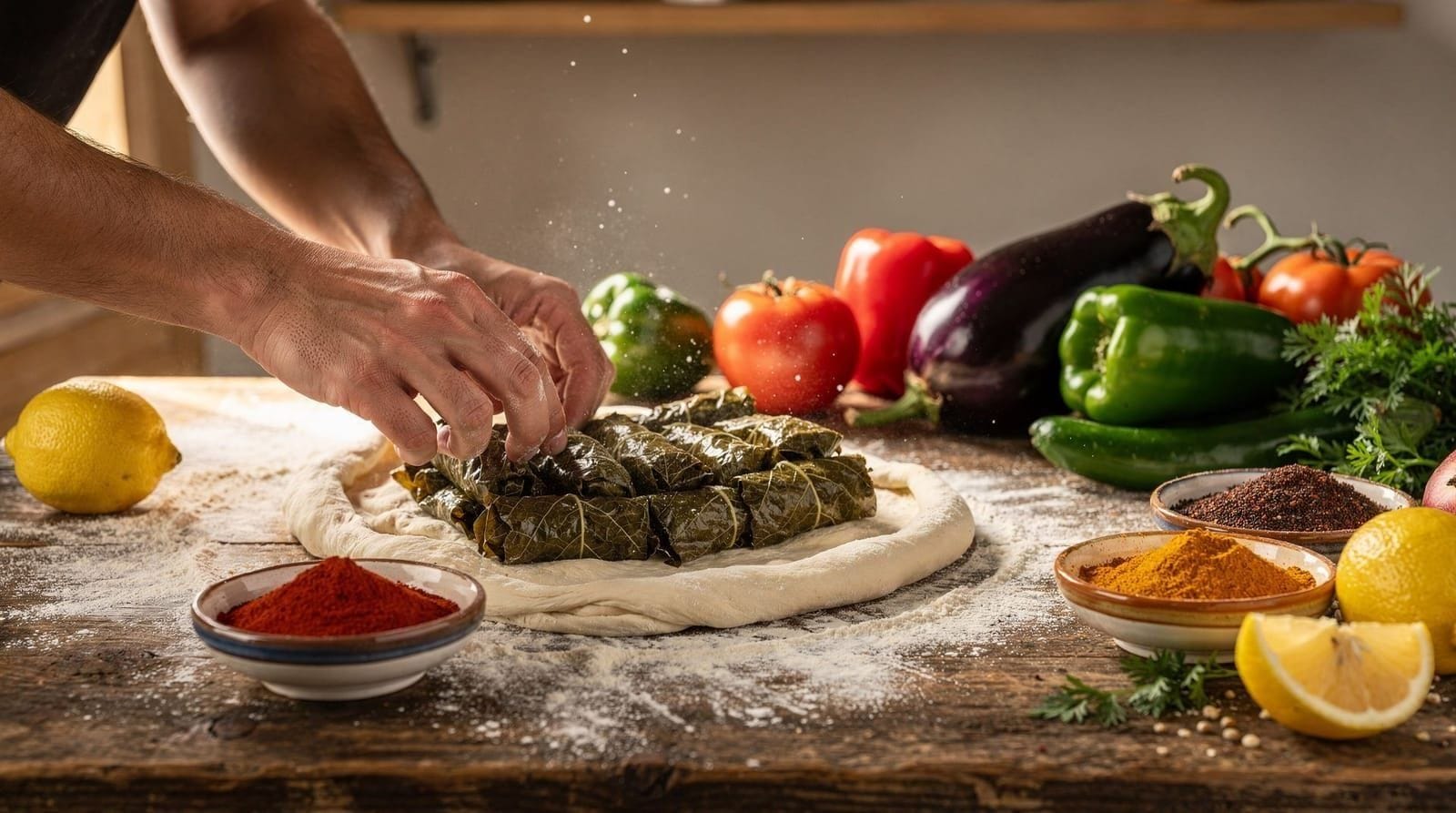
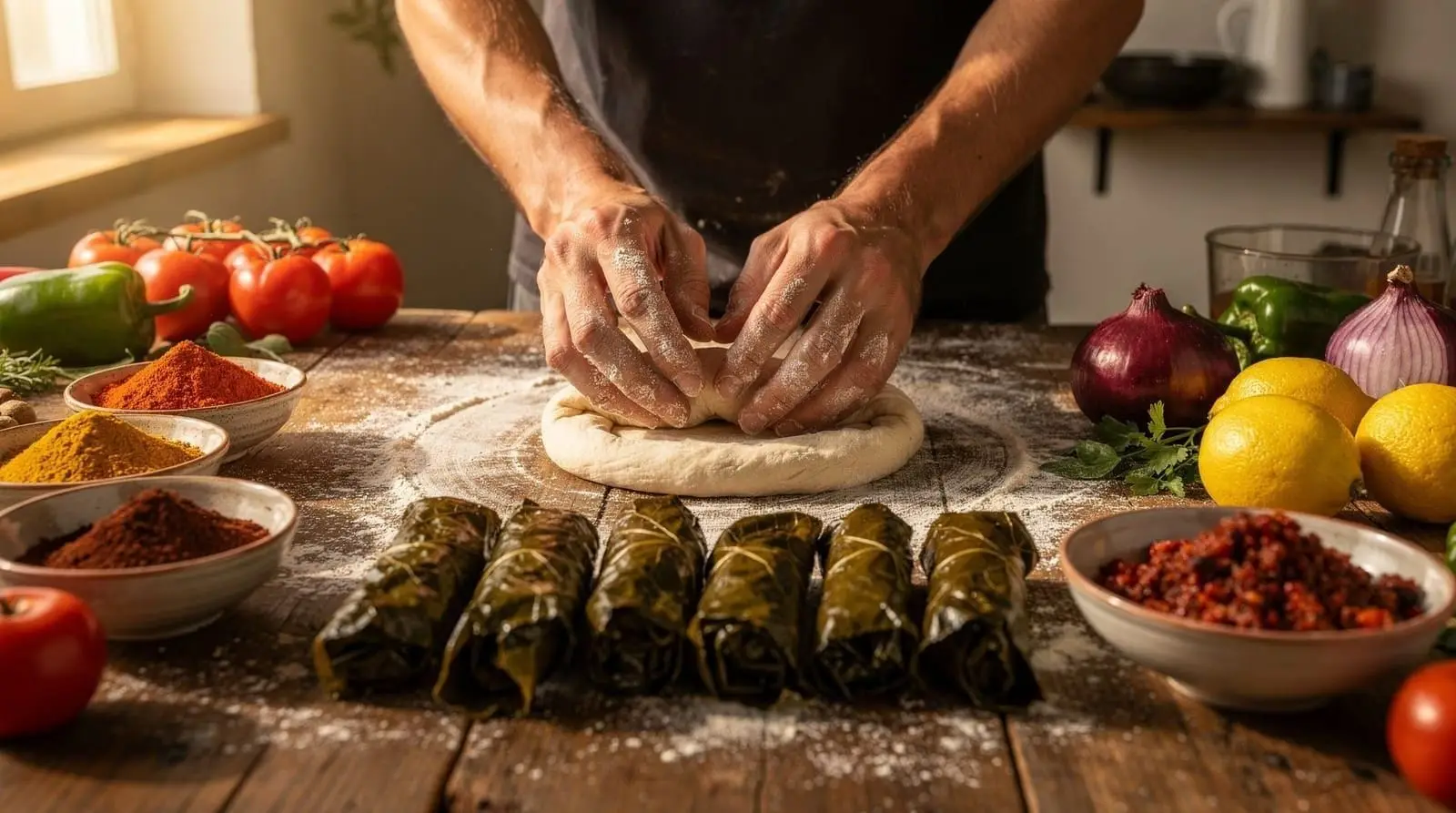
The most authentically Istanbul format. You meet a host (usually a woman, often described as a “local mom”) at or near their home in a residential neighbourhood — Cihangir, Moda in Kadıköy, or Fatih. The class runs in a working kitchen with the host’s own equipment, recipes from their family, and ingredients sourced from their local market.
The absence of professional kitchen infrastructure is a feature: you learn how Turkish home cooking actually works, not a restaurant production version of it.
What you cook: Dolma, börek or gözleme, a meze dish, sometimes a soup. Classes end with eating together at the table.
Price: €50–80 per person for 3–4 hours.
Best for: Anyone who wants to replicate the recipes at home and is interested in the social/cultural dimension as much as the cooking technique.
Professional chef class
Held in a proper teaching kitchen, led by a trained chef. More technical instruction, more precise techniques, more structured. The setting is less intimate than a home kitchen but the cooking instruction is clearer.
Good for people who want to come away with replicable culinary skills rather than a cultural experience.
Price: €60–100 per person for 3–4 hours.
Market + kitchen combination
Starts with a 1-hour visit to a neighbourhood market (typically the Spice Bazaar area or Kadıköy’s covered market) to select ingredients, then moves to a kitchen for cooking. Adds context about the ingredients — the difference between local spices and tourist-market versions, how to select a good aubergine, what to look for in fresh herbs.
Price: €65–100 per person for 4–5 hours (includes the market time).
Specialty workshops
Shorter sessions (1.5–3 hours) focused on one specific product:
Baklava workshop: Learn phyllo layering, syrup preparation, pistachio filling. The technical component is real — making good baklava is harder than it looks. 2.5–3 hours, €50–70.
Turkish delight (lokum) workshop: Learn the starch-and-sugar chemistry, flavouring with rose water and mastic, cutting and dusting with powdered sugar. 1.5–2 hours, €35–50.
Turkish coffee and fortune-telling workshop: Brew cezve properly, learn sweetness calibration, observe the tasseography tradition. 2 hours, €30–45.
Vegan/vegetarian cooking class: Istanbul has at least two operators specifically offering vegan cooking classes, which cover the zeytinyağlı (olive oil vegetables) tradition and plant-based meze. Useful for visitors who want to explore Turkish vegetarian cooking specifically.
What you’ll actually cook in a typical 3-hour class
A standard Turkish home cooking class in Istanbul covers:
Cold meze (45–60 min):
- Patlıcan ezmesi (smoked aubergine) — includes charring the aubergine directly on the gas flame, which gives the smokiness
- Haydari (yogurt dip) — technique for straining yogurt and folding herbs
Börek or dolma (60–75 min):
- Either börek (phyllo pastry with cheese filling, assembled and baked) or dolma (grape leaves or peppers stuffed with rice and herbs)
- Both require manual technique that takes practice
A main dish (30–45 min):
- Köfte (spiced meatballs) with tomato sauce, or a vegetable stew (türlü)
- Sometimes a pilav (rice) preparation
Dessert (15–30 min):
- A simplified baklava (using commercial phyllo rather than making it by hand) or sütlaç (baked rice pudding)
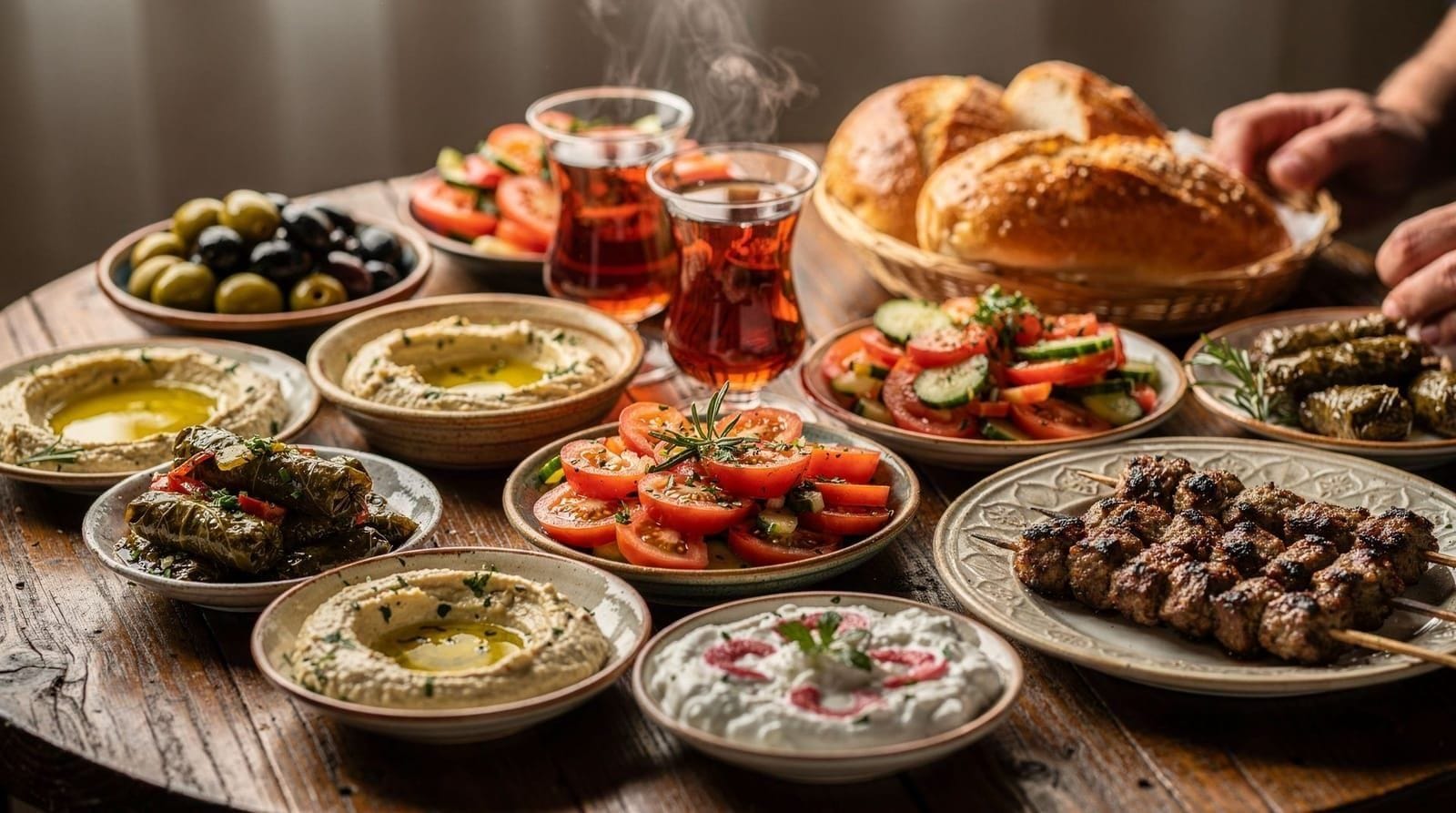
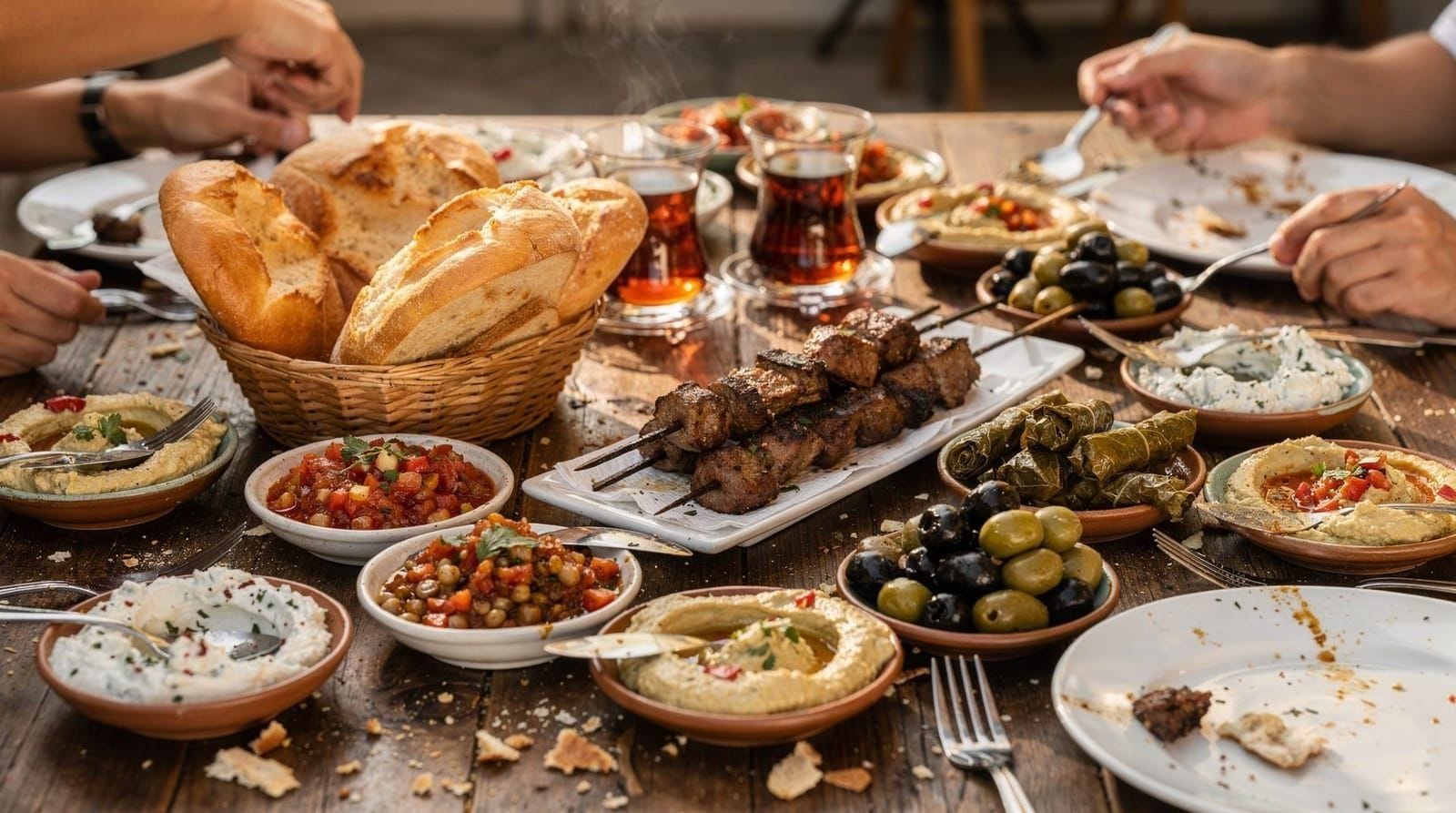
Eating together: The class ends with eating what you made, usually at a table set in the kitchen or dining area, with tea.
Comparing the formats at a glance
| Format | Setting | Price/person | Best for |
|---|---|---|---|
| Home cooking with a local host | Residential kitchen | €50–80 | Authenticity, replicable family recipes |
| Professional chef class | Teaching kitchen | €60–100 | Precise technique, structured instruction |
| Market + kitchen combination | Market then kitchen | €65–100 | Ingredient context alongside cooking |
| Specialty workshop (baklava, lokum) | Kitchen or workshop space | €25–70 | Short time budgets, a single focused skill |
| Hotel culinary “experience” | Hotel kitchen | €120–180 | Not recommended — polish over substance |
What to look for in a good class
Small groups: Maximum 8–10 people allows hands-on participation. Classes of 20+ become demonstrations rather than instruction.
Genuine recipes: The host should be cooking what their family actually eats, not a simplified tourist version. Ask beforehand if the recipes include specific ingredients (specific cheese varieties, fresh herbs, quality olive oil) — this is a proxy for authenticity.
Market component: Classes that start at a market rather than in the kitchen give you context about Turkish ingredients that the cooking alone doesn’t provide.
Clear recipes to take home: A good class results in printed or digital recipes you can actually use. Ask if recipe cards are provided before booking.
Flexible menu: The best home-cooking hosts adapt based on what’s seasonal and what the market had that morning. A fixed menu regardless of season is a sign of a packaged experience.
What to avoid
Hotel-attached cooking schools: The major tourist hotels offer cooking “experiences” at 120–180 EUR per person in sanitised kitchen settings. The instruction is watered down and the price is not justified by quality. The Sultanahmet hotels are particularly prone to this.
Classes in the Grand Bazaar area: Cooking “classes” offered by bazaar vendors (roll some börek, pay 150 TRY, leave) are not cooking classes. They are transaction-facilitation experiences.
Classes with no eating component: You should eat what you make. A class that ends with a small tasting plate rather than a proper meal shortchanges the experience.
Pairing the cooking class with the rest of your trip
A cooking class works best on day 2–3 of a trip, after you’ve already eaten around the city and have context for what the dishes you’re learning to cook taste like when made well. Doing it on day 1 means you’re learning dishes you haven’t yet tasted in context.
The market visit component (if available) pairs naturally with a tour of the Spice Bazaar or Kadıköy market — see the Spice Bazaar guide for what’s genuinely worth buying there versus browsing only. See the Istanbul 2-day foodie itinerary for how a cooking class fits into a food-focused trip.
For buying spices and ingredients to take home, the what to buy in Istanbul guide covers sourcing quality versions outside tourist-market pricing. If you’d rather explore Turkish food by eating your way through the city than cooking it yourself, the Istanbul food tours guide and Turkish food guide cover that alternative in full, and the best Turkish breakfast guide is worth reading before your first morning, since kahvaltı vocabulary comes up constantly in class.
What a booking confirmation should tell you
Before you commit, a well-run operator’s confirmation should specify: the exact meeting point and how to reach it (a home address requires more precise directions than a hotel lobby); whether transport is included or you’re arranging your own; the dish list so you know what you’re actually learning; whether the market component is included or optional; the maximum group size; and cancellation terms, since home-based hosts often have stricter policies than larger tour operators given the personal nature of the booking. If any of this is missing from the listing or the confirmation email, it’s worth messaging the operator before paying — a vague confirmation is often (though not always) a sign of a less carefully run experience.
Practical details
Meeting points: Most classes meet either at a neighbourhood market or at the host’s home/kitchen. Transportation is not typically included — budget for a taxi or tram fare.
Duration: Standard classes run 3–4 hours including eating. Shorter workshops (baklava, lokum) run 1.5–3 hours.
Languages: All reputable operators work with English-speaking hosts. Some offer classes in French and German.
Clothing: Bring or wear an apron-compatible outfit. Provide the chef-standard advice: no loose sleeves, hair tied back for longer classes.
Dietary restrictions: Notify the operator at booking — most can accommodate vegetarian and most common allergies. Vegan is more complex given Turkish cuisine’s reliance on cheese and yogurt, but the dedicated vegan cooking class format exists.
Turkish cooking techniques worth taking home
A well-designed cooking class gives you techniques that transfer to your home kitchen. The most useful ones:
Charring vegetables for smokiness: The method of placing an aubergine directly on a gas flame until the skin is entirely blackened is transformative for anyone who has only ever roasted vegetables in an oven. The same technique works with peppers (for muhammara, the Antep red pepper and walnut dip) and tomatoes. You need only a gas burner.
Stabilising yogurt for hot sauces: Turkish cooking uses yogurt in hot preparations (yayla çorbası — yogurt soup, cacık — which can be warmed) without it curdling. The technique involves tempering the yogurt with egg yolk and cornstarch before adding it to the hot liquid, then bringing the temperature up slowly. This extends your yogurt repertoire significantly.
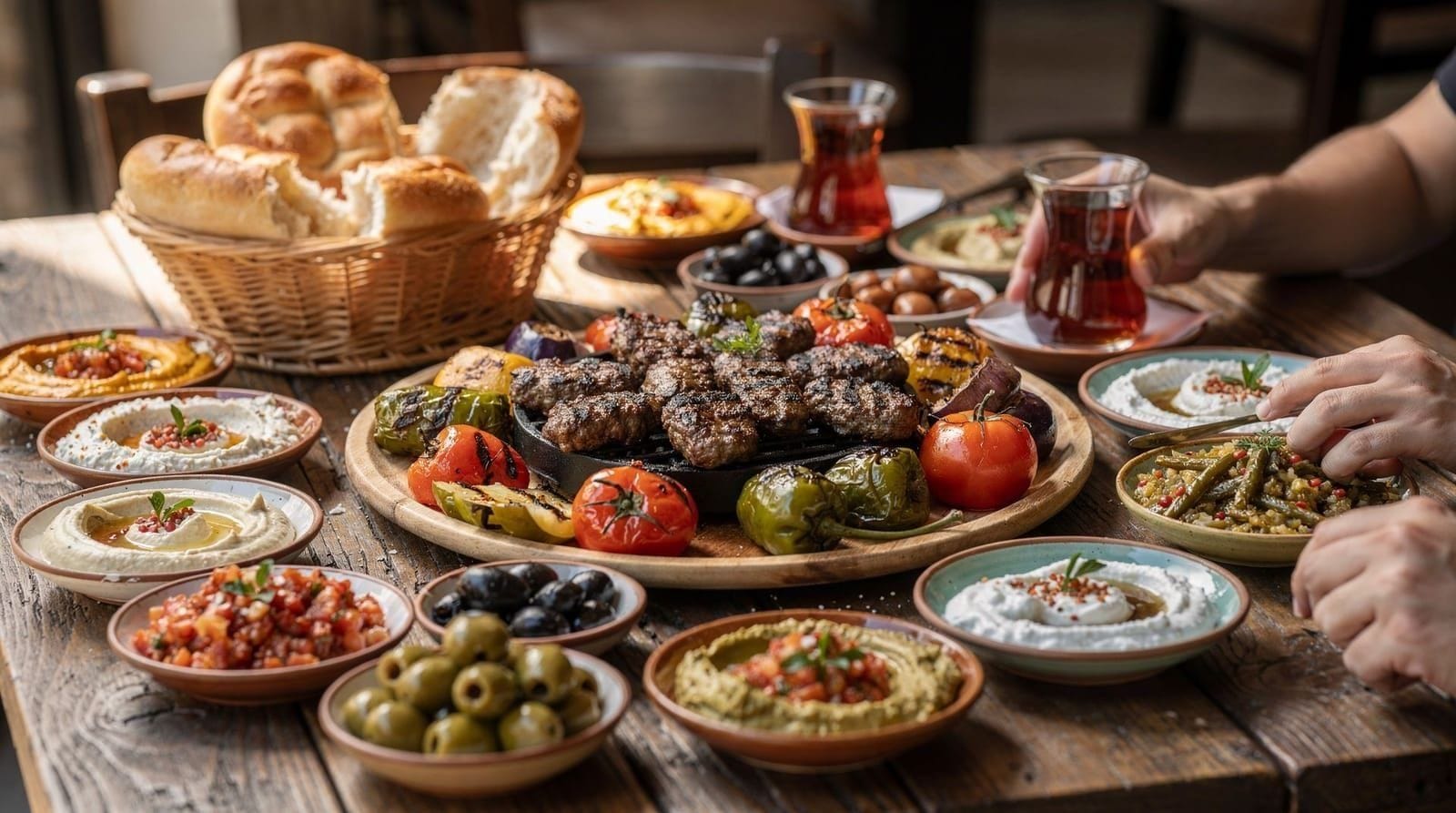
Meze building: Understanding the logic of a Turkish meze table — acidic elements (lemon, sumac, vinegar) balancing rich ones (olive oil, tahini, yogurt), warm textures against cold, bitter against sweet — provides a template for building a table of small plates in any kitchen.
The zeytinyağlı method: Slow-cooking vegetables in olive oil until completely tender, then cooling to room temperature before serving, produces a specific texture and depth of flavour unavailable from other cooking methods. It requires patience (40–60 minutes of low heat) rather than skill.
Where to source Turkish ingredients at home
After a cooking class, you’ll want to replicate the dishes. The specific ingredients worth tracking down:
Turkish red pepper flakes (pul biber): A dried Aleppo/Turkish pepper product with a complex, slightly oily quality. Available at Turkish and Middle Eastern grocery shops and increasingly online. Not the same as generic chilli flakes.
Sumac: A sour red ground spice used on salads, liver, and as a table condiment. Available at Middle Eastern grocers.
Turkish white cheese (beyaz peynir): Available at Turkish grocery shops in most European and North American cities. Feta is the closest substitute but milder versions are better.
Dried Turkish apricots: Used in pilav and dolma — the Turkish dried apricot (un-sulphured, darker) is different from the sulphured orange variety common in supermarkets.
Fresh yufka: Only available locally in Turkey. Commercial phyllo works for most börek recipes as a substitute.
The what to buy in Istanbul guide covers which spices and food products are worth buying to take home, and where to source quality versions outside tourist-market pricing — useful for anyone who wants to continue cooking Turkish food after their trip.
Vegetarian and vegan considerations in more depth
Turkish home cooking leans heavily on dairy (yogurt, kaşar and beyaz peynir cheeses) and, in many households, meat as a default protein in main courses, which makes a fully vegan class a genuinely different experience from a standard one rather than a simple substitution exercise. The zeytinyağlı tradition — vegetables slow-cooked in olive oil and served at room temperature — is naturally vegan and forms the backbone of the dedicated vegan classes that exist in Istanbul, alongside plant-based meze like patlıcan ezmesi (made without the yogurt some versions include) and a wider range of legume dishes than a standard class typically covers. Vegetarian travellers have an easier time, since most classes already include multiple dairy-based meze and vegetable mains; flagging the restriction at booking is still worth doing so the host can adjust the meat-based main course.
Frequently asked questions about Istanbul cooking class guide — what to expect and which one to book
What do you cook in an Istanbul cooking class?
How much does an Istanbul cooking class cost?
What is the difference between a cooking class and a food tour?
Are Istanbul cooking classes suitable for beginners?
What is a "cooking class with a local mom"?
Can I take a cooking class that focuses on a specific dish?
What do I do with the recipes after class?
Top experiences
Bookable activities with verified prices and instant confirmation on GetYourGuide.