Istanbul food itinerary — 2 days eating your way through the city
Istanbul: European and Asian Side Guided Foodie Walking Tour
Duration: 5.5 hours
Istanbul is one of the world’s great food cities — not for fine-dining theatrics but for depth: a 700-year Ottoman palace cooking tradition meeting Aegean ingredients meeting Central Asian nomadic food culture meeting Balkan and Greek influences meeting the Black Sea fishermen’s kitchen. Two dedicated days eating in Istanbul reveals a city that is perpetually underestimated by food media.
This itinerary is organized around neighborhoods and meal formats rather than sightseeing. You will eat well and understand why Turkish food is more varied and sophisticated than the döner-and-baklava shorthand suggests.
| Where | Sultanahmet, Karaköy/Beyoğlu, Kadıköy market, Balat |
| Cost | around 3,500-5,500 TRY/person/day (~100-160 USD, June 2026) for meals, market snacks, and one cooking class or food tour |
| Time needed | two full days, best split European side / Asian side |
| Getting there | Istanbulkart for tram, ferry, and metro between every stop |
| Best time to go | any season, though November-February is best for fresh hamsi (anchovies) |
What to eat before you arrive: a primer
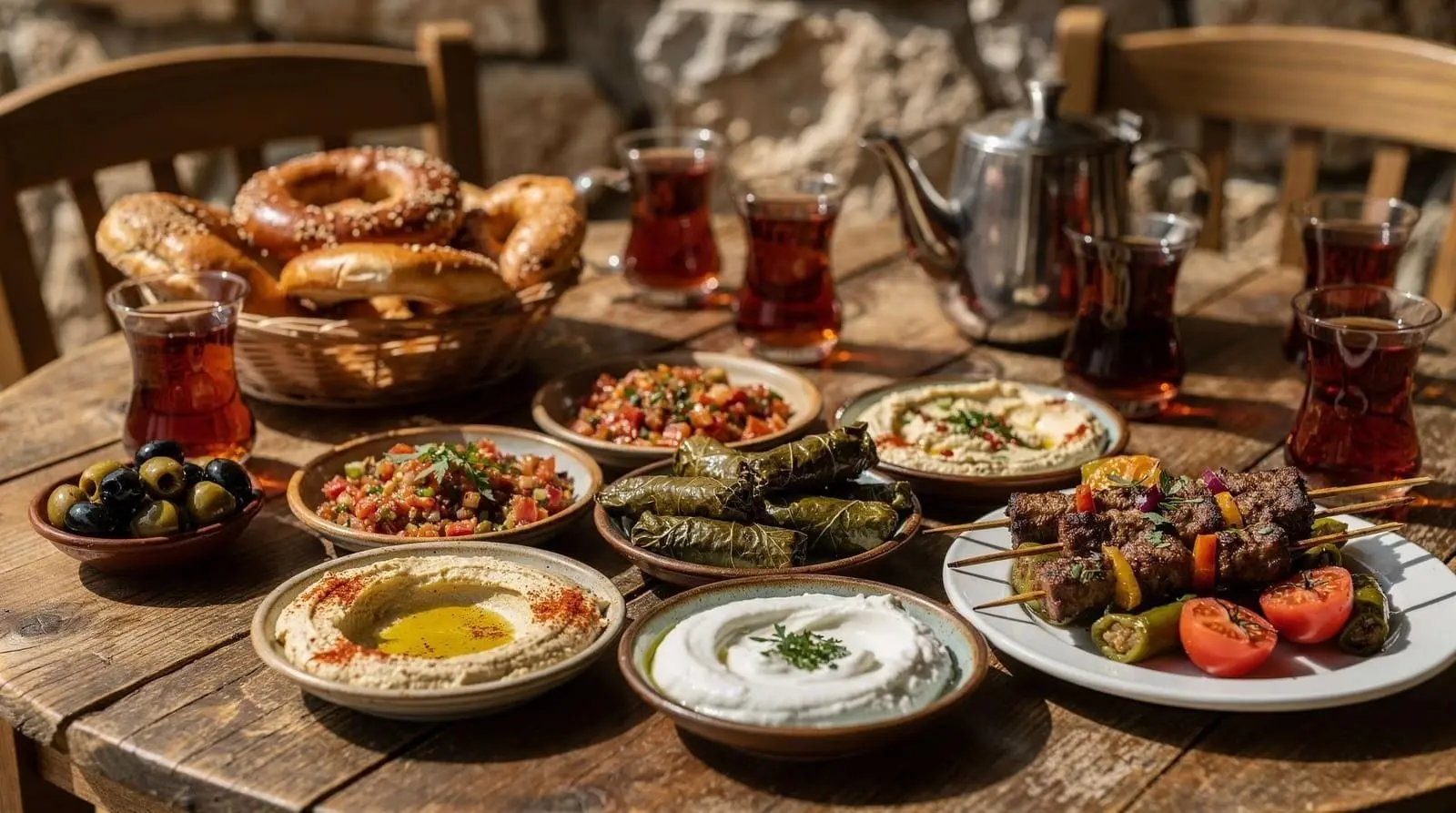
Breakfast (kahvaltı): The Turkish breakfast spread is one of the world’s most serious morning meals — a shared table of white cheese (beyaz peynir), sucuk (spiced sausage), eggs, tomatoes, cucumbers, olives, honey, kaymak (clotted cream), fresh bread, and unlimited çay. Budget 200-350 TRY per person for a proper spread.
Street food: simit (sesame bread rings, 15-20 TRY), balık ekmek (grilled mackerel sandwich, 150-200 TRY), midye dolma (spiced rice-stuffed mussels, 10-15 TRY each), kumpir (loaded baked potato, 150-200 TRY), gözleme (thin stuffed flatbread, 100-150 TRY), döner (rotating spit meat sandwich, 100-200 TRY).
Meze: the cold appetizers before a main — haydari (thick yogurt with herbs), cacık (yogurt with cucumber and garlic), arnavut ciğeri (Albanian-style fried liver with onion), enginar (artichoke heart in olive oil), kalamar (fried squid), midye tava (fried mussels). Order 4-6 to share.
Main dishes: İskender kebap (sliced lamb on bread with tomato sauce and browned butter, from Bursa), kuzu tandır (slow-roasted lamb), hamsi (Black Sea anchovies, particularly November-February), lahmacun (thin crispy flatbread with minced meat, from southeastern Turkey), testi kebabı (meat cooked sealed in a clay pot, broken at the table — Cappadocia specialty).
Desserts: baklava (multiple varieties beyond just the pistachio-walnut tourist version), kazandibi (caramelized milk pudding), sütlaç (rice pudding), muhallebi (rose water milk pudding), lokum (Turkish delight — the good stuff is nothing like the supermarket version), and tulumba (deep-fried dough soaked in syrup).
Day 1: European side — from Spice Bazaar to meyhane
8:00 am — Kayabaşı Turkish breakfast in Sultanahmet
Start with the meal Istanbul does best. Van Kahvaltı Evi (Kuzguncuk, Asian side) is the benchmark; on the European side, Tarihi Sultanahmet Kuru Fasülyecisi on Akbıyık Caddesi opens early. For a slightly more atmospheric setting, walk to the Marmara Pera Hotel terrace in Beyoğlu for a full spread with Bosphorus views.
Order the full spread for the table: you will eat slowly for 45-60 minutes and the meal is generous enough that you will not need a mid-morning snack.
9:30 am — Spice Bazaar (Mısır Çarşısı)
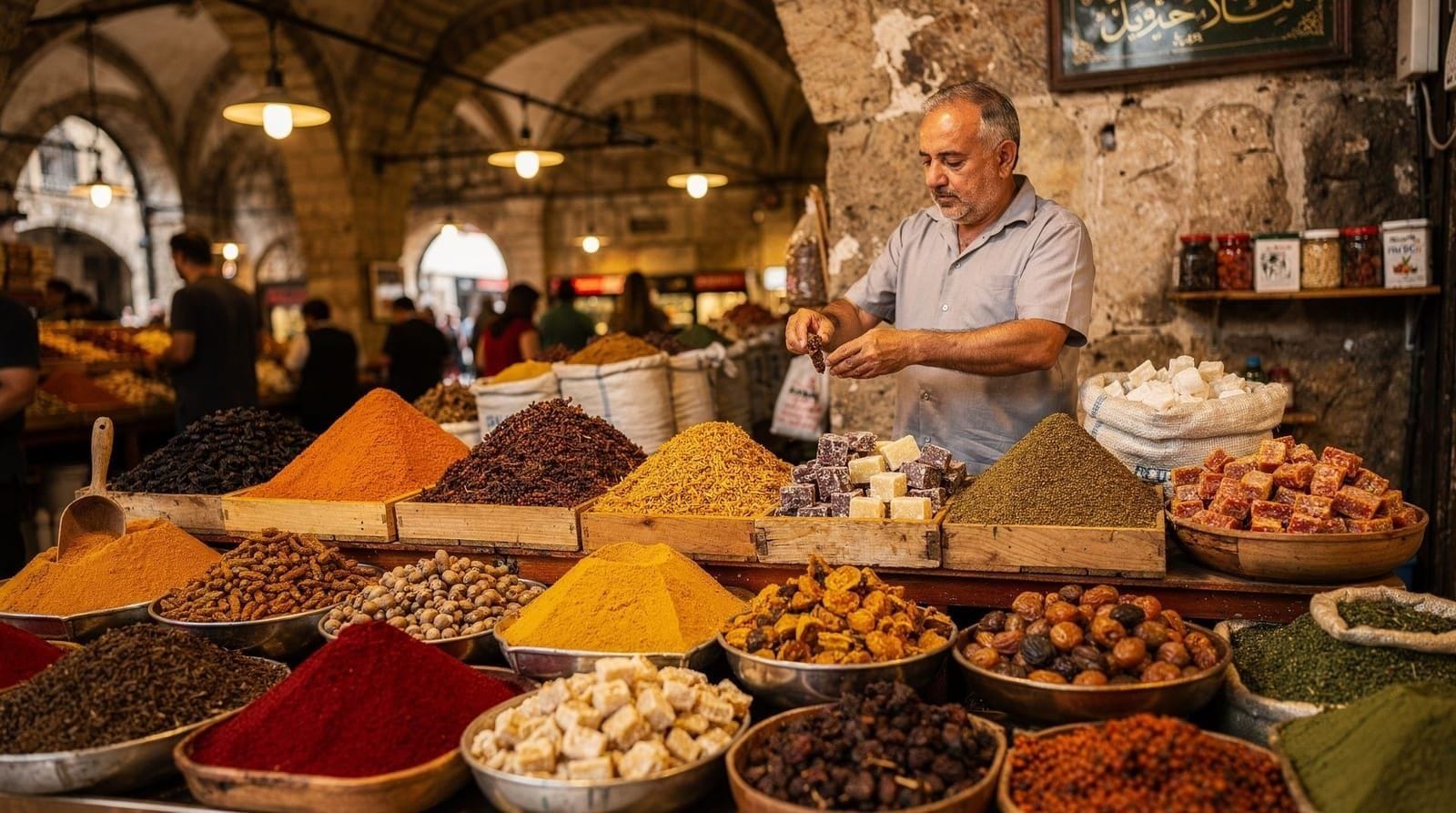
The Spice Bazaar at 9:30-10 am, before the tour groups arrive, is more manageable. This is where to buy: Aleppo pepper (pul biber), sumac, dried thyme (kekik), köfte spice blends, various teas, and lokum. Taste before you buy — reputable stalls offer samples. The inner stalls charge slightly more than the outer market around the building.
Avoid buying saffron without tasting and checking quality — much of what is sold as saffron in the Spice Bazaar is low-quality or adulterated. For genuine saffron, buy from a reputable shop or a supermarket (Migros or Carrefour).
For a more immersive experience: A guided Turkish cuisine walking food tour leads you through market streets and street food stops with cultural context — the best Day 1 morning option for food-focused visitors.
11:00 am — Grand Bazaar for food-adjacent shopping
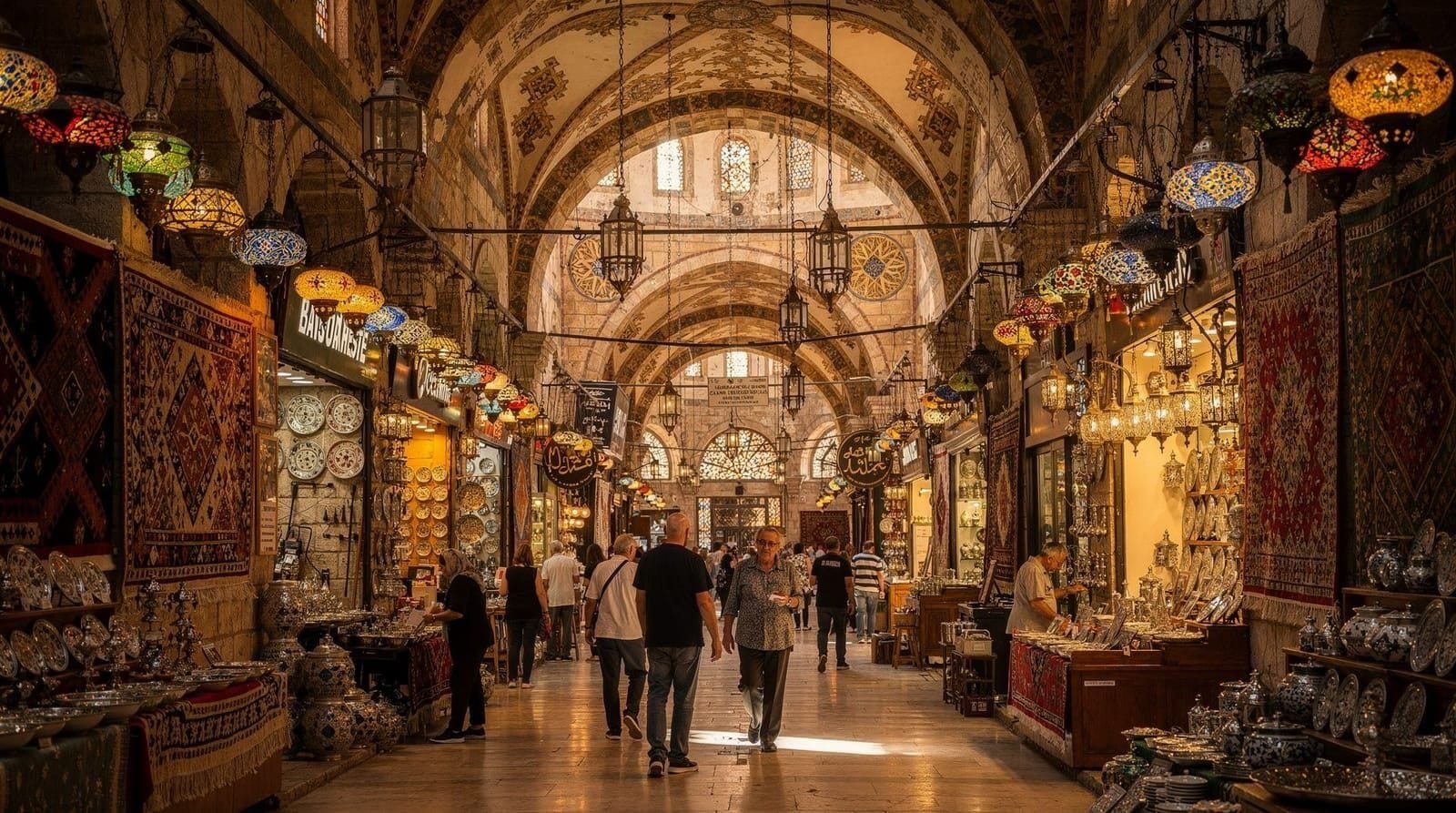
Fifteen minutes’ walk from the Spice Bazaar to the Grand Bazaar. The food-related shopping here: copper and brass cooking pots, hand-painted ceramic tea glasses, wooden spice mills, olive-oil soaps, and hand-embroidered tablecloths. The bazaar’s food stalls (tea, nuts, spices) inside the market are generally lower quality than the Spice Bazaar — browse but do not buy food here.
12:30 pm — Midday meal: Eminönü waterfront
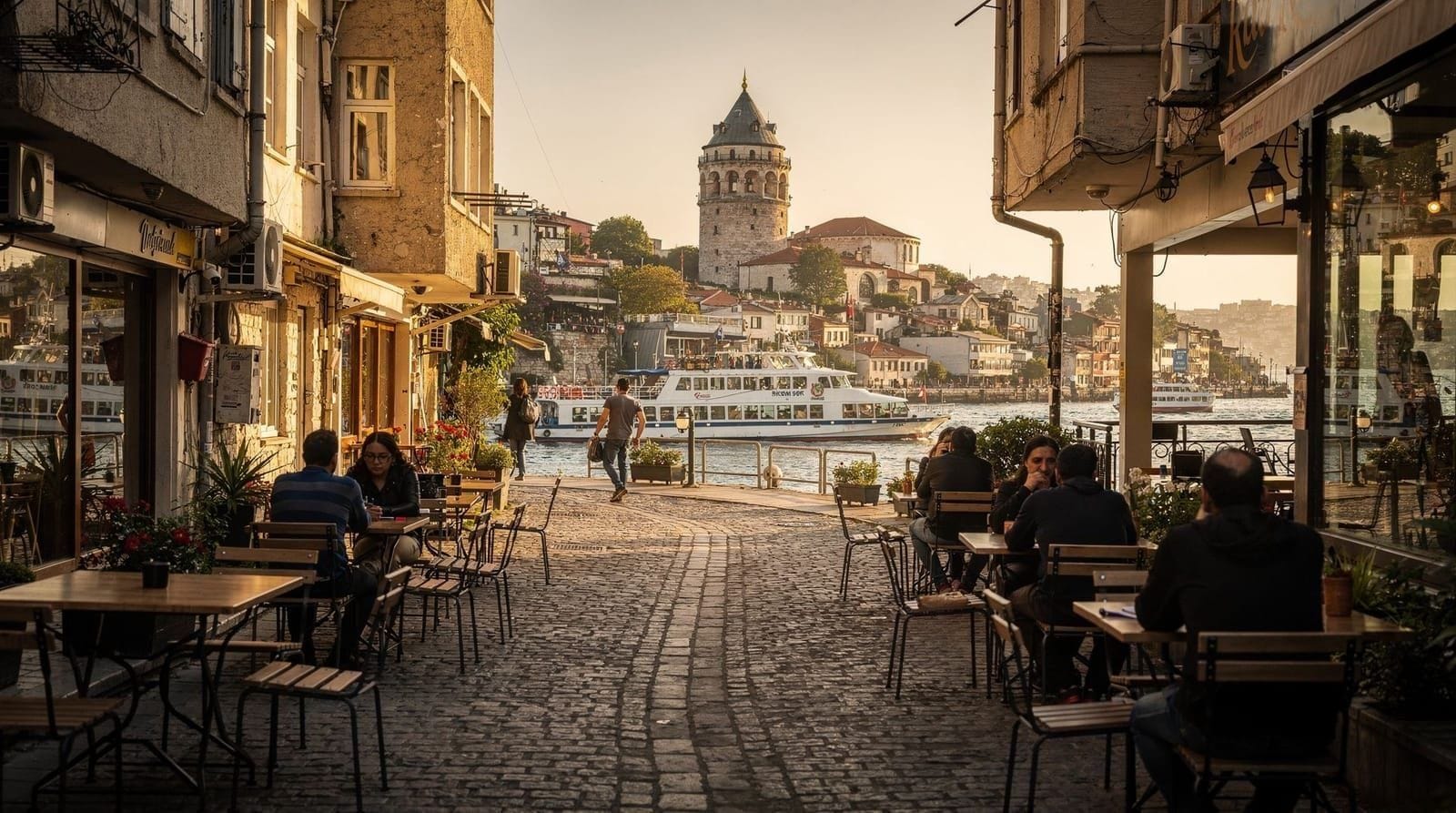
Walk to Eminönü. The balık ekmek experience is not just food — it is a ritual. The wooden boats moored at the ferry terminal have been grilling mackerel and stuffing it into bread with onions and lemon here for generations. Eat standing at the quay, watching the ferries. One mackerel sandwich costs 150-200 TRY.
For a more seated option: Pandeli Restaurant (upstairs above the Spice Bazaar entrance, in an arched tile room). Old-Istanbul classics — kefal fish, lamb stew, rice. Mains 400-700 TRY. Book ahead; popular with Istanbul businesspeople.
2:30 pm — Foodie walking tour or solo exploration
The afternoon is the ideal time for a structured food tour if you did not do one this morning. A 3-4 hour guided tour covers multiple neighborhoods and 10-15 tastings, providing context that is hard to replicate independently.
The European and Asian side foodie walking tour crosses the Bosphorus by ferry and covers both shores — an exceptional introduction to how Istanbul’s European and Asian food cultures differ.
A traditional street food tour stays in the European old city and focuses on street-level eating — simit, döner, gözleme, çay. Better for those who want maximum variety.
Alternatively, self-guided afternoon circuit:
- Karaköy Güllüoğlu: the most celebrated baklava maker in Istanbul. Buy a mixed box. The pistachio (fıstıklı) is the benchmark; try the şöbiyet (thin pastry with cream) for something different.
- Dürümzade (Karaköy): famous for bulgur wheat dürüm wraps. Queue is the indicator of quality.
- The Beyoğlu balık pazarı (fish market alley off İstiklal): for an early-evening browse before dinner.
7:30 pm — Meyhane dinner in Nevizade Sokağı
A meyhane is the Turkish equivalent of a Greek taverna — a relaxed place for meze, rakı, and shared plates through a long evening. Nevizade Sokağı (one alley off İstiklal, in the Balık Pazarı area) is lined with meyhanes that have been here for decades.
Order procedure: start with cold mezes (3-4 dishes to share), then order hot mezes (midye tava, arnavut ciğeri, sucuk with eggs), then a main if you have space (grilled fish or köfte). Drink rakı with water — the anise-based spirit turns white when diluted. Budget: 500-900 TRY per person for a full meyhane evening with rakı.
Best meyhanes on Nevizade: Refika’s Kitchen, Boncuk, Çifte Kumrular. Do not choose based on front-of-house touts; choose the one that is already full of locals.
See our meze and rakı guide.
Day 2: Asian side and cooking class
7:30 am — Kadıköy morning market
Take the 7:30-8:00 am ferry from Karaköy or Eminönü to Kadıköy (15 minutes, Istanbulkart). Arrive at the Kadıköy market (Kadıköy Çarşısı) before 8:30 am when the stalls are freshest and least crowded.
The Kadıköy market is one of the great food markets in any city. It is organized into sections: fresh fish (the morning catch from the Marmara and Black Sea), vegetables and herbs, cheese (a shop called Baylan has exceptional regional cheeses), pastries (Güllüoğlu’s Kadıköy branch), pickles (multiple vendors with dozens of types — taste freely), and dried goods.
Walk slowly. Taste everything offered. Have a midye dolma (stuffed mussels) from a vendor in the market — the rice inside is spiced with allspice and cinnamon, not chili; the flavor is much more complex than it looks.
Breakfast at the market: Find a stall selling söğüş (cold sliced lamb or beef with herbs, served on bread) or have a warm çay with a freshly baked poğaça (savory cheese pastry) from a fırın (bakery) near the market entrance. 50-100 TRY for breakfast here.
9:30 am — Çiya Sofrası — a museum of regional Turkish food
Çiya Sofrası is one of the most important restaurants in Turkey. Owner Musa Dağdeviren has spent decades documenting and reviving regional Anatolian dishes that are no longer made elsewhere — dishes from southeastern Turkey, the Black Sea, the Aegean hills, the Kurdish and Syriac traditions. The menu changes daily based on what is in season and what he is researching.
Arrive at 9:30-10:30 am (they serve breakfast/brunch) or plan a lunch visit (11:30 am-1 pm). Point at the steam table — whatever you see that looks unfamiliar, order it. Mains 300-500 TRY; a full meal for two 800-1,500 TRY. No reservations for lunch; queue if necessary. Worth it.
See our Turkish food guide for the food culture context behind what you are tasting.
11:30 am — Turkish cooking class (option A — full morning)
If you want to learn rather than just eat, a 3-hour Turkish cooking class is the ideal morning activity.
A Turkish cooking class with a professional chef typically includes a market visit (often Kadıköy market — perfect combination), then 2-2.5 hours of cooking followed by eating what you made. You learn to make at least 4-5 dishes: mezes, a main, and dessert. Price around 1,500-2,500 TRY per person.
If you take the cooking class, substitute it for the Kadıköy market walk (the class usually includes one) and the Çiya Sofrası visit.
1:00 pm — Moda waterfront lunch
Walk south from Kadıköy market to Moda. The Moda neighborhood’s café strip has several excellent options for lunch — lighter, less traditional, more contemporary than the market itself. Kır Kahvesi (Moda Shore) for the Bosphorus view. Or return to Kadıköy for a proper sit-down.
3:00 pm — Balat street food and café culture
Take a ferry back to Eminönü, then taxi or walk to Balat (15 minutes). The neighborhood has a growing café culture built around the colorful Ottoman-era streets. Stop at Forno (wood-fired bakery, excellent sourdough and pastries), or one of the small courtyard cafés. This is not a food tour — it is an excuse to eat çay and börek in a beautiful setting.
5:00 pm — Karaköy and the Galata area
Walk from Balat to the Galata Bridge (20 minutes) or taxi. Stop at the Galata area: Kronotrop coffee for a proper single-origin espresso (Istanbul’s specialty coffee scene is serious). The Nişantaşı neighborhood (20-minute taxi from Galata) has the most concentrated cluster of high-end patisseries and delicatessens if you want European-quality imported food products.
7:30 pm — Final dinner: authentic Ottoman or new-wave Turkish
Asitane Restaurant (Edirnekapı, 20-minute taxi): the only restaurant in Istanbul that serves genuine Ottoman palace recipes from 16th-17th century imperial cookbooks. Every dish on the menu is historically documented. The menu changes seasonally. Mains 450-700 TRY. Book ahead.
Alternative — Lokanta Maya (Karaköy): modern Turkish cuisine using Aegean and Black Sea ingredients; seasonal, market-driven. Excellent wine list focused on Turkish producers. Mains 350-600 TRY. Reserve.
Budget option: Return to the meyhane circuit in Nevizade or try the Asmalımescit neighborhood in Beyoğlu for smaller meyhanes with cheaper prices.
After dinner — Turkish sweets tour
Walk from Beyoğlu down to Karaköy for a final sweet course: Karaköy Güllüoğlu (open late) for a last piece of baklava. Then find a muhallebici (milk pudding shop) for kazandibi or fırın sütlaç (baked rice pudding) — these places are very cheap, very local, open late, and rarely visited by tourists.
A small serving of kazandibi at a muhallebici costs 60-100 TRY. Eat at the counter.
Two days at a glance
| Day | Time | Stop |
|---|---|---|
| 1 | 8:00 am | Turkish breakfast, Sultanahmet |
| 1 | 9:30 am | Spice Bazaar |
| 1 | 11:00 am | Grand Bazaar (food-adjacent shopping) |
| 1 | 12:30 pm | Balık ekmek, Eminönü |
| 1 | 2:30 pm | Foodie walking tour or self-guided circuit |
| 1 | 7:30 pm | Meyhane dinner, Nevizade Sokağı |
| 2 | 7:30 am | Kadıköy morning market |
| 2 | 9:30 am | Çiya Sofrası |
| 2 | 11:30 am | Cooking class (optional) |
| 2 | 1:00 pm | Moda waterfront lunch |
| 2 | 3:00 pm | Balat cafés |
| 2 | 7:30 pm | Final dinner: Ottoman or new-wave Turkish |
Pacing two days of serious eating
Two days of this itinerary means a lot of food in a short window, and pacing matters more than most itineraries admit. Skip the temptation to finish every dish at every stop — order to share, taste widely, and leave room for the next meal rather than filling up early at the Spice Bazaar samples. If you know your capacity is more moderate, treat Day 1’s afternoon circuit (Karaköy Güllüoğlu, Dürümzade, the fish market browse) as optional extras rather than obligations, and lean harder into the sit-down meals (meyhane, Çiya Sofrası, the final dinner) where the food is the whole point. Drinking water throughout the day, especially alongside rakı in the evening, keeps the pace sustainable for a second full day of eating tomorrow.
Making the most of the days around the food
Food is the thread, but a few neighborhood stops pair naturally with it. If you want to understand why Kadıköy and Karaköy feel so different from the old city, our Kadıköy neighborhood guide and Karaköy neighborhood guide explain the street layout and what each area is known for. For the Balat afternoon, the Balat and Fener walking guide helps you link cafés with the colorful streets between them.
Dessert deserves its own attention. Our baklava and Turkish desserts guide goes deeper on the varieties mentioned above, and the where to eat in Istanbul guide offers more options if a stop on this route is closed or too crowded. For a deeper look at the kitchen side, the Istanbul cooking class guide compares what a class can offer.
Moving between the European and Asian shores is part of the pleasure, and the Istanbul ferries guide and Istanbulkart guide cover how to cross smoothly. If you have a third day free, the 2-day Istanbul itinerary adds the major sights that this food-first plan deliberately leaves aside.
Where to buy Turkish food to take home
Spice Bazaar: all spices, teas, dried fruits, lokum (get a branded box from a reputable shop — not loose from a stall). Karaköy Güllüoğlu: baklava packaged in tin boxes for travel (ask for vacuum-sealed). Keeps 2-3 weeks. Supermarkets (Migros, Carrefour): better prices for olive oil, tarhana (dried soup base), pomegranate molasses (nar ekşisi), sumac, and packaged Turkish coffee. More reliable quality for spices than the bazaar.
Frequently asked questions about Istanbul food
What is the best food in Istanbul?
The balık ekmek at Eminönü, baklava at Karaköy Güllüoğlu, a full meyhane meze spread in Nevizade, Çiya Sofrası’s regional dishes, and a proper Turkish breakfast spread are the five essential Istanbul food experiences.
Is Turkish street food safe to eat?
Generally yes — Istanbul has high food safety standards and a strong street food culture. Midye dolma (stuffed mussels) carry a small risk if sourced from questionable waters; buy from busy vendors with high turnover. Döner is safe; watch for undercooked meat at smaller operations. Your stomach adjusts after day 1-2.
Is Istanbul good for vegetarians?
Better than most people expect. Zeytinyağlı dishes (vegetables cooked in olive oil — artichokes, green beans, dolma) are intrinsically vegan. Lentil soup (mercimek çorbası), hummus, ezme, and cheese mezes are meat-free. Mainstream Turkish restaurants default to meat; specialist and upscale restaurants have good vegetarian menus. Kadıköy has the most vegetarian-friendly restaurant options.
What should I know about Turkish coffee?
Turkish coffee (Türk kahvesi) is not espresso — it is finely ground, unfiltered, and served in a small cup with the grounds settling at the bottom. Do not drink the last sip. Order sade (plain, no sugar), az şekerli (a little sugar), orta şekerli (medium sweet), or çok şekerli (very sweet). See our Turkish coffee guide.
Should I book a food tour or explore independently?
Both work well, and this itinerary is written so either approach fits. A guided food tour adds most value on Day 1 morning, when context about ingredients and history deepens the Spice Bazaar and street food stops; Day 2’s Kadıköy market and Çiya Sofrası are straightforward to do independently since there’s less need for translation or navigation help. If budget is a bigger factor than time, skip the tour and use our street food guide as a self-guided reference instead.
Can I do this itinerary as a vegetarian or vegan?
Yes, with some adjustment. Zeytinyağlı (olive-oil) vegetable dishes, mezes like haydari and ezme, lentil soup, and Kadıköy market’s produce and cheese stalls all work well meat-free. The meyhane evening and Çiya Sofrası both have enough vegetarian mezes and dishes to make a full meal, though you’ll want to ask specifically rather than assume a dish is meat-free by name alone.
Top experiences
Bookable activities with verified prices and instant confirmation on GetYourGuide.