Istanbul shopping guide — beyond the bazaars
Istanbul: Grand Bazaar Shopping Tour with Local Guide
Where should I shop in Istanbul beyond the Grand Bazaar?
For unique items: the designer boutiques on Nişantaşı Abdi İpekçi Caddesi, the antique shops of Çukurcuma, and the delis of Kadıköy market. For mainstream shopping: İstanbul Cevahir (one of Europe's largest malls) or Kanyon in Levent. For gifts: Karaköy Güllüoğlu for baklava, local tea shops, and ceramic studios in Beyoğlu.
Shopping in Istanbul — the full picture
Most guides to Istanbul shopping start and end with the Grand Bazaar. That’s understandable — it’s 4,000 shops in one covered complex. But Istanbul is a city of 15 million people with a sophisticated consumer culture, a growing designer scene, and neighbourhood markets that serve locals rather than tourists.
This guide covers the full shopping landscape: the bazaars (briefly — detailed in their own guides), the neighbourhood markets, the fashion districts, and the specialist categories where Istanbul genuinely offers quality at honest prices.
| Where | Grand Bazaar (Sultanahmet), Nişantaşı (fashion), Çukurcuma (antiques), Kadıköy (food) |
| Cost level | Bazaars: negotiable, mid-range. Nişantaşı: premium. Neighbourhood markets: budget-friendly |
| Time needed | Half a day for the bazaars alone; a full day to add Çukurcuma or Nişantaşı |
| Getting there | T1 tram to Sultanahmet/Beyazıt-Kapalıçarşı for the bazaars; ferry or metro to Kadıköy |
| Best time | Weekday mornings for the bazaars (quieter); avoid Sunday closures on some streets |
The bazaars — the foundation
The Grand Bazaar and Spice Bazaar are covered in dedicated guides. The short version for shopping strategy:
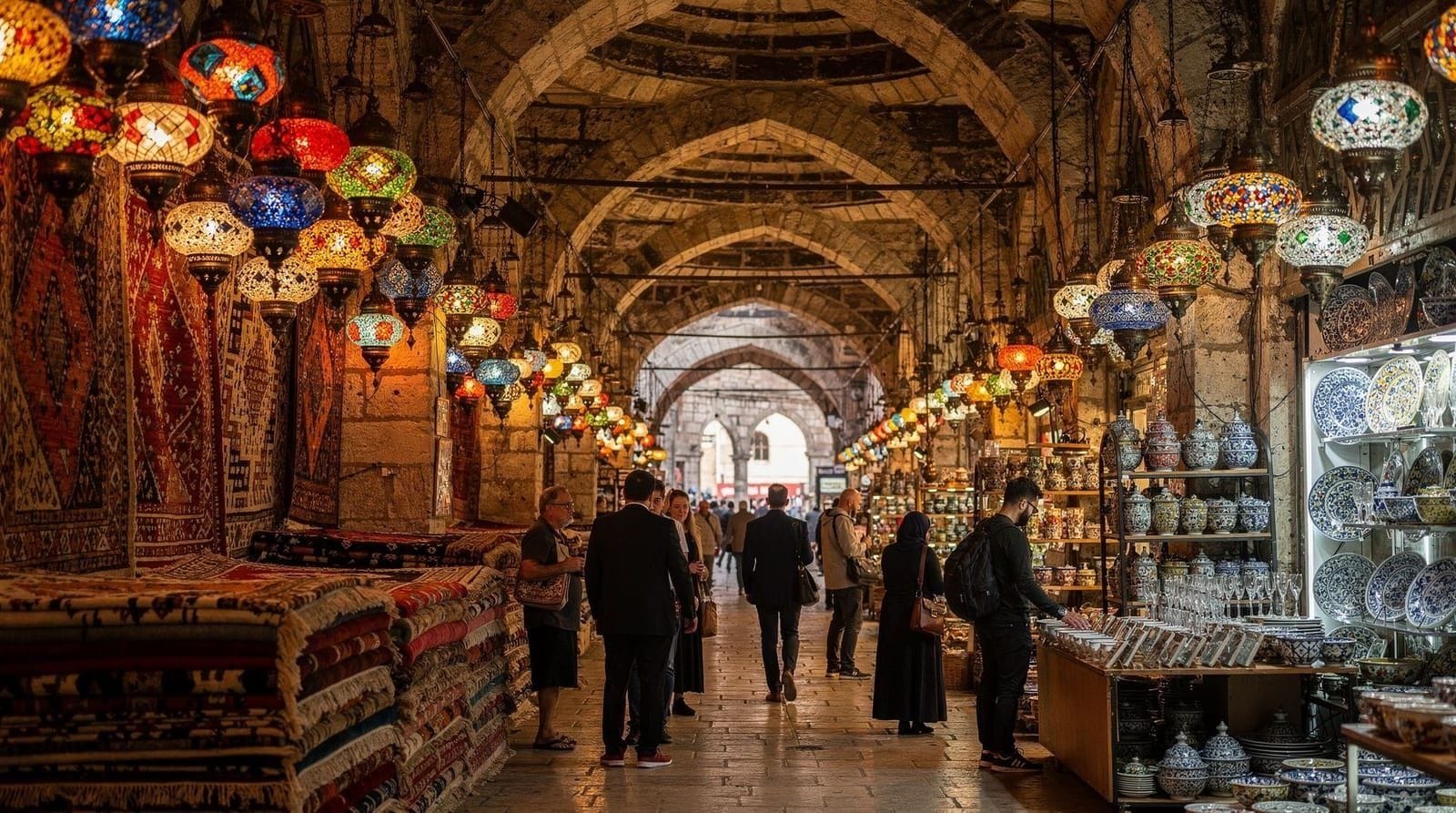
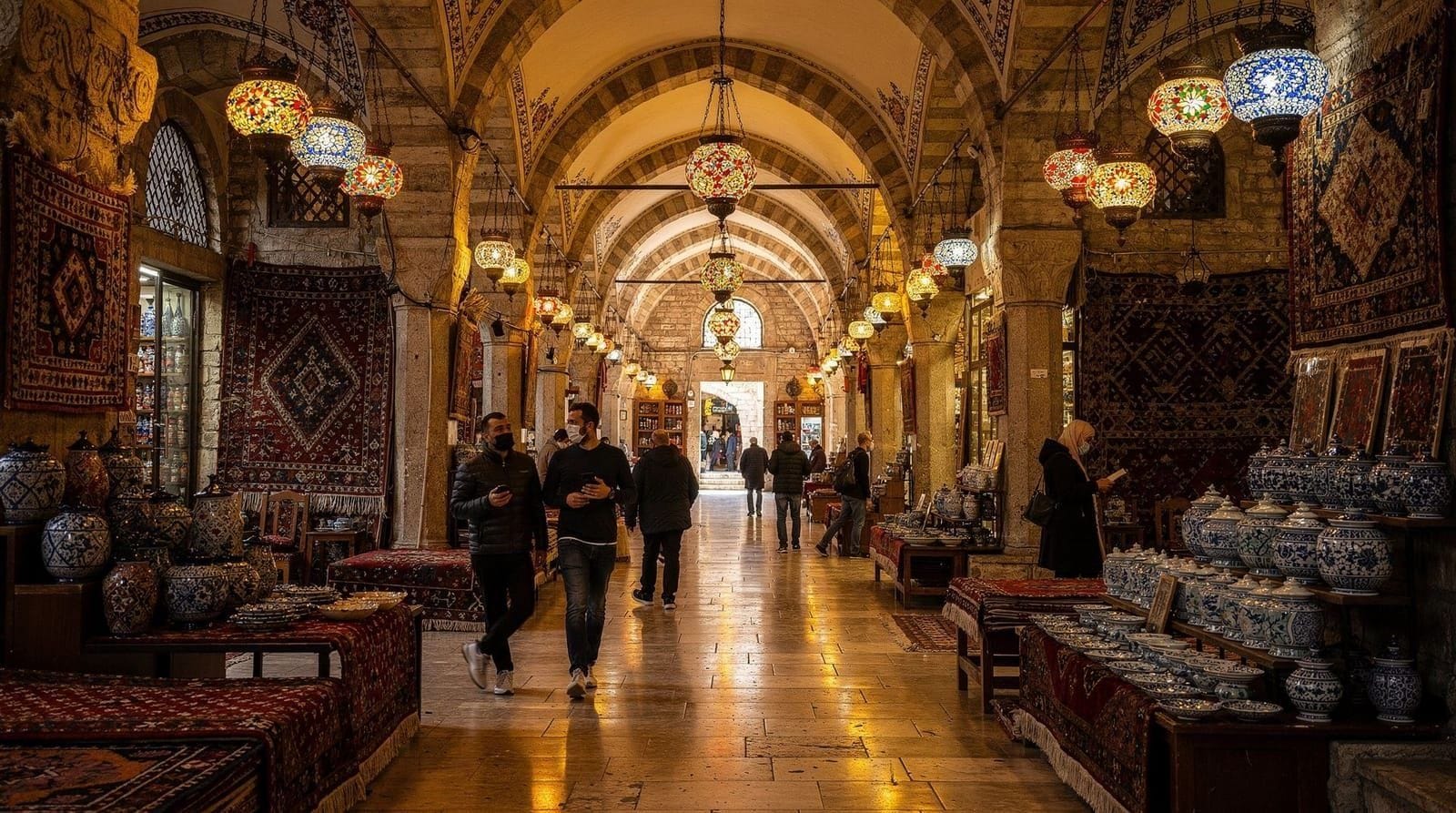
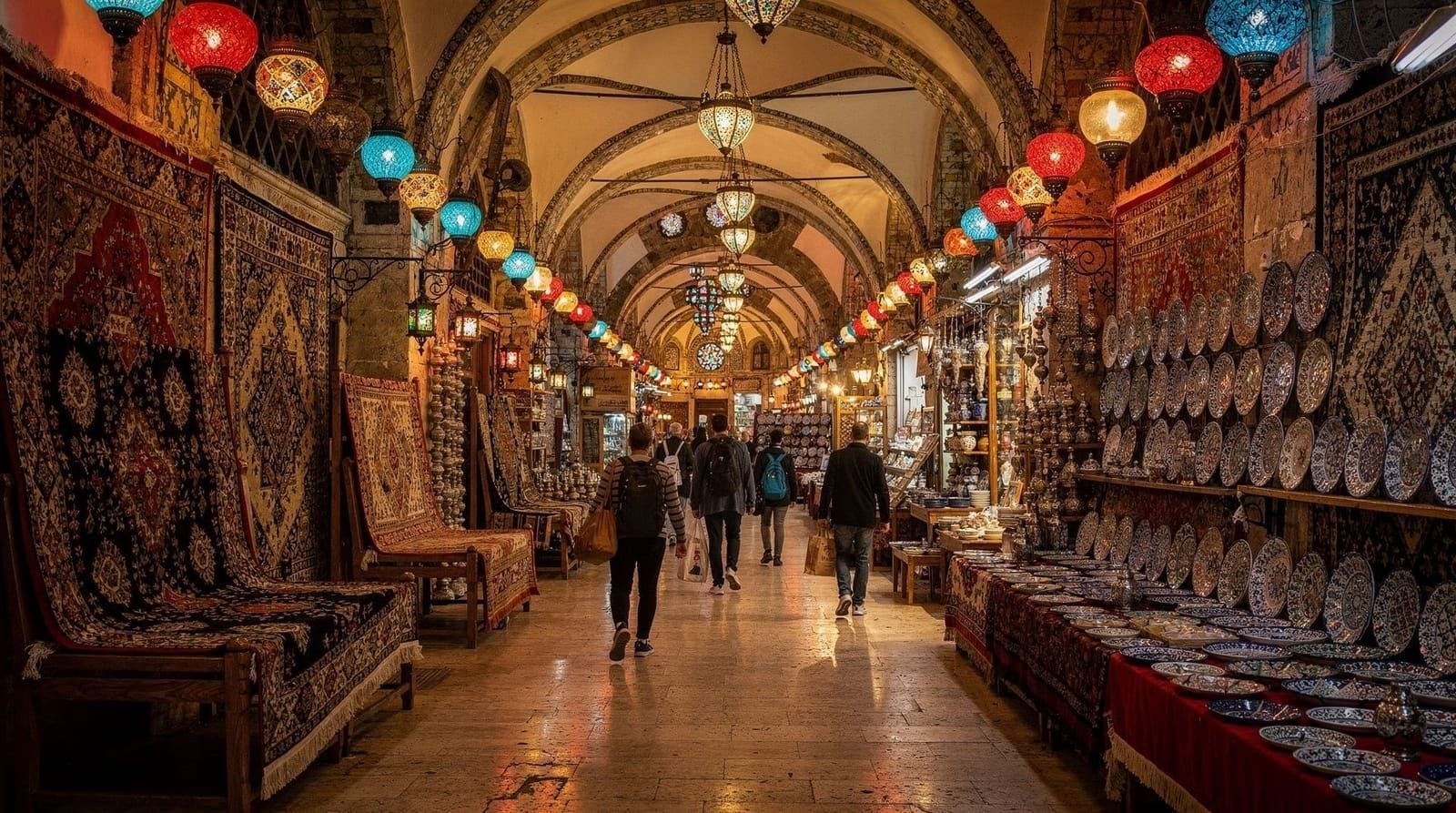
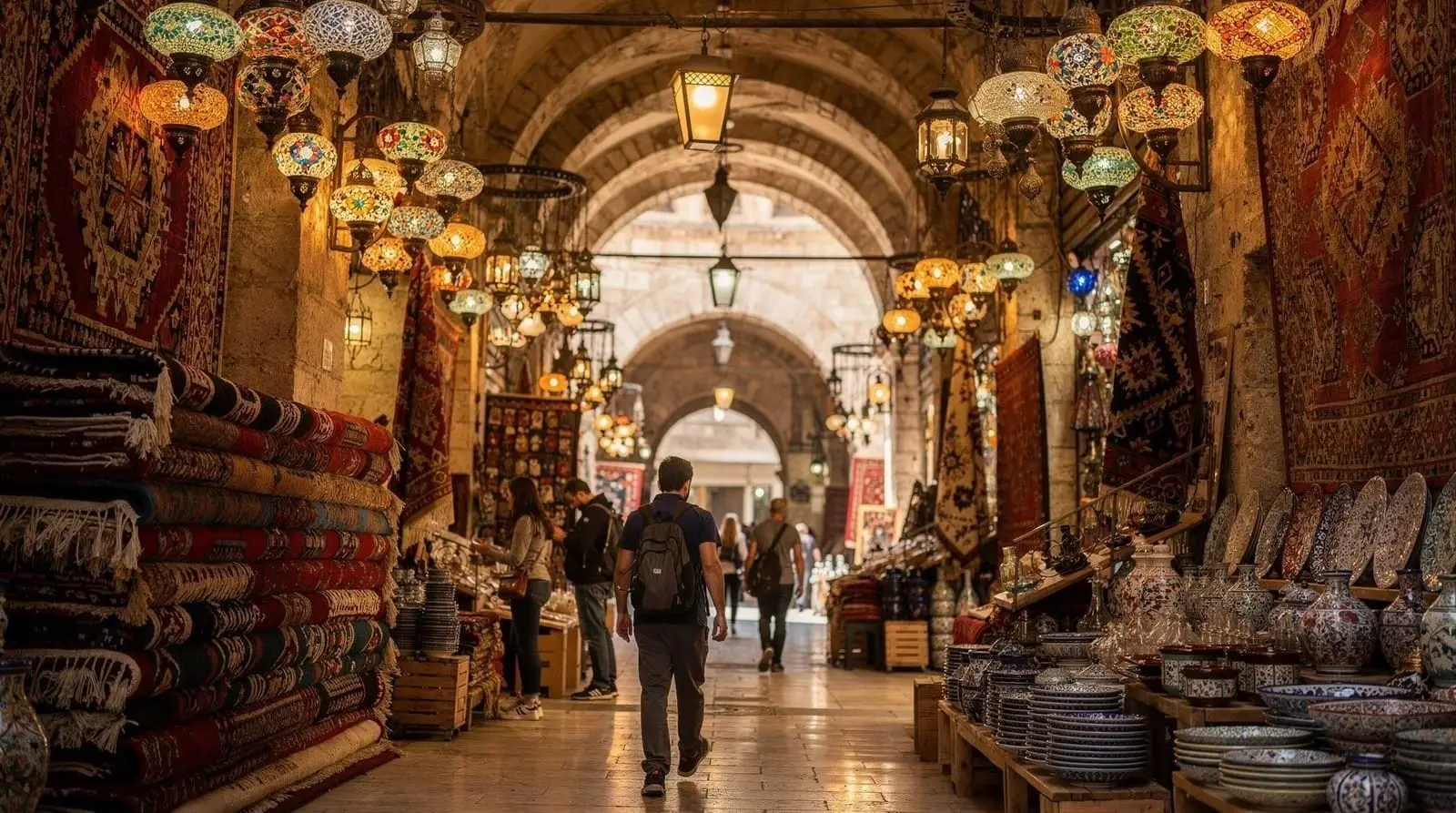
- Grand Bazaar: Best for gold jewellery (transparent per-gram pricing), quality ceramics (inner streets, not the tourist entrance stalls), carpets (if you’re knowledgeable), leather goods, and lokum from established confectioners.
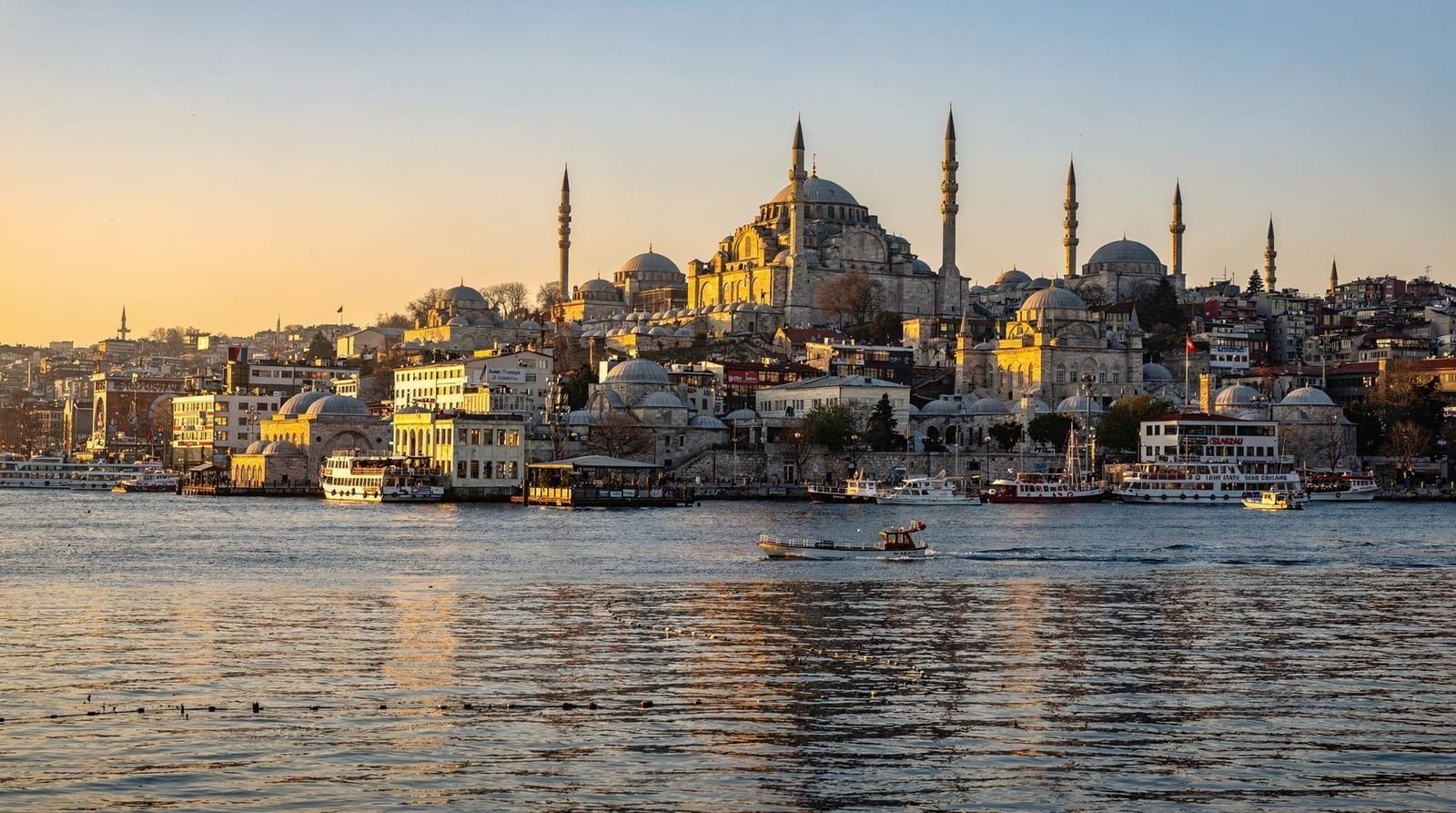
- Spice Bazaar: Best for saffron, dried herbs and spices, nuts, honey, and herbal teas. Combine with the nearby Rüstem Paşa Mosque (free, extraordinary Iznik tiles, nearly no tourists).
- Old Book Bazaar (Sahaflar Çarşısı): Adjacent to the Grand Bazaar. Old books, maps, prints. Atmospheric whether or not you buy.
Çukurcuma — the antique quarter
Çukurcuma, a neighbourhood in Beyoğlu a few minutes east of İstiklal Caddesi, has been Istanbul’s antique and vintage district for decades. The streets around Çukurcuma Caddesi and Faik Paşa Yokuşu contain shops selling genuine 19th and early 20th-century Ottoman and European items: furniture, ceramics, silver, jewellery, textiles, photographs, and curiosities.
This is not a tourist market — it’s where interior designers and serious collectors shop. Prices are not cheap for genuine items. The streets are worth walking regardless of budget: bric-a-brac spills onto the pavements, and the architecture of the neighbourhood is distinctive.
What to look for: Silver Ottoman spoons and tea sets, old maps of Istanbul and Turkey, 1920s–1950s photographs and illustrated magazines, embroidered textiles from Anatolian villages.
The Museum of Innocence (Diojen Çıkmazı 2, Çukurcuma): A genuine museum built around the fictional objects from Orhan Pamuk’s novel of the same name. Creative, literary, and worth 45 minutes if you’ve read the novel. Worth 20 minutes even if you haven’t — the concept is interesting.
Nişantaşı — the fashion district
North of Beşiktaş, Nişantaşı is where Istanbul’s upper-middle class shops. The main street, Abdi İpekçi Caddesi, has international luxury brands (Louis Vuitton, Hermès, Prada) alongside genuine Turkish designer boutiques:
- Vakko: Turkey’s most established luxury brand — textiles, silk scarves, accessories. Founded 1934.
- Beymen: Turkish department store chain with good quality Turkish-designed clothing.
- Arzu Kaprol, Hakan Yıldırım, and other Turkish designers: Contemporary Turkish fashion that you won’t find outside Turkey. Nişantaşı boutiques carry them.
Nişantaşı is not a budget shopping destination. But for Turkish-designed fashion as a genuine souvenir (clothes and accessories, rather than decorative objects), it offers things unavailable elsewhere.
Karaköy — design and food gifts
The Karaköy neighbourhood has the most interesting concentration of independent design shops in Istanbul:
- Design shops around SALT Galata: Small shops near the SALT research centre sell Turkish contemporary design: ceramics, glassware, textiles, and prints by Istanbul-based designers.
- Karaköy Güllüoğlu (Rıhtım Caddesi 3–4): The baklava institution. Buy freshly cut fıstıklı (pistachio) baklava by weight — an excellent and packable gift. The shop also sells a range of other pastries.
- Specialty food shops: Several small shops in the Karaköy–Galata area sell artisan Turkish products — olive oil, vine-leaf dolma jars, specialty jams, pomegranate molasses.
Kadıköy — the food market
For food-as-gift shopping, the Kadıköy market on the Asian side offers the most authentic and cost-effective options: good pistachios and hazelnuts at honest prices, Isot pepper from Urfa, quality cheeses, and preserved goods.
This is where Istanbul residents themselves shop for quality food. Prices are 20–40% lower than equivalent goods in Sultanahmet shops.
What to buy: a curated gift list
Lokum: Ali Muhiddin Hacı Bekir near the Grand Bazaar (the company that invented lokum in 1777). Fresh-cut, proper butter and sugar, no artificial stabilisers.
Isot pepper (Urfa biberi): The dark, oily red pepper flake from southeastern Turkey. Unavailable in most European or American supermarkets. Light to carry, easy to pack. From the Spice Bazaar or Kadıköy market.
Copper lamp (çarşı lambası): The mosaic-glass copper pendant lamps that have become Istanbul’s most recognisable decorative export. Heavy to carry but available in shipping versions. Best from workshops in the inner streets of the Grand Bazaar, not the tourist stalls near the entrance.
Silk scarf: Istanbul silk production has diminished but Turkish silk scarves with hand-painted or hand-blocked designs are still made. Authenticity matters — a hand-dyed silk scarf costs significantly more than a polyester version with similar appearance.
Zeytinyağı (olive oil): Turkey produces excellent olive oils, particularly from the Aegean region. A quality extra-virgin olive oil from a speciality shop is a practical gift. Check for the harvest year.
Meerschaum pipe: Carved from a Turkish mineral (sepiolite, mined near Eskişehir) into decorative pipe shapes. Traditional craftsmanship with no direct equivalent elsewhere. The better-quality pipes are sold in the inner Grand Bazaar.
Shopping districts compared
| District | Best for | Price level | Bargaining expected? |
|---|---|---|---|
| Grand Bazaar | Gold, ceramics, carpets, lokum | Mid to high, negotiable | Yes |
| Spice Bazaar | Spices, tea, nuts, sweets | Mid, mostly fixed | Light |
| Çukurcuma | Genuine antiques, vintage | High for authentic pieces | Some |
| Nişantaşı | Turkish designer fashion | Premium, fixed | No |
| Karaköy | Design objects, baklava, artisan food | Mid | No |
| Kadıköy market | Everyday food, nuts, cheese | Budget | Light |
Use this as a rough filter for where to spend limited shopping time: if you only have one afternoon and want a single representative experience, the Grand Bazaar shopping guide and bargaining in the bazaar guide cover the highest-value stop in depth.
Modern malls, if you want them
Not every visitor wants markets and antique streets — sometimes you need a specific item, air conditioning, or a rainy-day plan. İstanbul Cevahir in Şişli is one of Europe’s larger malls, with international chains, a cinema, and a food court; Kanyon in Levent is a striking piece of architecture in its own right with a more upscale tenant mix, close to the M2 metro’s Levent stop. Zorlu Center near Beşiktaş combines a mall with a concert hall and high-end boutiques. None of these are shopping “experiences” in the way the bazaars are, but they are useful for practical purchases, phone accessories, or a specific clothing size that bazaar stalls won’t reliably stock. They also make a sensible half-day pairing with Beşiktaş neighbourhood sights if you’re already in that part of the city.
Bargaining: when it applies and when it doesn’t
Bargaining is expected and part of the culture in the Grand Bazaar and similar bazaar-style shops, but it is not universal across Istanbul retail. Fixed-price stores (Nişantaşı boutiques, mall shops, most Spice Bazaar stalls, supermarkets) display a genuine price — attempting to haggle there reads as odd rather than savvy. The full mechanics, opening offers, and when to walk away are covered in the bargaining in the bazaar guide; the short version here is: bargain in the Grand Bazaar’s carpet, gold, and souvenir stalls, and don’t bother anywhere with a visible price tag and a till.
Old City to Grand Bazaar guided tour, combining sightseeing with shopping contextPlanning a shopping day that makes sense
The most common mistake is trying to cover every district in one outing. The areas in this guide sit in different parts of the city, and moving between them eats into the time you would rather spend browsing. A better approach is to pair places that are close together and let each day have one clear theme.
One easy pairing is the old city: start at the Grand Bazaar while it is calm, then walk toward the Spice Bazaar and finish with a long lunch. Another is the Beyoğlu side, where Çukurcuma, İstiklal and Karaköy sit within reach of each other, so you can move from antiques to design shops to a baklava stop without needing transport. The Beyoğlu neighbourhood guide is useful for filling the gaps between shops with cafés and sights. Kadıköy deserves its own half day on the Asian side, ideally combined with a ferry crossing, which is a pleasant part of the outing rather than a chore. If you are unsure how to link these areas, the getting around Istanbul guide explains the options, and the Istanbulkart guide covers the card that makes hopping between tram, metro and ferry painless.
Carry a light bag rather than a large one. Shops in all of these districts will happily hold or wrap fragile purchases, but you will enjoy the walking far more if you are not weighed down by the first thing you bought. Comfortable shoes matter too: bazaar lanes, Çukurcuma’s cobbled slopes and the hills of Karaköy all reward people who are prepared to walk.
How to tell quality from imitation
Istanbul sells a great deal of genuine craftsmanship, but it also sells plenty of factory-made items dressed up as handmade. A few habits help, whatever you are buying:
- Look at the back and the edges. Real hand-painted ceramics show small variations in line and colour; perfectly identical pieces stacked in dozens are usually printed or moulded.
- Ask who made it and where. A seller who knows the workshop, the artist or the region will answer easily. Vague answers are a signal to keep walking.
- Compare before you commit. Visit two or three shops selling similar items before buying. Your sense of what is normal improves quickly, and it makes a fair price much easier to recognise.
- Touch and smell. Real silk feels different from polyester, and fresh lokum or good olive oil should taste of what it claims to be. Many shops let you sample food items before buying.
- Be wary of “special today” stories. Pressure about a one-off price or a closing-down sale is a sales technique, not information.
For a longer shopping list organised by category, the what to buy in Istanbul guide goes into more depth than the short list above. And if you want to understand the pitches you may hear from touts and rug sellers, the Istanbul scams to avoid guide and the tourist traps guide are worth reading before you set out.
Food gifts and where they fit
Food is the easiest category to buy well in Istanbul because you can taste before you pay and it travels reasonably well. The Spice Bazaar is the obvious first stop; the Spice Bazaar guide explains how to navigate the stalls and what to look for. For sweets, the baklava and Turkish desserts guide helps you tell good baklava from the trays that merely look the part. Coffee lovers will find the Turkish coffee guide useful for choosing a grind and the right pot to brew it in.
Think about packing before you buy. Jars and bottles need cushioning, nuts and spices are easy to carry, and fresh pastries are best bought on your last day so they stay at their best. Shops that regularly sell to visitors will often pack items for travel if you ask.
Setting a shopping budget
It helps to decide in advance what you are willing to spend and on what. A single meaningful piece, such as a good ceramic, a lamp or a scarf, usually gives more pleasure than a bag of small souvenirs you will forget about. Food gifts and small items can come from the neighbourhood markets, while the larger purchases deserve more time and comparison. Our Istanbul travel budget guide shows how shopping fits alongside accommodation, food and transport, and the free things to do in Istanbul guide is a reminder that some of the best browsing, like strolling a bazaar lane or an antique street, costs nothing at all.
Shopping logistics
Currency: Always pay in Turkish lira (TRY) — shops that quote prices in USD or EUR typically apply a conversion rate that disadvantages you. Carry enough cash for bazaar shopping.
VAT refund: Turkey’s Tax Free Shopping scheme allows visitors to reclaim 18% VAT on purchases over a minimum threshold. Ask shops for a Tax Free form at purchase time. Redemption at Istanbul Airport (IST) customs. Worth the paperwork for larger purchases (carpets, gold, leather).
Shipping: For large items (carpets, antique furniture), reputable dealers have established shipping relationships. Get written documentation of what’s being shipped, the value, and the customs classification. Avoid paying full price for a rug and then discovering customs duties that double the cost on arrival.
Avoid: Market salespeople who follow you for extended distances or block your path. The aggressive sales approach is a signal that the product can’t sell on its own merits.
Frequently asked questions about Istanbul shopping guide — beyond the bazaars
What are the best souvenirs to buy in Istanbul?
Where do locals shop in Istanbul?
Is shopping in Istanbul cheaper than in Europe?
What is Nişantaşı?
Are there good independent bookshops in Istanbul?
What is the Sahaflar Çarşısı?
Top experiences
Bookable activities with verified prices and instant confirmation on GetYourGuide.