Beyoğlu neighborhood guide — Istanbul's grand avenue and off-street life
Explore Istanbul Night Life: Pub Crawl
What is Beyoğlu and why do visitors go there?
Beyoğlu is the European New City north of the Golden Horn, centred on İstiklal Caddesi — a 1.4-kilometre pedestrian boulevard between Galata/Karaköy and Taksim Square. It's Istanbul's entertainment and dining district, with historic arcades, the Pera Palace Hotel, embassies, art cinemas, meyhanes, rooftop bars, and music venues. The main street gets crowded; the narrow side streets are where the neighbourhood becomes interesting.
Beyoğlu — between the grand avenue and the back streets
Beyoğlu is where Istanbul’s European ambitions are most visible. The name comes from “boy of the bey” (Ottoman official), and the district has always had an international, cosmopolitan flavour — it was home to foreign embassies, Levantine merchant families, Greek and Armenian communities, and the luxury hotels of the late Ottoman era.
Today, İstiklal Caddesi (Independence Avenue) is the spine of the district: 1.4 km of pedestrian street lined with 19th-century European apartment buildings, international chain stores, Turkish fast food, historic bookshops, and an unusual density of people. On a weekend afternoon, it carries 2–3 million pedestrians. It is simultaneously the most vibrant and the most overwhelming place in Istanbul.
The key to enjoying Beyoğlu is the side streets.
| Where | European side, north of the Golden Horn, between Karaköy and Taksim |
| Cost | Free to walk; meyhane dinner around 500–900 TRY per person |
| Time needed | Half a day minimum; a full afternoon-into-evening ideally |
| Getting there | Tram T1 to Kabataş + Tünel funicular, or metro M2 to Taksim |
| Best time | Late afternoon into evening, when the meyhanes and rooftop bars come alive |
İstiklal Caddesi — what to look for beyond the crowds
The main boulevard rewards attention to details that most pedestrians rush past:
The nostalgic tram: A heritage tram runs the length of İstiklal, reproduced from original 1910-era cars. It’s more symbolic than practical (barely faster than walking given the crowds) but photographs well and represents the street’s old identity.
The grand passages (pasajlar): 19th-century shopping arcades built in the manner of Parisian galeries. Çiçek Pasajı (Flower Passage) at No. 509 is the most famous — now lined with restaurants and bars rather than flower stalls. The original architecture is intact. Atlas Pasajı and Avrupa Pasajı are less touristy alternatives. The passages connect İstiklal to the back streets and are worth threading through.
The embassies: The Beyoğlu district contains the historic European embassy buildings, now consulates — France, Sweden, Netherlands, Russia among them, in 19th-century buildings set back from the street.
Pera Palas Hotel: The entrance at Meşrutiyet Caddesi 52 (a side street off İstiklal) is understated. The interior — polished wood, period furniture, the original Orient Express elevator — is more impressive. Worth going inside for the lobby and Agatha Christie bar even as a non-guest. The hotel runs an afternoon tea service.
The meyhane streets — real Beyoğlu eating
Beyoğlu’s meze and raki tradition centres on two clusters:
Nevizade Sokak: A single block running behind İstiklal. Dense with meyhane tables spreading onto the street in warm weather. The tradition: order cold meze to start (haydari — yogurt with herbs, patlıcan salatası — smoky aubergine salad, tarama — fish roe, cacık — cucumber and yogurt), then hot meze (sigara böreği — fried cheese pastry, kalamar — calamari), then grilled fish or meat. Raki (anise spirit) throughout, diluted with water and ice. An evening at a Nevizade meyhane runs 500–900 TRY per person depending on what you order (15–27 USD, mid-2025).
Asmalımescit: Parallel to Nevizade, slightly more varied — meyhanes, wine bars, a few craft beer places. The meyhane at Sofyalı 8 (Asmalımescit neighbourhood) has been running since before the neighbourhood became fashionable and retains a local clientele.
Çukurcuma — antiques and browsing
Five minutes east of İstiklal, Çukurcuma is a neighbourhood of antique dealers, vintage furniture shops, and small galleries. The alleys around Çukurcuma Caddesi and Faik Paşa Yokuşu are worth an hour. Quality and price range from genuine antiques to second-hand bric-a-brac. The combination of the uneven streets, Ottoman-era building frontages, and furniture spilling out onto the pavements makes it one of Beyoğlu’s most atmospheric corners.
Orhan Pamuk’s novel The Museum of Innocence is set partly in this area, and the author opened a small corresponding museum nearby (Museum of Innocence, Çukurcuma Caddesi 2). It’s a genuine museum built around the fictional props of the novel — odd, creative, and more interesting than it sounds.
The tourist trap to know: bar scams
Beyoğlu’s most consistent tourist scam: a friendly local man (sometimes a woman) strikes up a conversation near İstiklal, suggests going for a drink, and leads you to a bar or club where the bill at the end is wildly inflated — 500–2,000 USD for a round. The bars that run this scam typically look legitimate from outside. The host insists on settling the bill before leaving and becomes threatening if you refuse.
How to avoid it: Don’t follow strangers to bars you didn’t choose. If someone approaches you on İstiklal with unusual friendliness, the statistics suggest they’re working a commission. Go to bars with visible menus and prices outside. Pay attention to what you’re ordering. The Istanbul scams guide covers this and other traps in detail — Beyoğlu and the İstiklal approach are consistently the most commonly cited location for this particular scam, more so than Sultanahmet, so extra caution here specifically is warranted.
Rooftop bars and views
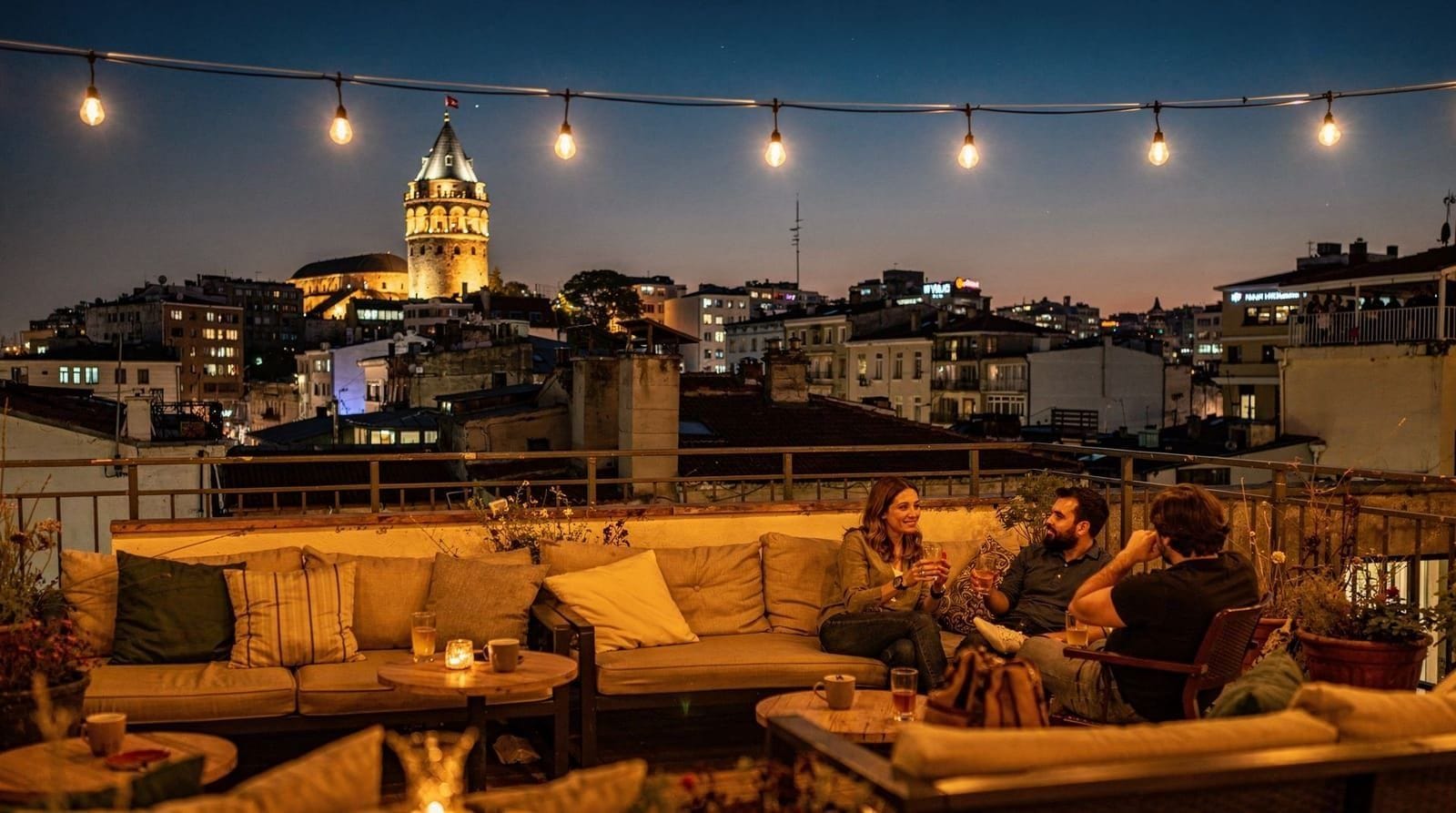
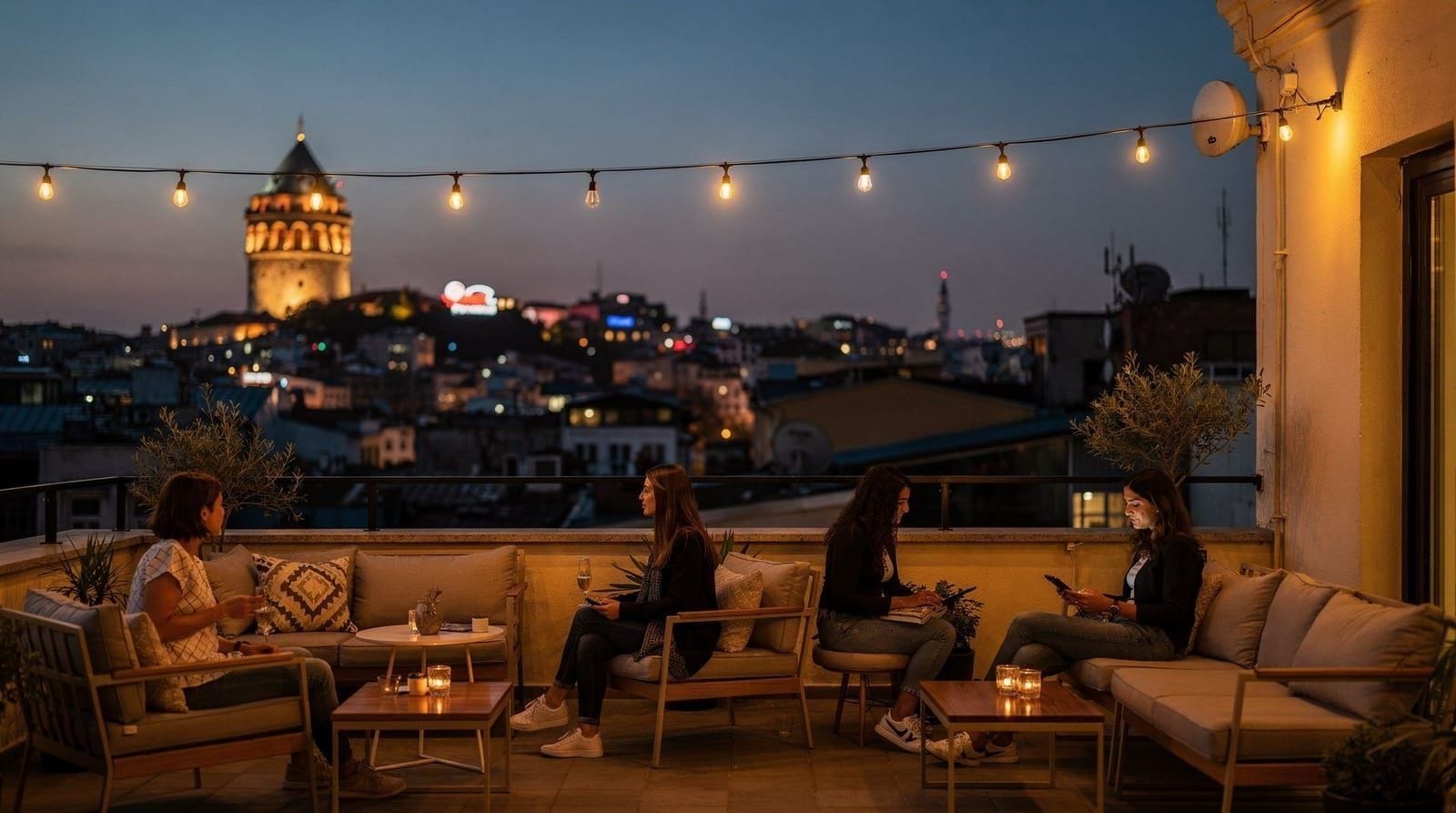
Beyoğlu’s elevation above the Golden Horn gives several buildings genuinely excellent views. Rooftop bars in Istanbul covers the full list, but the standouts in Beyoğlu:
Mikla Restaurant: Rooftop of the Marmara Pera hotel. The most celebrated view — Istanbul skyline, Bosphorus, both sides. Restaurant requires reservation; the bar section is more accessible. Expensive by Istanbul standards (200–350 TRY for a cocktail, mid-2025).
360 Istanbul: On a higher point above İstiklal, 360-degree terrace bar and restaurant. More affordable than Mikla; views nearly as good.
Anemon Galata Hotel terrace: Cheaper access, face-on view of the Galata Tower from across the street.
How to read the neighbourhood on foot
Beyoğlu is easiest to understand as layers. The top layer is İstiklal itself, the stage set that every visitor walks. The second layer is the passages and the first lanes either side, where the buildings are the same but the pace drops. The third layer is the steep streets running down towards the water, where the neighbourhood blends into Galata Tower territory and then into Karaköy. Walking down rather than up is kinder on the legs, and it means every turn gives you a view that opens towards the Golden Horn.
Look up as well as along. The most interesting detail in Beyoğlu is often above the shopfronts: carved balconies, iron railings, and the stone façades of the late Ottoman apartment blocks. Many ground floors have been taken over by chains, but the upper storeys still tell you how the street looked in its European heyday. If you enjoy buildings, the Istanbul architecture guide puts these European-style blocks next to the Ottoman and Byzantine landmarks across the river.
Do not try to tick everything off in one outing. Beyoğlu rewards a loose plan: one anchor (a view, a museum, a meal) and a willingness to turn down a lane that looks interesting. Visitors who treat it as a checklist usually end up stuck in the İstiklal crowd; those who wander tend to remember the neighbourhood fondly.
Eating and drinking beyond the meyhane
The meyhane is the headline, but it is not the only way to eat well here. Many visitors start the day with a long Turkish breakfast in one of the cafés on the side streets, and the best Turkish breakfast guide explains what to expect from the spread. Later in the day, the street food guide covers the quick bites you will see from carts and counters along the avenue, which suit a walking afternoon better than a sit-down lunch.
For a drink without the full ritual of a meyhane, a small café or wine bar on a side street is usually calmer than anything directly on İstiklal. If coffee is your priority, the Turkish coffee guide explains how it is prepared and served, and it is a good way to rest between the passages and the antique shops. For a broader view of where to eat across the city, where to eat in Istanbul puts Beyoğlu in context, and the baklava and Turkish desserts guide is worth reading before you choose somewhere sweet to finish.
A practical habit for the meyhane: ask what the table is bringing before you accept it, and say no politely to anything you did not order. Staff are used to it, and it keeps the bill in line with what you actually wanted. Take your time; an evening here is meant to stretch out, and nobody expects you to hurry. If you would rather have the dishes chosen for you, a small-group street food tour with a local guide is an easy way to taste the area’s food without guessing at menus.
Nightlife in Beyoğlu — what to expect
Beyoğlu is the centre of Istanbul’s evening life, but that covers a wide range. There are quiet wine bars, live music rooms, loud clubs, and rooftop terraces, and the mood changes street by street. The Istanbul nightlife guide maps the options in more detail, and it is worth reading before you commit to an evening so that you choose the type of night you actually want.
If you prefer a seated, cultural evening to a bar crawl, there are other ways to spend it in the city. The Turkish night show guide and the whirling dervishes guide cover the performances visitors often combine with a Beyoğlu dinner. Whatever you pick, decide where you are going before you leave your hotel, and keep the scam warning above in mind when anyone offers a spontaneous recommendation.
Who Beyoğlu suits, and who should skip it
Beyoğlu suits visitors who like city energy: people who want to eat late, walk without a fixed destination, and see how Istanbul lives after the sightseeing day ends. It also suits anyone who enjoys architecture, bookshops, and small galleries. First-timers can enjoy it too, as long as they pair it with the main sights; the first-timer guide to Istanbul shows how it fits alongside the classic route.
It suits a quieter traveller less well. Families with small children may find the avenue tiring on a busy day, though a daytime visit with a tram ride and a stop for something sweet can work; the Istanbul with kids guide has more on pacing the city with children. If crowds are your main worry, go earlier in the day, stay on the side streets, and leave the avenue for the architecture and the passages.
If you are still deciding where to sleep, the where to stay in Istanbul guide compares areas, and the neighbourhoods overview shows how Beyoğlu relates to the rest of the city. Reading the Istanbul tourist traps guide alongside this page will also help you spot what is worth your money and what is not.
Getting to Beyoğlu
From Sultanahmet: Tram T1 to Kabataş, then the historic funicular (Tünel, 1875 — Europe’s second-oldest underground railway) up to İstiklal. Or cross Galata Bridge on foot (15 minutes from Sultanahmet) and walk up Galip Dede Caddesi (the music instrument street) to the Galata Tower and İstiklal.
From Taksim: İstiklal runs from Taksim Square down to the Galata/Tünel end. The metro M2 serves Taksim.
From Karaköy: Walk up Bankalar Caddesi (Bank Street) or up any of the steep lanes past Galata Tower — 10 minutes to İstiklal. The climb is steep in places, so this route suits visitors happy to walk uphill; otherwise the funicular from Kabataş is the easier option.
Beyoğlu in your Istanbul itinerary
Beyoğlu works well as an afternoon-into-evening programme after morning Sultanahmet sightseeing. Start at the Galata Tower for orientation, walk down to Karaköy for café stops, then up İstiklal to Taksim for evening — finishing at a meyhane on Nevizade.
The Istanbul 2-day itinerary places Beyoğlu on afternoon of day one. The Istanbul first-timer itinerary builds evening meals in Asmalımescit into the schedule.
A sample Beyoğlu afternoon-into-evening
| Time | What |
|---|---|
| 3:00pm | Galata Tower and the surrounding lanes |
| 4:00pm | Walk up Galip Dede Caddesi into İstiklal, detour through the passages |
| 5:30pm | Çukurcuma antiques browsing, or the Museum of Innocence |
| 7:00pm | Rooftop drink (360 Istanbul or Anemon Galata terrace) for sunset |
| 8:30pm | Meyhane dinner on Nevizade or Asmalımescit |
If you’re deciding where to base yourself for the trip rather than just visiting for an evening, staying in Sultanahmet vs Beyoğlu weighs up the trade-off directly. For the meze-and-raki tradition described above in more depth, see the dedicated meze and rakı guide. And if a guided introduction to the neighbourhood’s food appeals more than working it out solo, the Istanbul food tours guide covers walking tours that run through Beyoğlu specifically.
Beyoğlu nightlife pub crawl is a straightforward way to sample several bars with a group and a guide, without the risk of following the wrong stranger into the wrong bar.
Frequently asked questions about Beyoğlu neighborhood guide — Istanbul's grand avenue and off-street life
What is İstiklal Caddesi?
What is the Pera Palace Hotel?
What are the best side streets in Beyoğlu?
Is Beyoğlu safe at night?
Where do locals eat in Beyoğlu compared to tourists?
What is the difference between Beyoğlu and Karaköy?
Top experiences
Bookable activities with verified prices and instant confirmation on GetYourGuide.