What to buy in Istanbul — the honest souvenir guide
Istanbul: Grand Bazaar Shopping Experience with a Local
What are the best things to buy in Istanbul as souvenirs?
The best value and most authentic: quality lokum (Turkish delight) from established confectioners, saffron and isot pepper from the Spice Bazaar, pistachio baklava from Karaköy Güllüoğlu, hand-painted ceramics signed by the artist, natural Turkish textile items (linen peştemal towels, silk scarves), and meerschaum pipes. Avoid generic tourist T-shirts, fake antiques, and mass-produced 'evil eye' items in tourist zones.
The honest Istanbul souvenir assessment
Istanbul’s tourist market sells a predictable inventory: ceramic plates, evil eye items, fez hats, miniature Hagia Sophia models, mass-produced T-shirts with “Istanbul” printed on them. Most of it is manufactured in China with Turkish-sounding names and sold at significant mark-ups near the main sights.
Meanwhile, Istanbul also produces genuinely excellent goods: food products from Turkey’s extraordinary culinary tradition, artisan crafts from real Turkish workshops, and textile traditions with centuries of history. The difference between good and bad souvenir shopping in Istanbul is knowing which is which.
This guide is the reference: what to buy, where to find the real version, what to spend, and what to avoid.
| Where | Grand Bazaar, Spice Bazaar, Karaköy, İstiklal Caddesi |
| Cost | Mostly 100–7,000 TRY depending on category |
| Best time | Weekday mornings — quieter stalls, less sales pressure |
| Bargaining | Expected in the Grand Bazaar; fixed prices at food shops |
| Getting there | Tram (T1) to Beyazıt or Eminönü for both bazaars |
Food — the best category for most visitors
Lokum (Turkish delight): The most reliable quality gift from Istanbul. Ali Muhiddin Hacı Bekir, the confectioner credited with inventing modern lokum in 1777, still operates on Nuruosmaniye Caddesi near the Grand Bazaar and on İstiklal Caddesi. Fresh-cut slabs of rosewater, pistachio, and hazelnut lokum sell by weight: 800–1,500 TRY per kg (24–45 USD, mid-2025). The pre-packaged tourist box versions are a significant quality step down.
Baklava from Karaköy Güllüoğlu: The most celebrated baklava shop in Istanbul has been on the Karaköy waterfront since 1949. Buy fresh-cut fıstıklı (pistachio) baklava by weight. It survives 24–36 hours at room temperature or 3–4 days refrigerated. A 500g box: approximately 400–700 TRY (12–21 USD, mid-2025). An excellent gift for anyone who appreciates pastry.
Saffron and spices: Genuine Iranian or Turkish saffron, isot (Urfa) pepper, sumac, and mixed baharat from the Spice Bazaar. Detailed purchasing guidance in the Spice Bazaar guide.
Turkish coffee from Mehmet Efendi: The roastery on Tahtakale Caddesi (near Eminönü, a few minutes from the Spice Bazaar) has been roasting and grinding Turkish coffee since 1871. The fresh-ground coffee sold here is significantly better than the tourist-packaged versions sold in airport shops. 100g tin: 80–150 TRY (mid-2025).
Çay (Turkish black tea): Loose leaf from the Spice Bazaar area — Rize çayı from the Black Sea coast. 100–200 TRY per 100g for good quality.
Textiles — the other strong category
Peştemal towels: The traditional hammam towels are flat-woven (not terry cloth), lightweight, and quick-drying. Made from cotton, linen, or mixed fibres. Genuine peştemal from Turkish workshops in Istanbul are sold in hammam supply shops in the Grand Bazaar and in textile boutiques in Karaköy. Cost: 300–600 TRY (9–18 USD) for a good-quality large size. Avoid the tourist versions that look similar but are thinner and less durable.
Silk scarves: Istanbul has a tradition of printed silk scarves. Hand-painted or block-printed silk from Turkish designers (Vakko in Nişantaşı is the benchmark brand) carries higher prices (1,500–5,000 TRY) but is genuinely hand-made in Turkey. Generic “silk” scarves in tourist shops are often polyester.
Natural dyed textiles: Several specialist shops in Beyoğlu and Karaköy sell hand-woven textiles using natural dyes — particularly kilim-style patterned items. Prices are higher than tourist-market versions but the quality is incomparable.
Ceramics and craft — what separates quality from tourist
Hand-painted Iznik-style ceramics: The blue-and-white (and later, multicoloured) ceramic tradition from İznik workshops is one of Turkey’s finest craft traditions. Genuine hand-painted ceramics signed by the artist and properly kiln-fired are sold in the inner Grand Bazaar streets and in specialist shops in Beyoğlu. Price: 1,500–6,000 TRY for a quality signed piece.
How to identify quality ceramics:
- Signed on the base by the artist/workshop
- Slightly irregular brushwork (not perfectly uniform — hand-painted)
- Smooth, even glaze (no bubbles or cracks)
- Heavy and well-fired feel
Tourist ceramics: stamped or stencilled patterns (perfectly regular), thin glaze, lightweight, no signature.
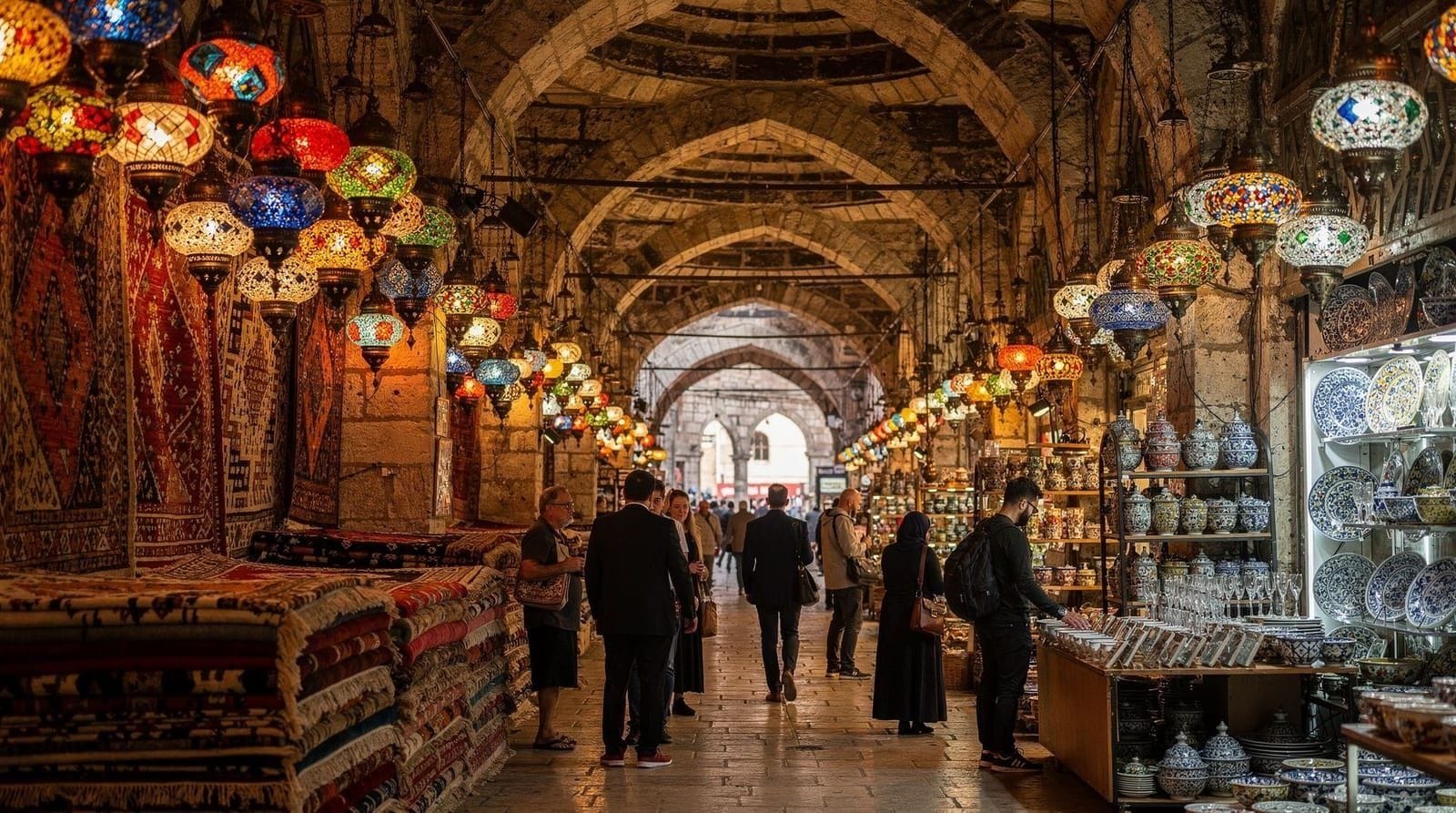
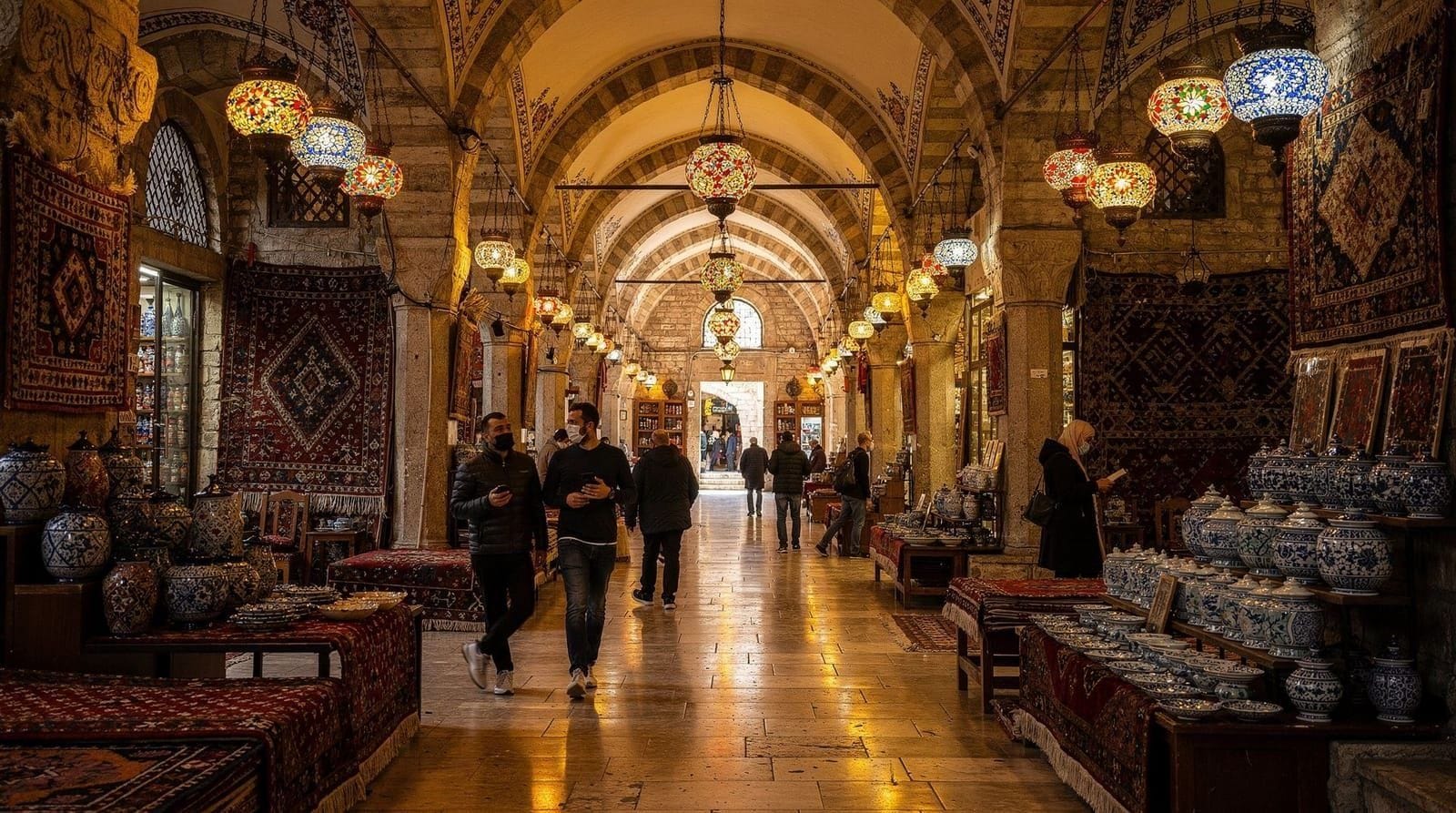
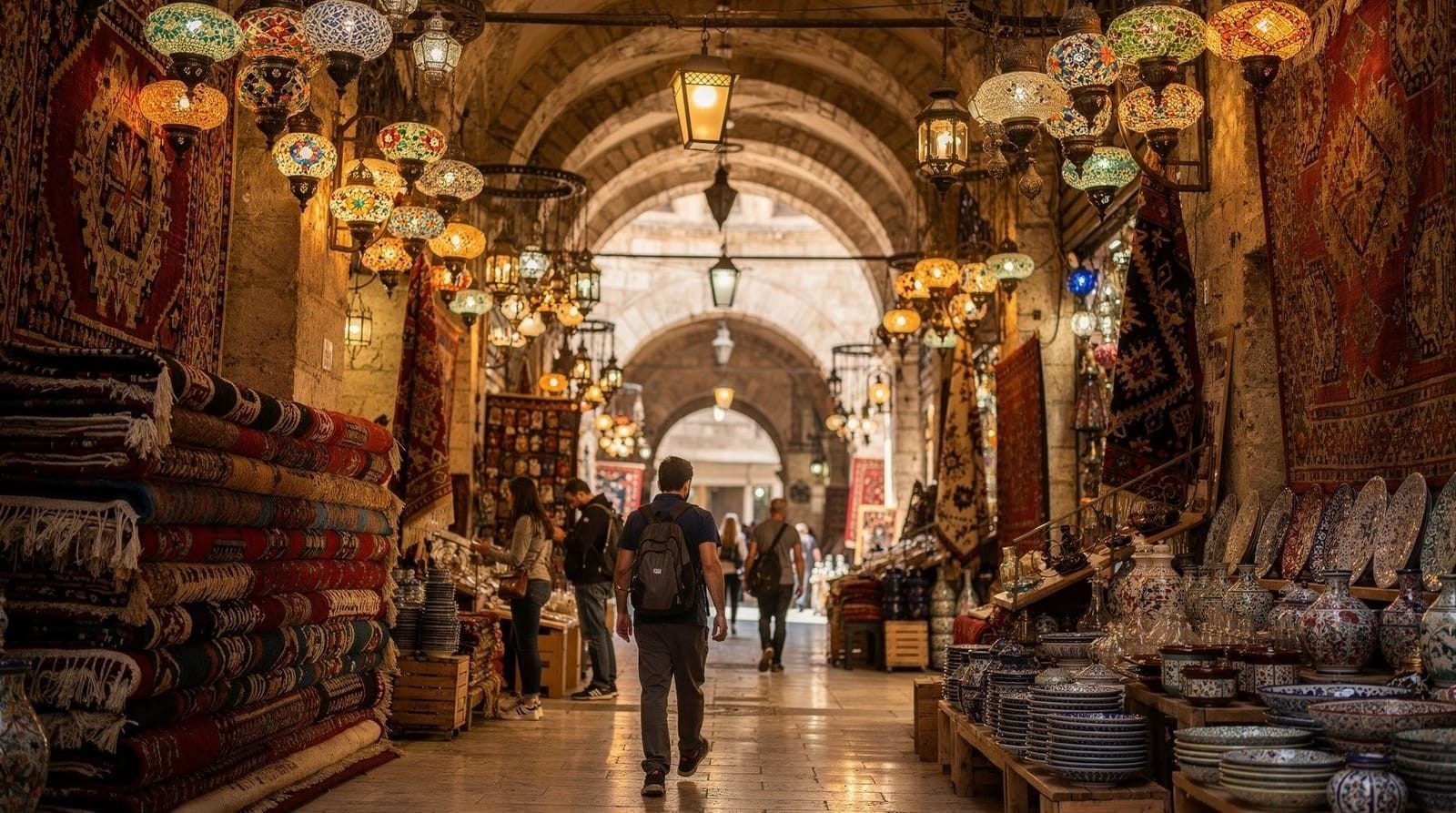
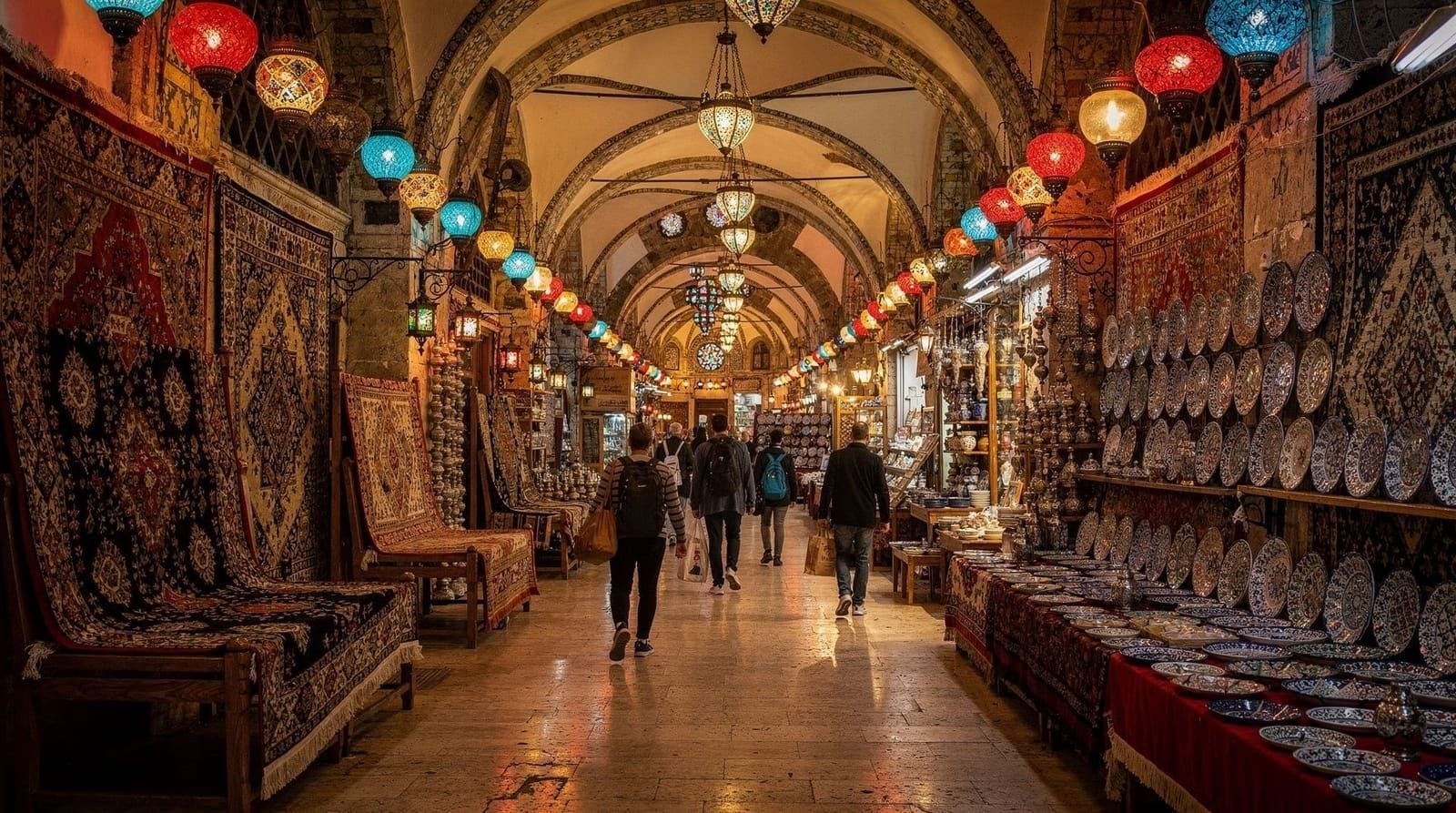
Mosaic glass lamps: The copper-frame, coloured-glass pendant lamps that have become iconic Istanbul souvenirs. Quality varies from beautiful hand-cut workshop pieces (expensive but excellent) to cheap factory versions. The inner Grand Bazaar has the best workshops, and a mosaic lamp-making workshop with Turkish delight and tea lets you make your own under a craftsman’s guidance rather than just buying one ready-made. A quality medium-sized lamp: 3,000–7,000 TRY (90–210 USD, mid-2025). Can be shipped.
Meerschaum pipes: Carved from sepiolite (a mineral mined near Eskişehir, Turkey) into figurative and decorative pipe shapes. Genuine meerschaum pipes are made in small workshops by skilled carvers — the better quality pieces are in the inner sections of the Grand Bazaar. Not everyone wants a pipe, but as an object, the craftsmanship is distinctive.
What to avoid
“Antique” items near tourist entrances: Artificially aged objects sold as Ottoman-era antiques are a consistent tourist market problem. Genuine antiques require knowledge to evaluate. If you’re interested in authentic antiques, shop in Çukurcuma (see the Istanbul shopping guide) with reputable dealers.
Synthetic “silk” carpets: The burn test tells you: a few pulled threads, real silk burns like hair (distinctive smell). Synthetic fibres burn like plastic. Any salesperson who objects to the burn test before purchase is worth walking away from.
Evil eye items in tourist zones: The nazar boncuğu (blue glass evil eye bead) is a genuine Turkish folk tradition. The mass-produced plastic versions near tourist sites are not. Genuine handblown glass nazar beads from Görece village near İzmir are available from specialty shops in Istanbul but not from the generic tourist stalls.
Airport purchases: Istanbul Airport (IST) has reasonable food options (Turkish delight, coffee) but the prices are 50–100% above what you’d pay in the city. If you’ve forgotten to shop and need last-minute gifts, the airport is fine; don’t rely on it.
Where to shop — quick reference
| What to buy | Where to find it | Price range |
|---|---|---|
| Lokum | Hacı Bekir near Grand Bazaar, İstiklal branch | 800–1,500 TRY/kg |
| Baklava | Karaköy Güllüoğlu (Rıhtım Caddesi) | 400–700 TRY / 500g |
| Saffron | Spice Bazaar inner stalls | 400–700 TRY/g |
| Isot pepper | Spice Bazaar or Kadıköy market | 100–200 TRY/100g |
| Turkish coffee | Mehmet Efendi, Tahtakale | 80–150 TRY/100g |
| Peştemal | Grand Bazaar textile shops, Karaköy boutiques | 300–600 TRY each |
| Signed ceramics | Inner Grand Bazaar streets | 1,500–6,000 TRY |
| Quality lamp | Grand Bazaar workshops | 3,000–7,000 TRY |
| Antiques | Çukurcuma neighbourhood | Varies |
| Designer fashion | Nişantaşı | High |
Bargaining — where it applies and where it doesn’t
Bargaining is expected in the Grand Bazaar’s craft and textile stalls, and in similar tourist-facing shops elsewhere in the city, but it does not apply everywhere. Fixed-price food specialists — Hacı Bekir, Karaköy Güllüoğlu, Mehmet Efendi — do not negotiate, and trying will just read as odd. Most Spice Bazaar stalls are similarly fixed-price for packaged goods, though loose spices sold by weight sometimes have room to move on larger quantities. For craft items where bargaining is normal, a realistic target is 20–30% below the first quoted price; walking away is the most effective negotiating tool you have. The full etiquette — opening moves, when to stop, how to read a shopkeeper who won’t budge — is in the bargaining in the bazaar guide.
Pairing shopping with food
Several of the best purchases in this guide double as things worth eating on the spot before you buy a packaged version to take home. The Turkish food guide and baklava and Turkish desserts guide cover what to try in person, and the Istanbul street food guide is useful if you want to graze the Spice Bazaar area between shops rather than sit down for a full meal. If souvenir spending is part of a wider trip budget, the Istanbul travel budget guide has realistic per-day figures to plan against.
Building a shopping route that makes sense
Souvenir shopping goes better when it is planned around where you already are, rather than treated as a separate errand. The two bazaars sit on the same tram line, so a single morning can cover both: start in the Grand Bazaar for textiles, ceramics and lamps while the stalls are quiet, then walk down toward the water for the Spice Bazaar and the coffee and tea shops nearby. Food purchases go last, so the baklava and lokum are not sitting in your bag through the warmest part of the day.
If your hotel is in the old city, the Sultanahmet area puts you within a short walk of the bazaar entrances, which makes it easy to go back to a shop you liked after thinking it over. That second visit is one of the best habits you can have here: a stall that still looks good after an hour away from the sales pitch is usually a safer buy than one you committed to on the spot. The where to stay guide and the Sultanahmet versus Beyoğlu comparison help you decide which base suits a shopping-heavy trip.
On the other side of the Golden Horn, the shops around Karaköy and İstiklal Caddesi feel quite different. They lean toward independent designers, textile boutiques and the occasional antique dealer, with less haggling and a calmer pace. The Karaköy neighbourhood guide and the Beyoğlu neighbourhood guide cover what else is worth stopping for along the way, so a shopping afternoon can double as a walk.
How to judge quality before you pay
Almost every category in this guide comes down to the same few habits. Look closely at the object rather than at the shopkeeper. Handle it, turn it over, and check the base, the seams and the finish. Ask where it was made and by whom; a seller who knows the workshop, the material and the technique will answer easily, while a vague answer is information in itself.
Compare before you buy. Seeing the same type of item in three or four places, from a tourist-facing stall to a specialist shop, teaches you quickly what good work looks like and what a fair opening price feels like. Prices you saw earlier in this guide are a rough orientation only, and they move with inflation, so treat them as a starting point and check the current ticket on the shelf.
Pay attention to pressure. A friendly offer of tea is part of normal hospitality in a Turkish shop and does not oblige you to buy, but a seller who rushes you, blocks the doorway or insists the price is only good today is not one to reward. The Istanbul tourist traps guide and the Istanbul scams guide describe the patterns to watch for, and the Turkish customs and etiquette guide explains why polite refusal is always acceptable.
Gifts by recipient
Choosing for specific people is often easier than choosing in general. For the colleague or neighbour who looked after your home, something edible is almost always right: a box of lokum, a tin of coffee or a bag of good tea is easy to carry, easy to share and does not clutter anyone’s shelves. For a friend who cooks, spices such as isot pepper and sumac are more interesting than anything with a logo on it, and the Turkish food guide will remind you what each is used for.
For someone who likes their home to feel personal, a signed ceramic piece, a handmade lamp or a peştemal that doubles as a throw is a better choice than a decorative object that will end up in a drawer. For yourself, consider buying one well-made thing rather than several small ones. A single piece you chose carefully tends to remind you of the trip long after a bag of trinkets has been forgotten. If you enjoy the coffee ritual, the Turkish coffee guide explains how to prepare what you bring home.
After the shopping — practical notes
Keep some cash on you for the stalls that do not take cards, and keep receipts for anything pricey or fragile, since a shop that arranges shipping will usually want to give you paperwork. Wrap breakable items carefully, as noted in the questions at the end of this page, and think about weight and space before you start buying, not after. If a purchase turns out to be larger than expected, shipping is often more sensible than squeezing it into a suitcase.
Finally, leave yourself a little slack in the day. The best finds here tend to come from wandering a side street, sitting down for a glass of çay and then looking again, rather than ticking items off a list. If you want a broader sense of what else deserves your time in the city, the Istanbul shopping guide and the what to skip in Istanbul guide are good companions to this one, and the top things to do in Istanbul will help you fit shopping around the major sights.
Guided shopping tours
For first-time visitors who want efficient, trap-free bazaar shopping with a local guide:
Frequently asked questions about What to buy in Istanbul — the honest souvenir
What is a peştemal and is it worth buying in Istanbul?
Is Turkish tea (çay) worth buying as a gift?
Is evil eye (nazar) jewellery authentic Turkish culture?
Is Turkish coffee worth buying as a souvenir?
What should I absolutely not buy in Istanbul?
Are Turkish carpets worth buying?
Should I bargain when buying souvenirs in Istanbul?
How do I get souvenirs home without them being damaged?
Top experiences
Bookable activities with verified prices and instant confirmation on GetYourGuide.