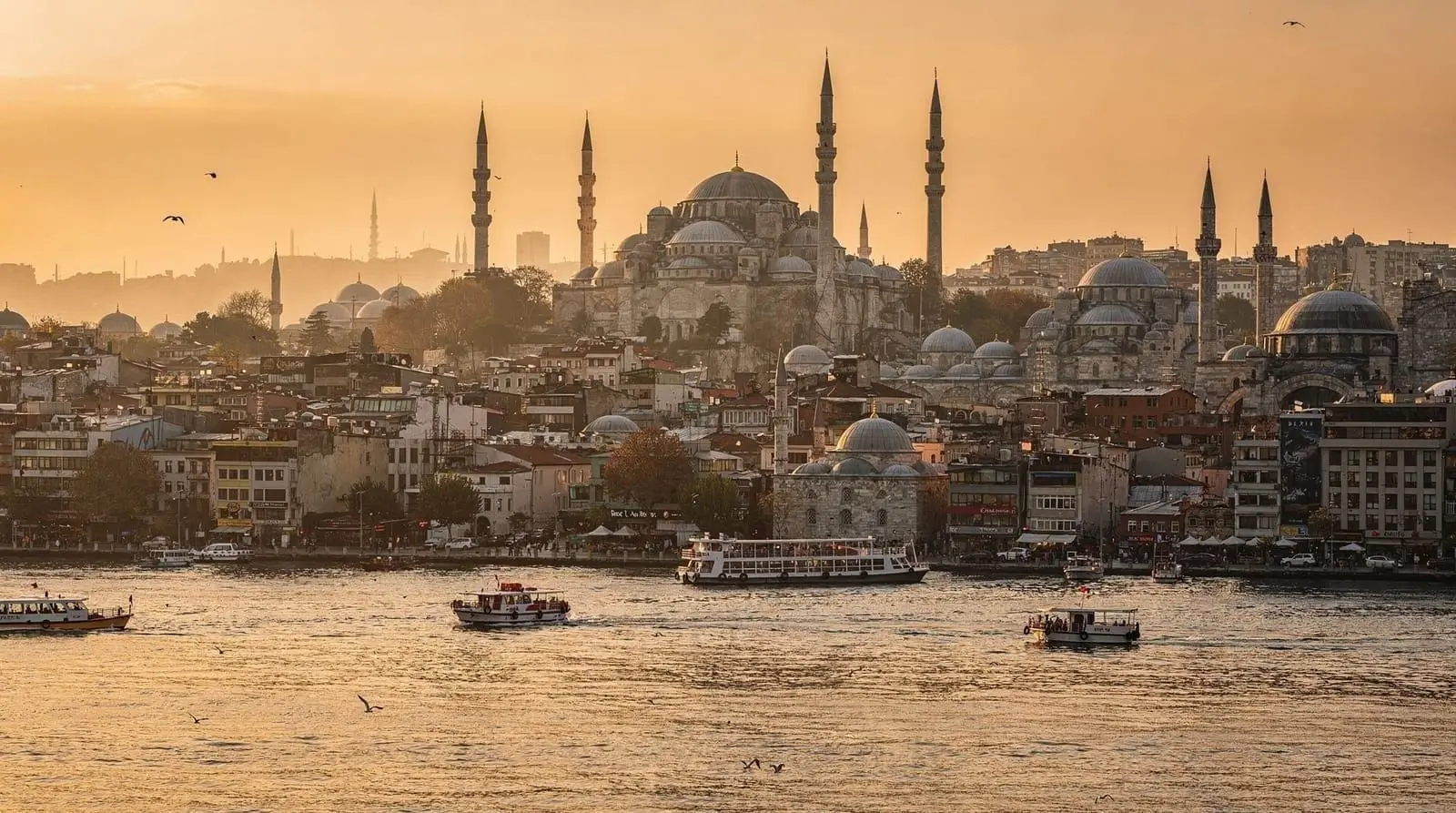
Hidden gems in Istanbul — beyond the main tourist circuit
Istanbul: Galata Tower, Chora Church, and Balat Tour
What are the hidden gems in Istanbul most tourists miss?
The Rüstem Pasha Mosque (extraordinary Iznik tiles, almost no tourists), the Chora Church in Edirnekapı (the finest Byzantine mosaics in existence), the Tahtakale wholesale market near the Spice Bazaar, the Kadıköy fish market, and the Fener Greek neighbourhood are consistently the most rewarding off-circuit discoveries.
The Istanbul most visitors never reach
The tourist circuit in Istanbul is genuinely excellent. Hagia Sophia, Topkapı, the Cistern, the Grand Bazaar — these are remarkable sites that justify any journey. But they represent maybe 5% of what the city contains, and the 95% is largely empty of organised tour groups.
| Where | Scattered — Fatih, Beyoğlu, Kadıköy, Üsküdar |
| Cost | Mostly free; small entry fees at a few sites |
| Time needed | Half a day per cluster, or spread across a trip |
| Getting there | Tram, ferry, taxi — no single fixed route |
| Best time | Weekday mornings, before tour groups reach the same spots |
This guide covers the specific places and experiences where the return on your time is highest — sites that match the famous ones for quality but require slightly more effort to find. For the standard sights first, see top things to do in Istanbul and the Istanbul bucket list — this guide picks up where those leave off.
Rüstem Pasha Mosque — the most overlooked masterpiece
Finding the Rüstem Pasha Mosque (Rüstem Paşa Camii) requires actually looking for it. It is on the second floor of a commercial building near the Spice Bazaar, with two stairwells from the street below — there are no signs visible from the main street. Ask locally or look for the narrow stairwell doors.
Once inside, the mosque — designed by Mimar Sinan in 1563 for Grand Vizier Rüstem Pasha — is covered wall to ceiling in 16th-century Iznik tiles. The tiles are in extraordinary condition: deep cobalt, turquoise, and tomato red in complex geometric and floral patterns. There are more tiles here, in better condition, than anywhere else in Istanbul, including the Blue Mosque. Virtually no tourists visit.
Free. Between prayer times. Worth finding. See Süleymaniye Mosque for context on the Sinan architect tradition.
Chora Church (Kariye Camii) — the finest Byzantine mosaics
The Chora Church (now Kariye Camii) in the Edirnekapı neighbourhood, near the old Byzantine land walls, contains the finest surviving Byzantine mosaics in the world. The 14th-century mosaics — funded by Grand Domestic Theodore Metochites — depict the life of the Virgin Mary and the life of Christ in a visual narrative that covers almost every surface of the outer and inner narthex.
The Anastasis fresco in the Parekklesia (side chapel) — Christ pulling Adam and Eve from their tombs, Satan broken and bound below — is considered one of the supreme achievements of Byzantine art. It makes the more famous mosaics of Ravenna look static in comparison.
The Chora was converted to a mosque in 2020 (like Hagia Sophia). This means it is free to enter the main prayer area; mosaic sections have an entry fee. Book tickets in advance. The neighbourhood, Edirnekapı, is genuinely off the tourist circuit — residential, local, and worth the 30-minute tram and walk or taxi from Sultanahmet. See Chora Church.
A guided tour combining the Galata Tower, Chora Church, and Balat neighbourhood is one of the better half-day options in the city for visitors who want to get off the Sultanahmet circuit.
Little Hagia Sophia (Küçük Ayasofya Camii) — the prototype
The Little Hagia Sophia Mosque (originally the Church of Saints Sergius and Bacchus, built 527–536 CE) was built four to seven years before the current Hagia Sophia and is considered a prototype for it. The two buildings share structural and decorative similarities. The Little Hagia Sophia is in the Küçük Ayasofya neighbourhood, about 10 minutes’ walk southwest of the Blue Mosque. It is now a functioning mosque — free to enter — and is almost always empty of tourists.
The interior preserves sections of original Greek-letter inscriptions in the frieze, and the overall scale and atmosphere are quite close to what Hagia Sophia’s first visitors would have encountered. Worth 30 minutes.
Balat and Fener — the lived-in old city
Balat (the old Jewish quarter) and Fener (the old Greek Orthodox quarter) sit on the Golden Horn north of the Grand Bazaar area. The streets here are steep, cobbled, and lined with crumbling 19th-century wooden houses painted in faded colours. There are independent coffee shops, antique dealers, and the Ecumenical Patriarchate of Constantinople in Fener (the historic seat of Eastern Orthodox Christianity, still active).
The neighbourhood became heavily Instagrammed around 2018–2020, and the famous colourful staircase (Mavi Kapı Merdiveni) now gets tour groups at midday. Go early — 9 am on a weekday — and walk the side streets rather than the obvious tourist route. See Balat and Fener.
A guided walking tour of Fener and Balat helps navigate the less obvious streets and provides context on the neighbourhood’s Byzantine and Ottoman-era layers.
Tahtakale — the wholesale quarter below the Spice Bazaar
The streets immediately surrounding the Spice Bazaar on the Eminönü side (the Tahtakale district) are the wholesale suppliers to the bazaar industry. Narrow streets piled with spices, dried fruit, nuts, cookware, and kitchen supplies, sold to restaurateurs and locals at prices significantly below the tourist-facing stalls inside the bazaar. Chaotic, atmospheric, and honest.
Not a tourist attraction — there are no signs, no English, no obvious entry point. Just walk from the Spice Bazaar toward the waterfront and turn into the first commercial side street. Twenty minutes here gives a clearer picture of Istanbul’s actual commerce than an hour in the tourist bazaars.
The Kadıköy fish market and Moda waterfront
The Asian side of Istanbul — specifically Kadıköy — is where the city’s creative, educated, secular middle class lives. The Tarihi Kadıköy Pazarı (historic market) in the streets south of the ferry terminal has a fish market, produce vendors, the best range of Turkish cheeses and pickles in the city, and street food that matches the Grand Bazaar area without the tourist markup.
After the market, walk south along the Moda coastline. The coastal path from Moda to Fenerbahçe along the Marmara shoreline is one of the best urban walking routes in Istanbul — quiet, local, cafés and breakfast spots every few hundred metres. See Kadıköy.
Cihangir — Beyoğlu’s bookshop neighbourhood
Cihangir is the neighbourhood immediately south of İstiklal Caddesi in Beyoğlu — a hilly area of 19th-century apartment buildings, independent cafés with cat populations, secondhand bookshops, and local restaurants. It has been a favourite of journalists, academics, and artists for decades and maintains a genuine neighbourhood character despite proximity to the tourist spine.
Robinson Crusoe 389 (a well-regarded bookshop on İstiklal) and the antique shops along Çukurcuma Caddesi (heading south from Cihangir) are worth finding.
Yıldız Park and the Bosphorus palace gardens
Yıldız Park in Beşiktaş (opposite Dolmabahçe Palace, toward the hills) is a large forested park with Ottoman-era pavilions scattered through it. The Şale Köşkü (palace guesthouse) was used for visiting royalty; some areas are open for tours. The park itself is free to walk through and excellent for escaping the city heat in summer.
The Çırağan Palace (now the Kempinski hotel) sits on the waterfront adjacent to the park — the exterior can be seen from the road and the waterfront walk is public. See Beşiktaş.
The old city walls — Theodosius Walls
The Theodosian Walls, built in the 5th century CE and extending 6.5 km across the western edge of the old city peninsula, are one of the most significant surviving examples of Byzantine military engineering anywhere. They protected Constantinople for over 1,000 years. Most tourists see a photograph of them and nothing more.
The wall can be walked along the outside (Topkapı neighbourhood, not the palace — the district named after the Gate of the Cannon) from Yedikule Fortress in the south to the Edirnekapı gate in the north. A two-hour walk along the outside perimeter passes tower gates, partially restored sections, and residential neighbourhoods that look almost unchanged from the 1960s. Yedikule Fortress itself (small entry fee) is one of the most dramatically situated Ottoman structures in the city. See History & culture.
The Asian Bosphorus villages
Between Üsküdar and the second Bosphorus Bridge on the Asian side, the waterfront villages of Kuzguncuk, Beylerbeyi, and Çengelköy have preserved wooden yalı (waterfront mansions) and the atmosphere of pre-metropolitan Istanbul. Beylerbeyi Palace — the summer palace of the sultans — is here, less visited than Dolmabahçe and worth a half day. The village streets are pleasant for walking; waterfront cafés are genuinely local.
Reachable by bus from Üsküdar or taxi. See Üsküdar.
For a structured tour of less-visited Istanbul sites, see Istanbul in 5 days. If your interest runs specifically to Byzantine-era architecture, the byzantine Istanbul guide ties several of these sites — the Chora Church, the Little Hagia Sophia, the Theodosian Walls — into a single thematic thread rather than treating them as scattered curiosities.
How to build a hidden-gems day without over-planning
Trying to hit every site in this guide in one day defeats the purpose — part of what makes these places rewarding is the unhurried pace. A realistic single day: Rüstem Pasha Mosque and Tahtakale in the morning (both near the Spice Bazaar), lunch in the area, then Balat and Fener in the early afternoon before the light fades on the coloured houses. Save Chora Church, the Asian-side villages, and Yıldız Park for a separate day — they are far enough apart that combining them with the Fatih cluster means a lot of transit time and less time actually looking at things.
| Cluster | Sites | Best paired with |
|---|---|---|
| Fatih waterfront | Rüstem Pasha Mosque, Tahtakale, Balat, Fener | A relaxed morning-to-afternoon walk |
| Edirnekapı / walls | Chora Church, Theodosian Walls, Yedikule | A dedicated half-day, less walkable to combine |
| Asian side | Kadıköy market, Moda, Üsküdar villages | A ferry-based day away from the old city |
| Beşiktaş / Bosphorus | Yıldız Park, Çırağan Palace exterior | An afternoon after Dolmabahçe Palace |
Pairing hidden gems with the famous sights
The best way to use this guide is as a counterweight to a conventional first itinerary. After a morning at Hagia Sophia or the Basilica Cistern, an afternoon in a quiet neighbourhood resets your attention. Crowds at the headline sites are tiring, and a street with nobody on it feels like a relief. If you are working out how much time you can spare, how many days in Istanbul and the Istanbul in 3 days itinerary show where a free half-day usually appears.
For the Fatih cluster, the Spice Bazaar guide and the Grand Bazaar shopping guide explain the commercial streets you will pass on the way, and bargaining in the bazaar helps if you stop to buy something in Tahtakale.
Getting around without a fixed route
Most of these places have no single obvious route, so a little preparation matters. The Istanbul public transport guide and the Istanbulkart guide cover the card that makes hopping between tram, bus and ferry painless, while the Istanbul ferries guide is the right starting point for the Asian side. A ferry crossing is part of the pleasure: you arrive in Kadıköy with a sense of having travelled somewhere, not just changed districts. The Asian side guide and the Kadıköy neighbourhood guide go deeper on what to do once you land.
Respect and etiquette at quiet sites
Several gems on this list are working mosques where nobody is expecting tourists, which changes how you should behave. Dress modestly, remove your shoes, speak quietly and keep clear of anyone praying. The mosque etiquette guide sets out what to expect, and free mosques in Istanbul lists other places you can enter without paying. Being a considerate visitor is the reason these places stay pleasant, and a quiet, unobtrusive visit tends to be welcomed.
Eating and resting along the way
Wandering is hungry work, and the best stops are usually unplanned. In Balat, Cihangir and Moda, the small cafés are the natural place to sit down and watch the street. For something more deliberate, the where to eat in Istanbul and Istanbul street food guide pages point to the dishes worth trying, and the Balat and Fener walking guide is the natural companion if you want a more detailed route through the old Greek and Jewish quarters. If you are staying nearby, where to stay in Istanbul helps you choose a base that puts several of these clusters within easy reach.
Frequently asked questions about Hidden gems in Istanbul — beyond the main tourist circuit
Which mosque in Istanbul is the most impressive but least visited?
Is the Chora Church worth visiting even for non-religious travellers?
What is the best hidden neighbourhood in Istanbul?
Are there hidden Ottoman sites in Istanbul most visitors miss?
What is the best way to find hidden gems?
Top experiences
Bookable activities with verified prices and instant confirmation on GetYourGuide.