Chora Church (Kariye Camii) — mosaics guide
Visit Istanbul's Chora Church (Kariye Camii) for the finest Byzantine mosaics in Turkey — tickets, location, opening hours, and what to see.
Istanbul: Chora Church (Kariye Camii) & Digital Audio Guide
Quick facts
- Built
- 4th century CE; mosaics 14th century
- Status
- Mosque since 2020; tourist access during non-prayer times
- Entry
- ~250–400 TRY (~7–12 USD, mid-2026)
- Time needed
- 60–90 minutes
- Getting here
- Taxi or bus from Sultanahmet (~20–30 minutes)
The Byzantine mosaics that survived everything
| Where | Edirnekapı, ~5 km from Sultanahmet |
| Cost | around 250–400 TRY (~7–12 USD, mid-2026) |
| Time needed | 60–90 minutes |
| Getting there | Taxi (15–20 min) or bus/tram (35–45 min) from Sultanahmet |
| Best time | Weekday mornings, before tour groups arrive mid-morning |
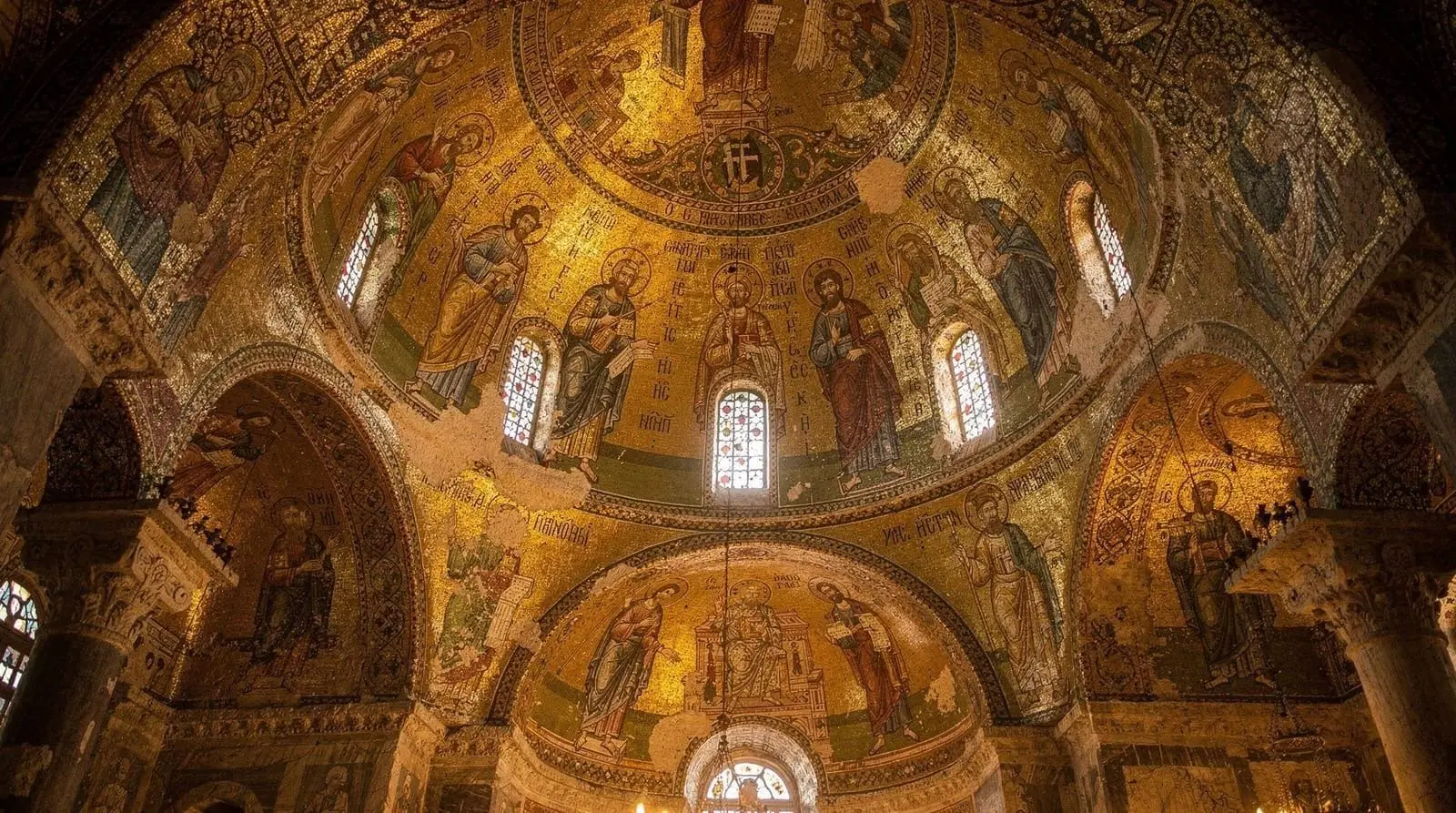
The Chora Church (now Kariye Camii) contains the finest surviving Byzantine mosaics anywhere in the world. That’s not promotional language — it’s the consistent assessment of art historians. The 14th-century mosaic cycles covering the two narthexes (outer and inner vestibules) and the parekklesion (burial chapel) represent Late Byzantine art at its most technically accomplished, with modeling, spatial depth, and narrative sophistication that would influence Western European painting for the next century.
They survived the Ottoman conversion in the 16th century because they were plastered over rather than destroyed. They survived as a museum from 1948 to 2020, when the Chora was one of the first buildings — along with Hagia Sophia — converted back to mosque use by Presidential decree.
As of 2026, it operates like Hagia Sophia: as an active mosque with a tourist section open outside prayer times. The mosaics remain accessible and (as of this review) have not been covered.
History of the building
The name “Chora” comes from the Greek meaning “in the countryside” (χώρα) — the original 4th-century monastery church was outside the city walls when it was founded. The current structure dates primarily from the 11th century, though the building was substantially rebuilt after an earthquake in 1077.
The mosaics and frescoes that give Chora its art-historical importance were funded and commissioned between 1315 and 1321 by Theodore Metochites, the Grand Logothetes (chief treasurer and minister) of Emperor Andronikos II. Metochites was both wealthy and intellectually distinguished — a philosopher, astronomer, and patron of what is called the Palaiologan Renaissance, the last flourishing of Byzantine culture before the Ottoman conquest.
The portrait of Metochites himself survives in the inner narthex, above the central door: he wears an elaborate hat and presents a model of the church to Christ — one of the most recognizable donor portraits in Byzantine art.
In 1453, after the Ottoman conquest, the church was converted to a mosque. The conversion under Grand Vizier Atik Ali Pasha happened sometime in the 1500s. The mosaics were plastered and the church was modified for Islamic use.
In 1948, the American Byzantine Institute (which had earlier worked on Hagia Sophia) undertook a multi-decade project to uncover, restore, and document the mosaics. The building became the Kariye Museum. In August 2020, it was converted to a mosque by Presidential decree, mirroring the Hagia Sophia conversion.
The mosaics: what to look for
The mosaics are organized into two large narrative cycles plus additional portraits.
Outer narthex (Esonarthex): A Life of the Virgin cycle, following sources from the apocryphal Gospel of the Pseudo-Matthew and the Protoevangelium of James. Scenes include the Annunciation to Anne, the birth and naming of the Virgin, her presentation at the Temple at age three, and the Annunciation. The compositional complexity — multiple figures in architectural settings, expressive gestures, spatial depth — is extraordinary for 14th-century work.
Inner narthex (Endothyron): A Life of Christ cycle and additional theological scenes. The Temptation of Christ, the Miracle at Cana, the Baptism, the Multiplication of Loaves. The Christ Pantocrator in the central dome above the entrance to the nave is the formal theological image.
The portrait of Theodore Metochites: Above the central door to the inner narthex, in a lunette. The detail of his hat and robe is exact; his expression is attentive. One of the finest patron portraits of the medieval period.
The Anastasis fresco in the parekklesion: The burial chapel (south of the main nave) contains a fresco rather than a mosaic — the Anastasis, showing Christ descending into Hades to pull Adam and Eve from their graves, flanked by kings and prophets. This is the defining image of the Byzantine Easter tradition and the visual standard against which other Byzantine compositions are often measured. The energy of the figures, the swirling garments, the compositional clarity — it’s genuinely one of the great works of medieval European painting.
Practical entry information
Status: Active mosque since 2020. Tourist access outside prayer times.
Entry fee: Approximately 250–400 TRY (~7–12 USD as of mid-2026). Book via GYG or at the entrance.
Prayer time closures: Same pattern as other mosques — five times daily, 30–60 minutes each.
Dress code: Standard mosque requirements — shoulders and knees covered, hair covered for women, shoes removed.
Photography: Permitted inside (as of mid-2026). Flash prohibited near the frescoes. The low light in the parekklesion requires patience with phone cameras.
Getting there: Chora is in the Edirnekapı neighborhood, near the Theodosian Land Walls. It’s not walkable from Sultanahmet in a reasonable time (it’s about 5 km).
- Taxi from Sultanahmet: 15–20 minutes, 150–250 TRY
- Tram T1 to Topkapı-Ulubatlı stop, then bus or walk: Allow 35–45 minutes total
- With a tour: Several tours combine Galata Tower, Chora, and Balat in a single route
Combining with other sites
Balat and Fener: The natural pairing — both are in the western districts along the Golden Horn, a 15-minute walk apart. Balat is the old Jewish quarter (now artists’ studios and colorful houses); Fener is the Greek Orthodox neighborhood with the Patriarchate and the Church of Pammakaristos (Fethiye Mosque).
A logical day: take a taxi to Chora (morning), spend 60–90 minutes, walk east through the land walls to Fener and Balat (30 minutes’ walk), explore the streets and have lunch, then tram or taxi back to Sultanahmet.
Süleymaniye Mosque: Thematically, pairing the finest Byzantine mosaic work (Chora) with the finest Ottoman mosque architecture (Süleymaniye) on the same day gives you a compressed survey of Istanbul’s two major architectural traditions. Both are free or low-cost. Logistically, they’re 3–4 km apart; taxi between them.
The Theodosian Walls: Chora is near the land walls, and if you walk north or south from the church you can see sections of the walls that are well-preserved. The Edirnekapı (Edirne Gate) is a few hundred meters from the church. No ticket, always open.
Why it’s worth the effort
The main Sultanahmet sites — Hagia Sophia, the Blue Mosque, Topkapı — are exceptional and worth their crowds. But Chora offers something different: a smaller space, manageable visitor numbers, and mosaics that reward sustained looking in a way that the Hagia Sophia experience (busy, hot, queued) sometimes doesn’t allow.
If Byzantine art specifically interests you, Chora is mandatory. If you’re looking for a respite from peak-tourist crowds with something genuinely world-class to see, Chora is the right answer.
The journey — taxi or bus through residential Istanbul neighborhoods away from the tourist circuit — is also interesting in itself.
Theodore Metochites and the Palaiologan Renaissance
The person who funded the Chora’s decoration, Theodore Metochites, is worth knowing about. He was the Byzantine Empire’s chief minister under Andronikos II — responsible for the state finances and a diplomat of considerable skill. He was also a scholar who wrote extensively on astronomy, philosophy, and rhetoric. His personal library was donated to the Chora.
The mosaics he commissioned weren’t just pious decoration. They were expressions of a sophisticated intellectual tradition — the Palaiologan Renaissance — that was deliberately engaging with classical Greek ideas about beauty, form, and representation. The modeling of faces in the Deësis mosaic and the spatial depth in the Life of the Virgin cycle are the visual evidence of that engagement.
When Constantinople fell in 1453, Metochites’ legacy was already a century and a half old. His building survived because the Ottomans recognized its value. When the mosaics were finally uncovered and restored in the 20th century, they became evidence of what the Byzantine tradition had achieved just before it was extinguished.
The neighborhood: Edirnekapı and the land walls
The Chora sits close to the Theodosian Land Walls — the triple walls built by Theodosius II in 413 CE that protected Constantinople for over a thousand years and are one of the great surviving ancient fortifications in the world.
The Edirnekapı (Edirne Gate) is a few hundred meters from the church — one of the best-preserved of the main gates, with substantial sections of the inner and outer wall intact on both sides. Walking along the wall to the south for 10–15 minutes passes towers, moats (mostly dry), and sections of curtain wall at varying states of preservation.
The land walls extend for 6.5 km from the Golden Horn to the Sea of Marmara. They’re not a conventional “attraction” — there’s no entrance, no ticket, no guided circuit — but they’re accessible and free, and the scale of the original fortification is striking when seen in person.
From Edirnekapı, walking north along the walls toward the Golden Horn passes through quiet residential streets (the Ayvansaray neighborhood) and eventually reaches the waterfront near Balat and Fener. This is a genuine Istanbul neighborhood walk, not a tourist route.
The church’s current condition
As of mid-2026:
- The main mosaic cycles in the two narthexes are intact and accessible
- The Anastasis fresco in the parekklesion is accessible
- The building is maintained as an active mosque with tourist access outside prayer times
- Entry fees and hours may have changed — check current information at the official ticket site or via GYG before visiting
The most significant concern after the 2020 reconversion was whether the mosaics would be covered or restricted. As of this writing, they have not been. The situation at Hagia Sophia (where mosaics remain accessible in the tourist section) appears to be the model for Chora as well.
The Pammakaristos Church (Fethiye Mosque) — a nearby alternative
For visitors with a deep interest in Byzantine religious art, the Church of the Pammakaristos (now Fethiye Camii, or Fethiye Mosque) is a short walk from Fener and Balat and contains a smaller but excellent set of 14th-century mosaics.
It served as the Ecumenical Patriarchate of Constantinople from 1456 to 1586. The parekklesion (south chapel) was converted to a museum in 1945 and contains the best preserved mosaics. Entry is modest.
The Pammakaristos is less well-known than Chora and sees very few tourists. The mosaics are technically accomplished and the building has a layered history comparable to Chora’s in complexity. For a day focused on Byzantine religious art in Istanbul’s western districts, Chora in the morning and Pammakaristos in the afternoon — with Balat and Fener between them — is the most comprehensive program.
| Chora Church (Kariye) | Pammakaristos (Fethiye Camii) | |
|---|---|---|
| Fame | The finest surviving Byzantine mosaics | Lesser-known, comparable quality |
| Crowds | Moderate, busier by mid-morning | Very quiet, rarely crowded |
| Entry | ~250–400 TRY | Modest, lower cost |
| Time needed | 60–90 minutes | 30–45 minutes |
| Best for | A first visit to Byzantine mosaic art | A deeper second stop for enthusiasts |
What to read before visiting
Visitors who read even briefly about Byzantine mosaic technique and the iconographic program beforehand report significantly better experiences. Recommended preparation:
The mosaic cycles follow specific theological programs (the Life of the Virgin and Life of Christ) drawn from canonical and apocryphal sources. The scenes have specific meanings within Byzantine theological tradition that aren’t always obvious from looking. Knowing which episode is depicted in each lunette transforms the visit from “beautiful images” to “a comprehensible narrative.”
A single English-language monograph on Byzantine mosaics, or even the detailed Wikipedia article on the Chora Church, provides enough context for a well-informed visit.
Practical visitor information in detail
Ticket options: Available at the entrance or via this Chora Mosque entry ticket, which provides a digital audio guide in addition to entry. The audio guide is particularly useful here because the iconographic program is dense.
How to use the audio guide: The guide walks you through the mosaic cycles room by room. The Life of the Virgin (outer narthex) and Life of Christ (inner narthex) are the two main cycles; the guide identifies each scene and its source text. Follow it in sequence rather than wandering — the narrative cycles have a deliberate order.
Lighting inside: The narthexes have low natural lighting. The mosaics are lit, but phone cameras without good low-light capability can struggle. A camera with a wide aperture or a phone with good night mode will produce better results. Dedicated flash is restricted.
Best viewing times: Early morning on a weekday, before tour groups arrive. The Chora sees far fewer visitors than Hagia Sophia or Topkapı Palace, but it does get group tours by mid-morning.
The parekklesion fresco: Slightly darker than the mosaic narthexes. Take time to let your eyes adjust when you enter from the brighter narthex. The full Anastasis composition — Christ in white at center, Adam and Eve pulled from their tombs, kings and prophets on either side — needs to be seen as a whole before the details are studied.
After your visit: The streets of Edirnekapı around the church have a few small cafés and local restaurants. This is a residential neighborhood with very little tourist infrastructure; expect basic options. Walk toward the land walls for 10 minutes and you’re in a genuinely local Istanbul neighborhood.
Why Chora doesn’t combine with the Grand Bazaar circuit
Logistically, Chora doesn’t pair well with a single Sultanahmet morning. It sits in Edirnekapı, 5 km from the old city core, while the Grand Bazaar, Hagia Sophia and the Blue Mosque are all clustered within a 15-minute walk of each other. Trying to squeeze Chora into the same half-day as the central Sultanahmet sites usually means rushing one or the other. The better plan: treat the western districts — Chora, Balat and Fener, and the Theodosian land walls — as their own dedicated half-day, entirely separate from the Sultanahmet and Grand Bazaar circuit.
For art historians and serious visitors
The standard academic reference on the Chora’s decoration is the four-volume study by Paul Underwood, published by the Princeton Byzantine Center (1966). It remains the definitive scholarly treatment of the mosaics. Portions of it are accessible online.
More accessible for general visitors: Robert Ousterhout’s “The Art of the Kariye Camii” is a shorter, accessible treatment that covers the main cycles and the building’s history.
The conservation challenges since 2020 — maintaining mosaic integrity in an actively humid environment, managing the temperature changes from worship use — are subjects of ongoing scholarly concern. Reports from the Byzantine Studies community continue to be published as the situation develops.
Frequently asked questions about Chora Church (Kariye Camii)
What is the Chora Church?
The Chora Church (Kariye Camii) is a 14th-century Byzantine church in Istanbul’s Edirnekapı neighborhood, containing the finest surviving Byzantine mosaic cycles and a major Anastasis fresco. It was converted to a mosque in the 16th century, used as a museum from 1948 to 2020, and returned to active mosque use in 2020.
Are the mosaics still visible after the 2020 conversion to a mosque?
As of mid-2026, yes — the mosaics remain visible in the tourist sections of the building. Entry is during non-prayer hours, with the same conditions as Hagia Sophia. This situation may change; verify before visiting.
How far is Chora Church from Sultanahmet?
Approximately 5 km, not walkable in a typical tourist schedule. Allow 15–20 minutes by taxi (150–250 TRY). There is a public bus option but it takes 35–45 minutes with connections.
Is Chora Church worth visiting if I’m not particularly interested in Byzantine art?
The mosaics are extraordinary even to non-specialists — the faces are expressive, the colors vivid, and the narrative scenes are visually compelling without art-historical knowledge. The parekklesion fresco (Anastasis) is striking to any visitor. Even a general Istanbul tourist benefits from seeing them if they have half a day.
Can I combine Chora Church with the Grand Bazaar or Sultanahmet?
Not efficiently on foot. The best combination is with Balat and Fener to the east (walkable from Chora), and with Süleymaniye Mosque by taxi or bus. For an Istanbul itinerary, allocate a dedicated half-day to the western districts (Chora + Balat + Fener) rather than trying to combine it with Sultanahmet in the same morning.
Top experiences
Bookable activities with verified prices and instant confirmation on GetYourGuide.
