Golden Horn cruise guide — Istanbul's overlooked waterway
Istanbul: Golden Horn & Bosphorus Day Cruise
Is a Golden Horn cruise worth doing alongside a Bosphorus cruise?
They're complementary rather than redundant. The Golden Horn is a narrower, slower waterway flanked by the historic Byzantine and Ottoman districts of Fener, Balat, and Eyüp. It's less visually dramatic than the Bosphorus but historically richer. Dedicated Golden Horn cruises run 1–1.5 hours and cost 200–400 TRY (6–12 USD, mid-2025). Many Bosphorus combo tours include a short Golden Horn segment.
Understanding the Golden Horn
The Bosphorus gets all the attention, but the Golden Horn is where Istanbul’s deepest history runs. This 7-kilometre estuary was the protected harbour that allowed Constantinople to resist sieges for centuries. Its northern shore sheltered Galata — the Genoese merchant colony that became the foundation of modern Beyoğlu/İstiklal. Its southern shore still holds the Fener and Balat districts — the oldest continuously inhabited Jewish and Greek Orthodox neighbourhoods in the city.
Seeing the Golden Horn from the water gives a perspective unavailable from the steep streets of Balat or the Galata Bridge. The waterway is narrow enough that you see both banks simultaneously — Byzantine land walls on one side, colourful Ottoman-era houses on the other.
| Where | Eminönü to Eyüp, a 7 km estuary off the Bosphorus |
| Cost | Under 100 TRY round-trip (public ferry) to 450 TRY (guided cruise) |
| Time needed | 1-1.5 hrs dedicated cruise; 3-4 hrs combined with the Bosphorus |
| Getting there | Tram T1 to Eminönü, or Marmaray to Sirkeci |
| Best time | April-May or September-October for light and crowds |
What you actually see from the water
From Eminönü heading north (upstream)
Galata Bridge: The first thing you pass — a double-deck bridge with a lower level lined with fishing rods casting into the Golden Horn. It’s an Istanbul institution: fishermen casting from the bridge at dusk, ferries threading between the dangling lines. The view from the water, looking back toward the bridge with the Galata Tower rising behind it, is one of the city’s best compositions.
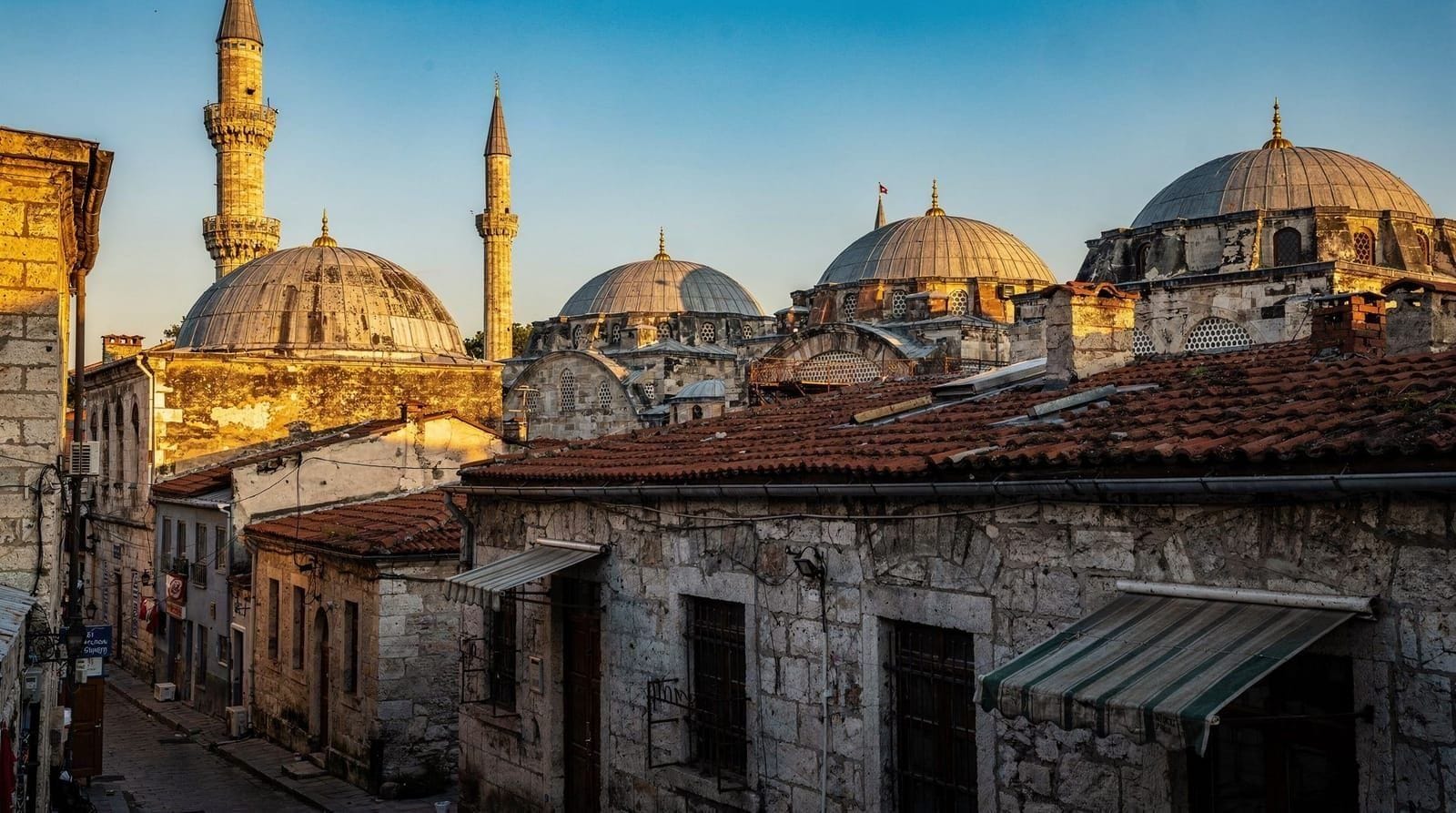
Fener (Phanar): The Greek Orthodox Patriarchate district. The Ecumenical Patriarchate is still headquartered in a modest building in Fener, making it the spiritual centre of Orthodox Christianity worldwide. The red-brick Greek Orthodox college (now closed) stands on the hill. From the water, you see the characteristic wooden houses of the district — many recently restored.
Balat: The historic Jewish quarter of Istanbul, now a mix of Jewish, Greek, Armenian, and Muslim communities. The colourful painted facades of Balat houses are best appreciated from the waterway — the steep streets don’t give a continuous view. The neighbourhood is covered in depth in the Balat and Fener walking guide.
Byzantine land walls: The Blachernae section of the Byzantine land walls runs near the head of the Golden Horn. These are the walls that withstood dozens of sieges before 1453. From the water, you see their scale and elevation differently than from the street.
Eyüp: At the head of the estuary, Eyüp Sultan Mosque (also called Eyüp Sultan Camii) is one of Islam’s most sacred sites in Istanbul — the burial place of Abu Ayyub al-Ansari, a companion of the Prophet Muhammad. Ottoman sultans were girded with the sword of Osman here as the symbolic equivalent of coronation. It’s genuinely less touristy than the Blue Mosque or Süleymaniye Mosque and worth a visit if you’re interested in Islamic heritage beyond the Sultanahmet circuit.
Cruise options for the Golden Horn
Public ferry — the frugal choice
The Haliç public ferry from Eminönü stops at Fener, Balat, and Eyüp. Round-trip on an İstanbulkart costs under 100 TRY (under 3 USD). Frequency varies by season — check current Şehir Hatları schedules. The ferry has outdoor deck seating. This is the most authentic way to experience the Golden Horn: alongside commuters and locals, not in a dedicated tourist boat.
Limitation: The ferry doesn’t provide commentary, and departure times may not align with golden light for photography.
Guided Golden Horn cruise
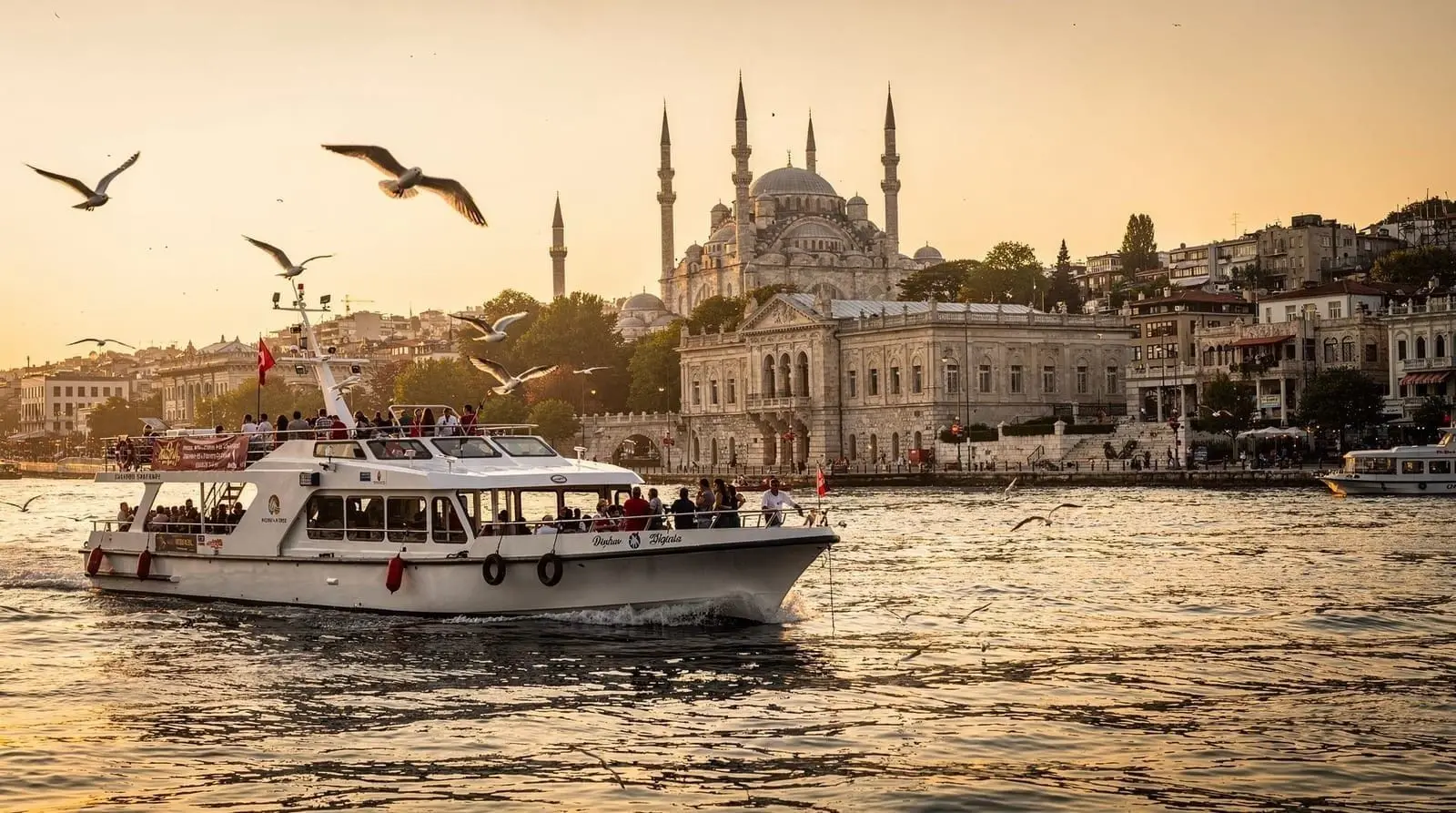
Dedicated tour boats offer a 1–1.5 hour tour of the Golden Horn with audio guide or live commentary. Some depart from Eminönü; others include a pier at Karaköy or Kabataş — the Bosphorus and Golden Horn cruise from the Kabataş pier runs as either a daytime or sunset departure. Price: 250–450 TRY per person (8–14 USD, mid-2025).
Combination Bosphorus and Golden Horn tour
A 3–4 hour tour covering both waterways. Typically does the lower Bosphorus first (passing Dolmabahçe, Ortaköy, the bridges), then returns via the Golden Horn. This is the most complete single water-based experience of Istanbul’s geography.
For the longer combination tour with audio commentary:
How the Golden Horn compares to the Bosphorus
| Factor | Bosphorus | Golden Horn |
|---|---|---|
| Width | 700m–3.4km | 50–600m (narrower) |
| Character | Open strait, international shipping | Enclosed estuary, local traffic |
| Landmarks | Palaces, bridges, suspension spans | Churches, mosques, Byzantine walls, colourful houses |
| Time needed | 2–6 hours | 1–1.5 hours |
| Drama/views | Higher — wide vistas, larger structures | Lower — intimate, historically rich |
| Photography appeal | Sunsets, bridges, palaces | Architecture, street life from water level |
The Bosphorus wins on visual drama and scale. The Golden Horn wins on historical density and the feeling of slipping into a less-visited Istanbul.
Connecting the Golden Horn visit with walking in Balat
The best sequence for most visitors: take the public ferry or a short cruise to Fener or Balat, disembark, and spend 2–3 hours walking the streets before the afternoon crowds arrive. Then catch the ferry back to Eminönü.
The Balat and Fener walking guide gives a street-level routing that complements the on-water approach. Key stops include the Fener Greek Patriarchate, the Bulgarian Iron Church (Sveti Stefan — a cast-iron church shipped from Vienna), the Ahrida Synagogue (visits by appointment), and Dersaadet restaurant on the waterfront for a lunch stop.
Getting to the Golden Horn piers
Eminönü: Tram T1 (stop: Eminönü), Marmaray train (stop: Sirkeci). The Haliç ferry terminal is the short walk east of Galata Bridge on the southern side. Tour boat operators are typically at the Galata Bridge northern quay or between the bridge and the Karaköy area.
Karaköy: If you’re staying in Karaköy or Beyoğlu, several operators depart from Karaköy pier — a 5-minute walk from Galata Bridge. Check your specific operator’s departure point.
Planning the Golden Horn in a wider Istanbul itinerary
The Golden Horn fits naturally into an old-city afternoon: morning at Hagia Sophia and Topkapı Palace, lunch near Eminönü (Hamdi restaurant does solid traditional food), afternoon ferry to Balat for walking, return to Karaköy for dinner.
The Istanbul 3-day itinerary builds the Golden Horn and Balat segment into day two. The Byzantine Istanbul guide provides the historical context for the land walls and the Fener churches.
Reading the waterway as you go
The Golden Horn rewards a slow look. Because the estuary is enclosed, the water is calmer than on the open strait, and the boat’s pace makes it easy to pick out details that blur past on a faster Bosphorus crossing. Pick a seat on the deck rather than inside, and keep switching sides: the two banks tell different stories. One side shows the layered Byzantine and Ottoman past of the old city, the other the merchant heritage of Galata and the streets that grew into Karaköy and Beyoğlu.
It also helps to know the context before boarding. The Byzantine Istanbul guide explains why this harbour mattered so much to Constantinople, and the Ottoman Istanbul guide picks up the story after the conquest, when the shores filled with warehouses, workshops and neighbourhood mosques. Ten minutes of reading turns a pleasant boat ride into a legible piece of the city.
Photography and light on the Golden Horn
The estuary suits architecture and street-life shots more than sweeping panoramas. Late morning and afternoon light tends to flatter the painted facades of Balat and the stonework of the old walls, while the view back toward the bridge and the tower is a classic composition from the stern. Keep a little distance from the rail when other passengers crowd in, and do not expect the wide, dramatic skyline frames that the Bosphorus offers. For those, the Bosphorus sunset cruise guide is the better companion.
If photography is a main goal of your Istanbul trip, the most Instagrammable spots in Istanbul and the best views in Istanbul pages help you decide where the Golden Horn fits among the other viewpoints.
Combining the cruise with the rest of the old city
A Golden Horn outing slots comfortably between bigger sights, because the pier is close to several of them. Before boarding, you can browse the Spice Bazaar beside the water and the nearby New Mosque at Eminönü, both a short walk from the departure area. After a morning among the domes of Sultanahmet, a boat is a restful way to change pace without needing a taxi.
For travellers building a longer stay, the Istanbul 2-day itinerary and the Istanbul in one day page show how a water segment can balance a day of museums and mosques. Families will find the boat format easy, and the Istanbul with kids guide covers what else keeps younger travellers engaged.
Getting the most from the public ferry
The public ferry is the simplest way to experience the estuary like a local. You tap in with an İstanbulkart, find a spot on the outer deck, and watch the stops go by. If you are new to the card, the İstanbulkart guide explains how to get and top it up, and the Istanbul ferries guide covers how the wider ferry network works. Since service patterns change, it is worth checking the current timetable on the day rather than relying on a fixed plan.
Plan your return before you disembark. If you intend to walk through Balat, decide in advance whether you will come back by ferry, tram or on foot, so you are not rushing at the end of an enjoyable afternoon. The getting around Istanbul guide lays out the options.
Extending the outing to Eyüp
Eyüp is the natural end point of the trip, and it feels very different from the busy centre. Take time to walk among the tombs and courtyards, and treat the visit as a spiritual place first and a sightseeing stop second. Dress modestly and follow the guidance in the mosque etiquette guide. The Eyüp Sultan Mosque guide goes into the site in detail, and the hilltop café mentioned in the FAQ is a calm place to rest before heading back down to the water.
Which option actually suits you
If your main goal is simply to see the Golden Horn and you’re comfortable without commentary, the public ferry is genuinely the better choice for most visitors — it’s a fraction of the cost of a dedicated cruise, runs alongside real commuters rather than tourists, and stops directly at Fener, Balat, and Eyüp so you can hop off and explore rather than just looking from the deck.
A dedicated guided cruise earns its higher price mainly through commentary — useful if you want the Byzantine and Ottoman history narrated in real time rather than reading about it afterward — and through the flexibility of choosing your own departure time rather than working around ferry schedules. The combined Bosphorus-and-Golden-Horn tour is the right call only if you haven’t done a Bosphorus cruise separately and want both waterways covered in one booking; if you’ve already done a dedicated Bosphorus cruise, a short Golden Horn add-on (ferry or short cruise) is more efficient than paying for the combined route twice.
Frequently asked questions about Golden Horn cruise guide — Istanbul's overlooked waterway
What is the Golden Horn?
What do you see on a Golden Horn cruise?
Can I take the public ferry on the Golden Horn?
Is the Golden Horn the same as the Bosphorus?
How long is a typical Golden Horn cruise?
Is Eyüp worth visiting from the Golden Horn cruise?
Top experiences
Bookable activities with verified prices and instant confirmation on GetYourGuide.