Free mosques in Istanbul
Istanbul: Hagia Sophia, Blue Mosque, Suleymaniye Mosque Tour
Are Istanbul's mosques free to enter?
Yes — all active mosques in Istanbul are free to visit, including the Blue Mosque, Süleymaniye, New Mosque, and Eyüp Sultan. No entry ticket exists. Anyone asking for money at the door is running a scam. Visiting during prayer times is the only time access is temporarily restricted.
Every major Istanbul mosque is free
This seems like it shouldn’t need its own guide, but the frequency with which tourists are charged fake “entrance fees” at Istanbul’s mosques makes it necessary to state clearly: no Istanbul mosque charges admission. Not the Blue Mosque. Not Süleymaniye. Not the New Mosque. Not Eyüp Sultan.
The operating budget of Istanbul’s mosques comes from the Turkish Directorate of Religious Affairs (Diyanet İşleri Başkanlığı) and from private religious foundations (vakıf), not from tourist admission.
If you are asked to pay any fee to enter a mosque — at the door, by someone in official-looking clothing, through a ticket booth — this is a scam. Walk past.
| Cost | Free — every active mosque in Istanbul, no exceptions |
| Dress code | Shoulders and knees covered; women cover hair; shoes off |
| Time needed | 20-45 minutes per mosque, outside prayer times |
| Best time | Between prayer times; avoid Friday midday (Cuma namazı) |
| Booking | Never required — all mosques are free walk-in access |
Major free mosques to visit
Blue Mosque (Sultan Ahmed Camii)
The most famous mosque on the tourist circuit, the most frequently scammed. Location: Sultanahmet Square, directly facing the Hippodrome.
Free to enter. No ticket. No reservation. The tourist entrance is the marked visitor entrance on the southeast side of the mosque courtyard — not the main worshipper entrance. Outside prayer times, the queue moves quickly.
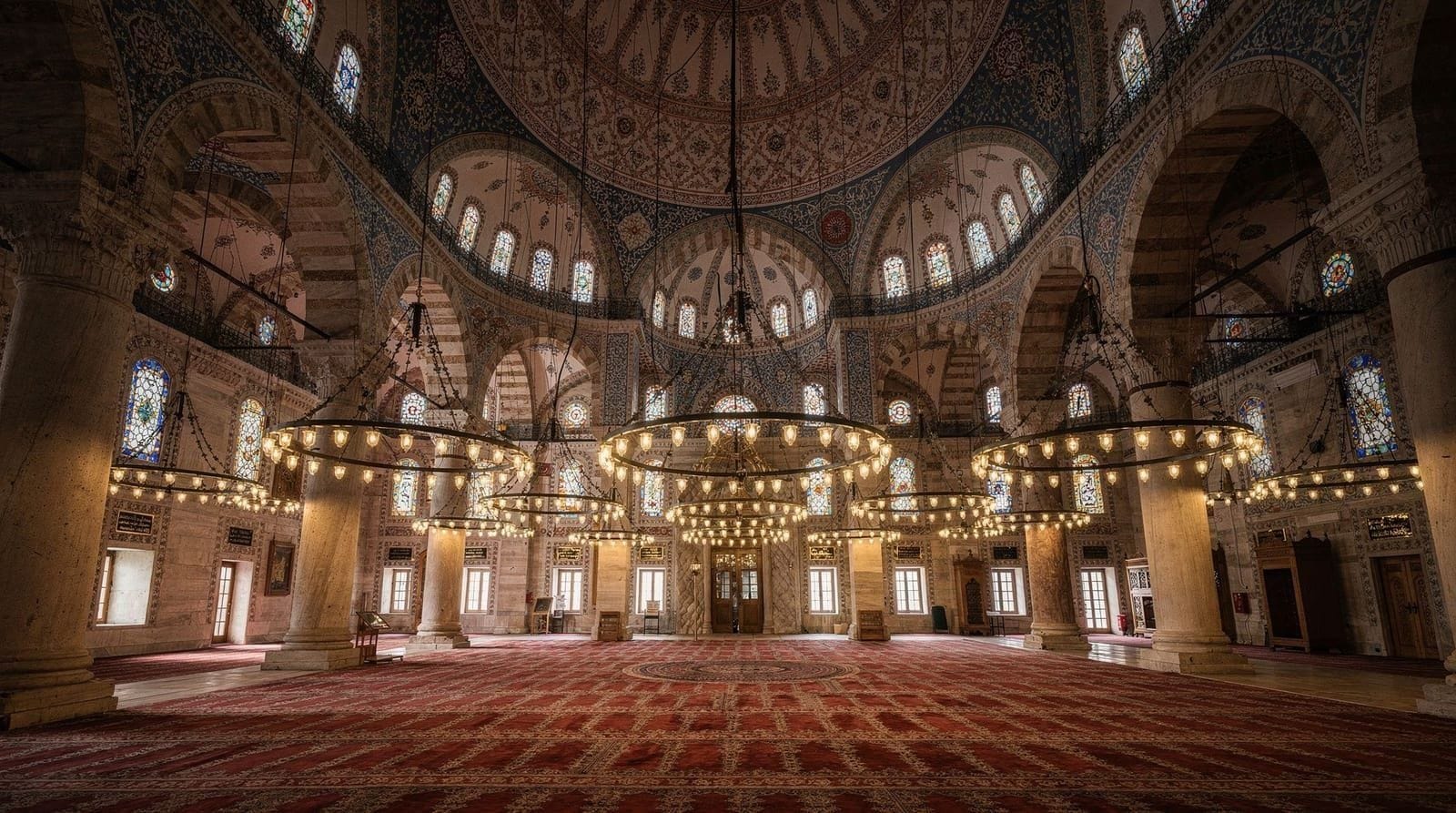
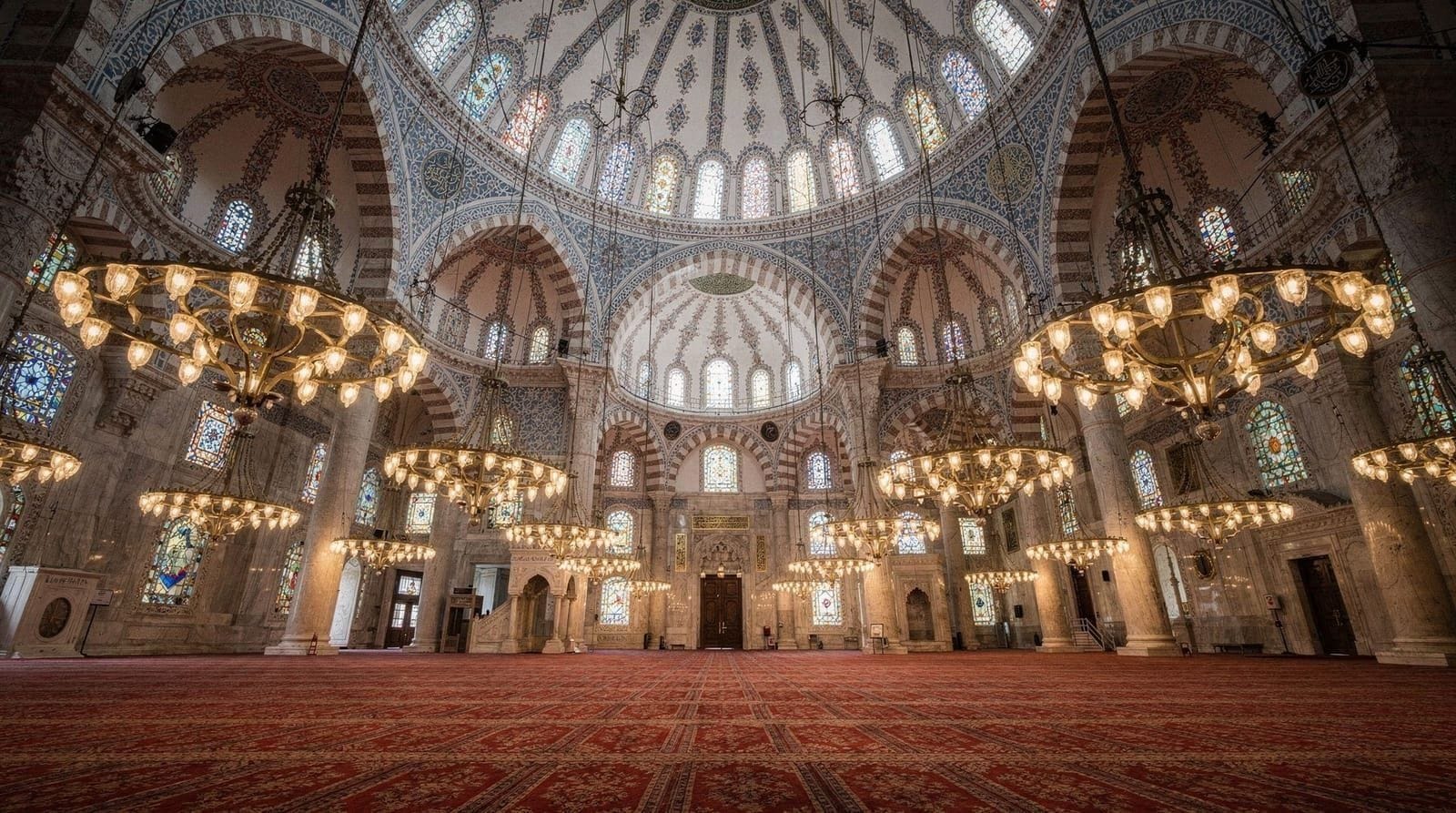
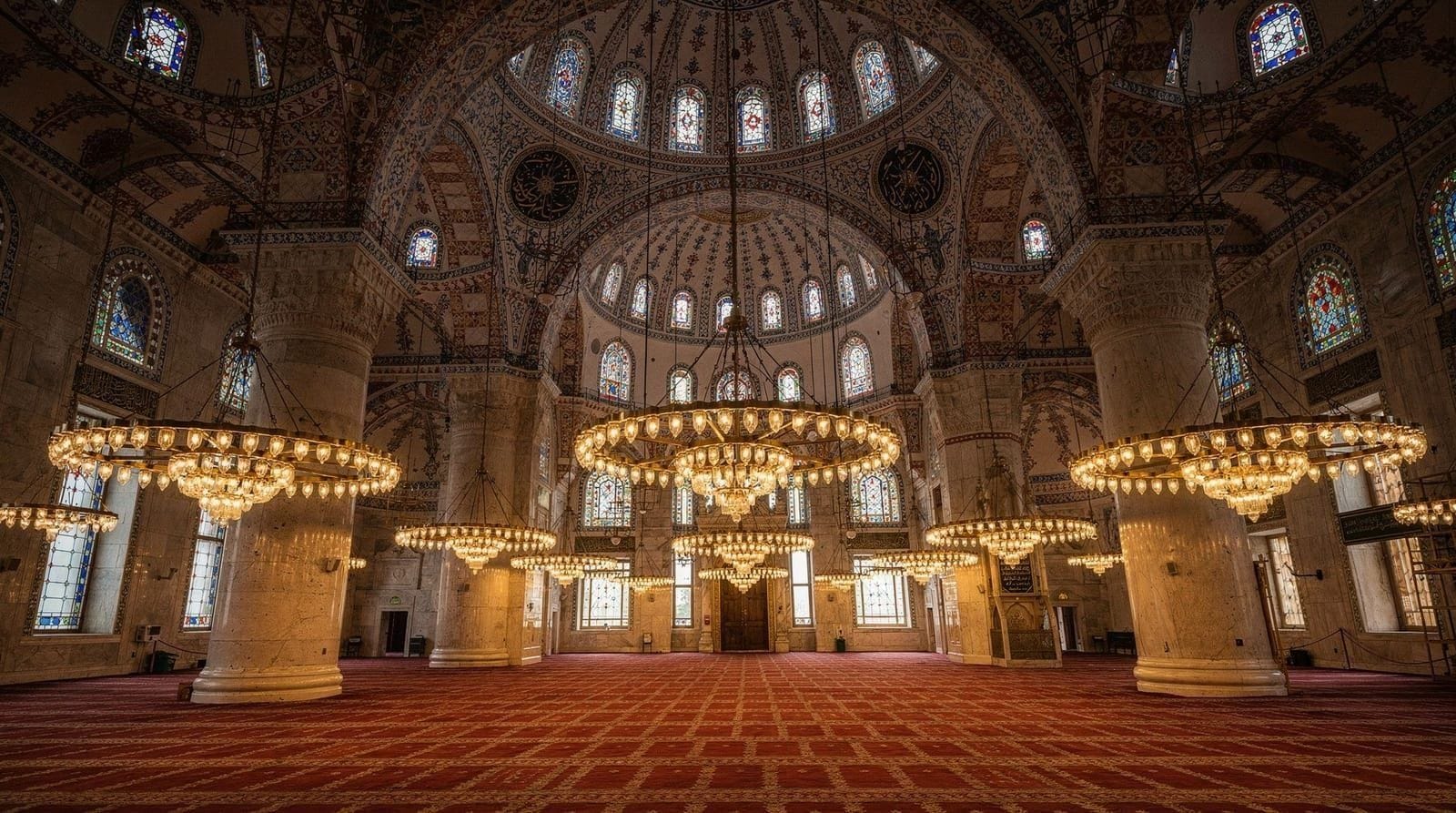
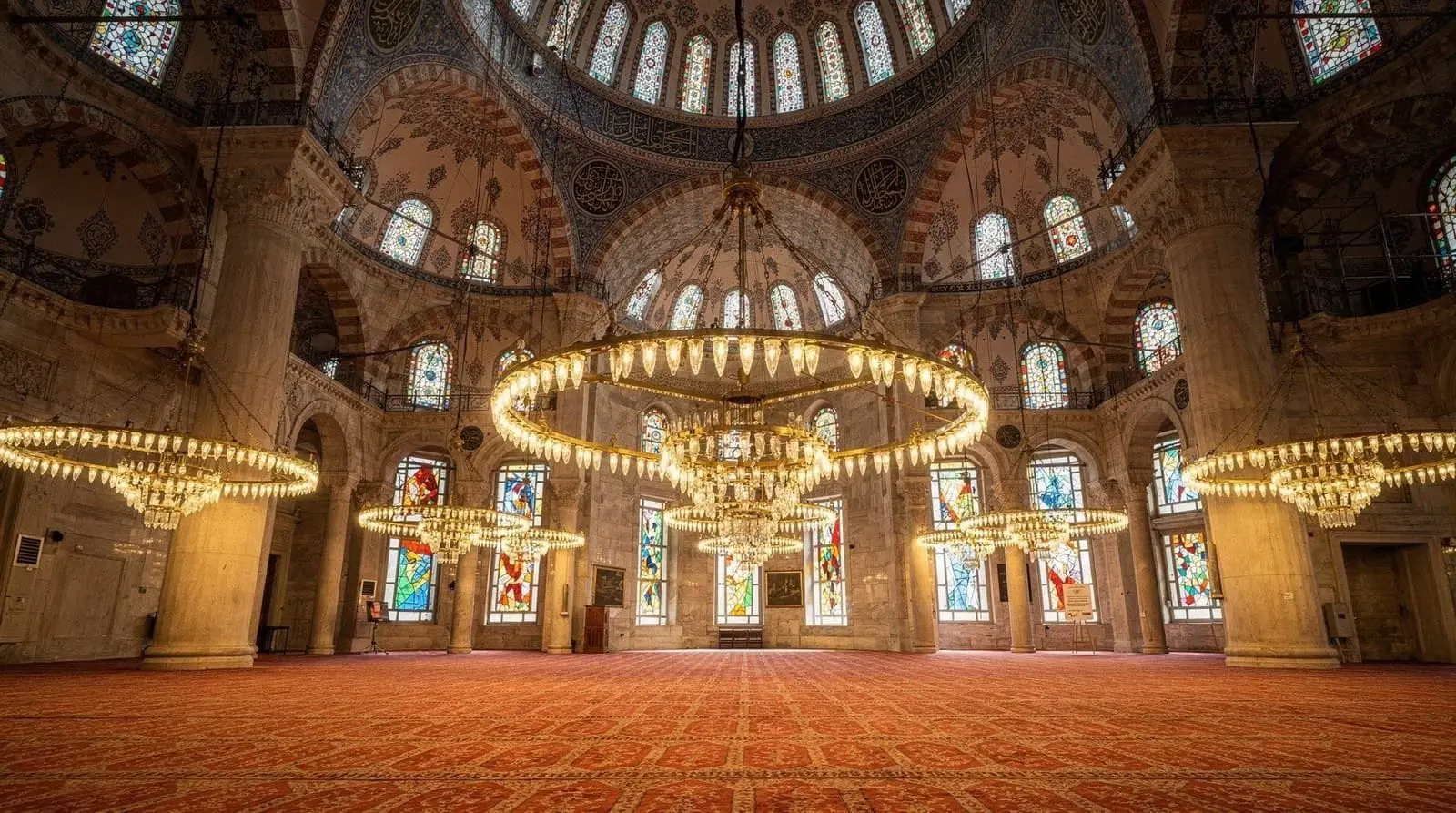
What you see: the interior decorated with 21,043 hand-painted Iznik tiles in blue-white patterns; 6 minarets visible from the Hippodrome; the central dome rising 43 metres; and 260 stained-glass windows.
Prayer closure: approximately 5 times daily for 20–30 minutes. Times are posted at the entrance. The Friday midday prayer closure is longer.
See the Blue Mosque visiting guide for the full visit details.
Hagia Sophia (Ayasofya)
Access rules and any fee have changed in recent years: check the current conditions on the official website of the Ministry of Culture before you go. The main interior is the 537 AD Byzantine cathedral, then Ottoman mosque, then museum, now mosque again, with its dome, Byzantine mosaics, and Ottoman calligraphy panels.
Important distinction: the separate “Hagia Sophia History & Experience Museum” (in the old baptistery building adjacent to the main entrance) is a separate commercial exhibit — not Hagia Sophia itself. Most visitors come for the main building.
Also adjacent and free: the Hagia Sophia complex includes the tomb of Sultan Selim II and other Ottoman tombs — worth viewing if passing.
Süleymaniye Mosque (Süleymaniye Camii)
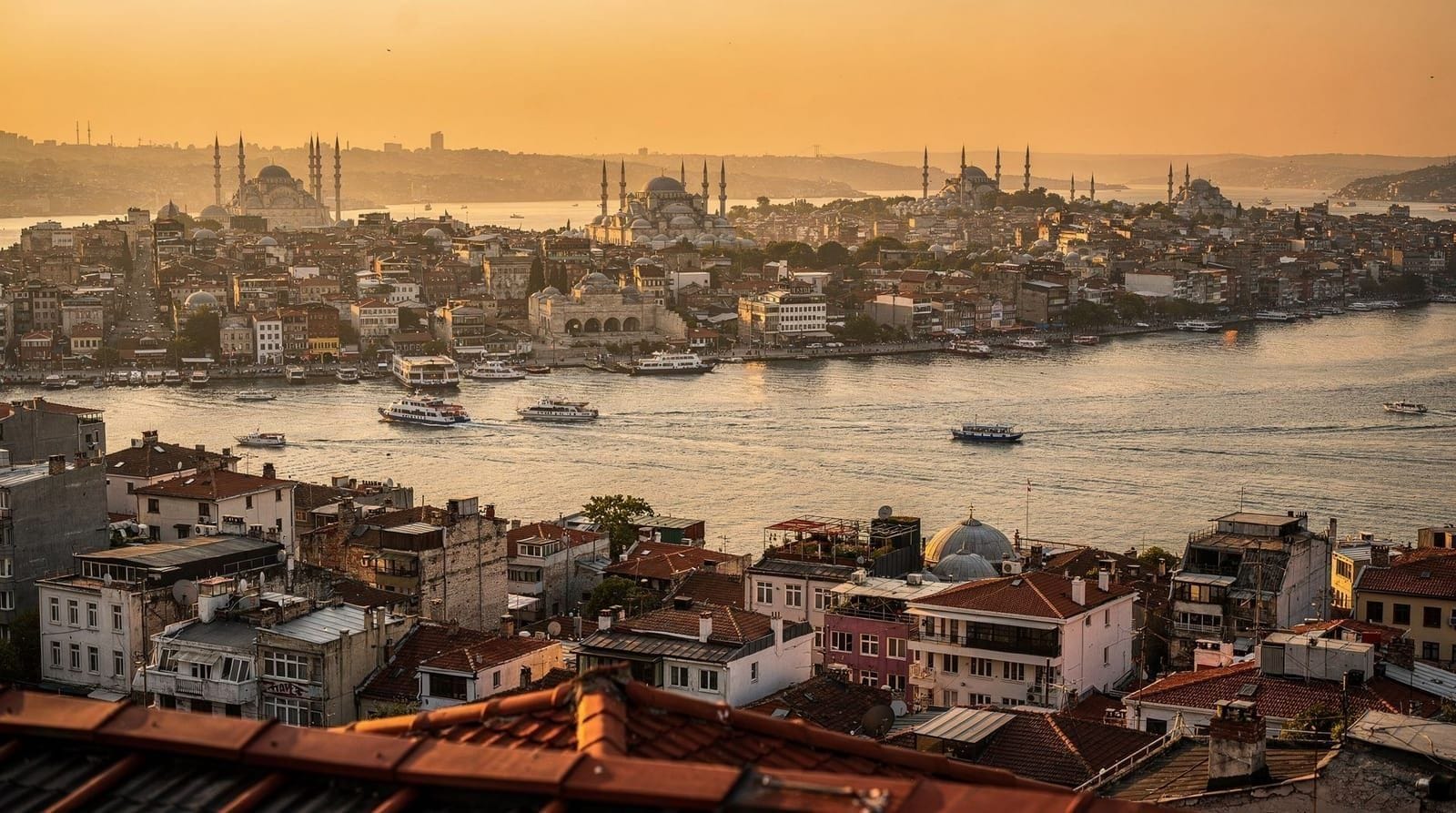
Designed by the greatest Ottoman architect, Mimar Sinan, and completed in 1557, Süleymaniye is arguably the finest piece of Ottoman architecture in Istanbul — more architecturally unified and less touristically crowded than the Blue Mosque.
Free to enter. Location: the hilltop above the Grand Bazaar, approximately 15 minutes’ walk from Sultanahmet.
What you see: the interior inspired by Hagia Sophia’s dome-over-square-base structure, refined over a millennium of architectural tradition; the mausoleum of Süleyman the Magnificent in the mosque garden (also free); a terrace view over the Golden Horn.
The area around Süleymaniye has good lokanta (working-class Turkish restaurants) — the Friday lunch crowd at these restaurants is a genuinely local Istanbul experience.
See the Süleymaniye mosque visiting guide.
New Mosque (Yeni Cami)
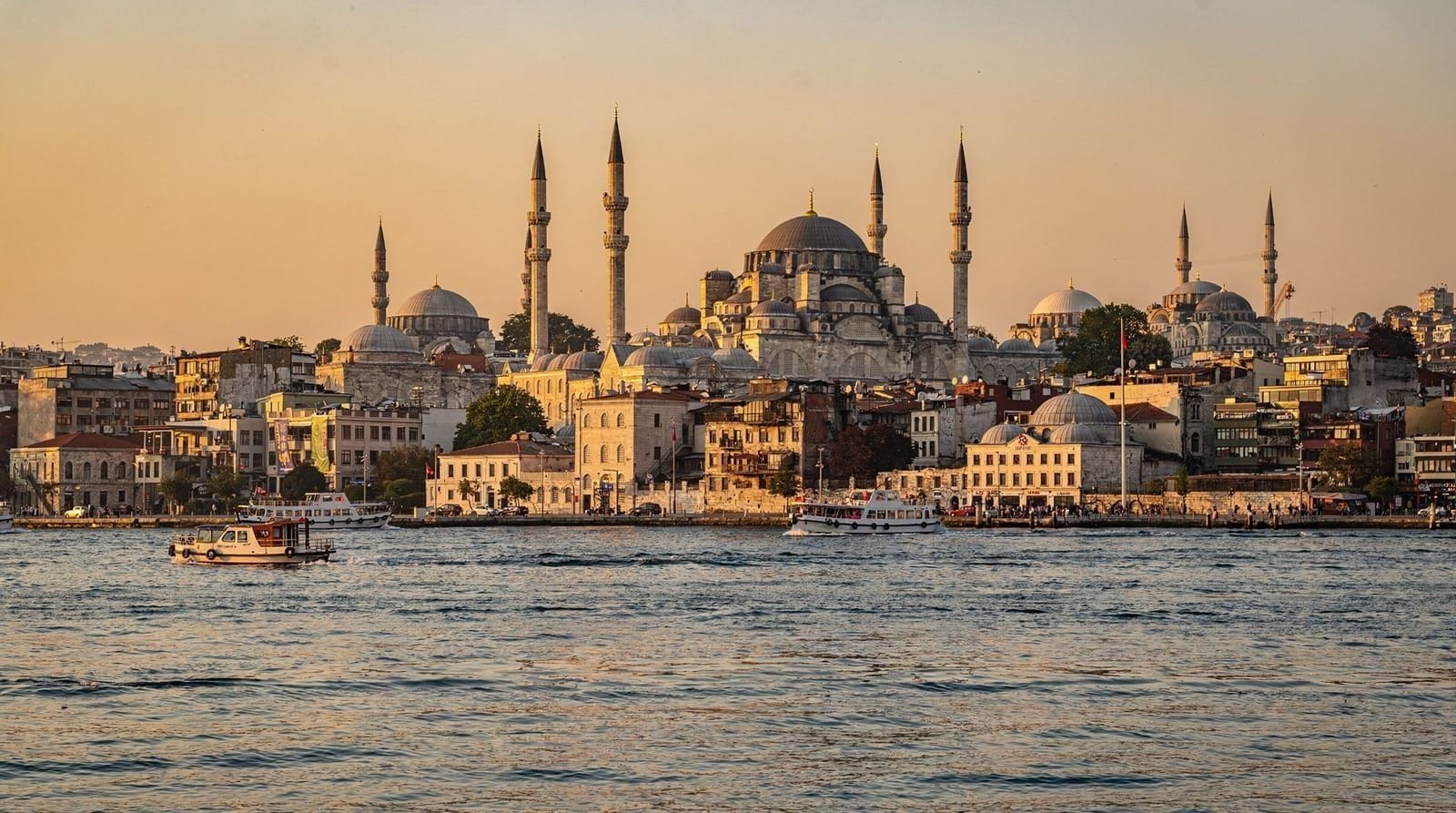
At the Eminönü ferry pier, the New Mosque (completed 1665 — “new” is relative) is visible from every Bosphorus-facing angle of the city. Free to enter. Less visited than the Blue Mosque and Süleymaniye; the interior has handsome tilework and proportions.
Often combined with the adjacent Spice Bazaar visit — the mosque and bazaar share the same historical precinct. See the New Mosque Eminönü guide for its history and the best viewpoint across the water from Karaköy.
Eyüp Sultan Mosque
The most sacred mosque in Istanbul in religious terms — built over the supposed burial place of Abu Ayyub al-Ansari, companion to the Prophet Muhammad. Located at the top of the Golden Horn, approximately 30 minutes by tram and walk or ferry from Sultanahmet.
Free to enter. The atmosphere is more devout than the tourist-circuit mosques; many local pilgrims visit, particularly on Fridays. Dress and behaviour codes should be observed more carefully here than at the Blue Mosque.
The Eyüp neighbourhood around the mosque has a different character from Sultanahmet — less tourist-facing, more religiously oriented. The Pierre Loti Café above the neighbourhood (reachable by cable car — see the current fare on the operator’s official site) has good views over the Golden Horn. See the Eyüp Sultan Mosque guide for the full visit, including the Ottoman cemetery walk up to Pierre Loti Hill.
Ortaköy Mosque
A small but photogenic mosque at the water’s edge in Ortaköy, with the Bosphorus Bridge directly behind it — one of Istanbul’s most-photographed compositions. Free to enter. The Ortaköy neighbourhood is itself worth a visit (waterfront cafes, kumpir — baked potato — street food, Bosphorus views). See the Ortaköy Mosque guide for the best photo spots and how to combine it with the rest of the neighbourhood.
Chora Church (Kariye Camii/Müzesi)
Technically a converted church rather than a purpose-built mosque, the Chora (known as Kariye Camii) is a Byzantine church from the 4th century with extraordinary 14th-century mosaic and fresco cycles — considered among the finest Byzantine art in existence. It was converted to a mosque in 2020. Entry status and pricing have changed since conversion — verify current access before visiting (free/reduced fee possible; check official sources). The Chora Museum guide has the current entry situation and a room-by-room look at the mosaics. Hagia Sophia, Blue Mosque and Süleymaniye guided tour
Mosque etiquette
Full etiquette guidance is in the mosque etiquette guide. Key points:
- Dress: Covered knees and shoulders for all. Women must cover hair — headscarves available at entrances, but bring your own for reliability.
- Shoes: Remove at the entrance; bags are usually provided.
- Behaviour: Quiet and respectful. No photography during prayer. Cameras generally permitted otherwise — no flash.
- Timing: Avoid the prayer times if you want uninterrupted access. Friday midday prayer is the largest weekly congregation.
- Contribution: Some mosques have voluntary donation boxes inside — these are legitimate. Entry is not the same as a donation request.
The scam context
Near the Blue Mosque entrance specifically, there are persistent attempts to charge tourists for entry. The mechanic varies: someone in official-looking uniform, a “ticket booth” that appears authoritative, a request for “suggested donation” accompanied by a physical receipt.
None of these are legitimate. You do not need to pay any amount to enter the Blue Mosque or any other active mosque in Istanbul.
If you’re uncertain, the legitimate visitor entrance process is: queue at the tourist entrance (typically the non-worshipper side), remove shoes when instructed, and walk in. No money changes hands.
See Istanbul scams to avoid for the full context.
Why some visitors still book a paid tour
If entry is free everywhere, it’s worth being clear about what a paid guided tour actually buys you: not access, but context and time efficiency. A licensed guide explains the Byzantine-to-Ottoman layering at Hagia Sophia, points out details in the Iznik tilework at the Blue Mosque that are easy to miss unguided, and — critically — often includes skip-the-line entry for the paid attractions bundled into a combined itinerary (like the Hagia Sophia History & Experience Museum or the Basilica Cistern). For visitors with limited time who want the old city’s major mosques covered efficiently with historical narration, this is a reasonable use of money even though none of the mosques themselves charge a cent. Blue Mosque guided tour
How to fit the free mosques into a day
Because nothing needs to be booked, the mosques are the most flexible part of an Istanbul itinerary. You can slot them around the sights that do have fixed tickets or queues, and rearrange the day on the spot if a prayer closure catches you out. The old city mosques sit close together, so a loose route works well: start with the Blue Mosque and Hagia Sophia, walk up to Süleymaniye, then drop down toward the water for the New Mosque and the Spice Bazaar.
If you only have a single day in the city, the Istanbul in one day guide shows how to combine the mosques with the other essentials. For a slower pace, the Istanbul 3 days itinerary spreads them across several mornings so you are never rushing through a prayer closure. First-time visitors who want the whole picture will also find the Istanbul for first-timers guide useful for deciding how much time the mosques deserve compared with the palaces and museums.
A few practical habits make the mosque visits smoother:
- Check the prayer schedule first thing in the morning. Times shift through the year and are posted at each entrance, so a quick look before you set out saves a wasted queue.
- Keep a light scarf and a layer in your bag. It lets you visit a mosque spontaneously when you pass one, without having to go back to the hotel.
- Wear shoes that come off easily. You will be removing them at every mosque, and laces on a hot day become tedious fast.
- Carry a small bag. Shoes go into a bag you carry with you, so a rucksack full of gear gets awkward quickly.
Choosing which mosques deserve your time
Not every visitor needs to see every mosque. The Blue Mosque and Süleymaniye are the two that most travellers regret skipping, because they show two very different sides of Ottoman architecture: one is ornate and tiled, the other is calm, spacious and architecturally pure. If you want to compare the two big names of the old city before deciding, the best mosques in Istanbul guide ranks them, and Hagia Sophia vs Blue Mosque helps if you have time for only one of the two headline buildings.
Smaller mosques reward a different kind of attention. The New Mosque is easy to include because it stands by the ferry pier, and Ortaköy Mosque fits naturally into an evening on the Bosphorus. Eyüp Sultan asks more of you in terms of time and respect, but it shows a side of Istanbul that the Sultanahmet crowds never see. Each of these also makes a good anchor for exploring the surrounding area, whether that is the Sultanahmet district around the Blue Mosque or the Süleymaniye Mosque destination page for the hilltop around it.
Visiting respectfully as a guest
The absence of an entrance fee does not mean a mosque is a monument first and a place of worship second. These are working buildings, and worshippers are often present even when the tourist entrance is open. Keep your voice low, do not walk in front of anyone who is praying, and keep to the visitor area where one is marked off. If you want to understand why the rules exist, rather than just follow them, the Turkish customs and etiquette guide gives the wider cultural background, and it helps explain why a friendly smile and a quiet manner go a long way in every mosque you enter.
Photography is part of most visits, and it is generally fine when no prayer is taking place, but common sense applies. Avoid pointing a camera at people who are praying, and give those who are seated or kneeling a wide berth. Taking a few frames and then simply sitting quietly for a while often leaves you with a better memory of the place than a full memory card does.
Pairing mosque visits with other free sights
Since the mosques cost nothing, they combine well with a budget-friendly day. Many of the old city’s other highlights, from the Hippodrome to the courtyards and viewpoints around the water, also cost nothing, and the free things to do in Istanbul guide lists them so you can build a day that spends very little. If you are watching your spending more generally, the honest Istanbul on a budget guide covers where money is actually worth spending and where it is not.
The same honest approach applies to the fake fees described above. Knowing that the mosques are free is the best defence against the entrance scams, and it pairs well with understanding the other common traps around the main sights, which the Istanbul tourist traps guide goes through in detail.
Frequently asked questions about Free mosques in Istanbul
Does the Blue Mosque charge an entrance fee?
Is Hagia Sophia free?
What is the dress code for mosque visits?
When do mosques close to tourists?
Which mosques require advance booking?
Is Eyüp Sultan Mosque free?
Top experiences
Bookable activities with verified prices and instant confirmation on GetYourGuide.