Eyüp Sultan Mosque guide — Istanbul's most sacred site for Muslims
Istanbul: Fener & Balat Guided Tour Through the Colored Streets
What is the Eyüp Sultan Mosque and should I visit?
The Eyüp Sultan Mosque at the far end of the Golden Horn is built around the tomb of Abu Ayyub al-Ansari, the standard-bearer of the Prophet Muhammad, making it one of the most sacred sites in Istanbul. The neighbourhood is distinctly local and non-touristy. Combine with Pierre Loti Hill and the Ottoman cemetery for a meaningful half-day off the main tourist circuit. All free.
The most spiritually significant mosque in Istanbul
For Turkish Muslims, the Eyüp Sultan Mosque has a significance that goes beyond ordinary mosque visits. The tomb of Abu Ayyub al-Ansari — the Companion and standard-bearer of the Prophet Muhammad — draws pilgrims from across Turkey and the Muslim world. During the Ottoman period, newly enthroned sultans came here to have the Sword of Osman girded at the tomb — the equivalent of a coronation ceremony. The neighbourhood retains this character: it is primarily a place of religion and local life, not tourist attractions.
For non-Muslim visitors, Eyüp offers something rare in central Istanbul: a quarter of the city that looks like itself, away from the tourist economy, with one of the most atmospheric walks (through the Ottoman cemetery to Pierre Loti Hill) and one of the best Golden Horn views in the city.
| Where | Golden Horn, western shore, Istanbul (European side) |
| Cost | Free — mosque, tomb, cemetery and cable car (~50 TRY return) |
| Time needed | Half-day (3-4 hours) with the cemetery walk and Pierre Loti Hill |
| Getting there | Bus 99/99A/99Y or Golden Horn ferry from Eminönü |
| Best time | Weekday mornings; Ramadan evenings for atmosphere |
Abu Ayyub al-Ansari: who he was
Abu Ayyub al-Ansari hosted the Prophet Muhammad in his house in Medina upon the Prophet’s arrival from Mecca in 622 CE (the Hijra). He was one of the Ansar (“helpers”) — the Medina residents who welcomed the early Muslim community. He continued to fight for Islam into old age and died during the first Arab siege of Constantinople in 674–678 CE, outside the city walls.
The location of his tomb was reportedly known to a small number of people through the Byzantine period. After the Ottoman conquest of 1453, Mehmed II asked his spiritual advisor Akshemseddin to identify the site. The tomb was found (or its location confirmed) and a mosque was immediately built. The current mosque dates from 1800, built by Selim III after earthquake damage to the original structure.
The mosque and tomb
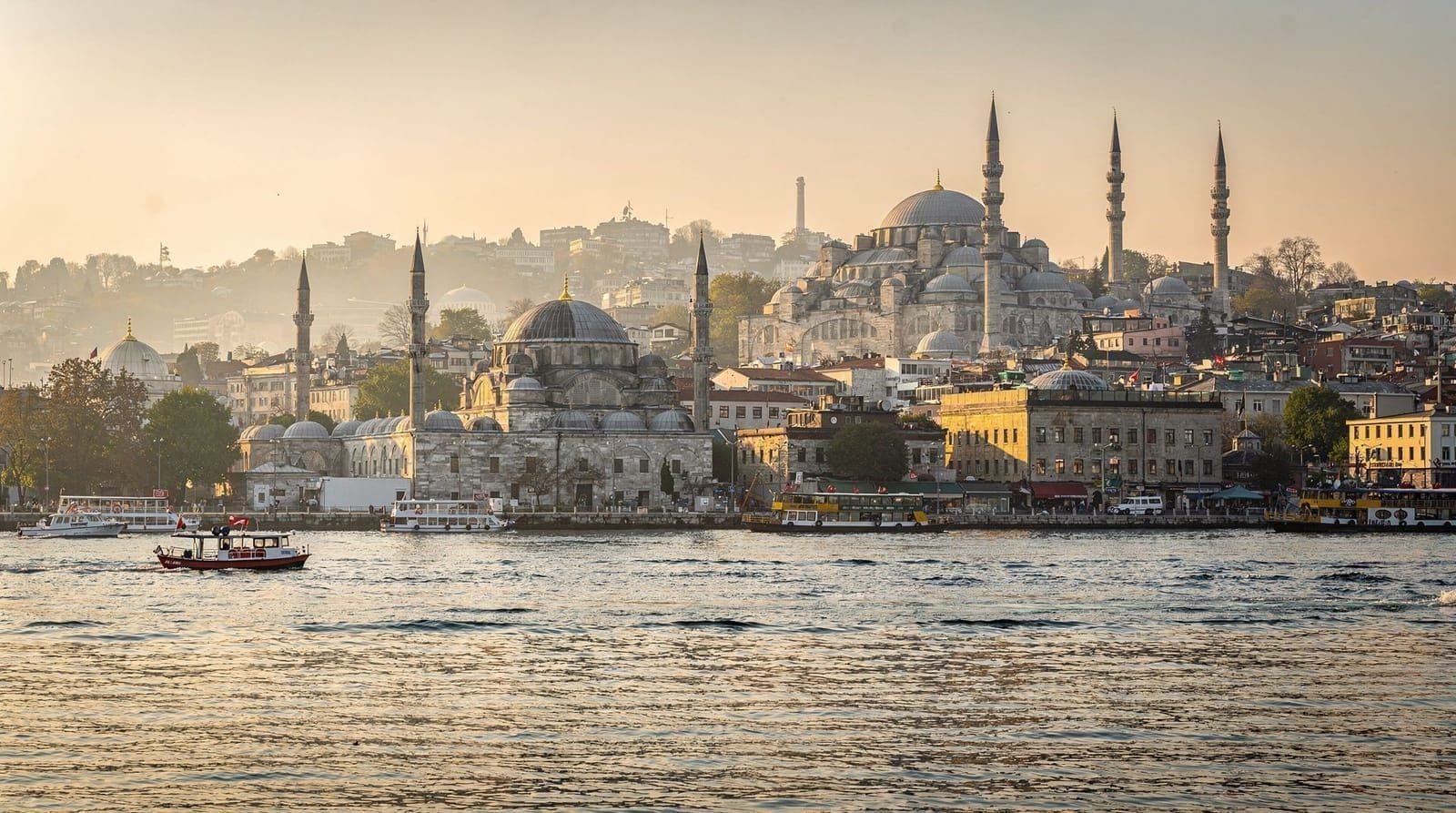
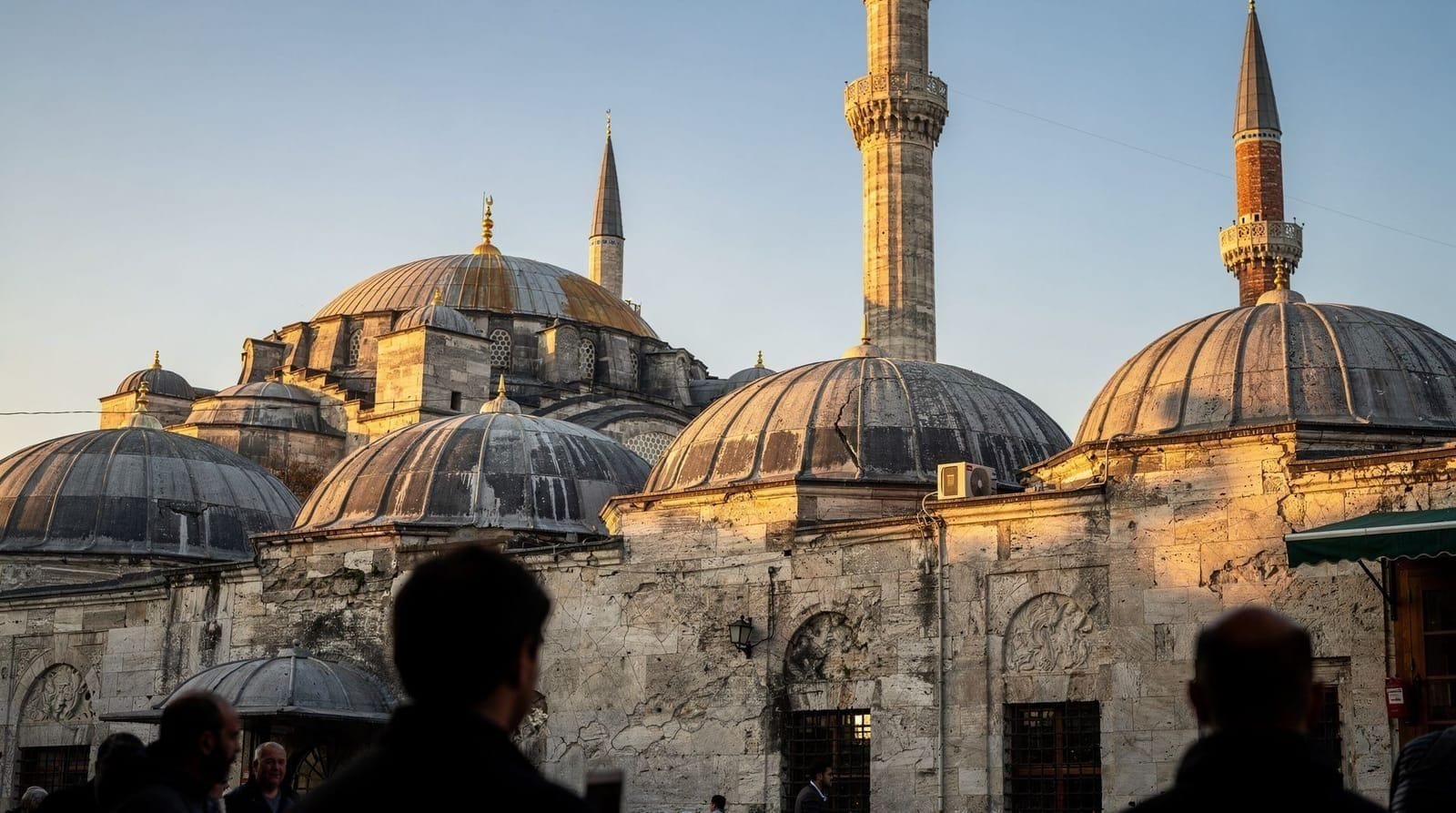
The mosque exterior: the current structure is Ottoman baroque in style — similar period and style to the Ortaköy Mosque. Two minarets flank a central dome. The forecourt has a large plane tree reputedly planted by Mehmed II himself.
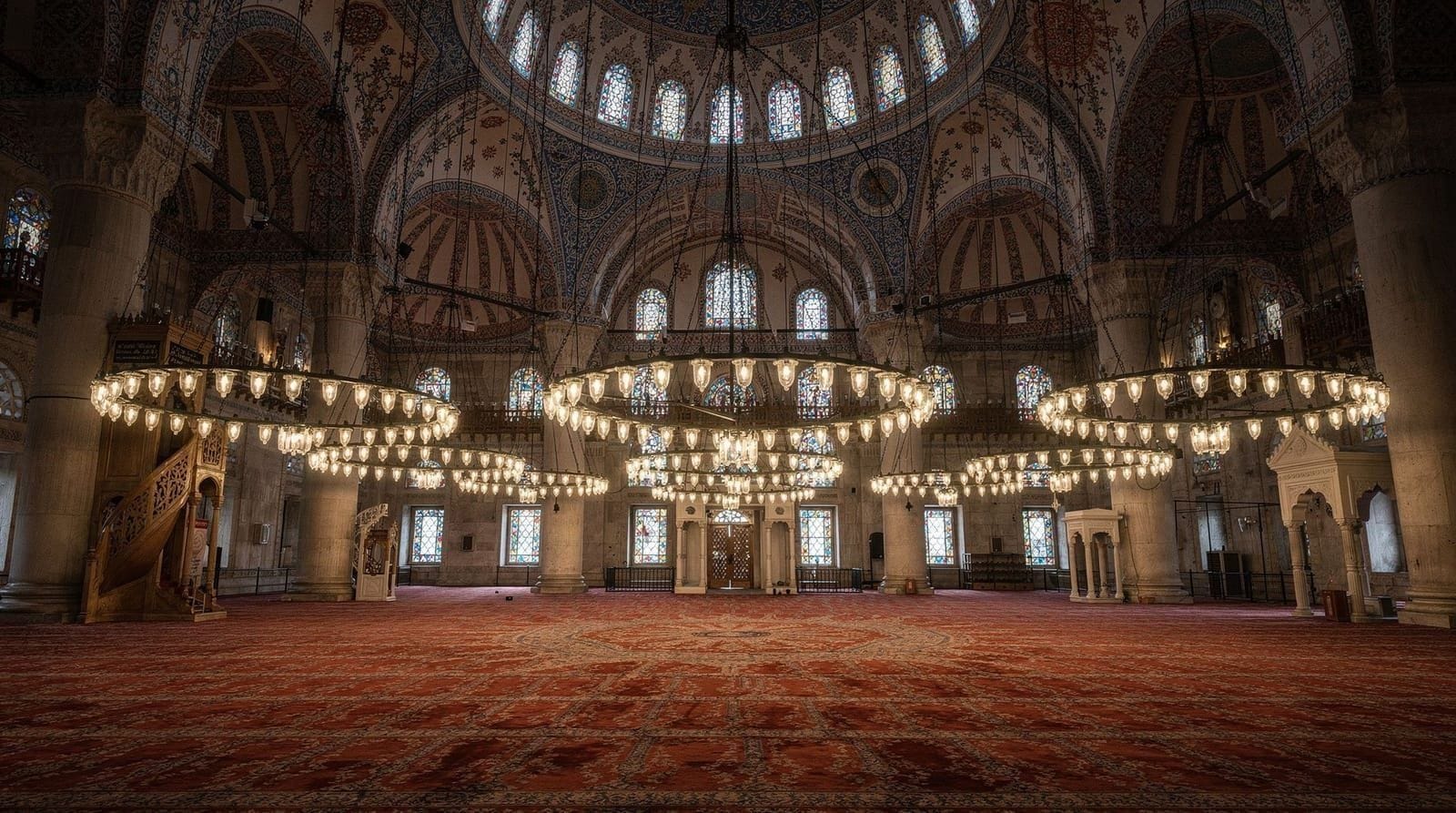
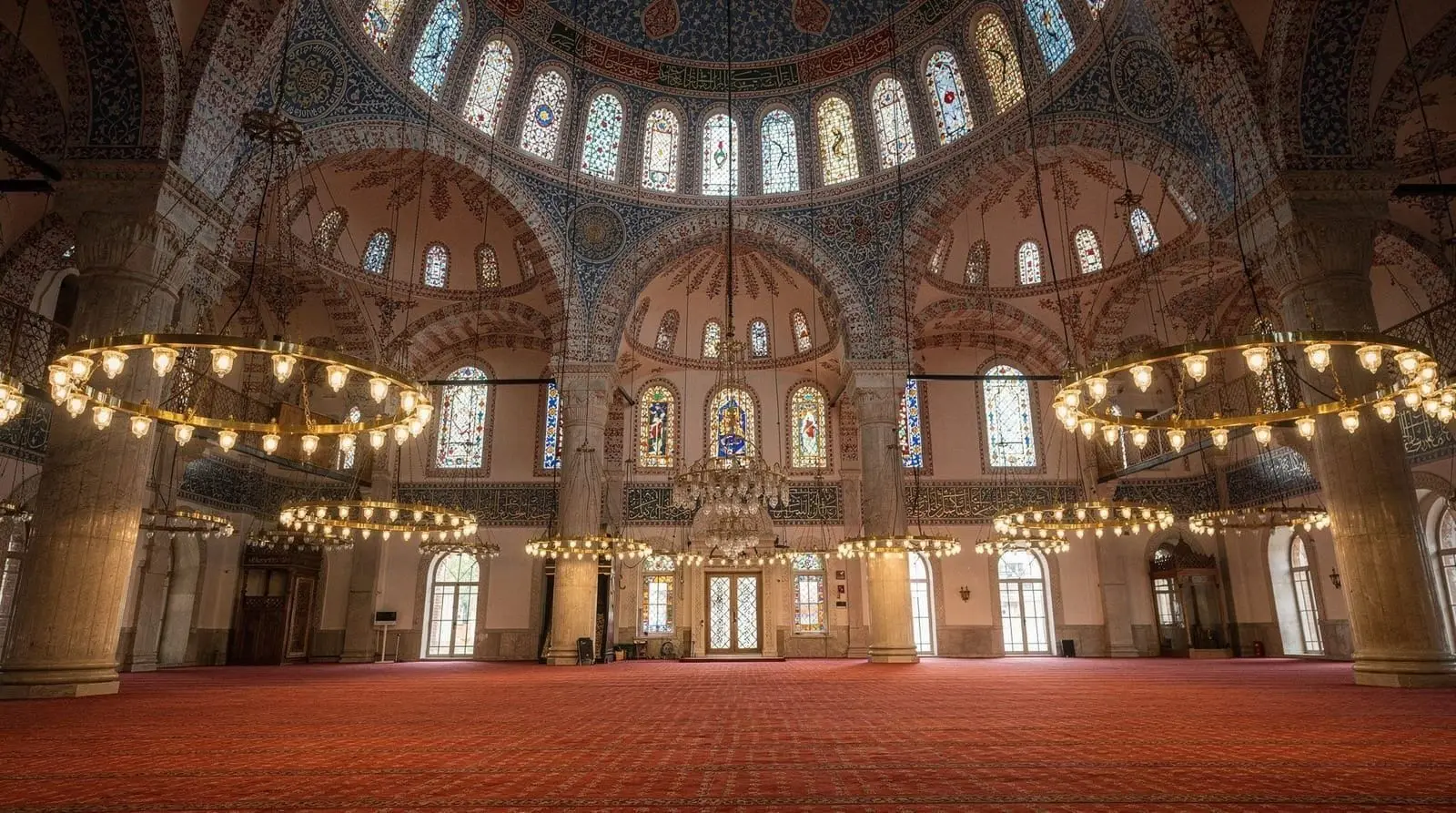
The mosque interior: the interior is more elaborate than the classical mosques in Sultanahmet, with 18th–19th century decorative work. Less architecturally sophisticated than Süleymaniye but the atmosphere is different — this is a mosque where the devotional significance is palpable in the worshippers’ behaviour. For how it fits among Istanbul’s other major mosques, see the best mosques in Istanbul guide; it’s also one of the sites covered in the free things to see in Istanbul rundown, since entry to every part of Eyüp is free.
The tomb (türbe): directly adjacent to the mosque is the tomb of Eyüp Sultan, enclosed in a separate building. Entry is through a separate entrance from the mosque. The tomb is continuously visited; people wait quietly in line, make supplications, and leave. The atmosphere is solemn and genuine. Non-Muslim visitors can enter respectfully but should be aware they are in a space of active devotion, not a museum.
The Ottoman cemetery and walk to Pierre Loti Hill
The hillside above and behind the mosque is covered with one of the most extensive and well-preserved Ottoman cemeteries in Istanbul — thousands of grave markers in white marble, many topped with turbans or other headwear indicating the deceased’s rank or profession. Cypress trees grow throughout. The silence and the visual texture of the markers against the hillside are striking.
From the mosque, follow the path uphill through the cemetery. Two routes to the top: on foot (~20 minutes) or by cable car (teleférik, small car running up the hill, ~50 TRY return, runs approximately 8 am–10 pm). At the summit: Pierre Loti Café and the panoramic view.
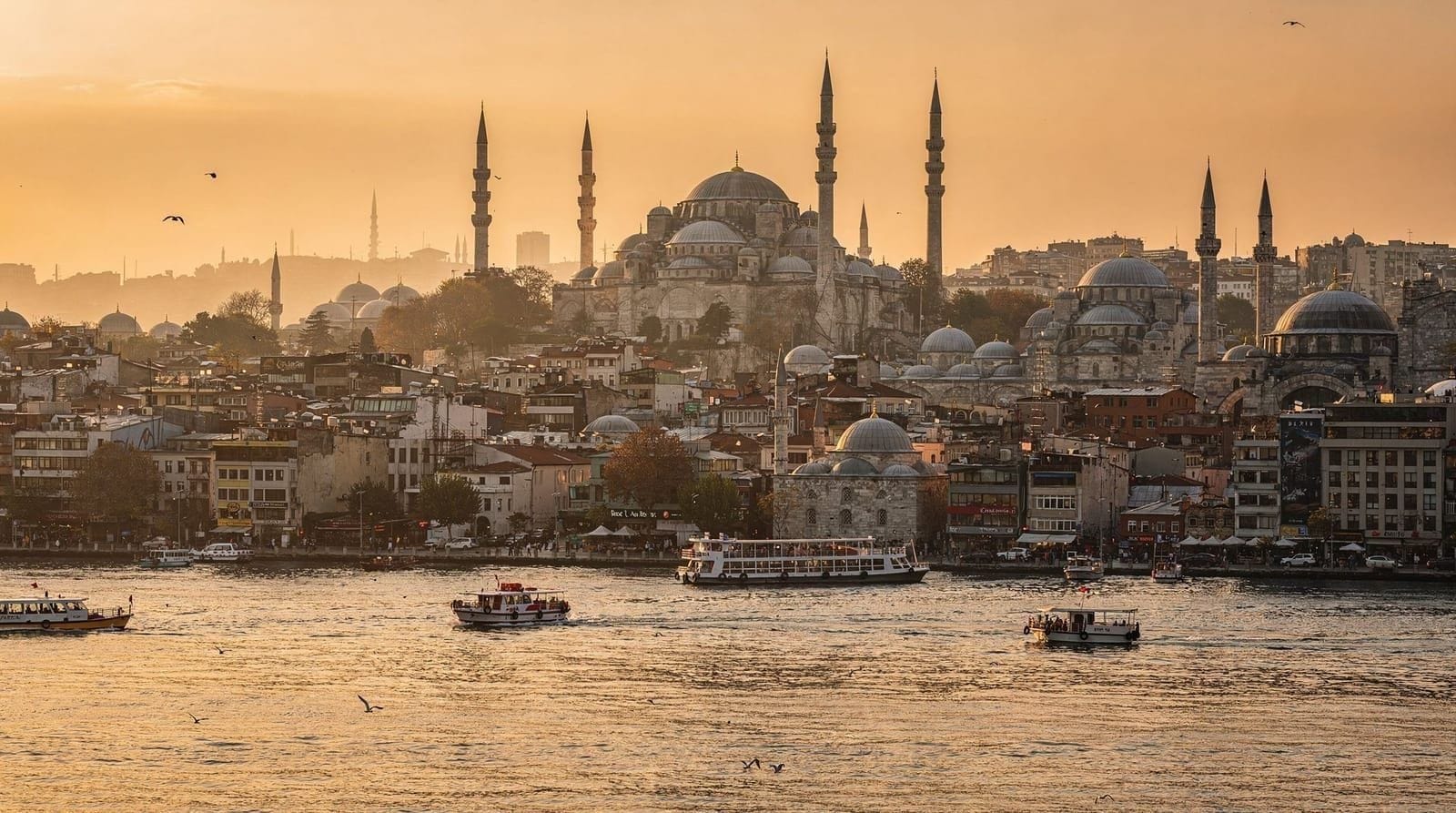
The view from the top of Pierre Loti Hill looks south down the Golden Horn toward the old city — the skyline of Sultanahmet, the Galata Tower on the other shore, and the Bosphorus visible in the distance on a clear day. One of the best views in Istanbul that almost no tourist finds.
The Pierre Loti connection
Pierre Loti (pen name of Julien Viaud, 1850–1923) was a French naval officer and novelist who made numerous visits to Istanbul and wrote extensively about Ottoman life in his novels Aziyadé (1879) and other works. He is reputed to have visited this hilltop frequently and found it inspiring. Whether the connection is exactly as legend describes is debatable; the café has used his name for over a century.
The café at the summit serves çay, Turkish coffee, and basic food with the view as backdrop. Reasonable prices.
The neighbourhood and the approach
The Eyüp district below the mosque has a character distinctly different from tourist Istanbul: predominantly conservative Muslim neighbourhood, shops selling religious goods (prayer beads, calligraphy, religious books), children’s clothing stores (traditionally, boys are dressed here for their circumcision ceremony), and the kind of tea houses and kebap restaurants found in residential neighbourhoods rather than tourist areas.
The main road from the ferry terminal to the mosque is commercial and busy. The side streets are residential. The total area is walkable in a short time. This working, largely non-touristic character is exactly what makes Eyüp a highlight in the hidden gems in Istanbul guide, and the Ottoman Istanbul overview places it in the wider context of the city’s Ottoman-era religious sites.
Combining with Balat and Fener
Eyüp, Balat, and Fener are all on the western Golden Horn shore and form a natural connected half-day or full-day circuit.
From Eyüp, walk south along the Golden Horn waterfront (about 20 minutes) to Balat — the old Jewish quarter with colourful streets, coffee shops, and antique dealers. Continue another 10 minutes south to Fener — the old Greek Orthodox quarter, home to the Ecumenical Patriarchate of Constantinople. The full walking route, with stops and timings, is in the Balat and Fener walking guide. If you’d rather see the Golden Horn from the water than on foot, the Golden Horn cruise guide covers boat options that pass Eyüp’s waterfront.
A guided tour of Fener and Balat covers the lower part of this circuit with historical context. Eyüp can be added independently at the beginning of the day before joining the guided tour.
See Balat and Fener.
Practical details
Getting there: Bus from Eminönü (Golden Horn waterfront side) toward Eyüp — buses 99, 99A, 99Y, approximately 20–30 minutes. Ferry from Eminönü (Golden Horn ferry services from Haliç pier) — check current Şehir Hatları schedules. Taxi from Sultanahmet ~20–25 minutes (~200–300 TRY).
Opening hours: mosque between prayers throughout the day. The tomb is typically open 9:30 am–5 pm. Cable car approximately 8 am–10 pm.
Dress code: as for all mosques. Particularly important here: the neighbourhood is more conservative and the expectations for respectful dress extend slightly beyond the mosque itself.
Photography: inside the tomb area, photography is generally not permitted out of respect for worshippers. Outside in the cemetery and the viewpoint, photography is fine.
Timing your visit against Balat and Fener
Because Eyüp, Balat, and Fener sit on the same shore, the order you visit them in changes the day considerably. Starting at Eyüp in the morning takes advantage of quieter streets and cooler cemetery-walk temperatures before the sun is high, then working south toward Balat and Fener for lunch and an afternoon of café-hopping makes for a natural wind-down. Doing it in reverse — starting in Fener and finishing at Eyüp — means arriving at the mosque and tomb later in the day, when the tomb can be busier with local visitors after work and prayer times. Either direction is a full and rewarding day; the morning-start version simply suits visitors who prefer their most physically demanding stretch (the cemetery climb) earlier rather than later.
Behaviour and etiquette at a living shrine
Eyüp is not a monument that happens to be a mosque; it is a place where people come with real requests and real grief. Visitors who treat it as such are generally met with quiet courtesy. Keep your voice low, move slowly, and do not block the line that forms at the tomb. If you are unsure what to do, watch what the people around you do and follow their lead. The general rules for entering a mosque, from shoes to head coverings, are laid out in the mosque etiquette guide, and the wider habits of everyday Turkish social life are covered in Turkish customs and etiquette. Read both before you go if this is your first mosque visit in Turkey.
It helps to think about what the space is for. People come to pray, to ask for something, to give thanks, or simply to sit. Pointing a camera at someone mid-prayer, or talking loudly with your group in the forecourt, undoes the goodwill that makes this a rewarding place for non-Muslim visitors. A short, attentive visit is better than a long, distracted one.
Reading the cemetery
The cemetery rewards slow walking. The grave markers are not uniform: their shapes and carved headwear were a kind of shorthand for the person’s place in Ottoman society, and a little attention to the carving turns the climb into a lesson in how the Ottomans thought about rank, trade and remembrance. Many stones are weathered, leaning, or half covered in moss, and the paths between them wind uphill under the cypresses in a way that feels far removed from the city below.
Wear shoes with decent grip. The paths can be uneven, and the climb is more tiring than it looks from the bottom. If the weather is hot, take the walk early; if it has rained, take care on worn stone. Going up on foot and coming down by cable car, or the reverse, is a sensible compromise if your legs are tired, though the walk is the part most visitors remember afterwards.
Eyüp in the wider story of the city
Eyüp makes more sense when you set it beside the other great religious sites of Istanbul. The classical grandeur of the Süleymaniye Mosque shows the imperial side of Ottoman faith; Eyüp shows the popular, devotional side. The baroque flourishes of the Ortaköy Mosque share a period feel with Eyüp’s current building, and comparing the two on the same trip is a satisfying way to understand late Ottoman taste. If you want the Byzantine layer of this part of the Golden Horn, the Byzantine Istanbul guide explains what came before the conquest, and the Chora Museum guide points to another corner of the old city worth pairing with a day on this side of the water. If you would like the imperial mosques explained by a guide before you head out to Eyüp, a guided tour of the great Sultanahmet mosques makes a useful contrast.
Visiting during Ramadan and religious holidays
The atmosphere at Eyüp changes noticeably at times of heightened devotion. In the evenings during Ramadan the district fills with families, and the mosque and its surroundings take on a festive, communal mood. That is part of the draw if you want atmosphere, but expect more people, longer waits at the tomb, and a stricter need for quiet. Plan around prayer times, be flexible about the order of your day, and read the Ramadan in Istanbul guide for what to expect across the city during the month. The Ramadan blog post gives a lighter, traveller-focused take.
Making the journey easy
Getting to Eyüp is part of the experience, and it is worth deciding the route before you leave. The bus is the most predictable option and the ferry is the most scenic; the getting around Istanbul guide explains how the city’s transport fits together, and the Istanbulkart guide covers the card that makes buses and ferries simple to use. For the water route in more depth, see the Istanbul ferries guide. If you are building a full day around the Golden Horn, the two-day Istanbul itinerary and the three-day itinerary show where an Eyüp morning can slot in alongside the headline sights.
What to do after the hill
When you come back down, resist the urge to rush off. A glass of çay at one of the local tea houses, a quiet moment in the forecourt under the plane tree, or a slow browse through the religious bookshops and calligraphy stalls rounds out the visit. If you want to eat nearby, the where to eat in Istanbul guide is a good starting point for the wider city, though the simplest meal in Eyüp is often a plain kebap in a residential-style restaurant, eaten where the locals eat. Bring patience rather than a tight schedule; this is a district that rewards lingering.
Frequently asked questions about Eyüp Sultan Mosque guide — Istanbul's most sacred site for Muslims
Who is Eyüp Sultan?
Is the Eyüp Sultan Mosque appropriate for non-Muslim visitors?
How do I get to the Eyüp Sultan Mosque?
What is Pierre Loti Hill?
What is special about the Ottoman cemetery near Eyüp?
How long should I spend in Eyüp?
Top experiences
Bookable activities with verified prices and instant confirmation on GetYourGuide.