Best time to visit Istanbul
Cappadocia: Goreme Hot Air Balloon Flight at Sunrise
When is the best time to visit Istanbul?
April–May and September–October offer the most comfortable weather (15–22°C), manageable crowds, and reasonable hotel prices. Summer (June–August) is hot, humid, and peak-tourist. Winter is cheap and atmospheric but days are short.
What the seasons actually feel like on the ground
Istanbul straddles two continents and two climates. European Istanbul faces the Bosphorus and the Golden Horn; the Asian side is slightly drier. Neither is extreme by European standards, but the combination of summer humidity, winter grey, and Ramadan logistics means the timing of your trip genuinely matters.
The short answer: visit in April–May or September–October. You get comfortable temperatures for walking, manageable lines at Hagia Sophia, and hotel prices that haven’t hit summer peak. If you are combining Istanbul with Cappadocia for the hot-air balloon experience, April–May is the most reliable balloon season — see the Cappadocia from Istanbul guide for the full logistics.
| Best overall | April–May or September–October |
| Cheapest | November–February (excluding New Year) |
| Hottest/most crowded | July–August |
| Balloon-friendly (Cappadocia) | April–May, then September–October |
| Ramadan 2026 | Approximately 19 February–19 March |
Month-by-month breakdown
January – February: cheap and quiet
Average temperatures hover around 5–8°C. Rain is frequent, and occasional snow transforms the domes of Hagia Sophia and the Blue Mosque into something genuinely beautiful — a rare sight worth experiencing if you can tolerate short days. Hotel occupancy is low; you can often find excellent properties in Sultanahmet for well under 100 EUR/night that would cost double in July.
Drawbacks: many outdoor terraces and rooftop bars are closed, and ferry rides on the Bosphorus can be cold and windswept. The Grand Bazaar and spice markets are open year-round. Museums are quieter and skip-the-line tickets are less necessary.
Ramadan note for 2026: If travelling in late February or March 2026, be aware that Ramadan approximately falls 19 February–19 March 2026. This is not a problem — Istanbul remains fully open to tourists — but some restaurants reduce daytime service. Evenings around the mosques in Sultanahmet are lively with iftar crowds, street food, and vendors selling hot çay and simit.
March – April: spring awakening
March can be unpredictable. Warm spells alternate with cold fronts; average 10–14°C. Easter week (March–April) sees an influx of European visitors.
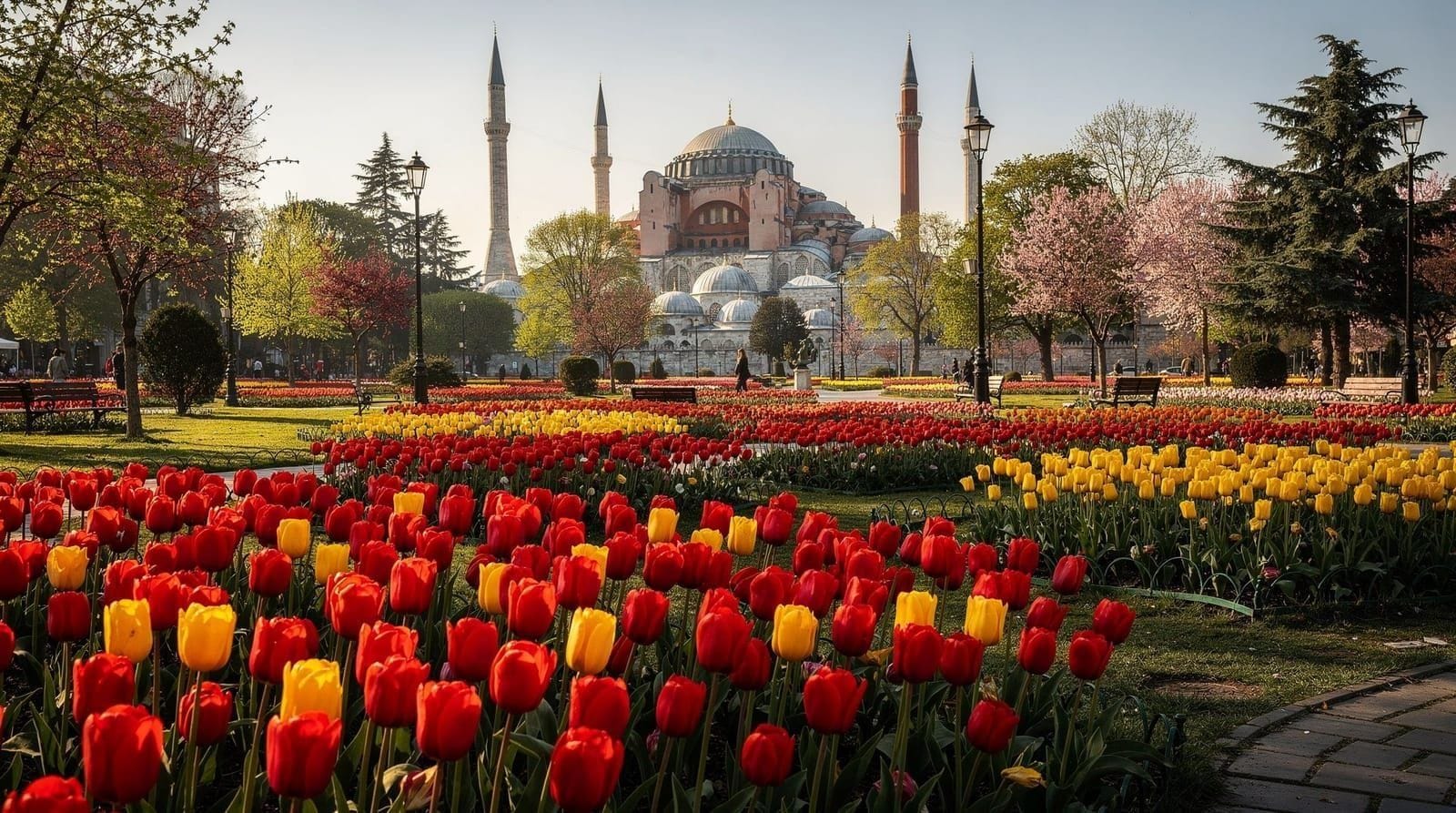
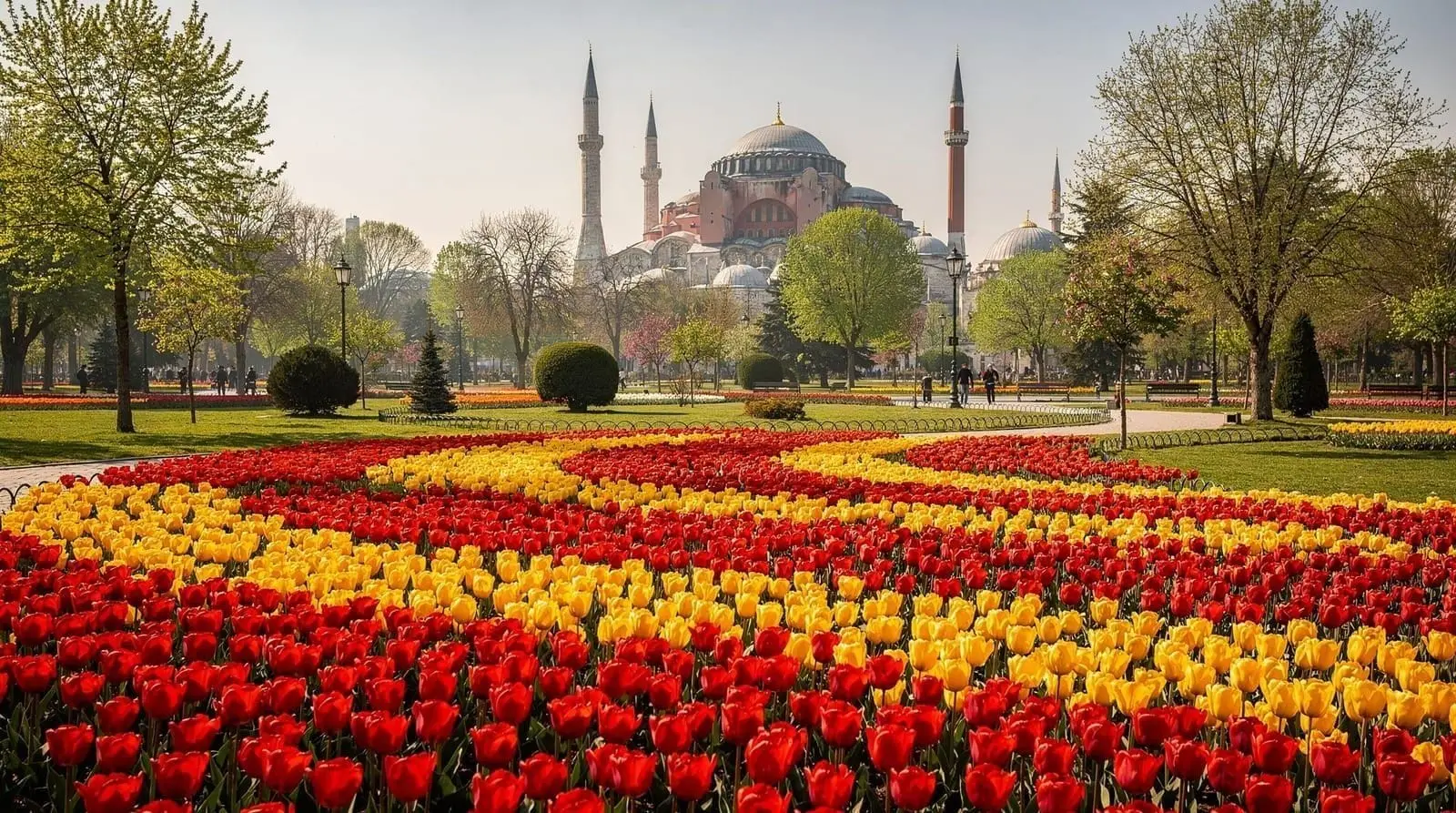
April is widely considered the best month. The tulip festival transforms Emirgan Park, Gülhane Park, and the Hippodrome area with thousands of red, yellow, and purple blooms — the legacy of Ottoman-era obsession with the flower. Temperatures reach 16–20°C. Rain is possible but typically brief. This is also when Cappadocia balloon flights reach peak reliability — April and early May see the fewest weather cancellations.
Cappadocia hot-air balloon at sunrise — if you plan to combine Istanbul with Cappadocia, April is the safest bet for securing a flight that isn’t cancelled. Book the balloon 3–4 weeks ahead.
May: arguably the best month
May blends warm weather (18–23°C), long days, and pre-summer crowds. School trips start appearing but international mass tourism hasn’t peaked. The Bosphorus is calm and inviting for afternoon cruises. You can walk the entire Sultanahmet neighbourhood in reasonable comfort.
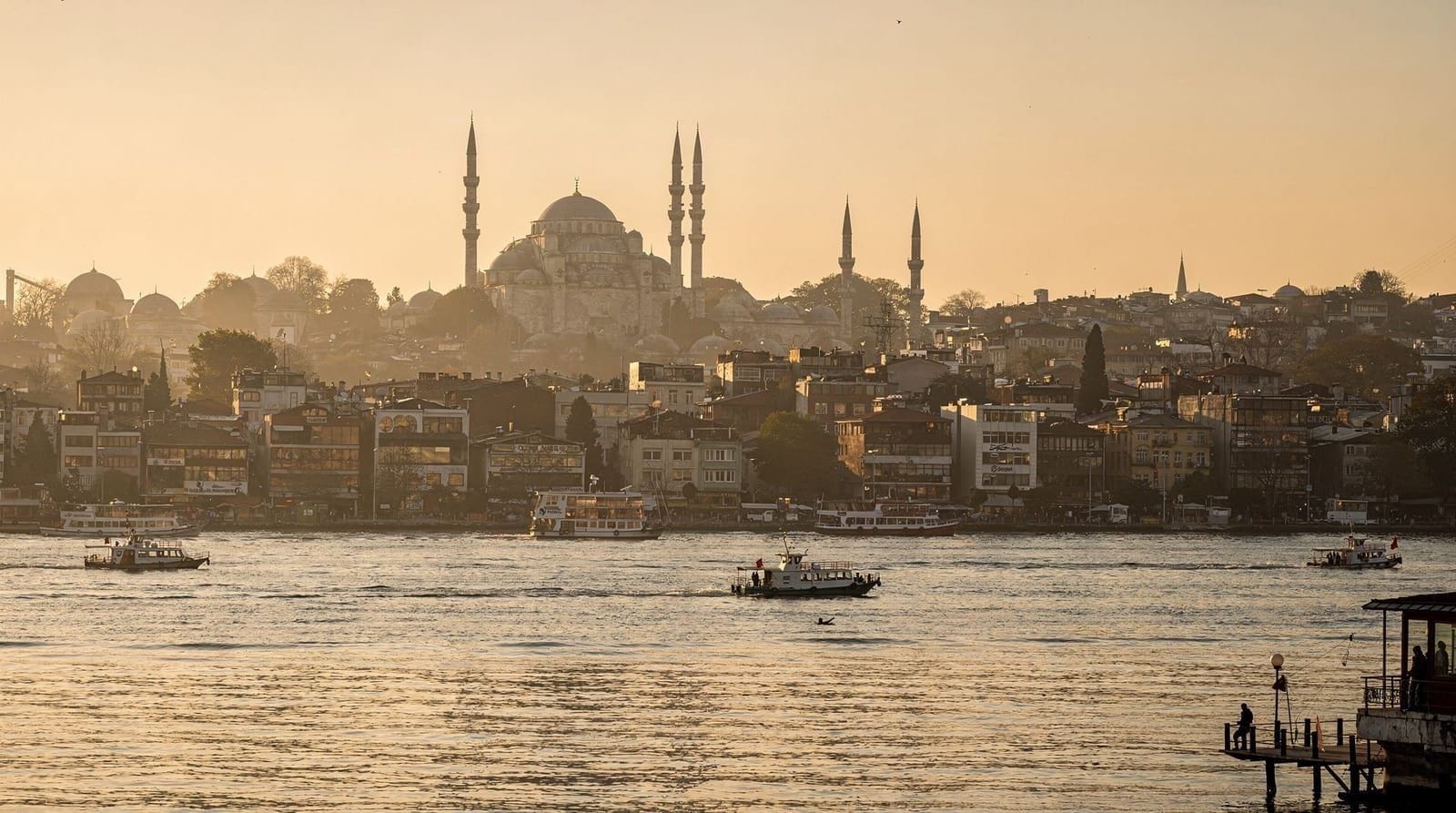
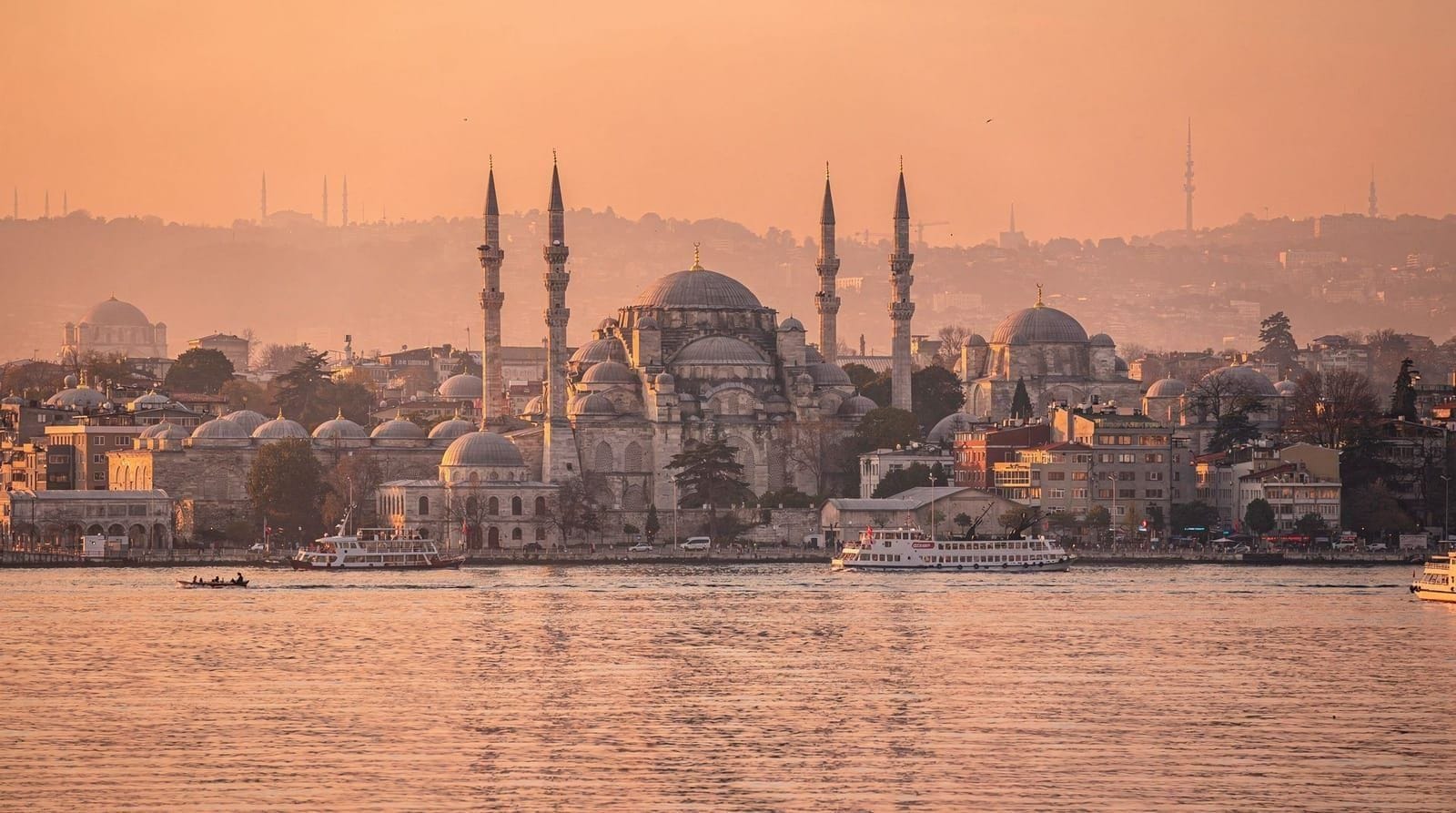
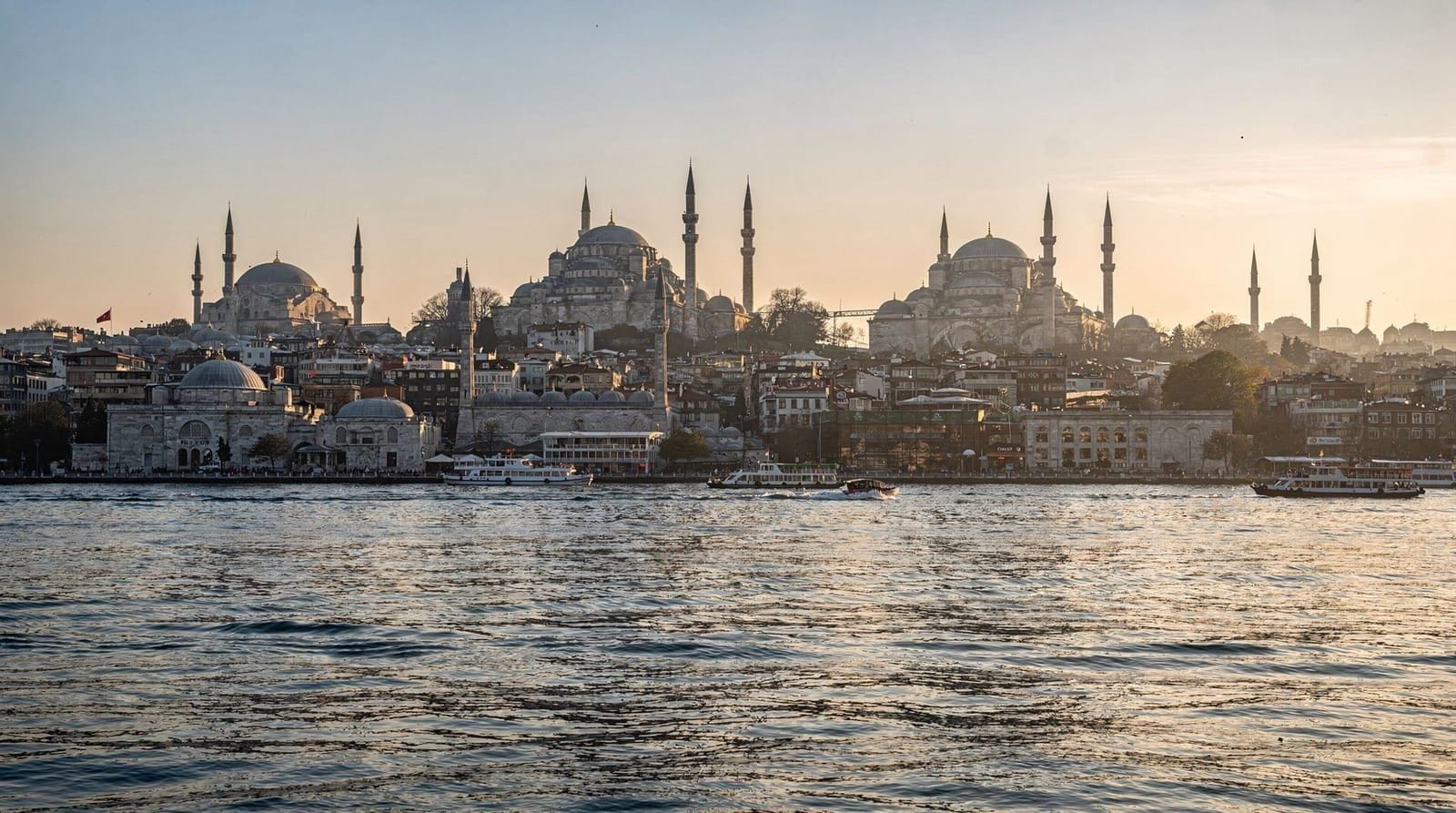
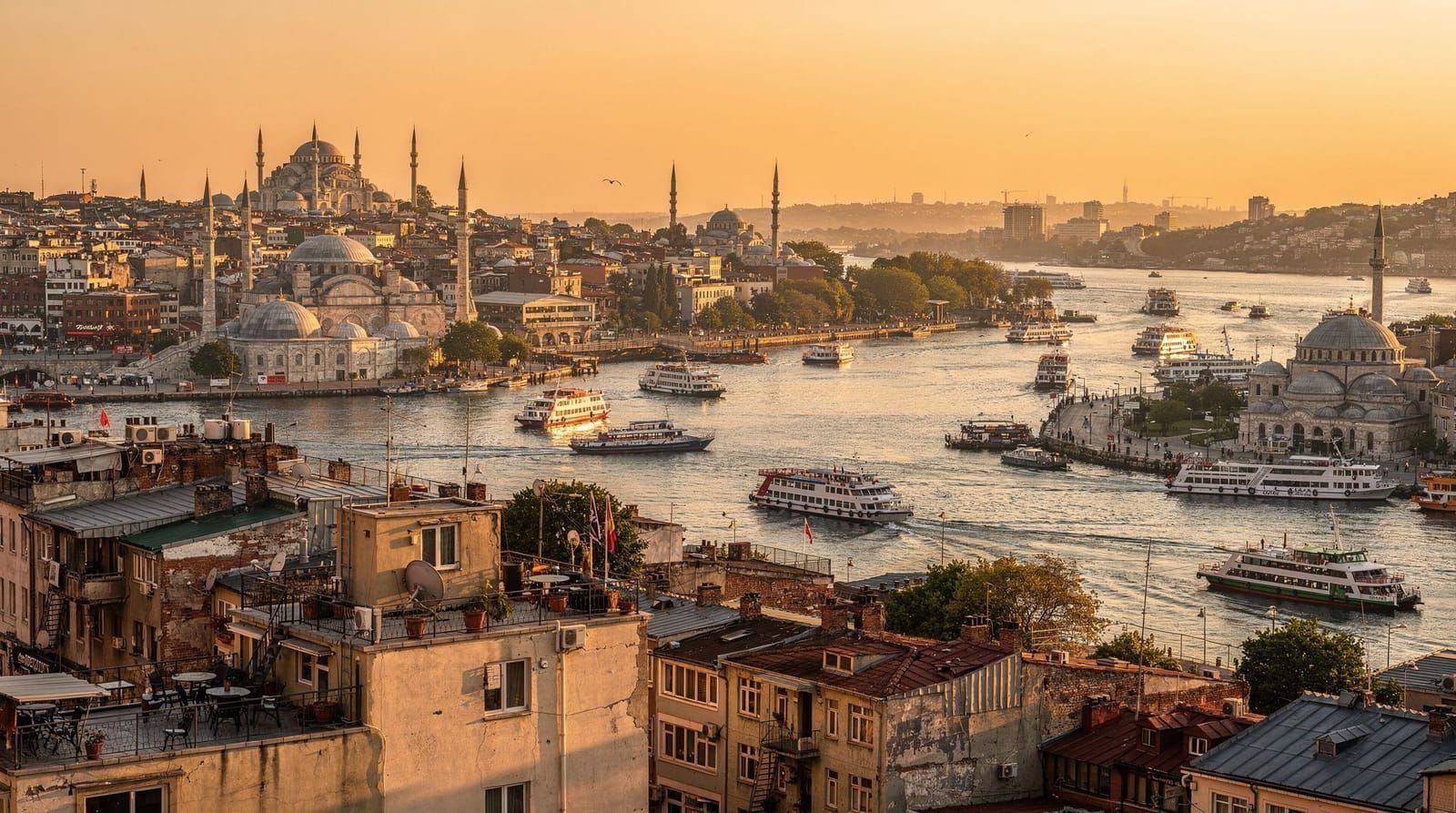
A Bosphorus cruise in late afternoon light in May is one of Istanbul’s defining experiences.
June – August: hot, crowded, expensive
Summer means 28–33°C with humidity that can feel suffocating in the covered bazaars. Tourists from the Gulf, Europe, and North America flood in simultaneously. Hagia Sophia queues without a pre-booked ticket can reach 90 minutes by 10am. Hotels double or triple their rates. Ferries are packed.
That said, Istanbul in summer has real appeal:
- Long evenings for rooftop dining
- Full bar and nightlife scene open on Beyoğlu/İstiklal
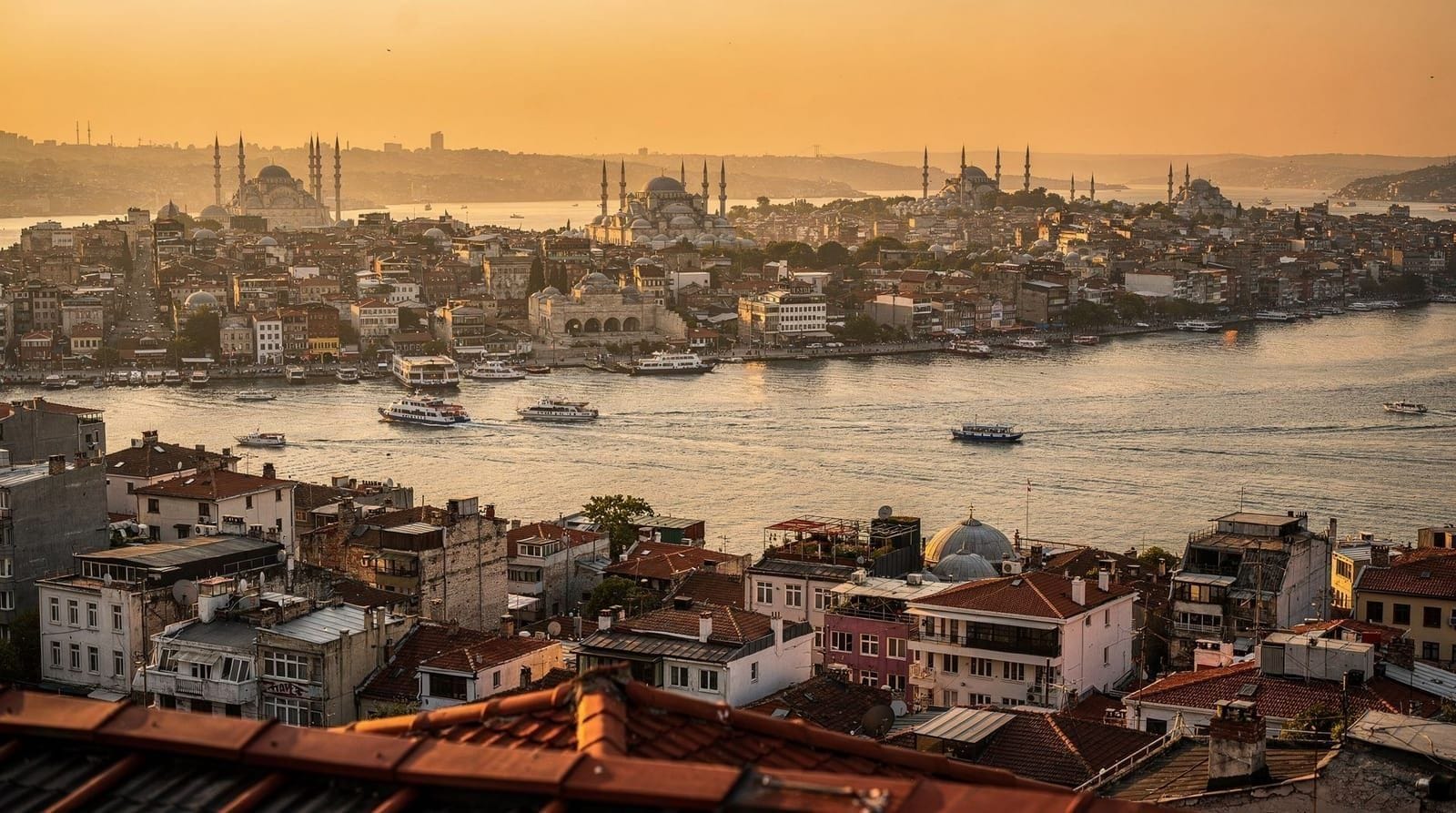
- Sunset Bosphorus cruises with a golden skyline
- Sea of Marmara warm enough for swimming near the Princes’ Islands
If visiting in summer, book all major sites (Hagia Sophia, Topkapı, Basilica Cistern) in advance. Plan sightseeing before 9am or after 5pm. The shaded interior of the Grand Bazaar is more bearable than it sounds — it has been cooling traders and visitors since 1461.
Cappadocia balloon note: Balloon flights run through summer but heat reduces morning lift — operators must launch very early. Cancellation rates are lower than winter but bookings fill far ahead. The Cappadocia Balloon Festival reportedly occurs around late July–early August (verify dates locally before planning around it).
September – October: the overlooked sweet spot
September remains warm (22–27°C early in the month) but the August mobs have thinned. Airlines and hotels price-drop from mid-September. October brings the most reliably clear skies — light over the Bosphorus is warm and photogenic, perfect for a late-afternoon cruise. Average 16–20°C.
The Asian side — Kadıköy, Üsküdar — is particularly pleasant in autumn, with open-air food markets and outdoor seating at fish restaurants. The Princes’ Islands ferry service runs at full frequency through October, making an autumn day trip to Büyükada genuinely pleasant.
November – December: grey but affordable
November brings cooler rain. December averages 8–12°C. Christmas markets don’t exist in the Ottoman tradition, but the Grand Bazaar and Spice Bazaar are festively busy regardless. Istanbul’s winter restaurant scene — warm meyhane with raki and meze — is at its most welcoming when it’s cold outside.
New Year’s Eve around Taksim is a major event; book accommodation far ahead if visiting then.
Planning your trip around key events
Turkish public holidays can cause closures and localized transport pressure. Major ones: New Year’s Day (1 Jan), National Sovereignty (23 Apr), Labour Day (1 May), Youth Day (19 May), Victory Day (30 Aug), Republic Day (29 Oct).
Eid al-Fitr (end of Ramadan, approximately 19–21 March 2026) and Eid al-Adha (approximately 27–30 June 2026) — verify exact dates. Domestic travel surges; intercity buses and ferries to the Princes’ Islands fill up. Internal flights can be hard to book last-minute.
Honest summary: which month wins?
| Month | Weather | Crowds | Price | Verdict |
|---|---|---|---|---|
| Jan–Feb | Cold/grey | Very low | Cheapest | Good for budget+museums |
| Mar–Apr | Mild | Medium | Mid | Best overall; tulips in April |
| May | Warm | Medium | Mid-high | Arguably the best single month |
| Jun–Aug | Hot/humid | Very high | Peak | Only if you tolerate crowds/heat |
| Sep–Oct | Warm/mild | Medium | Dropping | Second-best window |
| Nov–Dec | Cool/wet | Low | Low | Atmospheric; budget-friendly |
Practical advice across all seasons
Dress for mosques year-round. Shoulders and knees must be covered; women need a head covering at the entrance (usually provided). See the mosque etiquette guide for details. The most crowded mosques — Blue Mosque and Süleymaniye — are free to enter; there is no legitimate entrance fee. Anyone asking for money at the door is running a scam.
Prices change fast. Turkey experiences significant inflation. All prices in this guide carry a date stamp. Check current exchange rates on arrival; the TRY weakens regularly against EUR/USD.
Booking ahead. In April–May and June–August, book Hagia Sophia, Topkapı, and Basilica Cistern tickets at least 3–7 days in advance. In winter, you can often walk up.
For the full picture of each month’s weather, temperature ranges, and rainfall data, see the Istanbul weather by month guide.
Matching the season to your trip type
Not every visitor is optimising for the same thing, so “best” depends on what you’re actually here for:
Chasing tulips or the Bosphorus at its most photogenic — go in April; see our dedicated spring in Istanbul guide for exactly when the blooms peak each year, since the exact bloom window shifts by a week or two depending on how mild the preceding winter was.
Combining Istanbul with Cappadocia’s balloons — April–May or September–October, both for weather and for keeping the Cappadocia best time to visit window aligned with your Istanbul dates; pair the two on our Istanbul and Cappadocia 5 days itinerary.
Travelling on a tight budget — November–February, paired with our Istanbul on a budget guide for where the seasonal savings compound with everyday budget tactics.
Visiting during Ramadan on purpose, for the atmosphere — the iftar street food and evening energy around Sultanahmet genuinely is worth experiencing; our Ramadan in Istanbul guide covers what changes hour to hour.
Deciding how long to stay — the season affects this too: shorter winter days mean a same-length itinerary covers less ground. See how many days you need in Istanbul for a season-adjusted answer, and summer in Istanbul if you’re set on the warm months and want the heat-management specifics.
Domestic long weekends matter more than you’d think. Turkish public holidays (listed above) move the crowd pressure around independent of season — a quiet November week can suddenly get busy around a national holiday as Turkish families travel domestically, filling ferries to the Princes’ Islands and intercity buses to Bursa and Cappadocia. If your dates are flexible, checking the holiday calendar before booking is worth five minutes, especially around Eid al-Fitr and Eid al-Adha when both domestic and Gulf-region tourism spike simultaneously.
How the season changes what you do each day
The month you pick shapes the rhythm of a day as much as the temperature. In the cooler months, a walking day through Sultanahmet can run straight through the afternoon, with a long lunch and a hammam session as a warm reward at the end. In the hot months the day splits in two: early sightseeing, a long pause indoors or by the water, then a second wind in the evening. Neither is better, but knowing which pattern you are signing up for helps you decide how many sights to pack in. Our one day in Istanbul plan and the top things to do list both work in any season if you reorder the stops to suit the weather.
Indoor and outdoor balance. Rainy or grey days are the perfect excuse for the big indoor highlights: Hagia Sophia, the Basilica Cistern, the Grand Bazaar and the Spice Bazaar. Clear days are better spent on the water and on viewpoints such as Galata Tower or the best views in Istanbul. If your trip falls in a shoulder month, keep a flexible plan and swap days around once you see the forecast rather than fixing every hour in advance.
Hammams in every season. A traditional bath is one of the few experiences that is good all year, and it is especially welcome when the weather turns cold and wet. If you have never been, start with the first-timer hammam guide and the list of historic hammams in Istanbul so you know what to expect before you undress.
Eating by season. Menus follow the calendar, and outdoor tables are a pleasure when the air is mild. Spring and autumn are ideal for a long fish dinner by the water, while colder evenings suit a warm meyhane. For ideas on where to sit down, see where to eat in Istanbul, the meze and rakı guide and the street food guide, which is best enjoyed when you can stroll between stalls without sweating or shivering.
Packing and neighbourhood choices by season
What you put in the suitcase depends on your month, and so does where you sleep. In summer, a base with breezes off the water and easy access to ferries makes the heat easier to bear; in winter, being close to the tram and to indoor sights matters more. The packing list covers the layers worth bringing, and where to stay in Istanbul and Sultanahmet versus Beyoğlu help you match a neighbourhood to the season you are travelling in.
Getting around also feels different through the year. Walking between sights is pleasant in spring and autumn, tiring in peak summer and slippery on wet winter cobbles. The Istanbulkart guide and the getting around guide show how to lean on trams and ferries when you would rather not walk. Ferries in particular reward you in good weather; the Bosphorus by public ferry guide explains how to turn an ordinary commute into a scenic ride.
If you are still undecided between two windows, think about what you would regret most: a queue in the heat, a grey sky over the domes, or a day lost to rain. Most visitors who pick a shoulder month and stay flexible end up happy, and those who book the major sights ahead sleep better whichever season they choose. For a first visit in particular, the first-time tips and the trip planning guide are good companions to this page, and our 3-day itinerary is an easy template to adapt to any month.
Frequently asked questions about Best time to visit Istanbul
Is Istanbul hot in summer?
Is Istanbul cold in winter?
What is Istanbul like during Ramadan?
Should I visit Istanbul in spring?
Is autumn a good time to visit Istanbul?
When are flights cheapest to Istanbul?
Does Istanbul get rain?
Top experiences
Bookable activities with verified prices and instant confirmation on GetYourGuide.