Best time to visit Cappadocia
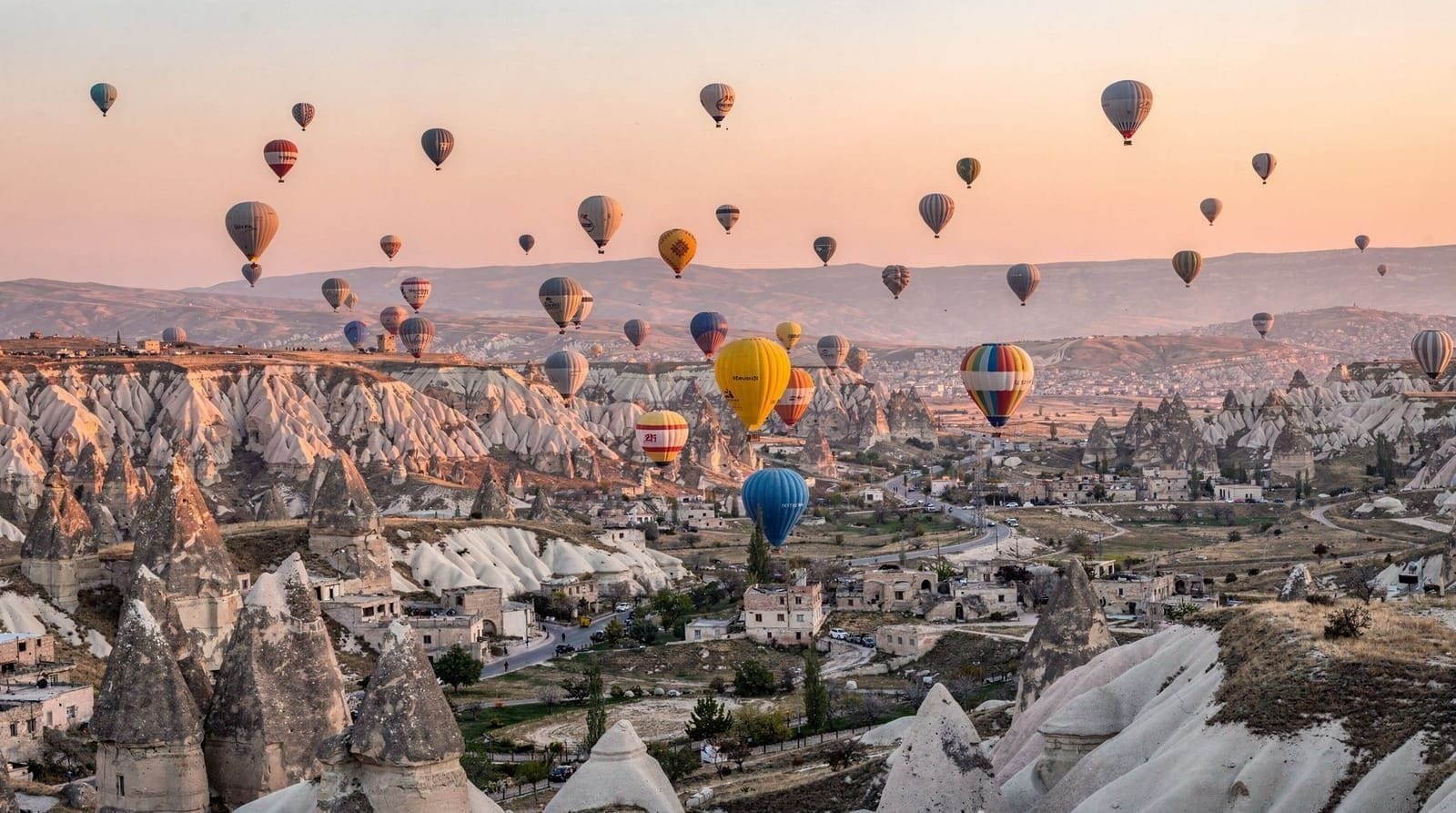
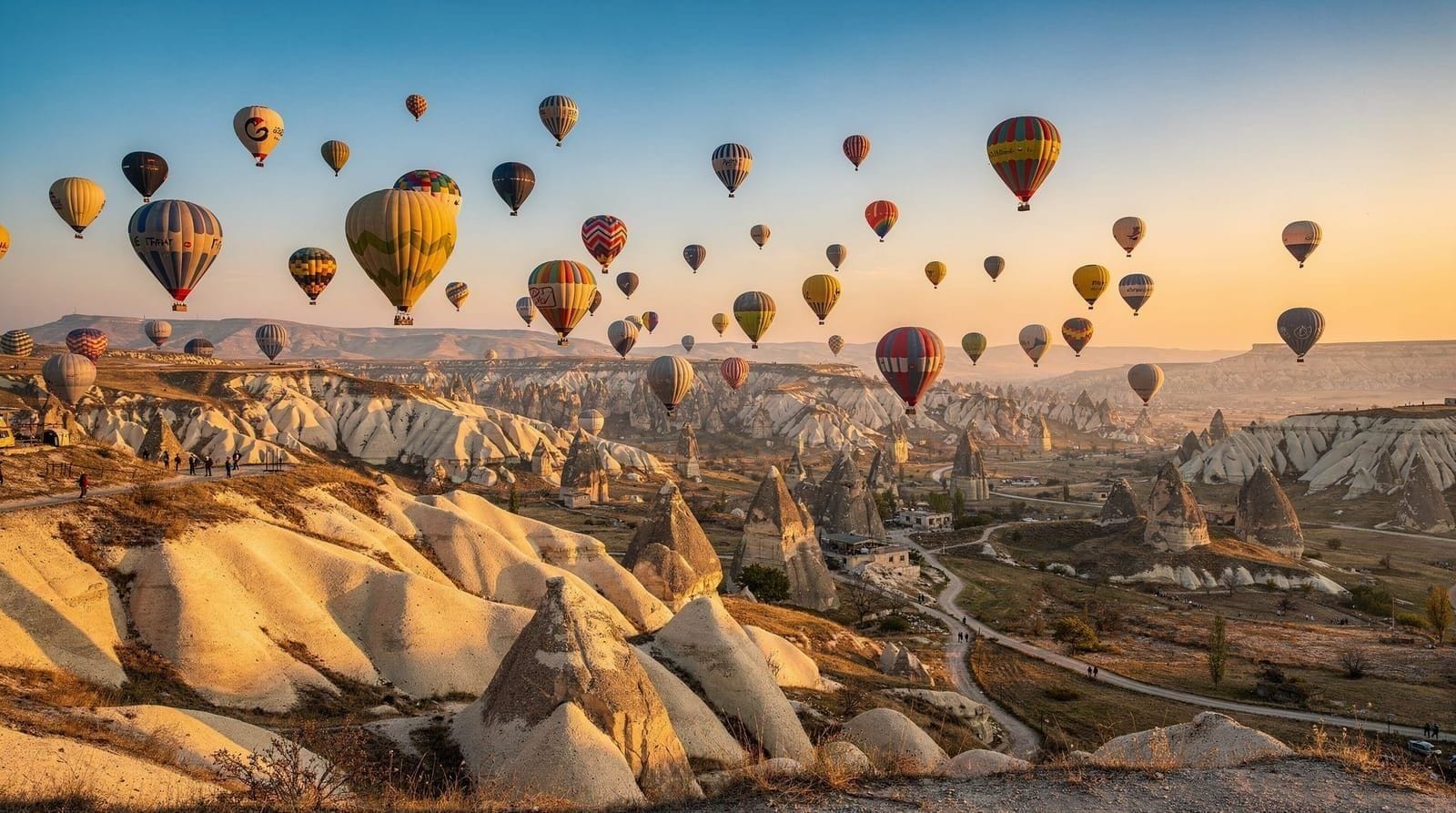
Cappadocia: Goreme Hot Air Balloon Flight at Sunrise
When is the best time to visit Cappadocia?
April-May and September-October. These shoulder months offer mild temperatures, good balloon flight reliability (80-90% fly), lower crowds than summer, and the best photography light. Winter (November-March) is beautiful with snow but balloon cancellations are frequent.
Planning your Cappadocia visit: a month-by-month guide
Cappadocia sits at 1,000-1,400 metres elevation on the Anatolian plateau. This altitude moderates summer heat (it is cooler here than coastal Turkey) and makes winters genuinely cold. The fairy chimney landscape looks different in every season — pink spring wildflowers, dusty summer haze, autumn vine colours, snow on the rock formations in winter.
The right time to visit depends primarily on three things: whether the balloon ride is a priority, your tolerance for heat and crowds, and budget constraints. This guide breaks down each factor by month.
| Best overall | September, closely followed by April-May |
| Cheapest | November-February (excluding New Year week) |
| Balloon reliability | Highest April-October; lowest December-February |
| Where | Cappadocia, based in Göreme |
| Getting there | Fly from Istanbul to Kayseri or Nevşehir — see our Cappadocia from Istanbul guide |
Month-by-month overview
March
Shoulder season. The Anatolian plateau is still cold in early March (nighttime temperatures can drop to -5°C) but warming rapidly by mid-month. Spring wildflowers begin appearing in the valley floors. Balloon reliability is improving but still variable — perhaps 70-80% of scheduled flights operate.
Crowds: low to moderate. Prices: low. Good for: budget travellers who want to avoid summer heat, photographers who want less crowded viewpoints.
April
One of the best months. Temperatures are comfortable (12-22°C daytime), wildflowers are at their best in the valleys and on the hillsides, and the light is excellent for the pink-gold tonality of the rock. Balloon reliability is good (80-90%). Crowds begin building in the second half of April but are manageable.
The run-up to the Turkish school spring holidays (check dates annually) can bring domestic visitors.
May
Peak spring quality. Similar to April but warmer (15-25°C). Balloon conditions reliable. Rose Valley’s wildflowers and the vineyard green at lower elevation are at their best. A popular month internationally — book well in advance. Prices are elevated compared to winter but not at summer peak.
June
The beginning of summer. Temperatures rise toward 30-35°C midday. Valley hikes should be done early morning. Balloon conditions are good. Crowds increase. Cave hotel rates rise to peak levels.
July-August
Peak summer and peak tourism. Daytime temperatures 30-38°C. Hot and sunny. The balloon (5:30 am launch) is pleasant in this temperature — you are airborne before the heat builds. Mid-afternoon activities are uncomfortable outdoors. The underground cities and cave hotels (cool by nature) are good afternoon options.
The Cappadocia Balloon Festival takes place in late July or early August (dates vary annually — verify before planning). This brings additional visitors and a festive atmosphere.
Book cave hotels 2-3 months in advance for summer stays.
September
Often cited by operators and experienced travellers as the best month. Temperatures are warm but not extreme (20-30°C). Balloon conditions excellent. Harvests in the vineyards (September-October). Crowds are lower than August. Prices begin to drop slightly from August peak.
October
Excellent month. Autumn colours arrive in the valleys (poplars in Ihlara turn gold). Temperatures are comfortable (12-22°C). Balloon conditions good. The Cappadocia region is active during the first half of October; by late October things quieten.
November
Shoulder season begins. Temperatures drop (5-15°C). Some operators reduce services. Balloon cancellation rate increases. Good for visiting without crowds and at lower prices. The valley walks in November light are atmospheric. Check which hotels are still open before booking.
December-February
Winter Cappadocia. Snow on the fairy chimneys typically arrives December-February. The landscape is extraordinary — pale formations against a winter sky, occasional snow dusting the rock surfaces. But:
- Balloon cancellation rates are very high (some weeks see no flights)
- Several smaller cave hotels and restaurants close January-February
- Valley trails can be icy or inaccessible
- Temperatures drop below -10°C at night
If the balloon is your priority, winter is a risky time to visit. If you want the snow landscape, a budget option, and do not mind the balloon potentially not flying, winter has real appeal.
Balloon reliability by season
A rough guide to flight success rates (weather-dependent, varies year to year):
- April-May: approximately 80-90% of scheduled flights operate
- June-August: approximately 85-90% (summer mornings generally calm before afternoon heat winds)
- September-October: approximately 85-95% (often the most reliable period)
- November: approximately 60-70%
- December-February: approximately 40-60% (high variability; some weeks lower)
- March: approximately 65-75% (improving through the month)
These are rough estimates. Individual weeks and specific weather events affect these significantly.
Crowds and pricing
Peak prices and crowds: July-August, followed by April-May and September-October.
Budget travel window: November-March (excluding Christmas-New Year week when domestic tourism brings prices back up briefly).
Value window: March (warming weather, lower prices) and October (excellent conditions, prices dropping from September peak).
Practical advice by traveller type
For balloon priority visitors: September or May are the safest bets — highest combination of balloon reliability, bearable temperatures, and available accommodation. Book 6-8 weeks ahead.
For budget travellers: November-February, particularly January. Low prices, snow possible, fewer tourists. Accept that the balloon may not fly.
For families with children: April or early June. Manageable heat, valley walks accessible, balloon time (pre-dawn) manageable for older children.
For photographers: Late April (wildflowers, pink light), October (autumn colours, mist in the valleys), or January-February after snowfall (extraordinary but logistically harder).
For first-time visitors with limited time: September is the consistently recommended month — everything works, the weather is good, and the experience is complete.
Cappadocia Göreme hot air balloon at sunrise is worth booking as early as your travel dates allow, regardless of which season you choose — it is the single most weather-sensitive and most in-demand activity in the region.
How the season affects tours beyond the balloon
Timing doesn’t only change balloon odds — it changes how the ground tours feel too. The Red and Green Tours (see our Cappadocia tours guide for how they differ) run year-round, but a summer Green Tour means an Ihlara Valley walk in shaded but still warm midday conditions, while the same walk in April or October is comfortable throughout. Winter tours run with smaller groups and occasionally shortened outdoor stops if snow or ice makes valley paths risky. The underground cities are the one experience that barely changes with season — a constant 13-15°C year-round makes them a dependable plan B whenever the weather above ground turns unpleasant, hot, or wet.
Cappadocia Red Tour with entry fees and lunch runs comfortably in every season except the harshest winter weeks — check with your hotel if visiting December-February, as some outdoor stops are shortened in poor conditions.
Accommodation choice also interacts with timing: peak-season Göreme cave hotels book out fastest, so if your dates are fixed to April-May or September-October, lock in a room before the balloon — see Cappadocia where to stay for how far in advance the best cave hotels typically sell out.
Special events and festivals
Cappadocia Hot Air Balloon Festival
Held annually in late July or early August (exact dates vary — verify for 2026), the Cappadocia Hot Air Balloon Festival fills the skies above Göreme with hundreds of balloons simultaneously. The visual spectacle from the Sunset Point viewpoint is extraordinary — dozens of coloured envelopes rising in sequence over the valley. This is the most photogenic single event in Cappadocia.
The festival brings additional crowds and the best hotel and tour options book out fast. If attending, book accommodation 3-4 months in advance.
Cultural events
The Ürgüp Grape Festival (usually September) celebrates the harvest from Cappadocia’s vineyards. Wine tastings, folk music, and processions mark the event in the town of Ürgüp. This coincides with the best travel season, making September a doubly attractive month.
Local municipalities also organise events in the outdoor spaces at Göreme and Uçhisar during summer. Check with your hotel for current listings.
What to pack by season
Spring (March-May): Layers for the pre-dawn balloon launch (5-15°C at 5 am), comfortable day-trip clothes (15-22°C), light rain jacket.
Summer (June-August): Light clothing for the day (25-35°C), a jacket for the balloon morning and underground cities (both significantly cooler than the surface), sun hat essential.
Autumn (September-October): Similar to spring. October evenings are noticeably cool (10-15°C). A fleece or light down jacket for evenings and the balloon morning.
Winter (November-February): Full winter layering — thermal base layers, fleece, insulated jacket. Balloon mornings in winter (if a flight happens) can be -5 to -15°C at altitude. Waterproof boots if snow is likely.
Photography calendar
Each season offers different photographic conditions:
- April-May: Wildflowers in the valley floors, warmer tones in the rock, balloon season reliable. Best for the classic Cappadocia look.
- June-August: Strong midday light creates harsh contrast. Best photography: dawn balloon (with good lift), sunset at the Sunset Point. The longer summer days extend the usable golden hours.
- September-October: Autumn light has a warmth that suits the orange and red tones of the tuff. Vineyard colours in the Ürgüp area (October). Mist in the valleys some mornings.
- Winter: Snow on fairy chimneys — dramatic, high-contrast, the most distinctive seasonal images. Low sun angle even at midday creates long shadows. Best for monochrome or low-saturation landscape work.
Ramadan timing
Ramadan 2026 falls approximately 19 February to 19 March (verify exact dates closer to the time — the Islamic calendar is lunar and precise dates are set by observation). Visiting Cappadocia during Ramadan is generally unproblematic for tourists. Some local restaurants may have reduced daytime hours, but tourist-facing establishments stay open. Evening iftar meals can be a good cultural experience if you time dinner for shortly after sunset.
Booking lead times summary
| Season | Book cave hotel | Book balloon | Tour booking |
|---|---|---|---|
| April-May | 2-3 months | 4-8 weeks | 1-2 weeks |
| June-August | 3-4 weeks | 2-4 weeks | A few days |
| September-October | 2-3 months | 4-8 weeks | 1-2 weeks |
| November-March | 1-2 weeks | 1-2 weeks | On arrival |
Peak months book out fastest: April-May and September-October. The luxury cave hotels in Uçhisar and Ürgüp at these times can book out 3-4 months in advance. The most sought-after balloon operators similarly.
For the broader Istanbul-Cappadocia itinerary: Istanbul and Cappadocia in 5 days.
Comparing the seasons: a decision framework
If you answer “yes” to one of these questions, that season is for you:
Book April or May if:
- The balloon ride is your top priority (best reliability)
- You want wildflowers in the valleys
- You want comfortable walking temperatures for full-day tours
- You want the classic Cappadocia images in warm golden light
Book September if:
- You want peak balloon reliability with fewer crowds than summer
- The harvest season (vineyards, grapes) appeals to you
- You prefer autumn light for photography
Book July or August if:
- School or work schedules require summer travel
- You can commit to very early starts for outdoor activities (balloon, valley hikes before 9 am)
- The underground cities (naturally cool) are a priority
Book November-February if:
- Budget is the primary constraint
- You specifically want the snow on fairy chimneys landscape
- You are comfortable with balloon cancellation risk and no backup plan
- You prefer very quiet, uncrowded sites
Pairing your Cappadocia timing with Istanbul
Most itineraries combine Cappadocia with Istanbul, and the timing question often becomes which city to visit first. If your dates land in a shoulder month with strong balloon odds (April-May, September-October), consider doing Cappadocia first — a cancelled balloon still leaves the door open for a rebooked flight if you loop back through later in the trip, whereas doing Istanbul first removes that flexibility entirely. If you’re building a combined route, Istanbul and Cappadocia in 5 days lays out a sequence that works for most seasonal windows.
What’s open year-round vs seasonal
Year-round open: Göreme Open-Air Museum, underground cities (Derinkuyu, Kaymaklı), the Sunset Point viewpoint, valley hikes (though icy in winter).
Balloon season: Technically year-round, practically most reliable April-October.
Hotels: Most cave hotels in Göreme stay open year-round. Some smaller Ürgüp boutiques close January-February. Always confirm before booking in deepest winter.
Restaurants and shops: Most Göreme main street establishments stay open year-round. Some smaller places in Çavuşin and Mustafapaşa close November-March.
Tours: Red and Green Tours operate year-round, but with reduced frequency and smaller groups in winter. Horse riding tours may reduce or stop January-February depending on conditions.
For full activity planning: Things to do in Cappadocia and, once your dates are set, our Cappadocia 2-day itinerary for how to structure the visit hour by hour.
Frequently asked questions about Best time to visit Cappadocia
What is Cappadocia like in winter?
Is summer (July-August) a good time to visit Cappadocia?
When does balloon season in Cappadocia end?
What are the peak months for Cappadocia tourism?
What are the cheapest months to visit Cappadocia?
What is the weather like in Cappadocia by month?
Top experiences
Bookable activities with verified prices and instant confirmation on GetYourGuide.