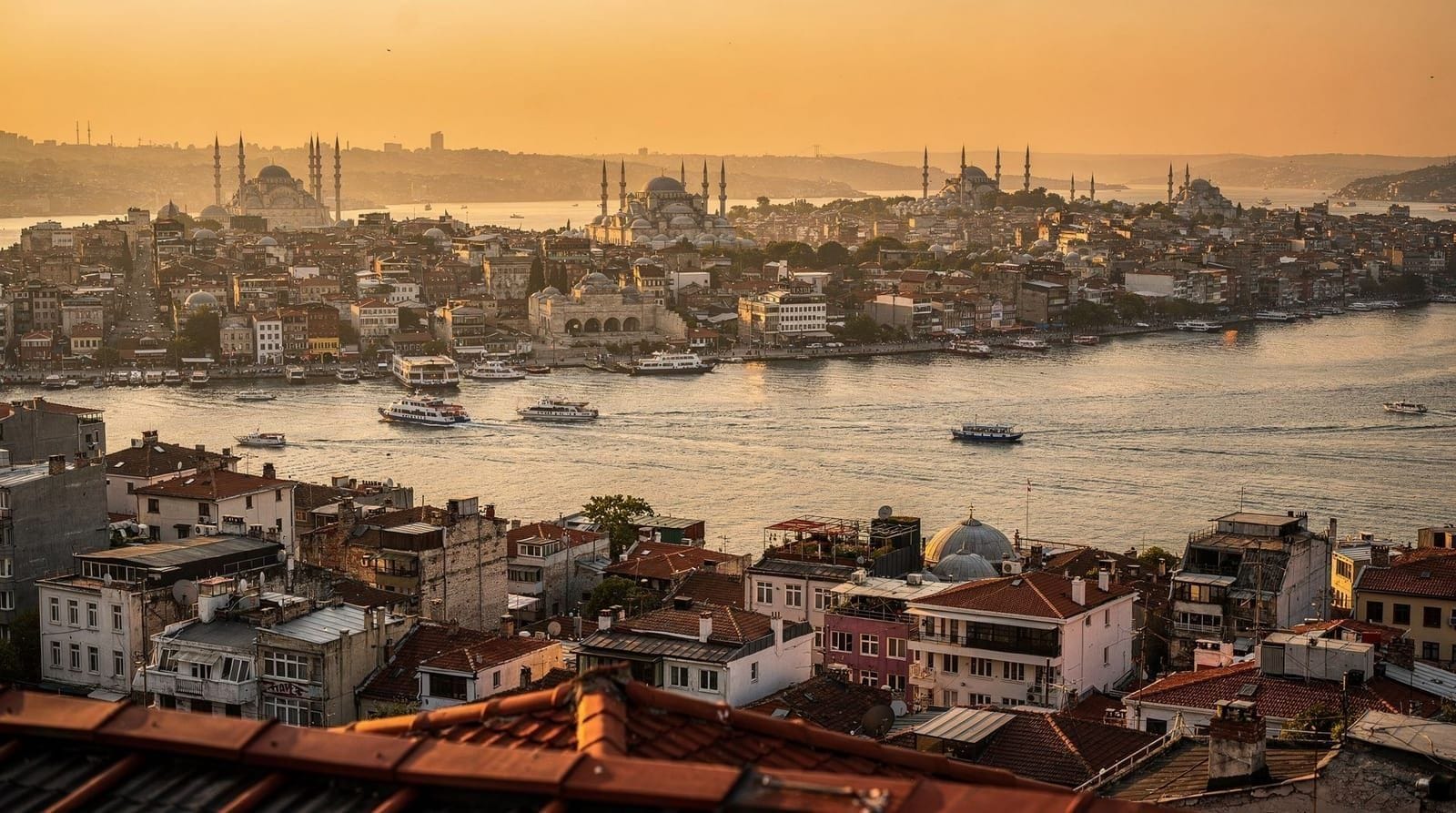
Istanbul in spring
Cappadocia: Goreme Hot Air Balloon Flight at Sunrise
Is spring the best time to visit Istanbul?
April and May are widely considered the best months. Temperatures 15–22°C, the famous tulip festival in April, peak balloon-season reliability in Cappadocia, and crowds well below summer peak. May offers the longest pre-summer days with the most comfortable conditions for walking.
Spring: the case for April and May
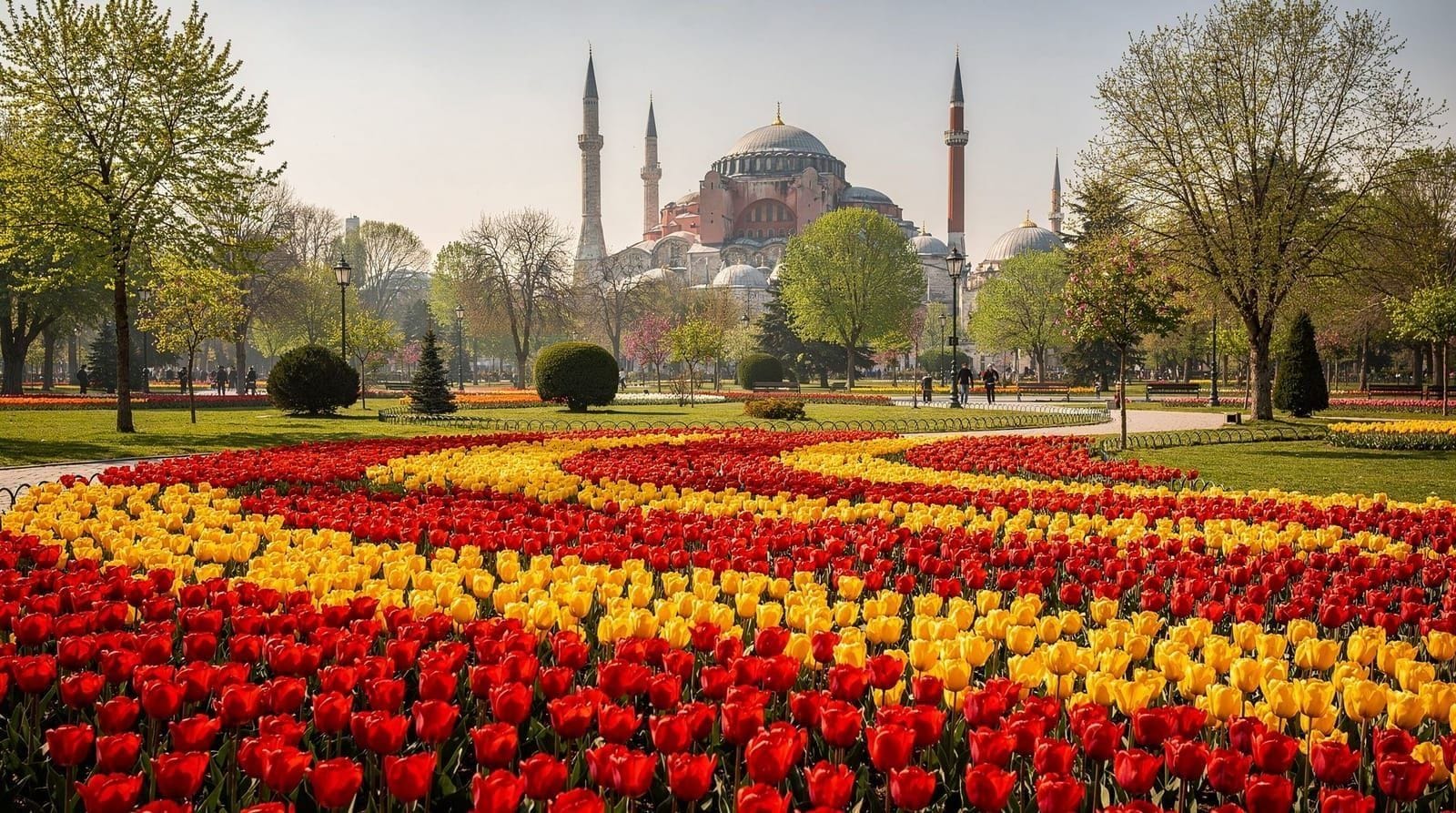
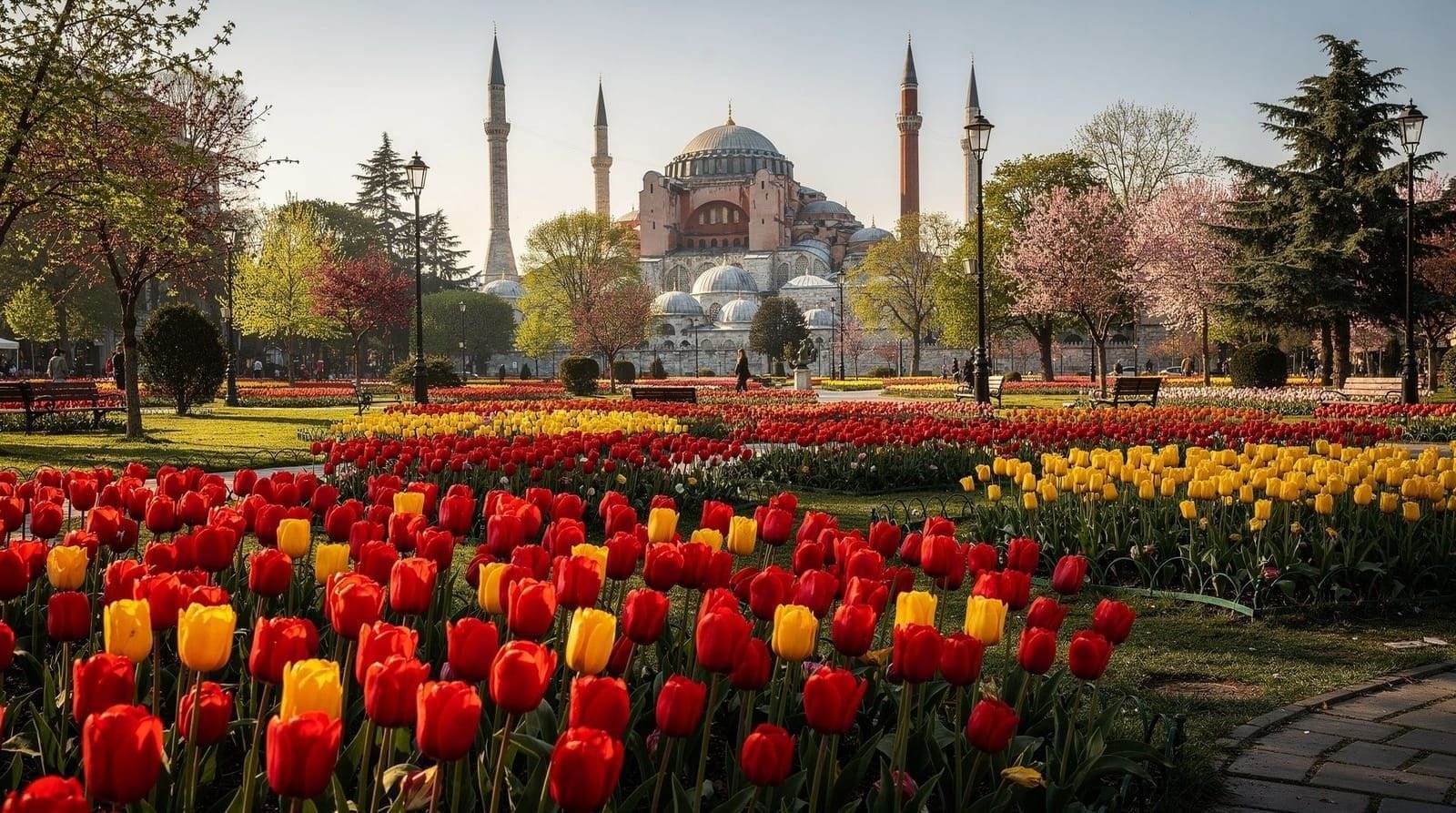
Ask any frequent Istanbul visitor which months they prefer, and the overwhelming answer is April or May. The reasons are consistent: the city is alive but not overwhelmed, temperatures are ideal for hours of walking through Sultanahmet, Balat, and the Asian side, and — uniquely for April — millions of tulips bloom across the city’s parks in a display that has few equivalents in Europe.
Spring also aligns with the most reliable hot-air balloon weather in Cappadocia, making an Istanbul–Cappadocia combination trip in April–May one of the strongest itinerary pairings in Turkey.
| Best months | April (tulips) or May (warmth, long days) |
| Temperatures | 12–23°C across the season |
| Crowds | moderate, rising through May |
| Standout event | Lale Festivali (tulip festival), all of April |
| Book ahead | Cappadocia balloon 4–6 weeks; hotels 4–8 weeks for peak April |
Spring month by month
| Month | Avg. temp | Rain | Crowds | Best for |
|---|---|---|---|---|
| March | 8–14°C | Frequent, brief | Low | Lower prices, cherry blossom |
| April | 14–18°C | Occasional showers | Moderate | Tulips, balloon flights, sightseeing |
| May | 18–23°C | Rare | Moderate-high | Bosphorus cruises, outdoor dining |
The tulip festival (Lale Festivali)
Istanbul’s relationship with tulips predates the Netherlands by centuries. The Ottoman court was obsessed with the flower from the late 16th century — the Tulip Era (Lale Devri) of the early 18th century is named for it. Every April, the city plants an estimated 30 million bulbs across parks, roundabouts, and garden areas.
The major displays:
- Emirgan Park (Emirgan Korusu) — the flagship display. Massive parkland on the European Bosphorus shore, 30 minutes by bus or taxi from Sultanahmet. Free entry. Packed on weekends; go early in the morning on a weekday.
- Gülhane Park — attached to Topkapı Palace. Convenient after a palace visit. Free entry.
- Hippodrome / Sultanahmet Square — flower beds around the German Fountain and the obelisks. Good for photos with the Blue Mosque in the background.
- Yıldız Park (near Beşiktaş) — less crowded, quieter, good views.
- Kadıköy (Asian side) — neighbourhood parks and medians also participate.
The festival officially runs through April, but peak bloom varies year to year with temperature — the first two weeks of April are typically strongest. Late March warm spells can accelerate blooms; a cold snap can delay them into mid-April. Check local news (hurriyet.com.tr) for current bloom status if timing your arrival around the peak.
March: the transition month
March is the month most people get wrong. Early March can still be cold and grey (8–12°C). By late March, warm spells alternate with final winter rain. Easter week (late March or early April) brings European tourists and can cause hotel price spikes.
The Ramadan period in 2026 ends around 19 March (approximately), meaning the first week of spring sightseeing in late March 2026 may overlap with the festive Eid al-Fitr atmosphere. This is actually a positive experience if you encounter it — communal meals, decorated streets near the mosques, and a celebratory mood.
What March offers: lower prices than April, beginning of terrace restaurant openings, and cherry blossoms in Gülhane Park (usually early-to-mid March) before the tulips arrive.
April: the sweet spot
April averages 14–18°C with highs occasionally reaching 22°C in the last week. Rain is possible — typically short afternoon showers rather than persistent drizzle. Pack a compact waterproof. Days are getting longer (sunset 7:30–8pm by late April).
What works well in April:
- Sultanahmet sightseeing without summer queue pressure — book Hagia Sophia and Topkapı 2–3 days ahead (not 7 days as in summer)
- Bosphorus cruises in pleasant temperatures and spring light
- The tulip parks, especially Emirgan, on weekday mornings
- Balat/Fener walking tour — the colourful streets of Balat are photogenic in spring light without summer crowds
- Day trips: the Princes’ Islands are fully operational and pleasant; Gallipoli/Troy excursions are excellent in April (meaningful, historically significant sites that are at their best in mild weather)
Cappadocia in April:
April is the single best month for Cappadocia balloon flights. The dawn light over the fairy chimneys, the lower wind rates, and the post-Ramadan relative quiet at hotels combine to make this the premium window. Book the balloon and your cave hotel accommodation 4–6 weeks ahead — April fills up faster than any other month.
If you plan to combine Istanbul and Cappadocia, see the Cappadocia from Istanbul guide for flight logistics and the honest assessment of whether a “day trip” is feasible (spoiler: it technically exists but an overnight stay is strongly recommended).
May: warm, long days, ideal conditions
May is the warmest spring month — averages 18–23°C, with highs occasionally reaching 26°C by late May (essentially early summer). Tulips are gone by mid-May, replaced by roses and general greenery. Days are long (sunset 8–8:30pm).
May crowds are noticeably larger than April — European school holidays begin, and the post-Easter city is busier. But the conditions are excellent: outdoor dining is fully operational, rooftop bars open, and the Bosphorus is beautiful in late afternoon light.
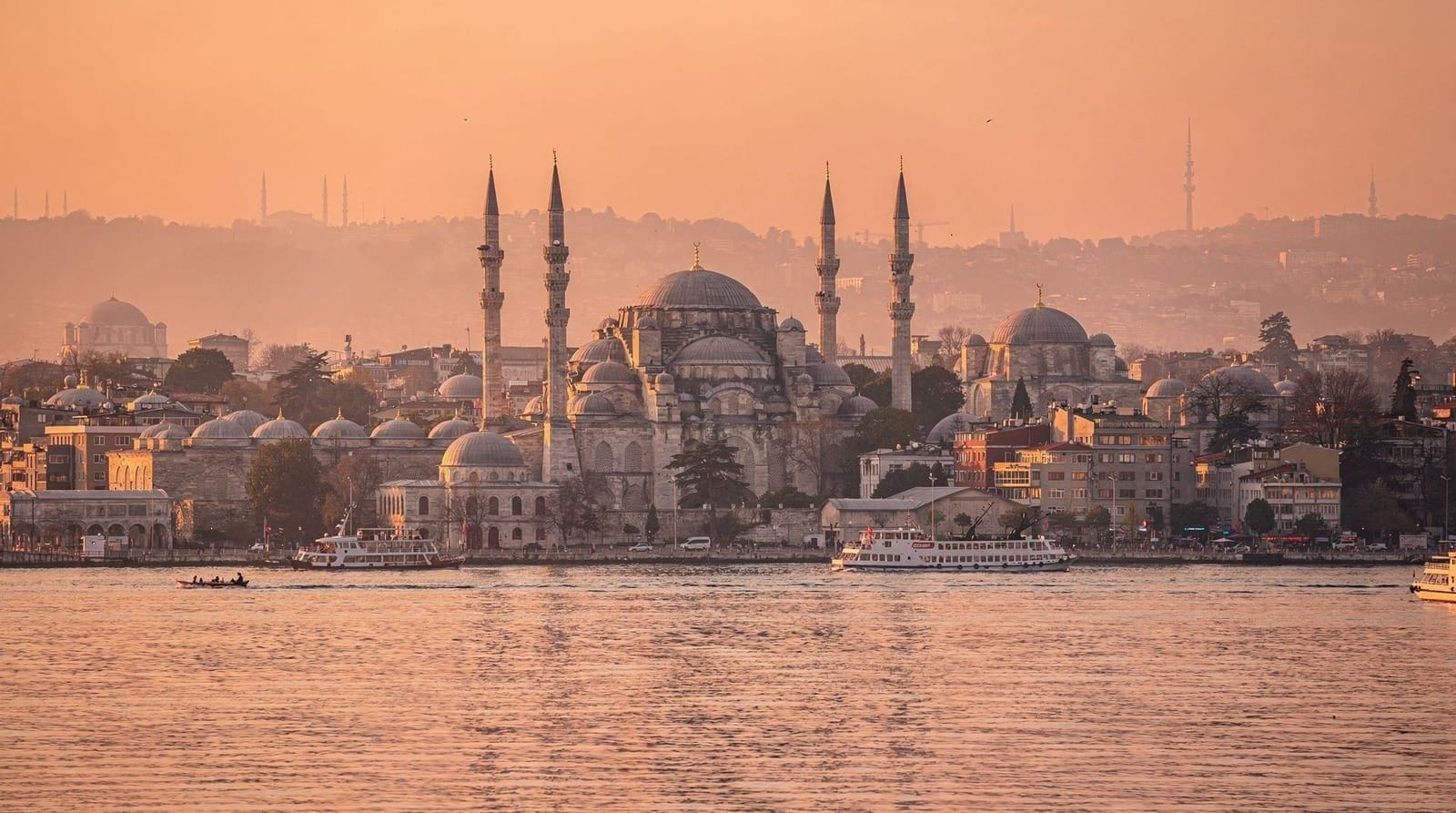
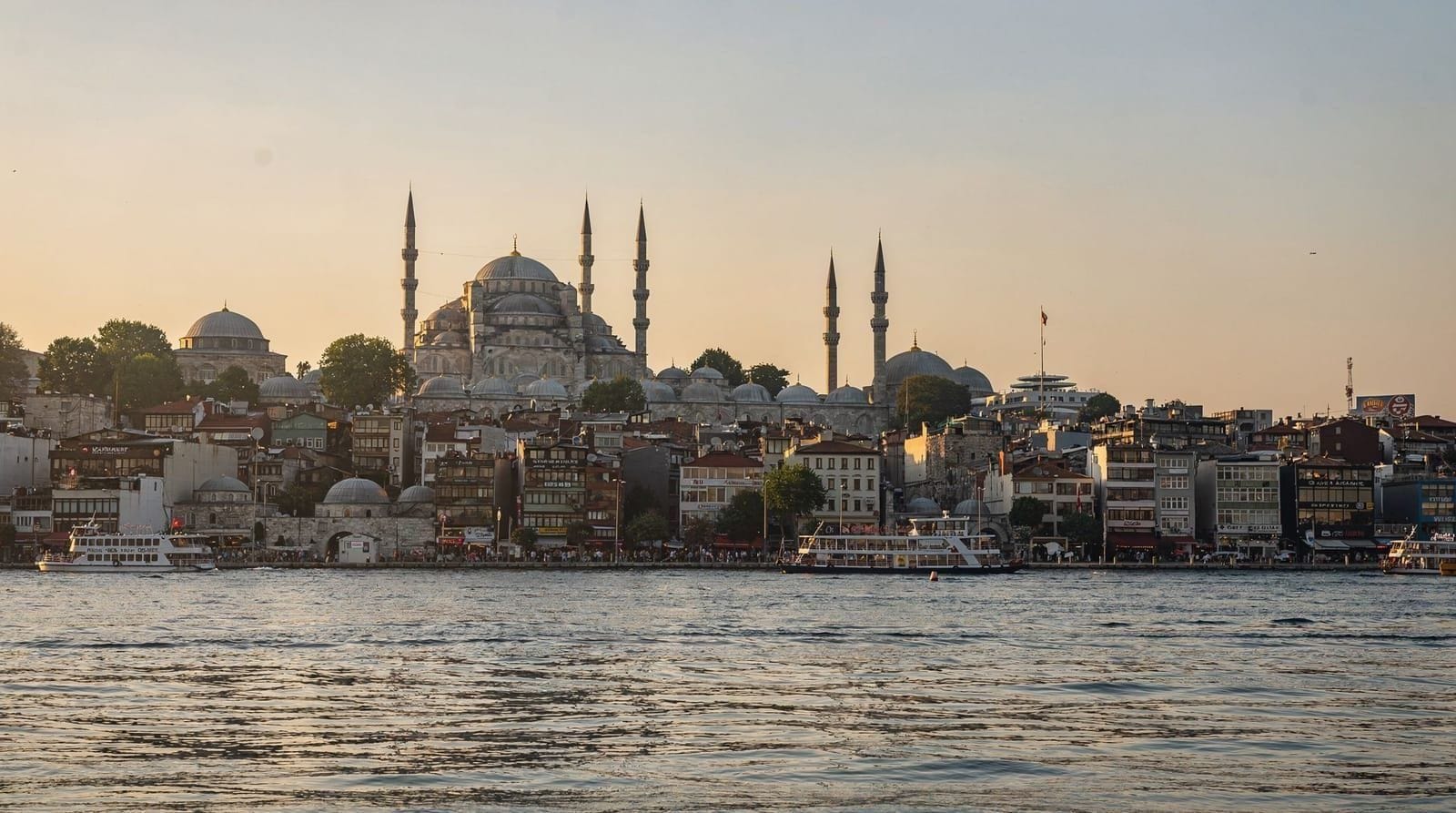
A Bosphorus sunset cruise in May is one of Istanbul’s defining experiences — warm enough to stand on the deck comfortably, light perfect for the European and Asian shores.
Spring day trips
Spring conditions make Istanbul’s day trips particularly rewarding:
Bursa (1.5 hours) — by fast ferry to Mudanya then bus. The Ulu Cami, the Silk Bazaar, and the Uludağ mountain cable car are all more pleasant in mild spring weather. İskender kebap is the local specialty — Kebapçı İskender on Atatürk Caddesi is the original. See the Bursa from Istanbul guide.
Princes’ Islands — the islands emerge from winter quiet in April, with fewer visitors than summer but ferries back on full schedule. Walking and cycling around Büyükada in 18°C is infinitely more pleasant than 33°C. See the Princes’ Islands day trip guide.
Gallipoli and Troy — a historically significant 2-day trip that makes more sense in mild weather. The battlefields of Gallipoli and the archaeological site of Troy require walking in the sun; spring is ideal. Distances from Istanbul require 2 days to do justice. See the Gallipoli and Troy from Istanbul guide.
Spring packing list
- Light waterproof jacket (brief showers likely in March–April)
- Layers for temperature swings (morning 12°C, afternoon 20°C)
- Comfortable walking shoes (Sultanahmet cobblestones; Emirgan Park paths)
- Small daypack for carry items
- Headscarf/wrap for mosque visits (women; usually provided at entrances but better to bring your own)
- Sunscreen for April–May (UV index rising; Bosphorus reflection intensifies it)
Practical booking guidance for spring
Hotels: Book 4–8 weeks ahead for mid-April (peak tulip period). Prices are substantially below summer but not as low as January–February. A mid-range Sultanahmet boutique in April typically runs 2,500–5,000 TRY per night (125–250 USD at mid-2026 rates; verify).
Major sites: For Hagia Sophia, Topkapı, and Basilica Cistern, 3–5 days advance online booking is sufficient in most of April (more lead time needed for late April/Golden Week adjacency). In May, extend to 7 days.
Cappadocia balloon: 4–6 weeks minimum. Refundable options exist but cost more — worth it given weather cancellation risk even in April.
Neighbourhoods that work best in spring weather
Mild temperatures make walking-heavy neighbourhoods far more rewarding than they are in summer heat or winter rain. Balat and Fener’s hilly, stair-heavy streets are genuinely pleasant to explore on foot in April light, and Kadıköy on the Asian side rewards an unhurried afternoon wander through its market streets. For an overview of how the city’s neighbourhoods differ and which suit a spring itinerary, see the Istanbul neighbourhoods overview.
Museum and pass strategy for spring visits
Spring’s moderate crowds (lighter than summer, heavier than deep winter) make a multi-attraction pass worth the maths for anyone visiting 4+ paid sites. Compare the options in the Istanbul museum pass guide and the pass comparison guide before booking individual tickets — in peak April weeks, a pass with skip-the-line access can save real queue time at Topkapı and the Basilica Cistern.
Shaping a spring day in the old city
Spring rewards a slow start. Begin in the mosque district of Sultanahmet while the light is soft, then let the afternoon drift toward the water. If you only have a short stay, the Istanbul in one day guide and the one-day itinerary show how to fit the essentials around a walk through a tulip park. Visitors with a little more time will find the three-day itinerary leaves room for a long lunch and an unhurried ferry crossing, which is exactly what spring weather invites.
The two great domes are worth visiting early, before tour groups gather. The Hagia Sophia visiting guide explains how to approach the visit, and the Blue Mosque visiting guide covers the etiquette that applies whatever the weather. Pair them with a break in a nearby park, and you have a morning that feels both historic and relaxed.
Eating outdoors and moving between neighbourhoods
One of spring’s quiet pleasures is that terraces reopen and the city starts eating outside again. Breakfast is the easiest place to feel it: a table in the sun, tea in a small glass, and nowhere to be for an hour. The best Turkish breakfast guide is a good starting point, and the where to eat in Istanbul guide helps you choose an evening spot once the days stretch out. If you prefer to graze as you walk, the street food guide suits mild afternoons far better than hot summer ones.
Getting around is part of the fun in this season. Ferries are at their best when you can stand on the open deck without squinting against the sun or shivering in the wind, and the Istanbul ferries guide explains how the crossings work. For the practical side of buses, trams and the rest, the getting around Istanbul guide and the Istanbulkart guide save you from fumbling at ticket machines. Spring is also a natural time for the Asian shore, so the Asian side guide rewards anyone who wants a quieter afternoon than the old city allows.
Reading the weather without over-planning
Spring weather in Istanbul is changeable, and the best approach is to plan in layers rather than in fixed hours. Keep your outdoor highlights flexible, and hold a couple of indoor options in reserve for the odd grey or wet afternoon. Museums, covered bazaars and hammams all work well as fallbacks, and a rainy hour is often a good excuse to browse the Grand Bazaar or to settle into a long coffee. If a shower catches you in the open, there is rarely any need to abandon the day; most spring rain passes and the streets look freshly washed afterwards, which is a lovely time for photographs.
It also helps to decide your priorities before you arrive. If tulips are the reason for your trip, anchor your days around the parks and keep the rest loose. If you care more about long evenings on the water, choose later spring and build your days around the shoreline. The best time to visit Istanbul guide puts spring in the context of the other seasons, and the spring tulips blog post gives a more personal take on chasing the blooms.
Combining spring in Istanbul with the rest of Turkey
Because the weather is kind across much of the country, spring is a natural moment to stretch a trip beyond the city. The Istanbul and Cappadocia in five days plan is the classic pairing, built around the balloon flights mentioned above. Travellers with more time can look at the seven-day route through Cappadocia, Ephesus and Pamukkale, which links the city with the country’s most visited ancient and natural sights. Whichever shape you choose, remember that overnight stays make these extensions far more comfortable than rushed same-day versions.
Finally, give yourself permission to leave gaps. The best spring memories in Istanbul tend to come from the unplanned moments: a bench in a blooming park, a ferry you boarded on impulse, a side street that turned out to be lovely. A well-paced itinerary leaves room for exactly those.
Frequently asked questions about Istanbul in spring
When is the Istanbul tulip festival?
How warm is Istanbul in April?
Is May better than April in Istanbul?
Can I see hot-air balloons over Cappadocia in spring?
Is Easter a busy time in Istanbul?
What should I wear in Istanbul in spring?
Top experiences
Bookable activities with verified prices and instant confirmation on GetYourGuide.