Istanbul in summer
Istanbul: Bosphorus Sightseeing Cruise with Sunset Option
Is Istanbul good to visit in summer?
Summer is Istanbul's most expensive and most crowded season. Heat (28–33°C, humid) and peak-tourist volume at all major sites make it challenging. It is rewarding for nightlife, Bosphorus evenings, and Princes' Islands — but requires advance booking and early-morning or late-evening sightseeing.
The honest case for and against Istanbul in summer
Every travel blog will tell you that April–May and September–October are better than summer. That is correct. But millions of people visit in June–August and many have excellent trips — because they manage the logistics properly.
| Temperatures | 28–33°C, humid |
| Crowds | peak season, book everything ahead |
| Hotel prices | 2–3x winter rates in Sultanahmet |
| Best sightseeing window | before 9:30am or after 5pm |
| Standout activity | Bosphorus sunset cruise, Princes’ Islands |
Summer month by month
| Month | Avg. temp | Crowds | Note |
|---|---|---|---|
| June | 24–29°C | Rising | Least crowded of the three, still hot |
| July | 27–33°C | Peak | Highest queues, book everything |
| August | 27–33°C | Peak | European + Gulf holiday overlap, priciest hotels |
The core challenges are real:
- Heat and humidity — 28–33°C with 65–75% humidity. Not comfortable for midday walking between monuments.
- Crowds — Istanbul had 20 million visitors in 2023, and peak tourist numbers concentrate in summer. Hagia Sophia queues, Grand Bazaar congestion, and Bosphorus ferry masses are not exaggerated.
- Prices — hotels in Sultanahmet can cost 2–3x their winter rate.
The real summer advantages:
- Long evenings — sunset at 8–8:30pm; outdoor restaurants, rooftop bars, and live music until late.
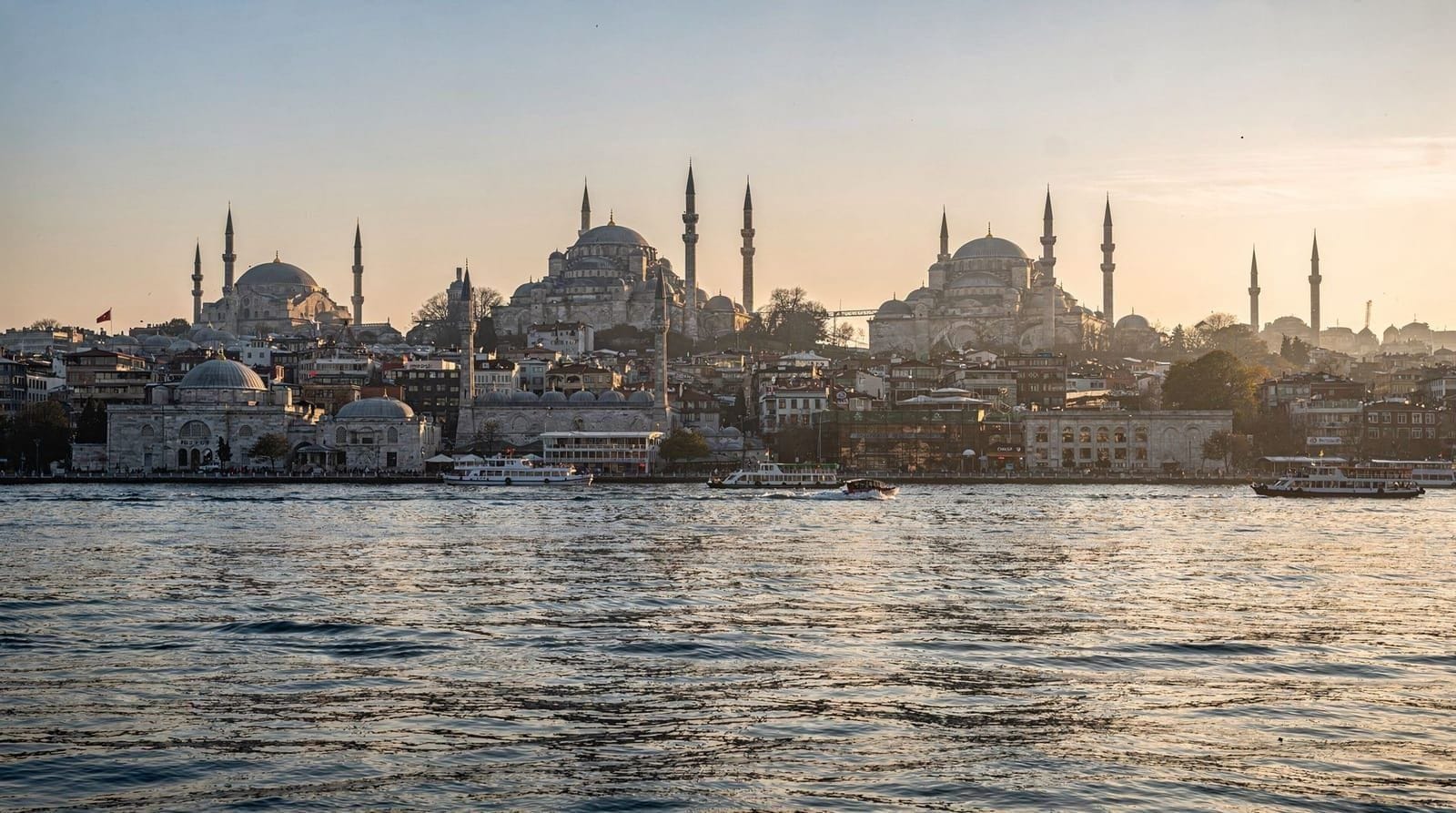
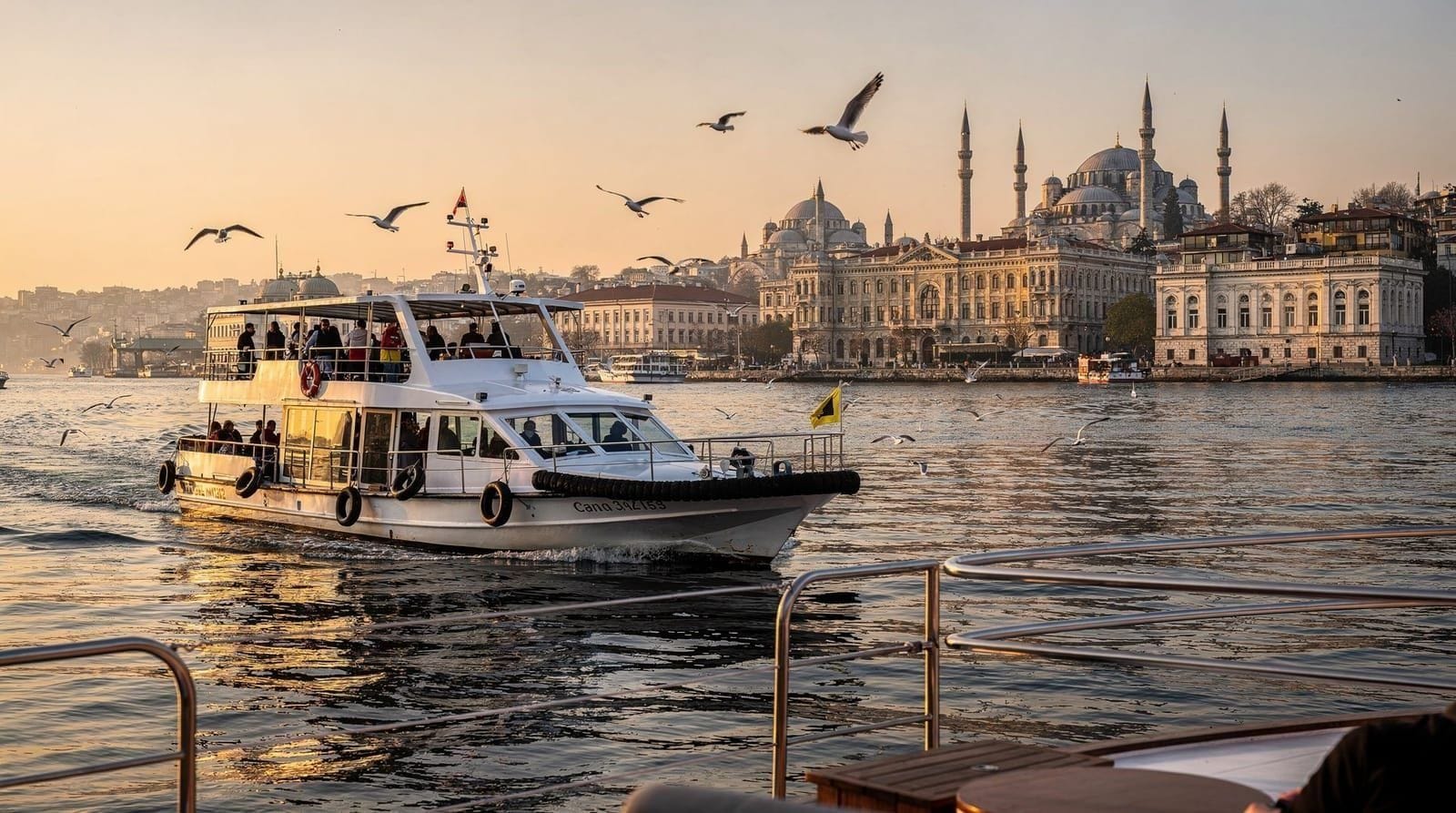
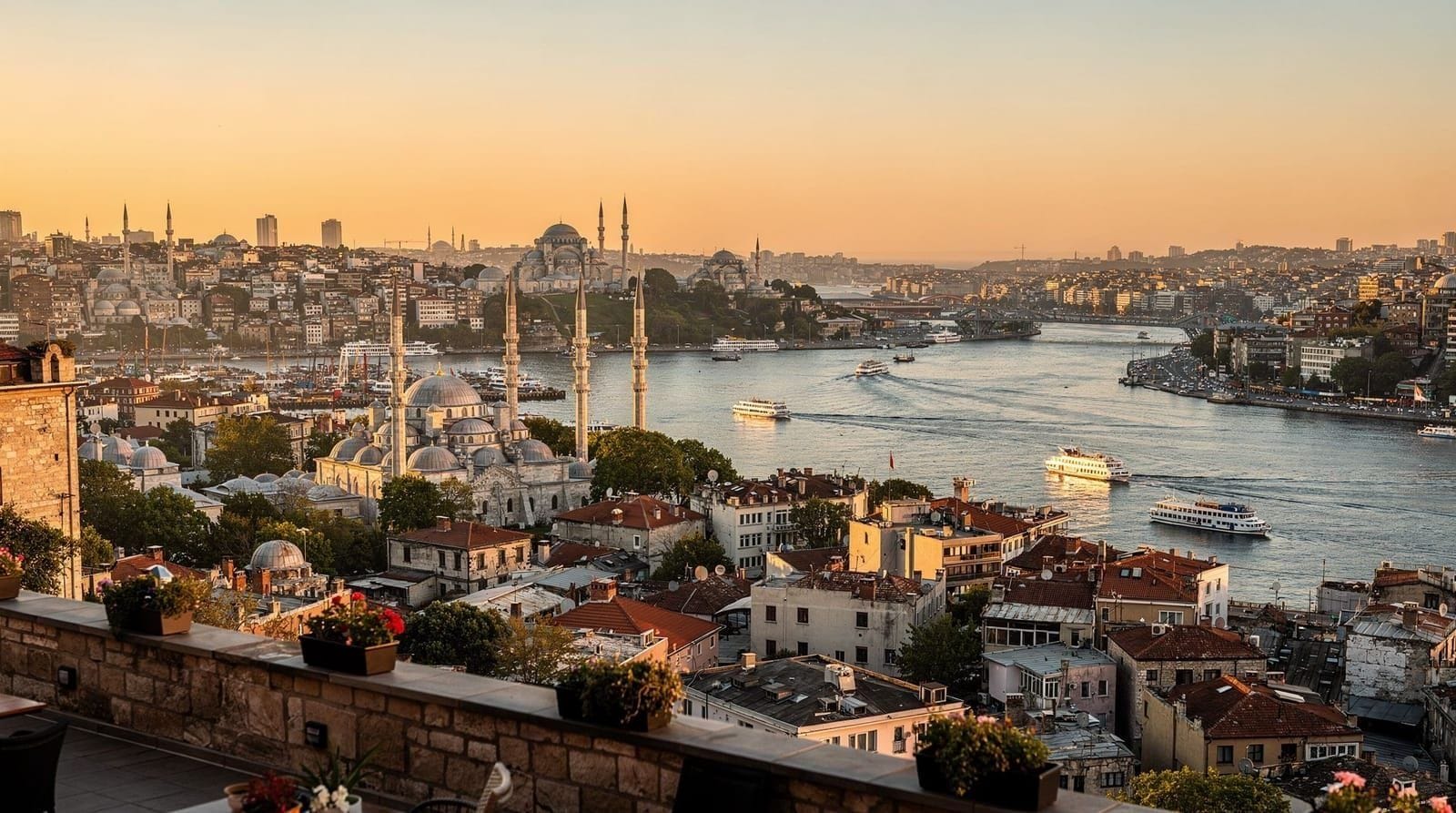
- Bosphorus at its best — warm, calm water; evening cruises with golden light on the European and Asian shores.
- Princes’ Islands — accessible by public ferry or tour; no cars, pine-scented air, sea swimming.
- Full nightlife — Beyoğlu, Kadıköy, and Beşiktaş bars fully open; summer concerts and festivals.
How to survive summer sightseeing
The early morning rule
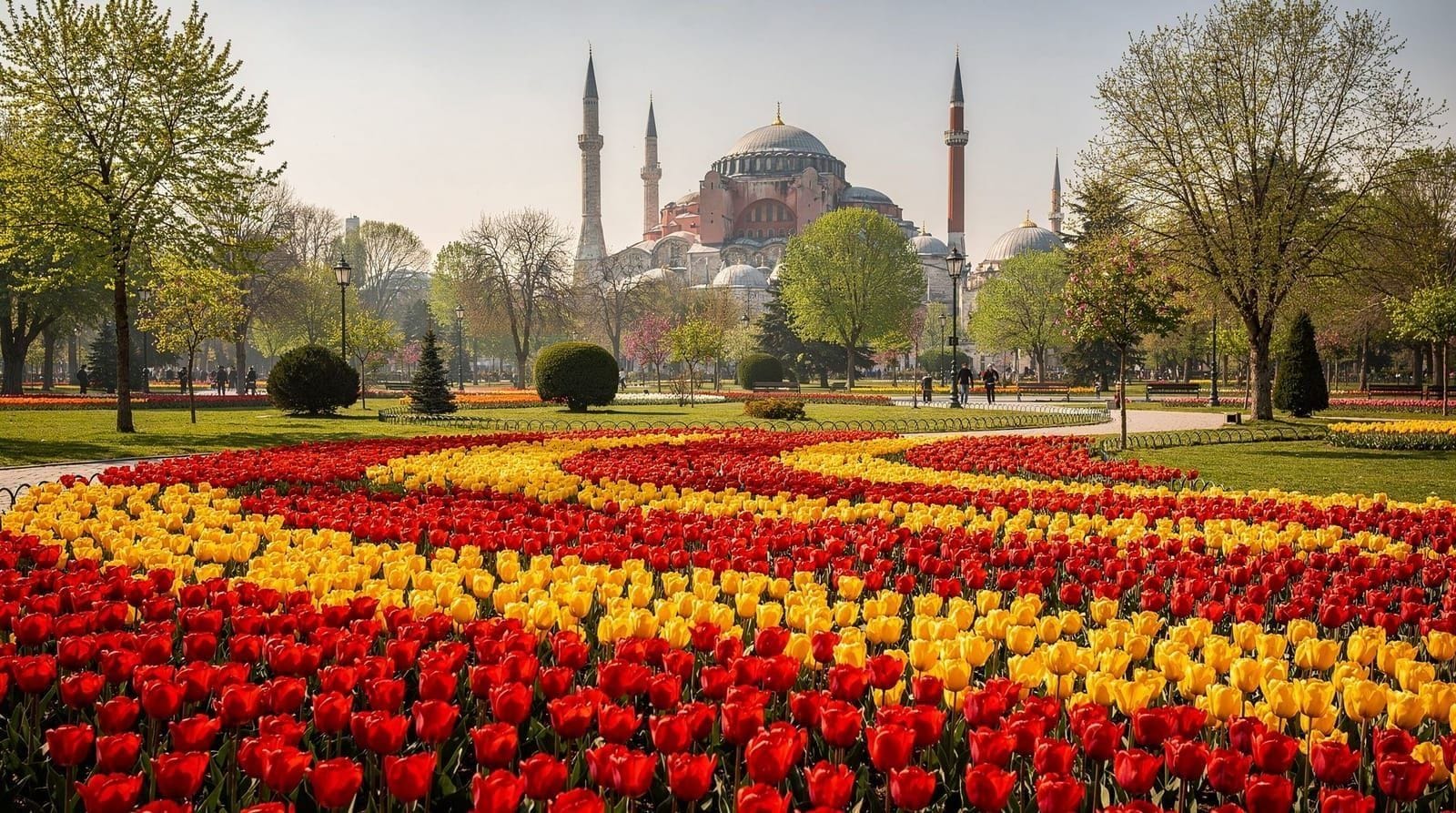
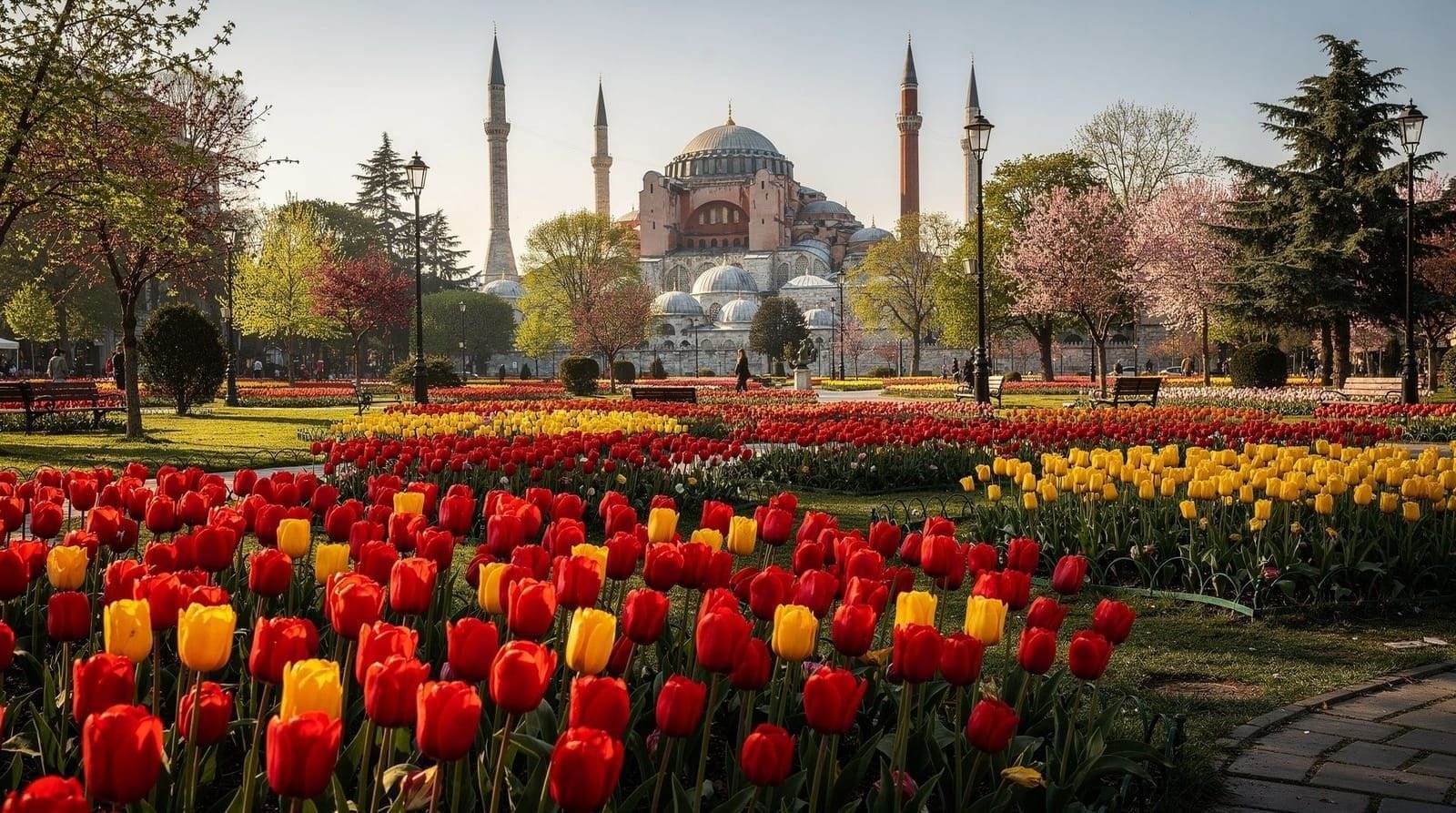
The single most effective tactic: start at 8am or earlier. Hagia Sophia opens at 9am — arriving at 8:45am puts you among the first 100 people through the door. By 11am, queues are already building. The same logic applies to Topkapı Palace, Basilica Cistern, and the Galata Tower.
Book tickets online before your trip. For the most popular sites, same-day availability is not guaranteed in July–August.
Midday rest
From 1pm to 4pm, do what Istanbul residents do: find shade, eat slowly, and recover. The Grand Bazaar’s arcaded passages are actually cooler than the street — interior temperature rarely exceeds 27°C even in peak summer, compared to 35°C+ outside. The Basilica Cistern maintains a constant 13°C.
Evening first approach
For certain sights, visiting in late afternoon or evening is distinctly better:
- Bosphorus cruise — the sunset option makes golden-hour light across the water a feature
- Galata Tower — late afternoon for the best light and sea views
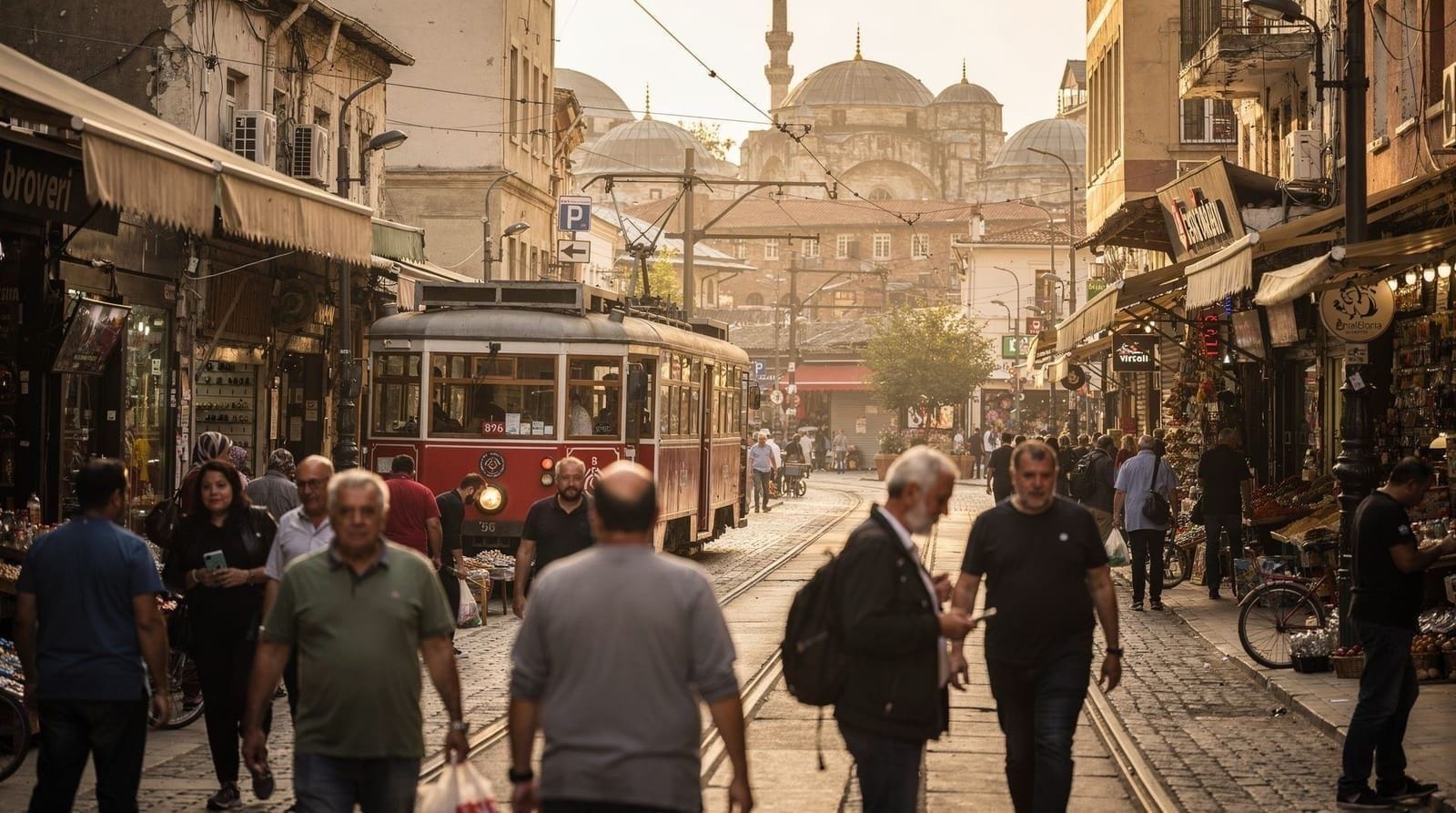
- Beyoğlu/İstiklal Street — most alive from 5pm onwards
- Hammam — a warm hammam followed by cool melon and apple tea on the terrace is a genuine pleasure after a hot day
Best summer-specific activities
Princes’ Islands day trip
The Princes’ Islands (Adalar) are at their best in summer. Büyükada, the largest island, has no cars — only horse-drawn carriages and bicycles. The surrounding sea is warm enough for swimming at various spots around the island’s edges (ask locals for the current best beach access). The public ferry from Eminönü or Kabataş takes 60–90 minutes each way.
If taking the public ferry independently, use an Istanbulkart. Weekday visits avoid the severe weekend crowds. The ferry schedule increases in summer — departures roughly every 30–60 minutes.
Kadıköy market and food walk
The Asian side is cooled slightly by sea breezes and less congested than Sultanahmet in summer. Kadıköy’s covered market (Kadıköy Pazarı) is excellent for Turkish cheeses, olives, dried fruits, and fresh fish. Çiya Sofrası is the most celebrated restaurant in the neighbourhood — diverse regional Anatolian cooking, queues worth joining, reasonable prices. The ferry from Eminönü to Kadıköy takes 20 minutes and costs a few TRY on an Istanbulkart.
Rooftop bars and nightlife
Istanbul’s rooftop scene opens fully in summer. A few genuine options:
- Mikla (Marmara Pera hotel) — Beyoğlu rooftop with Bosphorus views and modern Anatolian cuisine. Higher-end.
- The House Hotel Bosphorus terrace — waterfront in Ortaköy.
- Babylon Bomonti (Bomontiada complex) — live music venue with outdoor area.
The Beyoğlu bar strip on and around Asmalı Mescit and Nevizade streets is lively nightly. Standard Istanbul scam note: be wary of strangers who approach you to join them at a bar — the “new friend scam” (inflated bill at a bar you didn’t independently choose) is a known risk in tourist-heavy parts of Beyoğlu. See Istanbul scams to avoid.
What summer visitors skip unnecessarily
Bosphorus morning cruise — many assume it’s too hot. In practice, the water breeze makes morning Bosphorus temperature far more pleasant than midday at the Grand Bazaar. Departures at 9–10am in summer are entirely comfortable.
Hammam in summer — counterintuitively excellent. The cool marble and cold water rinse make it a relief rather than a sweat. The Çemberlitaş Hamamı, a few steps from the Grand Bazaar, charges approximately 700–900 TRY (35–45 USD) for a basic kese scrub (mid-2026 rates; verify on arrival).
Ramadan confusion — Ramadan does not fall in summer 2026 (it ends in late March). No issue for summer visitors.
What summer visitors regret
Not booking Hagia Sophia in advance — this is the most common complaint. Without a pre-booked ticket, peak queues in July–August can exceed 90 minutes. The skip-the-line option exists for a reason.
Underestimating taxi scams — summer tourist volumes bring out the highest concentration of taxi meter scams and overcharging. Use BiTaksi or Uber (which calls an official taxi), agree fare before departure, or use the tram/metro. See getting around Istanbul for details.
Cappadocia “day trip” in summer — a same-day flight to Cappadocia, balloon, and return is exhausting and expensive. The balloon launches at 4–5am, meaning a 2–3am hotel pickup from Istanbul. If you want the balloon experience, stay at least one night in Göreme. Operators sell this as a “day trip from Istanbul” because it technically returns the same day — but call it what it is: a trip that starts at 1am and ends at midnight. See the day trip reality check.
Summer transport tips
- Istanbulkart is non-negotiable in summer — tap-in on tram T1 through Sultanahmet rather than queuing for tickets. Recharge at yellow vending machines.
- Metro M11 from IST airport — new and excellent; direct to Gayrettepe, change for rest of the network. Faster and cheaper than airport buses in summer traffic.
- Ferries to the Princes’ Islands — check IDO app for updated summer schedules. Weekday ferries are significantly less crowded than Saturday.
- Avoid taxis without meters — if a driver refuses to use the meter (taximeter), exit the car. Flat-rate scams targeting tourists are common.
Staying hydrated and pacing the day
Humidity makes Istanbul’s summer heat feel worse than the thermometer suggests, and dehydration sneaks up on visitors who are used to drier climates. Carry a refillable bottle — public fountains (çeşme) are common in older neighbourhoods and generally safe to drink from — and treat the midday rest as non-negotiable rather than optional. Alcohol and long lunches in direct sun compound heat fatigue faster than people expect; a slower pace with more shade breaks covers just as much ground by evening.
Choosing where to stay in summer heat
Air conditioning is not universal in budget Sultanahmet guesthouses, so confirm it explicitly before booking a stay in July or August — it matters more than it does in shoulder season. Neighbourhoods with a Bosphorus or sea breeze, like Beşiktaş or parts of Kadıköy, are noticeably more comfortable in the evenings than the interior streets of the old city. See the where to stay in Istanbul guide for a fuller comparison by season and budget.
A sample summer day that works
The pattern that holds up best in July and August is to split the day in two. Spend the early hours on one major monument, retreat during the hottest stretch, and come back out when the light softens. A day in the old city might begin at Hagia Sophia before the queues build, continue with the Basilica Cistern because it stays cool underground, and then break for a long lunch somewhere shaded. After the rest, a slow walk through Sultanahmet as the crowds thin gives you the same sights in far better conditions.
The evening is where summer earns its reputation. Cross to the European shore north of the Golden Horn, climb toward the Galata Tower for the late light, and let the evening drift down toward the waterfront for dinner. Nothing about this plan requires a rigid schedule; the point is simply to put the effort at the cool ends of the day and the rest in the middle.
Using the water to stay cool
Istanbul is a city built around the water, and in summer that is the most practical way to feel comfortable. A ferry crossing costs little effort and rewards you with a breeze that the narrow streets of the old city never get. The Bosphorus by public ferry guide explains how the routes work for visitors who want a cheap, cooling afternoon rather than a formal tour, and the Istanbul ferries guide covers the wider network.
If you prefer something more structured, the best Bosphorus cruise overview helps you compare formats. A sunset departure is the one most summer travellers remember, while a morning departure is the better pick for anyone who wants shade-free views without the worst of the heat. Either way, bring a light layer: the breeze on deck can feel surprisingly fresh once the sun drops.
Eating well when it is hot
Appetite changes in the heat, and Istanbul’s food scene adapts to it. Cold meze, grilled fish, fresh salads and fruit make far more sense than heavy stews at midday, and evening is the natural moment for a long table outdoors. The meze and rakı guide is a good starting point for sharing plates in the evening, and the Istanbul street food guide helps you graze between sights without committing to a sit-down lunch in the sun.
For breakfast, a leisurely Turkish spread on a shaded terrace is one of the best ways to begin a summer day before the temperature climbs. See the best Turkish breakfast guide for ideas on how to approach it. Sweet things also taste right in the evening, and the baklava and Turkish desserts guide explains what to look for at a proper dessert shop.
What to pack and wear
Light, breathable clothing is the baseline, but Istanbul adds a few local considerations. Mosques require covered shoulders and knees, so a lightweight scarf or thin long layer is more useful than it sounds, especially for women who also need to cover their hair. A hat, sunglasses and sunscreen matter on the open stretches between monuments, and comfortable shoes with good grip are worth the space because many historic streets are steep and paved with uneven stone. The Istanbul packing list goes through the full list, and the mosque etiquette guide covers what is expected inside.
Planning around the crowds
Summer crowding is not evenly spread. The most congested places are the headline monuments and the main tram corridor, while neighbourhoods a little away from the centre feel calmer. If you have flexibility, use weekdays for the big sights and keep weekends for places where a lively atmosphere is part of the appeal. For visitors who want to stretch beyond the headline list, the hidden gems in Istanbul guide suggests quieter corners, and the Balat and Fener walking guide is a good option for a morning stroll before the day heats up.
Families travelling in school holidays face the same heat with less flexibility, so it helps to read the Istanbul with kids guide before settling on a daily rhythm. Shorter outings, frequent breaks and indoor options keep everyone in better spirits. For a broader view of how the season compares with the rest of the year, the Istanbul weather by month page and the best time to visit Istanbul guide help you decide whether summer really is the right fit for your dates.
Frequently asked questions about Istanbul in summer
How hot is Istanbul in July and August?
How crowded is Istanbul in summer?
Are summer prices higher in Istanbul?
What is best to do in Istanbul in summer?
Is it worth going to the Princes' Islands in summer?
Is the Cappadocia balloon season running in summer?
Top experiences
Bookable activities with verified prices and instant confirmation on GetYourGuide.