Galata Tower visiting guide — tickets, views, and what to expect
Istanbul: Galata Tower Entry Ticket w/ Audio Guide
Is the Galata Tower worth visiting and what does it cost?
The Galata Tower gives Istanbul's best 360-degree city panorama. Entry is ~250–350 TRY (~8–10 USD, mid-2026). On a clear day it is excellent; on a hazy summer day it is less compelling. Book online to avoid the queue. Allow 45–60 minutes including the climb and observation deck time.
A 14th-century watchtower in a 21st-century city
The Galata Tower (Galata Kulesi) was built in 1348 by the Genoese colony of Galata as a watchtower for the independent trading quarter they had established on the northern bank of the Golden Horn. The Genoese controlled the Galata district under Byzantine suzerainty, and the tower — at 66.9 metres, the tallest structure in the city at the time — served both practical surveillance and prestige purposes.
After the Ottoman conquest of Constantinople in 1453, the tower remained standing and went through several phases of use: first as a prison, then as an astronomical observatory, and eventually as a fire-watching post. The medieval wooden cone at the top was replaced by the current conical roof structure after fires and earthquakes. The interior has been renovated multiple times; the current version includes a lift and a restaurant.
The 360-degree view from the observation deck is the reason to visit.
| Where | Galata neighbourhood, between Karaköy and Beyoğlu |
| Cost | Around 250-350 TRY entry |
| Time needed | 45-60 minutes, including the climb/lift and deck time |
| Getting there | Tram to Karaköy, then a 10-minute walk uphill |
| Best time | Clear days, October-November or March-April |
The view from the top
On a clear day, the Galata Tower panorama is the most comprehensive single viewpoint in Istanbul. From the exterior balcony and the floor-to-ceiling windows of the interior level, you see:
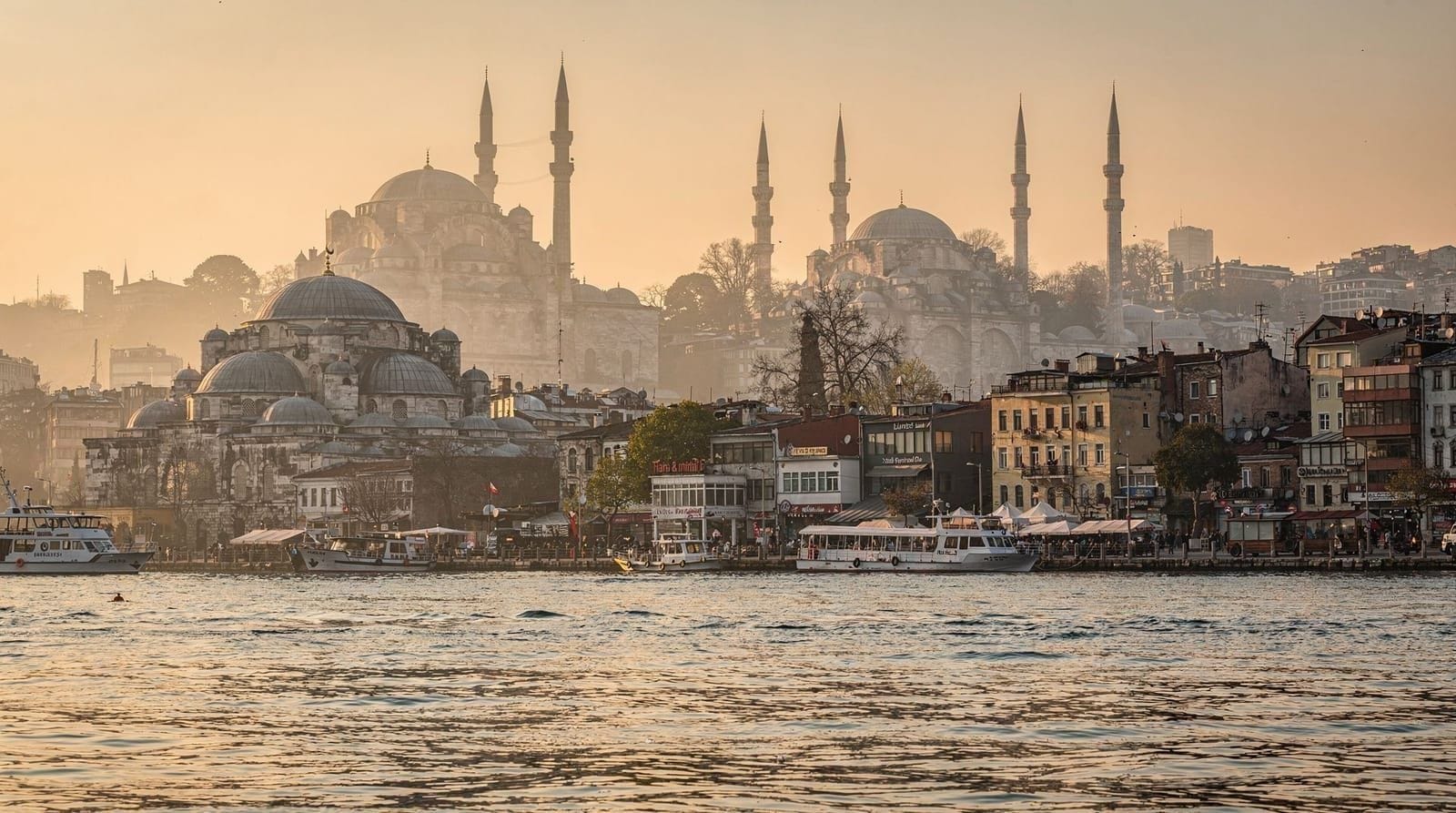
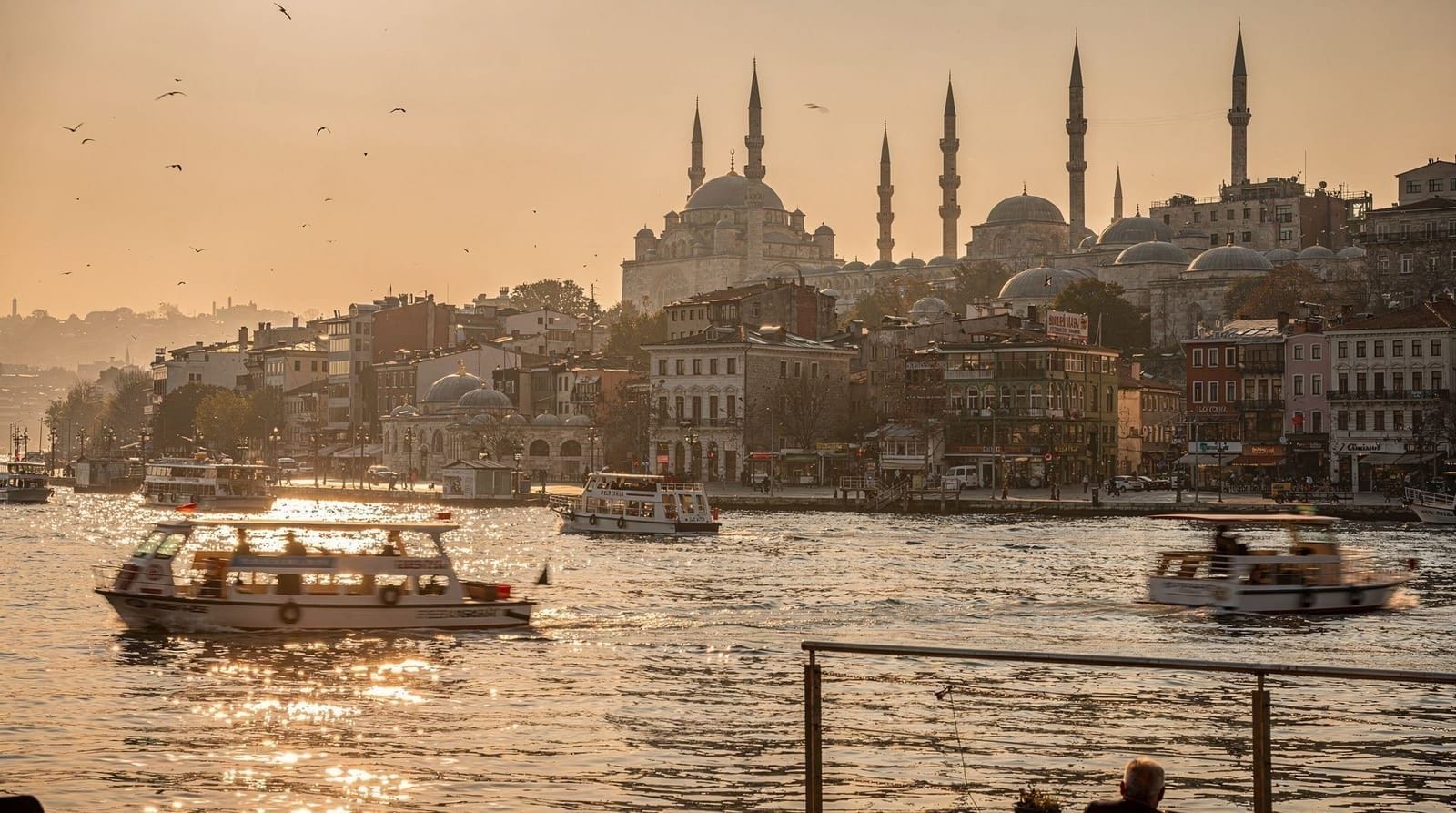
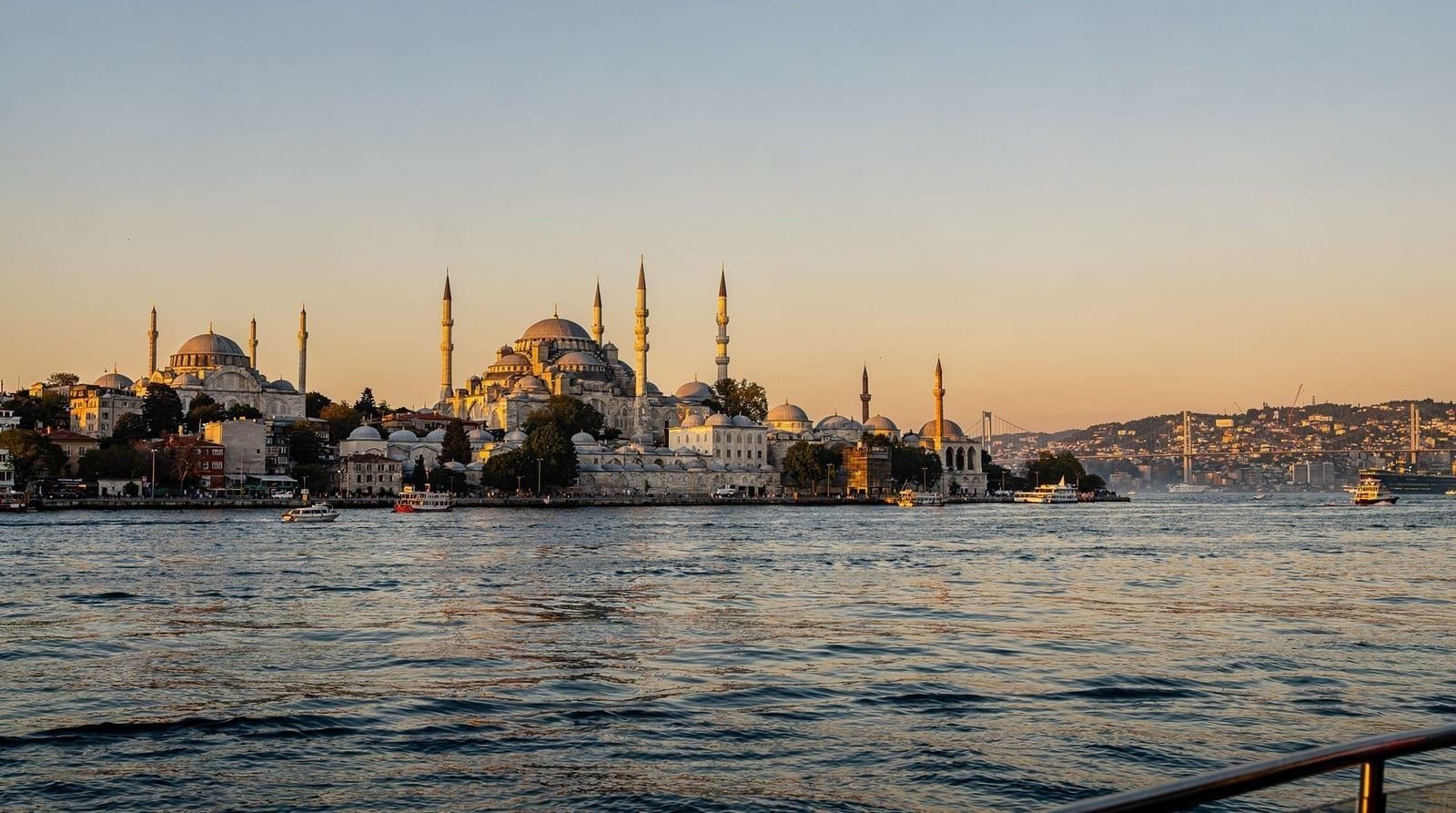
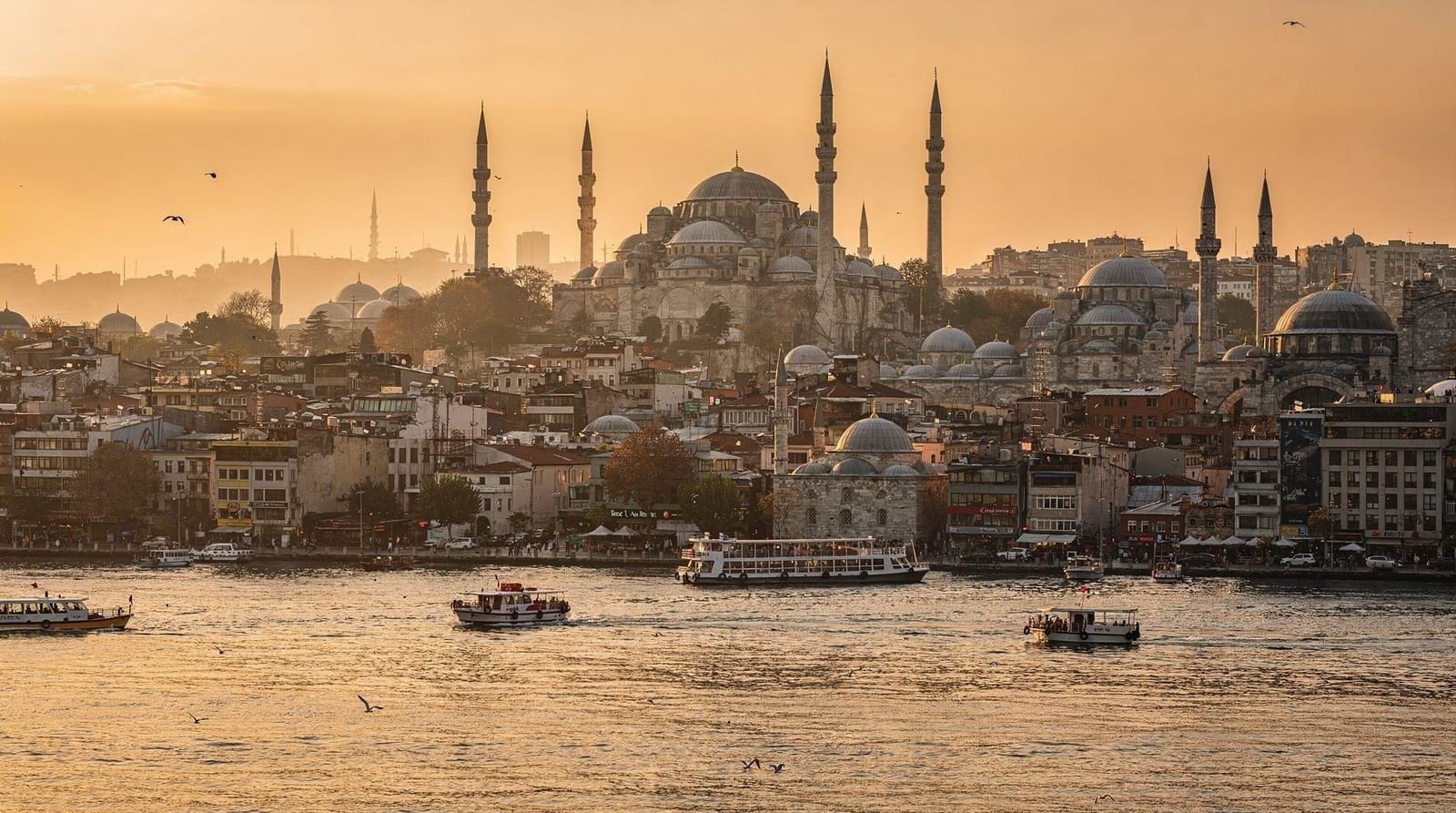
South and southeast: the old city (Sultanahmet) peninsula. The domes and minarets of Hagia Sophia and the Blue Mosque are visible 2–3 km away across the Golden Horn. Topkapı Palace sits on the end of the peninsula above the Bosphorus. The Sea of Marmara extends to the horizon.
East: the Bosphorus strait, with the Asian side visible across the water. The Maiden’s Tower (Kız Kulesi) is visible on its small island.
North: the modern city of Beyoğlu and Şişli spreading across the European hills. The forests above the city are visible on clear days.
West: the Golden Horn, with the historic bridges, and the old city walls at the western edge of the peninsula.
Haze is a significant factor in summer. Istanbul’s air quality in July–August often reduces visibility to 5–8 km. The tower view is most impressive in October–November and March–April when the air is clearest. Check conditions from the street before paying the entry fee — if you cannot clearly see the Hagia Sophia dome from the base of the tower, the view from the top will be hazy.
An entry ticket with audio guide adds historical audio context for the tower’s multi-century history in the city.
Getting there
The tower is in the Galata neighbourhood, between Karaköy (waterfront) and Beyoğlu (the main shopping and nightlife street, İstiklal Caddesi). From Sultanahmet: tram T1 to Karaköy or Eminönü, walk across the Galata Bridge and uphill approximately 10 minutes. From Taksim/Beyoğlu: walk down İstiklal toward Tünel, then south to the tower (~10 minutes).
The steep streets around the tower (Galata neighbourhood) are worth exploring on foot — independent coffee shops, bookshops, and tile/ceramics shops characterise the area.
See Galata Tower for a neighbourhood map and transport options.
Tickets and practical details
Entry fee: approximately 250–350 TRY (~8–10 USD, mid-2026). Prices have increased significantly in recent years as tourism has grown. Check current prices before visiting. If you’d rather not commit to a fixed time slot, an all-day entry ticket with audio guide lets you choose when to go up within the day.
Opening hours: 9 am–8:30 pm daily (last entry 8 pm). Extended hours for the restaurant.
Queue: without a pre-booked ticket, the queue at the ticket window can be 30–60 minutes in peak season. The online ticket typically allows you to enter via a separate, shorter entrance queue. Book at least a day ahead in summer.
Lift: available to the top level. The lift is small and the exterior balcony requires navigating steps.
Photography: the exterior balcony is the best photography position — no glass between you and the view. Interior shots through the floor-to-ceiling windows are also good. A wide-angle lens captures more of the panorama.
What is around the tower
The Galata neighbourhood has improved significantly as a restaurant and café destination over the past decade. The streets surrounding the tower are good for:
- Coffee: several high-quality independent coffee shops in the streets south and west of the tower
- Lunch: Karaköy (5 minutes walk downhill) has the best range
- Bookshops: Robinson Crusoe 389 is nearby on İstiklal; Galata has secondhand and antiquarian shops
See Karaköy and Beyoğlu and İstiklal Avenue for neighbourhood detail, or the dedicated Karaköy neighbourhood guide and Beyoğlu neighbourhood guide for a fuller street-level breakdown of each.
Is it worth the entry fee?
For most first-time visitors: yes, particularly on a clear day. The 360-degree view is unique in Istanbul and gives a spatial orientation of the city that is genuinely useful.
For visitors primarily interested in the view: note that the Süleymaniye Mosque terrace (free) and Pierre Loti Hill (near-free) give excellent views without entry fees, though neither gives a 360-degree panorama.
For visitors in hazy summer conditions: consider skipping or postponing. The view from the Galata Bridge approach to the tower (looking up the hill, free) is almost as dramatic from street level on a clear day.
For the full comparison of Istanbul viewpoints, see the best views in Istanbul guide, and for how Pierre Loti Hill and the free Süleymaniye terrace stack up against a paid entry, the Eyüp Sultan Mosque guide covers that side of the comparison in detail.
| Viewpoint | Cost | Panorama | Best for |
|---|---|---|---|
| Galata Tower | ~250-350 TRY | Full 360° | First-time orientation, city centre |
| Süleymaniye terrace | Free | Golden Horn arc | Budget travellers, sunset |
| Pierre Loti Hill | Free walk / ~50 TRY cable car | Golden Horn arc | Combining with Eyüp Sultan Mosque |
| Çamlıca Hill | Free (transport only) | Full Bosphorus | Clear-day photography, less central |
The Galata area: beyond the tower
The Galata Tower is the visual anchor of the neighbourhood, but the area has other things worth seeing:
Galata Mevlevihanesi: a Mevlevi lodge (tekke) where whirling dervishes performed for centuries. Now a museum with dervish artefacts and a performance space. Small entry fee. If you want to see an actual ceremony rather than just the museum, the whirling dervishes guide covers where and when performances take place.
Arab Mosque (Arap Camii): a Byzantine church converted to a Dominican church by the Genoese, then to a mosque. One of Istanbul’s few surviving Gothic-influenced religious buildings. Free.
Kamondo Stairs: a curving Art Nouveau staircase in the Karaköy neighbourhood just below the tower, built in the early 20th century for the banking family that lived nearby. A pleasant street-level sight.
For a combined tour of Galata Tower with the Chora Church and Balat neighbourhood, see Museums & monuments.
Timing your visit around the rest of Galata and Karaköy
The tower itself only needs 45-60 minutes, which makes it easy to underestimate how much time the surrounding neighbourhood deserves. A sensible half-day pairs an early tower visit (right at 9 am opening, before both the queue and the haze build up) with a slow wander down through Galata’s antique and ceramics shops toward Karaköy for lunch, finishing at the Kamondo Stairs and the waterfront. Trying to squeeze the tower in as an afterthought between other old-city sights usually means arriving in the queue-heavy late morning window and getting a hazier, more crowded view than the same visit an hour earlier would give.
How the tower fits into a wider Istanbul plan
The tower works best as an orientation stop early in a trip, because what you see from the top turns the map in your head into something concrete. Once you have picked out the old-city skyline, the Golden Horn and the Bosphorus, the rest of your days make more sense: you know which way is Sultanahmet, where the water divides Europe from Asia, and how far the old peninsula really is from the Beyoğlu side. If you are building a first itinerary, the Istanbul trip planning guide and the one-day Istanbul guide show where a tower visit slots in without wasting a morning.
Many travellers pair the tower with the old-city sights across the Golden Horn on the same day. That is possible, but it is worth being realistic: the old city and the Galata side are different moods, and each rewards slow walking. If you only have a short stay, the top things to do in Istanbul will help you decide what to put alongside the tower and what to leave for another trip. For a ready-made sequence, the Istanbul in 2 days itinerary keeps the Galata side and the old city on separate halves of the trip so neither feels rushed.
Choosing the right moment of the day
Light changes the experience more than most visitors expect. Early in the day the air tends to be cleaner and the queue shorter, which is why opening time is the safest slot. Late afternoon brings warmer light on the old-city domes and a softer feel over the water, but it also brings the heaviest crowds on the balcony, and you may find yourself waiting for a spot at the railing. Evening visits trade clarity for atmosphere: the city lights come on, the minarets are lit, and the Bosphorus turns dark and reflective. Photographers who care about detail usually prefer the clearer hours, while those who want mood often go back for a second visit near dusk.
Because the exterior balcony is narrow, it fills quickly. Move steadily around it rather than settling at one corner, and be considerate when others are waiting to photograph the same view. Take a moment to look at each direction in turn: the skyline to the south is the famous one, but the northern hills and the line of the Bosphorus to the east are just as revealing once you know what you are looking at.
Practical tips for a smoother visit
- Carry a light layer. The balcony is exposed, and wind at the top can make it feel cooler than the street, even on a mild day.
- Keep your hands free. The corridors and stairs are narrow, so a small bag is easier than a large backpack or a bulky camera setup.
- Hold bags and phones securely at the railing. You are high above the street, and nothing should be dangled over the edge.
- Wear comfortable shoes. The streets around the tower are steep and often cobbled, and you will be walking uphill from the waterfront or downhill from İstiklal.
- Leave time for the descent. The walk down toward Karaköy is part of the pleasure, so do not schedule something tight straight afterwards.
If you are travelling with children or with someone who finds heights uncomfortable, it helps to agree in advance how long you will stay on the balcony. The interior level with its large windows gives nearly the same view without the exposure. Families can find more ideas in the Istanbul with kids guide, which covers how to pace a day around younger travellers.
Walking routes that start or end at the tower
Because the tower sits at a junction of several neighbourhoods, it is a natural start or end point for a walk. One option is to head down the hill to the waterfront, cross toward the old city and continue on foot or by tram into Sultanahmet. Another is to climb up toward İstiklal Avenue and let the pedestrian street carry you toward Taksim, stopping in cafés and bookshops as you go. A third is to drift along the Karaköy waterfront, where the old port buildings now house cafés, galleries and small restaurants.
If hunger strikes after the climb, the where to eat in Istanbul guide and the Istanbul street food guide will point you toward something better than the closest tourist-facing terrace. For a sweet stop, the baklava and Turkish desserts guide explains what to look for. And if you are deciding where to base yourself so that the tower is a short walk away, the staying in Sultanahmet vs Beyoğlu comparison lays out the trade-offs honestly.
Getting around once you are down
After the tower, you will probably want to move on without retracing your steps. The getting around Istanbul guide and the Istanbulkart guide explain how the transport card and the different lines work together, which is useful because the Galata side is easy to reach by tram but is also a pleasant walk. If your plans take you across the water, the Istanbul ferries guide is a good companion, since a ferry ride makes an excellent way to see the same skyline you just viewed from above, this time from sea level.
Frequently asked questions about Galata Tower visiting guide — tickets, views, and what to expect
How much does the Galata Tower cost?
Do I need to book in advance?
What can you see from the Galata Tower?
How tall is the Galata Tower?
Is the Galata Tower restaurant worth it?
Is it accessible?
Top experiences
Bookable activities with verified prices and instant confirmation on GetYourGuide.