Whirling dervishes guide — how to see the Sema ceremony in Istanbul
Istanbul: Hodjapasha Whirling Dervishes Show & Exhibition
Duration: 1 hour
How do I see whirling dervishes in Istanbul?
The Hodjapasha Cultural Center near Sirkeci station runs the most accessible and professionally presented Sema ceremony — 1 hour, €30–40, several performances per week. For a more authentic (though less visitor-friendly) experience, the Galata Mevlevi Lodge runs ceremonial Sema performances on specific dates. Avoid the tourist dinner shows that add Sema as entertainment between belly dance and folk dance acts.
Quick answer: Hodjapasha Cultural Center is the most accessible venue — 1-hour Sema performance several times per week, €30–40. For the ceremonial version with traditional setting, the Galata Mevlevi Lodge runs performances on specific dates. Avoid dinner show versions where Sema is one act among several entertainment items.
| Where | Hodjapasha (Sirkeci), Galata Mevlevi Lodge (Beyoğlu), or near Hagia Sophia |
| Cost | Around €30–45 for a dedicated Sema; €60–120 for dinner-show packages |
| Time needed | 1 hour (Hodjapasha) to 90 min–2 hrs (full traditional ceremony) |
| Booking | 1–3 days ahead; 4–5 days in peak season (Apr–May, Jul–Aug, Oct) |
| Dress | Modest — shoulders covered, no shorts or sleeveless tops |
What the Sema ceremony actually is
The Sema is a meditative spiritual practice of the Mevlevi Order — the Sufi order founded in the 13th century by the followers of Rumi (Jalal ad-Din Muhammad Rumi, the Persian mystic poet). The spinning (sema — “listening to music, spiritual music”) represents the dervish’s mystic journey toward spiritual perfection.
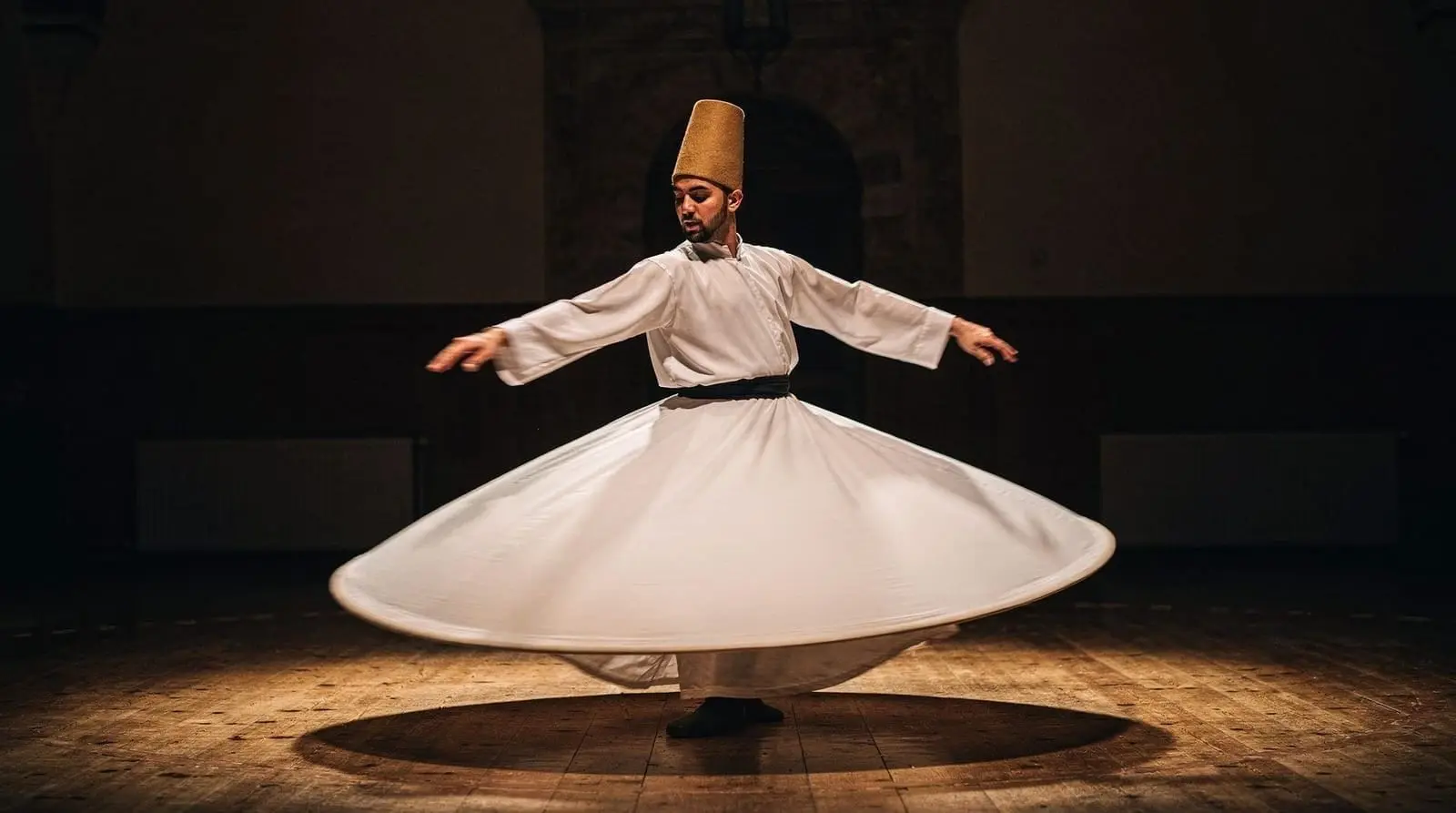
The semazen (practitioner) spins continuously on one foot — the left foot is the pivot, the right foot pushes — with the right arm raised palm-up (receiving divine grace from above) and the left arm lowered palm-down (transmitting it to the earth). The white robe (tennure) represents the ego’s shroud; the tall conical hat (sikke) represents the ego’s tombstone. The physical act of spinning is an embodied meditation.
For tourists, the question is: what version of this practice is accessible and meaningful? The spectrum runs from a 45-minute tourist dinner show where spinning is between belly dance and folk music, to a 90-minute ceremony at a functioning religious lodge. Both involve people in white robes spinning. The experience is entirely different.
Where to see whirling dervishes in Istanbul
Hodjapasha Cultural Center
Location: A converted 15th-century hammam in Sirkeci, near Eminönü station Format: 1-hour Sema performance in a restored hammam interior Frequency: Most days of the week, multiple time slots Price: €30–45 per person
The Hodjapasha is the most widely recommended tourist-accessible Sema venue in Istanbul. The former hammam space is genuinely beautiful — high arched ceiling, stone walls, good acoustics. Performances include the complete spinning ceremony with live ney (reed flute), kudüm (drum), and chanting.
The performers are trained professionals in the Mevlevi tradition. Whether the ceremony is “authentic” in a religious sense is a philosophical question — it is not a spontaneous religious practice, it is a culturally informed performance in a presentation context. For most visitors, this distinction matters less than whether it is well-executed (it is) and respectful (it is).
Booking: Advance booking recommended — performances sell out regularly in peak season.
Galata Mevlevi Lodge (Galata Mevlevihanesi)
Location: Galip Dede Caddesi, Beyoğlu, near Galata Tower Format: Traditional ceremonial Sema in a functioning Mevlevi lodge Frequency: Sundays and specific dates (check current schedule) Price: 200–400 TRY entry (museum entry covers the lodge; the ceremony has separate ticketing)
The Galata Mevlevi Lodge was established in the 15th century and is one of the oldest Mevlevi institutions in Istanbul. The lodge includes a museum (Divan Edebiyatı Müzesi) covering Ottoman poetry, calligraphy, and Mevlevi history, as well as the ceremony hall (semahane) where traditional Sema is performed.
This is the closest to a traditional ceremonial context available in Istanbul. The performances are less frequent (not daily) and the setting is more austere — less theatrical staging, closer to a genuinely spiritual atmosphere.
For visitors interested in the spiritual or historical dimension: Worth the additional effort to find a performance date and navigate Beyoğlu.
For first-timers wanting accessibility: Hodjapasha is more practical.
Mevlevi Sema ceremony near Hagia Sophia
A venue running Sema performances in the Sultanahmet area, in close proximity to Hagia Sophia. The setting (historic Istanbul backdrop) is atmospheric. The performance format is similar to Hodjapasha but in a different venue.
Good option for visitors staying in Sultanahmet who want to combine the ceremony with their Sultanahmet sightseeing day.
Venues compared
| Hodjapasha | Galata Mevlevi Lodge | Near Hagia Sophia | Dinner show | |
|---|---|---|---|---|
| Setting | Restored 15th-c. hammam | Functioning Mevlevi lodge | Sultanahmet venue | Banquet hall |
| Frequency | Most days | Sundays / specific dates | Regular | Nightly |
| Length | 1 hour | 90 min–2 hrs | ~1 hour | 10–15 min segment of 2 hrs |
| Feel | Presentational, well-executed | Closest to authentic | Presentational | Entertainment, not ceremony |
| Price | €30–45 | 200–400 TRY | Similar to Hodjapasha | €60–120 |
| Best for | Most first-time visitors | Those prioritising authenticity | Sultanahmet-based visitors | Those who want a full variety-show evening |
What to avoid: the tourist dinner show version
Several Istanbul venues offer a “Turkish Night Show” or similar package that includes Sema alongside other entertainment (belly dance, folk dance, Anatolian music) with dinner. These packages run €60–120 per person and include multiple performances.
The Sema component in these shows is typically 10–15 minutes of a 2-hour package. The spinning is genuine but the context (between belly dance acts, alcohol flowing, large group format) strips it of any spiritual dimension. If you specifically want to see the Sema, this is the least effective way to see it.
If you want a full evening of Turkish entertainment including multiple elements (not specifically the Sema ceremony), the dinner show format is described in the Turkish night show guide.
Understanding what you’re watching: the Sema ceremony structure
A full traditional Sema has four sections:
Naat — a poem in praise of the Prophet, sung a cappella by a hafız (memoriser of the Qur’an). Begins the ceremony in silence.
Devr-i Veled — a processional walk by the semazens around the hall three times, representing the spiritual journey. Each dervish wears a black cloak (hırka) that is removed before the spinning begins.
The four selams (greetings) — the spinning portion, divided into four musical movements representing four stages of spiritual ascent. This is the section that lasts the longest and is the visual centrepiece.
Closing prayer — the ceremony ends with a prayer and the sheik (leader) leading a concluding walk.
At Hodjapasha and similar venues, this structure is maintained but often condensed — the naat may be shortened or the selams reduced to two or three. A complete traditional Sema at the Galata Lodge is the full four-part structure.
The music of the Sema
The Mevlevi tradition has one of the richest musical heritages in Turkish classical music. The instruments:
Ney (reed flute) — the instrument Rumi wrote about extensively in the Masnavi (his major poem). The ney’s sound represents the soul’s longing — it is cut from its reed bed and cries for return. Central to the ceremony.
Kudüm — a pair of small kettle drums. Sets the rhythm for the spinning.
Rebab — a bowed instrument, predecessor of the violin in Ottoman classical music.
Ud — the Ottoman lute.
Singing (zikr/ilahi) — specific sacred poetry sung throughout the ceremony, often poetry by Rumi and other Sufi poets.
The music is genuinely worth listening to on its own terms — Istanbul’s Mevlevi musical tradition is world-class and some recordings of Galata Lodge performances are available.
Choosing between the three ceremony venues
If you’re weighing Hodjapasha, the Galata Lodge, and the near-Hagia Sophia option against each other rather than against the dinner show, the decision usually comes down to schedule and location rather than quality — all three deliver the genuine spinning ceremony with live music. Hodjapasha wins on frequency and predictability: it runs most days, so it fits around the rest of your itinerary rather than the other way around.
The Galata Lodge wins on atmosphere and historical weight, but only on the days it actually performs, so check the schedule before building a day around it. The Hagia Sophia-area venue is mainly a convenience choice — pick it if you’re staying in Sultanahmet and don’t want to cross to Beyoğlu or Sirkeci for the evening. None of the three requires choosing based on price alone, since they sit in a similar €30–45 range; schedule and location are the more useful filters.
Combining the Sema with other visits
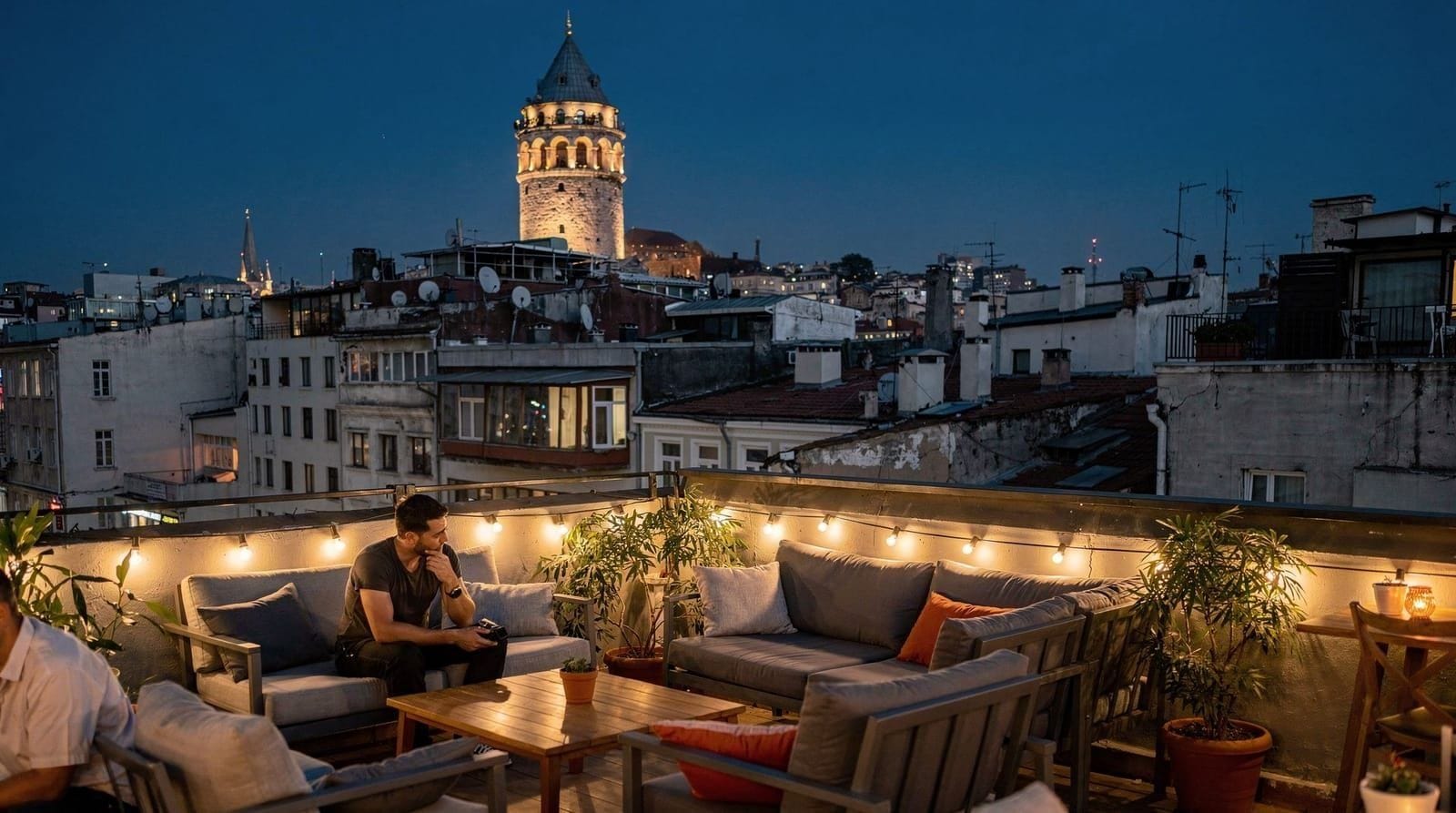
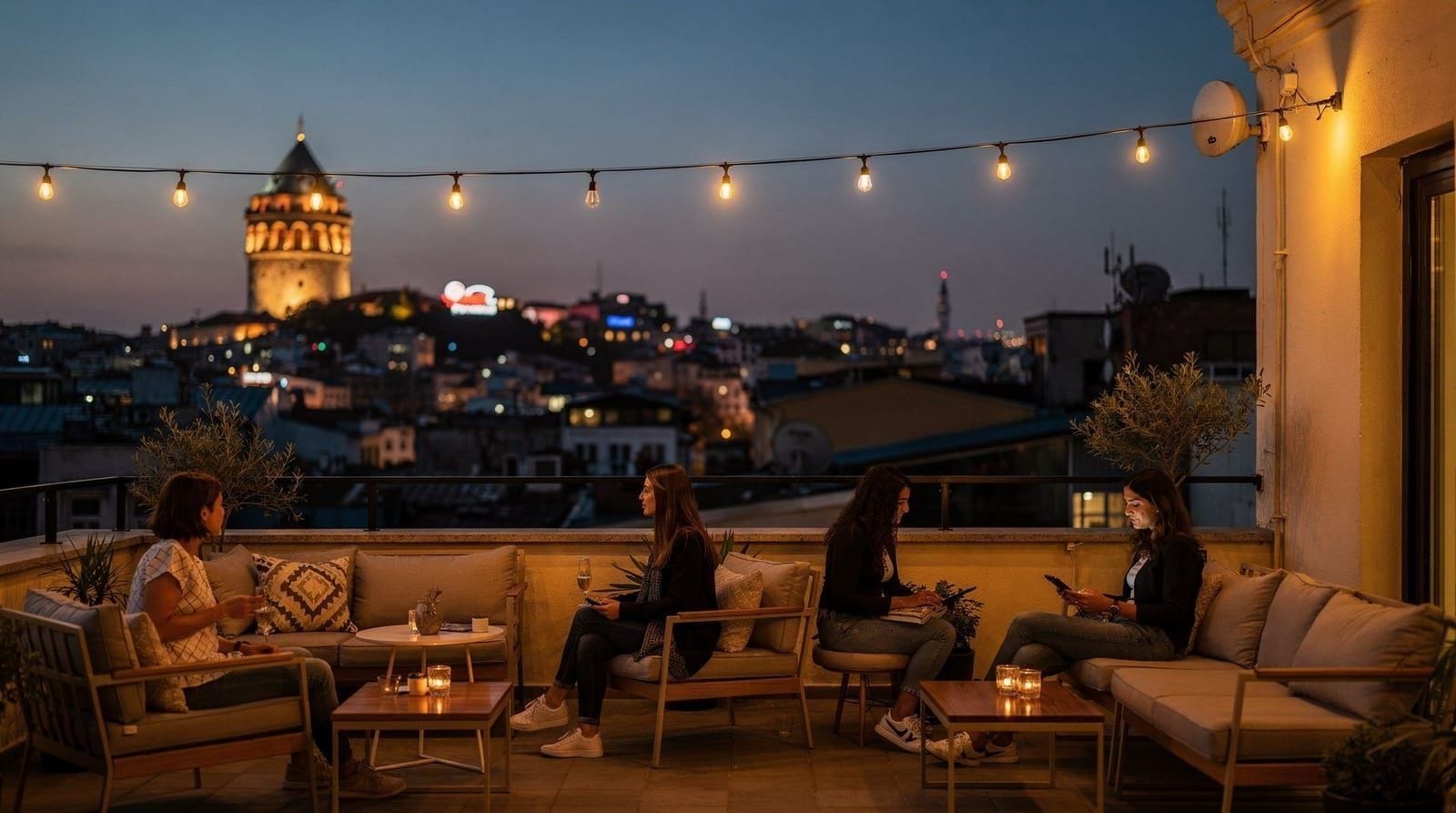
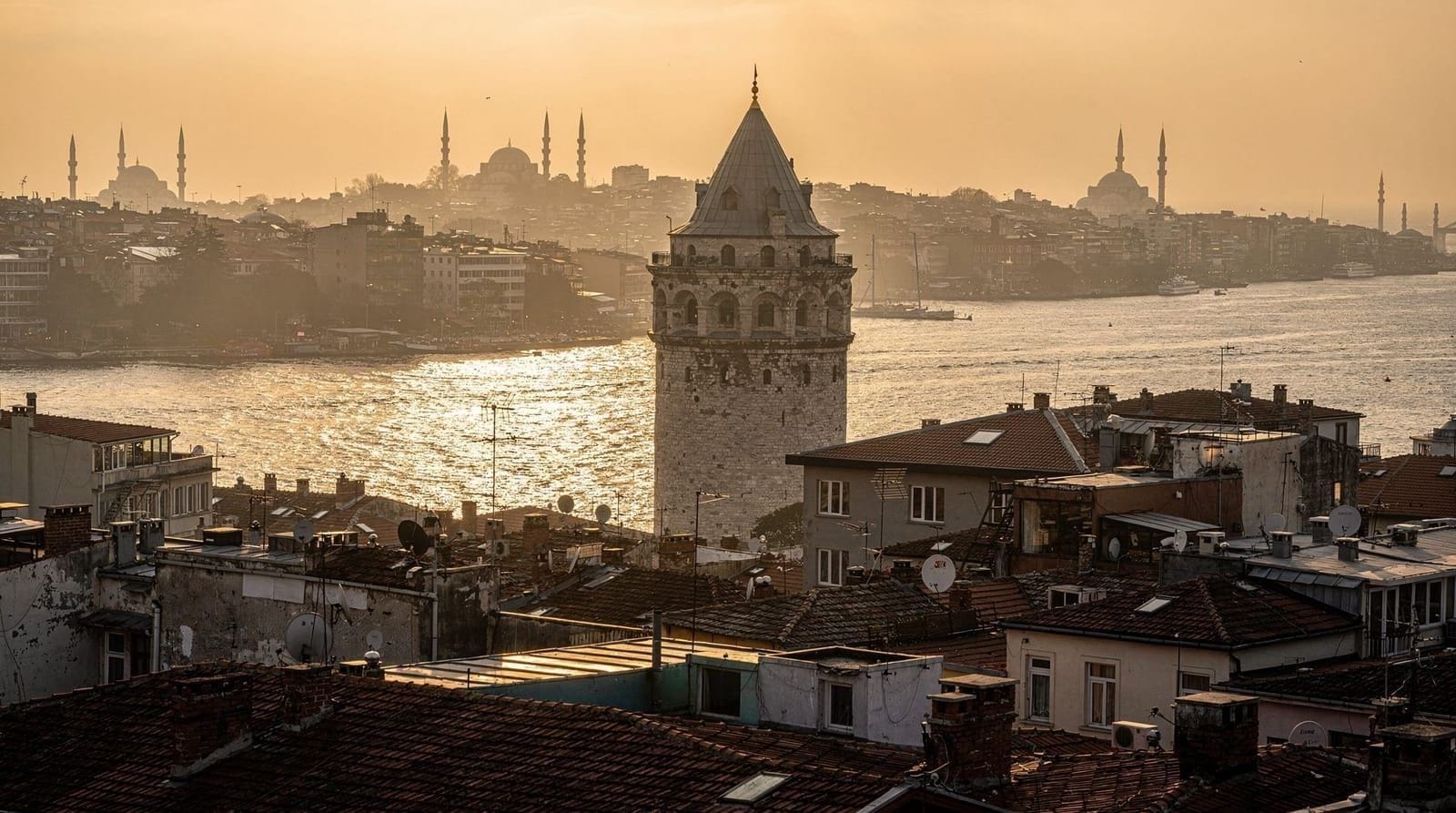
The Galata Mevlevi Lodge is a 5-minute walk from Galata Tower and 15 minutes from the Beyoğlu main street. A Sunday visit can combine the Galata Tower observation deck in the morning, a walk through the historic Galata neighborhood, and the lodge ceremony in the afternoon.
For visitors combining the Sema with other shows, the Istanbul shows and nightlife guide covers what else is available in the evening.
If you’re staying near Sultanahmet rather than Beyoğlu, the logistics run the other way: a Sema performance near Hagia Sophia can slot into an evening that starts with dinner in the old city and ends with a short walk back to your hotel, without the tram or metro connections that a Beyoğlu or Sirkeci venue requires. This is a reasonable trade of a marginally less atmospheric setting for simpler logistics on a night when you’d rather not plan a cross-city trip.
The ceremony also pairs naturally with the city’s wider history. If the Mevlevi story makes you curious about how the Order fit into the empire, the Ottoman Istanbul guide and the Istanbul history overview give the background, and a performance in a restored hammam makes more sense after reading about Istanbul’s historic hammams. For a wider choice of evening plans, the Belly dance show guide covers the other major performance format, and the Beyoğlu neighbourhood guide helps you plan the area around the Galata lodge.
Practical notes
Dress code: Modest dress is appropriate — the ceremony is a religious practice. No specific requirements, but shorts and sleeveless tops feel out of place. Shoulders covered is sensible.
Silence: The ceremony requires quiet audience participation. Phones should be silenced. Entering or leaving during the spinning is disruptive and should be minimised.
Seating: At Hodjapasha, seating is tiered around the circular space — all seats have good sight lines. Arrive slightly early for better positioning.
Duration vs. cost comparison: Hodjapasha at €35–45 for a 1-hour performance versus the dinner show format at €80–120 for 2 hours with multiple acts. If the Sema is specifically what you want to see, Hodjapasha is better value for the experience you’re seeking.
Rumi and the Mevlevi Order: why this matters for Istanbul
Jalal ad-Din Muhammad Rumi (1207–1273) never lived in Istanbul — he lived and died in Konya, the capital of the Seljuk Sultanate of Rum, where his tomb and the primary Mevlana Museum remain today. But the Order he inspired became central to Ottoman imperial culture, and Istanbul became one of its most important centres.
The Mevlevi Order received imperial patronage from multiple Ottoman sultans. Their music influenced Ottoman classical court music. Their lodges (tekke) were spaces of cultural and intellectual life beyond purely religious function. At the height of Ottoman power, the Galata Lodge in Istanbul was arguably the most cosmopolitan Mevlevi institution in the empire — positioned in the Galata district that was the city’s most international neighbourhood.
Understanding this context changes how you see the Sema. It is not a folk tradition preserved in amber — it was a court tradition with sophisticated musical theory and theological depth, practiced at the centre of one of the world’s most powerful empires. The spinning ceremony, far from being an exotic spectacle, was a serious devotional practice that shaped Ottoman culture for centuries.
The ney: the instrument at the centre of the ceremony
The ney (reed flute) is the instrument Rumi addresses directly in the opening lines of the Masnavi, his major work: “Listen to the story told by the reed, of being separated.” The reed cut from its reed bed represents the soul separated from its divine origin. The ney’s distinctive sound — breathy, not fully in tune by Western standards, with a rawness in the higher register — is meant to represent that longing.
In the Sema ceremony, the ney is not background music. It is theologically central — the first sound, the sound that begins the ceremony, represents the original divine breath. Learning to play the ney is a specific Mevlevi discipline requiring years of practice; the nasal embouchure technique is physically demanding.
At Hodjapasha, the ney player is typically the most experienced musician in the ensemble. Watching the ney player during the ceremony — the specific way they hold the instrument against the lips, the way breath creates both the tone and the overtones — is worth attention.
Visiting the Galata Mevlevi Lodge museum
The Galata Mevlevi Lodge (Galata Mevlevihanesi) is worth visiting even when no ceremony is scheduled. The museum inside (entry 200 TRY) covers Ottoman Divan literature, Sufi calligraphy, and Mevlevi material culture — including original musical instruments, ceremonial robes, and manuscript collections.
The semahane (ceremony hall) is visible from the museum space and gives the physical context for the ceremony: the circular floor where the spinning occurs, the gallery for musicians above, the balcony for women observers in the traditional arrangement.
The lodgedescended from 15th-century institution is in the Beyoğlu neighbourhood, 5 minutes walk from Galata Tower. Worth combining with a Galata Tower visit and a walk through the adjacent historic streets.
Frequently asked questions about Whirling dervishes guide — how to see the Sema ceremony in Istanbul
What is the Sema ceremony?
What is the difference between an authentic Sema and a tourist show?
How long does a Sema ceremony take?
Is the Hodjapasha Sema show authentic?
Can I photograph or film the Sema ceremony?
Where is Rumi's connection to Istanbul?
Is there a Sema ceremony on every day in Istanbul?
Is the Sema ceremony suitable for children?
Should I combine the Sema with a Turkish dinner separately, or is a dinner-and-Sema package better?
Top experiences
Bookable activities with verified prices and instant confirmation on GetYourGuide.