Turkish night show guide — what to expect and whether it is worth booking
1001 Turkish Night Dinner Show in Istanbul
Are Turkish night shows in Istanbul worth it?
It depends on what you want from the evening. The better shows combine live music, whirling dervishes, folk dance, and belly dance over 2–3 hours with dinner included at €70–120 per person. They are a concentrated sampler of several Turkish performance traditions. If you want genuine cultural depth, see each element separately. If you want a social evening entertainment package, the night show format delivers.
Quick answer: Turkish night shows are fun for what they are — a 2–3 hour entertainment package combining dinner with Sema, folk dances, and belly dance. Budget €70–120 per person. They lack cultural depth but are a more efficient way to sample multiple performance traditions than finding separate venues for each. The dinner is functional rather than exceptional.
| Cost | €60–140 per person, dinner included |
| Time needed | 2–3 hours |
| Includes | Dinner, live music, Sema, folk dances, belly dance |
| Booking | 2–4 days ahead recommended, especially peak season |
| Dress | Smart casual |
The honest case for and against Turkish night shows
Turkish night shows have a reputation problem in travel writing. The highbrow critique is that they are superficial — that packaging Sema, belly dance, and folk dance into a 3-hour dinner entertainment is tourism-industrial reduction of genuine cultural practices.
This critique has merit but misses what the format actually delivers: an entertaining evening with good production values, multiple performance styles, and the social pleasure of a group dinner. Nobody leaves a well-produced Turkish night show feeling ripped off. The question is whether it’s the right way to spend an Istanbul evening.
Go if: You want a festive social evening with Turkish performance elements, you don’t have time to attend multiple separate shows, you enjoy the spectacle of large-scale entertainment, or you’re travelling in a group that wants a shared evening activity.
Skip if: The spiritual dimension of the Sema ceremony matters to you (see it at Hodjapasha or the Galata Lodge instead), you specifically want to understand any one performance tradition deeply, or you’re focused on food quality (eat separately and book a show-only ticket).
What a Turkish night show actually looks like
A standard 2–3 hour Turkish night show in 2026 typically proceeds:
Arrival and dinner (45–60 min): Guests are seated at large tables (usually 8–10 per table). Meze are brought to the table — cold dishes (hummus, white cheese, olives, pastry, salads) — followed by a main course (usually grilled chicken, lamb, and/or fish depending on the package). Bread is abundant. Drinks from the bar or included open bar.
Performance opens (15 min): Live Ottoman classical music introduces the evening — ney, kanun (zither), and sometimes vocalist performing fasıl (a specific classical music form). This is genuinely pleasant and often the most culturally interesting part of the evening.
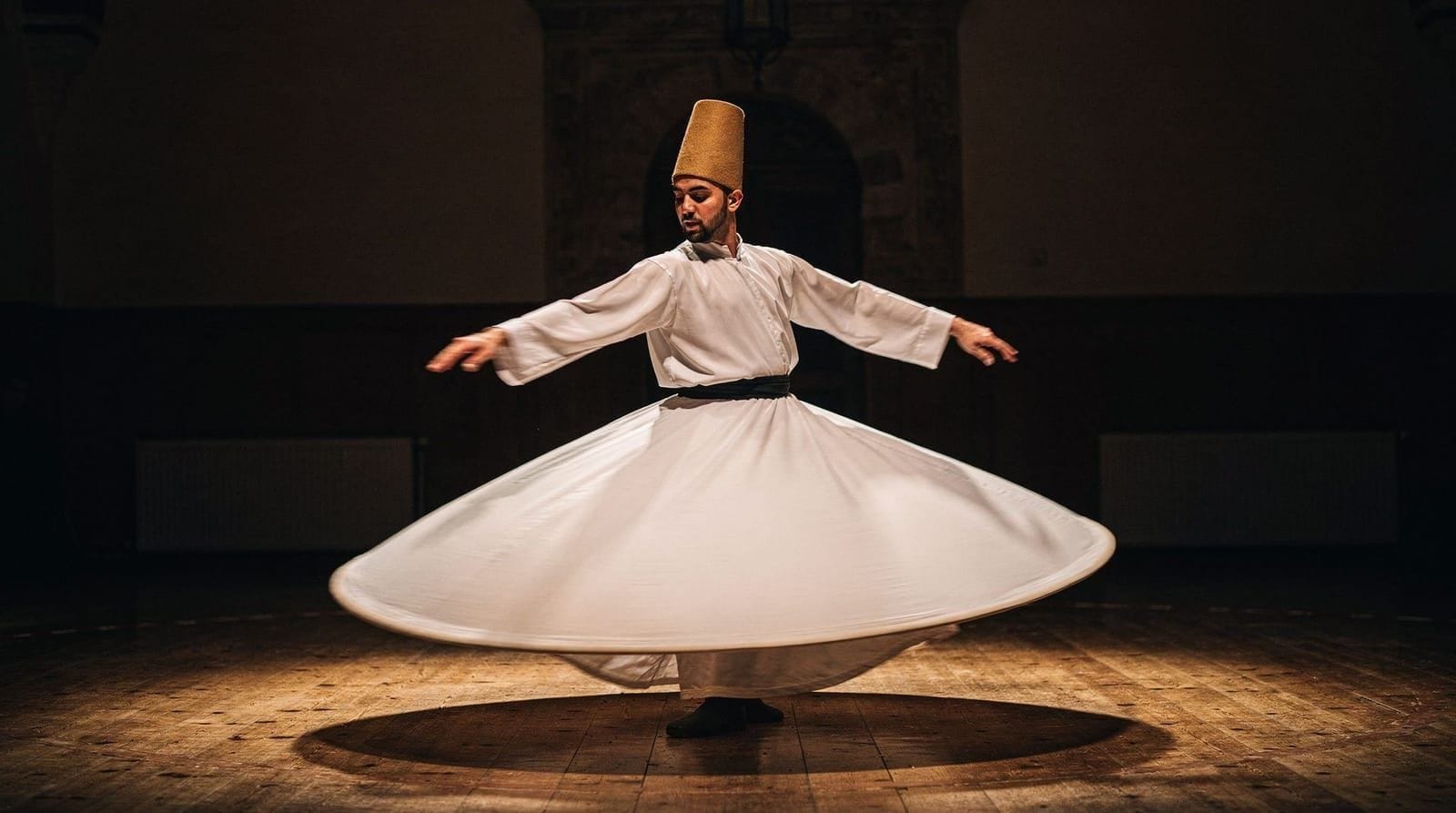
Whirling dervish Sema (15–20 min): Usually 2–4 semazens in the white robe and tall sikke hat perform the spinning ceremony. In a night show context, this is a shortened version of the ceremony — spiritually stripped but visually compelling.
Regional folk dances (30–40 min): Costumed dancers perform folk dances from different regions — Anatolian spoon dances (kaşık oyunu), Black Sea dances (horon), zeybek from the Aegean, halay from eastern Turkey. Each region has distinct costume and footwork. The best night shows use technically trained dancers; lower-end versions are less precise.
Belly dance (20–30 min): One or two performers in elaborate costume. The solo belly dance is the high point of entertainment value for most audiences — Istanbul’s better night shows hire skilled performers.
Audience participation (5–10 min): Most shows end with audience members being invited to dance — usually a simple structured moment that gets people on their feet.
Total duration: 2–2.5 hours at most venues.
Comparing the main venues
1001 Turkish Night
One of Istanbul’s best-known Turkish night show formats. Dedicated venue, multiple performances per week, professional production. The show has been running in various iterations for decades and has relatively consistent quality reviews.
The dinner quality is mid-range — adequate, not worth travelling for. The show component is the main event and is well-executed.
Price (2026): €85–100 per person including dinner and welcome drink. Show-only options exist at lower prices.
Sultana’s (belly dance focus)
A venue in Sultanamet area that offers a dinner show with a strong emphasis on the belly dance component — it has historically been considered one of Istanbul’s better belly dance dinner venues. The Sema component is present but secondary.
Good choice if the belly dance specifically is what you want to see at quality. The venue is smaller than the larger night show productions, which means a more intimate atmosphere.
Price (2026): €70–90 per person.
Bosphorus dinner cruise with show
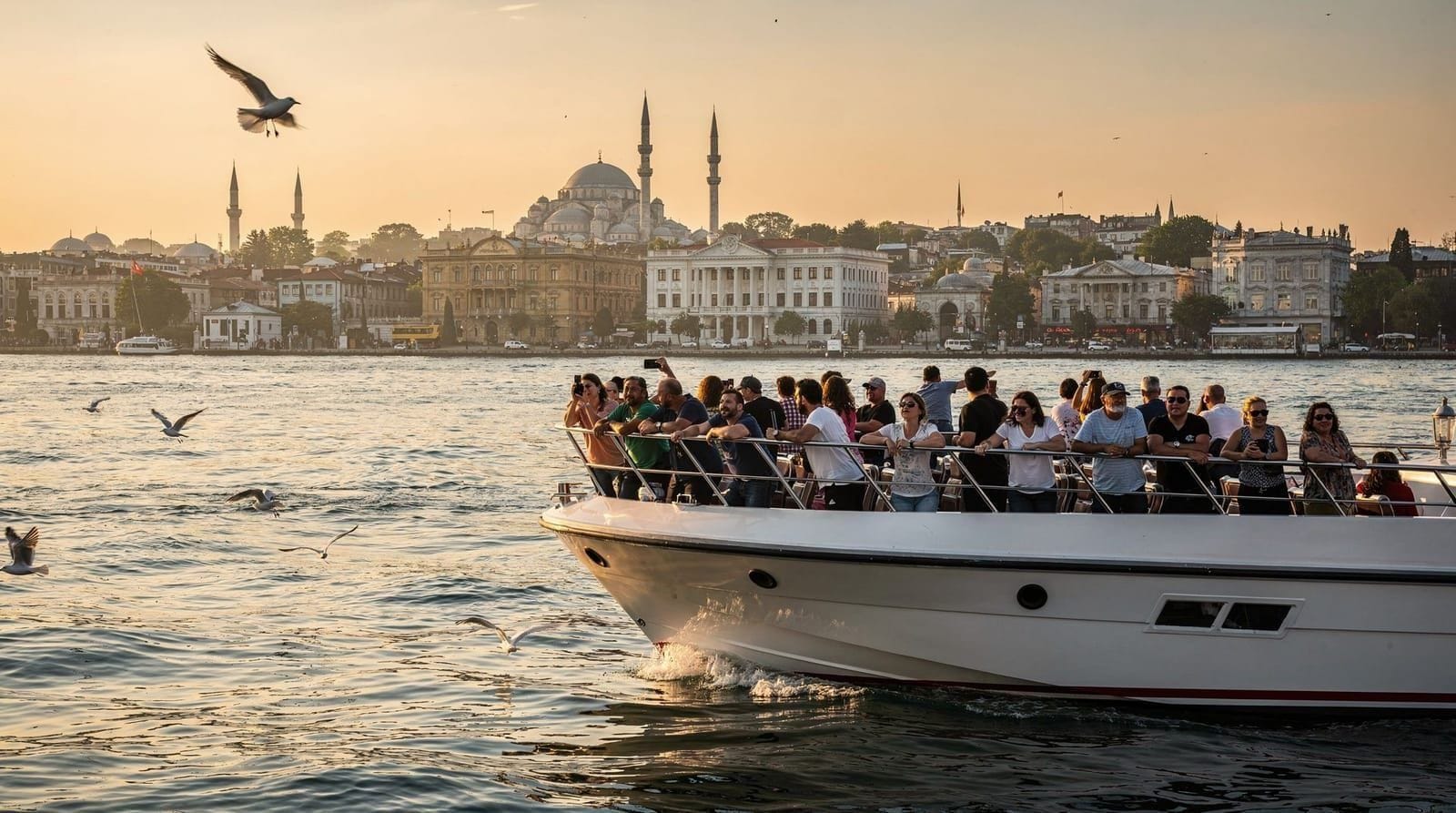
A related product that adds the Bosphorus backdrop. The entertainment is similar (folk dance, belly dance, sometimes Sema), but the 3-hour boat cruise on the Bosphorus at night provides the city panorama as the setting. See the dedicated Bosphorus dinner cruise guide for the full comparison.
Hotel rooftop shows
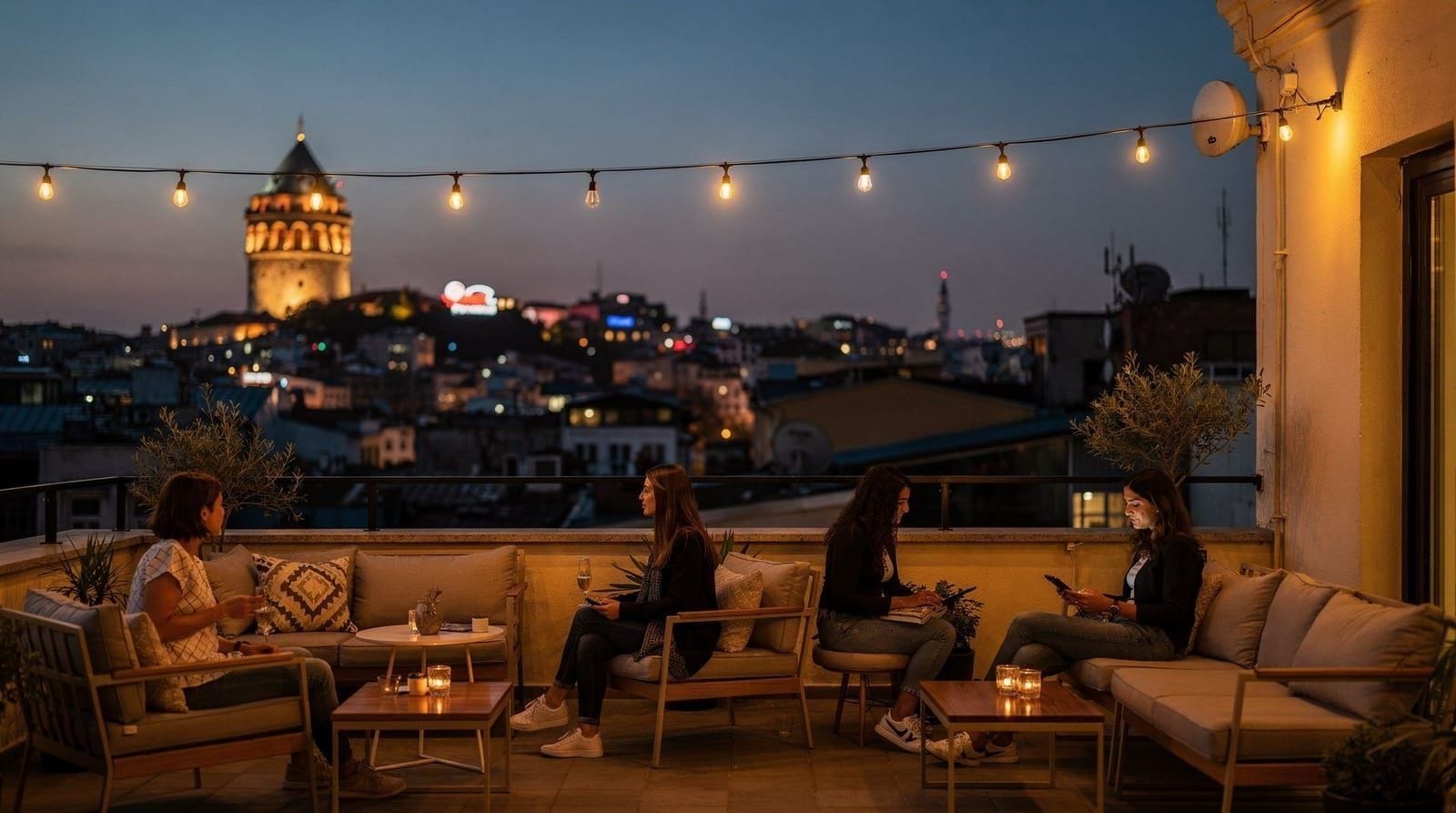
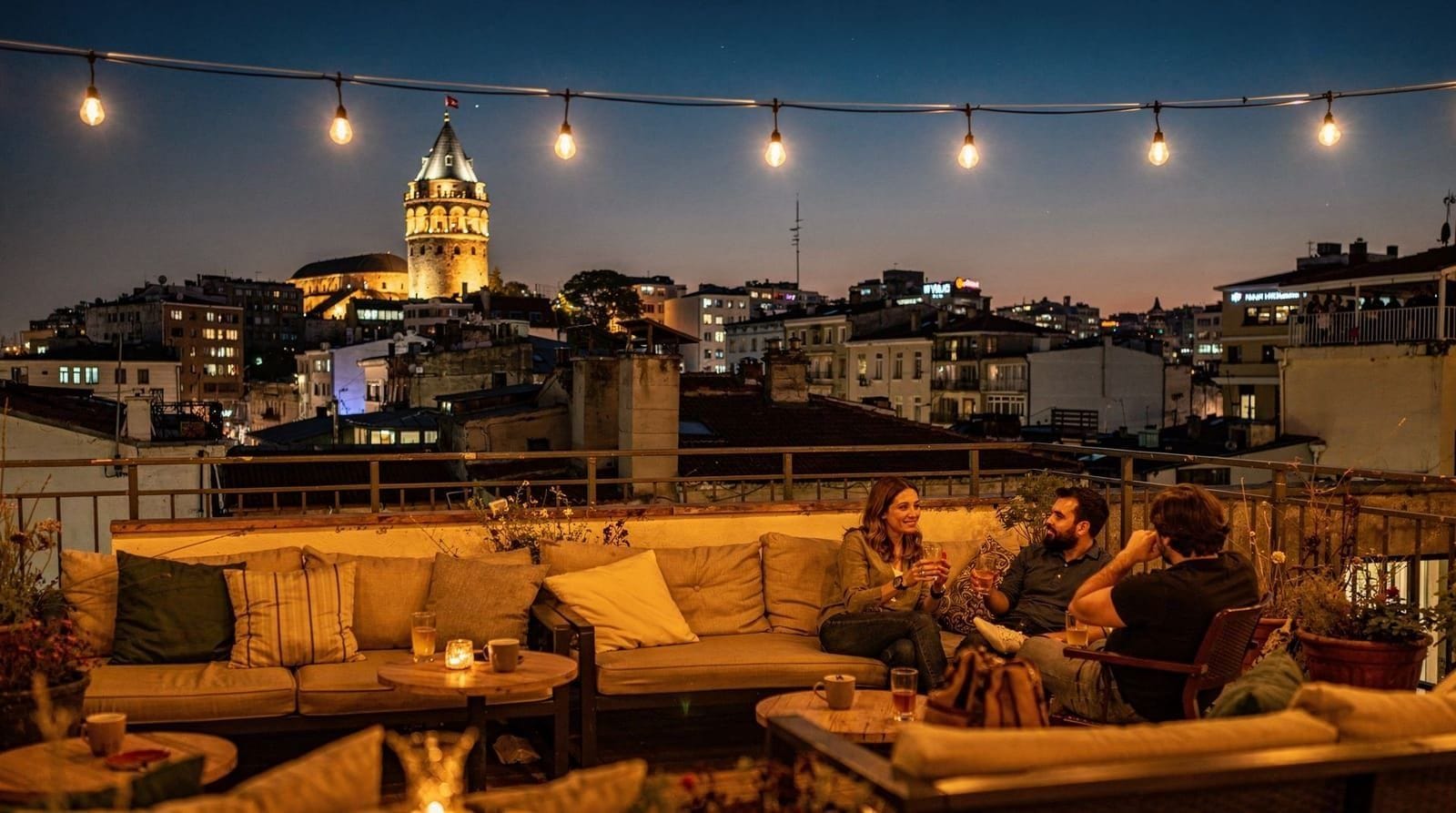
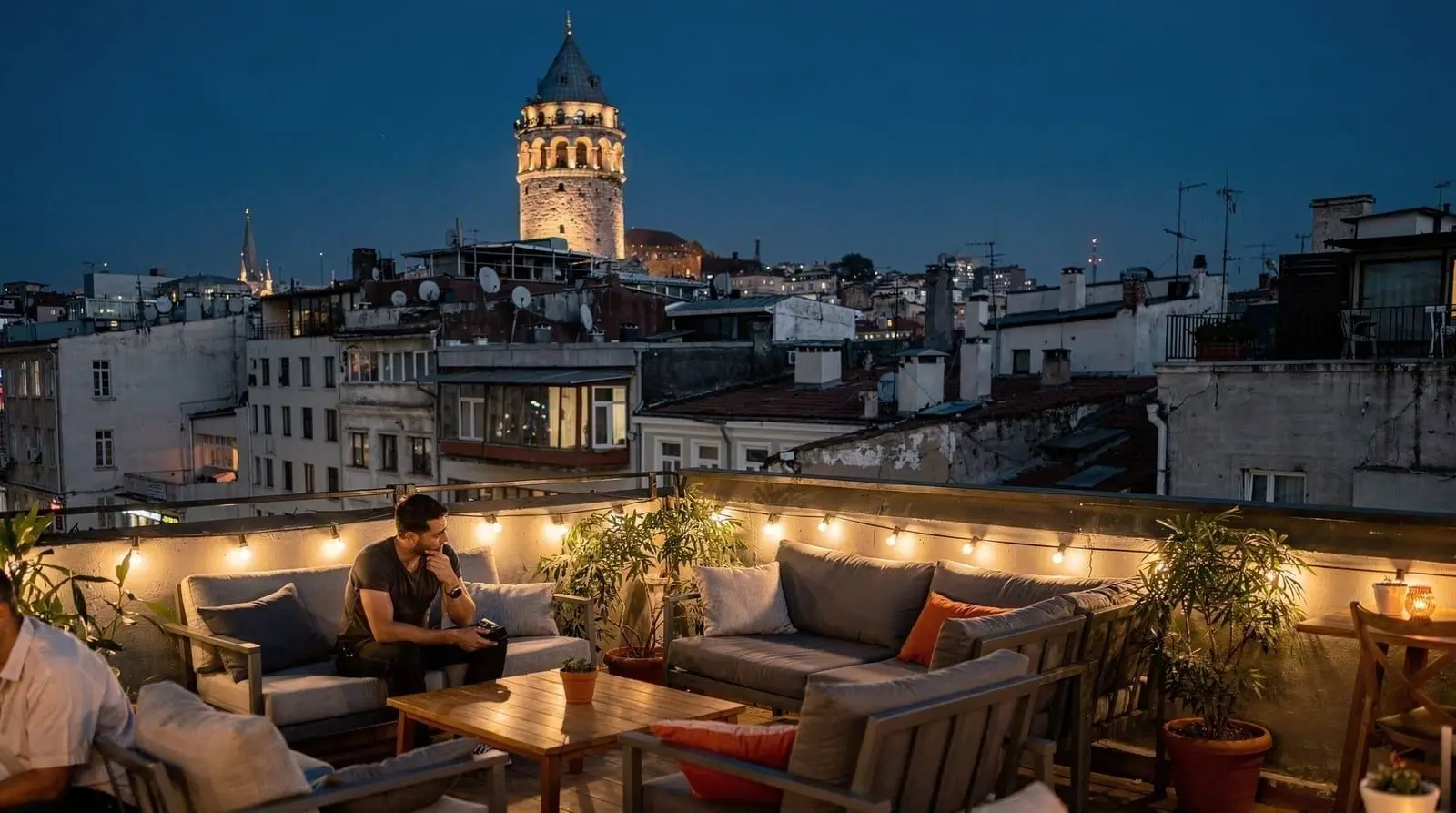
Some of Istanbul’s rooftop bars (particularly in Sultanahmet and Beyoğlu) run evening shows with live music and occasional performance elements without the full dinner-show format. Less structured, more spontaneous. Good option for visitors who want live music but not a regimented 2-hour entertainment package.
The Sema question: show version vs. dedicated ceremony
If you specifically want to experience the whirling dervish Sema, the night show version is the least satisfying way to do it. The ceremony is compressed to 15–20 minutes and surrounded by non-related entertainment.
At Hodjapasha Cultural Center, a 1-hour dedicated Sema performance for €30–45 is more focused, the setting is more appropriate (a converted 15th-century hammam), and the ceremony receives the full attention it deserves.
For visitors who want both the Sema and a full evening show, the practical approach: see the Sema at Hodjapasha in the afternoon or early evening, and do the dinner show separately if you want the full entertainment package.
The whirling dervishes guide covers this in more detail.
Practical considerations
Booking: Advance booking of 2–4 days is recommended. The main venues book out on summer weekends and during peak travel months (April–May, August–October).
Dress code: Smart casual is the norm. Not formal, but shorts and flip-flops feel out of place. The shows are specifically evening entertainment — dress for an evening out rather than sightseeing.
Alcohol: Most packages include a welcome drink or open bar. Turkey’s alcohol taxes mean drinks in Istanbul are expensive; an open bar package significantly improves value compared to a pay-per-drink format.
Groups: Night shows work especially well for groups of 4+ who want a shared evening experience. Solo travellers and couples can be seated at tables with other tourists, which is either enjoyable (meeting other travellers) or awkward depending on who’s there.
Transportation: Most venues in Sultanahmet are accessible on foot or by tram. Venues on the Bosphorus side require a taxi or the ferry connection. Late finish (11pm or later) means taxis are the practical return option.
What to do instead (if you skip the show)
If the Turkish night show format doesn’t appeal, the evening alternatives that are more culturally specific:
For live music: A fasıl (Ottoman classical music) concert at a meyhane in Beyoğlu or Kumkapı. The musicians circulate between tables; you eat and drink while they play. More intimate and genuinely part of Istanbul nightlife.
For just the Sema: Hodjapasha at €35–45 — then you have the evening free for a meyhane dinner in Beyoğlu.
For belly dance specifically: Sultana’s dinner show or the dedicated belly dance show format (see the belly dance show guide).
For a general evening out: A meyhane dinner in Nevizade Sokak (3 hours, 600–900 TRY per person with rakı), then drinks at a rooftop bar. See the Istanbul nightlife guide.
The regional folk dances: what you’re watching
One of the more underrated aspects of a quality Turkish night show is the regional folk dance component. Turkey is a large country with distinct regional cultures, and the dances from each region have specific musical accompaniment, footwork, and costume traditions that are genuinely different from each other.
Horon — the Black Sea region’s collective dance, performed in a tight shoulder-to-shoulder line with rapid, shaking shoulder movements and rapid footwork. Traditionally male, energetically intense. The music is driven by kemençe (a small bowed fiddle) and davul (drum).
Zeybek — the Aegean region’s dance, solo or in small groups. Slow and stately, with dramatically extended arm positions and a low-gravity heaviness. It represents the zeybek — an Aegean bandit-folk hero tradition. The music is in 9/8 time, creating an unusual rhythmic pulse.
Halay — from eastern and southeastern Anatolia. A chain dance where performers hold hands or shoulders in a line. Communal and celebratory. The line can be dozens of people; in a night show context it is a smaller ensemble.
Kasik oyunu (spoon dance) — from the Konya/Silifke region of central Turkey. Dancers click wooden spoons rhythmically while performing. Visually distinctive and accessible to audience members invited to participate.
Semaı — a folk dance form from several different regions with the same name but different characteristics. The term refers to the musical form as much as the dance.
In a well-produced night show, each dance is introduced by the region it represents, and the costumes correspond to regional textile traditions. In a poorly produced show, it is a generic “traditional Turkey” pastiche. This distinction is worth noting when evaluating shows.
Value comparison: night show vs. individual components
For visitors doing the calculation: is the night show format better value than attending each component separately?
Night show (1001 Turkish Night): €85–100 per person, 2.5 hours, dinner included.
Individual components:
- Hodjapasha Sema ceremony: €35 per person, 1 hour
- Meyhane dinner in Nevizade: 600–900 TRY per person (~€16–24)
- Dedicated belly dance show (Sultana’s show-only): €45–55
Total individual approach: approximately €95–115 per person, spread over 4–5 hours.
The night show saves time and money slightly while compressing everything into one venue. The individual approach provides better quality for each component and a more authentic Istanbul evening. Your priority determines which is better value.
For visitors with 2+ days in Istanbul, the individual approach across separate evenings is recommended. For visitors with one evening to dedicate to Turkish entertainment, the night show is the pragmatic choice.
Where a night show fits in a broader itinerary
A night show works best as a planned single evening within a multi-day trip rather than something squeezed in after a full sightseeing day — arriving tired to a 2–3 hour dinner-and-performance format undercuts the experience. If you’re mapping out Istanbul in 3 days or longer, a night show slots naturally into a middle evening, after a lighter sightseeing day rather than immediately after Topkapı and the Grand Bazaar.
For visitors specifically weighing the Bosphorus dinner cruise alternative mentioned above, it’s worth reading the Bosphorus dinner cruise guide side by side with this one before booking — the entertainment content overlaps but the setting and pacing differ meaningfully.
Solo travellers and couples at night shows
Night shows are built around large shared tables (typically 8–10 people), which changes the dynamic for solo travellers and couples compared to groups who book together. For solo travellers, this can be a genuine social plus — you’ll likely end up seated with other travellers, which some people enjoy and others find awkward depending on who else is at the table that night. Couples should expect to share a table with strangers rather than get a private one unless they specifically book a premium or VIP package, which some venues offer at a higher price point. If a shared table isn’t appealing, the Bosphorus dinner cruise format often has more flexible seating arrangements, or a show-only ticket paired with a separate restaurant dinner sidesteps the issue entirely.
Photography and phones during the show
Most venues allow photography and video of the performances — it’s part of the appeal for a lot of guests, and staff generally don’t discourage it during the folk dance and belly dance segments. During the Sema portion specifically, some venues ask for reduced camera flash out of respect for the ceremony’s quieter tone, even in the shortened night-show version. If you want genuinely good photos or video without disturbing your own table’s view, arriving early enough to secure a seat with a clear sightline to the stage matters more than any camera setting.
Hodjapasha’s rhythm of the dance show is a middle-ground option worth knowing about — a performance-only show at the same historic Hodjapasha venue as the Sema ceremony, without the full dinner-show production of the larger venues, for visitors who want more than just the Sema but less than a full 1001 Turkish Night package.
Pairing the evening with the rest of your Istanbul days
A night show is easier to enjoy when the day around it is planned with some slack. Sultanahmet venues sit close to the sights covered in the Sultanahmet destination page, so an afternoon at the Blue Mosque or the Basilica Cistern followed by a rest at your hotel makes a sensible lead-in. Spend the hours before the show somewhere calm rather than rushing between queues.
If you are still deciding where to base yourself, the Sultanahmet vs Beyoğlu comparison shows how the choice affects your late-evening return, since a show that finishes late is simpler when your bed is a short walk or ride away. The where to stay guide and the getting around Istanbul guide help you work out the practical side of that return trip.
Food-minded travellers can treat the show as one evening among several. Because the set dinner is functional, it makes sense to save your appetite for the meze and rakı guide on a different night, or to browse the where to eat in Istanbul guide for a proper restaurant meal before a show-only ticket.
For a wider look at what else the city offers after dark, the top things to do in Istanbul and the Beyoğlu neighbourhood guide are good companions, and the Istanbul in 2 days itinerary is useful if you are working out whether a short stay has room for an evening out.
Frequently asked questions about Turkish night show guide — what to expect and whether it is worth booking
What is included in a Turkish night show?
How much does a Turkish night show cost in Istanbul?
What is the 1001 Turkish Night show?
Is belly dance at a Turkish night show authentic?
Is the dinner good at Turkish night shows?
Can I attend the show without dinner?
Is a Bosphorus dinner cruise a type of night show?
Top experiences
Bookable activities with verified prices and instant confirmation on GetYourGuide.