Gallipoli and Troy day trip from Istanbul guide
From Istanbul: 2-Day Tour to Gallipoli & Troy
Can I visit Gallipoli and Troy in one day from Istanbul?
Gallipoli alone is possible as a very long day (6 am departure, return by 10 pm). Combining Gallipoli and Troy properly requires two days with an overnight in Çanakkale — most experienced travellers recommend this format to avoid rushing both sites.
Two sites, one decision: day trip or two days?
Gallipoli and Troy are two of Turkey’s most historically significant sites. Both are accessible from Istanbul. Both are within reasonable driving distance. The question is whether to try to see them in a single day or give them two days with an overnight in Çanakkale.
The honest answer: a single day can cover Gallipoli adequately, but doing Gallipoli and Troy together in one day means shortchanging at least one of them. The standard two-day format — Gallipoli on day one, overnight in Çanakkale, Troy on day two — is the approach that leaves visitors feeling they did justice to both places.
That said, if your schedule only permits one day and you can only pick one site, both have a strong case. This guide covers both options.
If you are still deciding how much of your trip to spend outside the city, the day trip reality check is a useful companion: it puts every excursion from Istanbul on the same honest scale. The destination pages for Gallipoli and Troy and Çanakkale give a shorter overview of each place.
| Where | Gallipoli Peninsula and Troy, near Çanakkale, ~300 km west of Istanbul |
| Time needed | 1 long day for Gallipoli alone; 2 days for both, with a Çanakkale overnight |
| Getting there | Guided tour, bus to Çanakkale, or private car via the 1915 Çanakkale Bridge |
| Cost | Around 1,500-2,500 TRY (day tour) to 3,000-4,500 TRY (2-day tour) per person |
| Best time | April-October; avoid Anzac Day (25 April) unless booked well ahead |
Gallipoli — the World War One battlefield
What happened at Gallipoli
In 1915, Allied forces (including Anzac troops from Australia and New Zealand, and British, French, and Indian contingents) attempted to capture the Gallipoli Peninsula to open a supply route to Russia and knock the Ottoman Empire out of the war. The campaign lasted eight months and resulted in a combined death toll of approximately 130,000. The Ottoman defence, led in part by Mustafa Kemal (later Atatürk), became a defining moment in Turkish national identity.
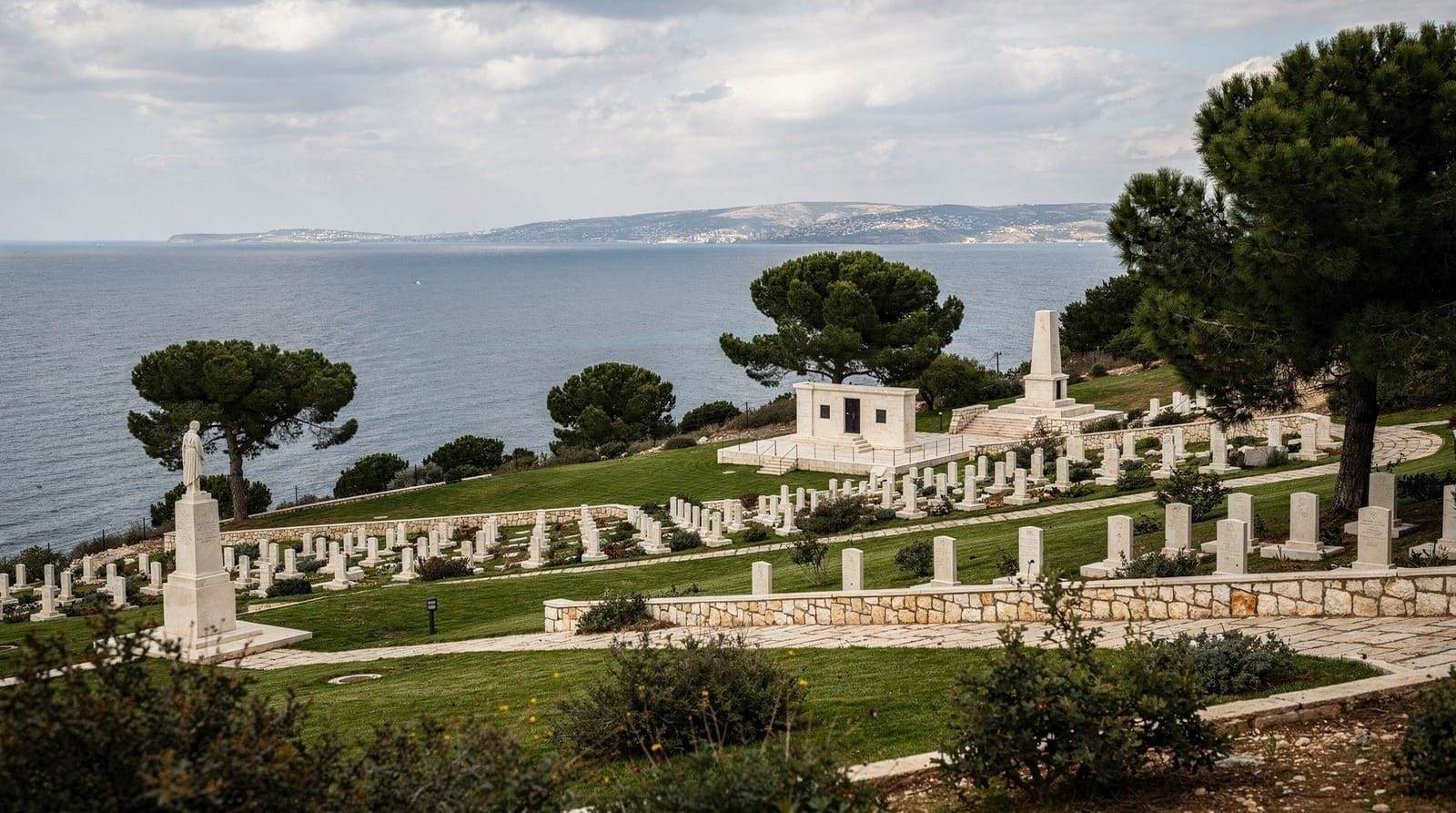
The peninsula contains dozens of memorials, cemeteries, and preserved trenches. The landscape itself — pine-covered ridges above the Dardanelles strait — is hauntingly beautiful and at odds with the horror of what took place here.
What to see
Anzac Cove: The narrow beach where Anzac troops landed on 25 April 1915. There is a small cemetery at the waterfront and the cliff above shows how impossible the landing terrain was. A deeply evocative spot.
Lone Pine Cemetery and Memorial: One of the main Anzac cemeteries, containing 4,900 names of Australians with no known grave. The pine tree above the cemetery grew from a seed brought back to Australia and returned. A peaceful, powerful place.
Chunuk Bair: The highest ridge on the Anzac line, captured briefly by New Zealand troops in August 1915 before being retaken. A large New Zealand memorial stands here. The view across the peninsula and to the Dardanelles is exceptional.
Cape Helles Memorials: The southern tip of the peninsula where British and French forces landed. The British Memorial here lists over 20,000 names. Less visited than Anzac Cove, and therefore quieter.
Kabatepe Museum: A small but informative museum at the visitor centre with artifacts from the campaign.
Allow approximately 5-6 hours to cover the main Anzac sector sites with a guide.
Getting there from Istanbul
Gallipoli is approximately 300 km west of Istanbul. Options:
- Guided tour from Istanbul: The most practical approach. Tours depart early (6-7 am) and return late (9-10 pm). A licensed guide at the battlefield is included. See Best day trips from Istanbul for logistics overview.
- Bus to Çanakkale: Buses from Esenler Otogar take 4-5 hours to Çanakkale. From there, local minibuses or taxis cross to the peninsula via the Çanakkale ferry.
- Private car: 3.5-4 hours from Istanbul via the E80, crossing at Çanakkale or the new 1915 Çanakkale Bridge (the world’s longest suspension bridge, opened 2022).
Gallipoli full-day tour from Istanbul includes transport, licensed guide at the battlefield, and entry fees. This is the recommended option for a one-day visit.
Troy — the legendary city
What is Troy
Homer’s Iliad describes a ten-year war between the Greeks and Trojans, set at a city called Ilion or Troia. For most of history this was treated as mythology. In the 1870s, the German archaeologist Heinrich Schliemann identified a site called Hisarlık near modern Çanakkale as the actual location of Troy and began excavating. He found not one city but nine successive settlements (Troy I through Troy IX) spanning 4,500 years, including several layers that match the Bronze Age chronology of Homer’s account.
The site is genuinely extraordinary — not visually dramatic like Rome or Athens, but intellectually fascinating. Walking through layers of civilisation from 3000 BCE to Roman times, knowing that somewhere in these ruins is the basis of one of Western literature’s foundational texts, is unlike any other archaeological experience in Turkey.
What to see
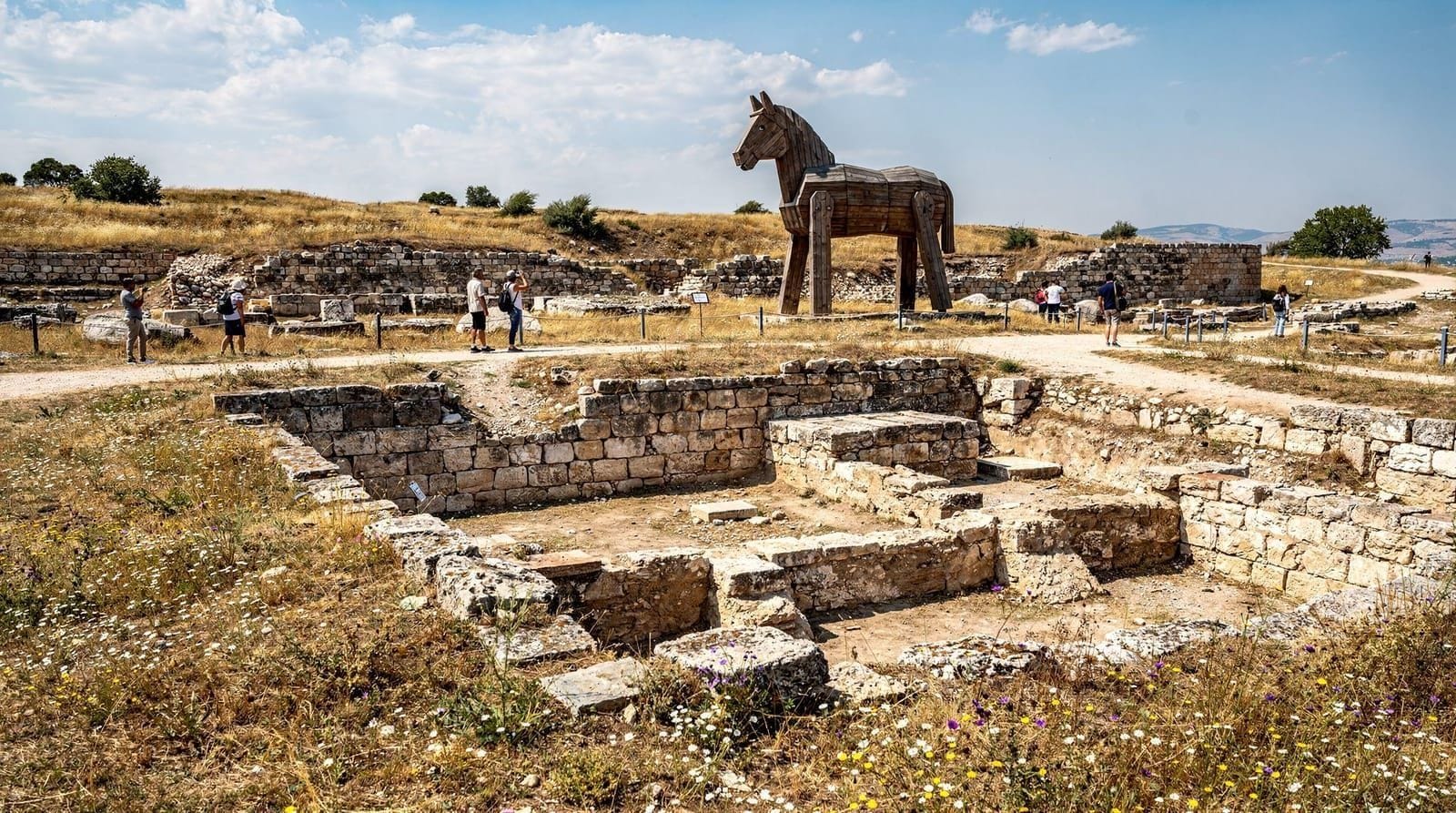
The site itself: The archaeological ruins are spread across a hilltop. The key features are the remains of Troy VI (the most likely candidate for Homeric Troy, around 1700-1300 BCE), the Temple of Athena from the Hellenistic-Roman period, the Roman odeon, and the reconstructed (controversial) wooden horse at the entrance.
Museum of Troy (Troya Müzesi): Opened in 2018, 1.5 km from the site. The museum is excellent — modern, well-designed, and containing artefacts from all nine layers of occupation. Jewellery, ceramics, tools, and architectural fragments are presented with good English signage. Allow 1.5-2 hours here in addition to the site.
The Trojan Horse: A large wooden horse at the site entrance is a tourist concession — there is no archaeological evidence for the specific horse of the Iliad, and this one is a modern construction. But visitors love it, and it is harmless enough.
Entry to the site: approximately 300-400 TRY (8-11 USD) in 2026; Museum of Troy is separate, approximately 200-300 TRY (6-8 USD).
Getting there from Istanbul
Troy is near Çanakkale, on the Asian side of the Dardanelles. From Çanakkale city, it is approximately 30 km and 30 minutes by local bus (dolmuş) or taxi.
From Istanbul independently: bus to Çanakkale (4-5 hours), then local transport to Troy. The round trip is long but manageable in a day if you start early — better done with an overnight in Çanakkale.
Full-day Troy tour from Istanbul includes transport and a licensed guide, covering both the ancient site and the Museum of Troy.
The two-day itinerary: Gallipoli + Troy
This is the format most experienced Turkey travellers recommend. The Gallipoli and Troy 2-day tour from Istanbul covers both sites over two days with an overnight in Çanakkale and is the most common booking for visitors tackling both.
Day 1 outline: Depart Istanbul early morning. Arrive Gallipoli peninsula late morning. Guided tour of Anzac sector (Anzac Cove, Lone Pine, Chunuk Bair) with lunch included. Afternoon: Cape Helles sector. Evening: ferry to Çanakkale, overnight.
Day 2 outline: Morning: Troy site and Museum of Troy. Afternoon: return to Istanbul by bus or private transfer. Arrive early evening.
This pacing allows genuine time at both sites rather than a rushed checklist.
Because the first day is long and the second starts early, it helps to keep the rest of your Istanbul stay light on either side. Our Istanbul in 3 days plan leaves room for a two-day excursion if you stretch it, and how many days in Istanbul explains how to weigh a trip like this against time in the city itself. If you are arriving or leaving by air, the Istanbul airports guide helps you avoid starting the excursion tired from a badly planned transfer.
Practical information
Costs summary (2026 estimates)
- Troy site entry: approximately 300-400 TRY (8-11 USD)
- Museum of Troy: approximately 200-300 TRY (6-8 USD)
- Gallipoli entry: free (open battlefields); Kabatepe Museum approximately 100-150 TRY (3-4 USD)
- Bus Istanbul-Çanakkale: approximately 300-500 TRY (8-14 USD) one way
- Guided day tour (Gallipoli): approximately 1,500-2,500 TRY per person (42-70 USD)
- Two-day guided tour (Gallipoli + Troy): approximately 3,000-4,500 TRY per person (83-125 USD) including one night’s accommodation
What to wear and bring
- Comfortable walking shoes — both Gallipoli and Troy involve walking on uneven terrain
- Sun protection and water (limited shade at both sites)
- Respectful dress at cemeteries — this is not required formally but is expected
- Cash for entry fees and meals
If you plan to see mosques or other monuments back in the city, the Turkish customs and etiquette guide covers the dress and behaviour expectations that also apply at the cemeteries and memorials here. For packing more generally, see the Istanbul packing list.
Best time to visit
April-October has the best weather. Avoid Anzac Day (25 April) at Gallipoli unless you have booked well in advance and specifically want the dawn service. The memorial is at capacity on that day.
| Season | Weather | Crowds | Notes |
|---|---|---|---|
| Apr-May | Mild, spring greenery | Moderate, spikes around Anzac Day | Best light for photography at the cemeteries |
| Jun-Aug | Hot, 28-32°C, little shade at Gallipoli | Higher, peak tour season | Start early to beat the heat at both sites |
| Sep-Oct | Mild, comfortable | Lower, easing after summer | A strong alternative to spring, less crowded |
| Nov-Mar | Cool, wetter, sometimes windy on the peninsula | Lowest | Some tour operators reduce frequency |
The Turkish perspective at Gallipoli
The Gallipoli campaign is understood very differently in Turkey than in Australia, New Zealand, and the UK. While Allied nations remember it as a military disaster and the birth of the Anzac identity, Turks commemorate it as the defence of the homeland.
The Turkish name for the campaign is Çanakkale Savaşları (Battles of Çanakkale). Mustafa Kemal, then a lieutenant colonel, distinguished himself commanding the defence of the Chunuk Bair ridge and is credited with a famous order: “I do not order you to attack. I order you to die. In the time which passes until we die, other troops and commanders can come forward and take our places.”
The Turkish memorials on the peninsula — the Mehmetçik Anıtı (Turkish Soldier Memorial), the Çanakkale Martyrs’ Memorial at Cape Helles, and the Atatürk Memorial near Chunuk Bair — are substantial and moving in their own right. A complete Gallipoli visit includes both Allied and Turkish sections.
Atatürk’s famous tribute to the Allied dead (a paraphrase of his 1934 speech) is inscribed on the Atatürk Memorial at Anzac Cove and on memorials in Australia and New Zealand: “Those heroes that shed their blood and lost their lives… You are now lying in the soil of a friendly country. Therefore rest in peace.”
Troy — what Homer got right and wrong
The debate about Troy and the Homeric tradition is one of archaeology’s most engaging controversies.
The consensus position: The site at Hisarlık was continuously occupied from approximately 3000 BCE to 500 CE. The layer designated Troy VIh (approximately 1400-1300 BCE) is the most likely candidate for the city of the Iliad — it was a substantial Bronze Age city (larger than previously thought, revealed by excavations in the 1990s-2000s by Manfred Korfmann) that was destroyed by fire or earthquake.
What Homer got right: The basic topography (a city on a mound above a plain, near a strait connecting two seas, with a beach where ships could be drawn up) fits Hisarlık perfectly.
What Homer got wrong (or elaborated): The Trojan War as described — a ten-year siege over the kidnapping of Helen, involving gods intervening directly — belongs to legendary tradition rather than historical record. Some scholars see the Iliad as a composite of memories from multiple Bronze Age conflicts in the Troad region.
This ambiguity is part of what makes Troy so interesting: it is simultaneously a real ancient city and a legendary text. The Museum of Troy’s approach to this tension — presenting the archaeological evidence neutrally while acknowledging the Homeric tradition — is one of the better examples of modern heritage communication in Turkey.
Çanakkale town
Most tours stop briefly in Çanakkale or use it as an overnight base on a two-day Gallipoli-Troy itinerary. The town itself has several worthwhile stops:
The Trojan Horse replica: A large wooden horse prop from the 2004 film Troy stands on Çanakkale’s waterfront. It is purely a movie prop, but it makes for photographs.
Military Museum (Naval Museum): The Deniz Müzesi near the waterfront focuses on the Gallipoli naval campaign — the Allied attempt to force the Dardanelles strait by sea (which failed before the land campaign began). The mine recovered from the strait and the history of the shore batteries are well-presented.
Çanakkale Archaeology Museum: A few kilometres outside the centre, the museum has a good collection from the Troy excavations and from the Dardanelles region generally. Often skipped on day tours but worth 45-60 minutes for archaeology enthusiasts.
The Dardanelles strait itself: Walking along the Çanakkale waterfront, you can see the narrowest point of the Dardanelles — approximately 1.2 km wide at the Çanakkale Boğazı constriction. Watching shipping traffic through the strait (container ships, tankers, ferries) gives a sense of why this strategic waterway has been contested for millennia.
Çanakkale itself has a relaxed, youthful atmosphere thanks to the local university — the waterfront promenade fills with students and families in the evening, and the restaurant scene along the harbour is good value compared with more touristed parts of Turkey. If you’re overnighting as part of the two-day itinerary, a slow dinner on the waterfront after a long day at Gallipoli is a genuinely pleasant way to decompress before an early start for Troy the next morning.
Independent travel vs a guided tour: an honest comparison
Doing this trip independently is possible but adds real logistics: booking buses to Çanakkale, arranging local transport to the peninsula and to Troy, and finding your own guide or audio material at Gallipoli specifically (where context matters more than at almost any other Turkish site). A guided tour removes all of that friction and, at Gallipoli in particular, meaningfully improves the experience — the cemeteries and battlefield sectors are spread out, and a guide’s narration of the campaign’s timeline while standing at each spot adds a dimension that reading about it beforehand doesn’t replace.
For Troy, an audio guide or the Museum of Troy’s own signage does more of the heavy lifting, so independent travel there is a more reasonable option if you’re comfortable with the bus connections. For most first-time visitors doing both sites, the two-day guided tour remains the simplest way to get genuine value from Gallipoli without spending a full day figuring out peninsula logistics.
Booking and logistics summary
- For Gallipoli alone: Best day trips from Istanbul has cost and transport overview
- For the two-day Gallipoli + Troy format: the two-day tour is the most practical single booking
- For independent travel: bus to Çanakkale (4-5 hours), local transport to the peninsula, overnight in Çanakkale
- For the historical context on Ottoman and Turkish history: Ottoman Istanbul guide
- For the bigger picture of the city you are leaving behind, Istanbul history overview and the Istanbul destination page are good starting points
- If you are weighing this trip against other overnight excursions, Ephesus from Istanbul and Cappadocia from Istanbul follow the same honest logic about distance and time
- If Gallipoli and Troy don’t fit your schedule, Bursa from Istanbul and Edirne day trip are closer alternatives that fit into a single day without an overnight
- For fitting this trip into a wider Istanbul stay, see Istanbul in 2 days for how much else realistically fits around a Gallipoli/Troy excursion
Comparing your options at a glance
| Option | Time required | What you see properly | Best for |
|---|---|---|---|
| Gallipoli only, single day | Very long day (6 am-10 pm) | Full Anzac and Cape Helles sectors | Visitors focused specifically on WWI history |
| Troy only, single day | Long day, less rushed | Site plus Museum of Troy | Visitors focused on ancient/Homeric history |
| Gallipoli + Troy, 2 days | 2 days, 1 night in Çanakkale | Both sites without rushing either | Most first-time visitors to the region |
| Gallipoli + Troy, 1 day | Extremely long, both rushed | Highlights only, at least one site shortchanged | Not recommended unless truly time-constrained |
Frequently asked questions about Gallipoli and Troy day trip from Istanbul
What is the drive from Istanbul to Gallipoli?
Is Gallipoli worth visiting if I'm not Australian or New Zealand?
What is the best way to visit Troy from Istanbul?
What does the Museum of Troy contain?
Do I need a guide for Gallipoli?
What is Anzac Day and should I visit then?
Top experiences
Bookable activities with verified prices and instant confirmation on GetYourGuide.