New Mosque Eminönü guide — the gateway to the Spice Bazaar
Istanbul: Hagia Sophia, Blue Mosque, Suleymaniye Mosque Tour
Is the New Mosque in Eminönü worth visiting?
The New Mosque (Yeni Cami) at Eminönü is worth 20–30 minutes if you are already at the Spice Bazaar and Galata Bridge. It is free, rarely crowded inside, and has an interesting construction history (66 years to build, interrupted by a fire and a change in dynasty). The interior is less impressive than Süleymaniye or the Blue Mosque but the setting at the water's edge is excellent.
The mosque that took 66 years to build
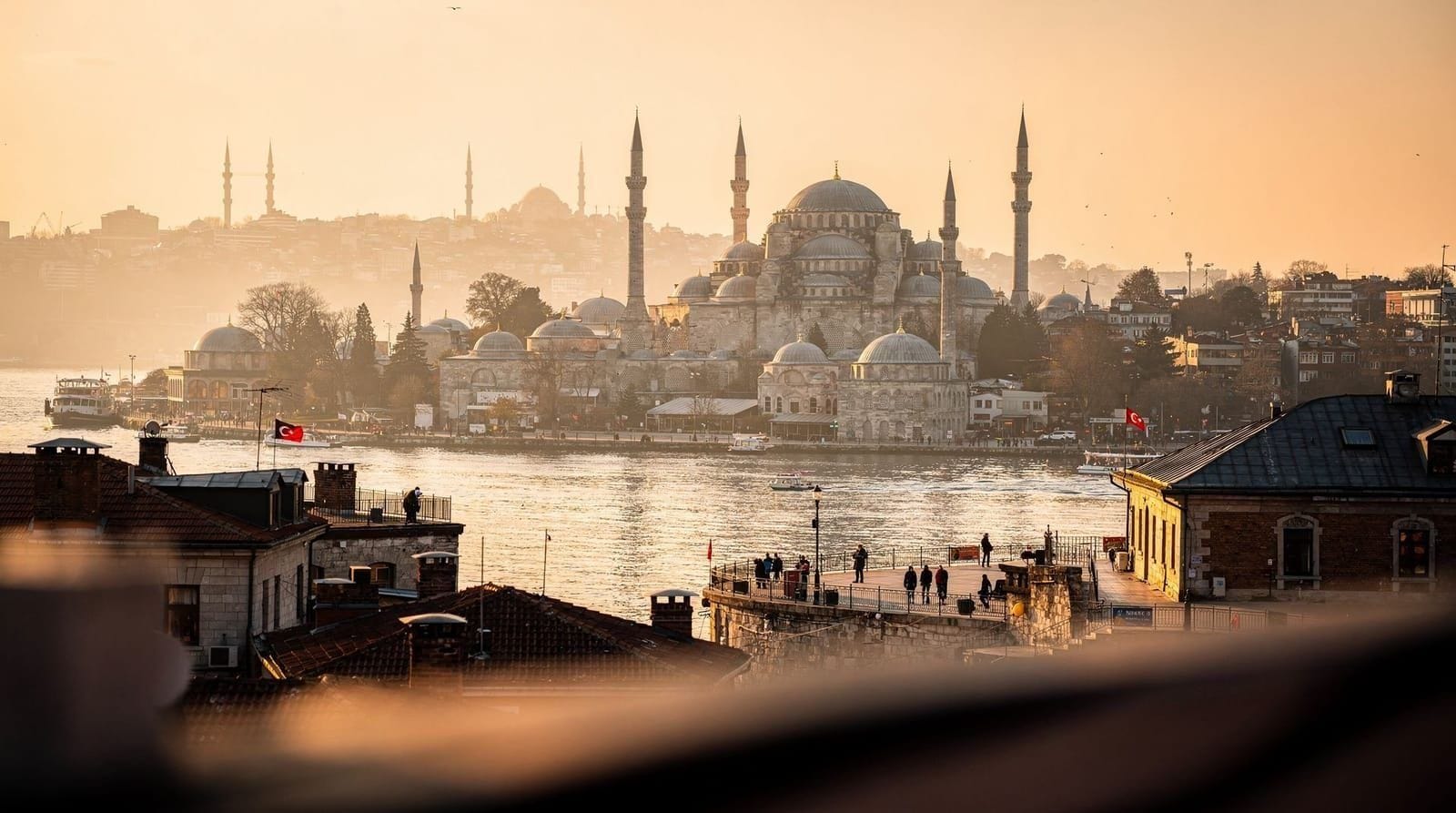
The Yeni Cami (New Mosque) at Eminönü is one of Istanbul’s most prominent landmarks — visible from the Galata Bridge, the Bosphorus ferries, and most of the old city waterfront — and one of its least visited. Most tourists pass it on the way to the Spice Bazaar or the ferry terminal and walk straight by. This is not unreasonable (the interior is not exceptional) but the building’s construction history and its position in the urban landscape deserve at least a brief stop.
| Where | Eminönü waterfront, next to the Spice Bazaar |
| Cost | Free |
| Time needed | 20–30 minutes |
| Getting there | Tram T1 to Eminönü, or walk from Sultanahmet |
| Best time | Morning, avoiding Friday midday |
Should you stop here at all?
For visitors with limited time in Istanbul, the honest answer is: only if you’re already at the Spice Bazaar or Galata Bridge. The New Mosque doesn’t justify a dedicated trip on its own — the interior is competent but unremarkable next to the Blue Mosque or Süleymaniye. What makes it worth the 20-minute detour is that it costs nothing extra: it sits directly between two things most visitors already do (the Spice Bazaar and the Galata Bridge crossing), so seeing it adds almost no time to an existing route.
If your Istanbul itinerary is under two days and you haven’t yet seen the Blue Mosque, Hagia Sophia, or Süleymaniye, prioritise those first — the New Mosque is a value-add on an already-planned walk, not a standalone destination.
A complicated construction history
The story of the Yeni Cami’s construction is more interesting than the building itself.
Construction began in 1597, commissioned by Safiye Sultan, the Valide Sultan (mother of Sultan Mehmed III). Safiye was an exceptionally powerful woman — a Venetian-born concubine who rose to become the most influential figure in the empire during her son’s reign. The site for the mosque required demolishing an existing Jewish quarter; the Jewish community was relocated to another district in exchange for the land.
In 1603, Mehmed III died. Without her son on the throne, Safiye Sultan lost her position as Valide Sultan and was exiled to the Topkapı Old Palace. Construction stopped entirely.
The mosque stood incomplete for decades. A fire in 1660 severely damaged what had been built. The rebuilding was commissioned by Turhan Sultan (Valide Sultan of Mehmed IV), who was in the midst of consolidating power after the murder of her predecessor Kösem Sultan. Completing the long-abandoned imperial mosque was both a pious act and a political statement. Construction resumed and the mosque was completed in 1665 — 68 years after it was begun.
Turhan Sultan chose to be buried at the mosque she completed. Her massive türbe in the garden contains the tombs of multiple sultans and other royals — one of the most populated royal mausoleums in Istanbul.
The interior
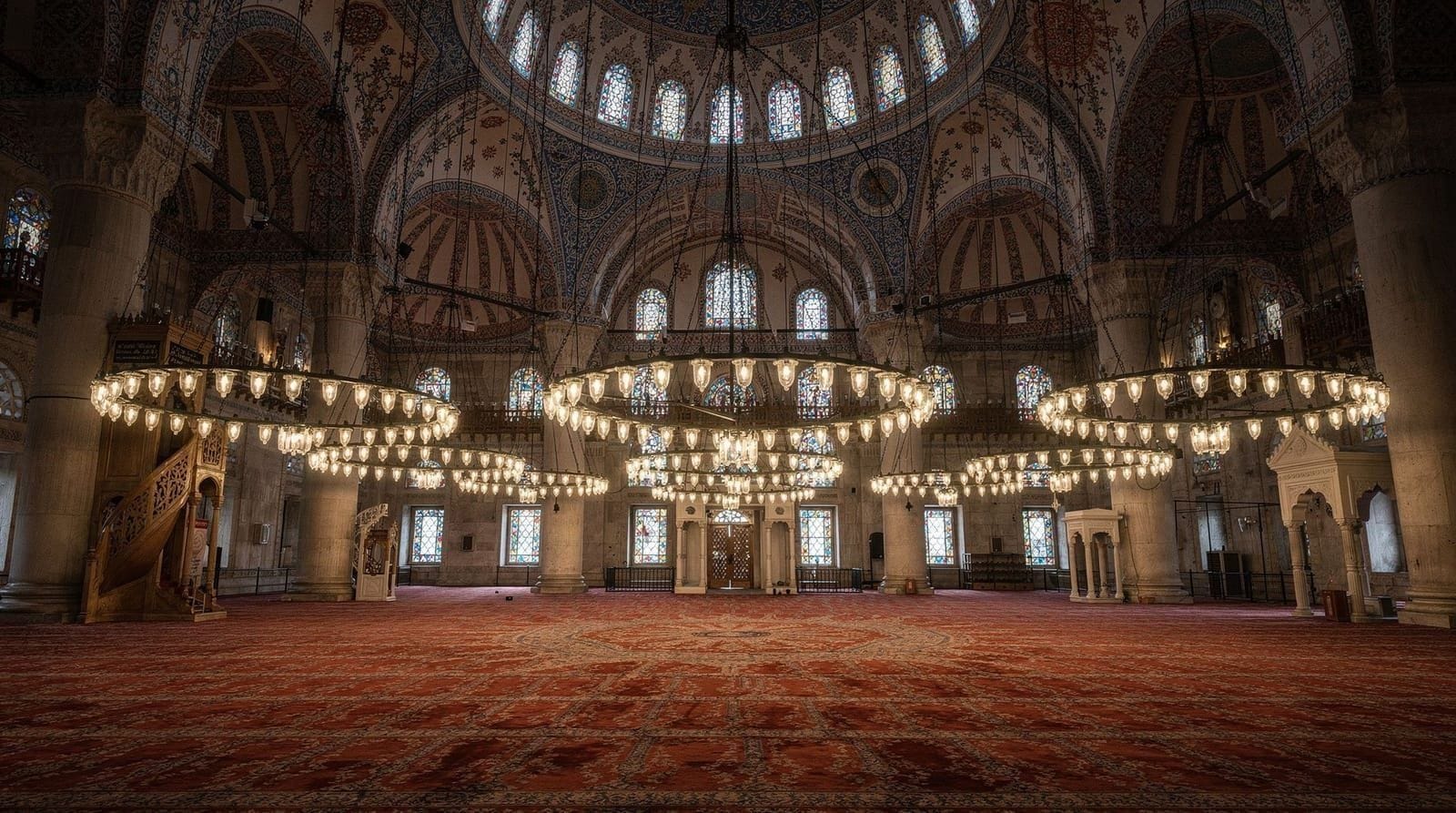
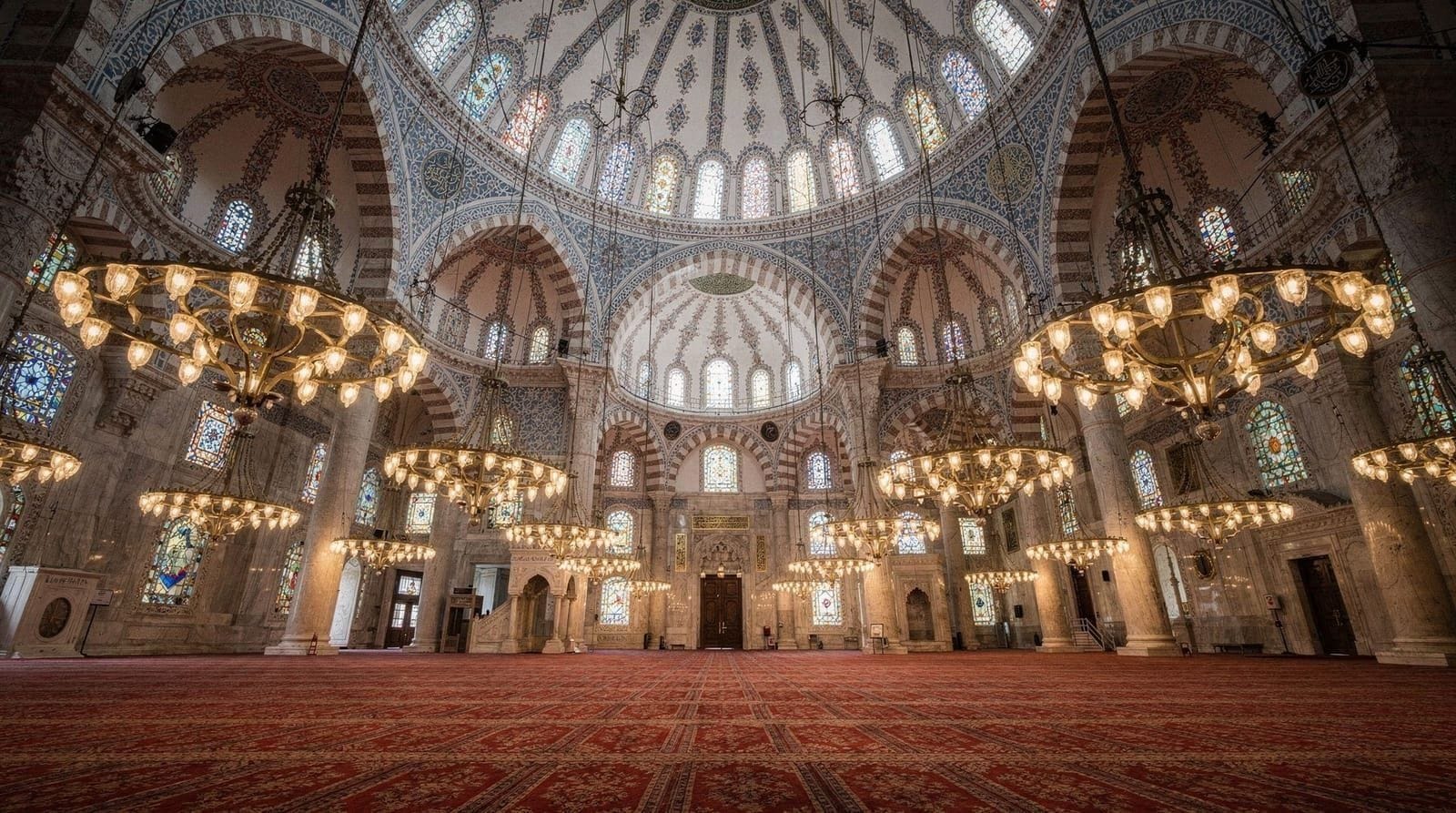
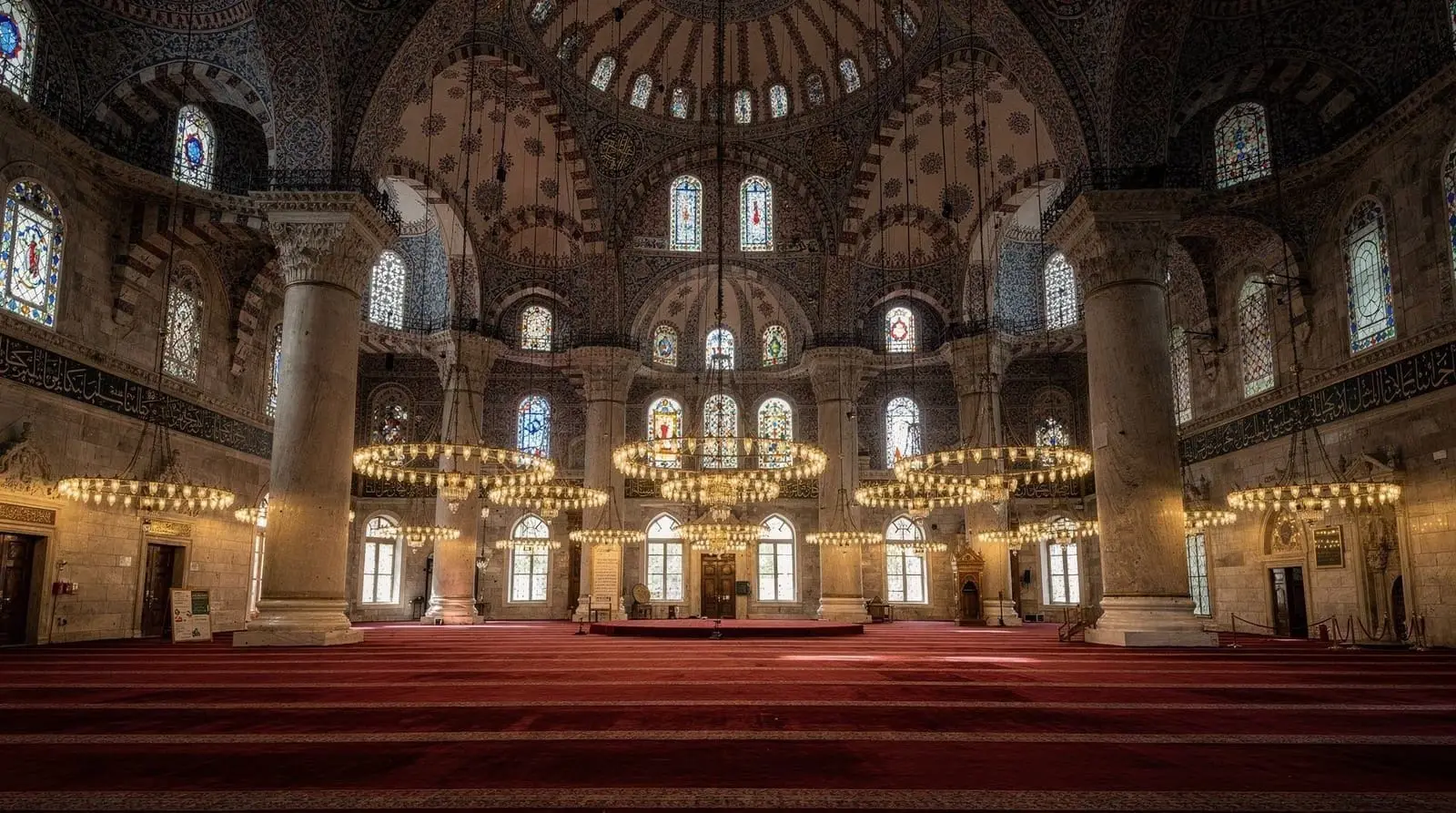
The interior follows the classical Ottoman mosque plan: central dome supported by four arches, two semi-domes on the north-south axis. The Iznik tile work is largely in the upper galleries; the quality is consistent with 17th-century Iznik production (slightly later than the peak period, but still good).
The mihrab and mimber are carved marble. The windows are original to the 1660s rebuilding. The overall impression is competent rather than exceptional — the mosque is conservative in its design, following the established formula rather than innovating.
Hünkâr kasrı (sultan’s lodge): accessible from the sea (Bosphorus side) via a covered ramp that allowed the sultan and Valide Sultan to enter directly from the waterfront without passing through public spaces. The ramp and the elevated loge are visible from the interior gallery. The concept — a private royal entrance from the water to the mosque — was a standard feature of waterfront imperial mosques.
The garden and türbe
The garden to the east of the mosque holds the türbe of Turhan Sultan, one of the largest royal mausoleums in the city. Turhan Sultan (died 1683) is buried here alongside several sultans, Valide Sultans, and other royal family members. The türbe is typically open to visitors and contains elaborate 17th-century tile and decorative work. Worth 15 minutes.
The Spice Bazaar connection
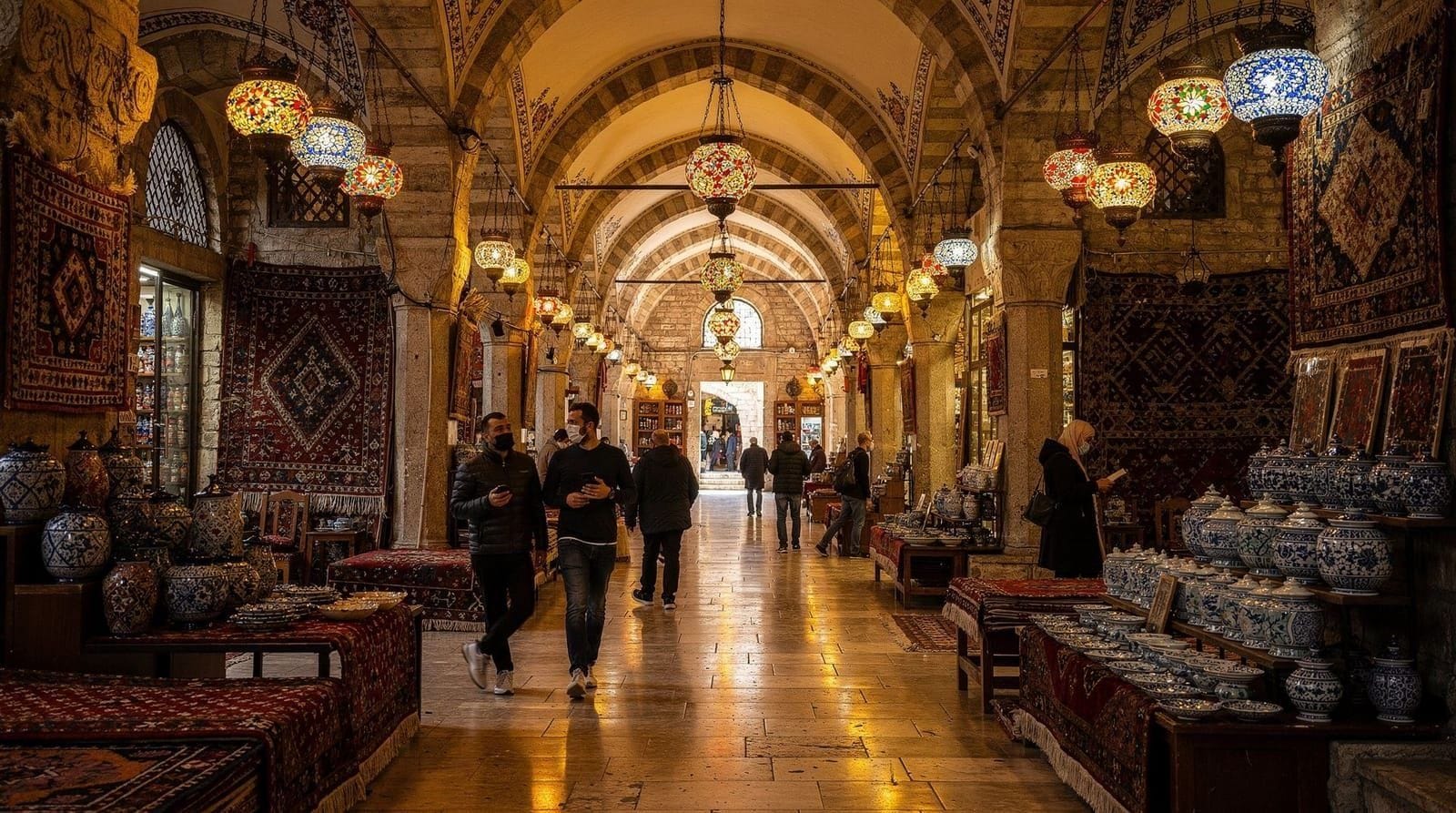
The Mısır Çarşısı (Spice Bazaar) directly adjacent to the mosque was built as a vakıf (endowment building) to fund the mosque complex — the rental income from the bazaar’s shops was designated to cover the costs of the mosque’s maintenance and religious staff. This was standard Ottoman practice: mosques were typically sustained by dedicated income-producing properties. The bazaar and the mosque are financially and architecturally a single complex. See Spice Bazaar. If you would rather see the bazaar and the waterfront with a guide, a morning Bosphorus cruise combined with a Spice Bazaar visit is one easy way to do it.
Visiting: logistics
Entry: free. The tourist entrance is typically on the south or southwest side (away from the main worshipper entrance). Dress code applies.
Setting: the mosque faces directly onto the Eminönü waterfront square — one of the busiest transit points in Istanbul (ferry terminals, tram stop, bus stands). The forecourt between the mosque and the square is often crowded with people waiting for ferries or the tram.
Combine with: the Spice Bazaar (directly adjacent), Rüstem Pasha Mosque (5-minute walk uphill — far more interesting interior), the Galata Bridge, and the waterfront balık ekmek (fish sandwich) boats.
A guided full-day walking tour of the old city passes the New Mosque as part of the route between Sultanahmet and the Spice Bazaar area — the guide provides the construction history and political context.
For more on Istanbul’s mosques, see Palaces & mosques.
The Eminönü waterfront
The area around the New Mosque is one of Istanbul’s most active public spaces: ferry passengers, fish sandwich vendors, seagulls, the Galata Bridge nearby, and the continuous movement of the waterfront. The fish sandwich (balık ekmek) boats moored directly in front of the mosque are a specific Istanbul experience — the smell of grilling fish mingles with the salt water. A balık ekmek eaten on the waterfront while looking at the mosque and the Galata Bridge is as authentic an Istanbul moment as visiting a single site.
For the full Eminönü context, see Istanbul travel guide.
New Mosque versus the other imperial mosques
| New Mosque | Süleymaniye | Blue Mosque | |
|---|---|---|---|
| Built | 1597–1665 | 1550–1557 | 1609–1616 |
| Interior quality | Competent | Refined, harmonious | Elaborate, İznik tiles |
| Crowds | Low (interior) | Low | High |
| Main appeal | Construction history, location | Architecture, quiet | Scale, spectacle |
| Time needed | 20–30 min | 30–45 min | 45–60 min |
For a deeper architectural comparison across all of Istanbul’s major mosques, see the best mosques in Istanbul guide.
Reading the building as a piece of politics
The New Mosque is easier to enjoy if you treat it less as an artwork and more as a statement. Imperial mosques in Istanbul were rarely only places of prayer: they were declarations of who held power, and who paid for them said a lot about the court of the day. Here the two patrons were both Valide Sultans, mothers of reigning sultans, which tells you how much weight the women of the Ottoman court could carry. If that dimension interests you, the Ottoman Istanbul guide puts the period in context, and the Topkapı Harem guide shows the world these women lived in before and after their years of influence.
Standing in the forecourt, look at how the mosque sits against the waterfront. Its mass was meant to be read from the water, by people arriving on boats, long before anyone thought about tourists on foot. That is why the view from the Galata Bridge or from a ferry deck is, in many ways, the best “exterior” you will get. The Golden Horn cruise guide and the guide to the Bosphorus by public ferry both give you that angle from the water.
What to look for inside
Because the interior is not dramatic, a little attention goes a long way. Pause under the central dome and let your eyes adjust, then follow the line of the arches outward to the semi-domes. Compare the proportions with what you may already have seen at Hagia Sophia or the Blue Mosque: the classical Ottoman plan is a conversation with the Byzantine building across the old city, and seeing a later, quieter version of it helps the better-known ones make sense.
Then look up to the galleries and the tile work, and look across to the sultan’s lodge. These are the details that carry the history. Take your time rather than rushing to the exit; the benefit of a mosque with few tourists is that you can actually stand still. A visitor who has read the construction story beforehand tends to leave with a much better memory of this stop than one who simply wandered in.
Etiquette and practical manners
This is a working mosque, and the same rules apply as everywhere else in the city. Shoulders and knees covered, shoes off, voices low, and no photography that points at people praying. Our mosque etiquette guide covers the details, and the broader Turkish customs and etiquette guide helps with everyday situations around the bazaar and the waterfront.
Prayer times can pause tourist access, so if you arrive and find the doors closed to visitors, do not argue and do not push in. Use the time to walk around the garden, look at the Spice Bazaar next door, or get a drink, then come back. The guide to free mosques in Istanbul explains how access works across the city so you are never surprised.
Fitting it into a day
The New Mosque works best as a hinge between other plans rather than a stop of its own. A few ways it can sit in a day:
- After the old city sights: finish at Sultanahmet, then follow the tram down to the water. The Sultanahmet destination page shows what you are likely to have already covered.
- Before crossing the bridge: pair it with the Spice Bazaar, then continue towards Karaköy and the Galata Tower on the other side.
- As part of a short stay: if you only have a day, the Istanbul in one day guide and the one-day itinerary show where a quick Eminönü stop fits without costing you a main sight. With a little more time, the two-day itinerary gives it more breathing room.
Getting to and from the area is simple. Eminönü is one of the city’s big transport hubs, so the getting around Istanbul guide and the Istanbulkart guide will make tram and ferry connections easier.
Eating and browsing nearby
The waterfront and the lanes around the Spice Bazaar are among the best places in the old city to eat without planning. If you want to go further than the fish sandwich boats, the Istanbul street food guide and the Turkish food guide explain what to try and how to order. The Spice Bazaar guide covers what to buy and how to approach the stalls, and the bargaining guide is worth a read before you walk in.
Be a little alert in the crowds around the ferry terminals and the bazaar entrances. Busy transit points attract the usual tourist-targeting tricks, and the Istanbul scams to avoid guide lists the ones to recognise. None of this should put you off; a relaxed, observant approach is all it takes.
If you want more mosques after this one
Once you have seen the New Mosque, you may find you want to go deeper. Süleymaniye rewards a longer visit with its calm and its city views. Further out, the Eyüp Sultan Mosque guide shows a more devotional side of Istanbul, and the Ortaköy Mosque guide covers a very different, waterside building on the Bosphorus. Seeing several in contrast is the best way to understand why the New Mosque, for all its modest interior, still earns its place in the skyline.
Frequently asked questions about New Mosque Eminönü guide — the gateway to the Spice Bazaar
Why is the New Mosque called "New" when it is from 1665?
What is special about the New Mosque?
Who built the New Mosque?
Can I visit the mausoleum of Turhan Sultan?
Is the New Mosque included in any passes?
Top experiences
Bookable activities with verified prices and instant confirmation on GetYourGuide.