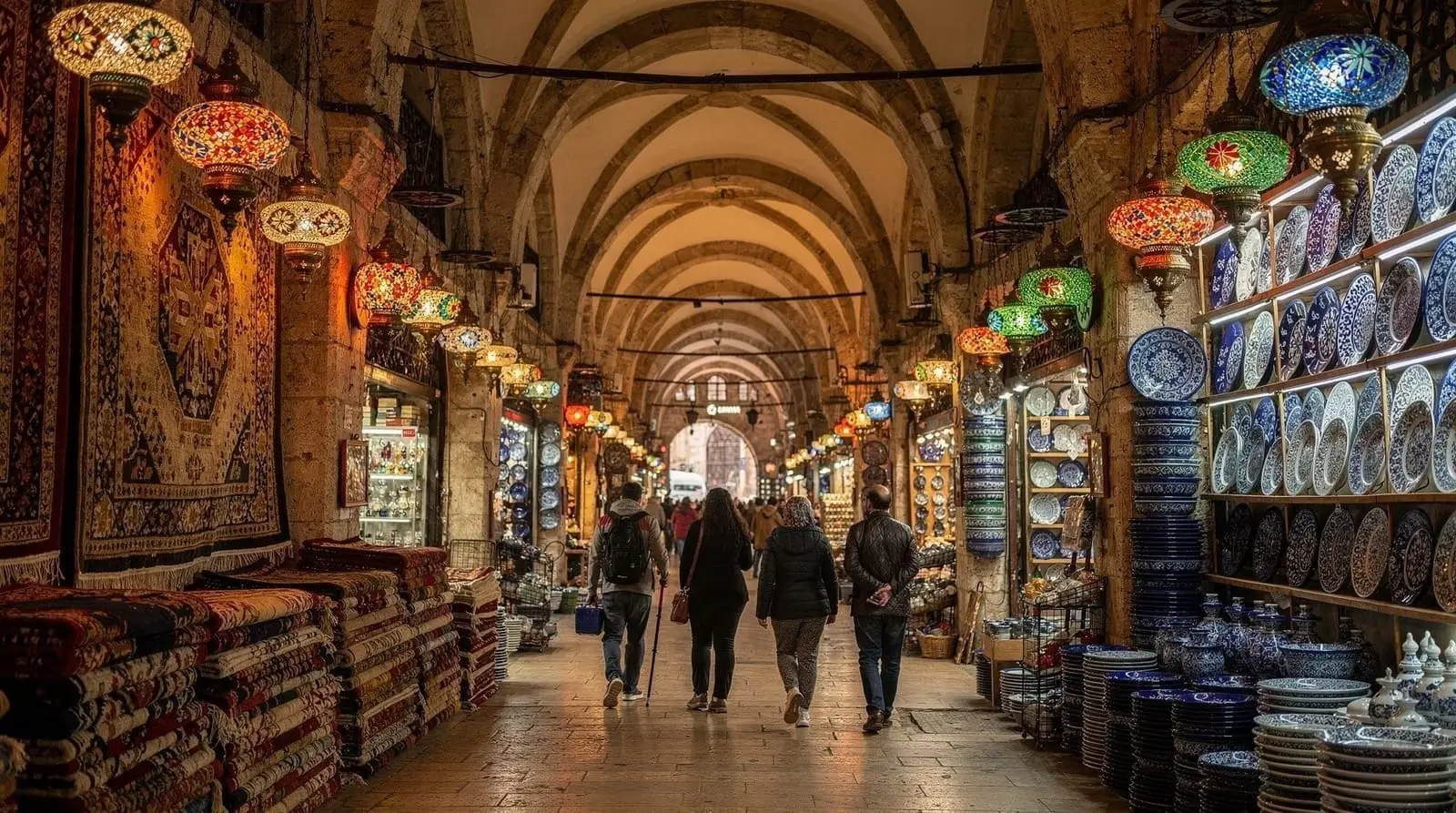
Grand Bazaar shopping tips: what to buy, what to avoid, how to bargain
| Where | Beyazıt area, Old City — Grand Bazaar |
| Cost | Free to enter; bargained prices typically 40–60% of opening quote |
| Time needed | 1.5–3 hours for a proper browse, longer if buying carpets or antiques |
| Getting there | Tram T1 to Beyazıt-Kapalıçarşı or Çemberlitaş |
| Best time | Weekday mornings (Tue–Thu, 8:30–10am) for the calmest browsing |
The Grand Bazaar (Kapalıçarşı) is one of the world’s oldest and largest covered markets — approximately 4,000 shops across 61 covered streets, all within a 16th-century Ottoman structure. It is also a tourist concentration point where overcharging, aggressive sales tactics, and low-quality goods marketed as authentic coexist with genuinely excellent shopping. Navigation requires knowing the difference.
What is actually worth buying
Ceramics: The İznik ceramic tradition (intricate blue-and-white and polychrome floral designs on white ground) is the most famous Turkish craft, and genuine pieces are exceptional. The challenge: most of what is sold in tourist-facing shops is not real İznik but cheaper Kütahya ware or mass-produced imports. The visual difference is substantial once you know what to look for — İznik has a luminous white ground, vivid saturated colours, and fluid hand-painted detail. Kütahya is serviceable and less expensive. Neither is a scam as long as you know what you are buying.
Spices: The Grand Bazaar spice section overlaps with the nearby Spice Bazaar (Mısır Çarşısı). Sumac, dried mint, Urfa chilli (isot), Turkish saffron, and various tea blends are good purchases. Buy by weight; prices in the bazaar are negotiable. The spices themselves are generally genuine.
Turkish delight (lokum): Better purchased at Hafız Mustafa (a pastry chain with multiple Istanbul locations, established 1864) or Ali Muhiddin Hacı Bekir (Eminönü branch, founded 1777) than from bazaar stalls targeting tourists, which tend to push inferior sugar-heavy versions.
Scarves and textiles: Pashmina-style scarves, cotton hammam towels (peştemal), and hand-embroidered textiles are good quality purchases in the Bazaar if you take time to examine the material and stitching. Acrylic sold as pashmina is a known issue; a simple burn test distinguishes real wool from synthetic (natural fibres char; synthetics melt).
Jewellery: Silver jewellery in the Grand Bazaar Bedesten (the oldest inner section) includes some legitimate craftwork. The Cevahir Bedesten antique market within the Bazaar has genuine antique pieces alongside tourist-facing reproductions.
Leather: Quality Turkish leather goods exist but are found in the bazaar alongside inferior imports. A short walk to Karaköy or Nişantaşı (for premium leather) gives better quality context.
What to approach with caution
Carpets and kilims: Beautiful objects with deeply inflated opening prices and high-pressure sales. The carpet shops adjacent to the Grand Bazaar and in Sultanahmet exist specifically to extract money from tourists who do not know market prices. If you genuinely want a Turkish carpet, do your research on regional styles and price ranges before entering any shop. A serious purchase is worth 30–60 minutes of research; an impulse purchase at a tourist shop is almost always overpriced.
“Authentic antiques”: The Bedesten does contain genuine antiques; many tourist-facing stalls sell mass-produced “antiques” (factory-produced copper pieces, fake coins, reproduction Ottoman items). Do not buy anything represented as genuinely antique without being prepared to have it valued independently.
Designer goods: Any “discounted” designer item in the Bazaar is a replica, regardless of what the seller claims. This is not a scandal — it is what it is — but understand what you are buying.
How bargaining works
In the Grand Bazaar, the posted price (or the first verbal quote) is not the real price for non-food items. The acceptable final price is roughly 40–60% of the opening quote for most tourist merchandise — sometimes more, sometimes less depending on the item, the vendor, and whether there are multiple shops selling the same thing.
The process:
- Express interest but not desperation. Browse several shops for the same type of item to calibrate real market prices.
- Make an initial offer of approximately 40–50% of the opening price.
- Negotiate toward a midpoint.
- Be prepared to walk away — this is the most effective tool. The vendor will often call you back with a lower price.
- Do not start negotiating for something you do not actually want to buy.
Tea offers: you may be offered çay during negotiation. It is polite to accept and it does not obligate you to purchase. Drink the tea; make your own decision.
Shopping with a local guide — useful for avoiding overpricing and finding the better sections of the Bazaar.
Navigating the Bazaar itself
The Grand Bazaar is structured with a central core (the old Bedesten antique market) surrounded by successive arched streets radiating outward. The entrances are numbered (Nuruosmaniye Gate, Beyazıt Gate, and others). Orientation: the Bedesten is at the centre; the more expensive, serious shops are in the inner sections; the increasingly tourist-facing generic merchandise dominates the outer corridors near the main entrances.
Useful structural knowledge:
- The Cevahir Bedesten (inner antique market) is worth a slow browse regardless of whether you buy
- The Sulu Han and other hans (caravanserais) adjacent to the main Bazaar are less visited and occasionally more interesting
- The section between Beyazıt Gate and the inner Bedesten has the highest concentration of carpet and textile shops
Going independently on a weekday morning (Tuesday–Thursday, 8:30–10:00 am) gives the most comfortable experience. Weekends and summer afternoons are the most crowded and most pressure-heavy times.
Full shopping guide: Grand Bazaar visiting guide. For the bargaining process specifically, with more example dialogue and price anchoring tactics, see the bargaining in the bazaar guide.
Fitting the bazaar into your Istanbul days
The bazaar sits in the Old City, so it pairs naturally with a day around Sultanahmet and its big monuments. Many visitors do the Hagia Sophia and Blue Mosque first, then walk to the market for a slower afternoon of browsing. If you are building a full plan, the Istanbul in 3 days itinerary shows where a shopping stop fits without crowding out the sights. If you would rather have the monuments and the market linked in one guided day, a guided Old City walk ending at the bazaar is a practical option.
Shopping pressure is only one of the local hazards worth knowing about. The Istanbul scams to avoid guide covers the wider set of tricks aimed at visitors, and the Istanbul tourist traps guide helps you decide which famous stops are worth your time. Keep your bag zipped and your phone out of back pockets in the crowded corridors, as in any busy market.
Finally, remember that bargaining is a social exchange, not a fight. Staying friendly, smiling and being clear about what you want usually gets you a better result than haggling hard. The Turkish customs and etiquette guide explains the manners that make these conversations go smoothly.
Beyond the Grand Bazaar itself
If shopping is a trip priority rather than a one-off visit, the Grand Bazaar is the starting point, not the whole story. The Spice Bazaar, a 10-minute walk away near Eminönü, has a different focus (food, spices, tea) and a calmer atmosphere. The Istanbul shopping guide maps the wider landscape, including Nişantaşı for contemporary Turkish designers and Karaköy for smaller, design-focused boutiques that don’t require bargaining at all. For a category-by-category rundown of what’s genuinely worth bringing home versus what to skip, the what to buy in Istanbul guide expands on the ceramics, textiles and jewellery notes above with specific brand and shop recommendations.
Frequently asked questions about the Grand Bazaar
Is it rude not to buy anything in the Grand Bazaar?
No. The bazaar economy is built on the understanding that most browsing does not convert to purchase. Entering and leaving without buying is normal and expected. Be polite; do not be pressured.
What are the Grand Bazaar opening hours?
Generally Monday–Saturday, approximately 8:30 am to 7:00 pm. Closed Sundays and Turkish public holidays. Individual shops may have slightly different hours; the Bazaar itself maintains regular schedule.
Are the prices in the Grand Bazaar fixed?
For food (tea, snacks): yes, typically fixed. For souvenirs, textiles, ceramics, and non-food items: no — negotiation is standard and expected.
Is the Spice Bazaar (Mısır Çarşısı) part of the Grand Bazaar?
No — they are separate buildings, approximately 10 minutes’ walk apart. The Spice Bazaar is near the Yeni Camii at Eminönü. The Grand Bazaar is in the Beyazıt area. Both are worth visiting; they have different characters and different merchandise.
How much cash should I bring to the Grand Bazaar?
Most shops accept cards now, but cash (TRY) gives you more room to negotiate and is expected for small purchases. Carrying a moderate amount of cash avoids the awkwardness of a vendor’s card machine “not working” for a bargained price — a known minor tactic in some shops.
Can I return or exchange something bought in the Grand Bazaar?
Rarely, and don’t count on it. Most stalls operate on a final-sale basis once cash changes hands. Inspect items carefully (stitching, material, any damage) before paying, especially for ceramics and textiles where quality varies shop to shop.