Turkish and Islamic Arts Museum — visiting guide and highlights
Istanbul: Turkish and Islamic Arts Museum Entry Ticket & Audio Guide
What is the Turkish and Islamic Arts Museum and is it worth visiting?
The Turkish and Islamic Arts Museum (TIEM) on the Hippodrome occupies the 16th-century Ibrahim Pasha Palace and holds one of the world's finest collections of Islamic art — particularly Anatolian carpets from the 13th century onward, Iznik ceramics, Ottoman manuscripts, and metalwork. Entry ~300–400 TRY (~9–12 USD). Undervisited relative to its quality. Budget 2–3 hours.
| Where | On the Hippodrome, opposite the Blue Mosque |
| Cost | ~300–400 TRY (~9–12 USD); included in the Museum Pass |
| Time needed | 2–3 hours |
| Getting there | Tram T1 Sultanahmet, 5-minute walk |
| Best time | Any time — crowds stay light year-round |
The other great museum on the Hippodrome
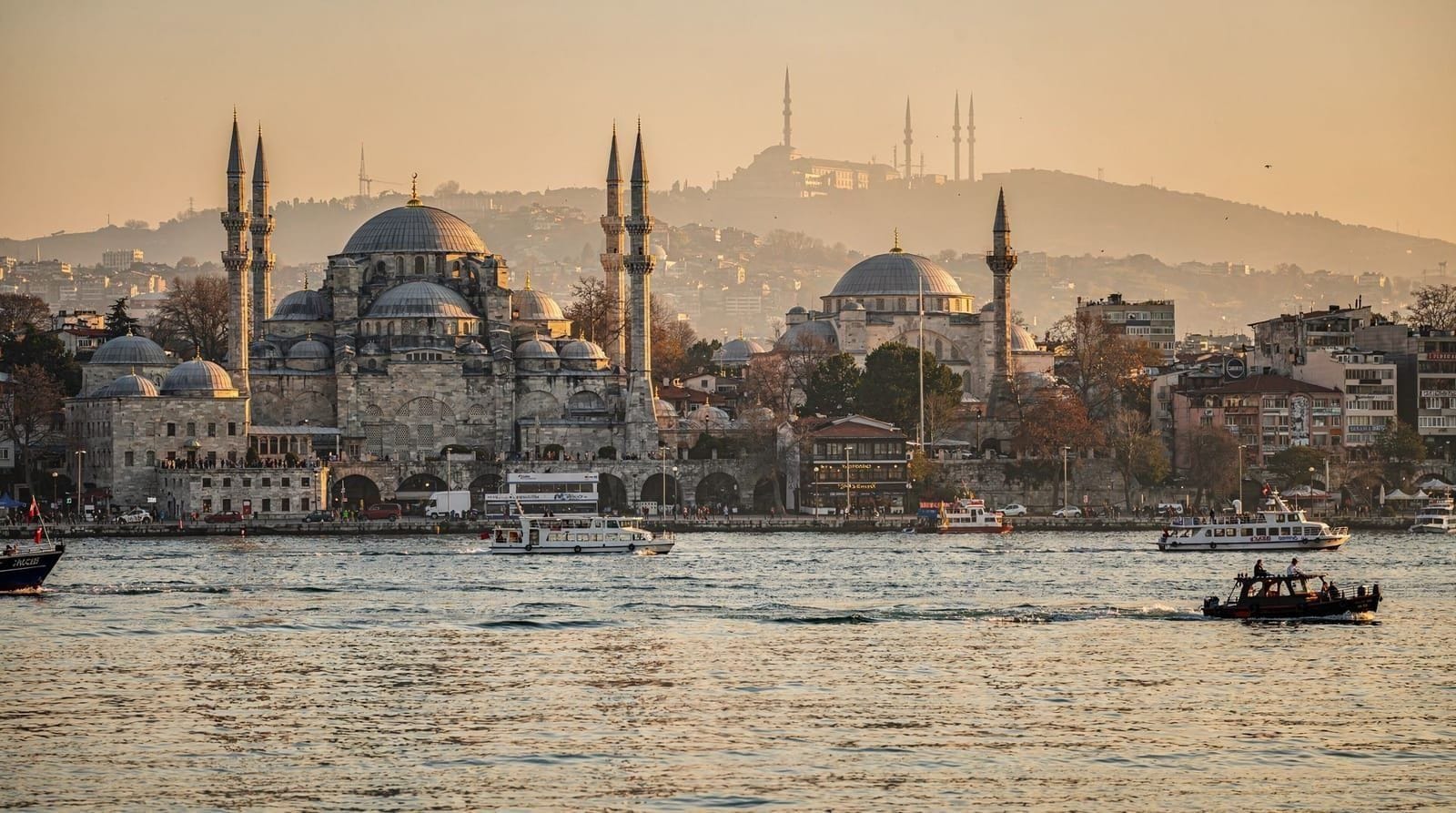
The Turkish and Islamic Arts Museum (Türk ve İslam Eserleri Müzesi) sits directly on the Hippodrome — directly opposite the Blue Mosque and 100 metres from Hagia Sophia. Every day, hundreds of thousands of tourists walk past the entrance on their way between the two, and relatively few go in. This is a mistake.
The TIEM holds one of the world’s most significant collections of Islamic art, with particular depth in Turkish and Central Asian textiles, Anatolian ceramics, Islamic manuscript arts, and metalwork. The building — Ibrahim Pasha Palace — is itself one of the most historically significant Ottoman secular structures in the city. The combination of collection and setting makes this one of Istanbul’s most rewarding but least crowded museum experiences.
Ibrahim Pasha Palace: the building
Ibrahim Pasha became Grand Vizier in 1523, at age 29, and was Süleyman the Magnificent’s closest advisor and friend from childhood. The palace was built for him on the Hippodrome facing the imperial monuments — a position of conspicuous prestige. Ibrahim Pasha was executed in 1536, reportedly at the instigation of Hürrem Sultan (Roxelana), Süleyman’s wife and later legal spouse, who allegedly feared Ibrahim Pasha’s influence.
After his execution, the palace was confiscated. It served various purposes including housing for officials, a state printing house, and a hostel before being assigned to the museum in 1983.
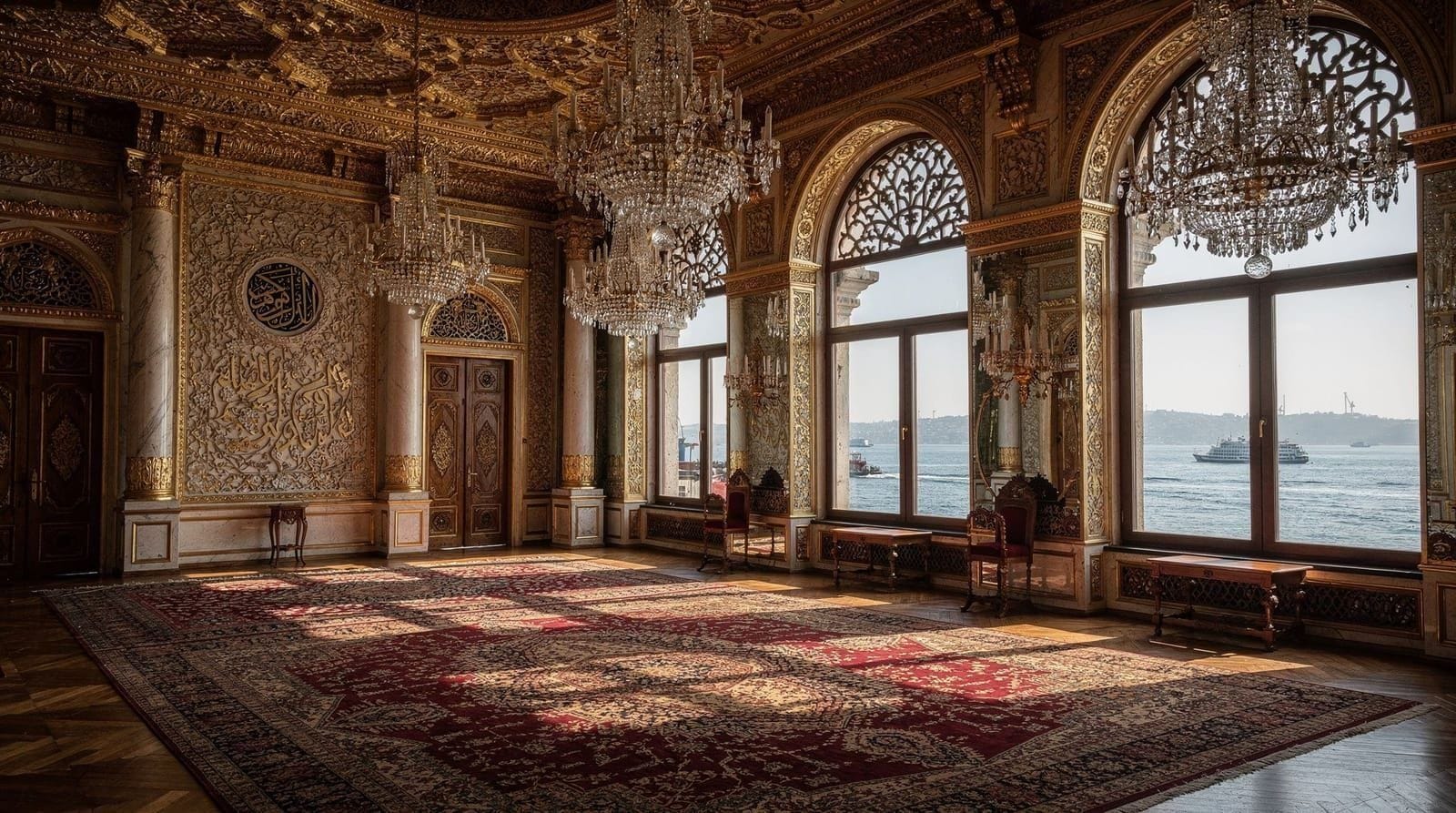
The building’s most impressive feature is its great hall on the second floor — a long Ottoman reception room with views over the Hippodrome and the Blue Mosque. The architectural quality of the building is worth noting independently of the collection.
The carpet collection
The TIEM carpet collection is the museum’s crown. It spans 700+ years of Anatolian and Islamic carpet-weaving, from:
13th-century Seljuk carpets (from the Alaeddin Mosque in Konya and other Anatolian mosques): among the earliest surviving Turkish carpets anywhere. The geometric boldness and colour of these pieces established the Anatolian carpet vocabulary that persisted for centuries.
14th–15th century Anatolian village carpets: including the animal-motif carpets associated with the town of Konya and the patterns reproduced in European Renaissance paintings (often called “Holbein carpets” or “Lotto carpets” after the painters who depicted them).
Mamluk carpets from Egypt: a different tradition — octagonal medallion compositions in distinctive red, blue, and green.
Ottoman court carpets: the Topkapı and palace-style carpets of the 16th–17th centuries, with their complex floral arabesque compositions.
Village and nomadic weaving: tribal flat-weave kilims and knotted carpets from across Anatolia, the Caucasus, and Central Asia.
The installation in the carpet gallery is good — pieces are displayed flat and vertically, with adequate lighting, and the chronological and geographical organisation helps you understand the evolution of the tradition.
Entry ticket with audio guide is particularly valuable in the carpet gallery, where the audio context explains the production techniques, geographic origins, and historical significance of individual pieces that are not always clear from the labels.
Iznik ceramics and tiles
The TIEM holds a significant collection of Iznik ceramics from the 15th–17th centuries — the same tradition that produced the tiles of the Topkapı Harem and Rüstem Pasha Mosque. The collection shows the evolution of Iznik production: from early blue-and-white (Chinese-influenced) through the distinctive cobalt-and-white-and-turquoise period, to the fully developed palette including the characteristic “sealing-wax red” tomato colour of the 16th-century peak.
Ottoman manuscripts and calligraphy
The manuscript collection includes Ottoman-period illuminated Qur’ans, Ottoman royal albums (murakkaa), and examples of the major calligraphic scripts (naskh, thuluth, diwani, ta’liq). For visitors unfamiliar with Islamic calligraphy as an art form, the gallery can be hard to evaluate without context — the audio guide or a guided tour helps significantly. The visual quality of the finest pieces, once you understand the formal constraints the calligraphers were working within, is genuinely impressive.
The ethnographic section
A reconstructed nomadic Turkish tent (yurt) and domestic objects from Anatolian village life form an ethnographic section that provides context for the tribal traditions behind the carpet collection. More accessible for general visitors than the manuscript rooms. Children tend to be interested in the tent reconstruction.
Practical information
Entry: ~300–400 TRY (~9–12 USD, mid-2026). Included in the Istanbul Museum Pass.
Opening hours: approximately 9 am–7 pm (closed Mondays). Verify current hours.
Getting there: the entrance is directly on the Hippodrome (Sultanahmet Square), between the Egyptian Obelisk and the southwest corner of the square. Tram T1 Sultanahmet stop, then walk 5 minutes.
Crowds: significantly lighter than the adjacent Hagia Sophia and Basilica Cistern. You can take your time with individual objects.
Photography: permitted in most areas. No flash in manuscript and textile rooms.
Combining with other Sultanahmet sites
The TIEM fits naturally into a Sultanahmet day: visit Hagia Sophia or the Basilica Cistern first (both close on tickets and sell out), then spend 2 hours at the TIEM before or after lunch. The Hippodrome monuments (Egyptian Obelisk, Serpent Column) are visible from the museum terrace.
For context on Ottoman artistic traditions, see History & culture and Shopping & bazaars for where to buy contemporary versions of these craft traditions.
Why this museum gets skipped, and why it shouldn’t
The TIEM’s biggest obstacle is location: it sits directly between Hagia Sophia and the Blue Mosque, on a stretch of the Hippodrome that most visitors are walking through, not stopping at. After queuing for Hagia Sophia or the Basilica Cistern, the natural instinct is to keep moving rather than add a fourth or fifth stop. That instinct costs visitors one of the calmest, most rewarding museum hours in the old city — the carpet gallery alone is comparable in significance to major textile collections in London or Washington, without the crowds either of those draws.
The other reason it gets skipped is unfamiliarity — most visitors have a mental checklist (Hagia Sophia, Blue Mosque, Topkapı, Grand Bazaar) and the TIEM isn’t usually on it before they arrive. Once you know it’s there, working it in is easy: it adds roughly 2–3 hours to a Sultanahmet day and requires no advance booking pressure the way Hagia Sophia and the Cistern do.
Comparing the TIEM to Sultanahmet’s bigger draws
| Site | Crowd level | Time needed | Why visit |
|---|---|---|---|
| Turkish and Islamic Arts Museum | Low | 2–3 hours | World-class carpets and Iznik ceramics, near-empty galleries |
| Hagia Sophia | Very high | 75–90 minutes | Byzantine and Ottoman architecture in one building |
| Topkapı Palace | High | 3–4 hours | Ottoman court history, treasury, Harem |
| Basilica Cistern | Very high | 45–60 minutes | Atmospheric underground Byzantine reservoir |
If your Sultanahmet day is running long and something has to be cut, the TIEM is the one most visitors will regret cutting the least in the moment — and regret cutting the most in hindsight, once they’ve heard what they missed.
A fast-track entry ticket to the Turkish and Islamic Arts Museum is mostly a convenience rather than a necessity here, since queues are rarely an issue — but it removes any ticket-line uncertainty if you’re working the museum into a tight schedule between Hagia Sophia and lunch.
How to pace a visit
Start with the carpet gallery while your attention is fresh, because it is the part of the museum that most rewards slow looking. Take the pieces in chronological order rather than drifting between rooms: the early Seljuk weavings, then the village carpets, then the Mamluk and Ottoman court pieces. Seen in sequence, the changes in pattern, colour and scale start to explain themselves, and the labels become easier to follow.
After the carpets, move on to the Iznik ceramics and the manuscripts, and leave the ethnographic section for last. The tent reconstruction and the domestic objects make a lighter finish, and they help tie the tribal weaving traditions you saw earlier back to the daily life that produced them. If you are visiting with children, you can reverse this order and begin with the tent so that they have something to look forward to when the quieter rooms come.
Do not feel obliged to read every label. A good approach is to pick a handful of objects per room and spend real time on them, looking at the knotting, the dyes, the way a border frames the field. Most visitors who enjoy this museum say the same thing afterwards: they wish they had given it longer.
Reading the palace as you walk through it
Because the museum occupies a genuine Ottoman palace, the building rewards attention as much as the objects do. Notice how the rooms are arranged around the great hall, and how the windows frame the Hippodrome and the Blue Mosque outside. The palace was designed to announce its owner’s status to anyone crossing the square, and from the upper floor you can still feel that intention. It is worth pausing at a window to understand why a grand vizier wanted this exact position.
The story of Ibrahim Pasha also adds a human layer to the visit. The friendship, the rise and the sudden fall described earlier are the same court politics that shaped the neighbouring Topkapı Palace, and our Harem guide covers the other side of that story. For the wider sweep of the dynasty, Ottoman Istanbul puts the palace and its owner in context.
Where the TIEM fits in your wider plan
The museum works best as part of a deliberate Sultanahmet plan. The Sultanahmet destination page maps out how the main sights cluster around the Hippodrome, and the Hagia Sophia visiting guide explains how to handle the busiest stop of the day so that you arrive at the TIEM with energy to spare. If you are comparing the two great mosque-museums nearby before deciding how to divide your time, Hagia Sophia vs Blue Mosque helps you decide.
If museums are the main reason for your trip, Archaeological Museums is a natural companion stop in the same part of the old city, and Chora Museum offers a very different kind of art, Byzantine mosaics rather than Islamic craft. Together with the TIEM they make a coherent museum-focused day or two. For those weighing up whether a combined ticket is worthwhile, the Istanbul Museum Pass guide walks through the decision, and Are Istanbul passes worth it? takes a more sceptical look.
Taking the craft home
A visit tends to leave people curious about contemporary weaving and ceramics. Once you have seen what the best historic pieces look like, you will find it much easier to judge what is on offer in the markets. The Grand Bazaar shopping guide and Bargaining in the bazaar are useful preparation, and What to buy in Istanbul lists the crafts worth considering. The honest lesson of the carpet gallery is that quality shows in the details, in the evenness of the knotting, the depth of the dyes and the confidence of the design, so look closely before you commit to a purchase.
A quieter counterpoint to the rest of the day
Sultanahmet can feel relentless: queues, tour groups, hawkers near the square. The TIEM offers a break from that. Its galleries are calm, you can sit for a moment if you need to, and the pace is set by you rather than by a crowd moving through a one-way route. Many travellers find that an hour or two here makes the rest of the day more enjoyable, because it resets your attention before the next big sight. If you are building a longer plan, the Istanbul in one day guide and the 3-day itinerary show how a museum stop like this can be balanced against food, walking and time on the water.
Frequently asked questions about Turkish and Islamic Arts Museum — visiting guide and highlights
What is special about the carpet collection?
What is Ibrahim Pasha Palace?
Is the Turkish and Islamic Arts Museum included in the Istanbul Museum Pass?
How long does a visit take?
Is the TIEM good for children?
Top experiences
Bookable activities with verified prices and instant confirmation on GetYourGuide.