Topkapı Harem guide — what to see and honest tips on the separate ticket
Istanbul: Topkapi Palace & Harem Skip-the-Line Access & Audio Guide
Is the Topkapı Harem worth the separate ticket?
Yes, for most visitors. The Harem gives access to approximately 40 of the 400+ rooms in the Ottoman palace's private residential quarter — the Sultan's apartments, the Valide Sultan's court, the Cage where princes were confined, and Murad III's apartment with its exceptional Iznik tiles. The separate ticket is ~350 TRY (~10 USD) and the visit adds 45–60 minutes to a Topkapı day.
| Where | Topkapı Palace, second courtyard, near the Carriage Gate |
| Cost | ~350 TRY (~10 USD) separate from the main palace ticket |
| Time needed | 45–60 minutes for the fixed route |
| Booking | Timed entry, roughly every 30 minutes — book alongside your palace ticket |
| Best time | Right after the palace opens, before tour groups queue at the Carriage Gate |
What the Harem actually was
The word “harem” (from the Arabic haraam, meaning forbidden or sacred) refers in the Ottoman context to the private residential quarters of the palace — specifically the sections accessible only to the sultan and to specific members of his household. The popular Western image of the Harem as primarily a place of concubinage is accurate in one respect and completely misleading in another.
It was accurate that the Harem housed the sultan’s concubines. It was misleading in suggesting that the Harem was primarily a sexual arrangement. The Harem was a highly structured social institution — a residential complex housing the sultan’s mother, wives, daughters, sons, female servants, male servants, eunuchs, and the concubines who might or might not be called to the sultan’s presence. The hierarchy within the Harem was elaborate, the education was rigorous (including Turkish, Arabic, music, needlework, and domestic arts), and the political significance was real.
At its peak in the 16th century, the Harem housed several hundred residents. It was administered by the Valide Sultan (the sultan’s mother), who was effectively the CEO of the institution and, in periods of a weak sultan or a minor, of significant influence in imperial politics.
The physical space: what survives and what is open
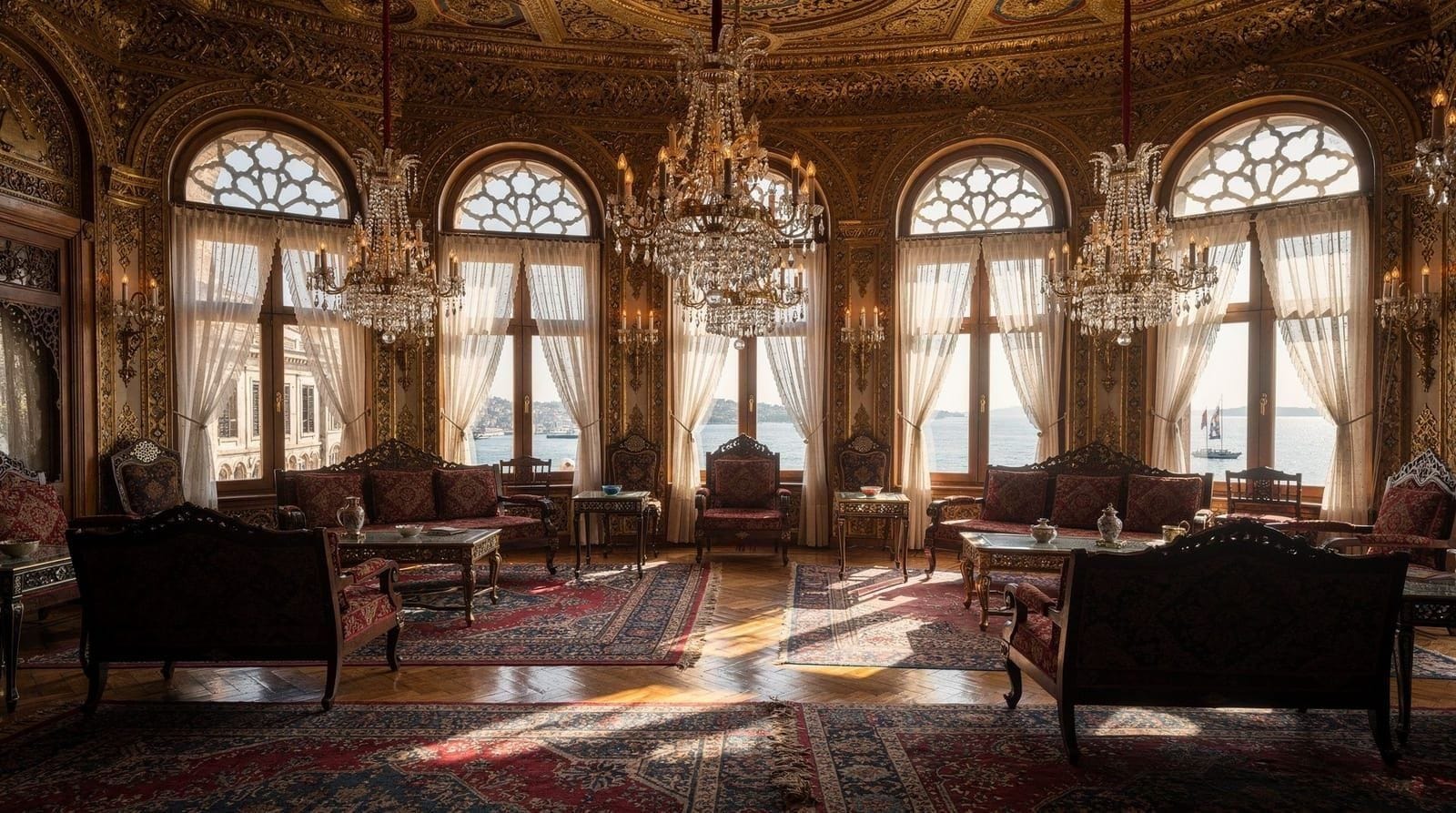
The Harem occupies the western section of the Topkapı Palace complex, connected to the main palace buildings and accessible from the second courtyard. It has over 400 rooms; approximately 40 are currently open to visitors. The route through the open rooms follows the historical logic of the hierarchy:
The Entrance Halls and Black Eunuchs’ Section: the corridor of the Black Eunuchs (Kara Ağalar Koğuşu) leads from the Carriage Gate into the Harem. The Black Eunuchs administered the Harem’s internal affairs and were the primary interface between the outside world and the restricted interior. Their quarters, the overseer’s room, and the mosque are here.
Valide Sultan’s Courtyard and Apartments: the Valide Sultan was the most powerful woman in the Ottoman Empire — occasionally in the empire. Her apartments are accordingly prominent: a large courtyard, a private bath (hamam), a sitting room with painted decoration, and a suite of reception rooms. The political power this space represented — Kösem Sultan administered the empire from here in the 1640s as regent for her grandson — is extraordinary.
The Sultan’s bathrooms (Murad III, 1578): the bath of Murad III, designed by Mimar Sinan, is covered in Iznik tiles of the highest quality — the double hammam with marble platforms, brass fixtures, and the flowing geometric tile patterns are some of the finest interior decoration in the palace.
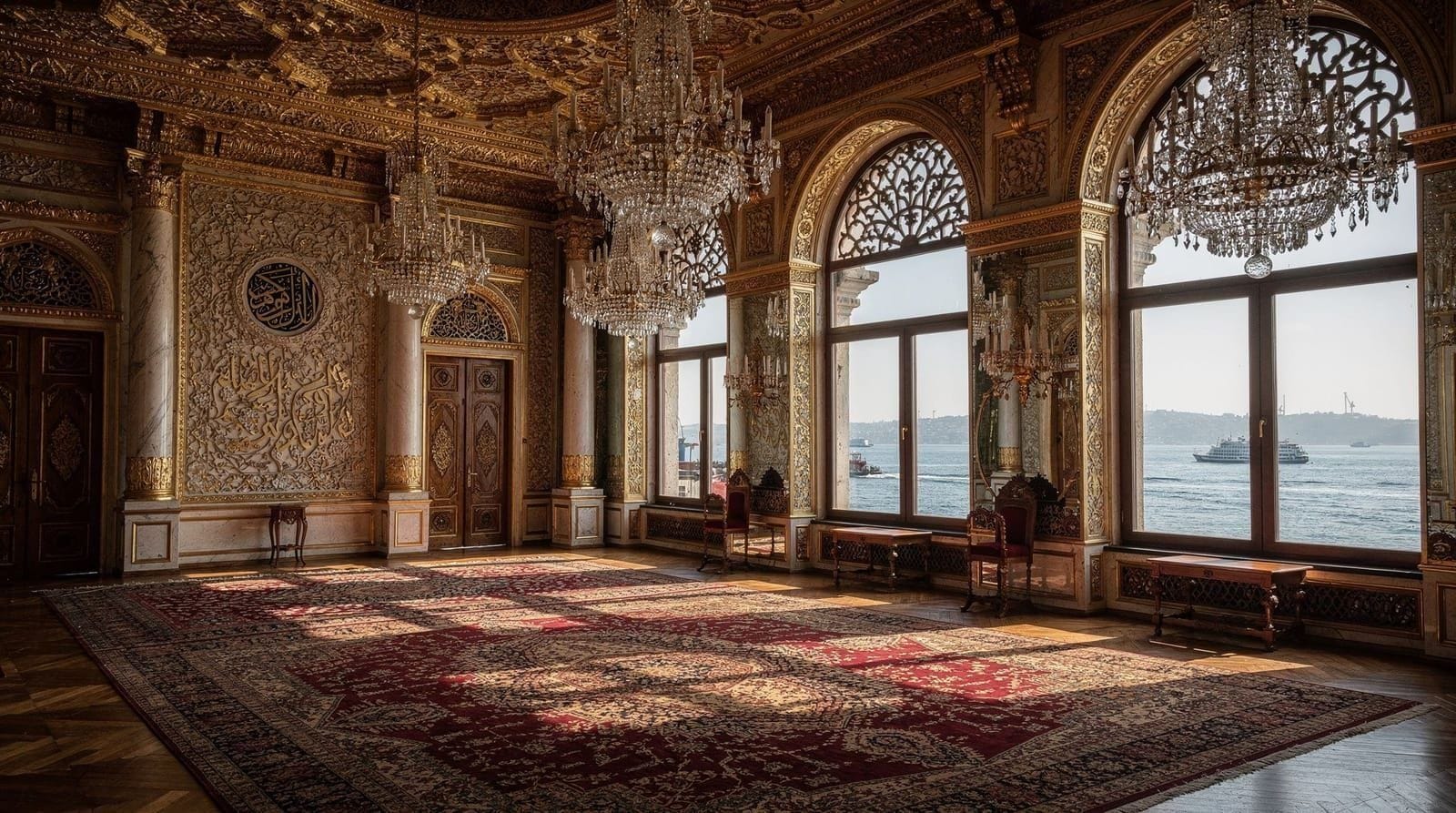
The Murad III Apartment: adjacent to the bath, the private apartment of Murad III (1574–1595) is considered the finest room in the Harem and among the finest rooms in any Ottoman building. Designed by Sinan, the walls are covered floor to ceiling in Iznik tiles from the peak period of production — the deep cobalt, the turquoise, the white backgrounds, and the characteristic tomato red all present in perfect condition. The painted dome and the bronze fireplace complete a room of exceptional quality.
The Imperial Hall (Hünkâr Sofası): the large reception room where the sultan received the women of the Harem for formal occasions. The current decoration dates from the 18th century (Baroque-influenced, after earlier earthquake damage).
The Cage (Kafes): the apartments where princes were confined. After the practice of fratricide (killing rival brothers upon accession) was replaced in the early 17th century, princes were confined instead. The rooms themselves are comfortable but the arrangement was a form of psychological imprisonment. Some sultans spent decades in the Cage before emerging to rule — Ahmed I, who built the Blue Mosque, was an exception in not having been caged.
The Golden Road (Altınyol): the main corridor of the Harem, which allowed the sultan to pass through the complex.
Logistics: the separate ticket and timed entry
The Topkapı Palace Harem ticket with audio guide handles the advance booking for both the main palace and Harem with an audio guide covering both sections. This is the most practical option for independent visitors.
Booking: book the Harem ticket online separately from or alongside the main palace ticket. Entry to the Harem is in timed batches approximately every 30 minutes. Your ticket specifies an entry window. Arrive at the Harem entrance (near the Carriage Gate in the second courtyard) within your window.
The alternative: the Harem is included in guided tour packages that also cover the main palace. A guided tour including both the palace and Harem avoids all booking complexity.
Without advance booking: walk-up tickets for the Harem are available if slots remain, but this is unreliable in peak season. Pre-booking strongly recommended.
The human stories behind the rooms
The Harem’s appeal is partly architectural and partly the human history. Some of the most significant Ottoman political dramas played out in these rooms:
Hürrem Sultan (Roxelana, d.1558): a Ukrainian-born concubine who became Süleyman the Magnificent’s legal wife — a break from Ottoman tradition. She converted Süleyman’s affections, influenced his political decisions, and built institutions (including the Hürrem Sultan Hamamı near Hagia Sophia) in her own name. Her political influence was unprecedented for an Ottoman woman.
Kösem Sultan (d.1651): Valide Sultan who governed the empire as regent during her grandson Mehmed IV’s minority. She was strangled in 1651 by the supporters of her daughter-in-law Turhan Sultan in a Harem coup — the last and most dramatic episode of the Sultanate of Women.
Sultan Ibrahim (“the Mad”, 1640–1648): confined in the Cage for 22 years before his accession. His erratic behaviour and political incapacity are often attributed to the psychological effects of decades of confinement. He was eventually deposed and executed.
For more on Ottoman history, see History & culture.
These stories are easier to follow with a little background on the dynasty. The Ottoman Istanbul guide sets out how the court worked, and the Istanbul history overview places the palace in the longer story of the city, from the Byzantine capital to the Ottoman one. Reading either before you go means the names on the audio guide already mean something when you reach the rooms they belong to.
How to read the rooms as you walk through
The route is fixed, so the best use of your time is to treat it as a sequence rather than a list of highlights. You begin in the service areas, where the eunuchs controlled access, and you move step by step towards the spaces closest to the sultan. Notice how the decoration changes along the way. The early corridors and courtyards are plain and functional. The finer tile work and painted ceilings appear as you approach the private apartments, and that gradient is the point: status was expressed through proximity and through materials.
Look up as often as you look ahead. Much of the best decoration in the Harem is on domes and upper walls, and crowds tend to bunch at eye level. Look also at the windows and screens. Many rooms were designed to let people see out without being seen, which tells you as much about life here as any tilework.
Pay attention to scale. After the grandeur of the palace’s ceremonial courtyards, the Harem can feel surprisingly intimate, with narrow passages, low doorways and small rooms opening off one another. This was a place where hundreds of people lived at close quarters, and the architecture reflects that. If a room feels cramped, that is historically accurate rather than a flaw of the visit.
Tiles, light and photography
The Iznik tiles are the visual highlight, and they reward patience. The colours look different depending on the light in each room, and the glazed surfaces catch reflections. Step back first to take in the overall pattern, then move close to see the individual floral motifs. If photography is allowed on your visit, keep your phone steady and avoid holding up the group behind you; the rooms are small and the batches move on a schedule.
Bring a little patience for the corridors too. In a timed batch, you will often be moving at the pace of the group, so decide in advance which two or three rooms you most want to linger in. The Murad III apartment is the obvious one, and the Valide Sultan’s courtyard and the Cage are good candidates for a second look. Rules about photography and bags can change, so follow any signs and staff instructions on the day.
Choosing between an audio guide and a live guide
Both formats work, and the choice comes down to how you like to learn. An audio guide lets you set your own pace, pause where a room grabs you and skip what does not. It suits independent visitors who have already read a little. A live guide adds context you cannot get from a script, answers questions about the political intrigue and can steer you away from the busiest corners. For a place defined by its people as much as its architecture, many visitors find a guide makes the history stick.
If you are visiting with a family, the Istanbul with kids guide is worth a look before you decide how much of the palace to attempt in one go. The Harem’s stories of rivalry and confinement can hold older children’s attention, but long stretches of quiet rooms are harder for younger ones.
Planning the rest of your day around the Harem
The Harem sits in the heart of the old city, so it combines naturally with its neighbours. The Sultanahmet district puts several major sights within walking distance of the palace gates. Many visitors pair the palace with the Hagia Sophia and the Basilica Cistern, but it is wise to split these across more than one day if you want to enjoy each of them rather than rush through. The Istanbul in one day plan shows how tightly the old city can be compressed if you have no choice, and the Istanbul in two days itinerary gives the palace more breathing room.
After the palace, the quieter streets and the nearby Gülhane side of the old city are a pleasant way to decompress before moving on. If you want something more informal and less crowded, a meal away from the main tourist streets is a good way to end a day of heavy history; the where to eat in Istanbul guide has ideas.
Fitting the Harem into a Topkapı visit
The Harem is a detour off the main palace route, not a separate outing — you enter through the second courtyard, near the treasury, so the practical question is when to slot it in rather than whether to make a special trip. Most visitors do the treasury first (it queues earlier in the day), then the Harem, then the third and fourth courtyards. Doing the Harem before the treasury queue builds is also reasonable if you arrive right at opening. Either way, budget the full Topkapı Palace visit at 3–4 hours before adding the Harem’s 45–60 minutes on top.
If you’re combining Topkapı with other Sultanahmet sights on the same day, the Harem is the first thing to cut if you’re running short on time — it’s the single most skippable hour of an old-city day, even though it’s genuinely rewarding if you have it.
Comparing the Harem to other Ottoman interiors
Istanbul has several other spaces that give a similar “inside Ottoman domestic life” experience, and it’s worth knowing how the Harem stacks up before deciding how much time to give it.
| Site | What it shows | How it compares to the Harem |
|---|---|---|
| Topkapı Harem | 16th–19th century royal residential quarters | The deepest and most architecturally significant option |
| Dolmabahçe Palace | 19th-century European-style royal residence | More visually dramatic, less historically layered |
| Turkish and Islamic Arts Museum | Ibrahim Pasha Palace, Ottoman secular architecture | Grand hall rather than intimate residential rooms |
A small-group Topkapı Palace and Harem tour keeps group sizes down inside the Harem’s narrow rooms and corridors, which matters more here than in the palace’s larger courtyards.
Frequently asked questions about Topkapı Harem guide — what to see and honest tips on the separate ticket
What is the Topkapı Harem?
How is the Harem visit structured?
Which rooms in the Topkapı Harem are most worth seeing?
What was the political significance of the Harem?
What is the Cage in the Topkapı Harem?
How long does the Harem visit take?
Top experiences
Bookable activities with verified prices and instant confirmation on GetYourGuide.