Historic hammams in Istanbul — the Ottoman bathhouses still operating today
Istanbul: Turkish Bath Experience (Cemberlitas Hamami)
Which historic hammams in Istanbul are still operating?
At least six major historic Ottoman hammams remain fully operational in Istanbul. The most significant are Çemberlitaş (1584), Ayasofya Hürrem Sultan (1556), Çağaloğlu (1741), and Süleymaniye (1557). All were built by or for the Ottoman imperial court. Prices range from €45 at Süleymaniye to €85–120 at Hürrem Sultan.
Quick answer: Six major historic Ottoman hammams remain operational. The most architecturally significant are Hürrem Sultan (1556) and Çemberlitaş (1584), both by Mimar Sinan. For a non-tourist-facing historic experience, Tarihi Galatasaray Hamamı (1481) in Beyoğlu and Gedikpaşa Hamamı (1475) predate the famous buildings.
| Where | Sultanahmet, Beyoğlu, and neighbourhood districts citywide |
| Cost | €35-55 neighbourhood hammams to €85-120 for Hürrem Sultan |
| Time needed | ~2 hrs for a full treatment and cool-down |
| First time? | see the hammam first-timer guide |
| Best time | weekday mornings for the quietest, most atmospheric visit |
Ottoman hammam architecture in context
Istanbul’s historic hammams are not just functional bathhouses — they are among the finest examples of Ottoman civil architecture still standing and in daily use. Understanding their architectural significance makes a visit more meaningful.
The Ottoman hammam tradition inherits from Byzantine and Roman bathing culture but adds Islamic spatial principles — strict gender separation, the importance of purification before prayer, and the hammam’s role as a social institution for communities. Istanbul’s conquering Ottomans found a city with functioning Byzantine baths in 1453 and immediately began building their own.
Within 150 years, Mimar Sinan had designed a generation of hammams that became the architectural standard — and most of them are still standing.
What is remarkable about this survival rate is not just the buildings’ age but their continuous function: unlike many historic monuments preserved as static museum pieces, Istanbul’s historic hammams are working buildings, still heated, still staffed, still performing the exact task they were designed for five centuries ago. Visiting one is closer to using a genuinely ancient piece of infrastructure than to viewing a museum exhibit — a distinction worth keeping in mind when comparing the experience to, say, a Byzantine church converted into a static tourist site.
Mimar Sinan and the hammam tradition
Mimar Sinan (Chief Ottoman Imperial Architect, 1490–1588) is responsible for Istanbul’s most architecturally significant buildings: Süleymaniye Mosque, the minarets of Hagia Sophia’s Ottoman-era additions, and the defining hammams of the imperial period.
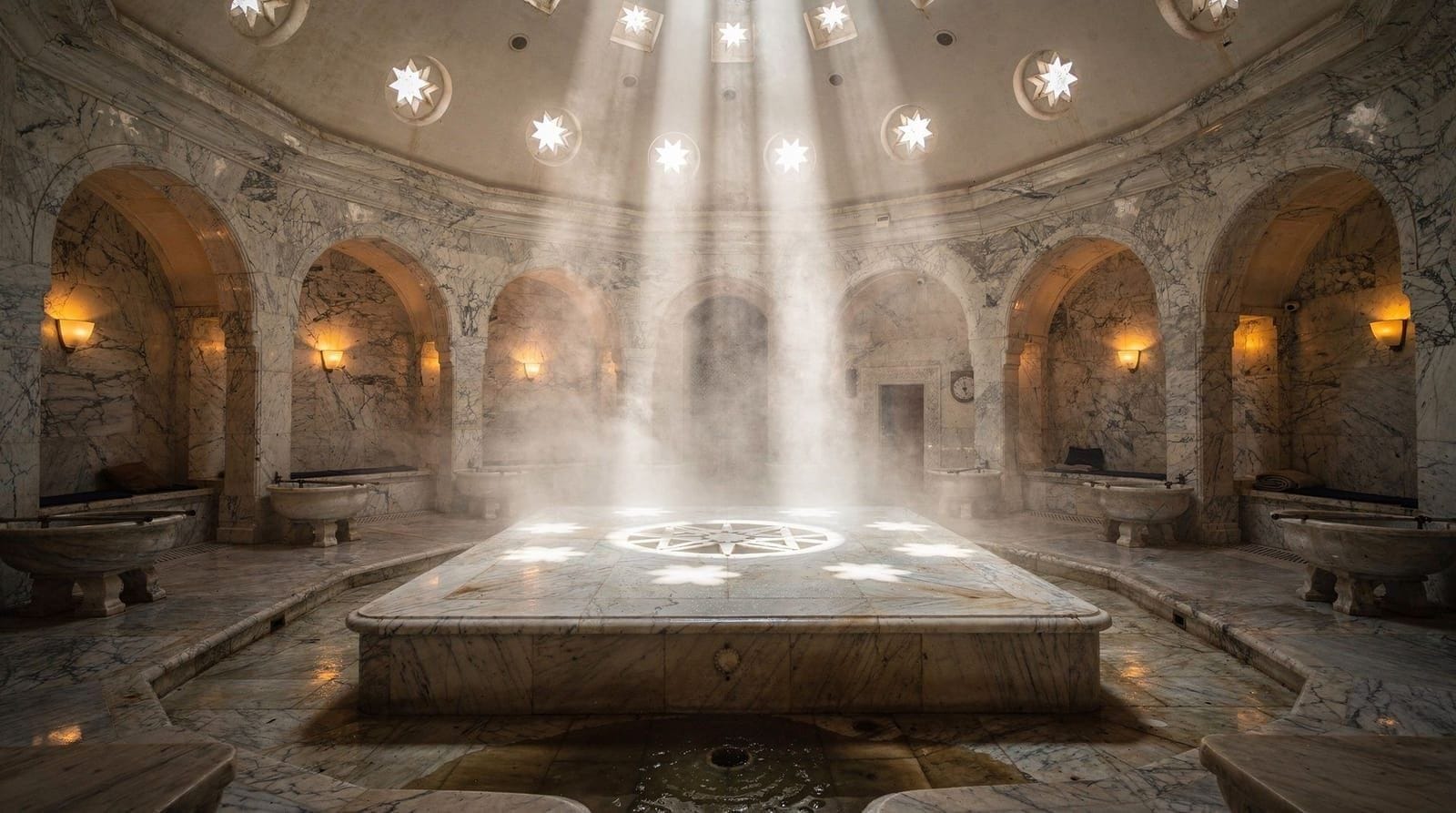
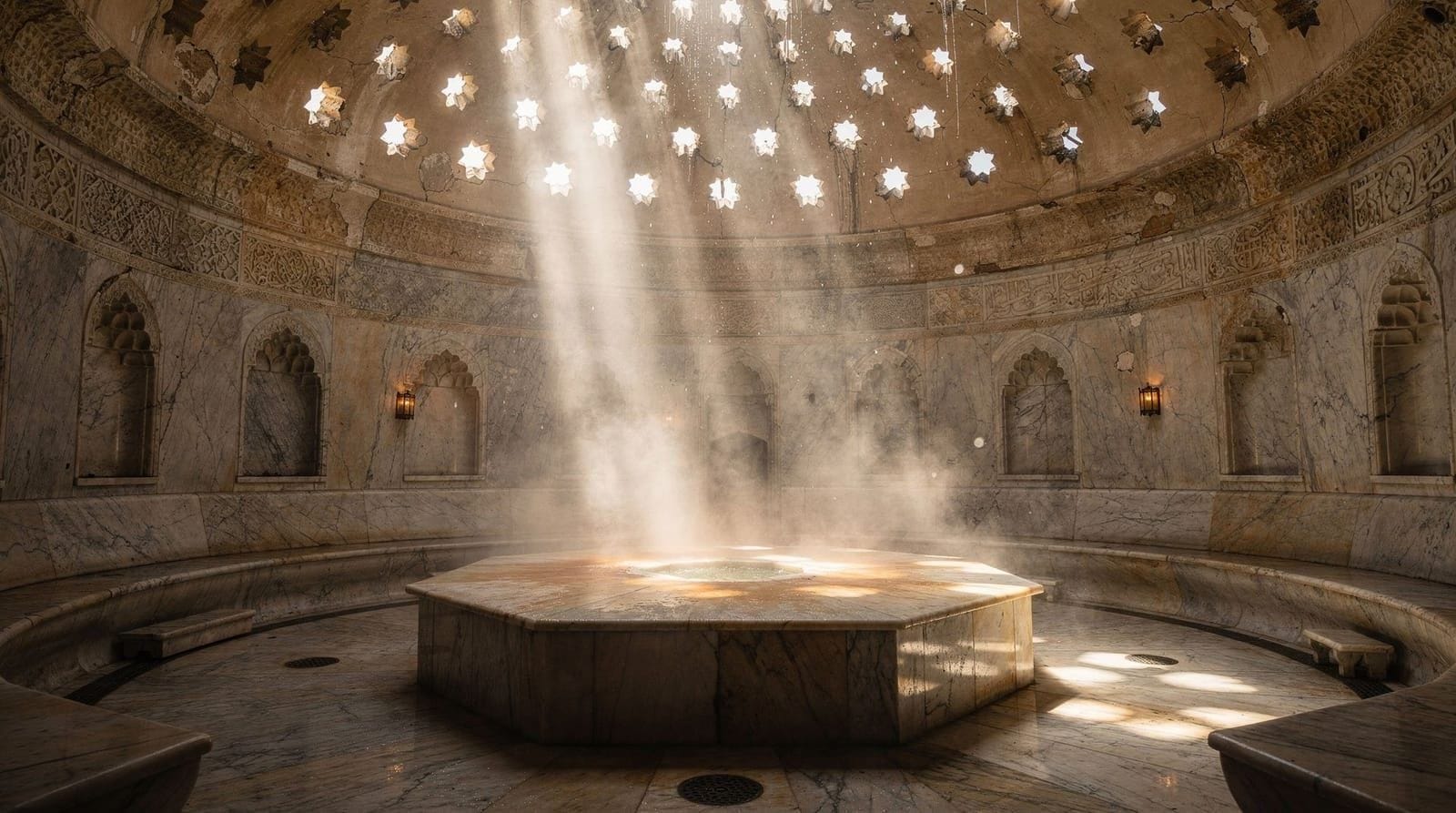
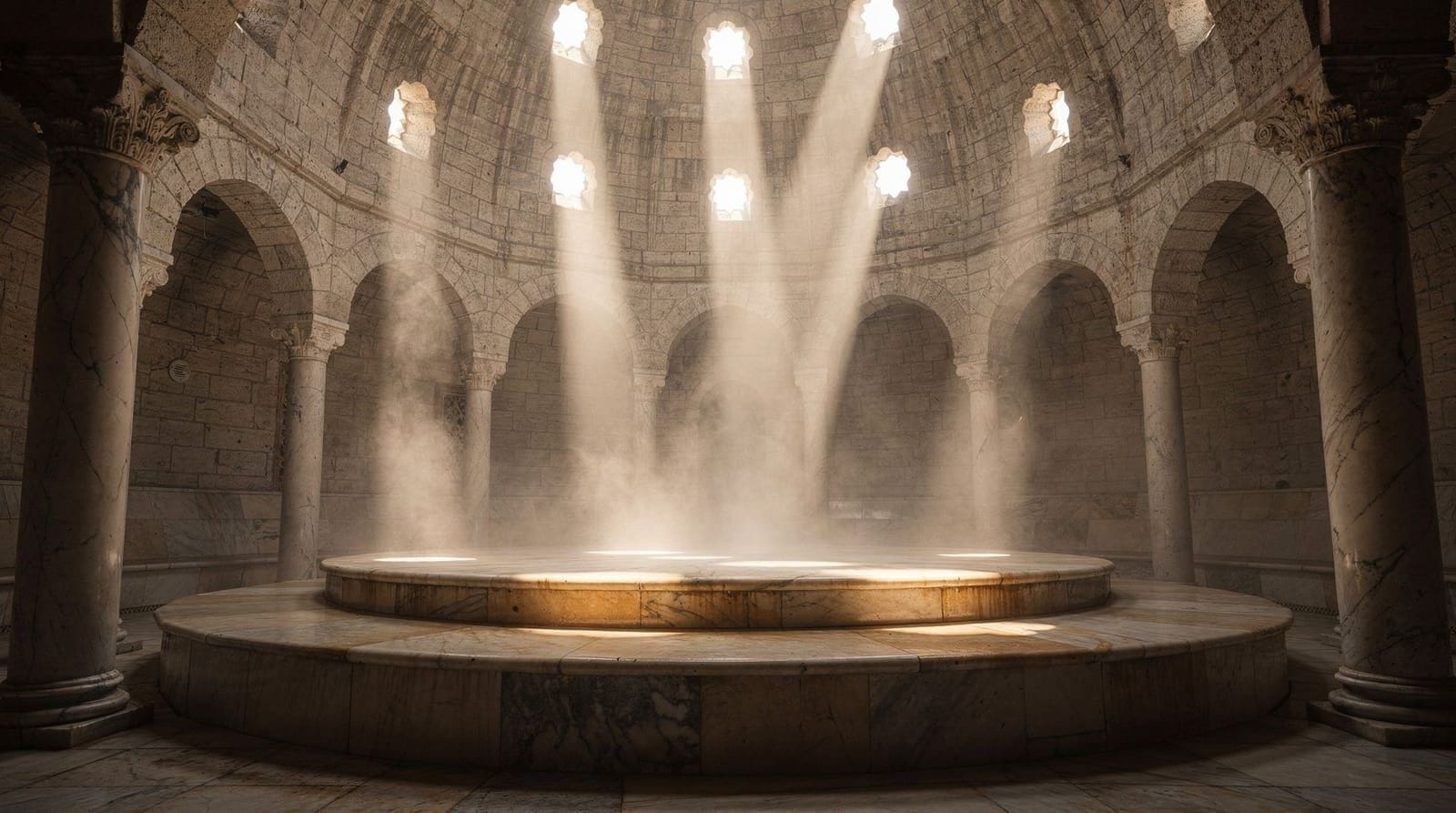
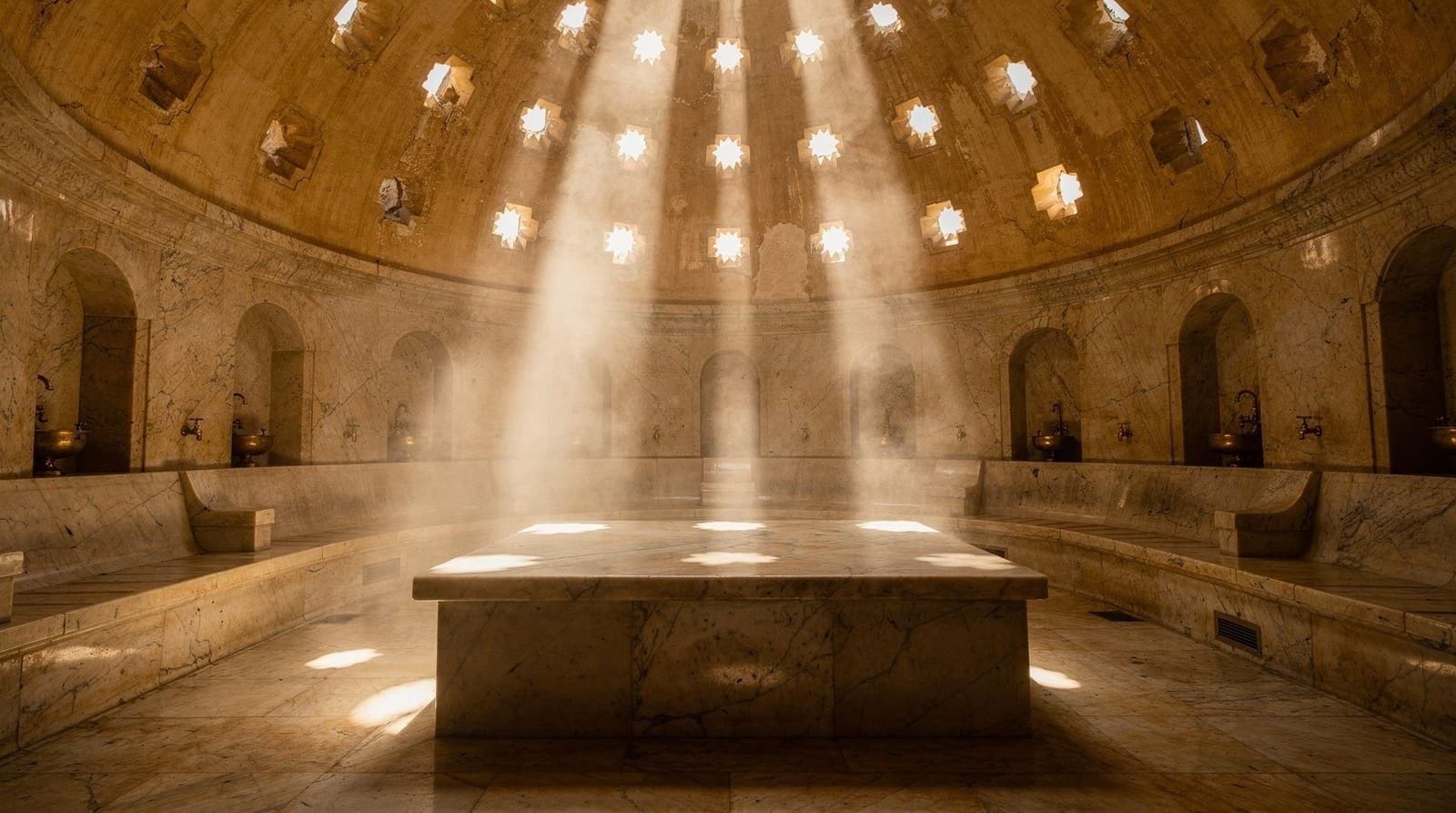
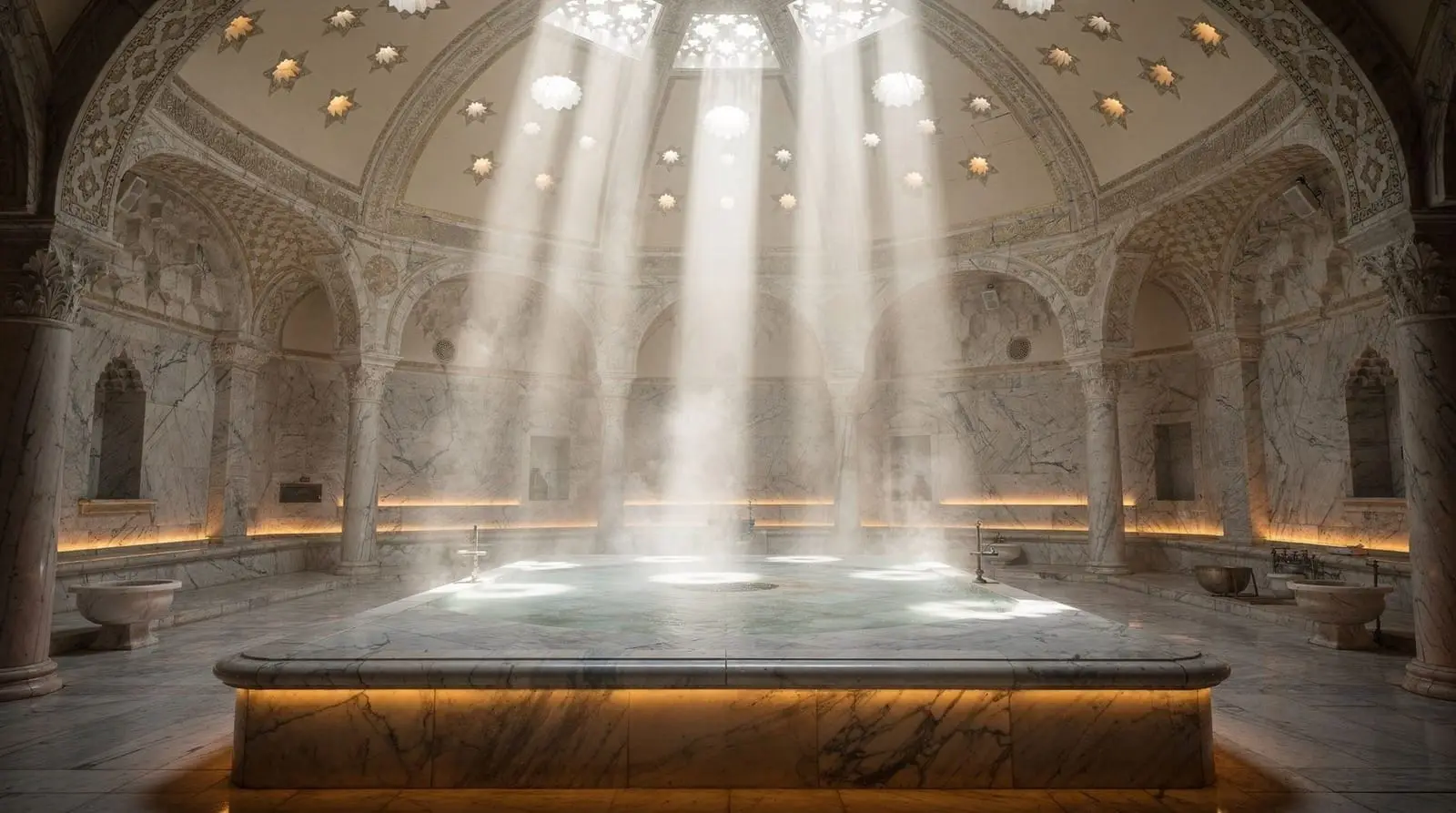
Sinan brought to hammam design the same principles he applied to mosques: the management of light through geometric skylight apertures (the fenerlik — star-shaped holes in the dome that filter sunlight into the hot room), the coordination of interior volumes to create specific spatial experiences, and the use of marble as both functional surface and aesthetic element.
The result is spaces that are simultaneously functional (they work as baths) and architecturally elevated (they function as architecture worth visiting for its own sake).
The major historic hammams — chronological
Gedikpaşa Hammam (1475)
The oldest continuously operating hammam in Istanbul, built just 22 years after the Ottoman conquest of Constantinople. Located in the Gedikpaşa neighbourhood between Sultanahmet and Kumkapı.
Less visited by tourists than the Sinan-era hammams — it lacks the marketing of Çemberlitaş or Hürrem Sultan — but the building is genuinely significant. The architecture predates the Sinan refinements: the proportions are heavier, the stone more austere, the aesthetic rawer than the mid-16th century buildings.
Status in 2026: Operational as a neighbourhood hammam with some tourist visitors. English is limited. The experience is local rather than tourist-facing.
Architectural notes: The hot room dome is one of the earliest examples of the star-skylight system. The göbek taşı is smaller than Sinan’s later versions.
Tarihi Galatasaray Hamamı (1481)
In Beyoğlu, built by the Galatasaray school founders. One of the oldest in the city’s European quarter (Galata/Beyoğlu was historically the cosmopolitan commercial district with Genoese, Greek, and Jewish communities).
Less architecturally refined than the Sinan hammams but historically interesting — it was built to serve the mixed community of Galata rather than the Ottoman court.
Status in 2026: Operational. More local-facing than the Sultanahmet options. Good option for visitors staying in Beyoğlu who want an accessible historic hammam without crossing to the old city.
Approximate price: €35–55 for standard package.
Ayasofya Hürrem Sultan Hammam (1556)
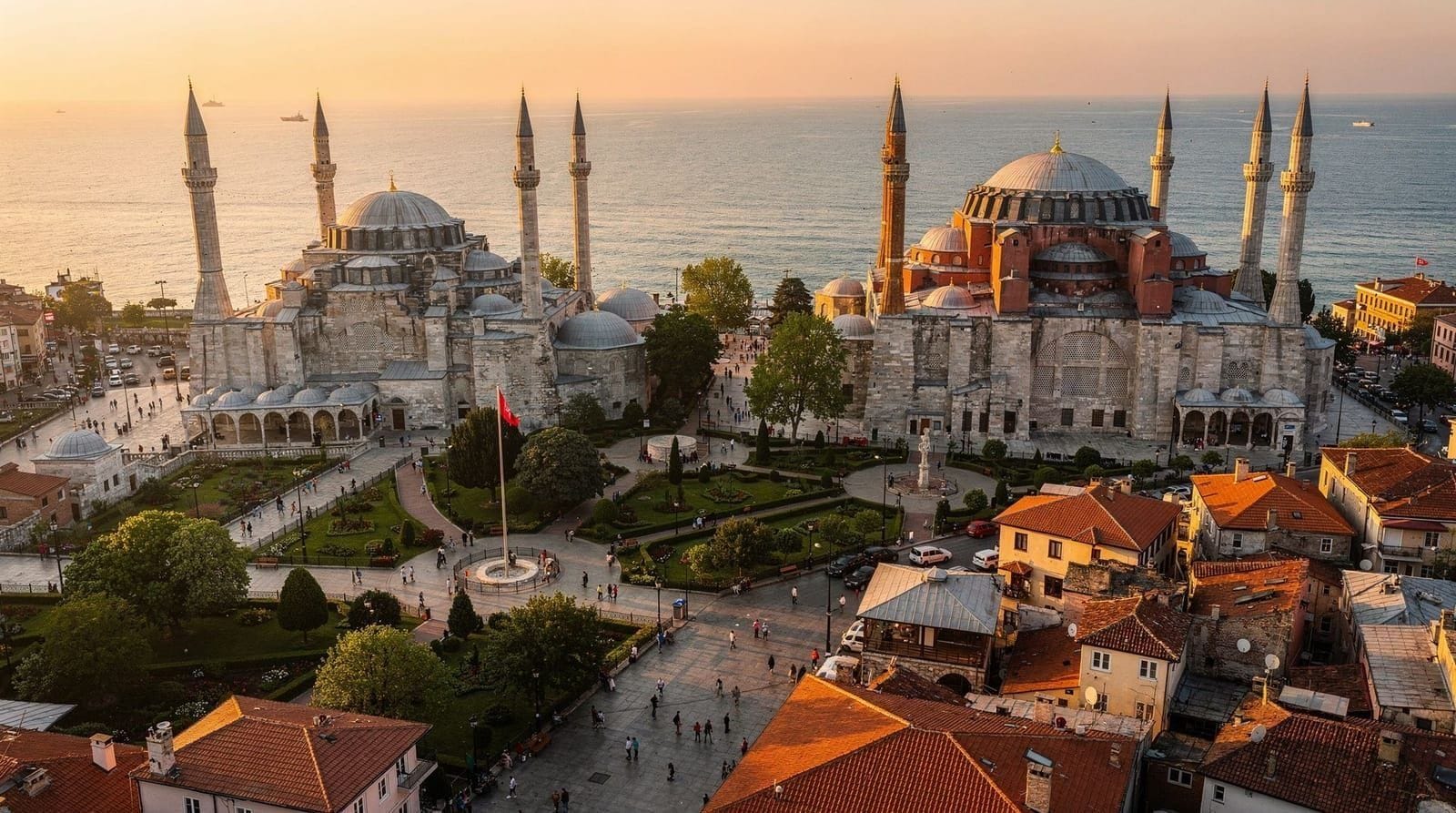
Built by Mimar Sinan for Hürrem Sultan (Roxelana) — Süleyman the Magnificent’s favourite consort and wife, one of the most powerful women in Ottoman history. Built directly opposite Hagia Sophia as part of the religious and charitable complex Hürrem Sultan endowed.
The design is a double hammam (çifte hamam) — two mirror-image sections, one for men and one for women, sharing a wall but independent in function. The symmetry is visible from the exterior and is an unusual architectural feature.
Architectural significance: The hot room is Sinan’s most refined hammam space — the proportions, the handling of light through the dome, and the marble quality are all at the highest level of Ottoman craftsmanship.
Status in 2026: Fully restored and operating as a luxury tourist hammam. Very expensive (€85–120 for the standard package) and not available for entry-only. Staff speak English fluently. The experience is high-end spa rather than traditional communal bath.
Süleymaniye Hammam Complex (1557)
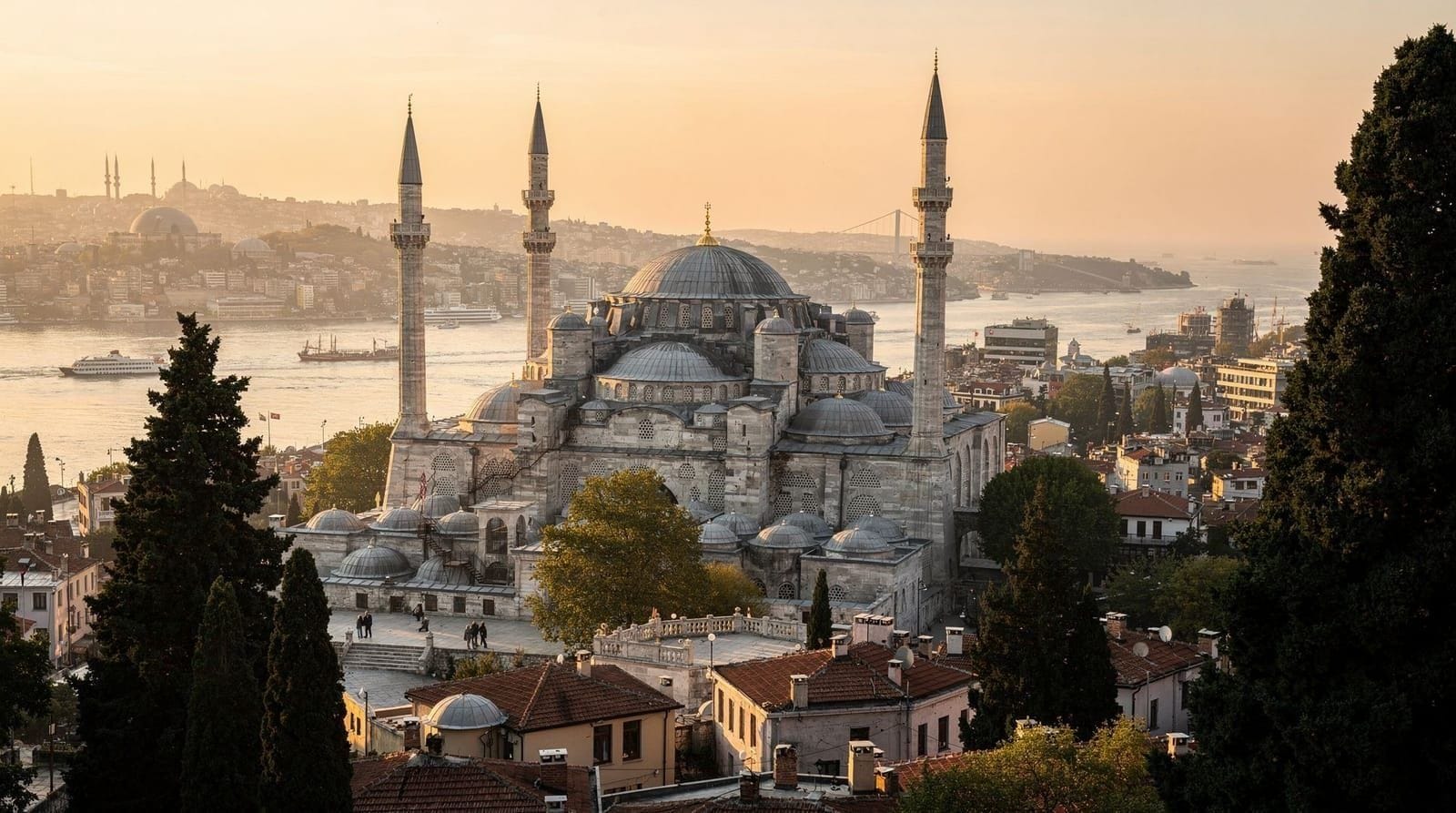
Part of the Süleymaniye külliye — the vast charitable complex Süleyman the Magnificent built around his mosque on the Third Hill of Istanbul. The hammam was an integral part of this charitable foundation (vakıf), providing bathhouse services to mosque employees, students at the adjacent madrasa, and neighbourhood residents.
Mimar Sinan designed the hammam as part of the overall complex — it shares the same stone vocabulary and proportional approach as the mosque itself. Less ornate than Hürrem Sultan (the mosque complex was designed for public religious use rather than imperial luxury), but technically accomplished.
Status in 2026: Operational tourist hammam. Slightly less expensive than Çemberlitaş (€45–55 for standard package). Less tourist-pressured than the Grand Bazaar area. Good alternative for visitors who want Sinan-designed architecture without the Sultanahmet crowds.
Location: 15-minute walk from the Grand Bazaar, uphill toward Süleymaniye Mosque. Combining the mosque visit with the hammam in the same afternoon makes practical sense, since both share the same architectural language and are a short walk apart — see the mosque destination page for the fuller visiting context before or after your bath.
Çemberlitaş Hammam (1584)
Built by Mimar Sinan for Nurbanu Sultan (mother of Sultan Murad III). Near the Column of Constantine (Çemberlitaş — the “hooped stone” — from which it takes its name), directly on Divan Yolu in central Sultanahmet.
Architectural significance: Considered by many historians to be the finest example of Sinan’s hammam design. The hot room dome — carried on a transition zone of pendentives and arches above the octagonal sıcaklık space — is technically sophisticated. The göbek taşı is one of the largest in Istanbul.
The building has operated continuously since 1584 — through the end of the Ottoman Empire, the founding of the Republic, two world wars, and the tourism era. It was restored in the 1990s and again in the 2010s without altering the original structure.
Status in 2026: The most visited hammam in Istanbul. Efficient, professional, heavily tourist-oriented. Standard package (kese + sabunlama) €55–65. Full package with massage €80–95.
The honest tourist-facing reality: On a busy Saturday morning, Çemberlitaş processes groups efficiently. The treatment is good but the atmosphere is less serene than a quieter venue. For the full architectural and atmospheric experience, visit on a weekday morning before 10am.
Çağaloğlu Hamamı (1741)
The newest of Istanbul’s major historic hammams — built during the reign of Mahmud I as part of a library complex in Çağaloğlu, between the Grand Bazaar and the Süleymaniye Mosque.
Built in a different era than the Sinan buildings, during the Ottoman-Baroque period when Western architectural influences were beginning to enter Ottoman design. The warm room (ılıklık) is the most elaborate in any Istanbul hammam — marble columns, carved niches, intricate joinery.
Status in 2026: Operating tourist hammam. Standard package €55–65. Less famous than Çemberlitaş but similarly priced. The warm room architecture is worth seeing specifically.
Çağaloğlu also has a documented history as a favourite of foreign visitors — it appears in 19th- and early-20th-century European travel accounts, and various notable historical figures reportedly bathed there while visiting Istanbul during the late Ottoman period. This gives it a slightly different atmosphere from the more purely Ottoman-court-associated Sinan buildings: a hammam built for and shaped by an international clientele from very early in its operating history, which is part of why its decorative programme leans more toward Western-influenced Baroque flourishes than the austere geometric precision of Süleymaniye or Çemberlitaş.
The neighbourhood hammams: local historic heritage
Beyond the six major tourist-facing hammams, Istanbul has dozens of historic hammams operating in neighbourhoods with minimal tourist awareness. These include:
Ağa Hamamı (Cihangir, 19th century) — an accessible option in the gentrified Cihangir area of Beyoğlu. Local pricing (200–350 TRY), some English capability, and a genuinely mixed clientele of long-time residents and newer arrivals to the neighbourhood.
Tarihi Haliç Hamamı (Fatih) — a working hammam in the traditional Fatih district. Minimal tourist infrastructure. 150–250 TRY, a fraction of the tourist-facing prices in Sultanahmet.
Kadıköy Hamamı (Asian side) — several historic hammams in the Kadıköy and Üsküdar areas, primarily local clientele, worth seeking out if you’re staying on the Asian side and want to avoid a ferry crossing just for a bath.
These hammams are built in the same architectural tradition as the tourist ones but have continued operating for local residents throughout the 20th and 21st centuries without interruption. The experience is more authentic and much cheaper. If you’re weighing the tourist-facing options against these local ones, the best hammams in Istanbul guide compares the full range directly, and the Turkish hammam guide covers the tradition’s broader cultural background for readers new to the concept entirely.
A note on etiquette across different hammam types
Neighbourhood hammams generally expect the same core etiquette as the tourist-facing ones — quiet in the hot room, tipping the attendant, respecting the changing room’s privacy norms — but with less English-language guidance and fewer signposted expectations for first-timers. If you’re trying a neighbourhood hammam rather than one of the six majors, read the hammam etiquette guide beforehand rather than relying on staff to walk you through every step in English.
Fitting a hammam into a day in the old city
The historic hammams sit close to the sights most visitors already plan to see, so a bath works well as a pause rather than a separate outing. Hürrem Sultan faces Hagia Sophia, which makes it a natural follow-on after a morning in the monuments, and Çemberlitaş sits on the main thoroughfare of Sultanahmet, a short stroll from the Grand Bazaar. Many travellers find that a hammam after a long walking day does more for tired legs than a rooftop terrace.
If you are building a wider plan, the Istanbul in 2 days itinerary and the Istanbul in 3 days itinerary both leave room for an unhurried afternoon, and the Istanbul for couples itinerary is the one that most naturally slots in a bath. Readers who want the practical first-visit walkthrough rather than the history can start with the first-time hammam article on the blog.
What makes the historic hammams worth visiting beyond the treatment
The istanbul history overview provides context for why the Ottoman charitable institution (vakıf) that created these buildings matters. A hammam was part of a broader infrastructure — it generated revenue that funded mosques, madrasas, and hospitals in the same complex.
Visiting Çemberlitaş after seeing the Grand Bazaar or Süleymaniye Hammam after visiting Süleymaniye Mosque connects the bathing tradition to the broader Ottoman urban institution.
For architectural interest, the Istanbul architecture guide covers the broader context of Mimar Sinan’s work and how the hammams relate to his other structures across the city.
Frequently asked questions about Historic hammams in Istanbul — the Ottoman bathhouses still operating today
What is the oldest hammam in Istanbul?
Who built Istanbul's famous hammams?
What makes an Ottoman hammam architecturally distinctive?
Are all historic Istanbul hammams tourist-facing?
Can I photograph the historic hammam architecture?
What happened to Istanbul's hammams under the Republic?
Is Galatasaray Hammam worth visiting?
Top experiences
Bookable activities with verified prices and instant confirmation on GetYourGuide.