Hammam etiquette guide — what to do and not do at a Turkish bath
Istanbul: Turkish Bath Experience (Cemberlitas Hamami)
What is the etiquette at a Turkish hammam?
Wrap in the provided peştemal, remove jewellery, and enter the hot room quietly. Lie on the marble and let the attendant guide you. Communicate about pressure with simple gestures or "daha hafif" (lighter) or "daha sert" (harder). Tip 50–100 TRY for the attendant at a tourist hammam. Don't bring valuables in. Don't rush the cooling-down phase afterward.
Quick answer: Arrive 10 minutes early. Wrap in the peştemal, leave valuables in the locker. Enter the hot room, lie on the marble, and let the attendant guide you. Say “daha hafif” if the scrub is too hard. Tip 50–100 TRY at the end of treatment. Stay for the cooling-down phase — don’t rush out immediately.
| Where | Historic hammams across Istanbul (Sultanahmet, Beyoğlu) |
| Cost | around 50-150 TRY tip on top of treatment price |
| Time needed | 2-2.5 hrs total including cool-down |
| Etiquette basics | quiet hot room, wrap in peştemal, no phone inside |
| First visit? | see the hammam first-timer guide for a step-by-step walkthrough |
Why hammam etiquette matters (and where it comes from)
The Turkish hammam is one of the oldest communal bathing traditions still in active daily use. Ottoman hammam culture developed a set of social protocols over centuries — rules about shared space, physical contact with strangers, gender segregation, and behaviour in the hot room — that still operate implicitly in traditional hammams today.
Most tourist-facing hammams in Istanbul are forgiving of etiquette lapses — staff are experienced with first-time visitors and will gently redirect you. But knowing the norms before you arrive makes the experience more comfortable and more culturally respectful. For background on the tradition itself and choosing where to go, see the Turkish hammam guide and best hammams in Istanbul.
Before arriving
Time your visit well
The hammam tradition does not hurry. Arrive with at least 2–2.5 hours to spare: 15 minutes for changing and orientation, 45–60 minutes for the treatment, 30–45 minutes for cooling down and tea afterward.
At tourist hammams (Çemberlitaş, Hürrem Sultan), book in advance and arrive 10–15 minutes before your slot. Walk-ins are possible but at peak times you may wait. Some of Istanbul’s most atmospheric options are centuries-old buildings in their own right — see the historic hammams of Istanbul if the architecture matters to you as much as the treatment.
Don’t eat a heavy meal within 2 hours before: The heat, steam, and physical treatment are more comfortable on an empty or lightly filled stomach. A light snack is fine.
What to leave at the hotel
Watches, rings, necklaces, and other jewellery should stay at the hotel. Valuable items are held in a locker at the hammam, but it’s better not to bring what you don’t need. Phones can be brought (some people photograph the architecture in the changing room before treatment) but should be stored safely and not brought into the hot room.
The changing room (camekan)
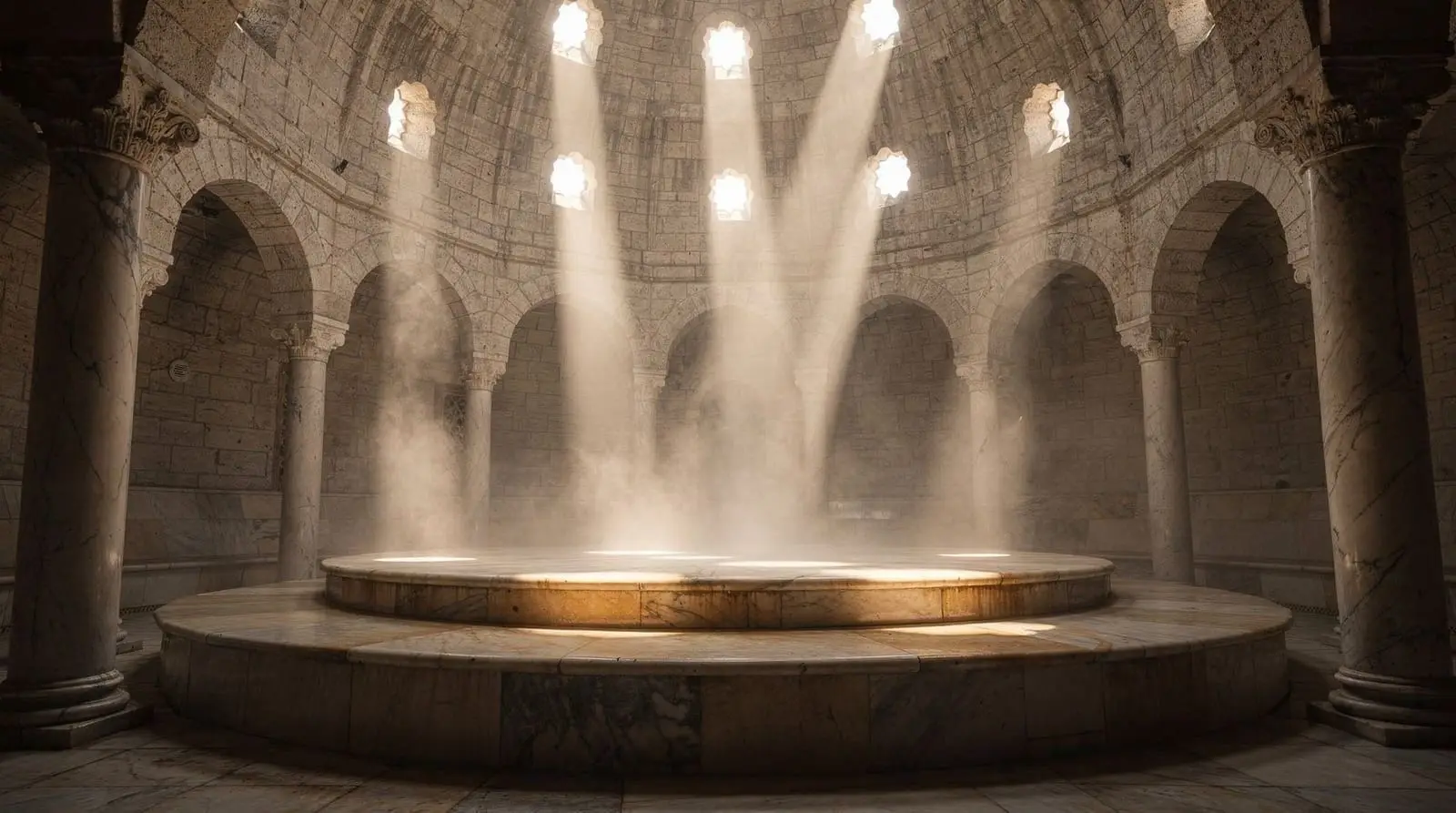
Changing rooms at Istanbul’s tourist hammams are attended — staff will direct you to a cubicle or locker area. The changing room is often architecturally significant itself (at Çemberlitaş, the camekan is a 16th-century vaulted space).
Undress fully — the peştemal covers what needs covering, and a swimsuit beneath creates unnecessary fabric bulk in the steam. If you’re uncomfortable undressing fully, leave underwear on beneath the peştemal — this is accepted.
Locker security: Use the lock provided. Do not leave items visible on the bench. The hammam staff are professional, but common sense applies anywhere you leave valuables.
The peştemal: The thin cotton wrap is provided. It is worn around the waist for men (down to the knee) and around the chest for women (to the knee). It gets wet — this is normal. Some hammams also provide wooden clogs (takunya) for the hot marble floors; if not provided, your flip-flops serve.
In the hot room (sıcaklık)
Finding your place
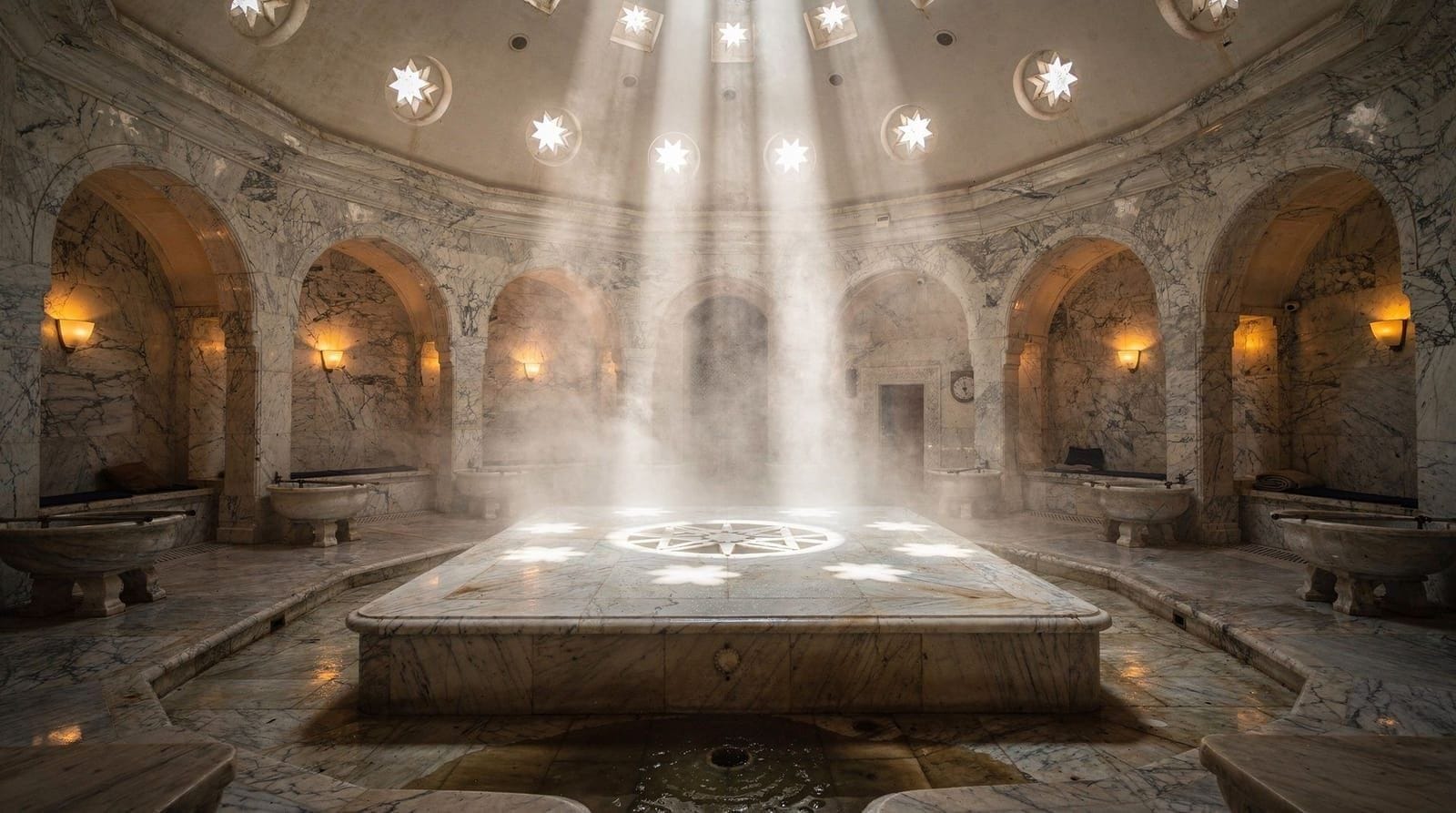
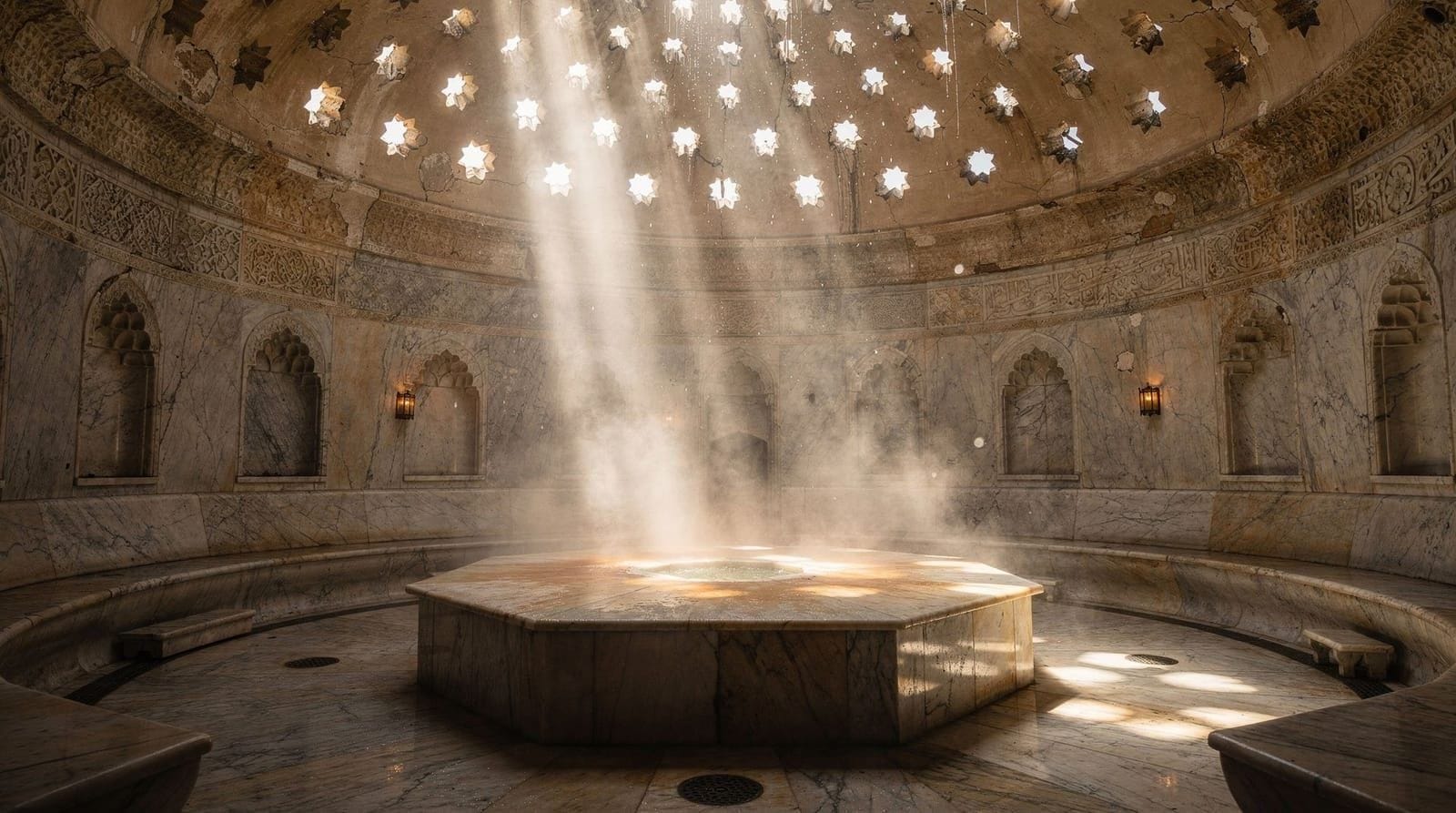
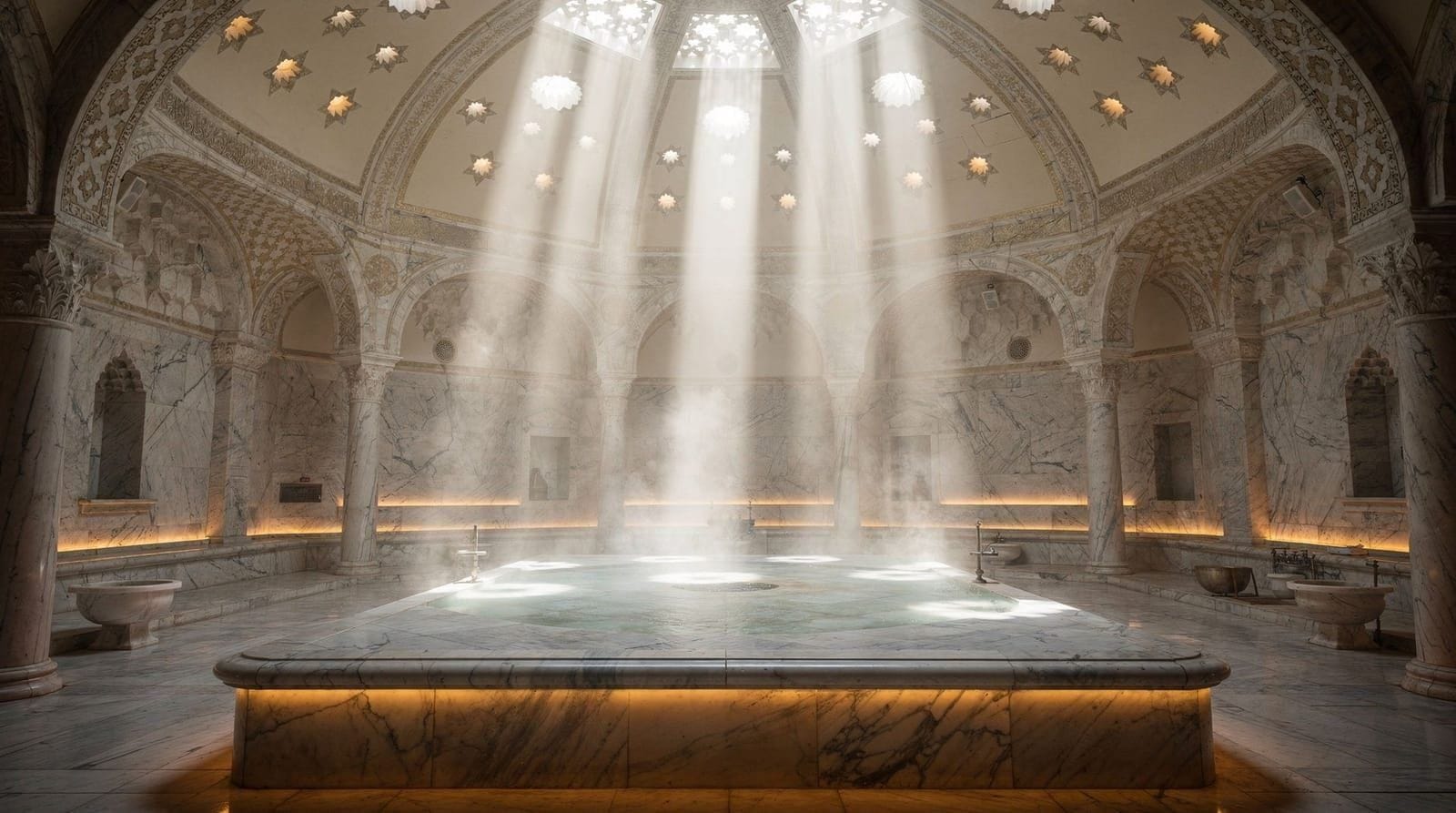
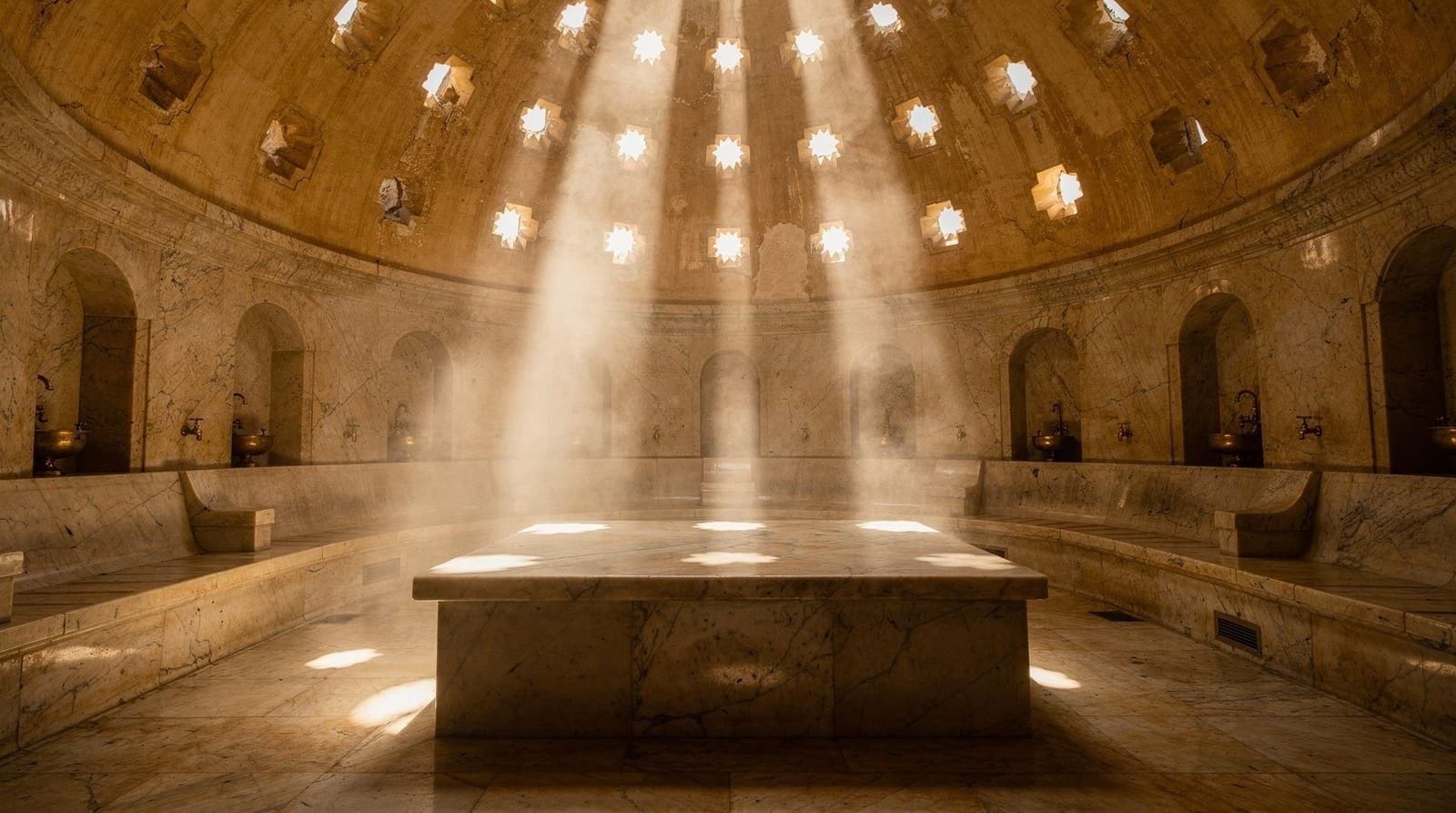
Enter the hot room and wait briefly to be directed to a space on the göbek taşı (central marble slab) or to a side area. In busy periods, you may wait on the perimeter benches for the central slab to be available.
Lie face-down on the marble to begin. This is the standard starting position. The heat works more effectively on the back and shoulder muscles — the areas that benefit most from pre-scrub warming.
Stay quiet. The hot room is not a place for phone calls, loud conversation, or group discussions. Communal bathing spaces in Turkish tradition are calm environments. Low-voice conversation with a companion is acceptable; anything disruptive is not.
At the kurna (marble basin)
The kurna — the marble basin set into the wall with its distinctive tap — is for rinsing. You fill a small bowl (tas) with water and pour it over yourself to rinse or cool down. This is not for washing hair or extended showering — it is a quick rinse between treatment stages.
Water temperature: Mix hot and cold at the kurna to a comfortable temperature for rinsing. The hot tap is very hot; always mix before applying to skin.
During the treatment
The attendant (tellak for male, natır for female) will approach when ready. They work efficiently — this is physical labour, repeated dozens of times daily. Let them lead the sequence.
Communicate clearly about pressure. This is the most important etiquette point for first-timers. The kese scrub is vigorous. If it is too intense, say:
- “Daha hafif” (DAH-hah HAH-feef) — lighter/gentler
- Simple gestures (wince + pat the air downward) are understood universally
- “Tamam” (tah-MAM) — okay/that’s right
If the water temperature from the rinse is wrong, indicate hot (“sıcak”, suh-JAHK) or cold (“soğuk”, soh-OOK).
Don’t resist the process: The attendant will move your limbs into different positions during the scrub. Passive cooperation — relaxing your muscles and allowing them to manoeuvre you — produces a better result than tensing. This takes a few minutes to get used to.
The foam phase: After the scrub, the attendant creates a dome of olive-oil soap foam and applies it over your body. This is lighter and more pleasant than the scrub. Breathe through it — the foam can cover the face briefly during the neck and shoulder treatment.
Stay still when asked: During specific treatment stages (particularly the lower back and shoulder massage if included), the attendant needs you to be positioned specifically. If you’re not sure what position is expected, ask with a gesture and they will show you.
After treatment
The cooling-down phase
After rinsing, you’ll be wrapped in fresh towels and directed to the warm room or the changing room to cool down gradually. This is not optional — rapid cooling after intense heat is physiologically uncomfortable and misses the health benefit of the thermal cycle.
Sit or lie down for at least 20–30 minutes. Tea is usually served at this stage. Drink it slowly.
Don’t immediately go into air conditioning. If it’s summer and you’re going straight from the hammam to an air-conditioned street, wrap up briefly. The temperature contrast after a hammam is more significant than after a normal shower.
Tipping
Tipping is standard and expected at tourist hammams. The protocol:
- Tip directly to the attendant who performed your treatment
- At the end of the treatment, before they leave
- Not at the reception desk unless you couldn’t tip the attendant directly
Appropriate amounts (2026):
- Kese + sabunlama only: 50–100 TRY
- Full package with oil massage: 100–150 TRY
- Exceptional service: 150–200 TRY
At local neighbourhood hammams, tipping is less formalised. 20–50 TRY is generous and appreciated.
Fitting a hammam into your trip
A hammam works best as a slow part of the day, not a rushed stop between sights. Many travellers place it after a heavy morning of walking around Sultanahmet or after a long day at Topkapı Palace, when tired legs and shoulders benefit most from the heat. If your schedule is packed, the Istanbul trip planning guide and the how many days in Istanbul guide help you decide where a quiet half-day can fit.
The same logic applies to the first day after arrival. A hammam is a gentle way to recover from a long flight, and the Istanbul first-time tips article covers other easy ways to ease into the city.
Etiquette around the hammam: dress and local customs
The manners you use in the hammam sit within a wider set of Turkish social habits: politeness towards staff, modesty, and a calm tone in shared spaces. If you want the bigger picture, the Turkish customs and etiquette guide explains how these habits show up elsewhere, and the mosque etiquette guide covers the dress and behaviour expected in places of worship. Travellers who have already read about covering up in mosques will find the hammam peştemal a natural next step in the same spirit of respect.
Gender-specific notes
For women
The women’s section of a traditional Istanbul hammam is a relaxed, communal space. Turkish women use hammams socially — groups of friends or family members visiting together. Solo women visiting tourist hammams are common and entirely unremarkable.
The natır (female attendant) will perform the same kese and sabunlama treatment as the male section. Turkish women in the hammam are typically comfortable with various degrees of undress; visitors should not feel pressure to conform beyond their comfort level.
For men
The male section (haremlik) is similar in format. Male attendants (tellak) work professionally in silence. The communal space requires standard respectful behaviour. Do not stare at other bathers; the space is functional, not social.
What not to do
Don’t bring your phone into the hot room. The heat and humidity will damage the device. Moisture in phones also means potential photography — inappropriate in a space where people are undressed.
Don’t apply lotion or sunscreen before the hammam. It creates a barrier that prevents proper scrubbing and makes the kese ineffective. Go clean.
Don’t shave the day before a hammam. Fresh-shaved skin is more sensitive to scrubbing. Wait 24–48 hours after shaving.
Don’t bring your own soap or shampoo unless you have a specific skin sensitivity. The hammam provides what’s needed. Using your own products disrupts the attendant’s process and is unnecessary.
Don’t compare prices loudly or question the staff about why the tourist price is higher than the local price. This is obvious and appreciated by no one.
Avoiding pushy sales and upsells
Some tourist-facing hammams, particularly those with touts stationed outside near Sultanahmet, use aggressive upselling once you’re inside — pressuring you into a more expensive package after you’ve already paid for a basic one, or implying the standard treatment is “not enough.” Politely decline anything you haven’t already agreed and priced in advance; a reputable hammam states its packages and prices clearly at booking, and doesn’t need to pressure you once you’re undressed and mid-treatment. If a tout approaches you on the street with an unusually cheap offer, treat it with the same scepticism you would any other street solicitation — see the Istanbul scams to avoid guide for the wider pattern of tourist-targeted upselling in the old city.
Booking directly through a known operator or a reputable tour platform in advance avoids this entirely, since the price and package are fixed before you arrive.
A related tell: staff who insist you tip an unusually specific, high amount (“it’s tradition to give 500 TRY”) rather than leaving it to your discretion within the normal range described above. The standard tipping bands hold at reputable historic hammams; anyone pushing well beyond them is testing what you’ll accept, not describing a real norm.
Planning the rest of your day around a hammam
After a hammam you will feel relaxed and slow, so plan something gentle afterwards. A tea break, a quiet meal, or an easy evening suits the mood better than a hurried sightseeing circuit. The where to eat in Istanbul guide and the Turkish coffee guide offer calm options, while the Bosphorus sunset cruise guide is a good way to end the day on the water.
If you are building a full programme, the Istanbul in three days itinerary and the Istanbul for couples itinerary both leave room for a slower, restorative activity like this. Visitors comparing budgets can also check the Istanbul travel budget guide before choosing between a historic hammam and a simpler neighbourhood one. For more on how hammam culture fits into the wider list of things to try, the Istanbul bucket list is a useful companion, and the blog article on your first Turkish hammam gives a personal-style overview.
Common first-timer anxieties (and why they’re unfounded)
“I’m not fit/young/a certain size to go to a hammam”: Turkish hammams are used by people of all ages, sizes, and fitness levels. There is no body standard required. Local neighbourhood hammams are used by elderly Turkish women and construction workers with equal regularity.
“I’m worried about cross-gender issues”: Traditional hammams are strictly gender-separated. The men’s section and women’s section are entirely independent spaces with separate staff. You will not encounter the opposite sex in the bathing area.
“I don’t know what to do and I’ll embarrass myself”: Every single attendant at a tourist hammam has handled first-timers dozens of times that day. You will be directed through every step. Nothing you do by accident will be embarrassing.
“The communal aspect is uncomfortable”: In a traditional hammam, multiple people are treated simultaneously but you are not observing or being observed — everyone is focused on their own experience. The space is not more exposed than a public swimming pool changing room.
Frequently asked questions about Hammam etiquette guide — what to do and not do at a Turkish bath
What should I wear to a Turkish hammam?
Can I speak during a hammam treatment?
Is it appropriate to tip, and how much?
What parts of my body does the attendant treat?
What do I do if I am too hot in the hot room?
Is it rude to be quiet during the treatment?
What if I have tattoos or scars?
Top experiences
Bookable activities with verified prices and instant confirmation on GetYourGuide.