Turkish hammam guide — everything you need to know before you go
Istanbul: Turkish Bath Experience (Cemberlitas Hamami)
What is a Turkish hammam and what happens inside?
A hammam is a traditional bathhouse with separate hot, warm, and cool rooms. You lie on a heated marble slab (göbek taşı), are scrubbed with a kese (coarse mitt) to remove dead skin, then soaped and massaged. The full experience takes 60–90 minutes. You do not need experience or special preparation — just arrive, undress to the level you're comfortable with, and follow staff instructions.
Quick answer: Arrive, change into the provided cotton peştemal wrap, lie on the heated marble slab, be scrubbed and soaped by an attendant. The process takes 60–90 minutes. Tourist hammams cost €40–80 for the standard package; local neighbourhood hammams cost €4–8 for the same service without historic architecture. You need no prior experience.
| Cost | €40–80 (tourist hammams), €4–8 (local neighbourhood hammams) |
| Time needed | 90 minutes to 2 hours total, including rest |
| Bring | Cash for tips, flip-flops, a bag for wet items |
| Booking | Advance recommended for the famous historic hammams |
| Best time | Mid-afternoon, avoiding meal times before |
What a hammam actually is and isn’t
The Turkish hammam (also spelled “hamam”) is a public bathhouse with a specific architectural form and a specific sequence of treatment. It is not a spa. It is not a sauna in the Finnish or Swedish sense. It is a hot-steam bath followed by vigorous physical scrubbing — a tradition that has existed in Istanbul since at least the 15th century and is still used by millions of people.
Istanbul has more than 60 historic hammams and hundreds of neighbourhood variations. The tourist experience (Çemberlitaş, Ayasofya Hürrem Sultan) and the local experience (the neighbourhood mahalle hamamı) are different in setting, price, and atmosphere but essentially the same in what happens.
The architecture: how a hammam is organised
A traditional Ottoman hammam has three rooms:
Camekan (changing room): The entrance hall where you undress and leave your clothes in a locked locker or cubicle. Usually cooler and often beautiful — many historic Istanbul hammams have 16th-century domed changing rooms.
Iılıklık (warm room): The intermediate space between the changing room and hot room. Lower temperature, used for cooling down or drying off after treatment.
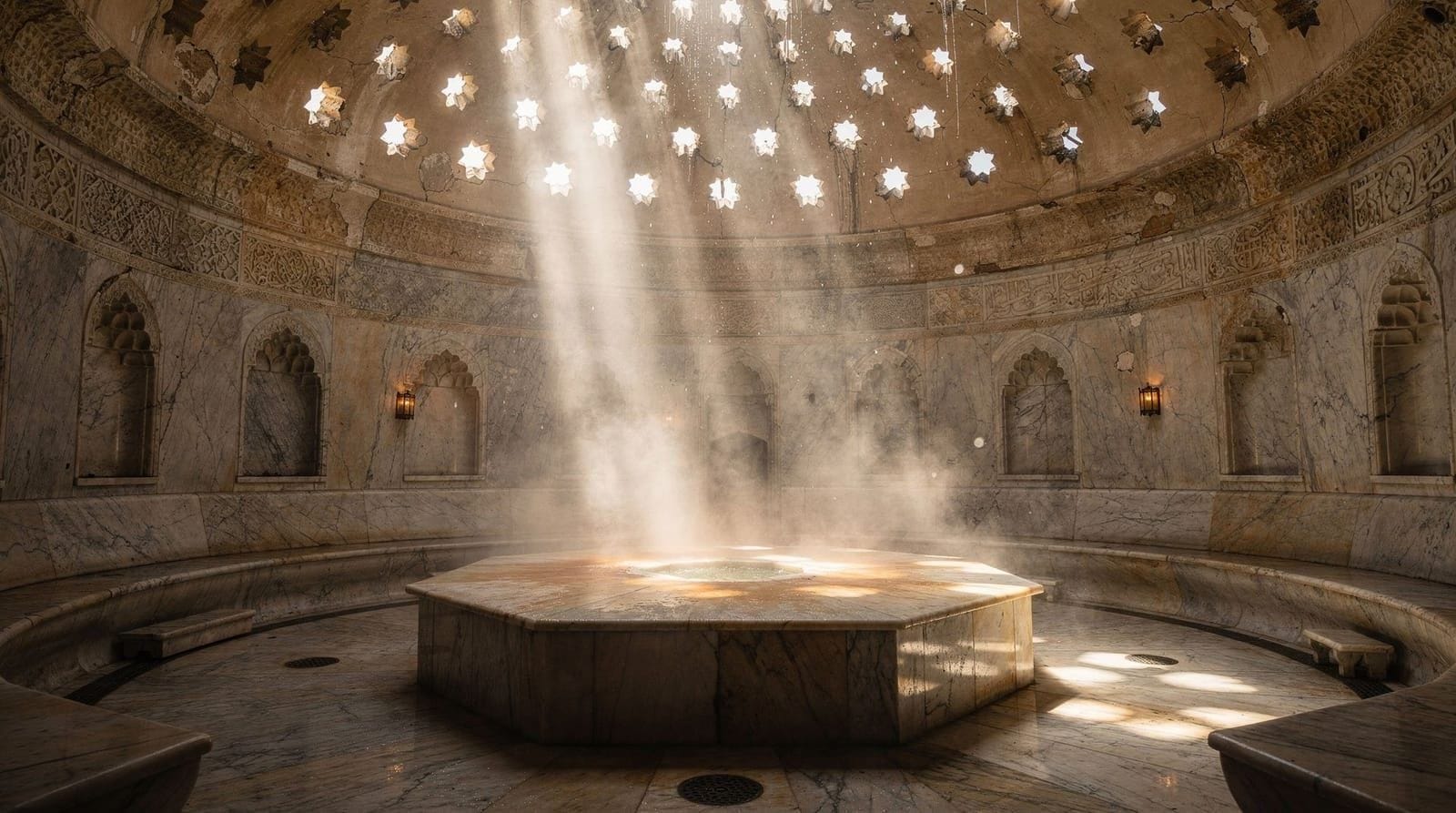
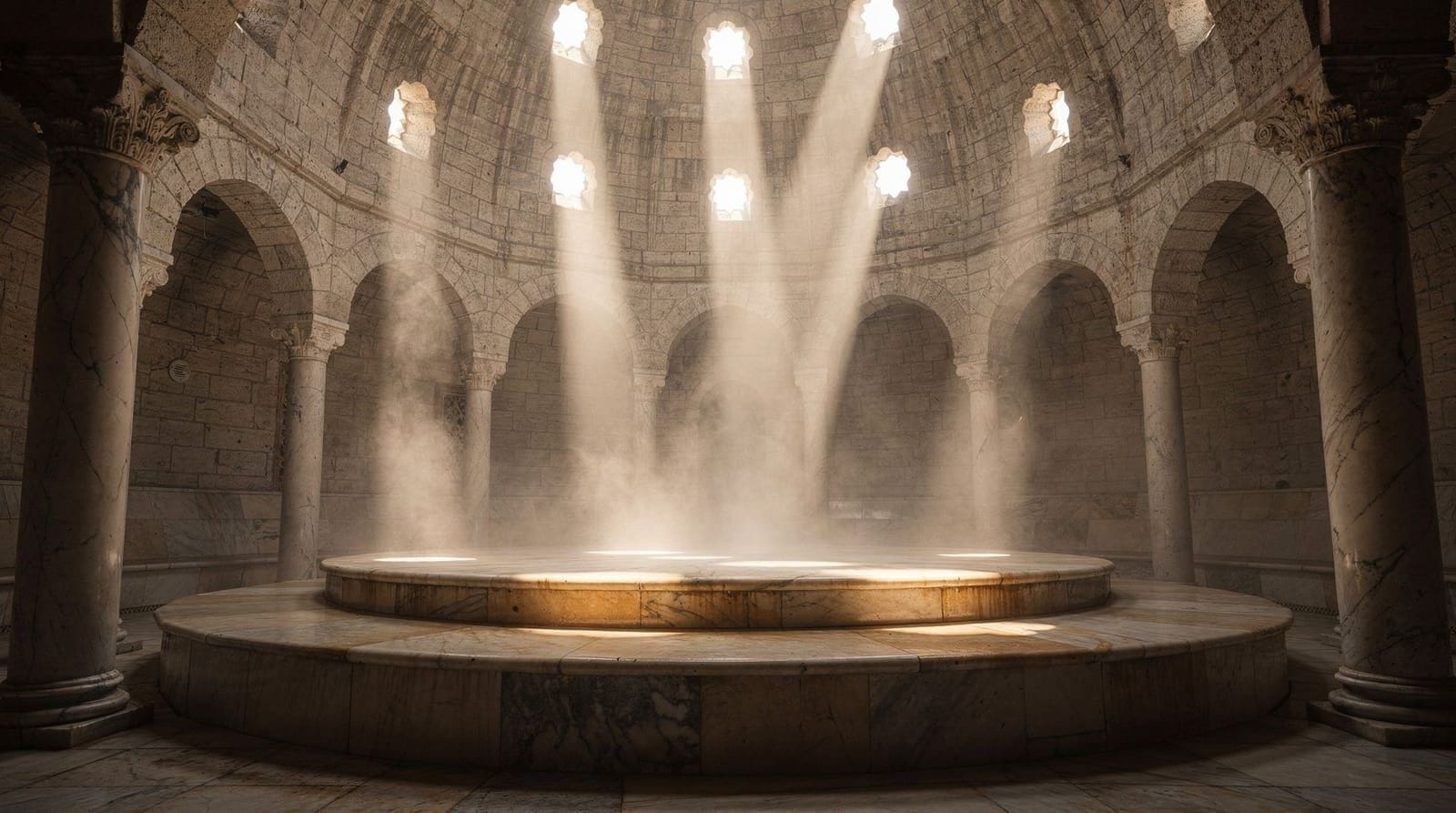
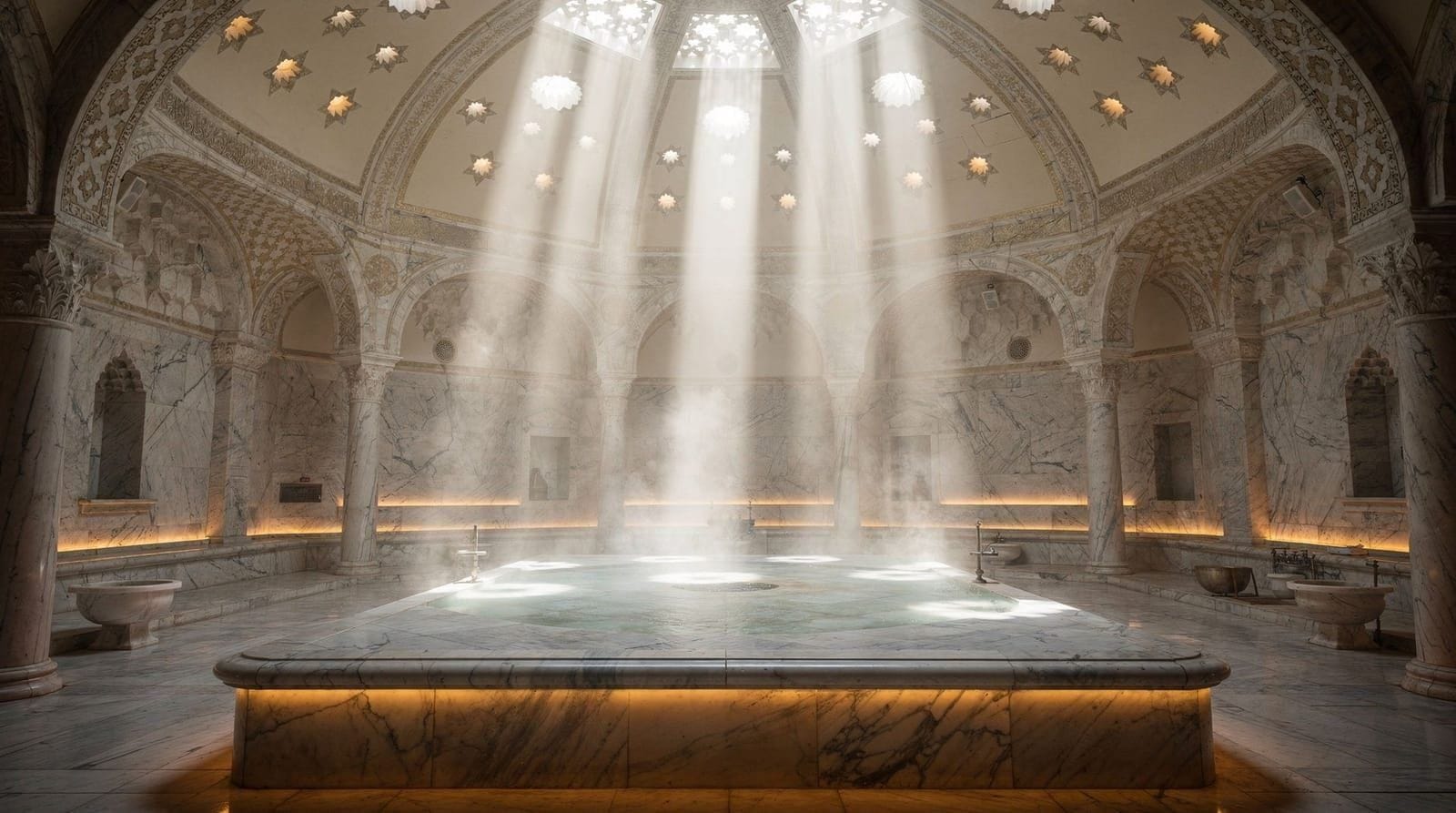
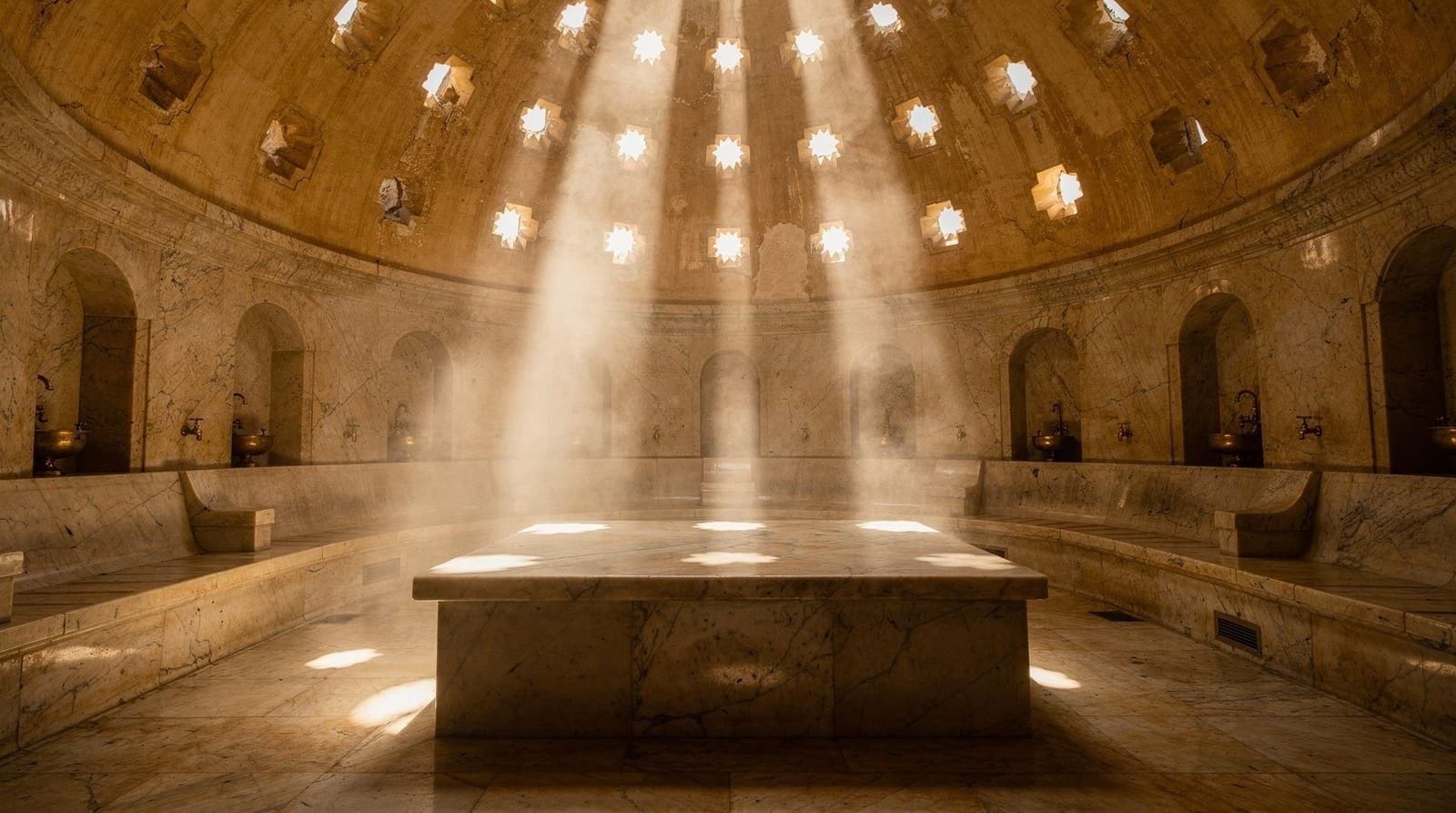
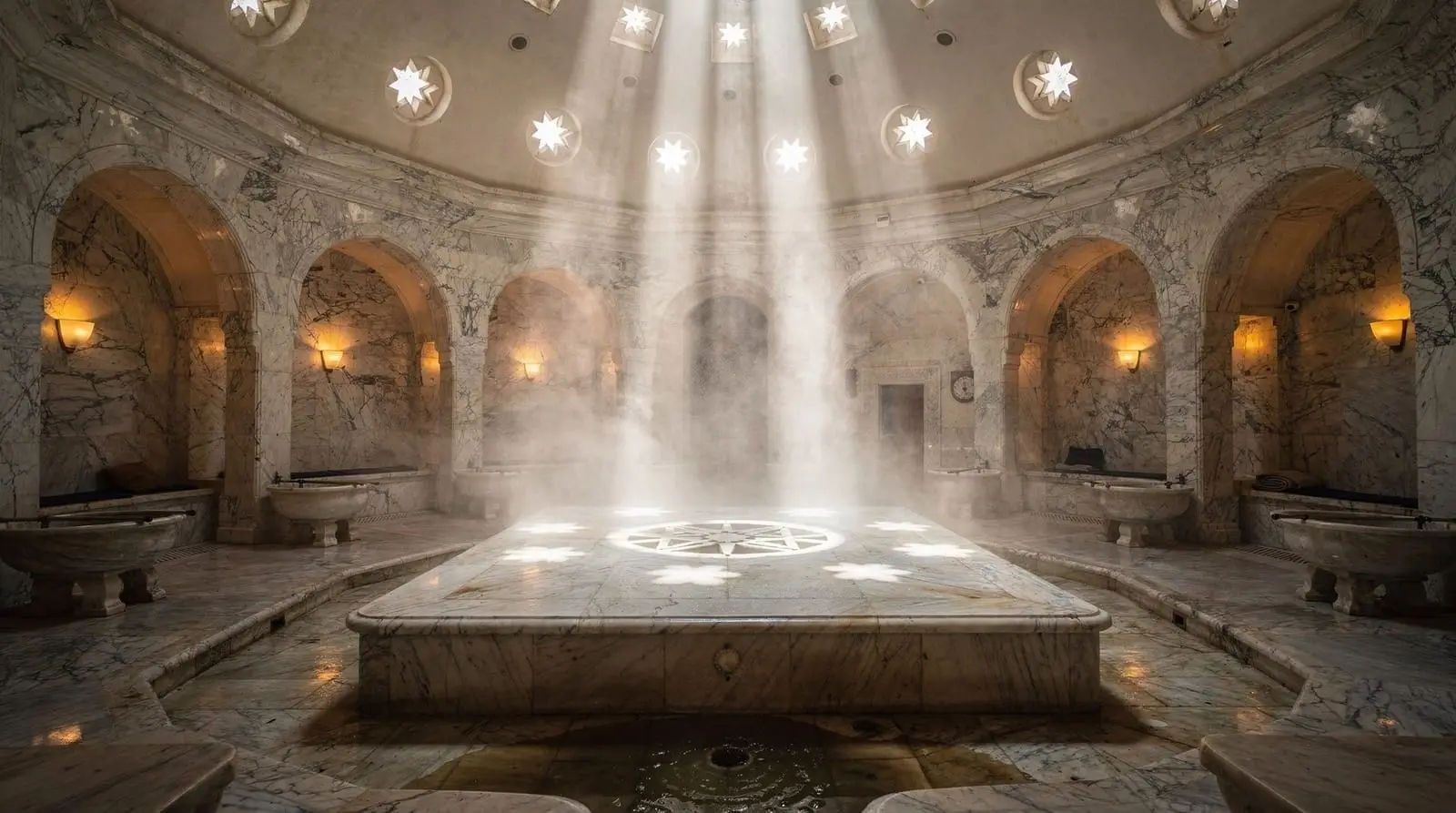
Sıcaklık (hot room): The main bathing hall, with a central heated marble platform (göbek taşı) and marble basins (kurna) around the walls. Temperature varies by hammam but ranges from 35–50°C. The ceiling is usually a domed roof with small star-shaped skylights (fenerlik) that filter light.
Most have separate entrances or sections for men and women. Some operate on alternating schedules.
The treatment sequence
Step 1: Undress and wrap (camekan)
You change in the entrance hall, wrapping the provided peştemal (thin cotton towel, woven traditionally in a lozenge or herringbone pattern) around your waist (men) or chest (women). Leave valuables in the locker. Bring or receive wooden clogs (takunya) — the marble floors are hot and slippery.
Step 2: Acclimatisation on the göbek taşı (sıcaklık)
The hot room attendant (tellak for male staff) will direct you to lie on the heated central marble. Lie face-down. The heat works on your muscles over 10–20 minutes. You’ll sweat significantly. This is the preparation phase — pore-opening, muscle-loosening.
If the hot room is busy, you may wait on the heated perimeter benches. Do not rush this phase — the quality of the scrub improves with a longer pre-heat.
Step 3: Kese (scrub)
The attendant uses the kese — a coarse exfoliating mitt, typically made of goat hair — to scrub your entire body with firm, long strokes. The amount of dead skin removed is consistently surprising to first-timers — visible grey rolls of skin shed onto the marble. This is normal and the point.
Pressure: say “daha hafif” (lighter) if it’s too aggressive, “daha sert” (harder) if you want more pressure. The attendant is professional — communicating is expected.
Step 4: Sabunlama (foam massage)
After the scrub, the attendant fills a pillowcase-like bag with olive oil soap and whips it into foam. The foam is spread over your entire body and massaged in. This is lighter and more relaxing than the scrub. Total coverage, pleasant temperature.
Step 5: Rinse and cool
After the foam, you’re rinsed with water ladled from the kurna basin — progressively cooler water to close the pores. You’re then wrapped in fresh towels and directed to the warm room to rest and cool down gradually.
Step 6: Tea and rest
Most tourist-facing hammams serve complimentary tea in the changing room after treatment. This rest phase (15–30 minutes) is part of the traditional hammam experience — rushing out immediately after the treatment misses the point. The thermal cycling (heat then gradual cooling) is said to be beneficial for circulation.
Tourist hammams vs. local neighbourhood hammams
Tourist hammams (€40–90)
The half-dozen famous historic hammams — Çemberlitaş, Ayasofya Hürrem Sultan, Çağaloğlu, Süleymaniye — have been sensitively restored and operate primarily for tourists. The advantages:
- English-speaking staff
- Consistent quality and hygiene standards
- Beautiful architecture (Mimar Sinan’s buildings are genuinely extraordinary spaces)
- Advance booking available and recommended
- Clear pricing (no negotiation)
The disadvantages:
- High price (€40–80 vs. €4–8 locally)
- Can feel like a themed experience rather than a functional bathhouse
- Staff sometimes rush through treatments in peak season when groups are waiting
Local neighbourhood hammams (150–300 TRY)
Every Istanbul neighbourhood has its own mahalle hamamı. These are used by local residents, have minimal tourist infrastructure, and charge a fraction of the tourist rate. The treatment is identical.
The challenges:
- Often no English signage or English-speaking staff
- Gender schedule is typically one section alternating between men and women on daily or weekly rotations (ask before going)
- Less polished experience
- Harder to find and navigate
For visitors who are comfortable with minimal English infrastructure, the local hammam is the most authentic experience and dramatically better value. The Ağa Hamamı in Cihangir is one of the better-known local hammams accessible to tourists.
Choosing which hammam to book
The best hammams guide covers the full options with honest comparative pricing. For first-timers, the practical guidance:
Çemberlitaş Hammam — a Mimar Sinan building from 1584, near the Grand Bazaar. The most historically significant hammam in Istanbul. Pricey (€60–90 for the full package) but the architecture alone justifies a visit. Book in advance.
Ayasofya Hürrem Sultan Hammam — built for Roxelana (Hürrem Sultan), wife of Süleyman the Magnificent, in 1556. Facing Hagia Sophia. Heavily restored and tourist-oriented. Very expensive (€80–120) and more of a luxury spa experience than a traditional hammam visit.
Süleymaniye Hammam — near the Süleymaniye Mosque, less touristy than Çemberlitaş, similar historic architecture, somewhat lower prices. Worth considering as an alternative.
Private Turkish bath experiences — multiple operators offer private hammam experiences (book a private room, bring a partner or couple) at €80–150 per couple. Different from the social traditional experience but more comfortable for those who prefer privacy.
What to bring (and not bring)
Bring:
- Flip-flops or sandals for the changing room (though wooden clogs are usually provided)
- A small amount of cash for tips (50–100 TRY for the attendant is standard at tourist hammams)
- A plastic bag for wet items
Do not bring:
- Valuables (leave watches, rings, and expensive items at your hotel)
- Shampoo or conditioner (the hammam provides soap; bring your own if you have specific needs)
- Razor or nail scissors (typically prohibited)
Tipping
Tipping is standard and expected at tourist hammams. For a standard kese + sabunlama package, 50–100 TRY for the attendant is appropriate (2026). For a full package with massage, 100–150 TRY. At local neighbourhood hammams, tipping is less expected but always appreciated.
Common mistakes and how to avoid them
Eating a large meal immediately before: The heat and physical treatment combined with a full stomach is uncomfortable. Eat lightly (or nothing) for 1–2 hours before the hammam. You can eat well afterward.
Rushing: The hammam tradition is slow by design. Arriving 15 minutes before your time slot and planning to leave within an hour means you’ll miss the relaxation phase. Block 2–3 hours including the cooling-down and tea phase after treatment.
Not communicating with the attendant: They are experienced professionals adjusting to your needs. If the pressure is wrong, the water temperature uncomfortable, or something isn’t right, say so. There is no language barrier for “daha hafif” (lighter) — gesture works just as well.
Going to the cheapest tourist option: Some newer hammam-branded spas near tourist sites charge tourist prices without the historic architecture or traditional training. A hammam is not a hammam just because it says so — the Çemberlitaş, Süleymaniye, and similar Mimar Sinan buildings are architecturally meaningful. The cheap versions that copy the format in a modern hotel are inferior products at similar prices.
Fitting a hammam into your Istanbul days
A hammam visit works best slotted into a lighter day rather than squeezed after a full morning of sightseeing — the 90-minute-to-2-hour commitment and the post-treatment rest period don’t pair well with a packed itinerary. Many visitors do it on their arrival day (a good way to shake off jet lag) or as a deliberate rest afternoon between heavier sightseeing days. If you’re staying in Sultanahmet, Çemberlitaş and the Süleymaniye hammam are both within easy walking distance; if you’re based in Beyoğlu or Karaköy, factor in the taxi or tram time to the old-city hammams.
For couples specifically wanting a shared, private experience rather than the traditional single-sex sections, a couples’ Turkish bath experience at a historic Cukurcuma hamam is a genuine alternative to the larger tourist hammams — smaller, private, and built specifically for that format rather than adapted from the traditional single-sex model.
If you’re staying near where to stay in Istanbul recommendations in the old city, walking distance to a proper hammam is one more reason Sultanahmet and Cihangir base points keep coming up as sensible choices for a first-time trip.
Hammam packages compared
The pricing structure at most tourist hammams follows a tiered format, and it’s easy to overpay for a package level you don’t need:
| Package | What’s included | Typical price |
|---|---|---|
| Basic entry | Facility use only, no scrub | €15–25 |
| Standard (kese + sabunlama) | Scrub, foam massage — the core experience | €40–70 |
| Full package | Standard plus oil massage | €70–120 |
| Private/couples | Private room, standard treatment for two | €80–150 per couple |
The standard package is the honest recommendation for first-timers — it captures the full traditional treatment sequence described above without paying extra for a massage add-on that isn’t always better than a standalone therapist.
Where a hammam fits in the wider trip
A hammam pairs naturally with the slower parts of a visit. If you want to understand the buildings before you go, the historic hammams guide explains how these bathhouses sit in the story of the city, and the Ottoman Istanbul guide gives the wider setting in which they were built. Anyone curious about the older layers of the city can add the Byzantine Istanbul guide for contrast.
Etiquette questions are worth settling before you arrive. The hammam etiquette guide goes deeper on behaviour inside, and the first-timer hammam guide is a good second read if the sequence above still feels intimidating. For a more personal account, the blog post on a first Turkish hammam visit covers what the experience feels like. Wider customs, from greetings to dress, are covered in the Turkish customs and etiquette guide.
Think about the rest of your day as well. After the treatment you will feel loose and unhurried, so a quiet evening works better than a rushed one. A relaxed meal fits well; the where to eat in Istanbul guide and the Turkish breakfast guide are good places to look for ideas. If you are building a longer stay around rest days like this, the 3-day Istanbul itinerary and the couples itinerary both leave room for slower moments, and the Istanbul trip planning guide helps you decide where a hammam afternoon belongs.
Some bathhouses sit close to other sights, which makes the combination easy. The area around the Grand Bazaar is a natural pairing: browse first if you like, then book the hammam for later, once you have walked off the crowds. Likewise, a visit to the Süleymaniye Mosque fits well beside a hammam in the same part of the old city.
Frequently asked questions about Turkish hammam guide — everything you need to know before you go
What do you wear in a Turkish hammam?
How much does a hammam cost in Istanbul?
What is the difference between a scrub and a full package?
Are hammams separate for men and women?
What is the göbek taşı?
Is it hygienic to go to a hammam?
Can I go to a hammam alone as a woman?
Top experiences
Bookable activities with verified prices and instant confirmation on GetYourGuide.