Hammam first-timer guide — what to expect at your first Turkish bath in Istanbul
Istanbul: Turkish Bath Experience (Cemberlitas Hamami)
What should a first-timer know before going to a Turkish hammam?
Book in advance at a tourist hammam (Çemberlitaş is the best starting point). Arrive 10 minutes early. Expect to undress to a cotton wrap (peştemal), lie on a heated marble slab, get scrubbed hard with a coarse mitt, then soaped and massaged. You will feel very relaxed afterward. Bring flip-flops and cash for a 50–100 TRY tip. The whole experience takes about 90 minutes.
Quick answer: Book Çemberlitaş in advance. Arrive early. Wrap in the peştemal, enter the hot room, lie on the marble. The attendant does everything — you just relax and communicate about pressure. Plan 90 minutes total. Bring flip-flops and cash (€60–70 all-in including tip). You will feel excellent afterward.
| Where | Sultanahmet / Beyoğlu historic hammams |
| Cost | around €55-65 package + 50-100 TRY tip |
| Time needed | ~90 min treatment, plan 2 hrs total |
| Getting there | Central old-city locations, walkable from major sights |
| Best time | weekday mornings before 11 am, calmest |
Why first-timers are more nervous than they need to be
The Turkish hammam involves two things that most Western visitors are unused to: communal undressing in a semi-public space, and physical contact with a stranger (the attendant) in a bathing context.
Neither of these is the frightening proposition it sounds. Istanbul’s tourist hammams are experienced at receiving first-time visitors — the entire infrastructure (English-speaking staff, clear booking, step-by-step guidance) is designed to make the experience accessible to people who have never done anything like it.
The communal aspect is less exposed than most visitors imagine — the peştemal wrap covers the essentials, the lighting is warm rather than clinical, and the space is focused on treatment rather than observation. The physical contact from the attendant is professional, efficient, and no more personal than the equivalent from a physiotherapist. For the full background on what the tradition means culturally, the Turkish hammam guide is worth a read before you go.
Step-by-step: your first hammam, start to finish
Before you arrive
Book in advance. At Çemberlitaş or Hürrem Sultan, advance online booking avoids queues that can be 30–60 minutes at peak times. Choose the kese + sabunlama package (standard — this is the core experience). Entry-only is significantly lesser and not recommended for first-timers.
Don’t eat a big meal for 2 hours before. Light snack or nothing is better. The heat and physical treatment are more comfortable without a full stomach.
Leave valuables at the hotel. Bring only what you’re happy to put in a locker.
What to bring:
- Flip-flops or sandals (the marble floors are hot and slippery; wooden clogs are sometimes provided)
- Cash: €55–65 for the package + 50–100 TRY tip for the attendant
- A small plastic bag for wet items afterward
- Nothing else — the hammam provides everything
Arrival and changing room (camekan)
Arrive 10 minutes before your scheduled time. The entrance typically divides immediately into separate men’s and women’s sections.
Staff will check your booking and direct you to a changing cubicle or locker area. Lock your bag and clothes in the provided locker.
Changing: Remove all clothes and jewellery. Wrap the provided peştemal (thin cotton wrap) around your waist (men) or chest (women). Most people keep underwear on beneath — this is accepted and common. The peştemal is your only covering from this point.
Put on flip-flops or the provided wooden clogs. The floors are warm and wet — support is essential.
Staff will indicate when to proceed to the next room.
Warm room (ılıklık)
You may pass through the warm room — a transition space between the changing room and the hot room. Lower temperature, used for acclimatisation. Some hammams serve tea here; some use it only for the cooling-down phase after treatment.
If you have time before your treatment starts, the warm room is where to wait.
Hot room (sıcaklık) — the main event
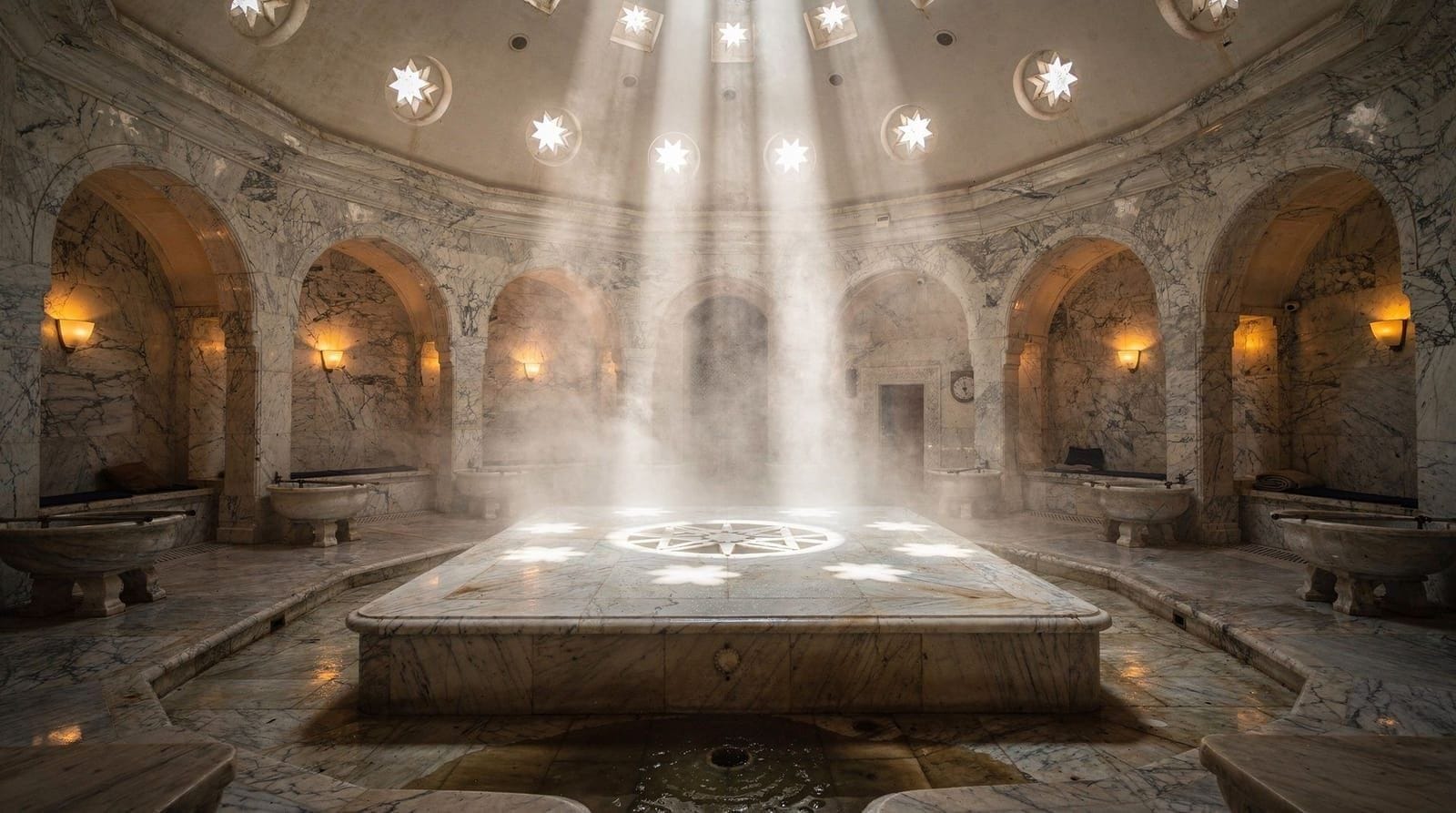
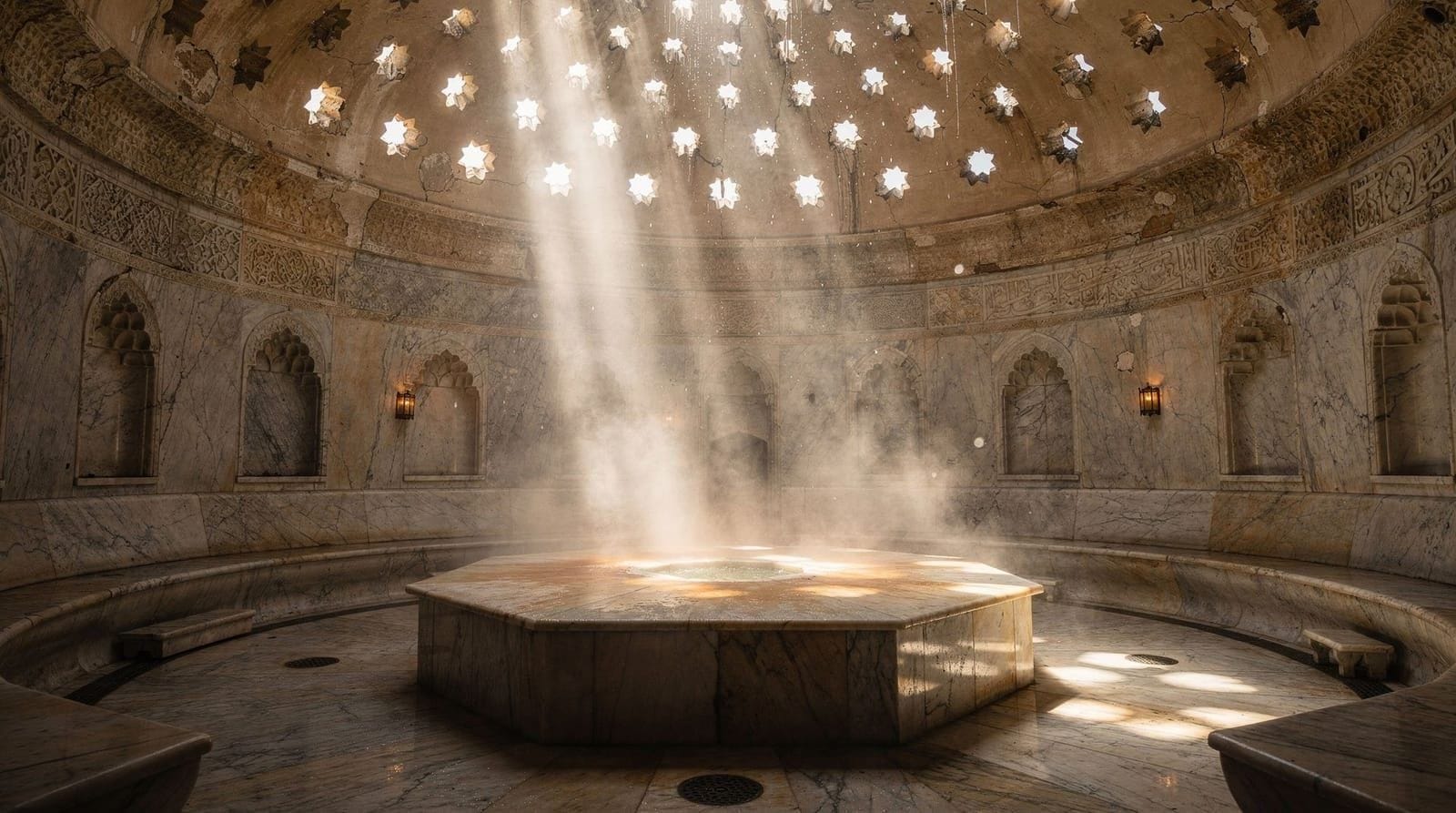
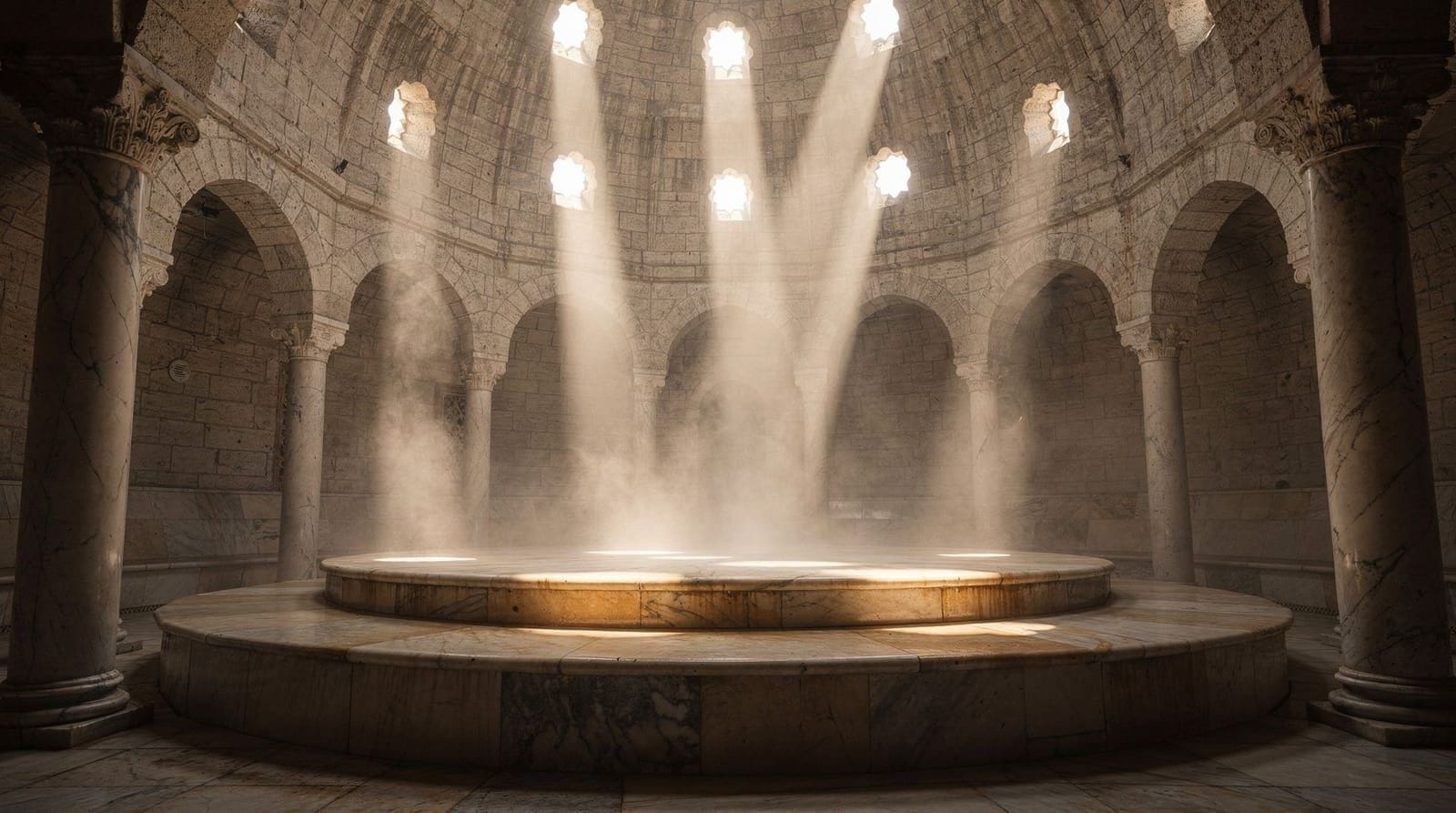
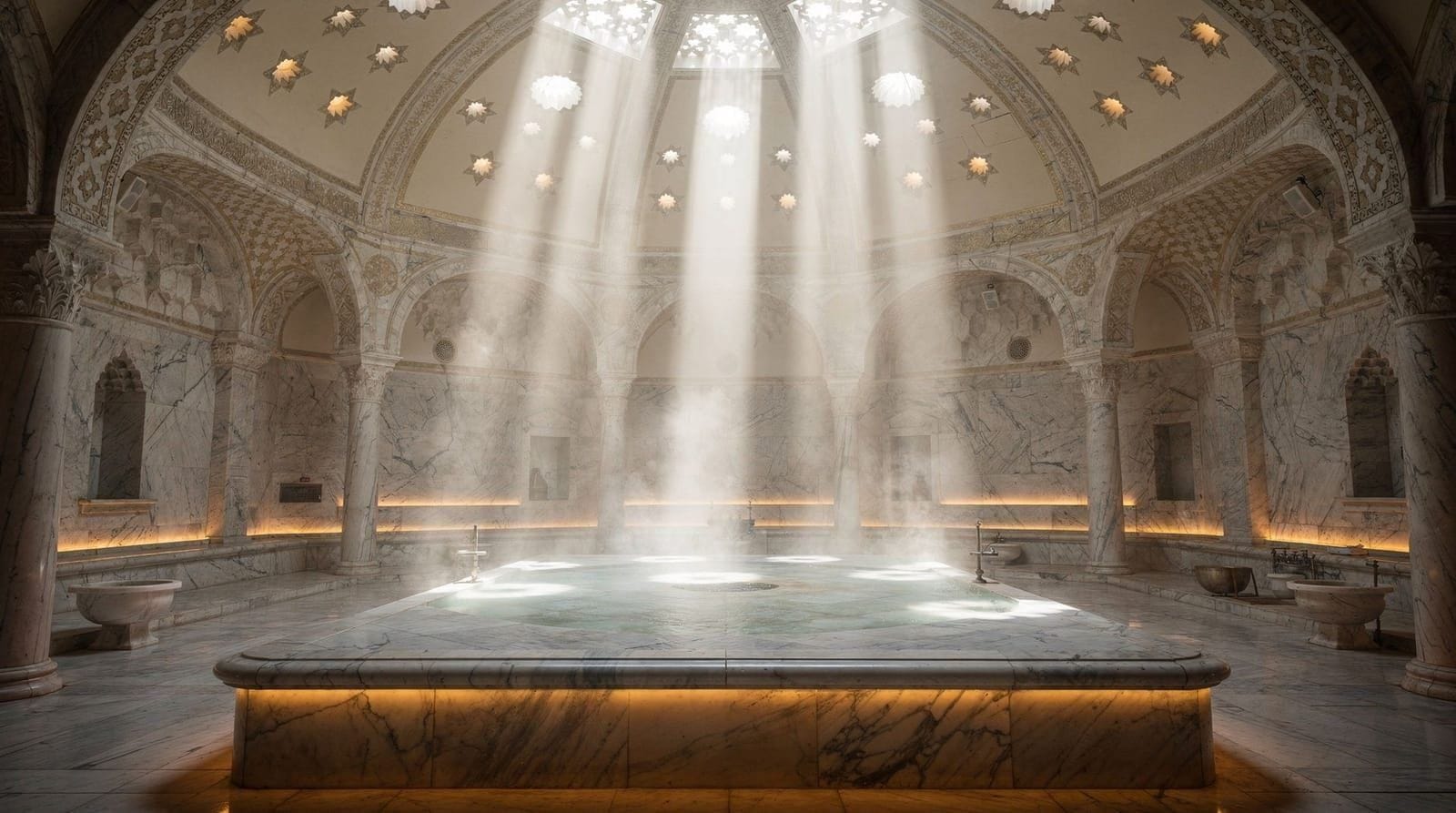
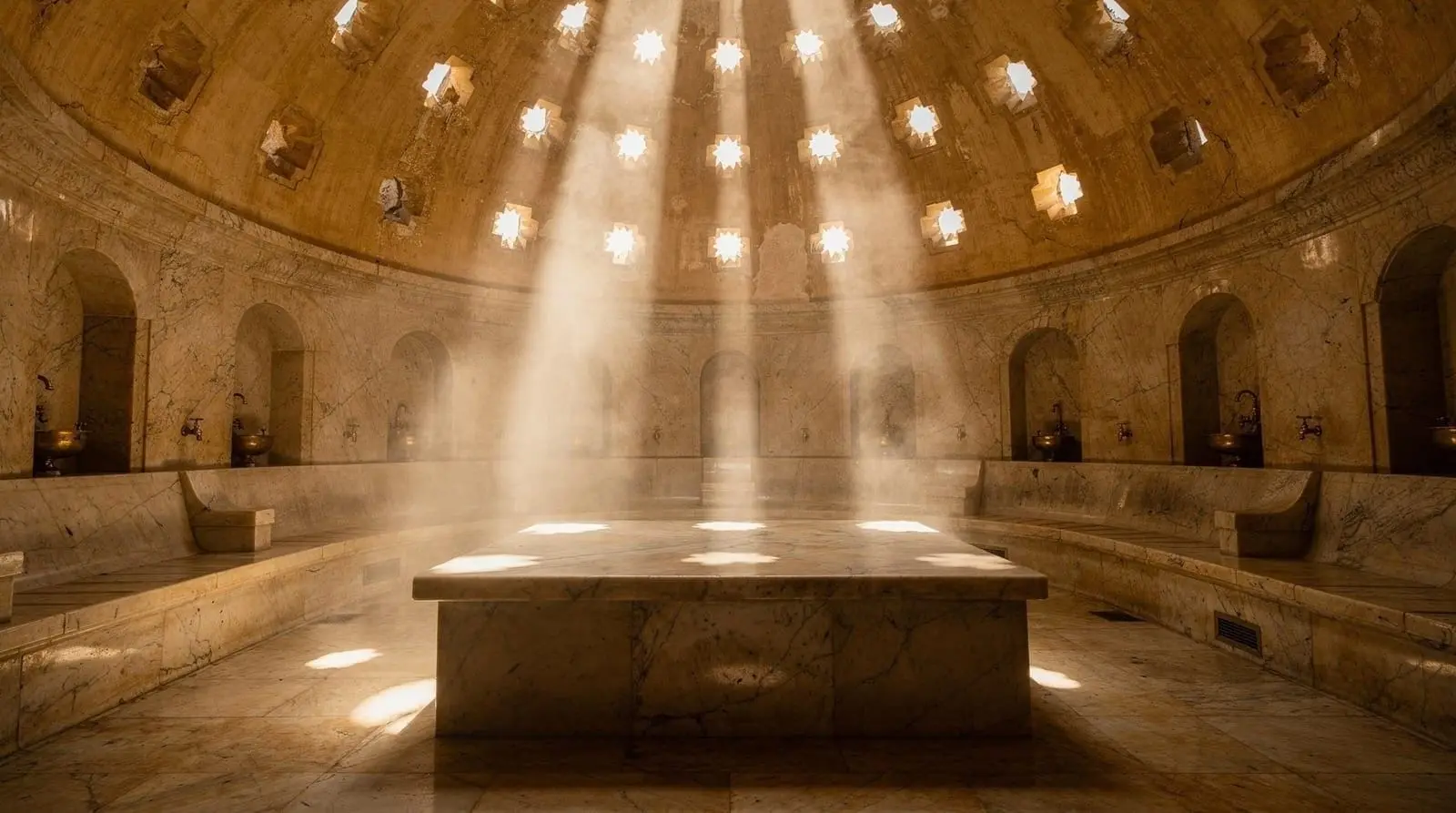
The first thing you’ll notice: heat. The sıcaklık is typically 38–50°C with high humidity. The domed ceiling, the marble, the star-shaped skylights filtering grey light — the atmosphere is unlike any space you’ve likely been in.
Find the göbek taşı (central marble slab). The attendant will direct you to a space on it or on the heated perimeter benches. Lie face-down on the marble.
The acclimatisation phase (10–20 minutes): Lie still. The heat works on your muscles, relaxing deep tissue tension and opening pores. You will sweat significantly. This is normal and the point. Don’t rush this phase — the effectiveness of the scrub that follows depends on adequate pre-heating.
The attendant arrives. A professional in a peştemal wrap will indicate it’s time. No lengthy introduction — they have done this hundreds of times today. Follow their positioning guidance.
The kese (scrub)
The attendant uses the kese — a coarse goat-hair exfoliating mitt — to scrub your entire body. The strokes are long and firm, starting from the shoulders, working down the back, arms, legs.
What it feels like: Firm pressure, slightly rough texture. Not painful if you’re relaxed. More intense on sensitive skin areas (inner arms, stomach). The dead skin separation (grey rolls of exfoliated skin) begins after the first few strokes — you’ll see it on the marble. This is normal.
Communicate: If the pressure is too much, say “daha hafif” (DA-ha HA-feef) or simply place your hand flat and push it gently downward — the universal gesture for “lighter.” The attendant will adjust immediately without issue.
The scrub covers the full body (both sides). Duration: approximately 15–20 minutes.
The sabunlama (foam massage)
After the scrub, the attendant fills a pillowcase-like cotton bag with olive oil soap and creates dense foam. This foam is applied over your entire body in a massaging motion.
What it feels like: Warm, soft, and relaxing — a significant contrast to the scrub. The foam is applied in long strokes covering the full body. The massage element is light — it is soap application plus gentle pressure, not deep tissue work.
Duration: 15–20 minutes. You are rinsed with water of decreasing temperature at the end — the cooling water closes the pores.
After treatment — the rest phase
The attendant wraps you in dry towels and directs you to the warm room or changing room. Sit or lie down for at least 20–30 minutes.
This cooling-down phase is where the most noticeable relaxation effect sets in. The combination of deep heat and physical exfoliation produces a state of profound physical calm — if you have experienced “jelly legs” after a massage, this is amplified significantly. Many first-timers report this as the best part.
Tea is usually served at this stage. Drink it slowly.
Tip before you leave. Hand 50–100 TRY to the attendant who performed your treatment. This is expected, standard, and appreciated.
What to wear underneath, and what happens to your clothes
Most visitors wear their own underwear beneath the peştemal throughout the treatment — this is normal and accepted at every tourist hammam, so there’s no need to decide in advance whether to go without. Your clothes stay in the locker in the changing room, and you change back into them at the very end after the cool-down phase, not immediately after the treatment finishes. Bring a change of underwear if you’d rather not put damp items back on afterward, since the peştemal and the treatment itself leave you thoroughly wet. A spare hair tie is also worth packing if you have long hair, since it will get wet during the scrub and foam stages even if you avoid the kurna basins deliberately.
How your skin feels afterward
The exfoliation effect of the kese is the most immediately noticeable physical result: skin that looked normal before feels extraordinarily smooth afterward. Colours appear slightly brighter. Many visitors describe the sensation as their body “restarting.”
This effect peaks 24–48 hours after the treatment when any minor redness has subsided. Avoid strong exfoliating products on the day after a kese scrub.
Common first-timer questions answered honestly
Will the attendant judge my body? No. The attendant has handled thousands of bodies of every possible age, size, and condition. They are focused on the treatment mechanics, not on evaluation. In 15+ years of operating, the professional Istanbul hammam attendants have seen everything. You are not a notable exception.
Is it weird if I get relaxed to the point of dozing off? It happens regularly. The heat and treatment combination produces significant relaxation. If you drift into a half-doze on the marble, the attendant will gently indicate when they need to continue. It is not unusual.
What if I need to leave early? You can step out of the hot room at any time — walk to the warm room or the changing room. Inform the attendant. They are experienced with people who need to adjust due to the heat.
Do I need to shower when I get back to my hotel? Not immediately. The hammam leaves you clean by its own process. You can shower normally that evening or the next morning. Some visitors prefer to preserve the sensation for a few hours.
Where to go for your first hammam
For most first-timers in Istanbul, the recommendation is Çemberlitaş. The reasons:
- Central location (Grand Bazaar area)
- 440-year history of continuous operation
- English-speaking staff fully oriented to first-timers
- Online advance booking available
- The architecture itself justifies the visit as a separate experience from the bath
Book the standard kese + sabunlama package (€55–65). This covers everything needed for a complete first experience. Add the oil massage only if you specifically want extended bodywork on top of the standard treatment.
If Çemberlitaş is fully booked: Süleymaniye Hammam is the next best option — similar architecture, slightly lower prices, fewer crowds.
If privacy is important: Several hammam-spas offer private room options at €80–150 per couple where you do not share the hot room with other visitors. If that appeals, a private Turkish bath and spa session is a good way to take your first hammam at your own pace.
Fitting it into your itinerary
Because the best-known hammams sit in the old city, they pair naturally with a day around Sultanahmet and the Grand Bazaar. After a morning at Hagia Sophia or the Basilica Cistern, a hammam is a gentle way to rest tired legs. Travellers with a short stay can see how it fits into one day in Istanbul or a slower three-day first-timer plan, where an unhurried afternoon block makes sense.
A hammam works best scheduled as a deliberate half-day, not squeezed between two sightseeing stops — plan it for an afternoon after a morning of walking, or as a dedicated rest activity. If you’re building a broader first-timer schedule, see the Istanbul trip planning guide and Istanbul for first-timers for where a hammam slots in relative to the major sights.
Building on your first visit
After your first hammam, the hammam etiquette guide provides deeper context on the social protocols. The historic hammams guide covers the architectural and historical background of the buildings you visited.
If you are curious about the wider customs around the bath, the guide to Turkish customs and etiquette explains the everyday courtesies you will meet in hammams and beyond. And if you are still choosing where to base yourself, where to stay in Istanbul helps you pick a neighbourhood within easy reach of the old-city baths.
For planning the rest of your Istanbul trip, the hammam best guide compares the full range of options if you want to visit a second time or compare tourist versus local hammam experiences.
Frequently asked questions about Hammam first-timer guide — what to expect at your first Turkish bath in Istanbul
Is a hammam scary or uncomfortable for a first-timer?
What if I don't speak Turkish?
What does the kese scrub feel like?
How much does a first-timer typically spend?
What should I do with the dead skin rolls that come off during the scrub?
What happens after the treatment — do I just leave?
Is one hammam visit enough or should I go twice?
Top experiences
Bookable activities with verified prices and instant confirmation on GetYourGuide.