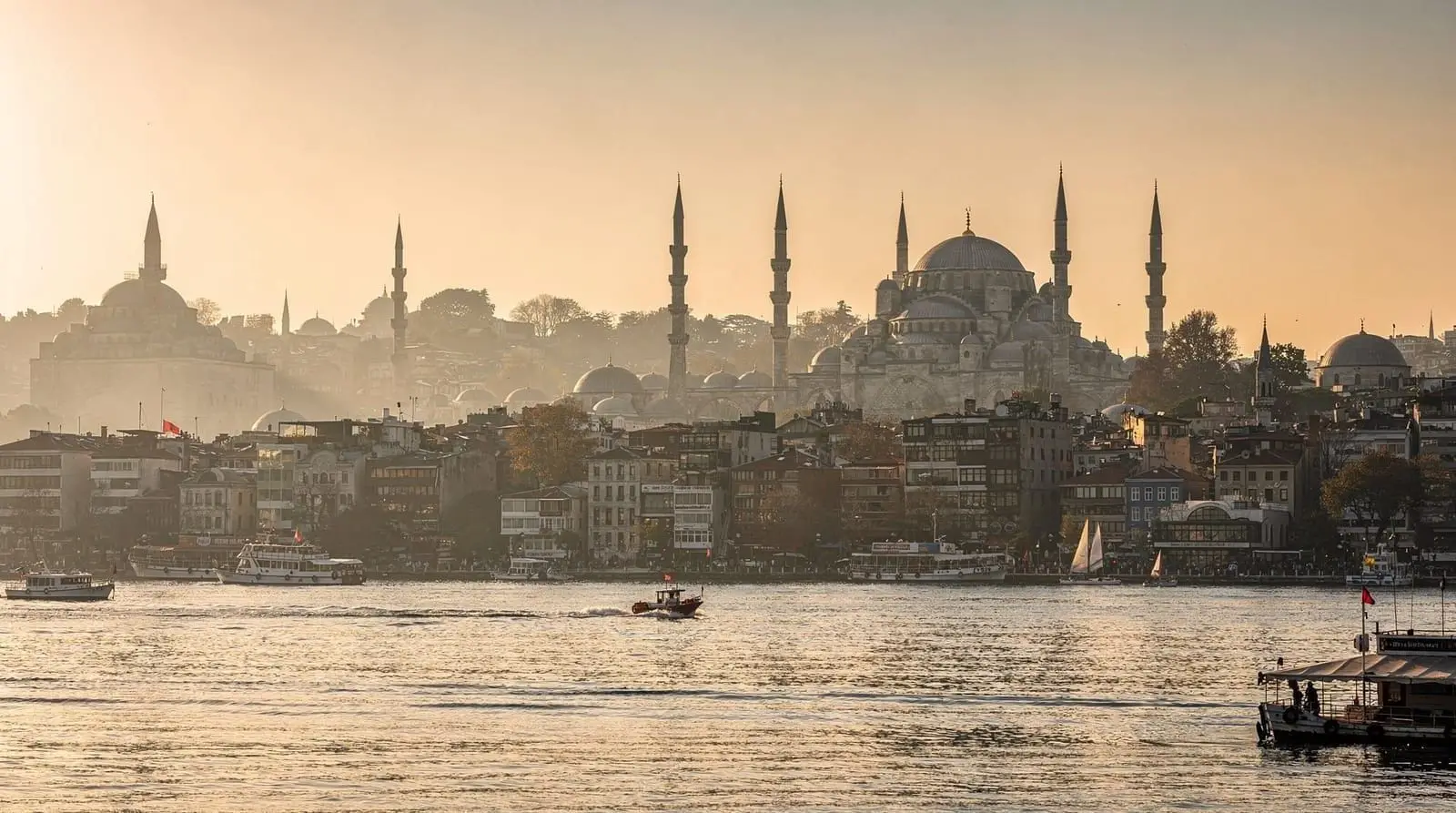
Two continents in one day: crossing Istanbul's European and Asian sides
Standing in Istanbul, you are physically within walking distance of two continents. The Bosphorus strait between the European and Asian shores is as little as 700 metres wide at the Maiden’s Tower. A ferry crossing takes 15 minutes. This is not a metaphor — it is a practical proposition for a single day’s exploration, and it was, unexpectedly, the day I enjoyed most on my own trip — more than any single monument.
| Where | Eminönü (Europe) to Üsküdar or Kadıköy (Asia) |
| Cost | Standard Istanbulkart ferry fare, under 1 USD/crossing |
| Time needed | A full day, or a relaxed half-day if you pick one Asian neighbourhood |
| Getting there | Ferries from Eminönü or Kabataş piers; Marmaray train under the strait |
| Best time | Weekday mornings for quieter markets, 5–6pm ferries for the best light |
The logic of an east-west day
Most first-time visitors to Istanbul spend their entire time on the European side — Sultanahmet, Beyoğlu, Karaköy. The Asian side (Kadıköy, Üsküdar, Beşiktaş-adjacent Moda) is a different city in character: more local, more residential, with a food scene that many Istanbullus argue is better than the tourist-facing European side. Combining both in a day is achievable with a good ferry schedule and a willingness to let the day unfold at the water’s pace. Our European vs Asian side guide and the Asian side Istanbul guide go deeper on the personality difference if you are still deciding whether this day is worth carving out of a short itinerary. If you would rather not manage the ferries yourself, a guided full-day Europe and Asia tour covers both shores with the logistics handled for you.
| European side | Asian side | |
|---|---|---|
| Character | Monuments, tourist infrastructure | Local, residential, food-driven |
| Signature stop | Sultanahmet, Blue Mosque, Hagia Sophia | Kadıköy market, Üsküdar waterfront |
| Crowd level | Busy, especially mid-morning | Noticeably quieter |
| Best for | First-time sightseeing | A second look, food, atmosphere |
| Time needed | Multiple days | A half to full day is enough for a taste |
The crossing options
Eminönü to Üsküdar: The classic crossing. Ferries run constantly from the Eminönü pier (near the Spice Bazaar and Galata Bridge) to Üsküdar on the Asian shore. Journey time: 15–20 minutes. Cost: standard Istanbulkart fare (under 1 USD). The view from the ferry — Sultanahmet skyline receding, the Maiden’s Tower in the middle of the strait, the Asian hills rising behind — is the canonical Istanbul photograph.
Eminönü to Kadıköy: A longer crossing, approximately 25–30 minutes, to the more bohemian Asian neighbourhood. Şehir Hatları ferries run every 15–20 minutes in daylight hours.
Kabataş to Üsküdar: For travellers already in the Beyoğlu/Taksim area, the Kabataş pier offers direct ferry to Üsküdar.
Marmaray: The underground train tunnel beneath the Bosphorus connects Sirkeci (European side) to Üsküdar (Asian side) in about 4 minutes. Less romantic than the ferry but faster. Useful for returning in the evening if ferry schedules are tight.
All crossings use the Istanbulkart. See ferry hopping on the Bosphorus for the full ferry network guide.
If you have not yet sorted your card, the Istanbulkart guide and the blog post on how the Istanbulkart works explain where to load it. For the wider picture of boats, trams and trains, the Istanbul ferries guide and the getting around Istanbul guide put this crossing in context.
The Asian side: what to do in Kadıköy
Kadıköy is the neighbourhood that serious Istanbul food writers visit. The market (Kadıköy Pazarı) is a working neighbourhood market with a great fish section, a cheese and pickle section, and pastry shops. The covered indoor part has excellent börek vendors and breakfast spots. The surrounding streets — particularly Moda Caddesi and the café-lined side streets toward the water — are lively with neighbourhood life.
Food stops worth making:
- Çiya Sofrası: The most interesting restaurant in Istanbul for obscure Anatolian recipes (see the Turkish food guide for context).
- Kadıköy Balık Ekmek stalls: Fish sandwiches, arguably better than the Eminönü floating boats.
- Neighbourhood tea gardens: Scattered through the Moda seafront park — order çay, watch the strait.
The Kadıköy neighbourhood guide has specific street-level recommendations.
Kadıköy rewards slow wandering rather than a checklist. Let your appetite choose the route: browse the market stalls, stop for a snack when something smells good, then drift toward the water for tea. If eating is the main reason you are crossing, the where to eat in Istanbul guide, the Istanbul street food guide and the Turkish coffee guide will help you order with confidence. The Kadıköy destination page gathers the essentials in one place.
The Asian side: Üsküdar
Üsküdar is older and more traditionally conservative than Kadıköy — the neighbourhood of Mihrimah Sultan Mosque (another Sinan work), the Maiden’s Tower (Kız Kulesi), and the waterfront promenade looking directly at the Sultanahmet skyline. The Üsküdar neighbourhood guide covers the mosque and waterfront in more depth than I have room for here.
The Üsküdar waterfront at sunset, looking across to Hagia Sophia and the Blue Mosque, is one of the best skyline views in the city and costs nothing beyond the ferry fare. The Maiden’s Tower itself can be visited (entry fee; booking advisable). See the Maiden’s Tower guide.
I will be honest: I went into this day expecting Üsküdar to feel like an afterthought tacked onto Kadıköy, and it was the opposite. Sitting on the Üsküdar promenade with a glass of çay, watching the Sultanahmet skyline light up across the water while the ferries crisscross in front of you, is a better “Istanbul moment” than most of the paid attractions on the European side.
Guided Asian side tour (Üsküdar and Kadıköy) — useful if you want context and narrative with your neighbourhood exploration.
Üsküdar also pairs well with a visit to the Üsküdar destination page if you want to plan a longer stay, and with the Maiden’s Tower destination page for the island itself. Because this is the shore that looks back at the old city, it is also a good place to appreciate what you have already seen: the Hagia Sophia visiting guide and the Blue Mosque visiting guide are worth a read before or after you take in that skyline from across the water.
A practical two-continent day plan
Morning (European side):
- Start with the Spice Bazaar at 9 am when it opens — before the crowds.
- Walk to the Galata Bridge and down to Eminönü pier.
- Board the 10:00 or 10:30 ferry to Kadıköy.
Late morning to early afternoon (Asian side — Kadıköy):
- Spend 2–3 hours in Kadıköy market and the surrounding streets.
- Lunch at Çiya Sofrası or a neighbourhood lokanta.
Afternoon (transition):
- Ferry or Marmaray to Üsküdar (15 minutes from Kadıköy pier).
- Walk the Üsküdar waterfront and visit the Maiden’s Tower if time allows.
Late afternoon (return):
- Ferry from Üsküdar back to Eminönü — aim for the 5–6 pm window for the best light on the European skyline.
- Evening in Karaköy or Beyoğlu.
Treat this plan as a frame rather than a timetable. If a lunch runs long or a stretch of waterfront holds you, drop the Maiden’s Tower rather than rushing. For the evening, the Karaköy neighbourhood guide and the Beyoğlu neighbourhood guide suggest where to end the day. If this crossing is one of several days, the Istanbul in 3 days itinerary and the how many days do you need in Istanbul post show where it fits, and the Istanbul trip planning guide helps you slot it around everything else.
The Bosphorus Bridge walk (on foot)
Both Bosphorus bridges technically span two continents. The Boğaziçi Bridge (First Bridge) and the Fatih Sultan Mehmet Bridge (Second Bridge) have pedestrian walkways — but as of recent years, foot and bicycle traffic has been restricted on the main bridges for security reasons. Do not plan your day around walking across; verify current access before attempting. The crossing by ferry is more practical and more scenic in any case — the Bosphorus landmarks guide covers what you pass either way, and the Bosphorus by public ferry guide is the cheapest way to see both shores if you have extra time beyond this itinerary.
If juggling ferry schedules while trying to enjoy Kadıköy sounds like more logistics than holiday, the guided Üsküdar and Kadıköy tour linked above removes that entirely — someone else times the boats and you just show up.
Frequently asked questions about exploring two continents
Which side of Istanbul is better — European or Asian?
They are complementary rather than competing. The European side has the historic monuments, the most famous skyline, and the main tourist infrastructure. The Asian side has the neighbourhood food scene, a quieter atmosphere, and the experience of seeing Istanbul from the other shore. First-timers should prioritise the European side and add a half-day on the Asian side if time allows.
Can you see both sides of Istanbul in one day?
Yes — comfortably in a full day, especially if you focus on a few neighbourhoods rather than trying to cover everything. A morning in Sultanahmet, afternoon in Kadıköy, and evening back in Beyoğlu is entirely achievable.
Is the Kadıköy market open every day?
The Kadıköy Pazarı (covered market) is open daily except Sunday. Tuesday and Friday are particularly lively with additional street stalls. Sunday is the main closed day for many vendors.
How much does it cost to cross the Bosphorus by ferry?
With the Istanbulkart, a single ferry crossing costs approximately 10–13 TRY (under 0.50 USD at mid-2025 rates). No other transportation costs anywhere near this for what you get in terms of experience.
Do you need to buy a separate ticket for the Marmaray train?
No — the Marmaray uses the same Istanbulkart as the ferries, buses, and trams, so there is no separate ticketing to plan around. Tap in and out like any other city transit ride; the fare is comparable to a short ferry hop.