Your first Turkish hammam: what to expect, step by step
A Turkish hammam is a bathing ritual with a 500-year history in Istanbul, and the experience is genuinely different from a Western spa. The combination of intense heat, marble, steam, exfoliation, and soap foam has a physical effect that a shower cannot replicate. First-timers find it surprising; most come out wanting to do it again. This is the personal, honest version of that first visit — what actually happens, what I wish someone had told me beforehand, and which historic hammams are genuinely worth the ticket price versus which ones are trading purely on location.
| Where | Sultanahmet (historic, tourist-facing) or Beyoğlu/Kadıköy (neighbourhood) |
| Cost | Around 600–1,200 TRY historic; 150–300 TRY neighbourhood |
| Time needed | 1.5–2.5 hours for the full treatment |
| Getting there | Çemberlitaş Hamamı is a 5-minute walk from Hagia Sophia |
| Best time | Morning or early afternoon, on an empty-ish stomach |
How a hammam visit works
The structure of a traditional hammam visit follows a consistent pattern:
Changing room (camekan): You are given a peştemal (a thin cotton wrap, usually striped) and a locker. Undress to whatever level you are comfortable with — men typically keep underwear on or wear the peştemal sarong-style; women may keep bra and underwear or go with the peştemal only, depending on the hammam. Wooden clogs (nalın) are provided for the wet floor.
Warm room (ılıklık): A transitional space where you acclimatise to the heat. Some hammams have this as a passage; others have separate hot and warm rooms.
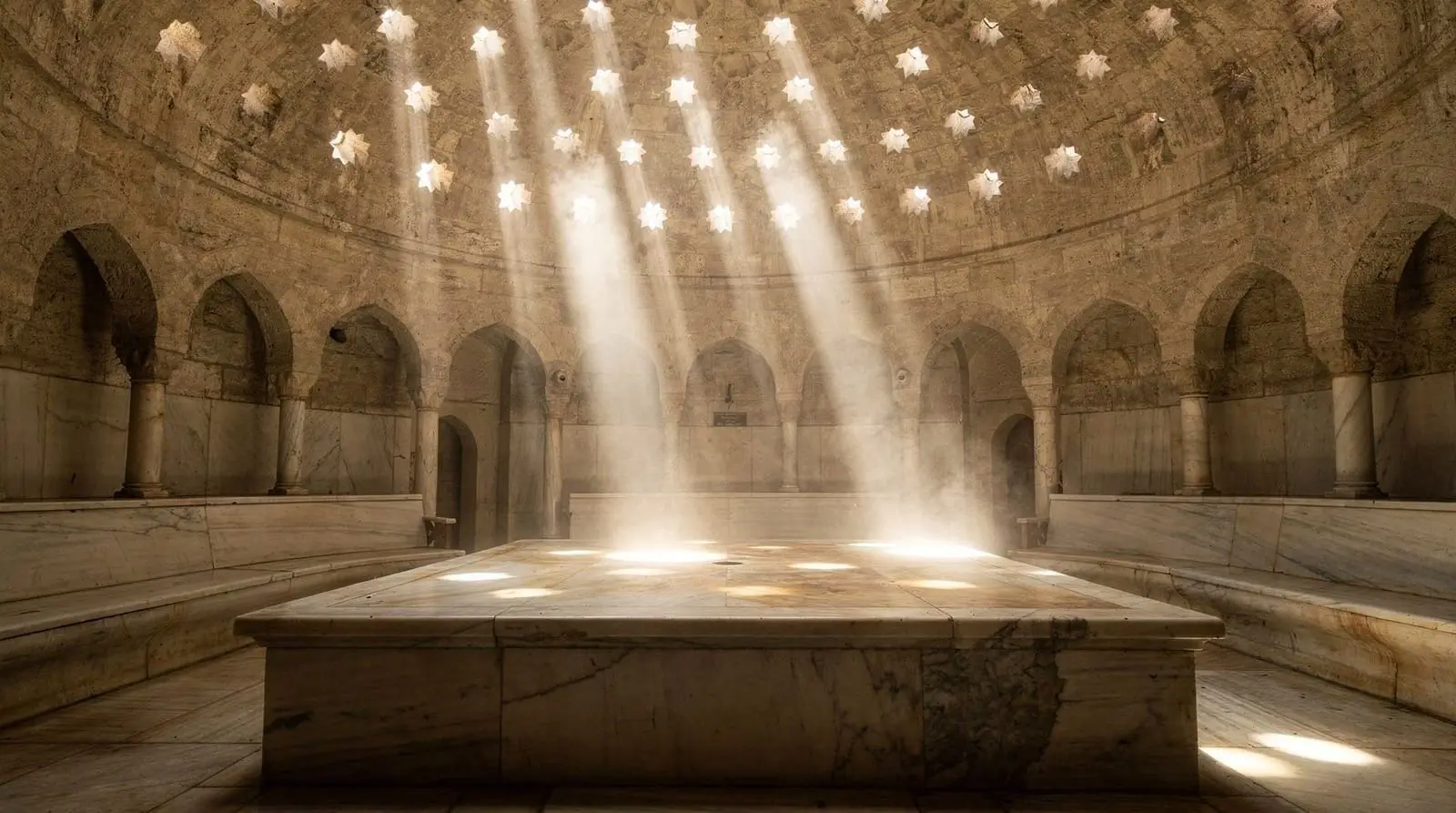
Hot room (hararet): The main marble hall. Temperature typically 40–50°C. In the centre is the large marble slab (göbek taşı — “navel stone”) which is heated from below. You lie on it and sweat. Give yourself 15–20 minutes before the attendant begins your treatment.
The treatment: The attendant (tellak for men, natır for women) soaks a rough cloth glove (kese) in water and exfoliates your entire body. The amount of dead skin produced is alarming at first. This is followed by a foam wash — the attendant creates a cloud of soap foam using a bag-like tool and essentially envelops you in it, massaging as they go. The combination is deeply effective.
Resting and tea: After treatment, you are led to a resting area with towels, tea, and a chance to cool down. Most hammams include tea; some offer cold drinks for purchase.
Historic hammams in Istanbul worth visiting
Çemberlitaş Hamamı: Built in 1584 by Mimar Sinan, commissioned by Nurbanu Sultan. One of the finest working hammam buildings in Istanbul, in the heart of Sultanahmet. Tourist-facing and priced accordingly, but the architecture is exceptional and the experience is well-run. Separate sections for men and women. Cost: approximately 700–900 TRY for the standard bath and kese treatment (mid-2025; verify before visiting).
Book the Çemberlitaş experience in advance — popular and can have queues.
Hürrem Sultan Hamamı: Adjacent to Hagia Sophia, designed by Mimar Sinan in 1556. The most architecturally significant hammam in Istanbul; the building itself is breathtaking. More expensive than most options (premium pricing reflecting the prestige location). Worth visiting for the space even if you choose a cheaper hammam for the actual treatment.
Cağaloğlu Hamamı: A 1741 hammam near Sultanahmet with a long history of celebrity visitors (listed on the wall). Excellent space; tourist-oriented but genuine.
Non-tourist hammams: The neighbourhood hammams in Beyoğlu, Kadıköy, and other residential areas charge local prices — 150–250 TRY — and provide the same physical experience in less ornate surroundings. If the architecture is not the priority and the experience is, a neighbourhood hammam is excellent value. The Kadıköy neighbourhood guide points to a couple worth trying on the Asian side.
Our historic hammams of Istanbul guide covers the full architectural history if that side of things interests you beyond the bath itself, and the full round-up of the best hammams is the place to go if you want a ranked shortlist rather than my personal favourites below.
Which hammam should you actually pick?
| Hammam | Vibe | Price tier | Best for |
|---|---|---|---|
| Çemberlitaş Hamamı | Grand, efficient, tourist-polished | Mid-to-high | First-timers wanting the classic experience |
| Hürrem Sultan Hamamı | The most beautiful building of the three | Premium | Splurging on architecture over value |
| Cağaloğlu Hamamı | Historic, slightly worn-in charm | Mid | Those who want history without Çemberlitaş’s crowds |
| Neighbourhood hammam (Beyoğlu/Kadıköy) | No-frills, local | Budget | Repeat visitors, budget travellers |
What it costs
Historic tourist-facing hammams: 600–1,200 TRY for the full treatment including kese and foam massage (approximately 18–36 USD at mid-2025 rates — verify). Prices vary by package: a “self-service” option (you just use the facility, no attendant treatment) is cheaper. The kese exfoliation is the main physical benefit; don’t skip it.
Neighbourhood hammams: 150–300 TRY.
Private hammam options (booked via tour platforms): 800–2,000 TRY for private sessions at upscale facilities.
Private Turkish bath experience — for those who prefer a non-shared setting.
Practical details
What to bring: A towel from your hotel is useful but not essential — hammams provide peştemal and towels. Flip-flops are supplied; you can bring your own if preferred. Leave valuables in your hotel safe, not the hammam locker (basic security, not a slur on any specific hammam).
How long does it take: Allow 1.5–2.5 hours for the full experience. The heat-soak alone takes 20–30 minutes; treatment adds 30–45 minutes; resting and cooling 30–45 minutes.
Gender separation: Traditional hammams have completely separate sections for men and women, with separate attendants. Some modern hammam-spa hybrids offer couples’ sessions. The historic hammams operate traditional separation.
Tipping: Tipping the attendant (tellak or natır) is customary — 20–30% of the treatment cost is reasonable. Carry cash.
What not to do: Do not rush. The hammam rhythm is slow. Do not take calls or check your phone in the hot room. Do not arrive having just eaten a large meal — the heat makes it uncomfortable.
For a full etiquette rundown: hammam etiquette guide. If this is genuinely your first time and you want the full step-by-step before you walk in the door, the hammam first-timer guide and the broader Turkish hammam guide are worth ten minutes of reading beforehand.
What actually surprised me the first time
Nobody had told me how loud a hammam hall can be — voices bounce off marble and echo more than you expect, so the “meditative spa” mental image is a little off; it is more communal and lively than serene, especially at busy times of day. I also underestimated how much the kese exfoliation would produce — genuinely alarming grey rolls of dead skin the first time, and slightly addictive by the second. The other thing worth knowing: the attendants work fast and are not gentle by Western spa standards. It is a firm, businesslike scrub, not a pampering massage. Go in expecting an authentic, slightly brusque ritual rather than a luxury spa treatment, and you will enjoy it far more. Pairing the hammam with a slow morning around Sultanahmet beforehand, so you are not rushing in hot and stressed, made a real difference to how relaxed I felt afterward.
Frequently asked questions about Istanbul hammams
Is a Turkish hammam for tourists or is it a real cultural practice?
Both. The historic hammams in Sultanahmet are clearly tourism-oriented today — they have been for decades. But hammams remain active as neighbourhood institutions across Istanbul; the Beyoğlu and Kadıköy neighbourhood hammams serve locals primarily. It is a real cultural practice that has been partially commercialised for the tourist market, as many traditional practices are.
Do you have to be naked?
No. Underwear is fine; many people keep it on. The peştemal wrap is the minimum in mixed or public sections. Private hammam sessions offer more flexibility. No historic Istanbul hammam requires full nudity.
How is a hammam different from a sauna?
A sauna uses dry heat; a hammam uses steam and wet heat. A sauna is passive; a hammam involves active treatment by an attendant (exfoliation and foam massage). A sauna does not involve the marble slab. The physical experience is different: a hammam leaves your skin notably smoother; a sauna primarily relaxes muscles.
Which is better, Çemberlitaş or Hürrem Sultan?
Çemberlitaş is the standard recommendation for first-timers — excellent architecture, well-run, central location, competitive pricing at the historic tier. Hürrem Sultan is architecturally more impressive and more expensive; worth it if you want to experience the most historic setting.
Can you visit a hammam on the same day as Hagia Sophia?
Yes — Çemberlitaş Hamamı is a 5-minute walk from Hagia Sophia. Many visitors combine a morning at the main Sultanahmet sites with an afternoon hammam. Given that the hammam leaves you relaxed and slightly drowsy, an afternoon-into-evening timing works well. If you are stacking a full day of Sultanahmet sights, check the Hagia Sophia visiting guide and the Blue Mosque visiting guide so you time the hammam for after, not before.
Will tattoos, piercings, or being self-conscious about your body be a problem?
No. Attendants have seen every body type imaginable and treat the process as entirely routine and professional — nobody stares or comments. Tattoos and piercings (removed or covered if they can snag) are a non-issue. If body-consciousness is genuinely holding you back, the private hammam sessions offer a one-on-one setting away from the shared hot room, which some first-timers find an easier entry point.