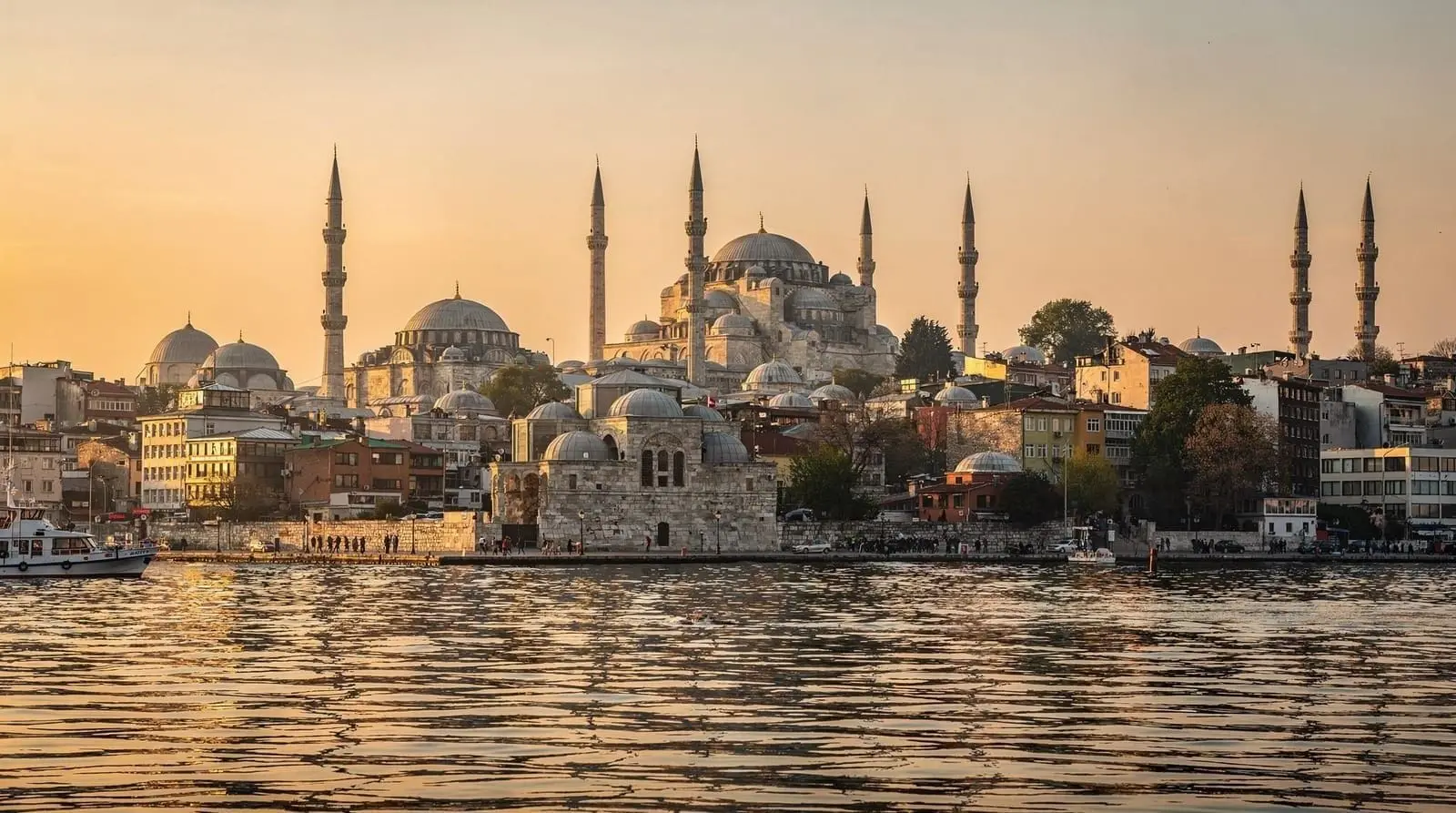
Istanbul in winter: is it worth visiting?
Istanbul in winter is a legitimate choice, not a consolation prize. It is cold, occasionally wet, sometimes beautifully snowy, and significantly quieter and cheaper than spring or summer. The question is whether the cold-weather reality suits what you want from the trip. I went in January expecting to tolerate the city until spring came back — instead I got the emptiest Hagia Sophia queue I’ve ever seen and a Bosphorus in grey light that’s stuck with me longer than any summer sunset there.
| Temperature | Highs 8–9°C, lows 2–4°C (Jan–Feb) |
| Cost vs peak season | Hotels around 30–50% cheaper |
| Crowds | Lowest of the year at major sites |
| Daylight | Sunset around 5:00–5:15pm |
| Best for | Budget, photography, avoiding queues |
The weather reality
Istanbul’s winter is Mediterranean-continental — cold but not polar. January and February average highs of 8–9°C; lows dropping to 2–4°C at night. Rain is regular from October through March. Snow falls several times each winter, typically January–February, occasionally sticking for 1–2 days before melting.
This is equivalent to a mild winter in London, Paris, or Chicago — uncomfortable without preparation, perfectly manageable with layers. The dramatic images of Hagia Sophia and the Blue Mosque under snow do occur, though they cannot be planned for.
What changes in winter
Crowds: The tourist footprint drops dramatically. The queue at Hagia Sophia that runs 90 minutes in August takes 15 minutes in January. Sultanahmet feels like a neighbourhood rather than a theme park. You can walk through the Grand Bazaar without being surrounded.
Prices: Hotel rates in Sultanahmet drop significantly — the same hotel that costs 120 USD in May might cost 60–70 USD in January. Off-season deals are real and substantial.
Daylight: Sunset around 5:00–5:15 pm in December–January means your sightseeing window is compressed. Plan the most outdoor-intensive activities for morning.
Atmosphere: Winter evenings in Istanbul are genuinely atmospheric. The Bosphorus in grey light, minarets lit against dark sky, the warmth of a çay house or meyhane after cold air — this is a different but valid aesthetic from the summer city.
The Princes’ Islands: Essentially off-season from November through March. Ferry service is reduced; many businesses close or operate on minimal hours. Not recommended as a winter day trip.
What stays excellent year-round
Hagia Sophia and the Sultanahmet sites: Operating normally. In winter, you can actually stand in Hagia Sophia and take in the mosaics without a crowd of phones blocking your view. The Basilica Cistern’s underground temperature is constant year-round (~13°C) — you might even find it warm in January. See the Basilica Cistern guide.
Hammams: Peak season for hammams. The contrast between cold outdoor temperatures and the warm marble hararet is the experience at its most effective. Historic hammams operate normally year-round. See the first-time hammam guide and the hammam etiquette guide before your first visit.
Çemberlitaş historic hammam experienceFood scene: Istanbul’s food culture is fully operational in winter. Neighbourhood lokantas, meyhanes, fish restaurants, and the street food stalls all run normally. Some seasonal street foods — roasted chestnuts (kestane), boza (fermented millet drink) — are specifically winter offerings.
Galleries and museums: Istanbul Modern (moved to the Karaköy waterfront building), the Istanbul Archaeological Museums, Pera Museum — all better in winter than in summer, when heat and crowds make them less comfortable.
Grand Bazaar and Spice Bazaar: Both fully operational. Winter shopping in the Bazaar without the summer crush is genuinely pleasant — see the Grand Bazaar shopping guide for how to make the most of the quieter aisles. If you’re planning to hit several paid sites, the Istanbul museum pass guide is worth checking regardless of season, since entrance fees don’t drop in winter even though queues do.
How winter compares to the rest of the year
If you’re weighing winter against another season, here’s the trade-off in one place:
| Season | Crowds | Prices | Weather | Best for |
|---|---|---|---|---|
| Winter (Dec–Feb) | Lowest | Cheapest | Cold, occasional rain/snow | Budget, no queues, atmosphere |
| Spring (Mar–May) | Moderate, rising | Mid-range | Mild, tulips in April | Balanced weather and crowds |
| Summer (Jun–Aug) | Highest | Most expensive | Hot, humid | Ferries, Bosphorus, islands |
| Autumn (Sep–Nov) | Moderate, falling | Mid-range | Mild, some rain | Similar balance to spring |
For the fuller month-by-month picture, see our Istanbul weather by month guide and the general best time to visit Istanbul guide.
Planning a winter itinerary
Winter rewards a flexible plan. Put the big outdoor sights early in the day and keep the afternoons for indoor stops: museums, a long lunch, a hammam. If it is your first time in the city, the Istanbul for first-timers guide and the three-day itinerary both work well in the cold months with small adjustments, and the Istanbul packing list covers the layers that matter. For getting between sights when the weather turns, the Istanbulkart guide explains the one card that covers trams, metro, and ferries.
A rainy or very cold day is also a good moment for the indoor highlights: the Hagia Sophia visiting guide, the Topkapı Palace visiting guide, and the best museums in Istanbul all help you build a day around shelter rather than fight the weather.
Ramadan consideration
In 2026, Ramadan runs approximately 19 February to 19 March — well into the “winter” period. This adds an atmospheric layer to a February or March visit. See Ramadan in Istanbul: what to expect for detail.
Who should go to Istanbul in winter
Winter Istanbul works best for:
- Independent travellers who have some flexibility and are not constrained by school holidays
- People who find summer crowds genuinely unpleasant
- Photography-oriented travellers (dramatic light, no crowds blocking shots)
- Budget-conscious travellers for whom the price difference is significant
- Those combining Istanbul with Cappadocia (winter is challenging for balloons but the Cappadocia landscape with snow is also memorable)
Winter Istanbul is harder for:
- Families with school-age children who are committed to summer travel
- Those who have one shot at Istanbul and want optimal conditions
- Visitors for whom the ferry and outdoor experiences (Bosphorus cruise, Princes’ Islands) are central to the trip
The snow question
Light snowfall in Istanbul — a dusting on the domes, white on the Bosphorus shore — is one of the most photographed versions of the city. It happens, but cannot be reliably planned for. If you are specifically chasing snow photos, January is your best chance; February is second. A good snow event happens most winters; a significant snow event that stays for days is less common.
When snow falls, public transport continues (with some disruption), sites remain open, and the city manages with the pragmatism of a city that knows this happens. Roads can be slippery and taxis may be harder to find.
Winter evenings suit a slow dinner. The where to eat in Istanbul guide and the Turkish food guide point to the kind of warm, hearty places that make a cold evening worthwhile. If you would rather have the evening organised for you, a traditional Turkish dinner with a dervish show keeps everything indoors and warm.
Budget estimates for winter
Hotel prices drop 30–50% from peak season. Entrance fees do not change seasonally. Restaurant prices are the same year-round. The main winter cost considerations: slightly more transport (fewer long outdoor walks), more café time (warming up), potentially one hammam session where you might not have one in summer.
A mid-range winter trip (decent hotel, all major sites, food at a mix of lokantas and mid-range restaurants): approximately 70–90 USD per day excluding flights.
Frequently asked questions about Istanbul in winter
What should I pack for Istanbul in winter?
A warm coat is essential. Rain gear (jacket or umbrella) is practical. Layers — Istanbul indoors is well-heated, outdoors can be very cold. Comfortable waterproof shoes for potentially wet cobblestones. A scarf or hat for cold evenings.
Is Istanbul cheaper in January than in April?
Yes, substantially. January is the cheapest month for accommodation. April sees a significant price jump as spring demand begins. If budget is a priority and you can handle the cold, January is the best value month.
Does it snow a lot in Istanbul?
No — it snows occasionally, not constantly. Most winters see 2–4 snowfall events, some minor, occasionally significant. The snow rarely stays for more than a few days. Istanbul is not a winter wonderland city; it is a city that has atmospheric winter moments.
Can you do a Bosphorus cruise in winter?
Sightseeing cruises operate year-round but schedules are reduced from November to March. Cold wind on the water requires serious warm clothing. The public ferry option (Şehir Hatları) is the most practical winter Bosphorus experience. If you’d rather stay warm, our best Bosphorus cruise guide flags which operators run enclosed or heated boats through winter.
Is Istanbul in winter good for a first visit?
It can be, especially if you value low crowds and lower prices over guaranteed sunshine and full ferry schedules. If this is a once-in-a-lifetime trip and you specifically want the Princes’ Islands or long outdoor Bosphorus time, consider spring or autumn instead — winter trims those options.